2027 Are Online Engineering Management Master's Degrees Respected by Employers? Hiring Trends & Career Outcomes

Co-Founder and Chief Data Scientist
Imagine a professional considering an online engineering management master's degree, unsure if employers will perceive it as equal to a traditional program. This dilemma arises as 67% of hiring managers report challenges in assessing the credibility of online credentials compared to on-campus degrees. Concerns about program rigor and networking opportunities often influence employer biases. As more candidates pursue flexible, remote education, understanding the true impact of an online engineering management degree is crucial for career planning. This article examines accreditation, employer attitudes, skill demand, and alumni success to clarify the real-world value and outcomes of online engineering management master's programs.
Key Benefits of Knowing Whether Online Engineering Management Master's Degrees Are Respected by Employers
- Employers increasingly recognize online engineering management master's degrees from accredited institutions as equivalent in rigor, reducing earlier skepticism tied to program delivery methods.
- Graduates demonstrate comparable workplace performance and leadership skills, with 68% reporting promotions within five years of earning an online degree.
- Online degree holders often access higher salary brackets, benefiting from skills-based hiring trends that prioritize applied expertise over traditional credentials.
How Have Employer Perceptions of Online Engineering Management Master's Degrees Changed Over the Past Decade?
Employer attitudes toward online engineering management master's degrees have evolved considerably since the early 2010s. Back then, surveys revealed widespread skepticism, as many companies associated online degrees with for-profit colleges and questioned their academic rigor-especially in technical fields like engineering management. This stigma created significant barriers for graduates seeking recognition in the job market.
However, the COVID-19 pandemic rapidly shifted this landscape by compelling most institutions to adopt remote learning models. As a result, employers had firsthand experience with online education, prompting a recalibration of their views across disciplines, including engineering management.
Changes in U.S. hiring trends for online engineering management graduates now reflect this broader acceptance. Champlain College's 2023 survey found that 84% of employers are more open to online education than before the pandemic, signaling a measurable shift. Today, employers focus less on the delivery format and more on accreditation, institutional reputation, and demonstrated program rigor. These factors have become the primary filters used to assess the validity and quality of online engineering management credentials.
Prospective students should weigh these markers carefully when exploring programs and how graduates fare in competitive hiring processes. For those interested in exploring pathways, reviewing the best majors in college can provide helpful context for aligning educational choices with employer expectations.
What Do Hiring Managers Actually Think About Online Engineering Management Graduate Credentials?
Employer attitudes toward online engineering management master's degrees have evolved markedly according to surveys from the National Association of Colleges and Employers (NACE) and the Society for Human Resource Management (SHRM). Initial skepticism about online credentials is waning, especially when degrees come from accredited programs affiliated with reputable institutions. However, hiring manager views on online engineering management graduates vary by industry sector, company size, and geography.
- Sector Variability: Employer acceptance of online degrees differs; tech and startups are more flexible, while traditional industries maintain reservations.
- Company Size Differences: Larger firms conduct formal credential reviews but focus heavily on candidate skills; smaller companies prioritize practical experience.
- Geographic Influence: Urban employers tend to accept online education more readily than those in rural or less populated areas.
- Recruiter Insights: HR professionals emphasize skills and proven experience over degree delivery format when hiring.
- Skills Over Format: Applied competencies and portfolios increasingly outweigh whether a degree was earned online, especially for engineering management graduates.
Human resource professionals in SHRM reports highlight that the stigma surrounding online degrees has diminished considerably. One recruiter commented, "We care most about what candidates can do, not just where or how they earned their degree. Skills and relevant experience usually trump degree format." This trend aligns with the rise of skills-based hiring, which favors applied leadership, budgeting, and operational skills that are essential in engineering management roles.
Online programs integrating real-world projects and internships tend to produce graduates who compete well in the job market. Those considering advanced degrees might also explore options among the best online colleges that accept FAFSA, which can offer affordable pathways to gain valuable credentials.
Does Accreditation Determine Whether an Online Engineering Management Master's Degree Is Respected?
Accreditation remains the principal criterion employers and credentialing organizations assess when evaluating online engineering management master's programs. Regional accreditation, which applies to the institution as a whole, establishes that the school meets broad academic standards recognized nationwide.
Meanwhile, programmatic accreditation targets the specific discipline-programs accredited by bodies such as ABET signal specialized quality that is often prioritized by industry and professional regulators. This distinction significantly influences how an online degree is perceived within hiring processes.
To confirm whether a program holds recognized accreditation, prospective students should utilize authoritative resources like the U.S. Department of Education's Database of Accredited Postsecondary Institutions and Programs (DAPIP) and the Council for Higher Education Accreditation (CHEA) directory. These tools provide updated listings of legitimate accreditors and accredited institutions, helping candidates avoid unaccredited programs that generally lack employer acceptance and may jeopardize certification or licensing opportunities. Notably, nearly 70% of employers report verifying accreditation status when reviewing applicants with online degrees, reflecting increased scrutiny and demand for quality assurance.
A professional who pursued an online engineering management master's degree shared that the accreditation factor was a constant concern during his enrollment. "I worried a lot about whether the degree would be respected in my new field," he said. Navigating the verification process involved contacting administrators and cross-checking multiple databases to be confident the program was legitimate. He recalled moments of uncertainty, especially as some peers questioned online credentials. However, confirming both regional and programmatic accreditation ultimately gave him reassurance and strengthened his confidence in negotiating job offers. His experience highlights how crucial accreditation can be in gaining employer trust and overcoming skepticism when transitioning careers.
How Does Institutional Reputation Affect the Value of an Online Engineering Management Master's Degree in the Job Market?
The reputation of the university awarding an online engineering management master's degree often influences how employers value the credential, a concept known as the brand premium. Schools like Purdue University, Texas A&M, and the University of Southern California offer flagship online programs that mirror their on-campus curriculum, faculty, and academic standards, assuring consistent graduate quality.
Employer surveys from the National Association of Colleges and Employers (NACE) reveal that recognized university names still weigh heavily in hiring decisions, especially for technical management roles. However, employer perceptions are evolving to emphasize demonstrated skills and practical experience alongside brand recognition, reflecting trends in employer perceptions of accredited online engineering management master's programs.
Choosing a highly ranked school is not always the best route; mid-tier programs with solid industry partnerships, accreditation, and successful placement records can provide stronger career advantages than prestigious but disconnected institutions. Prospective students should also consider alumni outcomes and how well programs prepare graduates for salary negotiations and long-term advancement.
For those deciding on a degree path, knowing what bachelors degree should I get is as important as evaluating program reputation to ensure future career success.
What Salary Outcomes Can Online Engineering Management Master's Graduates Realistically Expect?
The 2024 Education Pays report from the Bureau of Labor Statistics reveals that individuals with a master's degree earn substantially higher median weekly wages and face lower unemployment rates compared to those holding only a bachelor's degree. Specifically, within engineering management, BLS data show that median salaries increase from about $95,000 for bachelor's-level professionals to roughly $110,000-$120,000 for those with a master's degree. This indicates a meaningful financial boost tied to advanced education in this field.
Regarding delivery mode, extensive research-including studies from NYU SPS-indicates no significant wage differences between graduates of online and on-campus engineering management programs when the institution and curriculum are comparable. Employer acceptance of online credentials has grown as accreditation and program quality standards have strengthened.
When evaluating an online master's program, factoring in cost and time to completion is crucial. With tuition typically between $20,000 and $40,000 and average completion over two years, many graduates see salary increases around $15,000 annually, allowing them to recover their investment within two to three years. This financial outlook makes pursuing an advanced degree a practical choice for many engineering professionals.
A professional who advanced her career through an online engineering management master's program shared that while balancing work and study was challenging, the quality of instruction and networking opportunities exceeded her expectations. She emphasized that her salary negotiations after graduation reflected her enhanced expertise, noting, "The degree opened doors that might have remained closed otherwise." Her experience illustrates how well-chosen online programs can provide both credibility and tangible economic benefits in today's competitive job market.
Which Engineering Management Industries and Employers Are Most Receptive to Online Master's Degree Holders?
Employers in various sectors demonstrate differing degrees of openness toward online engineering management master's degree holders, influenced largely by evolving hiring practices. The technology industry ranks highest in acceptance, as companies prioritize proven technical skills and leadership experience over how a degree was earned. Major firms like Google and Microsoft frequently value strong portfolios and hands-on accomplishments alongside accredited online credentials.
Healthcare and biotechnology sectors are increasingly welcoming online graduates, especially as demands grow for expertise in digital transformation and project oversight. While some established institutions favor traditional credentials, many startups and mid-size companies actively seek professionals educated through practical, applied online programs.
The public sector and nonprofit organizations historically adhered to conventional degree preferences, but the shift toward competency-based recruitment now benefits candidates with online degrees. Federal and state agencies have integrated skills-focused policies, enhancing opportunities for online credential holders. Similarly, consulting firms in engineering and management recognize diverse educational backgrounds if paired with relevant experience and certifications.
Large corporations, such as Fortune 500 companies, tend to maintain strict degree requirements but are flexible during talent shortages by considering verified skills and project portfolios. Conversely, smaller businesses and startups emphasize candidate capabilities over degree format, presenting fertile opportunities for online master's graduates.
The National Association of Colleges and Employers' Job Outlook 2026 survey reports that 70% of employers employ skills-based hiring, helping level the playing field for online-educated candidates. Those exploring programs should prioritize accredited institutions with strong alumni outcomes to increase employer confidence. Claims about employer preferences should always be supported by credible data or official statements to ensure accuracy and effective career planning.
How Do Online Engineering Management Master's Programs Compare to On-Campus Programs in Terms of Curriculum and Academic Rigor?
Many online engineering management master's programs offered by established universities replicate their on-campus equivalents by using identical syllabi, the same faculty, and consistent assessments.
- Curriculum Consistency: Many online programs maintain identical syllabi, faculty, and assessments as their on-campus counterparts, ensuring academic parity and employer confidence.
- Accreditation Standards: Regional and programmatic accrediting bodies enforce uniform quality benchmarks across all formats, guaranteeing the validity of online degrees.
- Peer Collaboration: Synchronous sessions, virtual cohorts, and project-based learning create a collaborative learning environment that mirrors in-person experiences.
- Practical Requirements: Hybrid models and simulations help online students meet necessary hands-on components for specialized engineering management tracks.
- Enrollment Growth: A recent 20% rise in online master's enrollment signals wider acceptance and trust in these programs among students and employers.
What Role Does the Online Learning Format Play in Developing Job-Ready Skills for Engineering Management Careers?
The online learning format for engineering management master's programs initially faced skepticism but now clearly fosters essential job-ready skills valued by employers.
- Self-Directed Learning: Online programs build discipline and time management, fostering independence in problem-solving and project ownership highly valued by employers.
- Digital Collaboration: Use of virtual communication platforms teaches teamwork and technical skills essential for modern engineering management roles.
- Curriculum Design: Intentional integration of competency-based projects aligns online education with NACE's career readiness framework.
- Employer Validation: Data indicate online graduates possess practical skills on par with traditional peers, especially in remote and digital work environments.
- Networking Challenges: Online students must actively pursue professional connections given limited access to in-person mentorship and recruiting events.
Prospective students evaluating options should also consider how online study demands skills transferable beyond the degree itself. Those interested in further education may explore other credentials, including the best associates degrees to get, to complement their engineering management credentials.
What Do Graduate Employment Outcomes and Alumni Data Reveal About Online Engineering Management Master's Degrees?
Graduate employment outcomes and alumni data are crucial for assessing the respect online engineering management master's degrees command among employers. Prospective students should request official placement rates, median salaries, and lists of employer partners directly from program administrators before enrolling to ensure the program aligns with their career goals. Examining program-level outcomes provides a clearer picture than broad statistics, especially when considering alumni career success and hiring trends in engineering management graduate programs.
The National Center for Education Statistics' (NCES) Integrated Postsecondary Education Data System (IPEDS) offers graduation rate benchmarks that serve as a baseline for comparison. Similarly, the National Association of Colleges and Employers (NACE) publishes graduate outcomes data, which can help prospective students evaluate whether a program's reported employment metrics are above, at, or below the sector averages. Programs with outcomes near or above NACE's benchmarks often have stronger industry recognition and connections.
Many programs depend on self-reported graduate outcomes, which can be inconsistent or overly optimistic. In contrast, programs that provide third-party verified data-through audits by external accounting firms or validation via NACE surveys-offer more reliable signals of quality. Such transparency helps reduce employer skepticism surrounding online credentials and gives a better sense of alumni success over time.
For those exploring related fields, programs like a game design masters online offer insights into how online credentials in specialized graduate programs are also gaining broader employer acceptance, reflecting evolving hiring trends focused on skills and outcomes.
What Are the Biggest Misconceptions Employers Have About Online Engineering Management Master's Degrees?
Employers' perspectives on online engineering management master's degrees have shifted considerably, dispelling several longstanding myths. Contrary to the belief that online programs lack academic rigor, many accredited institutions apply the same strict curriculum and assessments for both online and on-campus cohorts. The Excelsior College/Zogby poll reports that 83% of executives regard online degrees as equally credible.
- Academic Rigor: Online programs maintain curricula and assessments equal to traditional formats, ensuring educational quality.
- Accreditation Validity: Most online degrees hold the same recognized regional and programmatic accreditation as in-person degrees.
- Commitment and Motivation: Successfully managing an online degree alongside professional roles demonstrates strong dedication and self-discipline.
- Program Demands: Competitive admissions and thorough coursework in top online programs negate myths of shortcuts or ease.
- Networking and Outcomes: The rise of remote work and virtual networks has boosted career opportunities and alumni success for online graduates.
What Is the Long-Term Career Outlook for Professionals Who Hold an Online Engineering Management Master's Degree?
Occupations closely aligned with engineering management, including architectural and engineering managers, industrial production managers, and operations research analysts, generally require or benefit greatly from a master's degree. The U.S. Bureau of Labor Statistics projects these roles to grow between 6% and 9% from 2022 to 2032, surpassing average occupational growth. Median annual salaries in these fields range from about $90,000 to $150,000, reflecting high market demand for advanced technical and leadership capabilities.
Data from the BLS Monthly Labor Review reveals an average wage increase of approximately $24,588 when moving from a bachelor's to a master's degree in engineering and technology disciplines, pushing typical earnings from around $69,459 to $94,047 annually. This substantial boost highlights the financial benefits of advanced credentials, whether earned online or on campus.
Once professionals build experience and demonstrate measurable results, hiring managers and promotion panels tend to focus on skills and accomplishments instead of the degree delivery method. Online degrees awarded by accredited institutions have gained credibility and the previous skepticism is waning.
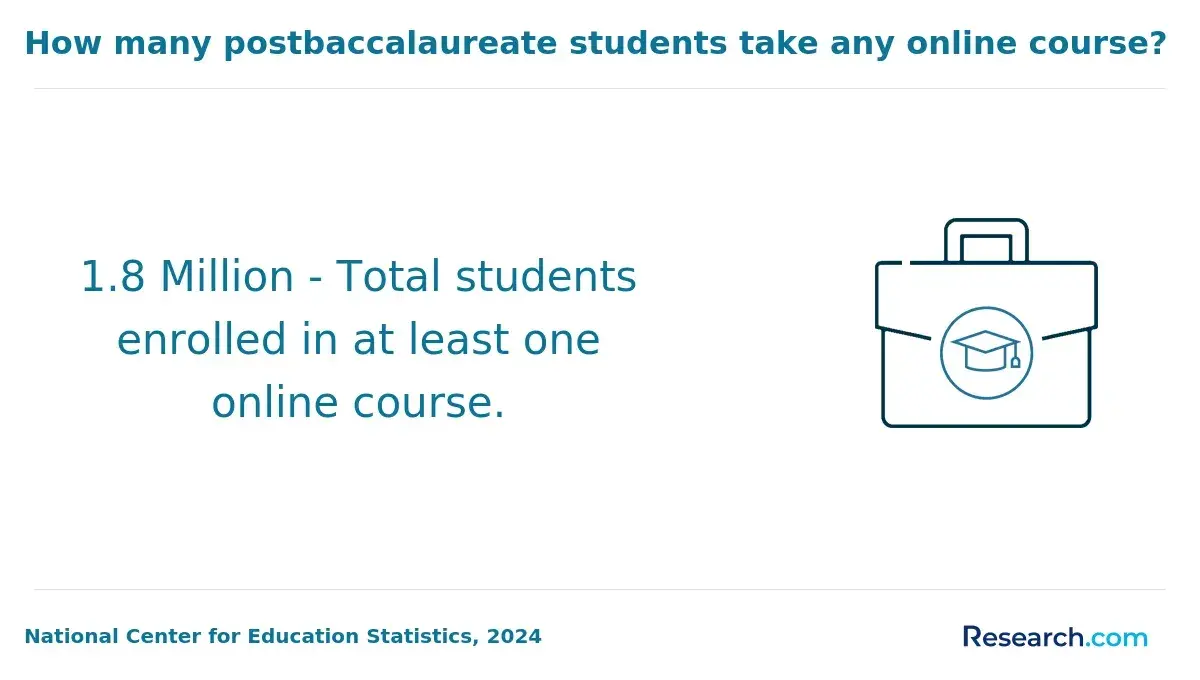
Looking ahead, online graduate education is firmly entrenched in the academic landscape. For the 2023-24 academic year, NCES reports over 2.5 million graduate students studying exclusively online, validating growing acceptance by employers and institutions alike.
What Graduates Say About Employer Reception to Their Online Engineering Management Master's Degree
- Azai: "Choosing an accredited online engineering management master's degree was one of my best decisions. My employer was initially uncertain about the value of an online program but quickly recognized the rigorous curriculum and emphasis on practical leadership skills. This degree has significantly boosted my confidence to lead complex projects and made me stand out during evaluations."
- Russell: "Reflecting on my career journey, pursuing an online engineering management master's degree was a turning point. The acceptance from my employer reassured me that the quality of online education is respected in our industry. It has opened doors for me to transition into management roles that I once thought were out of reach."
- Christian: "From a professional standpoint, the reception to my online engineering management master's degree at work was very positive. The accreditation of my program played a crucial role in this, showing my company that I took my education seriously. This degree has empowered me to drive strategic initiatives and advance my career in ways I hadn't anticipated."
Other Things You Should Know About Engineering Management Degrees
While an online engineering management master's degree provides advanced knowledge in leadership and technical project oversight, it typically does not fulfill requirements for professional engineering licensure on its own. However, the degree can support eligibility for certain management and project management certifications, such as PMP (Project Management Professional). Employers often value candidates who combine a reputable online degree with relevant certifications to demonstrate both technical leadership and professional credibility.
Skills-based hiring emphasizes demonstrated competencies over formal credentials alone, which benefits online engineering management graduates who can showcase practical project leadership and technical skills. Many employers increasingly evaluate portfolios, project outcomes, and soft skills alongside degree credentials. As a result, graduates of online programs that stress hands-on learning and real-world application remain competitive and often gain recognition equal to traditional degree holders.
In 2027, prospective students should evaluate program accreditation, faculty qualifications, technology used in delivering courses, industry partnerships, and graduate career outcomes. It’s also important to consider the alignment of the program with current industry trends and employer expectations.
References
- How can online courses help engineering managers in their career progression? https://m.umu.com/ask/q11122301573854460636
- How will studying engineering management impact your career growth? https://www.mla.ac.uk/blog/how-will-studying-engineering-management-impact-your-career-growth/
- Why Masters in Engineering Jobs Matter: The Value of an Advanced Engineering Degree https://engineeringmanagement.org/masters-in-engineering-jobs/
- Are Online Master’s Degrees Respected? https://www.snhu.edu/about-us/newsroom/education/are-online-masters-degrees-respected
- 7 Myths Surrounding Online Master’s Degree Programs https://www.snu.edu/blog/7-myths-surrounding-online-masters-degree-programs
- Ope - Dapip https://ope.ed.gov/dapip/
- [Post Title] | Engineering Management Institute https://engineeringmanagementinstitute.org/skill-readiness-engineering-firms-transforms-workforce-success/
- How do employers look at online degrees? - MBA Crystal Ball https://www.mbacrystalball.com/blog/2017/01/27/online-degrees-how-employers-view-them/
- Campus vs Online Engineering Degrees - What Employers Think https://www.itcareerfinder.com/brain-food/blog/entry/what-employers-think-about-online-engineering-degrees.html
- The Role of Online Learning in Career Advancement https://www.onrec.com/news/news-archive/the-role-of-online-learning-in-career-advancement