
2027 Best Highest-Paying Master’s in Education Jobs

Co-Founder and Chief Data Scientist
Despite teachers earning 23.5% less than peers in other professions, my decade-plus experience as a career advisor shows reasons to remain in education. Delving into the world of the highest-paying master’s in education jobs, it's clear that a master's, such as in science education, can significantly boost salaries by 10-15%.
Teaching can be lucrative for those driven by enhancing gifted and talented education. This guide tries to walk you through the lucrative post-master's opportunities, indicating a promising future for educators supported by extensive research and statistics.
What are the benefits of getting a master's in education
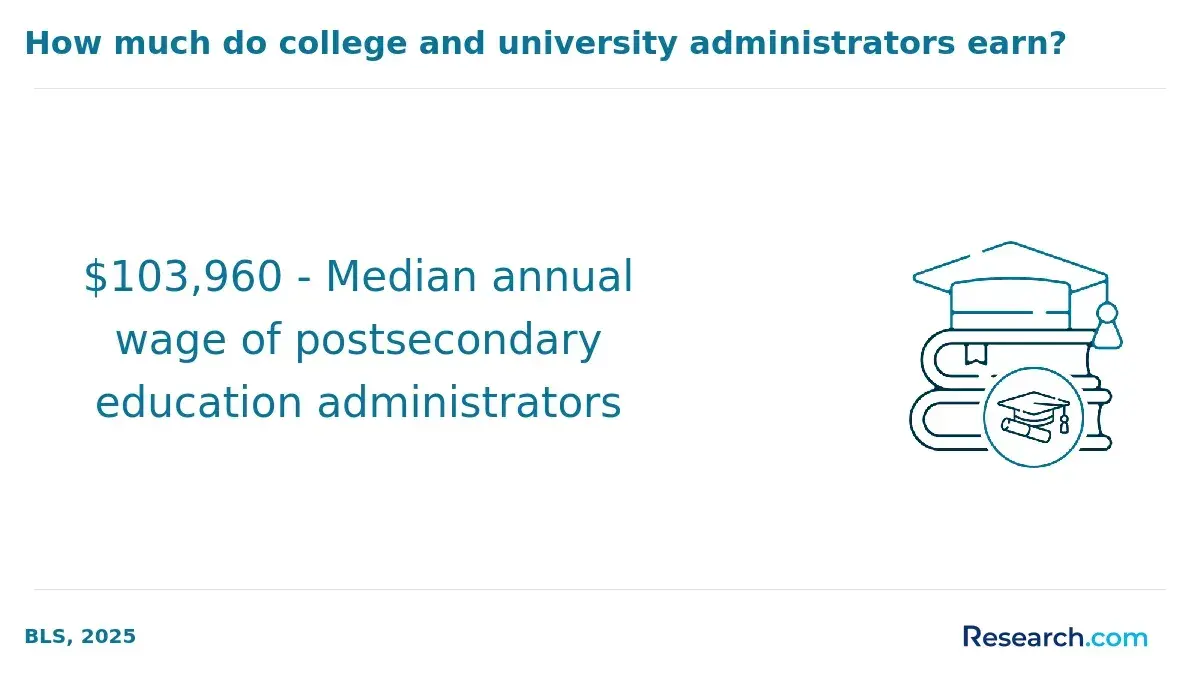
- On average, education administrators earn $99,820 annually, with the highest earners exceeding $154,690.
- Instructional coordinators have a median wage of $63,740, with potential earnings above $101,090 for the top 10%.
- The counseling and student support sector provides a median annual wage of $60,510, with opportunities for top earners to surpass $98,190.
- There's a growing demand for special education supervisors and school psychologists, promising higher salaries with advanced degrees.
- Advanced degrees in education open pathways to the most lucrative jobs in the field, enhancing career satisfaction and earning potential.
- What are the highest-paying master’s in education jobs in educational leadership and administration? Educational Leadership Jobs
- What are the highest-paying master’s in education jobs in curriculum development and instruction? Curriculum Development Jobs
- What are the highest-paying master’s in education jobs in counseling and student support? Counseling Jobs
- How does obtaining a master's in education influence salary and career advancement? Salary & Career
- What is the return on investment for pursuing a master's in education? Return on Investment
- What are the requirements for pursuing educational careers abroad? Careers Abroad
- How do you choose a specialization within a master’s in education program? How do you choose a specialization within a master’s in education program?
- What are good strategies for financing a Master's in Education? Financing
- What additional certifications or qualifications enhance prospects in specialized education roles? Certifications
- How can a master's in education prepare you for leadership and administrative positions? How can a master's in education prepare you for leadership and administrative positions?
- How to choose the right online master's in education program? How to choose the right online master's in education program?
- Is a master's in education worth it? Is a master's in education worth it?
- Can interdisciplinary studies expand your career opportunities in education? Can interdisciplinary studies expand your career opportunities in education?
- Strategies for Career Advancement in Education Strategies for Career Advancement in Education
- Emerging Trends and Future Opportunities in Education Careers Emerging Trends and Future Opportunities in Education Careers
- Can specializing in child development enhance classroom innovation and student outcomes? Can specializing in child development enhance classroom innovation and student outcomes?
- Can expertise in library science amplify a career in education? Can expertise in library science amplify a career in education?
Highest-paying master’s in education jobs in educational leadership and administration
A master’s in education can move an educator from classroom practice into roles that shape schools, districts, colleges, and training systems. The highest-paying options are usually not traditional teaching positions. They tend to involve budgeting, academic policy, compliance, faculty supervision, student services, curriculum quality, accreditation, and institutional strategy.
This guide is for teachers, advisors, instructional specialists, and education professionals comparing whether a graduate education degree is worth the cost and which career path may offer the strongest earning potential. You will find salary figures, job outlook numbers, role comparisons, education requirements, specialization guidance, financing strategies, and practical questions to ask before enrolling in a program.
Quick answer: which master’s in education jobs pay the most?
Based on the roles listed in this guide, the highest-paying master’s in education jobs are concentrated in senior higher education administration and specialized program leadership. College president, graduate medical education director, chief academic officer, vice chancellor, provost, academic director, dean, and dean for student affairs are among the strongest salary options. Many of these positions require more than a master’s degree, such as extensive leadership experience, licensure, or a doctorate, but a master’s in education is often an important step toward eligibility.
| Career path | Salary listed | Job outlook listed | Best fit for |
| College President | $188,282 | 7% | Experienced higher education leaders who can manage strategy, fundraising, operations, and public relationships |
| Graduate Medical Education Director | $158,500 | 28% | Education professionals with medical education administration knowledge and ACGME accreditation experience |
| Chief Academic Officer | $145,437 | 6% | Academic leaders who want broad responsibility for instructional quality, compliance, and institutional planning |
| Vice Chancellor | $127,798 | 7% | Senior university professionals with extensive academic, fiscal, and governance experience |
| Provost | $127,499 | 7% | Faculty-administrators with deep higher education experience, often at dean level or above |
| Academic Director | $122,669 | 7% | Professionals focused on curriculum quality, faculty coordination, and academic operations |
| Dean | $113,895 | 7% | Academic administrators responsible for departments, colleges, budgets, and academic standards |
| Dean for Student Affairs | $109,667 | 7% | Student-centered leaders who oversee campus services, student conduct, housing, safety, and engagement |
Education administrators earn an average annual salary of $99,820, while high earners can reach more than $154,690. California and the District of Columbia report higher average figures of $119,880 and $116,980, respectively. These numbers show why leadership and administration are often the most financially competitive areas for graduate-prepared educators, including those who began in fields such as science education graduate programs.
Campus Director
Salary: $73,324
Job Outlook: 7%
A campus director manages the daily functioning of a college, university branch, or specialized learning site. The job can include supervising faculty and staff, reviewing academic standards, coordinating student services, supporting recruiting efforts, improving facilities, and monitoring budgets. This role fits professionals who enjoy operations, people management, compliance, and cross-department coordination. A bachelor’s degree in education, business administration, public relations, or finance is commonly expected, while a master’s degree can strengthen a candidate’s leadership profile.
Associate Dean
Salary: $89,798
Job Outlook: 7%
An associate dean helps lead a school, college, or academic division within a larger institution. The role may involve faculty evaluation, admissions oversight, student support, career development programs, budgeting, and curriculum improvement. It is a strong match for educators who want academic leadership responsibilities but may not yet be pursuing a full dean position. Strong communication, conflict resolution, planning, and faculty management skills are essential.
Postsecondary Education Administrator
Salary: $96,910
Job Outlook: 7%
Postsecondary education administrators work in colleges and universities in areas such as admissions, registrar services, student affairs, academic programs, institutional research, or faculty support. Their duties depend on the office they serve. Admissions staff may review applications and promote the institution, while student affairs professionals may advise students, organize programs, and support campus engagement. These roles are usually full-time, and many employers prefer candidates with a master’s degree and experience in academic administration.
Elementary, Middle, and High School Principal
Salary: $98,420
Job Outlook: 5%
Principals lead K–12 schools by managing teachers, schedules, budgets, curriculum implementation, student discipline, family communication, safety procedures, and performance reporting. This is one of the clearest leadership routes for experienced classroom teachers. Most principals hold a master’s degree in educational leadership, education administration, or a related field, and public school principals generally need state licensure. Classroom teaching experience is also a major advantage because principals must evaluate instruction and support teacher development.
School Superintendent
Salary: $98,980
Job Outlook: 6%
A superintendent oversees a public school district rather than a single school. The work includes districtwide strategy, principal supervision, staffing decisions, curriculum planning, facilities, human resources, board communication, and financial management. A bachelor’s in education and a master’s in educational leadership or administration are commonly expected, while a doctorate is often preferred in larger districts. Student enrollment growth can support demand, although budget constraints may limit hiring in some areas.
Dean
Salary: $113,895
Job Outlook: 7%
Deans direct academic units such as colleges, schools, or major departments. Their responsibilities may include academic quality, faculty hiring, research oversight, student progression, compliance, resource allocation, and budget planning. They also help maintain ethical research practices, institutional policies, intellectual property procedures, and environmental or legal requirements tied to academic work. This role is best suited to professionals with substantial higher education experience and the ability to balance academic priorities with operational realities.
Provost
Salary: $127,499
Job Outlook: 7%
A provost is typically the chief academic officer of a university. The role oversees academic programs, faculty affairs, research standards, accreditation concerns, and institutional academic strategy. Provosts may also act on behalf of the university president when needed. Applicants often need a Ph.D., at least ten years of higher education experience, and significant academic administration experience at the dean level or higher. A master’s degree can be part of the pathway, but this role usually demands a long record of academic leadership.
Vice Chancellor
Salary: $127,798
Job Outlook: 7%
A vice chancellor works at the senior executive level of a university system or institution, often overseeing academic, administrative, financial, and external-facing responsibilities. The position may involve representing the university, advising governing bodies, securing funding, shaping policy, and leading institutional strategy. Candidates generally need around ten years of academic experience, often including university faculty work, along with advanced credentials and a strong record of leadership.
Chief Academic Officer
Salary: $145,437
Job Outlook: 6%
Chief academic officers are responsible for the academic performance and instructional direction of an educational organization. Their work can include supervising faculty leaders, maintaining curriculum standards, launching academic initiatives, aligning programs with regulations, managing budgets, and setting institutional goals. This role rewards professionals who combine strategic thinking with practical knowledge of teaching, accreditation, assessment, and organizational leadership.
Graduate Medical Education Director
Salary: $158,500
Job Outlook: 28%
A graduate medical education director oversees a medical school or medical institution’s GME program. The role focuses on program administration, curriculum alignment, faculty performance, outcome evaluation, and compliance with medical education expectations. A master’s degree in education or business, relevant professional experience, strong communication skills, and knowledge of the ACGME accreditation process are typically important. This is a specialized leadership path for educators who understand both academic administration and medical training environments.
College President
Salary: $188,282
Job Outlook: 7%
A college president is the senior executive responsible for institutional vision, financial health, public reputation, donor relationships, community engagement, administrative leadership, and long-term strategy. This role requires a strong history of leadership, knowledge of higher education operations, strategic planning ability, financial judgment, and skill in resource allocation. Many presidents have a master’s degree, although advanced credentials and extensive leadership experience are often expected. The onboarding period for this role commonly lasts 1 to 3 months.
Highest-paying master’s in education jobs in curriculum development and instruction
Curriculum and instruction roles are a strong option for educators who want to improve learning systems without necessarily becoming school principals or district executives. These careers focus on course design, digital learning, instructional technology, assessment, faculty support, training programs, and student outcomes.
Instructional coordinators and curriculum specialists have a median salary of $63,740, with the potential to exceed $101,090 for top earners. Specialized preparation in areas such as gifted and talented education can also support roles that address advanced learners and differentiated instruction. Government and education-sector roles list median wages of $78,900 and $75,840, respectively.
| Role | Salary listed | Job outlook listed | Where the role can lead |
| E-Learning Specialist | $71,898 | 9% | Instructional design, learning technology, corporate training, online program development |
| Distance Learning Coordinator | $76,238 | 7% | Online education administration, LMS management, virtual learning operations |
| Education Consultant | $79,608 | 8% | Independent consulting, school improvement, student planning, admissions guidance |
| Research Consultant | $83,492 | 20% | Education research, program evaluation, policy analysis, institutional research |
| Learning and Development Manager | $88,297 | 8% | Corporate learning, talent development, leadership training, workforce education |
| Adjunct Professor | $98,821 | 11% | Higher education teaching, academic research, full-time faculty applications |
| Academic Consultant | $104,744 | 8% | Academic coaching, curriculum review, school improvement, professional development |
| Academic Director | $122,669 | 7% | Program leadership, curriculum administration, faculty supervision, academic operations |
E-Learning Specialist
Salary: $71,898
Job Outlook: 9%
E-learning specialists build digital courses, online modules, assessments, and multimedia learning materials. They may use platforms such as Articulate Storyline and Adobe Captivate and may benefit from knowledge of HTML, CSS, and JavaScript. A bachelor’s degree in instructional design or education is often a baseline requirement, while a master’s degree can help professionals move into design leadership, evaluation, or strategy roles. A strong portfolio matters because employers often want evidence of practical course-building ability.
Distance Learning Coordinator
Salary: $76,238
Job Outlook: 7%
Distance learning coordinators manage online programs, digital learning tools, course delivery systems, and student or faculty support for remote education. They may work with platforms such as Centra, WebEx, Blackboard, and internal websites, and some roles require knowledge of HTML5 and CSS3. The position is common in schools, colleges, universities, and corporate training departments. A bachelor’s degree is commonly expected, but graduate training can improve readiness for broader program management.
Education Consultant
Salary: $79,608
Job Outlook: 8%
Education consultants advise students, families, schools, or organizations on academic planning, program development, testing, admissions, learning challenges, and school improvement. They need strong analytical, interpersonal, and communication skills because their recommendations often affect academic choices and long-term planning. A bachelor’s degree is common, while certifications such as the Microsoft Certified Educator (MCE) designation may strengthen credibility in specialized consulting niches.
Research Consultant
Salary: $83,492
Job Outlook: 20%
Research consultants design studies, collect data, interpret findings, write reports, and present recommendations. In education, they may support program evaluation, policy research, student outcome analysis, or institutional planning. The minimum requirement may be a high school diploma or GED in some settings, but candidates with a bachelor’s degree, research training, data analysis skills, and experience interpreting evidence are generally more competitive. This path fits educators who enjoy measurement, writing, and evidence-based decision-making.
Learning and Development Manager
Salary: $88,297
Job Outlook: 8%
Learning and development managers design and supervise employee training programs. They identify skill gaps, set learning goals, select training tools, and support employee advancement. These roles appear across many industries, not only schools. Employers often look for a bachelor’s degree in human resources, education, or a related area, plus at least five years of relevant experience. Knowledge of learning management systems and instructional design principles is especially valuable.
Adjunct Professor
Salary: $98,821
Job Outlook: 11%
Adjunct professors teach college courses on a contract basis. Duties may include building syllabi, delivering lectures, grading assignments, holding office hours, and supporting student success. A master’s degree in the teaching field is commonly required for many undergraduate teaching assignments. Adjunct work can help educators gain higher education experience, but candidates should compare pay structure, course availability, benefits, and advancement possibilities before relying on adjunct teaching as a primary income source.
Academic Consultant
Salary: $104,744
Job Outlook: 8%
Academic consultants help students, schools, or programs improve performance. Their work can include tutoring strategy, curriculum review, academic coaching, professional development, program assessment, and leadership development through service learning. A bachelor’s degree in a relevant field is usually expected, along with teaching, advising, or program experience. Strong listening, communication, analytical, and curriculum design skills are important.
Academic Director
Salary: $122,669
Job Outlook: 7%
Academic directors oversee curriculum quality, faculty coordination, assessment practices, and academic operations in schools, colleges, or education organizations. They may participate in faculty hiring, curriculum development, student evaluation, and support planning. A bachelor’s degree in a related field and 4-6 years of experience are usually expected, with 1-3 months of on-the-job training. Credentials such as the MCE may improve prospects in some settings.
Highest-paying master’s in education jobs in counseling and student support
Counseling and student support roles are designed for education professionals who want to help learners succeed academically, socially, emotionally, and personally. These careers can be especially meaningful for educators who prefer direct student advocacy, intervention planning, student services administration, or psychological support rather than curriculum or executive leadership.
This area lists a median salary of $60,510, with the top 10% surpassing $98,190 per year. Some professionals strengthen their administrative or technology skills through complementary study, including areas such as management information systems, when their roles involve student data, digital support systems, or institutional reporting.
| Role | Salary listed | Job outlook listed | Core focus |
| Special Education Supervisor | $72,268 | 3% | IEP oversight, legal compliance, teacher support, special education quality |
| Assistant Principal | $73,607 | 4% | School operations, student discipline, staff coordination, principal support |
| Director of Student Affairs | $77,419 | 7% | Student activities, advising, orientation, campus engagement, student services |
| School Psychologist | $78,431 | 14% | Behavioral, emotional, psychological, and learning support for students |
| Dean for Student Affairs | $109,667 | 7% | Senior student services leadership, campus life, housing, safety, policy, advocacy |
Special Education Supervisor
Salary: $72,268
Job Outlook: 3%
Special education supervisors manage services for students with disabilities and help ensure that individualized education programs are properly developed and implemented. They work with teachers, specialists, families, and administrators to maintain compliance with legal requirements and support instructional quality. The typical pathway includes an undergraduate degree in education, a master’s in special education, required licensure, and about two years of related experience. This role requires leadership, communication, decision-making, and the ability to guide staff through complex student needs.
Assistant Principal
Salary: $73,607
Job Outlook: 4%
Assistant principals help run daily school operations. They may coordinate schedules, support teacher development, handle discipline, manage facilities issues, enforce policies, allocate resources, and help maintain a safe school climate. A master’s or doctorate degree, teaching certification, and relevant experience are commonly expected. Many candidates have a bachelor’s degree in educational leadership or a related field and 4-6 years of experience. This job is a practical stepping stone for educators who may eventually pursue a principalship.
Director of Student Affairs
Salary: $77,419
Job Outlook: 7%
Directors of student affairs supervise student activities, clubs, orientation programs, student organizations, budgets, campus events, and advising services in higher education. The role requires organization, communication, budgeting, and student-centered leadership. A bachelor’s degree is not always mandatory in every setting, but many candidates hold one, and additional graduate study can help with advancement. On-the-job training commonly lasts from one to three months. A Certified Manager Certification (CM) may improve earning potential in some contexts.
School Psychologist
Salary: $78,431
Job Outlook: 14%
School psychologists apply psychological principles to help students with behavioral, emotional, social, and learning challenges. They collaborate with families, teachers, and school leaders to create safer, more supportive learning environments. Important skills include listening, empathy, assessment, communication, attention to detail, and analytical thinking. School psychologists often work 35–40 hours per week, Monday–Friday, with schedules shaped by the number of schools they serve. A bachelor’s degree in psychology or school psychology is commonly part of the pathway, and training may last less than 1 month on average. The Nationally Certified School Psychologist (NCSP) credential can support income growth.
Dean for Student Affairs
Salary: $109,667
Job Outlook: 7%
A dean for student affairs, often called a Dean of Students, leads campus support systems that affect student well-being, engagement, safety, housing, food services, social programming, and policy. The dean acts as a bridge between students and the institution, helping students navigate academic and personal issues while advising leadership on student needs. Strong communication, leadership, planning, and problem-solving skills are essential because the role combines advocacy, administration, and crisis response.
What education professionals say about moving into higher-paying master’s in education jobs
- James: "Moving from classroom work into educational leadership changed the way I understood my impact. I was no longer helping only the students in front of me; I was helping shape policies, programs, and systems that affected many more learners. My master’s degree helped me make that transition with confidence."
- Maria: "School psychology gave me a way to combine education with student mental health and advocacy. The work can be demanding, but helping a student move through a difficult barrier is deeply meaningful. Graduate preparation helped me build the technical skills and empathy the role requires."
- Anika: "An online master’s program gave me enough flexibility to keep working while preparing for a curriculum-focused role. Today, I use digital learning tools and instructional design methods to build programs for different types of learners. The degree helped me connect teaching experience with practical design strategy."
How a master’s in education can affect salary and promotion opportunities
A master’s in education can improve earning potential when it qualifies an educator for leadership, administration, specialist, or advanced instructional roles. The income difference is not automatic, but the credential often helps candidates meet requirements for positions with broader responsibility. The median annual income of educators with master’s degrees compared with those with only a bachelor’s degree increases to $52,658.
Graduate education can also support specialization. Educators may use a master’s program to focus on leadership, curriculum and instruction, special education, student support, instructional technology, or other education degree types. The strongest salary gains usually come when the degree is connected to a clear role requirement, state licensure pathway, salary-lane increase, or promotion target.
Employment stability may also differ by education level. Individuals with master’s degrees had a 1.7% unemployment rate, compared with 2.1% for those with only a bachelor’s degree. That does not guarantee job security, but it suggests why many educators view graduate study as both a career-development tool and a way to qualify for more specialized work.
What is the return on investment for a master’s in education?
The return on investment depends on tuition, borrowed amount, employer tuition support, salary-lane increases, licensure requirements, and the type of job you pursue after graduation. The financial case is stronger when the degree directly qualifies you for a higher-paying role, a required credential, or a leadership position.
Master’s degree holders have median weekly earnings of $1,661, compared with $1,432 for bachelor’s degree holders. The cost side also matters. In-state tuition averages around $11,184, so students should compare total program cost, fees, books, travel, residency requirements, and lost work time before enrolling.
A master’s in education may also help educators move into roles beyond K–12 teaching, including administration, special education leadership, curriculum design, training, student affairs, or education-related work in organizations that hire former teachers. The best ROI usually comes from choosing a program that matches a specific career outcome rather than enrolling only because a degree sounds broadly useful.
| ROI factor | Why it matters | Question to ask before enrolling |
| Total cost | Tuition is only one part of the investment; fees, books, technology, and travel can change affordability. | What is the full program cost from enrollment to graduation? |
| Licensure alignment | Some leadership, counseling, or special education roles require state-specific credentials. | Does this program meet requirements in the state where I plan to work? |
| Salary advancement | Districts and institutions may use different pay scales or promotion rules. | Will my employer recognize this degree for a raise, lane change, or promotion? |
| Career target | A general degree may be less useful than a degree aligned with a specific role. | Which job title am I preparing for, and what credentials do job postings request? |
| Work flexibility | Programs that fit around employment can reduce opportunity cost. | Can I complete the program while continuing to work? |
Requirements for pursuing education careers abroad
Teaching or leading schools internationally can be rewarding, but requirements vary by country, employer, visa category, school type, and language of instruction. A master’s degree may improve competitiveness, especially for leadership or specialized roles, but it does not replace legal authorization or local credential rules.
- A valid teaching credential, certification, or comparable authorization from your home country is often required.
- A bachelor’s degree in education or a related subject is commonly expected; a master’s degree can improve access to higher-level education roles.
- Some countries or schools require proof that you can teach in the language used for instruction.
- Applicants may need to meet the host country’s curriculum standards, teaching regulations, or professional expectations.
- Cultural awareness, adaptability, and comfort working with diverse learners are essential for long-term success.
- A legal work visa or permit is required before beginning employment abroad.
Interest in international work is partly shaped by compensation concerns. In the U.S. in 2025, teachers earned 73.6 cents for every dollar compared with other college graduates, and total compensation, including benefits, was lower. A graduate credential such as a master’s in special education can increase earning potential by 10–15%, sometimes translating to $20,000 more annually. Abroad, salary differences depend heavily on country, school type, specialization, housing benefits, and local demand.
How to choose a master’s in education specialization
The right specialization should connect your strengths, preferred work environment, licensure needs, and salary goals. Do not choose only the specialization that sounds prestigious. Choose the one that leads to the job you actually want and qualifies you for the requirements in your state or target institution.
| If your goal is... | Consider this specialization | Be careful about... |
| Becoming a principal, superintendent, or district leader | Educational leadership or education administration | State licensure rules and required teaching experience |
| Designing courses or leading instructional improvement | Curriculum and instruction or instructional design | Whether the program includes assessment, digital learning, and practical portfolio work |
| Supporting students with disabilities | Special education | Licensure, endorsement, and field experience requirements |
| Working in online learning or training | Educational technology, e-learning, or learning design | Whether you graduate with software skills and work samples employers can review |
| Teaching adults or college students | Higher education, adult education, or a content-specific master’s | Whether a master’s is enough or a doctorate is preferred for your target role |
| Combining technical expertise with education | STEM education, instructional technology, or research | Whether your prior background, such as a computer science degree online, supports the role you want |
Also consider labor-market pressure and job satisfaction. Nearly half of American teachers are considering leaving their profession, according to McKinsey’s teacher retention research. A well-chosen specialization can help educators move into roles that better match their interests, workload preferences, and long-term career plans.
Ways to finance a master’s in education
Before applying, build a financing plan. A master’s degree can pay off, but borrowing heavily without a clear salary or promotion pathway can weaken ROI. Compare the total cost of attendance, aid options, employer support, and repayment terms before choosing a program.
- Scholarships and grants: Universities, private organizations, professional associations, and government programs may offer funding for graduate education students. Apply early because some awards have limited funds and strict deadlines.
- Employer tuition assistance: School districts, colleges, universities, and private education organizations may reimburse part of the cost for employees pursuing relevant degrees. Ask whether reimbursement requires a minimum grade, continued employment, or enrollment in an approved program.
- Federal student loans and income-driven repayment plans: Federal loans can help cover graduate study, and income-driven repayment may lower monthly payments after graduation based on income. Borrow only what you need and review long-term repayment obligations.
- Online study options: Online programs may help working educators keep earning while studying. Some students comparing low-cost doctoral pathways may also review affordable online EdD programs, especially if long-term goals include senior leadership.
- Loan forgiveness programs: Educators in high-need settings may qualify for federal or state loan forgiveness options. Confirm eligibility rules before assuming forgiveness will apply.
Certifications and qualifications that can improve specialized education career prospects
Additional credentials can make a master’s degree more useful when they align with your target role. Before pursuing any certificate, check whether employers in your state or field recognize it and whether it is required, preferred, or simply optional.
- National Board Certification: This nationally recognized credential can support salary growth and leadership opportunities for eligible educators.
- Special Education Certification: This is important for educators who want to work with students with disabilities or supervise special education programs.
- ESL/TEFL Certification: These credentials can help educators work with English language learners in domestic or international settings.
- STEM Certification: This can support educators preparing for science, technology, engineering, and mathematics teaching or leadership roles.
- Educational Leadership Certification: This is often relevant for aspiring principals, administrators, and policy-focused education professionals.
- Technology Integration Specialist Certification: This can be useful for educators who want to support digital learning, particularly those with a technical background from a software engineering school online.
Credentials can matter more in states or districts where pay differs significantly. For example, teachers in New York earn on average $85,889, while teachers in Mississippi average $45,574. Additional qualifications do not erase state-level pay differences, but they may help educators compete for specialized or higher-responsibility roles.
How a master’s in education prepares educators for leadership and administration
A master’s in education can build the foundation for leadership by combining education theory, instructional practice, organizational management, policy awareness, and communication skills. In leadership-focused programs, students often study school law, finance, supervision, assessment, curriculum systems, community relations, and strategic planning.
The degree can be especially useful for educators who want to supervise faculty, manage programs, interpret data, lead improvement initiatives, or move into administration. It can also help professionals specialize in areas such as special education, ESL, curriculum design, or educational technology. However, candidates should verify whether their intended role requires a specific endorsement, state administrator license, counseling credential, or doctorate.
| Leadership skill | How it is used in education jobs |
| Budgeting and resource allocation | Managing school, district, department, or program finances |
| Instructional supervision | Coaching teachers, evaluating instruction, and improving curriculum implementation |
| Data-informed decision-making | Using student, program, and institutional data to guide improvement |
| Policy and compliance | Meeting state, federal, accreditation, and institutional requirements |
| Communication and conflict resolution | Working with teachers, students, families, faculty, boards, and community partners |
How can I fast-track my teaching degree online?
Accelerated online teaching programs are designed for students who want to complete requirements in a shorter period while continuing to meet academic expectations. These programs may use condensed courses, flexible scheduling, digital learning platforms, and focused modules to help students progress efficiently. They are not easier than standard programs; they usually require strong time management and consistent weekly study time.
If speed is your main priority, compare transfer credit rules, practicum requirements, state licensure alignment, course start dates, and whether the program supports working adults. For more detail, review this guide to a fast-track teaching degree online.
How to choose the right online master’s in education program
An online master’s in education can be a practical choice for working teachers and education professionals, but programs differ widely. The best program is not always the cheapest, fastest, or highest ranked. It is the one that fits your career goal, licensure needs, budget, schedule, and preferred learning format.
- Accreditation and reputation: Confirm that the institution and program meet recognized quality standards. Accreditation can affect financial aid, employer acceptance, transferability, and licensure eligibility.
- Specialization options: Choose a concentration that matches your goal, such as educational leadership, special education, curriculum and instruction, higher education, educational technology, or instructional design.
- Curriculum quality: Look for courses that combine theory, applied projects, assessment, leadership practice, and current education challenges.
- Online format: Check whether courses are synchronous, asynchronous, or blended. Live class times may be valuable for discussion but harder for teachers with fixed schedules.
- Faculty experience: Review whether instructors have relevant teaching, leadership, research, or field experience in the specialization you want.
- Student support: Strong online programs should offer advising, library access, research tools, technical support, career services, and practicum coordination when needed.
- Cost and aid: Compare tuition, fees, books, technology costs, and available scholarships, grants, employer benefits, or assistantships.
- Flexibility: An online master’s in education can make graduate study more manageable, but deadlines, field placements, and group projects still require planning.
- Program length: Some programs can be completed in as little as one to two years, while others take longer because of part-time pacing, fieldwork, or licensure components.
- Return on investment: Estimate whether the degree supports a raise, endorsement, promotion, or job transition that justifies the total cost.
Questions to ask admissions advisors before enrolling
- Does this program meet licensure or endorsement requirements in my state?
- What percentage of students complete the program while working full time?
- Are field experiences, internships, practicums, or residencies required?
- Can I transfer prior graduate credits?
- Are online students eligible for the same scholarships and services as campus students?
- What career outcomes do graduates commonly pursue?
- How often are courses offered, and what happens if I need to pause enrollment?
- Does the program require synchronous sessions, campus visits, or proctored exams?
Is a master’s in education worth it?
Yes, a master’s in education can be worth it when it leads to a specific advancement goal, licensure pathway, salary increase, or transition into leadership, curriculum, student support, or higher education administration. In educational leadership and administration, salaries average $99,820 annually, and experienced professionals can earn more than $154,690.
The degree is less likely to pay off if you choose a program without checking accreditation, state requirements, employer recognition, and total cost. A master’s degree can improve expertise and competitiveness, but salary outcomes vary by location, employer, specialization, and experience. The strongest candidates combine graduate study with field experience, leadership evidence, strong references, and role-specific credentials.
| A master’s in education may be worth it if... | You may want another option if... |
| Your district or employer rewards graduate credits with salary advancement. | Your target job does not require or value a graduate education degree. |
| You need the degree for principal, administrator, specialist, or counseling-related eligibility. | You are unsure which career path you want and would need to borrow heavily. |
| You want to move into curriculum, instructional design, student affairs, or higher education administration. | A shorter certification or endorsement would meet your immediate goal. |
| You can complete the program while working and keep opportunity costs low. | The program does not align with licensure rules in your state. |
Can interdisciplinary studies expand your career opportunities in education?
Yes. Education careers increasingly reward professionals who can combine teaching expertise with data, technology, information literacy, digital content management, research, and student support systems. Interdisciplinary study can help educators move into roles involving instructional technology, library services, academic resource management, online learning, assessment, or program evaluation.
Library science is one example. Educators who understand research resources, digital collections, and information literacy can support curriculum development and student inquiry in schools, colleges, and learning organizations. For a broader look at this path, see what you can do with a library science degree.
Career support services that can improve job placement after a master’s in education
Career support can make a graduate program more valuable, especially for students trying to move into administration, higher education, instructional design, or consulting. Strong programs may offer career coaching, resume review, interview preparation, internship coordination, alumni mentoring, employer connections, and role-specific workshops.
These services are especially helpful when graduates are competing for high-paying jobs with a master’s in education. Before enrolling, ask whether career services understand your target field. A general university career office may not be enough if you need support with principal licensure, higher education administration, instructional design portfolios, or student affairs hiring.
Can library science expertise strengthen an education career?
Library science can complement a master’s in education by improving skills in information literacy, research support, digital resource organization, curriculum enrichment, and student inquiry. This combination can be useful for school librarians, curriculum specialists, instructional designers, academic support professionals, and educators working with digital learning materials.
If you want a cost-conscious path into this field, compare program accreditation, field experience, online flexibility, and total tuition before choosing a cheap MLIS online program.
Strategies for career advancement in education
Career growth in education usually requires more than earning a degree. The strongest advancement plans combine the right credential, targeted experience, measurable results, and professional visibility. For working adults, accredited online teaching degree programs can offer a flexible route to build qualifications while continuing to work.
- Build leadership evidence: Lead committees, mentor teachers, coordinate programs, manage grants, or document student outcome improvements.
- Choose credentials strategically: Add certifications only when they match a job requirement or recognized employer preference.
- Develop technology fluency: Learn learning management systems, digital assessment tools, accessibility practices, and instructional design software when relevant.
- Network intentionally: Join professional associations, attend education conferences, and connect with administrators or alumni in your target area.
- Create a portfolio: Curriculum maps, training modules, assessment reports, leadership projects, and program evaluations can help employers see your impact.
- Ask for stretch assignments: Volunteer for roles that expose you to budgeting, compliance, scheduling, supervision, or institutional planning.
Current trends shaping education careers
Education careers are being reshaped by online learning, digital course design, data-informed instruction, artificial intelligence tools, personalized learning, and continued pressure on teacher retention. These trends do not replace the need for skilled educators, but they do change what employers may expect from candidates in leadership, curriculum, and student support roles.
Education technology is one of the clearest growth areas. Schools, colleges, and training organizations need professionals who can choose learning platforms, support faculty, design accessible online materials, and evaluate whether digital tools actually improve learning. Roles such as e-learning specialist, distance learning coordinator, and instructional technology leader are well aligned with this shift.
Personalized learning and data analytics are also influencing curriculum and support roles. Educators who can interpret student data, design interventions, and adapt instruction for different learners may be better positioned for curriculum leadership, student success, and program evaluation work. AI-driven tools may support planning and feedback, but human judgment remains essential for equity, context, privacy, and student relationships.
International education continues to attract educators interested in language instruction, school leadership, and cross-cultural learning environments. However, global opportunities require careful review of visa rules, credential recognition, compensation packages, and local expectations.
Can child development specialization improve classroom innovation and student outcomes?
A child development focus can help educators better understand developmental milestones, learning readiness, behavior, family context, and age-appropriate instruction. This can improve curriculum design, classroom management, early intervention, and student engagement, especially in early childhood and elementary settings.
Educators with child development expertise may be better prepared to design learning environments that support academic, social, and emotional growth. This specialization can also support leadership in early education programs, curriculum development, and intervention planning. To compare options, review this guide to a master in child development.
Common mistakes to avoid when pursuing a master’s in education
- Choosing a program without checking accreditation: Accreditation can affect licensure, transfer credit, financial aid, and employer recognition.
- Ignoring state licensure rules: Online programs may not meet requirements in every state, especially for administration, counseling, special education, or school psychology roles.
- Comparing tuition only: Fees, fieldwork costs, books, technology, travel, and lost work hours can change the real cost.
- Assuming a master’s guarantees a raise: Salary increases depend on employer policies, job availability, contracts, credentials, and location.
- Selecting a specialization too broadly: A focused program tied to a job title is often more useful than a general degree with unclear outcomes.
- Overlooking experience requirements: Many high-paying leadership jobs require years of teaching, faculty, administrative, or supervisory experience.
- Relying only on rankings: Rankings can be useful, but licensure alignment, affordability, support services, and career fit matter more.
- Not asking about field placements: Practicums, internships, and residencies can be difficult to arrange if you are working full time or live far from campus partners.
Key insights
- The highest-paying master’s in education jobs are usually in senior administration, higher education leadership, specialized program management, curriculum leadership, and student affairs.
- College president has the highest salary listed in this guide at $188,282, followed by graduate medical education director at $158,500 and chief academic officer at $145,437.
- A master’s degree can improve access to leadership and specialist roles, but many top positions also require licensure, years of experience, or a doctorate.
- ROI depends on total cost, borrowing, employer salary rules, state requirements, and whether the degree leads to a specific promotion or career change.
- Online programs can be valuable for working educators, but students should verify accreditation, licensure alignment, fieldwork expectations, and career support before enrolling.
- The best specialization is the one that matches your target job, not simply the one with the highest advertised salary.
- AI, online learning, data analytics, and personalized instruction are creating opportunities for educators who combine teaching knowledge with technology and evaluation skills.
- A master’s in education is most worth it when it is part of a deliberate career plan with clear job titles, credential requirements, financing strategy, and measurable advancement goals.
References:
- American Educational Research Association. Careers in educational research. AERA careers resource
- American Association of Colleges for Teacher Education. Teacher preparation and education workforce data. AACTE resources
- CareerOneStop. Education administrators career profile. CareerOneStop education administrators profile
- Council for the Accreditation of Educator Preparation. Accreditation standards for educator preparation programs. CAEP standards
- Association for Supervision and Curriculum Development. Instructional leadership and curriculum development careers. ASCD
- National Council of Teachers of English. Professional pathways for English educators. NCTE career resources
- National Center for Education Statistics. Characteristics of public school teachers. NCES public school teacher data
- National Education Association. Educator pay and school funding overview. NEA educator pay and student spending
- U.S. Bureau of Labor Statistics. Postsecondary education administrators: Occupational Outlook Handbook. BLS postsecondary education administrators
- U.S. Bureau of Labor Statistics. Education administrators, kindergarten through secondary. BLS elementary, middle, and high school principals
- Additional source links used in the original reference set: AACTE resources, CAEP standards, ASCD, AERA careers resource, NCES public school teacher data, BLS postsecondary education administrators
Other Things You Should Know About the Highest-Paying Master’s in Education Jobs
To access the highest-paying education jobs with a master's degree in 2027, certifications like the National Board for Professional Teaching Standards (NBPTS) and state-specific administrative licenses are often required. These credentials enhance eligibility for roles such as school principals and district administrators.
In 2027, master's degree specialties such as Educational Leadership, Curriculum and Instruction, and Special Education command the highest salaries in education. Graduates from these programs often secure roles as school administrators, instructional coordinators, and special education directors.


