
2027 Best Online Social Work Degree Programs

Co-Founder and Chief Data Scientist
Navigating the array of online bachelor’s degree programs in social work in the United States (US) can be overwhelming. Whether you are looking for a flexible study schedule, an accredited program, or a school offering a specialized curriculum, finding the right fit is crucial.
To help aspiring social workers get started, I, a career-planning expert with over a decade of professional experience, created this guide on accredited institutions offering an online bachelor’s degree in social work. I will also provide information on average tuition rates, admission requirements, specializations, career paths, and the current job outlook for social work positions.
What are the benefits of getting an online degree in social work?
- With an online bachelor’s degree in social work, you can land non-clinical roles in social work, such as case management aide, social services assistant, and community outreach coordinator.
- In 2022, social and human service assistants had a median annual wage of $38,520, while social workers had $55,350 [US Bureau of Labor Statistics (BLS), 2023].
- Earning an online bachelor's degree in social work offers flexibility, accessibility, and practical experience, equipping graduates with a diverse skill set and understanding of social issues.
What can I expect from a social work degree?
Students pursuing an online bachelor's degree in social work can expect a comprehensive education that prepares them for entry-level positions in the field. The following are three key aspects they can anticipate:
- Flexible Learning Environment: Online programs offer the flexibility to study at your own pace and schedule, accommodating work and family commitments.
- Interactive Coursework: Engaging online coursework includes multimedia presentations, discussions, and case studies, fostering interactive learning experiences.
- Field Experience Opportunities: Many programs incorporate field placements or internships where students gain hands-on experience in real-world social work settings, applying theoretical knowledge to practical scenarios.
Where can I work with a social work degree?
In the US, around 421,300 social and human service assistants were employed in 2024. The following are their common places of work according to data from the US BLS:
- Individual and family services - 29%
- Local government agencies, except for education and hospitals - 13%
- Nursing and residential care facilities - 11%
- Community and vocational rehabilitation services - 10%,
- State government agencies, except for education and hospitals - 8%
In the same year, 728,600 social workers were employed across the US. These social workers are typically employed in the following sectors:
- Individual and family services - 17%
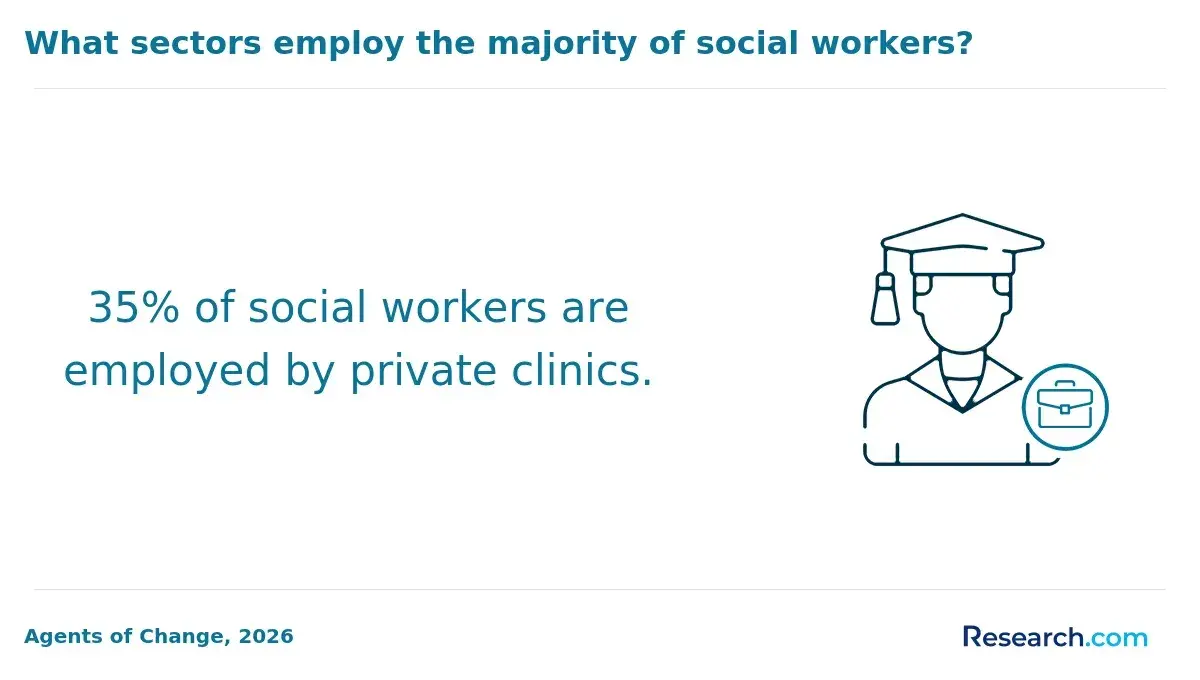
- Ambulatory healthcare services - 14%
- Local government agencies, except for education and hospitals - 14%
- State government agencies, except for education and hospitals - 13%
- Hospitals - 10%
How much can I make with a social work degree?
Social workers can either hold clinical or non-clinical roles, depending on their education and professional experience. Non-clinical social workers are required to have a Bachelor’s in Social Work (BSW) degree. Meanwhile, clinical social workers are required to have a Master of Social Work (MSW) degree, supervised clinical experience, and a license to practice, depending on the state that they prefer to work in.
Because of the differences in their credentials, licensed social workers may have a higher income potential and employability rate than social workers who hold only an undergraduate degree in the field. However, the type of role and the work environment are also factors that contribute to compensation. For instance, in 2022, the following are the median annual wages of professionals in the field [US Bureau of Labor Statistics (BLS), 2023]:
- Social and human service assistants: $38,520
- Social workers: $55,350
- Social and community service managers: $74,240
- List of Online Social Work Degree Programs for 2027 List of Programs
- How long does it take to complete an online social work degree program? Completion Time
- How does an online social work degree program compare to an on-campus program? Online vs. On-campus
- What is the average cost of an online social work degree program? Program Cost
- What are the prerequisites for enrolling in an online social work degree program? Admission Prerequisites
- What courses are typically in an online social work degree program? What courses are typically in an online social work degree program?
- What types of specializations are available in online social work degree programs? What types of specializations are available in online social work degree programs?
- How to choose the best online social work degree program? How to choose the best online social work degree program?
- What are the common challenges faced by online social work students? What are the common challenges faced by online social work students?
- What are the pathways to a doctoral degree in social work? What are the pathways to a doctoral degree in social work?
- Do affordable online BSW programs compromise academic quality? Do affordable online BSW programs compromise academic quality?
- What career paths are available for graduates of online social work degree programs? What career paths are available for graduates of online social work degree programs?
- What advanced career paths can a master’s in social work unlock? What advanced career paths can a master’s in social work unlock?
- What student support resources do online social work programs offer? What student support resources do online social work programs offer?
- How do online social work programs integrate emerging social issues into their curriculum? How do online social work programs integrate emerging social issues into their curriculum?
Online Social Work Degrees: What to Know Before You Apply
An online social work degree can be a practical route into human services, case management, community outreach, and other helping professions, especially for students who need to balance school with work, caregiving, or location constraints. The key decision is not simply whether to study online. It is whether a program is accredited, affordable, field-placement friendly, and aligned with the type of social work role you want after graduation.
This guide explains how online bachelor’s programs in social work work, what they cost, how long they take, what courses and fieldwork to expect, and how to compare programs without relying only on rankings. It also covers licensure preparation, career paths, job outlook, and the common mistakes students should avoid before enrolling.
Quick Answer: Are Online Social Work Degree Programs Worth Considering?
Yes, an online social work degree can be worth considering if the program is properly accredited, includes supervised field education, and fits your state’s licensing or graduate-school requirements. For undergraduate students, the most important credential to check is Council on Social Work Education (CSWE) accreditation because many employers, graduate programs, and licensing pathways rely on it.
Online BSW programs are best for students who want flexible coursework but can still complete required field placements in approved agencies. They are not a shortcut around practicum requirements. A strong online program should help students secure local placements, provide advising, and clearly explain whether the degree prepares graduates for entry-level social work roles, advanced standing MSW admission, or state-specific licensure steps.
List of Online Social Work Degree Programs for 2027
The programs below represent online or online-friendly bachelor’s options in social work or social welfare. When comparing them, look beyond tuition. Pay attention to CSWE accreditation, total credits, transfer-credit expectations, field placement support, and whether the program is a full four-year degree or a degree-completion pathway.
| School | Program Format | Program Length | Cost per Credit | Credits Required | Accreditation Listed |
| University of Arkansas at Little Rock | Online BSW | 4 years | $292 | 120 credits | Higher Learning Commission (HLC); Council on Social Work Education (CSWE) |
| Fresno Pacific University | BA in Social Welfare | 2 years | $550 | 51 credits | WASC Senior College and University Commission (WSCUC); CSWE |
| Simmons University | Online BSW | 4 years | $500 | 128 credits | New England Commission of Higher Education (NECHE); CSWE |
| University of Tennessee-Knoxville | Online BSSW for transfer students | 2 years | Contact the university for tuition information. | 60 transferable credits from an accredited associate degree program; 61 credits in the online BSSW program | Southern Association of Colleges and Schools Commission on Colleges (SACSCOC); CSWE |
| University of North Dakota | Online bachelor’s in social work | 4 years | $1,055.5 | 120 credits | Higher Learning Commission (HLC); CSWE |
| University of Alabama | Online BSW | 4 years | $385 | 120 credits | SACSCOC; CSWE |
| Temple University | Online BSW | 2 years | $610 | 60 credits | Middle States Commission on Higher Education (MSCHE); CSWE |
| Maryville University of Saint Louis | Online bachelor’s in social work | 4 years | $540 | 128 credits | HLC; CSWE |
| University of Hawaii at Manoa | Online BSW completion program | 2 years | $471 | 38 credits | WSCUC; CSWE |
| Misericordia University | Accelerated online or hybrid BSW | 2 years | $2,141.17 | 121 credits | MSCHE; CSWE |
1. University of Arkansas at Little Rock
The University of Arkansas at Little Rock online BSW is designed for students preparing for generalist social work practice. Its coursework includes human behavior in the social environment, statistics for social workers, addictions, and mental health. Students also complete 14 hours of field courses, an important requirement for applying classroom learning in agency settings.
- Program Length: 4 years
- Cost per Credit: $292
- Required Credits to Graduate: 120 credits
- Accreditation: Higher Learning Commission (HLC); Council on Social Work Education (CSWE)
2. Fresno Pacific University
Fresno Pacific University’s BA in Social Welfare is offered through the School of Humanities, Religion, and Social Sciences. The program combines human development, social work, and research coursework. It is structured for a cohort of 12 to 22 adult students who meet for lectures once a week, which may appeal to learners who want online flexibility but still value a consistent group format.
- Program Length: 2 years
- Cost per Credit: $550
- Required Credits to Graduate: 51 credits
- Accreditation: WASC Senior College and University Commission (WSCUC); CSWE
3. Simmons University
Simmons University’s online BSW introduces students to core areas such as social welfare policy, economic justice, and social justice. The curriculum includes generalist social work practice, work with individuals and families, group practice, and society-level practice. Students also build research skills and complete practicum education and placements.
- Program Length: 4 years
- Cost per Credit: $500
- Required Credits to Graduate: 128 credits
- Accreditation: New England Commission of Higher Education (NECHE); CSWE
4. University of Tennessee-Knoxville
The University of Tennessee-Knoxville online BSSW is built for transfer students who already hold an associate degree from an accredited community college and have completed 60 transferable credit hours. The online program follows the same requirements as the campus version. Course options include forensic social work, crisis intervention, and social work with military members and veterans.
- Program Length: 2 years
- Cost per Credit: Contact the university for tuition information.
- Required Credits to Graduate: 60 transferable credits from an accredited associate degree program; 61 credits in the online BSSW program
- Accreditation: Southern Association of Colleges and Schools Commission on Colleges (SACSCOC); CSWE
5. University of North Dakota
The University of North Dakota online bachelor’s degree in social work has held CSWE accreditation since 1974. Students complete a supervised field internship and study human behavior in the social environment, social policy, and research. The program emphasizes generalist practice with individuals, families, communities, and organizations.
- Program Length: 4 years
- Cost per Credit: $1,055.5
- Required Credits to Graduate: 120 credits
- Accreditation: Higher Learning Commission (HLC); CSWE
6. University of Alabama
The University of Alabama online BSW uses a research-based curriculum intended to prepare students to work with clients from varied backgrounds. The degree includes 120 hours across general education, social work major courses, electives, and field education. Coursework covers the history of social welfare in the US, oppression and social injustice, human behavior and the social environment, and practice with individuals, families, groups, and communities.
- Program Length: 4 years
- Cost per Credit: $385
- Required Credits to Graduate: 120 credits
- Accreditation: SACSCOC; CSWE
7. Temple University
Temple University’s online BSW, offered through its School of Social Work, prepares students for entry-level social work employment. The program uses a person-in-environment perspective to help students understand how individual experiences are shaped by families, systems, communities, and institutions. The on-campus BSW requires 120 credits and takes 4 years for full-time students, while the online option can be completed full-time in 2 years.
- Program Length: 2 years
- Cost per Credit: $610
- Required Credits to Graduate: 60 credits
- Accreditation: Middle States Commission on Higher Education (MSCHE); CSWE
8. Maryville University of Saint Louis
Maryville University of Saint Louis’s online bachelor’s in social work covers generalist practice, social justice, diversity, and related professional topics. Its curriculum is aligned with the nine CSWE competencies, including ethical and professional behavior and the ability to connect practice-informed research with research-informed practice.
- Program Length: 4 years
- Cost per Credit: $540
- Required Credits to Graduate: 128 credits
- Accreditation: HLC; CSWE
9. University of Hawaii at Manoa
The University of Hawaii at Manoa online BSW is offered through the Thompson School of Social Work and Public Health. It is a completion program, so applicants must have already finished general education core courses and the BSW Program Knowledge Base. Students study social work practice, social welfare policy, human behavior, and the social environment.
- Program Length: 2 years
- Cost per Credit: $471
- Required Credits to Graduate: 38 credits
- Accreditation: WSCUC; CSWE
10. Misericordia University
Misericordia University’s accelerated BSW is available in online and hybrid formats and can be completed part-time or full-time. The curriculum includes social problems, social work methods and processes, human behavior and the social environment, research methods, and field experience. It may fit students who want an accelerated route but still need flexible enrollment options.
- Program Length: 2 years
- Cost per Credit: $2,141.17
- Required Credits to Graduate: 121 credits
- Accreditation: MSCHE; CSWE
What Online Social Work Graduates Often Value Most
- : "Online study made it possible for me to keep working while completing my social work courses. The discussion boards, group projects, and instructor feedback helped me feel connected instead of isolated. By graduation, I felt better prepared to serve clients and communities. — Maria"
- : "The online format gave me room to study from wherever I was, but the field experience was what made the degree real. Applying coursework in an agency setting helped me understand the responsibilities of social work practice and gave me confidence for my first role. — Michael"
- : "As a parent, I needed a program that could fit around my family responsibilities. Online learning helped me stay on track, and the peer conversations pushed me to think more deeply about empathy, culture, and community needs. — Meredith"
Key Findings
- CSWE accreditation is one of the most important factors to verify before choosing an online BSW or social work degree program.
- Many online BSW programs still require in-person field education, so students should ask how placements are arranged before enrolling.
- Program length varies widely: some options are full 4-year degrees, while others are 2-year completion programs for students with transfer credits.
- Published tuition among listed programs ranges from $292 to $2,141.17 per credit hour, but total cost depends on transfer credits, fees, books, fieldwork expenses, and enrollment pace.
- A BSW can support entry-level roles, but clinical licensure and many advanced roles usually require graduate education and state-specific supervised experience.
How Long Does It Take to Complete an Online Social Work Degree Program?
The timeline for an online bachelor's degree in social work depends on whether the student starts as a first-year applicant, enters with transfer credits, studies full time, or chooses a part-time schedule. A traditional full-time bachelor’s pathway usually takes about four years, or eight semesters. Degree-completion programs can be shorter because they require students to bring in prior college credit.
| Stage | What Students Usually Complete | Decision Point |
| First Year | General education courses such as English composition, Mathematics, Social Sciences, and Humanities, often alongside an introductory social work course. | Confirm that early coursework will transfer if you may change schools later. |
| Second Year | Core topics such as human behavior, social welfare policy, diversity, and sometimes the beginning of practicum preparation. | Ask when field education begins and what eligibility requirements apply. |
| Third Year | More advanced study in research methods, social work practice, ethics, and applied skill development. | Prepare your schedule for heavier fieldwork and agency expectations. |
| Fourth Year | Specialized electives in areas such as child welfare, mental health, or substance abuse, plus a senior seminar, capstone, or final field placement. | Plan for graduation, job applications, MSW applications, or licensure-related next steps. |
How Does an Online Social Work Degree Program Compare to an On-Campus Program?
Online and campus-based social work programs can lead to similar academic outcomes when they are accredited and include comparable field education. The better choice depends on your schedule, learning style, location, budget, and need for in-person campus services.
| Factor | Online Social Work Program | On-Campus Social Work Program | Best Fit |
| Schedule | Often offers asynchronous or hybrid coursework, which can help working adults and caregivers. | Usually follows set class meeting times and campus calendars. | Choose online if flexibility is essential; choose campus if you want more built-in structure. |
| Faculty and peer interaction | Interaction happens through video meetings, email, learning platforms, discussion boards, and virtual office hours. | Students meet classmates and instructors in classrooms, advising offices, and campus events. | Choose online if you are comfortable initiating communication digitally. |
| Field placement | Fieldwork is usually completed in person at an approved site near the student when available. | Fieldwork may be arranged through local campus-agency relationships. | Ask both formats how placements are approved, supervised, and documented. |
| Reputation | Many institutions do not indicate online delivery on diplomas or transcripts, but policies vary. | Campus programs may have stronger local employer recognition in their region. | Focus on accreditation, outcomes, and employer connections rather than delivery format alone. |
| Cost | May reduce commuting or relocation costs, though online fees can still apply. | May include campus fees, housing, transportation, and location-based expenses. | Compare total cost of attendance, not tuition alone. |
Flexibility is one of the main reasons students choose online study. A traditional campus program typically follows a semester or quarter structure with classes at fixed times. Online programs may offer more control over when coursework is completed, although deadlines, exams, group work, and field placements still create structure.
Students should also understand that online does not mean disconnected. Many programs use facilitated courses, live sessions, virtual advising, video feedback, and cohort discussions to keep students connected with faculty and peers. The quality of interaction depends heavily on course design and instructor availability.
Cost is another major consideration. Student loan debt in the United States has reached $1.75 trillion in 2024 (Federal Reserve, 2024), and concerns about debt often shape debates over whether college should be more affordable. Online programs may help some students lower housing or transportation costs, but they are not automatically cheaper. Students should compare tuition, fees, financial aid, transfer credits, and the number of credits they still need.
What Is the Average Cost of an Online Social Work Degree Program?
The cost of an online bachelor’s degree in social work varies by institution, residency rules, transfer credits, and required fees. Based on the listed programs, published tuition ranges from $292 to $2,141.17 per credit hour. This wide spread makes it important to calculate total program cost rather than comparing only the advertised per-credit price.
Students should ask each school for a full cost breakdown, including technology fees, field placement expenses, books, background checks, travel to placement sites, and graduation fees. Financial aid can also change the net cost significantly. Scholarships, grants, work-study, loans, and employer tuition assistance may help reduce out-of-pocket expenses, just as cost planning is important for students comparing doctoral degree costs and other long-term education expenses.
| Cost Factor | Why It Matters | Question to Ask |
| Per-credit tuition | Determines the base cost of remaining coursework. | Is tuition the same for online, in-state, and out-of-state students? |
| Transfer credits | Can shorten completion time and reduce tuition. | How many credits will be accepted toward the BSW? |
| Program fees | Online, technology, assessment, or field fees can add to cost. | What mandatory fees are charged each term? |
| Field placement expenses | Students may need transportation, background checks, or immunization records. | What placement-related costs should students expect? |
| Financial aid eligibility | Accreditation and enrollment intensity can affect aid options. | Will part-time students remain eligible for federal aid? |
Students in online bachelor’s social work programs may be able to use several forms of financial aid. Common options include:
- Federal Grants: The Federal Pell Grant is need-based, while the Federal Supplemental Educational Opportunity Grant (FSEOG) supports students with exceptional financial need.
- Scholarships: Groups such as the National Association of Social Workers (NASW) offer scholarships that may consider academic performance, financial need, or student background.
- Work-Study Programs: Federal Work-Study can provide part-time employment that helps students pay education-related expenses.
- Loans: Federal Direct Subsidized and Unsubsidized Loans are common borrowing options, with different interest rules while students are enrolled.
- Employer Tuition Assistance: Some employers reimburse part of an employee’s tuition, especially when the degree supports workforce development or career advancement.
What Are the Prerequisites for Enrolling in an Online Social Work Degree Program?
Admission requirements vary by school and by whether the program accepts first-year students, transfer students, or degree-completion applicants. Most online social work programs ask for academic records, an application, and evidence that the applicant is prepared for college-level work.
- Completed Application Form: Applicants submit the school’s application and may need to explain their interest in social work, prior coursework, volunteer experience, or related work history.
- Minimum Grade Point Average (GPA): Many programs require at least a 2.0 GPA for admission, although scholarships, competitive programs, and transfer pathways may require stronger academic records.
- Standardized Test Scores: Some institutions request SAT or ACT scores. For a graduate, the average SAT score is between 1050 and 1060, compared to an average ACT score of 21, although expectations vary by school competitiveness.
- Copies of Transcripts: Schools typically require official transcripts from high schools and any colleges attended. Because transcript processing can take weeks, applicants should request them early.
- Recommendation Letters: Letters from teachers, supervisors, coaches, or employers can help show academic readiness, reliability, communication ability, and commitment to service.
Transfer applicants should also ask whether social work prerequisites must be completed before entering the major. Some programs require general education, introductory social work coursework, or a minimum number of transferable credits before admission to the professional sequence.
What Courses Are Typically in an Online Social Work Degree Program?
Curricula differ by institution, but online social work degrees commonly combine general education, social work theory, research, policy, ethics, practice methods, electives, and field education. Most social work programs require 165 credits to complete, with 45 credit courses focusing on social work and the remaining 120 credits focusing on general education and electives.
- Foundations of Social Work: Students learn the history of the profession, core values, generalist practice, and the differences among micro, mezzo, and macro social work.
- Human Behavior and the Social Environment: This course connects human development, culture, family systems, and environment to client well-being. It can also support students interested in related fields such as psychology careers or future PhD psychology programs.
- Social Welfare Policy: Students examine how policies are created, who receives benefits, how services are funded, and how policy decisions affect vulnerable populations.
- Professional Ethics: Coursework introduces ethical standards, professional boundaries, confidentiality, mandated reporting, and decision-making frameworks used in practice.
- Social Work in Healthcare: Because many social workers work in hospitals, clinics, long-term care, and public health settings, students often study discharge planning, chronic illness, interdisciplinary teamwork, and patient advocacy. This topic may also interest students comparing social work with accredited online healthcare degrees.
- Social Work Intervention: Students learn when and how professionals intervene in situations involving abuse, neglect, mental health crises, substance use, or safety risks, while considering client rights and legal requirements.
- Research Methods: Students learn how to evaluate evidence, understand data, and use research to improve practice decisions.
- Field Education: Supervised practicum or internship experiences allow students to apply classroom knowledge in approved agencies.
What Types of Specializations Are Available in Online Social Work Degree Programs?
At the bachelor’s level, specialization is often introduced through electives, field placements, certificates, or focused projects rather than a full concentration. Students planning for graduate school should choose electives and internships that support their long-term goals.
| Specialization Area | What It Focuses On | Good Fit For |
| Child Welfare | Services for children and families involved with child protective services, foster care, adoption, and family support systems. | Students interested in family services, school partnerships, or child advocacy. Students coming from the best online early childhood education degree programs may also find this path relevant if they later pursue an MSW. |
| Mental Health | Assessment basics, counseling-related concepts, crisis support, and services for individuals facing mental health challenges. | Students considering graduate clinical training or behavioral health roles. |
| Substance Abuse | Prevention, intervention, treatment systems, recovery support, and community responses to addiction. | Students interested in treatment centers, community agencies, or integrated healthcare settings. |
| Gerontology | Aging, older-adult services, healthcare coordination, long-term care, caregiver support, and aging policy. | Students who want to work with older adults and families navigating age-related needs. |
| Community Development | Community organizing, advocacy, resource mobilization, program planning, and social change strategies. | Students drawn to nonprofit work, policy advocacy, or macro-level practice. |
How to Choose the Best Online Social Work Degree Program
The best online social work program is the one that meets professional standards, fits your schedule, supports your field placement, and makes financial sense. A lower tuition rate can be attractive, but it should never replace accreditation, placement quality, and licensing alignment.
- Verify accreditation first: Look for CSWE accreditation for the social work program and recognized institutional accreditation for the university.
- Study the curriculum: Confirm that the program covers generalist practice, ethics, research, social welfare policy, diversity, field education, and required competencies.
- Evaluate faculty experience: Review whether instructors have practice, research, policy, or clinical expertise relevant to your interests.
- Check flexibility carefully: Ask whether classes are asynchronous, synchronous, cohort-based, part-time, full-time, accelerated, or hybrid.
- Ask about support services: Strong programs provide advising, technology help, field placement support, career counseling, library access, and mental health resources.
| Before You Enroll, Ask | Why the Answer Matters |
| Is the social work program CSWE-accredited? | This can affect MSW advanced standing, employer recognition, and licensure-related pathways. |
| Who finds and approves field placements? | Students need to know whether the school provides placement help or expects them to locate agencies independently. |
| Will my state recognize this program for my intended career path? | Licensing rules differ by state, and online students should confirm requirements before enrolling. |
| How many of my credits will transfer? | Transfer policies directly affect cost, completion time, and whether a 2-year pathway is realistic. |
| What is the total cost, including fees? | Per-credit tuition does not show the full financial commitment. |
| What career or graduate-school outcomes do graduates report? | Outcomes help students evaluate whether the program supports their next step. |
What Are the Common Challenges Faced by Online Social Work Students?
Online social work programs can be flexible, but they are not easy by default. Students must manage academic deadlines, fieldwork expectations, technology, and emotional content that can be demanding.
- Time Management: Coursework, readings, discussion posts, exams, and practicum hours can become difficult to balance with employment or family responsibilities.
- Limited Face-to-Face Interaction: Students may need to work harder to build relationships with classmates, instructors, and advisors.
- Technical Issues: Reliable internet, updated software, video conferencing tools, and comfort with learning platforms are essential.
- Self-Motivation and Discipline: Online students need routines because they may not have the daily structure of commuting to campus.
- Access to Resources: Digital libraries and remote advising help, but students may still miss some campus-based spaces and services.
- Understanding Curriculum Requirements: Fieldwork rules, background checks, prerequisite sequencing, and professional conduct expectations can be complex.
- Balancing Fieldwork with Online Classes: Practicum schedules may require weekday availability, travel, or fixed agency hours even when coursework is online.
Common Mistakes to Avoid When Choosing an Online Social Work Degree
| Mistake | Why It Can Hurt You | Better Approach |
| Choosing a program without checking CSWE accreditation | You may face barriers to advanced standing MSW admission, licensure pathways, or employer recognition. | Verify accreditation directly with the school and the accrediting body. |
| Comparing only tuition per credit | Fees, transfer-credit limits, books, fieldwork costs, and extra terms can change the real price. | Request a full cost estimate through graduation. |
| Assuming online means fully remote | Field education is commonly completed in person at an approved agency. | Ask how placements work in your city or state. |
| Ignoring state licensing rules | Requirements vary, and a degree alone may not qualify you for every role. | Contact your state licensing board before enrolling. |
| Relying only on rankings | A highly ranked program may not fit your budget, schedule, location, or career goals. | Use rankings as one data point, not the final decision. |
| Waiting too long to plan fieldwork | Placement delays can postpone graduation. | Start field-placement conversations early with your advisor. |
What Are the Pathways to a Doctoral Degree in Social Work?
Doctoral study is usually intended for social work professionals who want to move into advanced leadership, teaching, research, policy analysis, or high-level practice innovation. These programs build expertise in evidence-informed service models, organizational change, and systemic problem-solving. Options such as online DSW programs may appeal to practitioners who want advanced training while continuing to work.
Do Affordable Online BSW Programs Compromise Academic Quality?
Lower-cost online BSW programs do not automatically mean lower quality. Accreditation is the key filter. Accredited social work programs must meet academic and professional standards related to curriculum, competencies, field education, and ongoing review.
Students should still examine outcomes, field placement quality, faculty experience, and support services. Comparing cheapest online BSW programs can be useful, but affordability should be weighed alongside accreditation and career alignment.
What Career Paths Are Available for Graduates of Online Social Work Degree Programs?
Graduates with an online bachelor’s degree in social work may qualify for several entry-level and community-focused jobs in social work. Job titles and licensure rules vary by state and employer, so students should review local requirements before assuming a specific role is available with a bachelor’s degree alone.
- Social and Human Service Assistants: These workers help individuals and families access healthcare, housing, social services, and support programs. In May 2024, social and human service assistants had a median annual wage of $45,120.
- Social Workers: Social workers assess client needs, connect people with resources, advocate for services, and help clients address issues such as poverty, mental illness, substance abuse, and family stress. In 2024, social workers in the US had a median annual wage of $61,330.
- Case Managers: Case managers coordinate services, track client progress, communicate with agencies, and help clients navigate complex support systems.
- Community Outreach Coordinators: These professionals develop programs, communicate with community members, mobilize resources, and support local initiatives.
- Social and Community Service Managers: These managers oversee programs, staff, budgets, compliance, and service delivery. In 2024, social and community service managers had a median annual wage of $78,240.
What Is the Job Market for Graduates With an Online Social Work Degree?
The employment outlook for social work-related roles is positive but varies by occupation, location, employer, and education level. From 2024 to 2034, demand for social workers is expected to grow by 6%, exceeding the average for all US occupations.
Social and community service managers are projected to experience 9% growth over the same period. These projections suggest continued need for professionals who can coordinate services, support vulnerable populations, and help organizations respond to community needs. However, students should not treat national projections as a guarantee of employment in a specific city or specialization.
What Is the Role of Internships in Online Bachelor's in Social Work Programs?
Field education is one of the most important parts of a BSW program. Even when coursework is online, internships give students supervised experience with real clients, agencies, documentation, ethical decision-making, and professional teamwork.
Online programs commonly handle field education through several methods:
- Local Placement Opportunities: Programs may work with agencies near the student so fieldwork can be completed without relocating.
- Virtual Supervision: Students in remote areas may receive some supervision and guidance through video conferencing, depending on program and agency rules.
- Career Exploration: Internships help students test interest in areas such as healthcare, child welfare, behavioral health, school social work, or community services.
Because field education is tied closely to professional preparation, students evaluating whether a social work degree is worth it should ask detailed questions about placement support, supervision, agency options, and scheduling expectations.
How Do Online Social Work Degree Programs Prepare You for Licensure?
Accredited online social work programs support licensure preparation through ethics coursework, generalist practice training, supervised field education, and advising. However, licensure is state-specific. A bachelor’s degree may support certain entry-level or bachelor’s-level credentials in some states, while clinical licensure generally requires an MSW, supervised post-graduate hours, and examinations.
Students should review their state licensing board’s requirements before choosing a program. Those who plan to pursue clinical practice may later compare cheapest accredited online MSW programs to continue toward advanced licensure requirements.
How Do Online Social Work Programs Use Technology to Strengthen Learning and Field Practice?
Online social work programs often use learning management systems, video conferencing, virtual case discussions, simulations, digital libraries, and collaborative tools. These technologies help students practice assessment, communication, documentation, and ethical reasoning before and during field placements.
Technology can also support career exploration. For example, students comparing related professions may review resources such as the social work vs psychology salary guide to understand how training, scope of practice, and career outcomes differ.
Is Social Work a Good Career?
Social work can be a strong career choice for people who want purpose-driven work, can manage emotionally complex situations, and are willing to keep learning throughout their careers. It is not the right fit for everyone. The work can involve heavy caseloads, documentation, crisis situations, limited resources, and exposure to trauma. Students should weigh both mission and working conditions.
- Meaningful Work: Social workers help people address poverty, addiction, mental health concerns, family challenges, housing instability, and other barriers.
- Varied Career Settings: Graduates may work in healthcare, schools, government agencies, nonprofits, behavioral health programs, or community organizations.
- Personal Fulfillment: Many people choose social work because they want their daily work to have a direct human impact.
- Flexible Pathways: Bachelor’s graduates may enter human services roles, while MSW graduates may pursue advanced clinical, administrative, or policy positions.
- Advancement Potential: Further education and licensure can open paths toward clinical social work, program leadership, supervision, and policy development.
So, is social work a good career? It can be, if your values align with service and advocacy and you understand the education, licensure, salary, and workplace realities before committing.
How Do Online Social Work Programs Support Networking and Career Development?
Online students can build professional networks through virtual events, peer groups, faculty mentoring, alumni communities, practicum supervisors, and professional association activities. Because social work hiring is often relationship-driven, students should treat field placements and class projects as career-building opportunities.
Some programs also provide career webinars, resume reviews, interview preparation, and employer connections. Students who want to specialize geographically or clinically may also explore advanced options such as online MSW programs in Texas to compare targeted networking and career development opportunities.
How Can Students Transition From a Bachelor’s to a Master’s in Social Work?
Students who complete a BSW may choose to continue into an MSW if they want advanced practice, clinical preparation, leadership roles, or broader career mobility. Planning should begin before graduation because MSW programs often review field experience, references, academic performance, and fit with the program’s focus.
One common route is advanced standing or accelerated MSW study, where eligible BSW graduates may complete the graduate degree in less time because they already covered foundational social work content. Students comparing faster pathways can review an accelerated master's degree in social work while confirming CSWE accreditation and state licensing alignment.
To prepare, students should build strong relationships with faculty and field supervisors, keep records of practicum experience, maintain a solid GPA, and choose undergraduate electives that support their intended MSW concentration.
What Advanced Career Paths Can a Master’s in Social Work Unlock?
An MSW can expand opportunities beyond bachelor’s-level human services work. Depending on state law, licensure, and supervision requirements, graduates may pursue clinical social work, therapy-related roles, healthcare social work, school social work, policy advocacy, program management, nonprofit leadership, or private practice pathways.
Students can review jobs you can get with a master's in social work to compare roles, qualifications, and settings. Advanced MSW professionals often work in nonprofits, hospitals, government agencies, schools, community organizations, and private practice settings.
What Student Support Resources Do Online Social Work Programs Offer?
Strong online programs provide more than course access. Support services can affect retention, field placement success, and job readiness. Students should ask whether support is available during evenings or weekends if they work full time.
- Academic advising: Helps students plan courses, understand prerequisites, and stay on track for graduation.
- Field placement support: Helps students identify, secure, and complete approved internships.
- Technical assistance: Supports access to learning platforms, video tools, and online assignments.
- Career services: May include resume help, job boards, interview coaching, and graduate-school planning.
- Mental health and wellness resources: Important for students engaging with difficult social issues and emotionally demanding fieldwork.
- Financial guidance: Can help students compare aid options, budgeting, and related affordable pathways such as cheap sociology degrees online.
How Do Online Social Work Programs Integrate Emerging Social Issues Into Their Curriculum?
Social work programs increasingly address current issues such as economic inequality, systemic racism, environmental justice, behavioral health access, aging populations, housing insecurity, and policy change. Online programs may incorporate these topics through updated readings, case studies, guest speakers, policy analysis, community projects, and field experiences.
Students should ask how often curriculum is reviewed and whether faculty bring current practice or policy expertise into courses. Those comparing graduate pathways with streamlined admissions may also review easy online MSW programs, while still checking quality indicators and accreditation.
How Can You Verify the Credibility of Online Social Work Programs?
To evaluate an online social work program, start with accreditation and then examine evidence of student support, field placement quality, and outcomes. Confirm the school’s institutional accreditation and the program’s CSWE status. Then check whether the curriculum, field education, and advising match your career plans and state requirements.
Students should also review graduation information, licensure support, faculty qualifications, placement processes, and independent program feedback. If you are comparing more accessible admissions options, review easy online MSW programs with the same level of scrutiny.
Key Insights
- An online social work degree is most valuable when it is CSWE-accredited, includes supervised field education, and aligns with your state and career goals.
- Online coursework can be flexible, but field placements usually require in-person hours at approved agencies.
- Program length depends heavily on transfer credits: some students need a full 4 years, while others may complete a degree-completion pathway in 2 years.
- Published per-credit tuition among listed programs ranges from $292 to $2,141.17, but total cost depends on credits remaining, fees, financial aid, and fieldwork expenses.
- A BSW can lead to entry-level social work and human services roles, while clinical and many advanced positions generally require an MSW and state-specific licensure steps.
- The best program is not automatically the cheapest or most recognizable; it is the one that combines accreditation, placement support, affordability, flexibility, and clear career alignment.
References:
- Bureau of Labor Statistics, U.S. Department of Labor. (2024). Social workers. In the Occupational Outlook Handbook. https://www.bls.gov/ooh/community-and-social-service/social-workers.htm
- Forbes Advisor. (2025). Best online bachelor of social work. https://www.forbes.com/advisor/education/social-work/best-online-bsw-programs
- National Association of Social Workers. (n.d.). Social work statistics. https://www.socialworkers.org/News/Facts/Social-Work-Statistics
- SocialWorkGuide.org. (2024). Our rankings methodology. https://www.socialworkguide.org/methodology/
Other Things You Should Know about Online Social Work Degree Programs
In 2027, prominent online social work degree programs offer specializations in areas like clinical social work, community practice, and child welfare. Schools like University A and University B provide comprehensive courses, ensuring graduates are well-equipped for specific field challenges.
In 2027, admission requirements for online social work degree programs typically include a bachelor's degree from an accredited institution, a minimum GPA (often around 3.0), letters of recommendation, a personal statement, and relevant work or volunteer experience. Some programs may also require the GRE, though this is becoming less common.


