
2027 Best Online Nursing Degree Programs

Co-Founder and Chief Data Scientist
Finding high-quality, accredited nursing programs that can be pursued online can be challenging. In this article, we provide a comprehensive guide to the best online nursing degree programs. We offer insights into program accreditation, curriculum quality, faculty expertise, and the flexibility of online learning.
What are the benefits of getting an online nursing degree?
- An online nursing degree opens doors to a range of career prospects, such as becoming a registered nurse (RN), nurse practitioner (NP), nurse anesthetist, nurse midwife, or clinical nurse specialist.
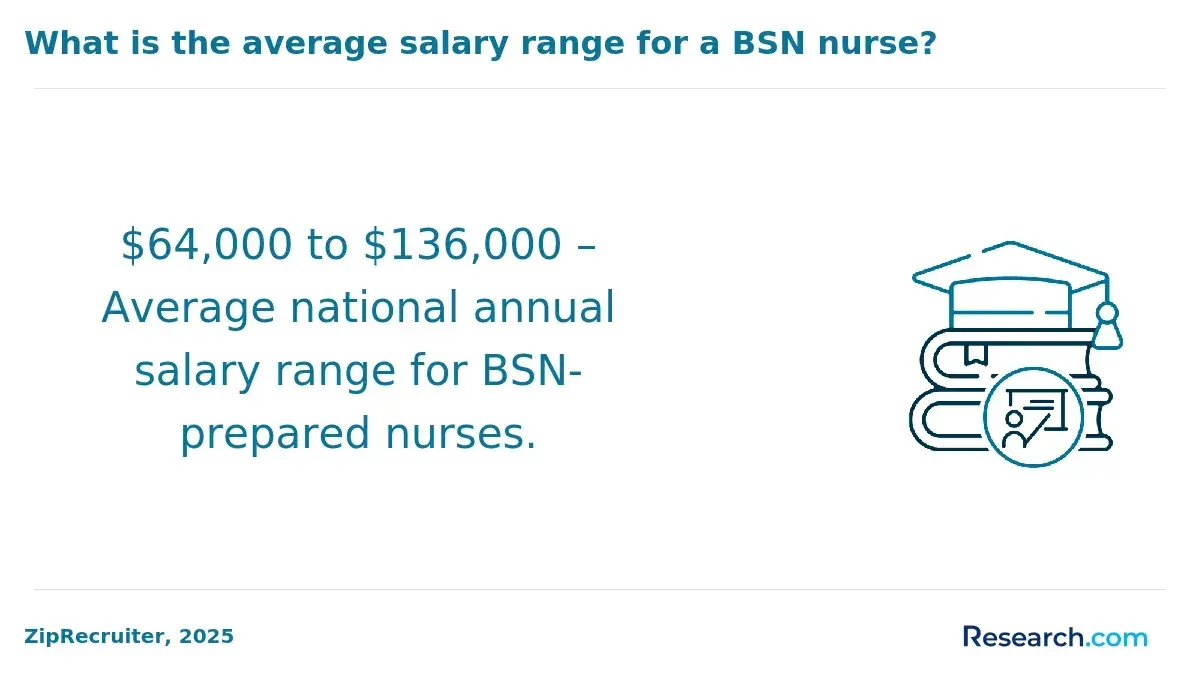
- The median salary for professionals with an online nursing degree can vary based on the specific role. For example, in 2024, Level 1 RNs in the U.S. received a median salary of $77,600.
- An online nursing degree offers flexible scheduling, cost-efficiency, access to support resources, immediate feedback, and the ability to work concurrently with studies. This format provides the flexibility to balance education with practical experience.
What can I expect from an online nursing degree?
Online nursing degree programs provide a comprehensive curriculum, which includes core subjects such as:
- nursing concepts
- community health nursing
- evidence-based practice
- financial management
- global health nursing, and
- leadership
These courses serve as a solid foundation for either creating a new online program or enhancing an existing one.
Accelerated Bachelor of Science in Nursing (ABSN) programs within online nursing education enable individuals with prior bachelor’s degrees in other fields to expedite their nursing education. Students with other bachelor’s degrees who want to pursue ABSN can skip general education requirements.
Online nursing education demands dedication and technological adaptability from students and instructors. In addition, employers generally accept online nursing degrees from reputable, accredited institutions without discrimination.
Where can I work with an online nursing degree?
Graduates holding online nursing degrees have various career possibilities, spanning various industries and settings. These include both conventional healthcare facilities and non-traditional environments.
In traditional healthcare settings like hospitals, clinics, and long-term care facilities, graduates with an online nursing degree can pursue roles involving direct patient care. They can specialize in critical care, gerontology, or community nursing.
Moreover, they can explore opportunities in non-traditional settings such as telehealth, case management, and informatics. They can also work remotely as telehealth nurses or nursing informaticists. These positions typically require a Bachelor of Science in Nursing (BSN). Additionally, some graduates may opt for academic careers as online nursing faculty, engaging in virtual instruction and mentoring the next generation of nurses.
How much can I make with an online nursing degree?
Graduates with an online nursing degree can expect to earn a competitive salary, depending on their level of education and chosen career path. According to the Bureau of Labor Statistics (BLS), general medical and surgical hospitals have the highest level of employment in RNs with 1,724,510. RNs working in these industries can earn $90,600 annually.
Beyond conventional nursing positions, graduates holding online nursing degrees can explore non-traditional opportunities in remote and virtual environments. For instance, telemedicine registered nurses received a median salary of $95,200 in 2024. Meanwhile, an informatics nurse had an average base pay of $107,300 annually.
- 2027 List of online nursing degree programs Best Programs
- How long does it take to complete an online nursing degree program? Completion Time
- How does an online nursing degree compare to an on-campus program? How does an online nursing degree compare to an on-campus program?
- What is the average cost of an online nursing degree program? Average Cost
- What are the financial aid options for students enrolling in an online nursing degree program? Financial Aid
- What are the prerequisites for enrolling in an online nursing degree program? Requirements
- What courses are typically in an online nursing degree program? What courses are typically in an online nursing degree program?
- What types of specializations are available in online nursing degree programs? Specializations
- How to Choose the Best Online Nursing Degree Program How to Choose the Best Online Nursing Degree Program
- What are the challenges and strategies for balancing online nursing education with clinical training? What are the challenges and strategies for balancing online nursing education with clinical training?
- How can non-nurses transition into advanced nursing roles through online programs? How can non-nurses transition into advanced nursing roles through online programs?
- How Can Online Nursing Programs Bridge the Gap from ADN to MSN? How Can Online Nursing Programs Bridge the Gap from ADN to MSN?
- What student support services are available in online nursing programs? What student support services are available in online nursing programs?
- What additional certifications can enhance specialization in online nursing programs? What additional certifications can enhance specialization in online nursing programs?
- How can dual degree programs benefit nursing professionals? How can dual degree programs benefit nursing professionals?
- How do online nursing programs prepare students for the NCLEX-RN exam? How do online nursing programs prepare students for the NCLEX-RN exam?
- What career paths are available for graduates of online nursing degree programs? What career paths are available for graduates of online nursing degree programs?
- What is the job market for graduates with an online nursing degree? Job Outlook
- Easiest Nursing Jobs to Transition Into Post-Graduation Easiest Nursing Jobs to Transition Into Post-Graduation
- How competitive is admission to online nursing programs? How competitive is admission to online nursing programs?
- Pathways for Career Advancement in Nursing After Graduation Pathways for Career Advancement in Nursing After Graduation
- What are the emerging trends in online nursing education? What are the emerging trends in online nursing education?
2027 Best Online Nursing Degree Programs: Ranked RN-to-BSN and Nursing Pathways
Choosing an online nursing degree is not only about finding the cheapest tuition or the fastest completion time. Nursing programs affect licensure eligibility, clinical placement options, transfer credit use, work schedules, and long-term career mobility. This guide is designed for registered nurses considering an RN-to-BSN program, prospective nursing students comparing online and campus formats, and working healthcare professionals weighing advanced nursing pathways.
Below, you will find Research.com’s 2027 list of online nursing degree programs, followed by practical guidance on program length, costs, prerequisites, accreditation, clinical requirements, career paths, and common mistakes to avoid before enrolling.
Quick answer: What is the best online nursing degree program?
The best online nursing degree program depends on your current nursing status, state licensure requirements, budget, schedule, and career goal. For licensed RNs seeking a bachelor’s degree, RN-to-BSN programs are often the most direct online option. For non-nurses, online coursework may be available, but clinical training and licensure preparation usually require in-person components. Always verify institutional accreditation, nursing program accreditation, clinical placement rules, and whether the program meets requirements in your state before applying.
How Research.com ranks online nursing schools
A nursing degree is a major financial and professional decision, so rankings should be transparent and based on reliable data rather than promotional claims. Research.com evaluates online nursing degree options using current and comprehensive information from U.S. government and education data sources, including:
- The Integrated Postsecondary Education Data System (IPEDS) database
- Peterson’s database, including the Distance Learning Licensed Data Set
- College Scorecard database
- National Center for Education Statistics
Our review also considers practical student-facing indicators such as graduation rate, student-faculty ratio, and program focus. You can review the full ranking process on our methodology page.
Best online nursing degree programs at a glance
| Rank | School | Online pathway | Program length | Credits required | Cost information listed | Accreditation listed |
| 1 | Loma Linda University | RN to BS | 2.5 years | 50 | $345 per credit | Commission on Collegiate Nursing Education |
| 2 | Medical University of South Carolina | RN to BSN | 3 or 6 semesters | 35 | $650 for full-time, South Carolina residents | Commission on Collegiate Nursing Education |
| 3 | SUNY Downstate Health Sciences University | RN to BS | 3 semesters | 35 | $3,535 per semester for full-time, New York resident | Commission on Collegiate Nursing Education |
| 4 | Texas Tech University Health Sciences Center | RN to BSN | 2-3 semesters | 30 | $215 resident; $635 non-resident | Commission on Collegiate Nursing Education |
| 5 | The University of Texas Health Science Center at Houston | RN to BSN | 2-5 semesters | 31 | $273 resident; $1,111 non-resident | Southern Association of Colleges and Schools Commission on Colleges |
| 6 | The University of Texas Medical Branch at Galveston | RN to BSN | 8 months | 30 | $238 resident; $661 non-resident | Commission on Collegiate Nursing Education |
| 7 | University of Florida Online | RN to BSN | 5 semesters | 60 | $129 per credit resident; $553 per credit non-resident | Commission on Collegiate Nursing Education |
| 8 | University of Maryland, Baltimore | RN to BSN | 2 semesters | 31 | $4,784 per semester full-time, Maryland resident | Commission on Collegiate Nursing Education |
| 9 | University of Nebraska Medical Center | RN to BSN | 2-6 semesters | 20 | $372 per credit | Commission on Collegiate Nursing Education |
| 10 | University of Wisconsin-Madison | RN to BSN | 5-6 semesters | 24-40 | $452 per credit | Commission on Collegiate Nursing Education |
1. Loma Linda University
Loma Linda University offers an online RN-to-BS in Nursing for registered nurses who need a flexible route to a bachelor’s degree. Students may enroll part time or full time and complete coursework in areas such as nursing informatics, introductory epidemiology, and nursing research. The curriculum also includes a professional RN capstone project. Because the university is affiliated with the Seventh-day Adventist Christian tradition, students are required to complete two religion courses.
- Program Length: 2.5 years
- Tracks/concentrations: RN to BS
- Cost per Credit: $345
- Required Credits to Graduate: 50
- Accreditation: Commission on Collegiate Nursing Education
2. Medical University of South Carolina
The Medical University of South Carolina delivers its online RN-to-BSN through an asynchronous cohort format. Students complete core nursing courses while also meeting clinical hour requirements each semester. Clinical experiences may be completed virtually or in person and are organized around projects in gerontology, community and public health, and leadership. Together, these projects satisfy the program’s capstone requirement.
- Program Length: 3 or 6 semesters
- Tracks/concentrations: RN to BSN
- Cost per Credit: $650 for full-time, South Carolina residents
- Required Credits to Graduate: 35
- Accreditation: Commission on Collegiate Nursing Education
3. SUNY Downstate Health Sciences University
SUNY Downstate Health Sciences University structures its RN-to-BS program around core nursing competencies identified as essential by the American Association of Colleges of Nursing. The online coursework includes pathophysiology, health informatics, clinical care technologies, and the role of spiritual care in nursing practice.
- Program Length: 3 semesters
- Tracks/concentrations: RN to BS
- Cost per Credit: $3,535 per semester for full-time, New York resident
- Required Credits to Graduate: 35
- Accreditation: Commission on Collegiate Nursing Education
4. Texas Tech University Health Sciences Center
Texas Tech University Health Sciences Center designs its online RN-to-BSN for working nurses who need multiple learning formats. Coursework may include asynchronous lessons, discussion boards, and web conferencing. Students can also choose electives in areas such as holistic nursing, healthcare policy involvement, and the use of spiritual perspectives in evidence-based practice.
- Program Length: 2-3 semesters
- Tracks/concentrations: RN to BSN
- Cost per Credit: $215 (resident); $635 (non-resident)
- Required Credits to Graduate: 30
- Accreditation: Commission on Collegiate Nursing Education
5. The University of Texas Health Science Center at Houston
The University of Texas Health Science Center at Houston offers an online RN-to-BSN with fall, spring, and summer start dates. Lecture-based courses are delivered online, including applied health informatics and coursework focused on professional practice issues. The multiple start dates may be useful for RNs trying to align school with employer schedules or tuition assistance timelines.
- Program Length: 2-5 semesters
- Tracks/concentrations: RN to BSN
- Cost per Credit: $273 (resident); $1,111 (non-resident)
- Required Credits to Graduate: 31
- Accreditation: Southern Association of Colleges and Schools Commission on Colleges
6. The University of Texas Medical Branch at Galveston
The University of Texas Medical Branch at Galveston provides an online RN-to-BSN that covers key professional nursing topics, including legal and ethical issues, evidence-based practice and research, and clinical reasoning for health assessment. Its shorter listed timeline may appeal to licensed RNs who are prepared for an intensive pace.
- Program Length: 8 months
- Tracks/concentrations: RN to BSN
- Cost per Credit: $238 (resident); $661 (non-resident)
- Required Credits to Graduate: 30
- Accreditation: Commission on Collegiate Nursing Education
7. University of Florida-Online
University of Florida Online uses a largely asynchronous format for its RN-to-BSN program. Courses examine how nurses practice within a changing healthcare system and address topics such as legal and ethical concerns, genetics and genomics in nursing, and nurses’ roles in healthcare policy and organizational change.
- Program Length: 5 semesters
- Tracks/concentrations: RN to BSN
- Cost per Credit: $129 per credit (resident); $553 per credit (non-resident)
- Required Credits to Graduate: 60
- Accreditation: Commission on Collegiate Nursing Education
8. University of Maryland, Baltimore
University of Maryland, Baltimore emphasizes competency-based learning in its online RN-to-BSN. In addition to core requirements, students can use three open electives to build focused knowledge in substance use and addictions or in care coordination with an emphasis on health IT.
- Program Length: 2 semesters
- Tracks/concentrations: RN to BSN
- Cost per Credit: $4,784 per semester (full-time, Maryland resident)
- Required Credits to Graduate: 31
- Accreditation: Commission on Collegiate Nursing Education
9. University of Nebraska Medical Center
University of Nebraska Medical Center offers an online RN-to-BSN with on-demand coursework and occasional scheduled synchronous meetings. The curriculum develops competencies in health promotion, evidence-based practice, and population-focused care.
- Program Length: 2-6 semesters
- Tracks/concentrations: RN to BSN
- Cost per Credit: $372
- Required Credits to Graduate: 20
- Accreditation: Commission on Collegiate Nursing Education
10. University of Wisconsin-Madison
University of Wisconsin-Madison allows registered nurses to complete the RN-to-BSN online at a pace that fits their schedule. Core courses are asynchronous, and students may choose seven-week or 14-week course blocks. Coursework includes chronic care management, nursing research, and community health nursing.
- Program Length: 5-6 semesters
- Tracks/concentrations: RN to BSN
- Cost per Credit: $452 per credit
- Required Credits to Graduate: 24-40
- Accreditation: Commission on Collegiate Nursing Education
Student perspectives on online nursing degrees
- Sarah: "Online nursing study changed what was possible for me. I could keep working full time, care for my family, and still move toward becoming a registered nurse. The flexible schedule and online support made the experience manageable and meaningful."
- David : "The online format helped me learn alongside classmates from many locations, which expanded how I think about patient care. Around-the-clock access to resources, experienced faculty, and local clinical options helped me stay on track. I now work as a nurse practitioner, and the online pathway played an important role in that progress."
- Emily : "Studying online gave me more control over how I learned and helped me become comfortable with digital care tools. That experience prepared me for telehealth work, where I now practice as a telehealth nurse."
Key Findings
- Online nursing degrees are not all the same. RN-to-BSN programs are generally built for licensed registered nurses, while prelicensure and advanced practice pathways may require more in-person clinical coordination.
- Accreditation and state authorization matter. A program can be online and reputable, but students still need to confirm whether it meets licensure or practice requirements in their state.
- Program speed should be weighed against workload. A shorter timeline can be attractive, but working nurses should compare course intensity, clinical expectations, and employer schedule flexibility.
- Total cost is broader than tuition. Fees, books, clinical travel, technology requirements, background checks, uniforms, exams, and lost work hours can affect affordability.
- Online nursing education is best for organized learners who can manage deadlines, clinical scheduling, and communication with faculty without frequent in-person structure.
How long does it take to complete an online nursing degree program?
Completion time depends on the degree level, transfer credits, enrollment pace, and whether the program is designed for licensed nurses or students preparing for initial licensure. An online Associate Degree in Nursing (ADN) program typically takes two years, while a BSN program can take up to four years. Some accelerated online BSN options allow students to finish in as little as 12 months.
MSN timelines vary by program model and student pace. Accelerated online MSN programs may be completed in as little as 18 months, while other programs may take up to three years. Some online MSN programs also provide part-time study options, which can help nurses continue working while earning the degree.
| Pathway | Typical student | Common timeline mentioned | Best fit |
| ADN | Students preparing for entry-level registered nursing practice | Typically two years | Students seeking a shorter route into nursing before advancing later |
| BSN | First-time nursing students or RNs completing a bachelor’s degree | Can take up to four years; some accelerated options may take as little as 12 months | Students who want broader bachelor’s-level preparation and future graduate study options |
| RN-to-BSN | Licensed registered nurses | Varies widely by program and transfer credit | Working RNs who want to strengthen advancement options without leaving employment |
| MSN | BSN-prepared nurses or eligible bridge students | Accelerated options may take as little as 18 months; others may take up to three years | Nurses pursuing advanced practice, education, administration, or specialized roles |
How does an online nursing program compare with an on-campus program?
Online nursing programs are usually chosen for flexibility. They can make it easier for students to continue working, manage family responsibilities, or study from a location far from campus. However, the flexibility also requires strong time management, comfort with online platforms, and the ability to stay organized without daily face-to-face reminders.
Campus-based nursing programs may offer more in-person faculty access, structured lab time, peer interaction, and direct use of campus simulation facilities. They may be a better fit for students who prefer scheduled class meetings, immediate instructor feedback, or a highly structured learning environment.
Many online nursing degrees are not fully remote. Clinical placements, skills labs, simulations, exams, or intensives may require in-person attendance. Before enrolling, students should ask exactly which requirements can be completed online, which must be completed locally, and which require travel to campus.
| Factor | Online nursing program | On-campus nursing program |
| Schedule flexibility | Often stronger, especially when courses are asynchronous | Usually follows fixed class, lab, and clinical schedules |
| Clinical training | May be arranged locally, virtually supported, or tied to approved sites | Often coordinated through campus partnerships |
| Faculty interaction | Usually through email, video meetings, learning platforms, and discussion boards | More frequent in-person access before, during, or after class |
| Best for | Self-directed learners and working nurses | Students who want structure and face-to-face support |
| Risk to check | State authorization, clinical placement responsibility, and licensure alignment | Commuting time, schedule rigidity, and relocation costs |
What is the average cost of an online nursing degree program?
The cost of an online nursing degree varies by school type, residency status, degree level, credit requirements, transfer credits, and financial aid eligibility. Students should compare total program cost rather than tuition alone.
- Institution or university
- Specific degree level
- Geographic location
- Eligibility for financial aid or scholarships
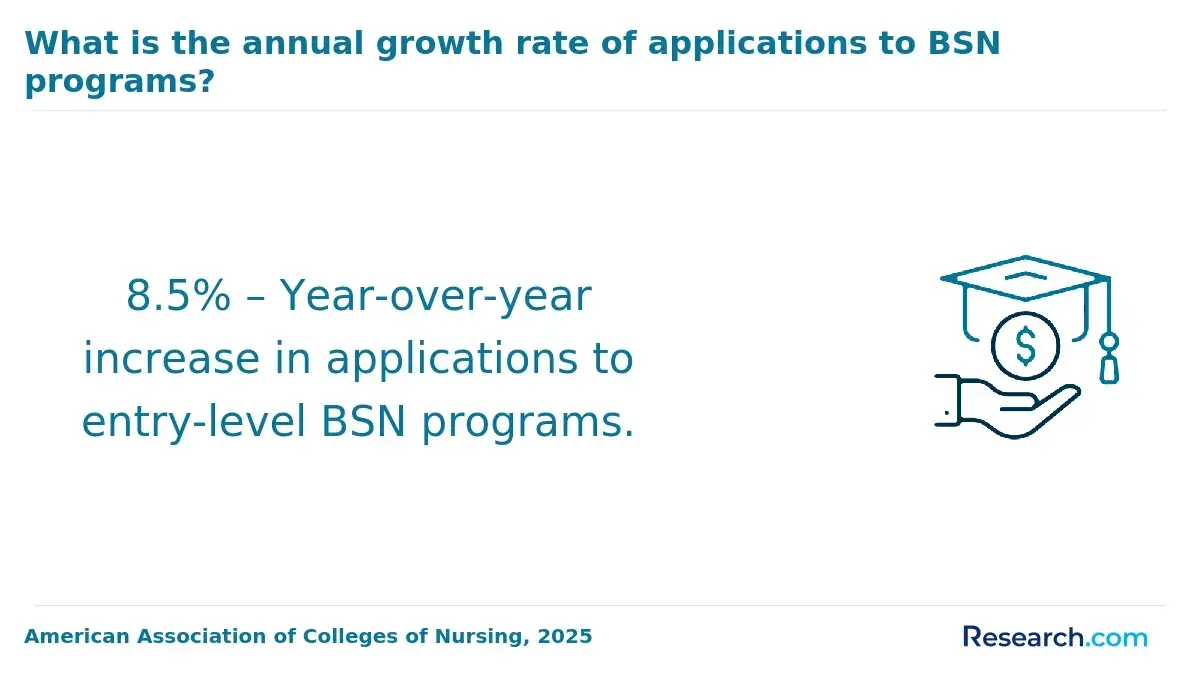
One cost comparison shows that private institutions charge significantly less for an online degree, with tuition fees averaging around $60,593 compared to $185,252 for an in-person degree at the same institution. For public four-year colleges, the comparison between online and in-person cost of attendance and tuition shows that online degrees can be more cost-effective, with average savings of $31,165.
When estimating affordability, include fees that may not appear in the headline tuition rate, such as online course fees, clinical placement costs, background checks, immunization requirements, textbooks, simulation software, graduation fees, exam preparation, and travel for any required campus sessions.
What financial aid options are available for online nursing students?
Nursing school can be expensive, but students should not assume they must pay the full cost out of pocket. Start by confirming whether the school participates in federal financial aid and whether the specific online program is eligible. Then compare institutional scholarships, employer tuition assistance, state workforce grants, payment plans, and nursing-specific awards.
The American Association of Colleges of Nursing (AACN) maintains scholarship and financial aid information for nursing students. Working nurses should also ask employers about tuition reimbursement, service commitments, and whether reimbursement applies to online RN-to-BSN, MSN, or certificate programs.
What are the prerequisites for enrolling in an online nursing degree program?
Prerequisites differ by school and degree level. RN-to-BSN programs often require an active RN license and prior nursing coursework, while prelicensure programs commonly require science, math, and general education courses before students enter the nursing sequence. Common prerequisites include:
- English composition. Students build college-level writing and communication skills needed for care plans, documentation, research summaries, and professional communication.
- Biology. This course introduces living systems, organism structure, biological processes, and concepts that support later nursing science coursework.
- Chemistry. Chemistry covers matter, chemical reactions, and foundational principles that help students understand physiology, medications, and body processes.
- Anatomy and physiology. Students study the human body’s structures, organ systems, and functions, which are central to assessment and clinical reasoning.
- Pharmacology. This coursework introduces medication actions, therapeutic uses, safety considerations, and potential side effects.
- Nutrition. Students learn about nutrients, health maintenance, diet planning, and the role of nutrition in wellness and disease management. Students interested in this area can also compare online nutrition programs.
- Intermediate algebra. Math preparation supports dosage calculations, data interpretation, and quantitative reasoning in healthcare settings.
- Human growth and development. This course examines physical, cognitive, and emotional development across the lifespan.
What courses are typically included in an online nursing degree?
Online nursing curricula combine general education, nursing theory, clinical preparation, and practice-focused assignments. Course requirements vary by program, but students commonly encounter the following subjects:
- Nursing theory and practice. This course introduces key nursing concepts, patient assessment, care planning, and the connection between evidence and bedside practice.
- Pharmacology. Students study medication categories, therapeutic effects, adverse reactions, and safe administration principles. Related healthcare programs, including online pharmacy technician programs, also commonly include pharmacology content.
- Microbiology. Coursework focuses on microorganisms such as bacteria, viruses, and fungi and explains how they affect infection, immunity, and patient care.
- Statistics. Students learn how to interpret data, evaluate research findings, and apply quantitative evidence in nursing decisions.
- Community health nursing. This course covers health promotion, disease prevention, population health, and care delivery outside acute hospital settings.
- Leadership and management in nursing. Students examine supervision, delegation, quality improvement, healthcare systems, and professional accountability.
- Clinical practicum. Clinical experiences allow students to apply nursing knowledge in approved healthcare environments under supervision.
What nursing specializations are available online?
Specializations are most common at the graduate or post-graduate certificate level, although some bachelor’s programs allow electives or focused projects. Common online nursing specialization areas include:
- Family Nurse Practitioner (FNP). FNP preparation focuses on primary care for patients across the lifespan, including health promotion, prevention, and management of acute and chronic conditions. Students comparing advanced practice routes can review online FNP programs.
- Nurse educator. This specialization prepares nurses to teach, mentor, evaluate learners, and support nursing education in academic or clinical settings.
- Nurse administrator. Students focus on healthcare leadership, budgeting, staffing, quality improvement, and organizational management.
- Nurse informaticist. This area combines nursing knowledge with information systems to improve patient care, workflows, data use, and healthcare technology implementation.
- Nurse anesthetist. This specialization prepares nurses for anesthesia and pain management services for surgical and procedural patients.
- Pediatric Nurse Practitioner (PNP). PNPs focus on primary care for children from birth through adolescence, including prevention, health promotion, and management of acute and chronic conditions.
How to choose the best online nursing degree program
The strongest online nursing program is the one that matches your license status, state requirements, schedule, budget, and career objective. Use the checklist below before applying.
- Verify accreditation. Confirm institutional accreditation and nursing program accreditation. Accreditation can affect financial aid, transfer credits, graduate school admission, employer recognition, and licensure eligibility.
- Match the program to your starting point. An RN-to-BSN is not the same as a prelicensure BSN, direct-entry MSN, or nurse practitioner program. Make sure you are applying to the correct pathway.
- Ask what “online” really means. Some programs are fully online for theory courses but still require in-person clinicals, campus intensives, labs, or proctored exams.
- Review admission requirements and fees. Compare prerequisite courses, minimum GPA rules, license requirements, application fees, transcript fees, and testing expectations.
- Use rankings carefully. Rankings can help narrow a search, but they should not replace accreditation checks, state licensure verification, and cost comparisons.
- Evaluate course delivery. Asynchronous formats may suit shift workers, while synchronous formats may benefit students who want scheduled interaction.
- Calculate total cost. Include tuition, fees, books, clinical expenses, technology, travel, and potential lost wages.
- Look at clinical support. Ask whether the school finds placements, whether students must secure their own sites, and whether placements are available in your area.
- Consider reputation in nursing. Employer familiarity, clinical partnerships, faculty credentials, and graduate outcomes can matter more than broad university name recognition.
- Check student support. Strong advising, tutoring, library access, technical help, writing support, and career services are especially important in online programs.
| Question to ask | Why it matters |
| Is the nursing program accredited by a recognized nursing accreditor? | Programmatic accreditation can affect licensure, graduate study, and employer acceptance. |
| Does the program meet requirements in my state? | Online programs may not be authorized or appropriate for every state’s licensure rules. |
| Who arranges clinical placements? | Students may face delays if they must find their own approved sites without enough support. |
| How many transfer credits will the school accept? | Transfer policy can change both total cost and time to graduation. |
| Are classes asynchronous, synchronous, or hybrid? | The format affects whether the program fits shift work, caregiving, and time zone constraints. |
| What support is available after enrollment? | Online students need reliable advising, technical support, tutoring, and faculty access. |
How can students balance online nursing coursework with clinical training?
The hardest part of online nursing education is often not the online coursework itself. It is coordinating lectures, assignments, exams, work shifts, family responsibilities, and required clinical experiences. Clinical training is essential because nursing cannot be learned only through readings and simulations.
Accredited online nursing programs with clinical requirements typically require students to complete in-person experiences at approved healthcare facilities. These placements allow students to practice assessment, medication administration, communication, care planning, and professional judgment under supervision. Some programs help arrange placements through clinical coordinators, while others expect students to identify possible sites for approval.
Students can reduce stress by building a weekly schedule before each term begins, blocking clinical days early, and communicating with employers about school obligations. Virtual simulations and case-based assignments can help students prepare for clinical situations, but they do not remove the need for supervised patient-care experience when the program requires it.
Students pursuing advanced practice roles should pay close attention to clinical hour expectations and placement support. If you are comparing options, Research.com’s guide to the easiest nurse practitioner program can help you think through workload and program structure, but “easiest” should never mean cutting corners on clinical preparation or licensure readiness.
How can non-nurses move into advanced nursing roles through online programs?
People who already hold a bachelor’s degree in another field may be able to enter nursing through accelerated or direct-entry pathways. These programs combine foundational nursing coursework with graduate-level study and clinical practice. Options such as direct entry MSN programs online are designed to help non-nurses build the knowledge and supervised experience required for advanced nursing preparation.
Applicants should expect a demanding curriculum. Admission requirements commonly include a bachelor’s degree, standardized test results, prerequisite coursework, and a personal statement. Because these pathways compress a large amount of nursing preparation into a shorter format, students should evaluate clinical requirements, NCLEX preparation, state licensure alignment, and whether they can realistically manage the workload.
How can online nursing programs bridge the path from ADN to MSN?
ADN-to-MSN bridge pathways allow registered nurses with an associate degree to move toward graduate-level nursing preparation without first completing a separate traditional BSN in every case. These programs typically combine bachelor’s-level bridge content, advanced nursing theory, leadership, research, and clinical experiences.
Working nurses may benefit from the flexible scheduling, online modules, and simulation-supported learning used in many bridge models. However, students should compare admissions rules, undergraduate credit requirements, clinical placement expectations, and whether the program aligns with their intended specialty. For a focused comparison, review Research.com’s guide to ADN to MSN bridge programs.
What student support services are available in online nursing programs?
Strong support services can make a major difference in online nursing education. Students should look for academic advising, faculty office hours, library access, writing help, tutoring, technical support, clinical coordination, and career counseling. Online learners also benefit from peer discussion spaces and mentoring opportunities, especially in programs with intensive clinical or graduate requirements.
Advanced programs may offer additional advising related to specialty certification, scholarly projects, clinical placements, and post-graduation career planning. Students comparing doctoral options can explore DNP programs on line and evaluate how each program supports online students through advanced coursework and practice requirements.
What additional certifications can strengthen nursing specialization?
Certifications can help nurses demonstrate focused expertise in a specialty area, but they should be chosen strategically. The right credential depends on current license level, work setting, state scope-of-practice rules, and long-term goals. Certifications may be useful in areas such as primary care, leadership, informatics, critical care, geriatrics, or education.
For nurses who already hold a graduate nursing degree and want to expand into family practice, an FNP post-master's certificate can provide a targeted route into family nurse practitioner preparation. Students should confirm clinical hour requirements, certification exam eligibility, and state approval before enrolling.
How can dual degree programs benefit nursing professionals?
Dual degree programs can be useful for nurses who want to combine clinical leadership with business, finance, strategy, or operations knowledge. An MSN paired with business education may support roles in healthcare administration, service-line leadership, quality improvement, consulting, or executive management.
These programs require careful planning because they can be more demanding than a single degree. Nurses should compare total credits, tuition, capstone or practicum requirements, employer tuition support, and whether the business curriculum is relevant to healthcare leadership. To compare this path in more detail, review Research.com’s guide to dual MBA MSN programs.
How do online nursing programs prepare students for the NCLEX-RN exam?
Online prelicensure nursing programs commonly build NCLEX-RN preparation into the curriculum through exam-style questions, review modules, timed quizzes, practice tests, and faculty feedback. The goal is to help students connect classroom knowledge with the clinical judgment required for licensure testing.
Many programs also use virtual simulations, case studies, and skills-focused assignments to help students practice decision-making. In-person clinical experiences remain important because NCLEX preparation is strongest when students can connect theory to supervised patient care.
Before enrolling in an online program intended to lead to RN licensure, ask about first-time NCLEX pass support, required exit exams, remediation policies, faculty availability, and whether the curriculum meets your state’s nursing board requirements.
What career paths are available for graduates of online nursing degree programs?
Career options depend on the degree earned, license held, certifications completed, and state scope-of-practice rules. Graduates of online nursing programs may pursue roles such as:
- Registered nurse
- Ambulatory care nurse
- Military nurse
- Health administrator
- Nurse manager
- Nurse educator
- Psychiatric-mental health nurse
- Nursing informaticist
Graduate-prepared nurses may also qualify for advanced practice or specialized roles, including:
- Certified Registered Nurse Anesthetist (CRNA). CRNAs provide anesthesia and anesthesia-related care for patients undergoing surgery or medical procedures.
- Certified Nurse-Midwife (CNM). CNMs provide prenatal, labor and delivery, postpartum, and women’s health care, often with an emphasis on natural childbirth and reproductive health.
- Clinical Nurse Specialist (CNS). CNSs bring advanced expertise to a specialized area of nursing practice and often work with healthcare teams to improve care quality and patient outcomes.
What is the job market for graduates with an online nursing degree?
Employers generally focus more on licensure, accreditation, clinical competence, experience, and fit for the role than on whether didactic coursework was completed online. Online nursing degrees are typically viewed more favorably when they come from accredited institutions and include appropriate clinical preparation.
For licensed nurses, an online RN-to-BSN or graduate nursing degree can be a practical way to continue working while preparing for advancement. For new nurses, the most important considerations are whether the program supports licensure, provides adequate clinical training, and prepares students for entry-level practice.
The job offer rate at graduation is high for new BSN and entry-level MSN graduates. According to the American Association of Colleges of Nursing, new BSN graduates had an average job offer rate of 84% upon graduation, while entry-level MSN graduates received offers at an average rate of 82%.
Easiest nursing jobs to transition into after graduation
Some new nursing graduates want a role that offers a more predictable schedule, lower intensity, or a smoother transition from school to practice. No nursing role is effortless, and stress levels vary by employer, staffing, patient population, and shift. Still, some settings may feel more manageable than fast-paced acute care units.
Examples that may offer a gentler transition include public health nursing, school nursing, and nurse case management. These roles may involve more structured hours, lower patient-to-nurse ratios, or less continuous emergency response than some hospital-based positions.
- Public health nurses focus on community wellness, prevention, education, outreach, and population health. They may work in clinics, schools, government agencies, or community organizations.
- School nurses support students and staff in educational settings. Their work often emphasizes prevention, chronic condition management, health screenings, and response to student health needs.
- Nurse case managers coordinate care across providers and settings, assess patient needs, develop care plans, and help patients access appropriate services.
If your goal is a lower-stress entry point, compare roles, schedules, patient acuity, and employer expectations carefully. Research.com’s guide to the easiest nursing jobs can help you identify options that better match your preferred work environment.
How competitive is admission to online nursing programs?
Admission selectivity varies widely. Some online nursing programs have open or broad access for licensed RNs who meet GPA, license, and prerequisite requirements. Others, especially prelicensure, direct-entry, and advanced practice programs, may be more selective because clinical placements, faculty supervision, and cohort sizes are limited.
Applicants may be evaluated on prerequisite grades, minimum GPA, standardized test scores, healthcare experience, letters of recommendation, personal statements, interviews, and current licensure. To understand how acceptance patterns can differ across schools, review Research.com’s article What nursing program has the highest acceptance rate? and compare requirements against your academic profile.
Pathways for career advancement after an online nursing degree
An online nursing degree can support advancement, but the next step should be tied to a specific career goal. For example, an RN-to-BSN may help a nurse qualify for broader clinical, leadership, or graduate school options. An MSN may support advanced practice, education, administration, or informatics. A DNP may align with advanced clinical leadership or systems-level practice.
Certifications can also strengthen a nurse’s professional profile in areas such as critical care, geriatrics, informatics, leadership, or family practice. Research.com’s guide to the best certifications for nurses can help you compare credentials by specialty and career purpose.
What trends are shaping online nursing education?
Online nursing education is becoming more technology-supported and competency-focused. Programs increasingly use virtual simulations, adaptive learning tools, case-based assignments, telehealth scenarios, and digital collaboration platforms to help students connect theory with practice. These tools can improve flexibility, but they do not replace the need for clinical judgment, supervised practice, and state-approved licensure preparation.
Employer expectations are also changing. Nurses are increasingly expected to work with electronic health records, remote care tools, interdisciplinary teams, population health data, and evidence-based quality improvement methods. Programs that integrate informatics, leadership, health policy, and telehealth preparation may be especially useful for nurses planning long-term advancement.
Students looking for a more direct RN-to-BSN pathway can compare easy online RN to BSN degree options, but they should still prioritize accreditation, state alignment, clinical expectations, and academic quality over speed alone.
Common mistakes to avoid when choosing an online nursing program
| Mistake | Why it can hurt you | Better approach |
| Choosing a program without checking accreditation | It may affect licensure, transfer credits, graduate admission, and employer acceptance. | Verify institutional and nursing program accreditation before applying. |
| Assuming online means no in-person requirements | Clinical hours, labs, intensives, or exams may still require travel or local placement. | Ask for a written list of all in-person requirements. |
| Comparing only tuition per credit | Fees, clinical costs, books, and travel can change the total price. | Request a full cost estimate through graduation. |
| Ignoring state licensure rules | A program may not meet requirements where you plan to practice. | Contact the school and your state nursing board before enrollment. |
| Picking the fastest program without considering workload | Accelerated pacing can be difficult for students working full time. | Compare weekly time expectations, course load, and clinical scheduling. |
| Relying only on rankings | A highly ranked program may not fit your budget, location, schedule, or career path. | Use rankings as a starting point, then evaluate fit. |
Key Insights
- Start with your current status. Licensed RNs, non-nurses, ADN graduates, and BSN-prepared nurses need different online nursing pathways.
- Accreditation and licensure alignment are non-negotiable. Do not enroll until you confirm that the program is properly accredited and appropriate for your state and career goal.
- Online does not always mean fully remote. Clinical training, skills labs, proctored exams, or campus sessions may still be required.
- Program length should be realistic. Fast programs can save time, but only if you can manage the academic pace, clinical schedule, and work-life demands.
- Total cost matters more than tuition alone. Compare fees, books, clinical expenses, technology, travel, and available financial aid before deciding.
- The best program is the one that fits your next step. Choose based on licensure needs, clinical support, learning format, career outcome, and long-term advancement plan—not just name recognition or ranking position.
References:
- College Ave. (2025). BSN Nurse Salary: What Graduates Can Expect to Earn. https://www.collegeave.com
- AACN. (2025). 2024-2025 Enrollment and Graduations in Baccalaureate and Graduate Programs. https://www.aacnnursing.org
- NCSBN. (2025). 2024 National Nursing Workforce Study. https://www.ncsbn.org/workforce
- Nightingale College. (2024). Nursing Shortage: 2026 US Statistics. https://nightingale.edu/blog/nursing-shortage-by-state.html
Other Things You Should Know About Online Nursing Degree Programs
To choose a reputable online nursing program in 2027, consider program accreditation, NCLEX-RN pass rates, faculty qualifications, student support services, and flexible learning options. Look for programs accredited by the Commission on Collegiate Nursing Education (CCNE) or Accreditation Commission for Education in Nursing (ACEN) to ensure quality education.
To gain admission into top online nursing programs in 2027, candidates typically need a minimum GPA of 3.0, completion of prerequisite courses like anatomy and physiology, and sometimes relevant work experience. Additionally, programs may require a personal statement and letters of recommendation.
In 2027, financial aid for online nursing programs includes federal and state grants, scholarships from nursing associations, and student loans. Specific programs like the HRSA Nurse Corps Scholarship Program offer additional funding options for nursing students pursuing online degrees.


