
2027 How to Get an RNC Nursing Certification: Requirements and Exam Preparation

Co-Founder and Chief Data Scientist
Nearly 6 million registered nurses hold active licenses in the United States today, but only a fraction go on to earn specialized certifications like the RNC (Registered Nurse Certified) credential. For many nurses, this certification is more than a title—it’s proof of advanced expertise that can open doors to better roles, higher pay, and stronger career security.
In this guide, you’ll learn exactly what it takes to qualify for RNC certification in 2025, the costs involved, and the best strategies to prepare for the exam with confidence.
Key Things You Should Know About RNC Nursing Certification
- RNC is a specialty credential, not a license. Passing the NCLEX grants you the license to practice as a registered nurse, while the RNC certification proves advanced knowledge in areas like obstetrics, neonatal, or maternal newborn care, boosting credibility and career opportunities.
- Eligibility requires both licensure and experience. To apply, you must hold an active, unencumbered RN license in the U.S. or Canada and meet specific practice-hour requirements in the specialty you’re testing for, typically around 2,000 hours over 24 months.
- Exams are rigorous and costly. The National Certification Corporation (NCC) administers RNC exams, with fees starting at $325 for core certifications. Preparation involves structured study, practice exams, and often months of review to succeed on the computer-based test.
- What are the requirements and exam preparations for RNC Nursing Certification in 2027? Requirements & Prep
- How do I choose which RNC specialty (e.g., RNC-OB, RNC-NIC, RNC-MNN) fits my career goals? Specialization
- What are the eligibility criteria for each RNC specialty exam? Eligibility Criteria
- How much does it cost to apply for and take an RNC certification exam? Exam Costs
- What testing formats (in-person vs. remote proctoring) are available for the RNC exams? Testing Formats
- What’s the exam content breakdown and question format for RNC certifications? Exam Content
- What study materials, courses, or review resources are best for preparing? Study Resources
- How hard is the RNC exam—what are the pass rates and real-world candidate experiences? Exam Difficulty
- What is involved in renewing or maintaining an RNC certification? What is involved in renewing or maintaining an RNC certification?
- How does being RNC-certified affect job prospects, salary, and professional reputation? How does being RNC-certified affect job prospects, salary, and professional reputation?
What are the requirements and exam preparations for RNC Nursing Certification in 2027?
Earning an RNC credential demands more than passing a test—it means meeting licensure requirements, documenting hands-on experience, and studying strategically. Below are the key prerequisites and pointers to prepare effectively.
- Active RN License: Must hold an unencumbered, current RN license in the U.S. or Canada at the time of application.
- Specialty Practice Hours: Required: 24 months of specialty nursing practice, including at least 2,000 hours in the field within the last two years.
- Application & Candidate Guide: Submit your application online and, upon approval, review the NCC candidate guide detailing exam content, question types, and suggested resources.
- Exam Structure & Prep: Expect a 3-hour test of around 175 multiple-choice questions. Study using sample questions, practice tests, and review courses to build stamina and confidence.
Wise candidates balance direct patient experience with structured review—and supplement that with flexible resources such as reputable online nursing programs that reinforce specialty knowledge without interrupting work.
How do I choose which RNC specialty (e.g., RNC-OB, RNC-NIC, RNC-MNN) fits my career goals?
Selecting the right RNC specialty is about aligning your certification with your career path, personal interests, and long-term goals. Since certification requires prior specialty experience, your daily clinical environment often guides the best match. Education also plays a role, as advancing from associate to bachelor’s or master’s levels can influence both eligibility and salary potential, with resources like top ADN programs helping build that foundation.
- RNC-OB (Inpatient Obstetric Nursing): Ideal for nurses passionate about maternal health, labor, and delivery. Best suited if you thrive in fast-paced, high-stakes environments supporting mothers and newborns during childbirth.
- RNC-NIC (Neonatal Intensive Care Nursing): Recommended for those committed to caring for critically ill or premature newborns. This path is fitting if you prefer technology-driven care and are detail-oriented under pressure.
- RNC-MNN (Maternal Newborn Nursing): Perfect for nurses focused on the postpartum period, supporting both mother and infant recovery. Choose this specialty if you enjoy continuity of care and patient education after delivery.
The chart below highlights RNC certification exam pass rates in 2024, showing that success rates vary by specialty. Understanding these differences can help you gauge exam difficulty and choose a path that aligns with both your strengths and career ambitions.
What are the eligibility criteria for each RNC specialty exam?
Earning an RNC credential requires more than passing a test—it demands the right license, specialty experience, and education background. The National Certification Corporation (NCC) outlines specific requirements depending on whether you’re applying for a core certification, nurse practitioner certification, or a subspecialty exam.
Nurses often prepare by completing degrees such as BSN or MSN, while others strengthen their foundations with Associate of Science in Nursing online programs that provide flexible entry points into the field. Below are the major eligibility criteria.
- Core RNC Exams (e.g., Inpatient Obstetric, Neonatal Intensive Care, Maternal Newborn): Active RN license in the U.S. or Canada, 24 months of specialty practice, and at least 2,000 hours worked within the last two years.
- Nurse Practitioner Exams (e.g., Women’s Health, Neonatal NP): Active RN or APRN license, graduation from an accredited NP program awarding a master’s, post-master’s, or DNP degree, and exam taken within eight years of graduation.
- Subspecialty Exams (e.g., C-EFM, C-NPT, C-NNIC, C-ELBW, C-ONQS): Active license (RN, NP, physician, respiratory therapist, or other eligible provider). No mandatory experience, but one to two years in the specialty is strongly recommended for success.
How much does it cost to apply for and take an RNC certification exam?
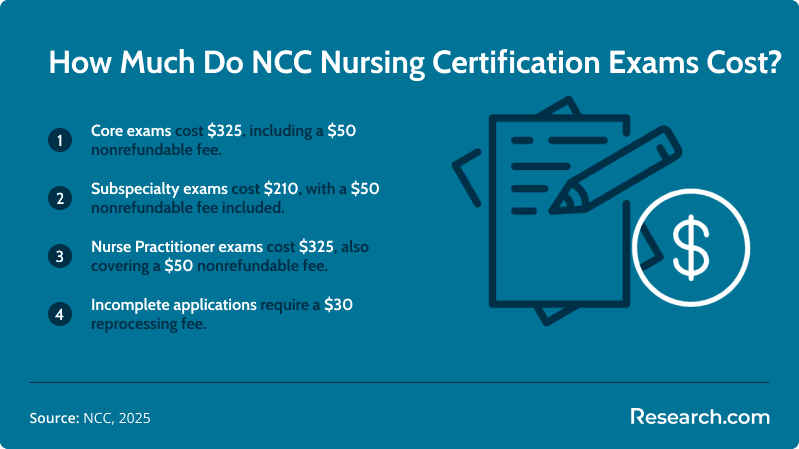
Applying for an RNC certification exam requires careful planning, not only in terms of eligibility and preparation but also financially. The National Certification Corporation (NCC) sets standardized fees depending on the type of exam. For Core Nursing Certification Exams, such as inpatient obstetric or neonatal intensive care, the exam fee is $325, which includes a $50 nonrefundable application submission cost.
Subspecialty exams, such as Electronic Fetal Monitoring (C-EFM) or Neonatal Pediatric Transport (C-NPT), are slightly less expensive at $210, again with the $50 nonrefundable application fee included. Meanwhile, Nurse Practitioner Certification Exams also cost $325, reflecting their advanced scope and requirements. In addition, applicants should be aware of a $30 nonrefundable reprocessing fee if their application is incomplete or contains errors, which can add unexpected costs to the process.
These fees highlight the importance of submitting accurate, complete applications and budgeting appropriately before pursuing certification. While the investment may seem high, the career benefits of becoming RNC-certified often outweigh the costs through greater earning potential and recognition.
For RNs considering further advancement in clinical practice, exploring programs like RN to physician assistant can provide a clear pathway to expand scope of practice, increase earning potential, and transition into a highly versatile healthcare role.
The infographic below provides a clear breakdown of the NCC exam fees, making it easier to understand exactly what you’ll need to pay before applying. Use it as a quick reference when budgeting for your certification journey.
What testing formats (in-person vs. remote proctoring) are available for the RNC exams?
The National Certification Corporation (NCC) offers candidates two main testing options for RNC certification exams: in-person computer-based testing at designated testing centers and remote proctoring from a secure location of your choice. Both formats deliver the same exam content—175 multiple-choice questions completed within a three-hour time limit—but differ in flexibility and environment.
In-person testing is often preferred by nurses who value the controlled atmosphere of a testing center, where technical requirements are handled by staff, and distractions are minimized. These centers are located across the U.S. and Canada, making access relatively convenient. However, scheduling may be limited in high-demand regions.
Remote proctoring, by contrast, allows candidates to test from home or another quiet space, provided they meet the NCC’s strict technical and environmental requirements. This includes a reliable internet connection, a functioning webcam, and a private room free from interruptions. Proctors monitor live via webcam to ensure exam integrity.
Ultimately, the choice depends on your personal comfort, scheduling needs, and access to reliable technology. Both pathways provide equal scoring, security, and recognition by employers, ensuring no disadvantage regardless of format.
For occupational therapists planning their careers, understanding certification pathways can also help in pursuing the highest paying occupational therapy specialty, aligning credentials with advanced roles that offer both expertise and higher earning potential.
What’s the exam content breakdown and question format for RNC certifications?
The RNC exams, administered by the National Certification Corporation (NCC), are structured to test both applied knowledge and clinical judgment in specific nursing specialties. Each exam is computer-based and consists of 175 multiple-choice questions, with 150 scored and 25 unscored pretest items that do not count toward your results. Candidates are given three hours to complete the exam.
While the exact content domains vary by specialty, the NCC provides detailed blueprints that outline the percentage of questions assigned to each competency area.
- Core Exams (e.g., Inpatient Obstetric, Neonatal Intensive Care, Maternal Newborn Nursing): Content focuses on clinical assessment, intervention, complication management, and professional practice standards.
- Nurse Practitioner Exams (Women’s Health Care NP, Neonatal NP): Questions emphasize advanced health assessment, diagnosis, pharmacology, and patient management across the lifespan.
- Subspecialty Exams (e.g., Electronic Fetal Monitoring, Neonatal Neuro-Intensive Care): These target narrower competencies, such as monitoring, transport, or safety protocols, with applied clinical scenarios.
All exams use single-best-answer multiple-choice questions, often case-based, requiring analysis of patient data, prioritization of care, and application of current evidence-based guidelines.
Preparing for such rigorous certification exams can give insight into academic challenges in other fields as well, helping students gauge how hard is a biology major and what to expect in terms of workload, critical thinking, and time management.
What study materials, courses, or review resources are best for preparing?
Preparing for an RNC certification exam requires using a mix of official resources, academic study tools, and peer learning opportunities. Below are the most effective materials and courses to consider:
- NCC Candidate Guide: This is the foundation for exam prep. It outlines test content areas, sample questions, and policies, helping you structure your study plan with accuracy.
- Official NCC Practice Tests: Timed practice exams simulate the real test experience, reinforcing knowledge while building test-taking confidence.
- Specialty Nursing Textbooks: Books focused on obstetrics, neonatal, and maternal newborn nursing deepen clinical knowledge and connect theory to real-world application.
- Online Review Courses: Structured programs led by nurse educators provide interactive lectures, quizzes, and exam strategies that align directly with NCC exam content.
- Peer Study Groups: Learning with colleagues fosters accountability, discussion, and shared resources, often making complex topics easier to master.
- Supplemental Programs – Expanding skills through options like affordable CNA programs online can reinforce patient care fundamentals and broaden clinical competence for certification readiness.
How hard is the RNC exam—what are the pass rates and real-world candidate experiences?
The RNC exam, administered by the National Certification Corporation (NCC), is designed to measure advanced knowledge in specialty practice areas such as obstetrics, neonatal, or maternal newborn nursing. Candidates must answer 175 multiple-choice questions in three hours, with 150 scored items and 25 pilot items. The challenge lies not just in the breadth of topics but also in the critical thinking required, as many questions are scenario-based.
Pass rates vary by specialty but generally hover between 70% and 85%, reflecting the exam’s rigor. Nurses who meet eligibility requirements—typically at least 2,000 practice hours in their specialty—tend to perform better due to their hands-on experience. Preparation often includes structured study, official NCC practice tests, and participation in peer study groups. Many candidates report the exam is tough but achievable with consistent preparation, especially when compared to the foundational NCLEX. For context, understanding the difference between LPN and CNA can help highlight how advanced the RNC credential is compared to entry-level nursing roles.
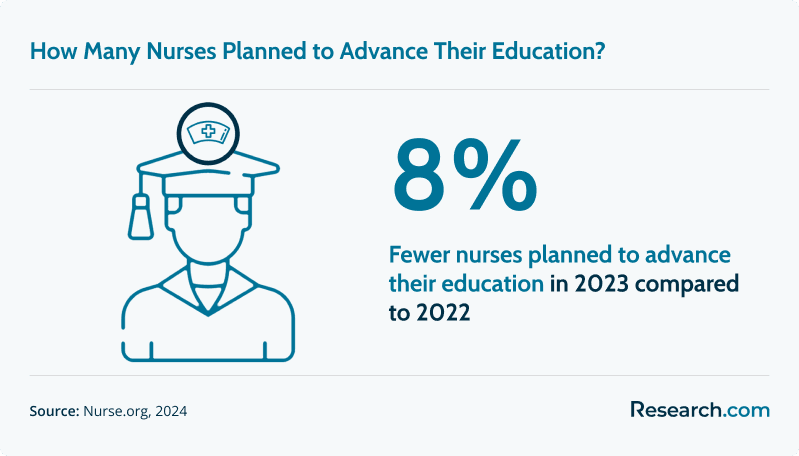
The infographic below highlights how fewer nurses are planning to pursue advanced education, a trend that may affect future certification rates. It ties directly to the difficulty of the RNC exam and the commitment required to succeed.
What is involved in renewing or maintaining an RNC certification?
Earning an RNC certification is only the first step—nurses must actively maintain their credential to ensure it reflects current practice standards. Renewal is required every three years and is managed through the National Certification Corporation (NCC). To recertify, candidates must hold an active RN license in good standing and demonstrate ongoing professional development. This can be achieved by completing continuing nursing education (CNE) hours, academic coursework, or participation in professional practice activities such as precepting or publishing.
NCC uses a continuing competency assessment to tailor renewal requirements to each nurse’s practice area. Typically, nurses need to complete at least 45 continuing education hours during the three-year cycle, with a portion tied directly to their specialty. Nurses must submit documentation online through their NCC account and pay the renewal fee to keep their certification active. Failing to meet renewal requirements can result in certification lapse, requiring reapplication and retesting.
Maintaining an active RNC certification not only ensures clinical competence but can also impact earnings, as nurses with current credentials often have higher marketability. For those considering broader healthcare careers, it’s helpful to know what is the average salary for health science professionals, which provides context for how specialized certifications can influence overall compensation.
The industries that employ the majority of registered nurses play a direct role in shaping ongoing competency needs. The chart below shows where most nurses work, which often influences the type of continuing education and specialty knowledge that supports certification renewal.
How does being RNC-certified affect job prospects, salary, and professional reputation?
Earning an RNC credential signals to employers that a nurse has advanced expertise in a defined specialty, such as obstetrics, neonatal intensive care, or maternal newborn nursing. This distinction can improve job prospects by making candidates more competitive for roles in hospitals, specialty clinics, and teaching facilities where employers value specialized knowledge and proven competency.
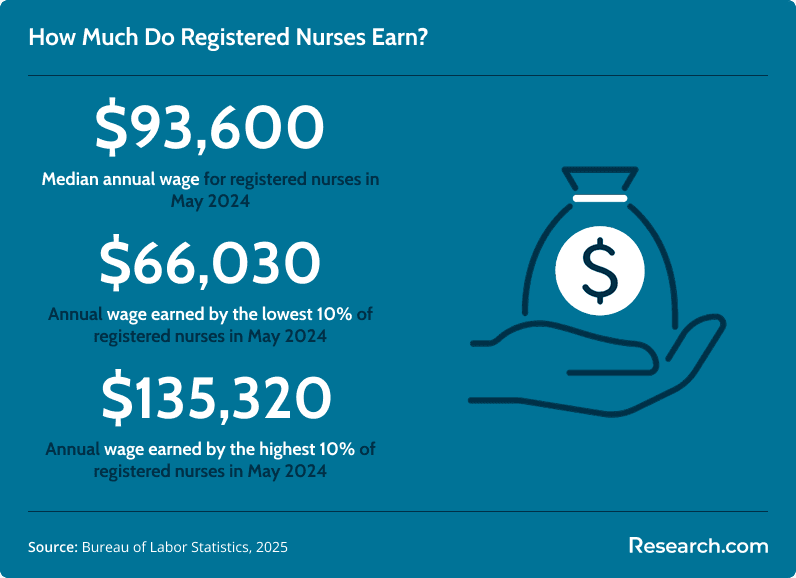
Salary outcomes also improve with certification. While the median annual wage for all registered nurses was $93,600 in 2024, RNC-certified nurses often command higher pay due to their specialized skill set and eligibility for leadership or advanced practice roles. Employers may also offer differentials or bonuses to attract and retain certified nurses. Compared to entry-level roles often associated with the easiest nursing jobs, certification aligns with long-term career growth and salary advancement.
Professional reputation is another benefit. Certification establishes credibility with colleagues, patients, and administrators, positioning RNCs as trusted resources in their specialty. It can also lead to greater opportunities for professional development, speaking engagements, and involvement in shaping policies within their practice areas.
The infographic below illustrates the wage distribution for registered nurses in 2024, showing how certification and specialization may help individuals move from median-level earnings toward the higher end of the salary spectrum.
Here's What Graduates Have to Say About Their RNC Nursing Certification
- Marisol: "Earning my RNC certification gave me a sense of confidence I didn’t have before. The online prep resources made balancing study with full-time work realistic. Now, I feel recognized not just as a nurse, but as a specialist in my field."
- Tahlia: "I was nervous about advancing my career while managing family life, but the flexibility of online study made the journey possible. Achieving RNC certification has already helped me negotiate a higher salary and take on leadership opportunities in my unit."
- Soren: "The RNC exam was tough, but the online practice tests and peer study groups kept me motivated. Beyond the professional benefits, completing certification reminded me why I chose nursing—growth, knowledge, and better patient care. It’s the best career step I’ve taken."
Key Findings
- Nearly 6 million nurses in the U.S. hold active RN licenses.
- The median RN salary in 2024 was $93,600, with the top 10% earning over $135,000.
- Core RNC exams cost $325, while subspecialty exams cost $210.
- Pass rates for RNC exams typically range from 70% to 85%.
- About 8% fewer nurses planned to pursue advanced education in 2023 compared to 2022.
- Hospitals employ 59% of registered nurses, making them the top industry for RNs.
References:
- Bureau of Labor Statistics. Occupational Outlook Handbook: Registered Nurses.
- Bureau of Labor Statistics. Occupational Employment and Wage Statistics: Registered Nurses.
- Journal of Nursing Regulation. Issue S2155-8256(25)X0004-1.
- Journal of Nursing Regulation. Registered Nurse Education Requirements Article (PII: S2155-8256(25)00047-X).
- National Certification Corporation. Exam Fees and Eligibility.
- National Certification Corporation. Exam Statistics.
- National Council of State Boards of Nursing. Aggregate RN Active Licenses Table.
- Nurse.org. 2024 State of Nursing Report.
- Test Prep Review. Neonatal Intensive Care Nurse Test Prep.
- World Health Organization. Global Strategic Directions for Nursing and Midwifery 2021–2025.
- ZipRecruiter. Director of Nursing Resume Keywords and Skills.
- ZipRecruiter. Registered Nurse Resume Keywords and Skills.
- Zippia. Registered Nurse Education Requirements.
Other Things You Should Know About RNC Nursing Certification
In 2027, obtaining an RNC certification requires meeting eligibility criteria, such as holding an active RN license and having verified experience in a specialty area. Candidates must apply through the appropriate nursing certification body and pass a written exam to become certified.
Eligibility for RNC certification in 2027 requires an active RN license in the U.S. or Canada, completion of a nursing specialty program, and at least two years of specialty practice, equating to 2,000 hours, before applying for the exam.


