
2027 How to Switch From Being a Registered Nurse to a Physician Assistant

Co-Founder and Chief Data Scientist
Physician assistant jobs are projected to grow 20% between 2024 and 2034, adding more than 33,000 positions in the U.S. For registered nurses, this creates a strong incentive to consider transitioning into a PA role.
This article explains exactly how to switch from being a registered nurse to physician assistant in 2027. You’ll learn about prerequisites, clinical experience requirements, program costs, licensing, and career outlook. By the end, you’ll have a clear understanding of what the transition involves and how to prepare for it.
Key Things You Should Know About Switching from Registered Nurse to Physician Assistant
- Physician assistants must earn a master’s degree from an accredited PA program, while nurses typically start practicing with a bachelor’s degree. This means RNs planning the switch need additional schooling, including coursework in anatomy, pharmacology, and clinical medicine, plus supervised rotations.
- Unlike registered nurses, PAs must pass the Physician Assistant National Certifying Exam (PANCE) and obtain state licensure before practicing. This exam ensures they have the advanced diagnostic and treatment skills required to work under a physician’s supervision across specialties.
- PAs generally earn higher salaries than RNs, with median pay reaching $133,260 in 2024, compared to $93,600 for registered nurses. This salary gap reflects PAs’ expanded scope, including diagnosing illnesses, prescribing medications, and performing procedures in diverse healthcare settings.
- How do I switch from being a registered nurse to a physician assistant in 2027? Switching RN to PA
- What prerequisites do I need before applying to PA school as an RN? School Prerequisites
- How many patient care hours are required to apply for PA programs? Patient Care Hours
- Will my RN degree or credits count toward PA school requirements? Degree Credits
- How long does it take to become a PA after being an RN? Timeline
- How much does it cost to shift from RN to PA (tuition, lost income, etc.)? Costs
- What are the differences in role, responsibility, and autonomy between RNs and PAs? RN vs PA Roles
- What are the certification and licensing steps after finishing PA school? Certification Steps
- What are typical salaries and job growth prospects for PAs versus RNs? Salaries
- What challenges should RNs expect when transitioning into PA school and how can they prepare? What challenges should RNs expect when transitioning into PA school and how can they prepare?
How do I switch from being a registered nurse to a physician assistant in 2027?
The switch from registered nurse to physician assistant requires planning, education, and certification. While RNs already have valuable healthcare experience, becoming a PA means completing specific academic and licensing requirements. The process typically takes several years, depending on your current qualifications and the program you choose. Below are the key steps you need to follow:
- Earn a bachelor’s degree: Most PA programs require applicants to hold a bachelor’s degree, often in nursing, biology, or another science-related field. RNs with a BSN already meet this requirement.
- Gain direct patient care experience: Programs expect applicants to have hands-on healthcare hours. Your RN experience counts, but schools may require a minimum number of documented hours in clinical settings.
- Complete prerequisite coursework: Courses in anatomy, physiology, microbiology, chemistry, and psychology are often mandatory for PA school admission.
- Apply to a PA master’s program: Accredited programs usually take about two to three years and combine classroom instruction with clinical rotations in specialties like surgery, pediatrics, and internal medicine.
- Pass the PANCE exam: After graduation, you must pass the Physician Assistant National Certifying Examination to earn the PA-C credential, which is required for state licensure.
- Obtain state licensure: Each state regulates PA practice differently, but all require licensure before you can legally work as a physician assistant.
For some RNs, the prerequisite coursework—especially in subjects like anatomy, physiology, and microbiology—can feel challenging. This is similar to why many students wonder, is majoring in biology hard, since it demands strong analytical skills, memorization, and consistent study habits. Understanding this upfront can help you prepare mentally and academically for the transition to a PA program.
What prerequisites do I need before applying to PA school as an RN?
If you’re an RN aiming to apply to a PA (Physician Assistant) program, there are specific prerequisites you’ll need to meet beyond your nursing credentials. These requirements ensure you have both the academic foundation and hands-on experience that PA programs expect. Below are common prerequisites many PA schools mandate, along with brief explanations.
Here are the prerequisites
- Bachelor’s Degree: You must have completed a bachelor’s degree from an accredited institution. While your nursing degree (BSN) satisfies this, if you hold an associate RN degree, you’ll need to complete a four-year degree first.
- Science Coursework: Expect courses such as general biology (with lab), anatomy & physiology (two semesters or a combined sequence, with labs), general chemistry, microbiology, possibly organic chemistry or biochemistry. Non-science courses often include psychology, statistics, and English composition.
- Doctor Qualified Courses Currency: Many programs require that your science prerequisites be recent (often within 5-10 years) to ensure your knowledge is up to date. If older, you may need to retake courses.
- Direct Patient Care / Clinical Experience Hours: Programs typically expect between 1,000 to 4,000 hours of direct patient care. Your RN experience counts; paid or volunteer roles where you provide hands-on patient care are valued. Shadowing or non-clinical health roles may count less or not at all.
- Minimum GPA Requirements: Most schools set both a minimum overall GPA and a science GPA (often around 3.0-3.2 on a 4.0 scale). It’s important to verify the specific GPA thresholds for each PA school.
- Additional Academic Skills: Some programs might require or strongly recommend statistics, psychology, and strong English writing skills. Also, there are guides to careers including what does a travel medical assistant do, which illustrate how diverse healthcare roles can count toward relevant experience and help you develop applicable skills.
How many patient care hours are required to apply for PA programs?
Most physician assistant (PA) programs place strong emphasis on direct patient care experience, as it demonstrates your ability to work effectively with patients before advancing into a more independent clinical role. While requirements vary by school, most programs expect a minimum of 1,000 hours of direct patient care.
However, many competitive programs prefer applicants with 2,000 to 4,000 hours. Registered nurses typically meet these requirements more easily than other applicants, since their daily responsibilities already involve providing patient care. Roles such as EMT, paramedic, or medical assistant can also fulfill these hours.
Understanding the difference between medical administrative assistant vs medical assistant responsibilities can help clarify which experiences count as direct care and which are considered administrative, since only direct clinical interaction usually qualifies. Documenting your hours carefully and ensuring they align with program expectations will strengthen your application significantly.
The chart below highlights the top skills employers look for in physician assistants. Patient care ranks among the most important, reinforcing why schools weigh clinical experience so heavily when reviewing applicants. This data illustrates the connection between strong patient care skills and the requirements of PA programs.
Will my RN degree or credits count toward PA school requirements?
If you already hold a nursing degree, you may wonder how much of that education transfers toward physician assistant (PA) school requirements. The short answer is that your RN degree will satisfy the bachelor’s degree requirement if it is a BSN.
However, if you have an associate’s degree in nursing (ADN), you will need to complete a bachelor’s degree before applying. Coursework from your nursing program may overlap with prerequisite requirements such as anatomy, physiology, microbiology, and psychology, but schools differ on how many credits they will accept. It’s important to confirm with each PA program, since some may require you to retake science courses if they are older than 5–10 years.
Understanding the difference between LPN and RN backgrounds also helps clarify why BSN-prepared RNs are generally more competitive applicants, as they meet both degree and clinical experience expectations upfront.
The chart below shows the most common majors pursued by physician assistants. Nursing is among them, reflecting how an RN degree aligns with PA school entry requirements and demonstrates the overlap between the two educational pathways.
How long does it take to become a PA after being an RN?
The timeline to become a physician assistant after working as a registered nurse depends on your current education level and experience. If you already have a BSN, you’ve met the minimum degree requirement, which shortens the process. Most PA master’s programs take about 24 to 36 months to complete, combining classroom coursework with clinical rotations in areas such as internal medicine, pediatrics, surgery, and emergency care.
If you hold an Associate Degree in Nursing (ADN), you will first need to complete a bachelor’s degree, adding approximately two to three years before you can apply. In addition, many programs require 1,000 to 4,000 hours of direct patient care experience, which most RNs accumulate naturally while working. After graduation, you’ll need time to prepare for and pass the Physician Assistant National Certifying Examination (PANCE), then obtain state licensure.
On average, the full process from RN to PA takes four to six years, depending on your starting point, program length, and whether you must complete additional prerequisites. This makes it a significant but rewarding commitment that leads to broader responsibilities and higher earning potential.
For those considering related healthcare roles, it’s useful to note that training timelines can vary significantly. For example, many aspiring dental assistants often ask how long is dental assistant school, which typically ranges from 9 months to 2 years depending on whether you pursue a certificate, diploma, or associate degree program. Understanding these timelines helps in planning your career path effectively alongside other healthcare goals.
How much does it cost to shift from RN to PA (tuition, lost income, etc.)?
Becoming a physician assistant after being an RN requires sizable financial investment. Tuition alone for PA programs ranges widely. The average for graduate PA tuition in-state is about $12,279 and about $24,851 out-of-state for 2024-2025. For undergraduate equivalents (if needed), in-state tuition averages $11,273, while out-of-state is $33,436. These are just base tuition fees: you also need to account for books, supplies, labs, and other fees.
Additionally, after finishing the PA program, you must pay for certification exams. The Physician Assistant National Certifying Examination (PANCE) costs $550 to register. Many students also purchase prep materials, which might add several hundred dollars more.
Lost income is another big cost. If you stop working or reduce RN shifts for 2-3 years while attending PA school, using a median RN salary of about $94,480 per year, that could mean forgoing $180,000–$280,000 depending on location and how many RN hours you give up.
For those planning a broader healthcare career, it’s also helpful to consider timelines for related professions. For example, many prospective students wonder how long are occupational therapy programs—these typically range from 2 to 3 years for a master’s degree, and 3 to 4 years for a doctorate, depending on the program and whether prerequisites are needed. Factoring in program length alongside tuition and lost income can help you make a more informed decision when shifting careers.
The chart below outlines the average tuition and fees for PA programs in the 2024-2025 academic year, illustrating just one part of the total financial commitment required.
What are the differences in role, responsibility, and autonomy between RNs and PAs?
Registered nurses (RNs) and physician assistants (PAs) both care for patients, but their roles, responsibilities, and levels of autonomy differ significantly. An RN’s primary focus is on carrying out care plans, administering medications, monitoring patients, and supporting patient wellness. A PA, by contrast, works under physician supervision but has broader powers: diagnosing conditions, ordering tests, prescribing medication, and in many states performing some treatment decisions.
Comparisons:
- Scope of Practice: RNs provide direct patient care such as assessing, monitoring, and educating patients. PAs take on tasks closer to what physicians do, such as diagnosing illnesses and prescribing treatments. State law and supervising physician agreements strictly regulate PA scope.
- Responsibilities: RNs usually follow care plans developed by physicians or PAs and focus on service delivery and patient support. PAs are more responsible for creating and adjusting treatment plans, interpreting diagnostic tests, and sometimes managing populations of patients in different specialties.
- Autonomy & Supervision: RNs have clear supervision, often by nurse managers or physician leadership, limited authority in decision-making. PAs require physician oversight but the level of supervision varies by state; some states allow PAs more autonomy in practice, particularly after they gain experience.
Many of these overlaps and distinctions mirror what one sees when comparing roles such as a podiatry medical assistant salary vs more clinical healthcare roles, highlighting how specialized or supervisory components change responsibilities.
What are the certification and licensing steps after finishing PA school?
Graduating from a physician assistant (PA) program does not immediately qualify you to practice. Like other healthcare professionals, PAs must go through certification and licensing steps to prove their competency and meet state requirements. These steps ensure that every PA has the knowledge, skills, and legal authority to provide patient care safely.
Steps to Certification and Licensing:
- Graduate from an accredited PA program: Completion of a master’s program accredited by the Accreditation Review Commission on Education for the Physician Assistant (ARC-PA) is mandatory.
- Pass the PANCE: The Physician Assistant National Certifying Examination, administered by the NCCPA, evaluates clinical knowledge and decision-making skills. Passing earns you the PA-C credential.
- Apply for state licensure: Submit proof of certification, transcripts, and other documents to your state’s medical board. Requirements vary but all states demand licensure.
- Maintain certification: Every two years, PAs must complete at least 100 continuing medical education (CME) credits. They must also pass the Physician Assistant National Recertifying Examination (PANRE) every ten years to remain certified.
- Meet additional state requirements: Some states require background checks, jurisprudence exams, or supervisory agreements with physicians before granting practice rights.
For those exploring alternative or complementary career paths in healthcare and science, it’s also worth considering related fields such as forensic science. Understanding highest paid forensic jobs can help guide long-term career planning, as some positions—like forensic pathologists, crime lab directors, or forensic psychologists—offer both high salaries and specialized opportunities in law enforcement and investigative work.
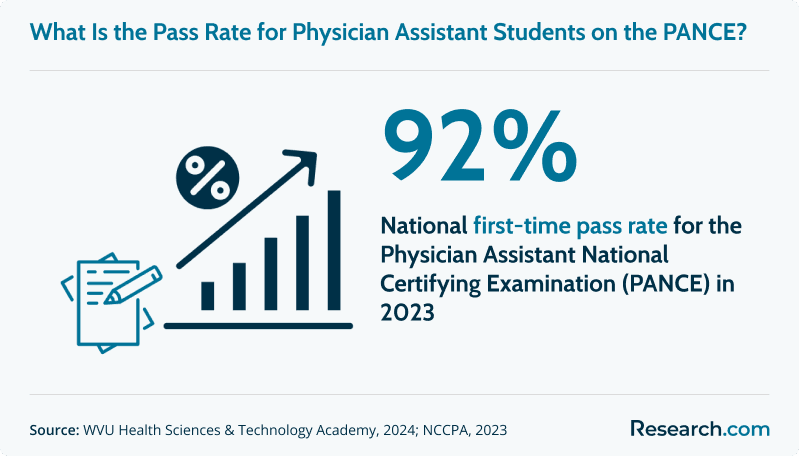
The infographic below shows the PANCE pass rate, demonstrating how students perform on this critical certification step. High pass rates reflect both program quality and student readiness for licensing.
What are typical salaries and job growth prospects for PAs versus RNs?
Salary and job growth are two of the biggest factors RNs consider when deciding whether to become physician assistants (PAs). According to the U.S. Bureau of Labor Statistics, the median annual salary for PAs in 2024 was $133,260, compared to $93,600 for registered nurses. The highest 10% of PAs earned more than $182,200, while top-earning RNs brought in over $132,000. These figures highlight a substantial earning gap that reflects the PA’s broader scope of diagnosing, prescribing, and performing advanced medical tasks.
In terms of job outlook, PAs are projected to grow by 20% between 2024 and 2034, adding more than 33,000 new jobs. By contrast, RN employment is projected to grow by about 6% in the same period, still above the national average but at a much slower rate. This makes PA a faster-growing career path with higher long-term demand. Comparisons like medical assistant vs physician assistant salary also demonstrate how scope of practice and autonomy directly influence earnings potential across different healthcare roles.
What challenges should RNs expect when transitioning into PA school and how can they prepare?
Shifting from a registered nurse to physician assistant role requires significant adjustments. Although RNs bring valuable clinical experience, PA school introduces new academic demands, responsibilities, and lifestyle changes. Understanding the challenges beforehand can help nurses prepare for the transition and succeed in their new path.
Challenges to Expect:
- Academic Intensity: PA programs are highly rigorous, condensing advanced medical sciences, pharmacology, and diagnostic training into two to three years. Even seasoned nurses must adapt to the steep learning curve and pace.
- Financial Strain: Many students reduce or pause RN work while enrolled. Between tuition costs and loss of steady RN income, financial planning is essential.
- Lifestyle Adjustments: Balancing classes, rotations, and exams often leaves little time for family or personal commitments. Work-life balance can be more difficult to maintain compared to nursing schedules.
- Role Transition: Moving from implementing care plans to creating and managing them requires a shift in mindset. Exposure to leadership roles, like learning what does a nurse administrator do, can help RNs prepare for greater autonomy.
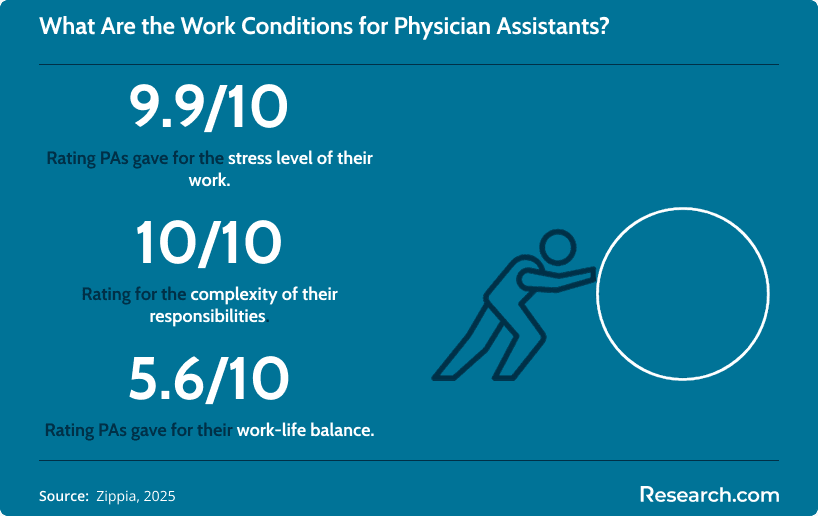
The infographic below outlines the work conditions PAs face, such as high stress and complexity. It reflects the challenges RNs should anticipate as they prepare for this demanding yet rewarding career path.
Here's What Graduates Have to Say About Their Transition from Registered Nurse to Physician Assistant
- Mireille: "Transitioning from RN to PA was the toughest academic challenge of my life, but studying online gave me the flexibility to balance clinical hours and family time. The shift in responsibility—diagnosing, prescribing, and leading patient care—was worth every late night. I now feel fully empowered to impact healthcare in ways I couldn’t before."
- Darius: "As an RN, I was used to following care plans, but PA training pushed me to create them. The online modules made mastering advanced medical science manageable, even while working part-time. Now, prescribing medications and managing complex cases gives me a sense of autonomy I never had before. It’s the most fulfilling leap I’ve taken."
- Alondra: "The transition came with sacrifices, especially leaving my RN salary for two years, but online coursework allowed me to keep a foot in practice. Becoming a PA has opened doors to specialties like emergency medicine, and I’ve grown tremendously in both skill and confidence. The payoff—financially and personally—has been beyond rewarding."
Key Findings
- Physician assistant jobs are projected to grow 20% from 2024 to 2034, adding more than 33,000 positions.
- Median annual salary for PAs is $133,260, while RNs earn $93,600.
- PA programs typically require 1,000 to 4,000 patient care hours before admission.
- Average graduate PA tuition ranges from $12,279 in-state to $24,851 out-of-state.
- National first-time pass rate for the PANCE was 92% in 2023, compared to 100% for WVU’s Class of 2024.
- PAs face high demands: stress level rated 9.9, complexity 10.0, and work-life balance 5.6.
References:
- Bureau of Labor Statistics. Occupational Employment and Wages: Physician Assistants.
- Bureau of Labor Statistics. Physician Assistants: Occupational Outlook Handbook.
- CollegeTuitionCompare. Physician Assistant Program Tuition.
- National Commission on Certification of Physician Assistants (NCCPA). Become Certified.
- West Virginia University School of Medicine. Physician Assistant Students Boast Perfect Pass Rate on National Certifying Exam.
- ZipRecruiter. Physician Assistant Resume Keywords and Skills.
- Zippia. Physician Assistant Education Requirements.
- Zippia. Physician Assistant Jobs.
Other Things You Should Know About Switching from Registered Nurse to Physician Assistant
In 2027, Registered Nurses may have an edge in PA program admissions due to their healthcare experience. However, competitive programs also prioritize academic performance and specific prerequisite courses, so RNs need to ensure these requirements align with their credentials.
Most PA programs are full-time and highly intensive, making it very difficult to work simultaneously. Some RNs manage part-time or per diem shifts, especially during online coursework phases, but this is the exception. The majority of students rely on savings, loans, or scholarships to manage costs while in school. Planning finances carefully beforehand is essential to reduce stress during the program.
Registered Nurses often benefit from their clinical experience and patient care skills when applying to PA programs. In 2027, their background can strengthen applications by demonstrating practical healthcare knowledge and an understanding of medical environments, potentially giving them an advantage during the admissions process.


