
2027 Most Affordable Online Colleges for Early Childhood Education

Co-Founder and Chief Data Scientist
An online bachelor’s degree in early childhood education can be a practical route into teaching, child development, childcare leadership, curriculum support, and related education careers—especially for adults who need a flexible path to a degree. The decision is not only about finding the lowest tuition. You also need to know whether the program is accredited, whether it supports licensure in your state, how field experience works, and whether online learning will give you enough classroom practice to work effectively with young children.
This guide is for prospective students comparing affordable online early childhood education programs in 2026. It explains what these degrees usually include, how online and campus-based programs compare, what costs to evaluate, which affordable programs appear in the available tuition data, what admissions requirements to expect, and how to think about career outcomes before enrolling. Because children’s cognitive development is especially active from birth through age eight (Centers for Disease Control and Prevention, 2024), the quality of preparation matters for both educators and the children they serve.
If you are still comparing learning formats more broadly, this guide can also help you decide whether an online degree fits your schedule, budget, and career plans.
Quick Answer: Is an Online Bachelor’s in Early Childhood Education Worth Considering?
Yes, an online bachelor’s degree in early childhood education can be worth considering if it comes from an accredited institution, includes supervised field experience, aligns with your state’s teaching or childcare requirements, and fits your budget. Online programs are often most useful for working adults, transfer students, childcare workers seeking advancement, and students who need flexible scheduling.
The main caution is practical preparation. Early childhood education is highly interactive. If you plan to teach young children in person, a fully online program should still provide local practicum, internship, student teaching, or observation opportunities. A hybrid format may be better if you want more face-to-face training in classroom management, child interaction, and collaboration with families.
Affordable Early Childhood Education Table of Contents
- Are online bachelor’s degrees respected in early childhood education?
- What should students expect in an online early childhood education bachelor’s program?
- Most affordable online bachelor’s programs in early childhood education
- What affects the cost of an online early childhood education degree?
- How do you apply to an online bachelor’s program in early childhood education?
- What career services should online early childhood education students look for?
- How can early childhood educators advance their careers?
- What is the career outlook for child life specialists?
- Can early childhood education lead to elementary education?
- What other careers can early childhood education graduates pursue?
- Should early childhood educators pursue advanced special education training?
- How does parental engagement strengthen online early childhood education?
- How are policy and funding changes affecting early childhood education?
- Can alternative teacher certification speed up an early childhood education career?
- How do library and research resources support early childhood educators?
- Is a doctorate in educational leadership useful for advancement?
- How can an advanced special education master’s degree improve inclusive classrooms?
Are online bachelor’s degrees respected in early childhood education?
In most cases, an online bachelor’s degree is treated as legitimate when it is awarded by an accredited college or university and meets the same academic standards as the school’s campus-based programs. Many accredited online schools use the same faculty, degree requirements, assignments, and institutional oversight for online and on-campus students. Reputable institutions offering online education programs include the University of Washington (Seattle Campus), Florida State College at Jacksonville, and South Dakota State University. Students focused on price can also compare cheap accredited online colleges that may offer lower-cost pathways without sacrificing institutional recognition.
The bigger question is not whether online learning can be rigorous. It is whether the program is designed well for teacher preparation. Course quality can vary by instructor, by technology platform, and by how well hands-on experiences are built into the degree. A strong program should use an effective learning management system, provide regular instructor feedback, and make fieldwork expectations clear before you enroll.
Before applying, ask admissions staff how the online program handles observations, practicum hours, student teaching, childcare center placements, and state-specific requirements. Then talk with current students or alumni if possible. They can often give more useful information than a catalog page: how responsive instructors are, whether courses are organized, how field placements are arranged, and whether working students can realistically manage the schedule.
The main trade-off: flexibility versus in-person skill development
A fully online Early Childhood Education program can work well for theory, lesson planning, child development, assessment, literacy instruction, and family engagement. However, teaching young children also requires skills that develop through direct practice: reading children’s nonverbal cues, managing transitions, setting routines, responding to behavior, guiding play, and using hands-on materials in a physical classroom.
If your goal is classroom teaching, look carefully at whether the program includes local field experiences or hybrid components. A hybrid program may be less convenient, but it can provide more opportunities to practice classroom management, work with mentor teachers, and build professional confidence.
| Program format | Best fit | Main advantage | Main caution |
| Fully online | Working adults, transfer students, childcare workers, students far from campus | Maximum scheduling flexibility and fewer commuting expenses | May require extra effort to secure strong local field experience |
| Hybrid | Students preparing for classroom teaching or licensure | Combines online coursework with in-person practice | Requires travel, fixed meeting times, or local placement availability |
| Campus-based | Students who want frequent face-to-face support and structured classroom practice | More direct access to faculty, peers, labs, and school partnerships | Less flexible for full-time workers or students outside the area |
Will employers respect an online early childhood education degree?
Employers generally focus on accreditation, relevant experience, licensure eligibility, references, and whether you can do the job. In many cases, the diploma itself does not state whether the degree was completed online or on campus. Acceptance of online education has also grown, as shown in broader online education statistics.
That said, employer expectations vary by state, district, childcare organization, and role. Some teaching positions require state-approved educator preparation, student teaching, background checks, or specific endorsements. Other roles, including childcare center director, nonprofit program coordinator, family engagement specialist, or curriculum assistant, may place less emphasis on traditional classroom teaching. PayScale also lists jobs for people with a bachelor’s degree in early childhood education.
The safest approach is to verify requirements before enrolling. Contact your state education agency, potential employers, and the program’s licensure office. Ask whether graduates from the online version of the program are eligible for the same roles as campus graduates.
What should students expect in an online early childhood education bachelor’s program?
An online bachelor’s program in early childhood education usually combines child development theory, curriculum planning, literacy instruction, assessment, family engagement, inclusion, health and safety, and supervised field experience. The main difference from a campus program is how coursework is delivered. According to a VdoCipher (2024) survey, flexibility remains a major reason students choose online learning.
Course delivery: asynchronous, synchronous, and hybrid learning
Online courses are commonly delivered in two ways. Asynchronous courses let students watch lectures, complete readings, participate in discussions, and submit assignments on a flexible schedule. This format is often best for students balancing employment, caregiving, or unpredictable schedules. Similar flexibility is one reason students compare programs such as an MFA degree online when they need graduate study to fit around other obligations.
Synchronous courses require students to attend live online sessions at set times. They may be better for discussion, instructor interaction, and peer collaboration, but they offer less flexibility. Hybrid programs combine online coursework with scheduled in-person requirements, which can be especially useful in teacher preparation.
Ask each school these questions before applying: Are courses live, self-paced, or mixed? Are any evening or weekend sessions required? How are field placements scheduled? Can working students complete practicum requirements near home? The answers will determine whether the program can realistically fit your life.
Education remains a popular online field. UPCEA & Collegis Education (2024) reported that education is only second to business in popularity among online graduate students, and 71% of prospective undergraduates studying education prefer distance learning programs.
Common courses in early childhood education programs
Child and human development. These courses examine how children grow physically, socially, emotionally, and cognitively. Students study developmental theories and the factors that shape child development. Some programs also introduce special education concepts for working with children who have different learning or developmental needs.
Early childhood literacy. Literacy courses prepare students to support listening, speaking, early reading, writing, vocabulary growth, storytelling, and language-rich classroom routines. Students learn how to choose materials, design activities, and build classrooms that support communication.
Health, safety, and nutrition. These courses cover child wellness, safe learning environments, hygiene routines, nutrition basics, communicable disease awareness, and classroom policies that protect young learners.
Art, play, and creative development. Students explore how art, movement, music, dramatic play, and open-ended materials support creativity and development. Strong programs show future educators how to design activities that encourage exploration rather than simply producing a finished craft.
Curriculum and lesson planning. Curriculum courses teach students how to design age-appropriate lessons, group activities, individual supports, daily routines, assessments, and learning environments for young children.
| Course area | What students learn | Why it matters in practice |
| Child development | Developmental stages, learning theories, behavior, family and cultural influences | Helps educators choose realistic expectations and age-appropriate strategies |
| Literacy | Language development, early reading, writing readiness, oral communication | Supports foundational skills children need before and during elementary school |
| Health and safety | Nutrition, hygiene, classroom safety, wellness routines | Protects children and supports healthy learning environments |
| Creative development | Play, art, music, movement, imagination, sensory activities | Encourages exploration, expression, and problem-solving |
| Curriculum design | Lesson planning, assessment, learning centers, individualized activities | Connects theory to daily classroom decisions |
Most affordable online bachelor’s programs in early childhood education
Among top schools offering online bachelor’s programs in early childhood education, annual tuition ranges from $2,850 to $11,250 (OnlineU, 2025). At some institutions, out-of-state tuition can reach up to $653 per credit hour. The affordability range includes institutions such as Bay Mills Community College, Eastern Oregon University, and the University of West Alabama.
The table below lists affordable online bachelor’s programs in early childhood education using the tuition figures provided in the source data. Treat tuition as a starting point, not the full cost of attendance. Fees, books, technology, field placement expenses, testing, background checks, and certification-related costs can change the total amount you pay.
| Rank | Institution | Tuition Cost |
| 1 | Aspen University | $4,500 |
| 2 | Western Carolina University | $5,670 |
| 3 | Northwestern College - IA | $5,649 |
| 4 | University of the Cumberlands | $6,368 |
| 5 | St. Catherine University | $6,675 |
| 6 | Wichita State University | $6,708 |
| 7 | Florida Gateway College | $6,915 |
| 8 | Fort Hays State University | $6,997 |
| 9 | Fayetteville State University | $7,556 |
| 10 | Central Methodist University | $7,800 |
How to use this affordability list
Do not choose a program based on tuition alone. A low-cost program that does not meet your state’s licensing requirements, offers weak field placement support, or accepts few transfer credits may cost more in the long run. Compare total price, time to completion, accreditation, transfer policies, licensure alignment, and student support together.
What affects the cost of an online early childhood education degree?
Online programs can reduce some costs, especially commuting, parking, housing near campus, and relocation. They may also be less expensive than campus-based options because some course materials and instruction can be delivered digitally. However, online does not automatically mean cheap. Tuition structure, residency rules, transfer credit, fees, and practicum requirements all affect the final price.
| Cost factor | Why it matters | Question to ask the school |
| Tuition rate | Some schools charge per credit, while others list annual tuition. | What is the total estimated tuition for the full bachelor’s degree? |
| In-state versus out-of-state pricing | Out-of-state students may pay more, including up to $653 per credit hour at some institutions. | Do online students pay the same rate regardless of residency? |
| Transfer credits | Accepted credits can shorten the program and lower total cost. | How many prior credits can I transfer into the major and general education requirements? |
| Fees and materials | Technology fees, books, assessments, background checks, and placement costs can add up. | What costs are not included in the advertised tuition? |
| Field experience requirements | Practicum or student teaching may require travel, unpaid hours, or schedule changes. | Can I complete fieldwork near where I live? |
| Licensure preparation | Certification exams, applications, and additional state requirements may create extra expenses. | Does the program meet educator preparation requirements in my state? |
Is an online bachelor’s degree in early childhood education financially worth it?
The value depends on your career goal, tuition paid, borrowing level, state requirements, and the type of employer you pursue. The median annual wage for kindergarten and elementary school teachers is $62,340, compared with $49,500 for all occupations (Bureau of Labor Statistics, 2024). That comparison suggests that some graduates may see a reasonable return, particularly if they choose an affordable program and avoid excessive debt.
Pay still varies by setting. Teachers in local schools have a median annual salary of $59,300, while teachers in private schools have a median annual salary of $47,250. Location, licensure, years of experience, union coverage, school funding, and job role can all affect earnings.
Students planning to continue into graduate study should be especially cost-conscious. For example, those moving toward elementary teaching may compare cheap degrees in elementary education online to keep future credential costs manageable.
How do you apply to an online bachelor’s program in early childhood education?
Admissions requirements for online early childhood education bachelor’s programs are usually similar to campus-based programs. Applicants typically need proof of high school completion or prior college coursework. Some schools require minimum GPA thresholds, standardized test scores, recommendations, essays, or resumes. Many institutions waived standardized testing during the COVID-19 pandemic because of scheduling disruptions, but requirements vary by school and may change over time.
Common admission requirements
- High school diploma
- Minimum GPA, depending on the institution
- Standardized test scores, when required
Common application materials
- Letters of recommendation
- Application form and processing fees
- Statement of purpose or personal essay
- CV or resume
- TOEFL or IELTS scores for international students, when required
Application steps for prospective students
- Confirm that the college or university is institutionally accredited.
- Ask whether the early childhood education program leads to licensure, non-licensure, childcare leadership, or another outcome.
- Check whether the program meets requirements in the state where you plan to work.
- Request a transfer credit evaluation before committing, especially if you have community college credits.
- Compare total cost, not only annual tuition.
- Ask how field placements, internships, or student teaching are arranged for online students.
- Review technology requirements and course schedules before you enroll.
What technology do online early childhood education students need?
Most online students need a reliable computer, stable high-speed internet, and access to the school’s learning platform. Students in synchronous courses should also have a webcam, microphone, and quality headset. As with students comparing the cheapest software engineering degree online, the exact hardware needs may vary by program, but dependable technology is essential for completing assignments, joining class meetings, watching lectures, and submitting work on time.
Some students also use a tablet, cloud storage, note-taking tools, project management apps, citation tools, or grammar-checking software. These are not always required, but they can help working adults keep school files organized and manage deadlines.
What should you look for in an online early childhood education program?
Start with accreditation. Choose an institution accredited by a recognized accrediting body, and confirm whether the education program itself has the approvals needed for your goal. This matters for employment, transfer credit, graduate admission, and licensure. The logic is similar to why aspiring paralegals are often advised to prioritize ABA approved paralegal programs when professional recognition is important.
Next, check whether the program is designed for your career path. A non-licensure early childhood degree may be appropriate for childcare administration, family services, nonprofit work, or curriculum support, but it may not qualify you for public school teaching. A licensure-track program may require student teaching, state exams, and approved placements.
Also consider format. Fully online programs may be better for students who work full time or have caregiving responsibilities. Hybrid programs may be stronger for students who need direct practice with children, classroom routines, and mentor feedback. Because early childhood teaching can involve emotional labor and high levels of interaction, practical experience is not a minor detail.
Finally, review faculty expertise, student services, local partnerships, and career support. Strong programs help students build professional networks, prepare for fieldwork, and understand long-term options. This can support setting up your long-term career goals before graduation. It is also useful to remember that most kindergarten teachers, at 83%, work in local schools.
| Program feature | Why it matters | Red flag |
| Accreditation | Supports transferability, employer recognition, and possible licensure eligibility | The school cannot clearly identify its accreditor |
| Licensure alignment | Determines whether the degree prepares you for teaching credentials | The program avoids answering state-specific licensure questions |
| Field placement support | Hands-on practice is central to early childhood education | Students must find placements with little guidance |
| Flexible scheduling | Important for working adults and caregivers | Required live meetings conflict with your work schedule |
| Career services | Helps with resumes, interviews, placements, and employer connections | Services are available only to campus students |
What career services should online early childhood education students look for?
Online students should expect career support that is comparable to what campus students receive. Because early childhood education often requires field experience, background checks, references, and local employer connections, career services can directly affect how smoothly students move from coursework to employment.
- Career advising: Advisors should help students compare teaching, childcare administration, family services, curriculum, nonprofit, and graduate school pathways.
- Resume and interview support: Strong programs help students present practicum experience, lesson planning skills, child development knowledge, and classroom readiness.
- Education-specific job boards: Job listings should include childcare centers, preschools, Head Start programs, schools, nonprofits, and child-focused organizations when available.
- Practicum and internship placement help: Online students should ask whether the school helps secure approved local sites or leaves the process mostly to the student.
- Alumni mentoring: Connections with graduates can help students understand local hiring expectations, licensure processes, and realistic first jobs.
How can early childhood educators advance their careers?
A bachelor’s degree in early childhood education can lead to classroom, childcare, administrative, curriculum, and family-support roles. Advancement often depends on additional experience, state credentials, leadership ability, specialized training, and sometimes graduate education. Educators who want to move into administration, policy, or senior program leadership may eventually consider a doctorate in educational leadership online.
Common advancement routes include becoming a lead teacher, mentor teacher, childcare center director, program coordinator, curriculum specialist, early intervention support professional, or education administrator. Specializations in child psychology, inclusive education, literacy, bilingual education, or special education can help educators serve more diverse learners and qualify for more focused roles.
| Career goal | Typical next step | When it makes sense |
| Lead teacher or classroom specialist | Build classroom experience, complete licensure if required, pursue targeted professional development | You want to remain close to daily teaching |
| Childcare center director | Gain supervisory experience and learn budgeting, compliance, staffing, and family communication | You want leadership responsibility in early learning settings |
| Curriculum specialist | Develop expertise in standards, assessment, instructional design, and teacher coaching | You enjoy improving programs and supporting other educators |
| Special education-focused educator | Pursue endorsements, certifications, or graduate training in special education | You want to support children with diverse developmental and learning needs |
| Education leadership or policy role | Consider graduate study in leadership, administration, or policy | You want to influence systems, funding, compliance, or program design |
What is the career outlook for child life specialists?
Child life specialists support children and families in healthcare settings by addressing emotional, developmental, and psychosocial needs during medical experiences. This career is related to early childhood education because it requires knowledge of child development, communication, play, family systems, and trauma-sensitive support, though it may require additional certification or specialized preparation beyond a bachelor’s degree in early childhood education.
Career prospects can improve with relevant experience, supervised clinical preparation, and targeted credentials. Students interested in this path should compare requirements early, because hospital and healthcare roles can have more specific qualifications than childcare or preschool roles. For salary and job-growth details, review Research.com’s guide on how much does a child life specialist make.
Can early childhood education lead to elementary education?
Yes. Early childhood education can be a strong foundation for elementary education because it focuses on the developmental years that shape later learning. Students study child development, early literacy, classroom routines, assessment, family communication, and age-appropriate curriculum—skills that can transfer into the early elementary grades.
However, a degree in early childhood education does not automatically qualify every graduate to teach elementary school. State licensure requirements differ. Some states separate early childhood and elementary credentials, while others allow overlapping grade bands. Students who want to teach elementary grades should verify requirements before choosing a program and may consider additional preparation such as the cheapest online elementary education degree options.
This pathway can be especially useful for educators who want to understand how preschool and kindergarten readiness connect to later academic development. It may also help teachers become more versatile across early grade levels, depending on state certification rules.
What other careers can early childhood education graduates pursue?
An online bachelor’s degree in early childhood education can support more than preschool or kindergarten teaching. Graduates may work in childcare management, family support, educational publishing, nonprofit programs, curriculum design, early intervention support, advocacy, and community-based child services. The right path depends on whether the program is licensure-focused, whether you complete field experience, and whether you gain specialized skills.
One option is curriculum support. Curriculum specialists help create, review, or adapt early learning materials so they align with developmental expectations and classroom realities. Another path is child advocacy, where professionals work through nonprofit organizations, agencies, or community programs to support access, safety, early intervention, or educational equity.
Creative graduates may explore educational content development, children’s learning tools, toy design support, or digital learning materials. These roles may require portfolios, writing samples, design experience, or knowledge of child-centered product development.
Working adults who plan to continue their education should compare flexible and affordable options carefully. Research.com’s list of the most affordable online colleges for working adults can help students evaluate cost-conscious programs that fit employment and family obligations.
Should early childhood educators pursue advanced special education training?
Advanced training in special education can be valuable for early childhood educators who want to build inclusive classrooms, support children with developmental differences, collaborate with specialists, and design individualized learning strategies. It can also strengthen skills in behavior support, adaptive instruction, family communication, and intervention planning.
This path makes the most sense if you regularly work with children who need additional supports, want to pursue special education roles, or plan to move into inclusion leadership. Students comparing graduate options can review the cheapest online masters in special education programs to evaluate cost-effective ways to deepen their credentials.
How does parental engagement strengthen online early childhood education?
Family engagement is central in early childhood education because young children learn across home, school, and community settings. In online or blended learning environments, caregiver involvement becomes even more important. Families may help maintain routines, reinforce activities, communicate children’s needs, and share observations that educators cannot see through a screen.
Effective programs use digital tools for parent-teacher conferences, progress updates, workshops, and two-way communication. The goal is not to shift teaching responsibility to parents, but to build a coordinated support system around the child. Educators who want stronger family-engagement strategies may benefit from graduate-level training, including options such as a cheap masters in education online.
Current trends affecting early childhood education
Early childhood education is changing because of technology adoption, workforce pressure, funding debates, family needs, and increasing attention to inclusion and early intervention. The COVID-19 pandemic accelerated digital tool use across education, and educators are now expected to be more comfortable with online communication, learning platforms, classroom technology, and digital family engagement. Some professionals pursue degree programs for educational technology to build expertise in this area.
At the same time, technology does not replace the need for human interaction in early childhood education. Young children still need responsive adults, play-based learning, sensory experiences, routines, peer interaction, and emotionally supportive environments. For online degree students, this means digital competence should be paired with field experience and strong child-development knowledge.
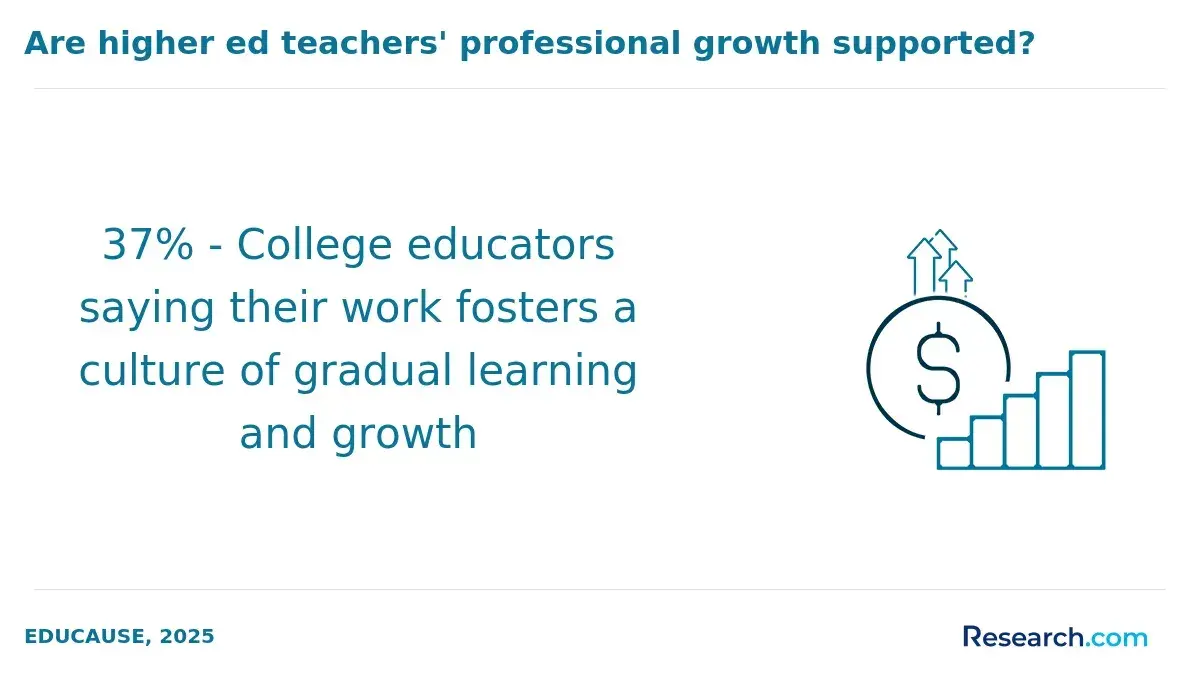
Teacher morale, workplace collaboration, pay, and retention remain important issues in the education workforce, as discussed in sources such as Gallup, EdWeek, RAND, EDUCAUSE, and the U.S. Bureau of Labor Statistics. Prospective students should enter the field with realistic expectations about workload, compensation, emotional demands, and advancement options.
How are policy and funding changes affecting early childhood education?
Policy and funding decisions influence who can access early childhood programs, what standards providers must meet, how classrooms are staffed, and which services are prioritized. Changes in public funding, quality standards, early intervention requirements, and state mandates can affect curriculum, staffing, compliance, and program operations.
Educators who want to influence these systems may move into administration, advocacy, policy, or leadership roles. Graduate study can help professionals understand budgeting, regulation, organizational management, and strategic planning. Those comparing leadership pathways can review the most affordable online doctorate programs in educational leadership.
Can alternative teacher certification speed up an early childhood education career?
Alternative teacher certification programs may help some career changers or degree holders enter teaching without completing a second traditional undergraduate program. These routes usually focus on classroom practice, mentorship, pedagogy, and state certification requirements. They can be faster than starting over, but they are not automatically the right choice for every student.
Before choosing this route, verify whether the alternative certification is accepted in your state, whether it covers early childhood grades, and whether employers in your area recognize it. Students comparing lower-cost pathways can review the cheapest teacher alternative certification programs.
How do library and research resources support early childhood educators?
Strong library resources help online students access peer-reviewed research, lesson-planning materials, child development studies, assessment tools, policy information, and evidence-based teaching strategies. This is especially important for online learners who may not have regular campus access.
Advanced library systems can also help educators evaluate sources more critically, design better curriculum, and stay current with research on literacy, inclusion, family engagement, and classroom practice. Educators interested in research, information access, or learning-resource leadership may explore programs such as the cheapest MLIS degree online.
Common mistakes to avoid when choosing an online early childhood education degree
| Mistake | Why it can hurt you | Better approach |
| Choosing the cheapest tuition without checking accreditation | Credits, licensure eligibility, or employer recognition may be limited. | Confirm institutional accreditation and program approval first. |
| Assuming every early childhood degree leads to teaching licensure | Some programs are non-licensure and may not qualify graduates for public school teaching. | Ask whether the program meets requirements in the state where you plan to teach. |
| Ignoring field experience requirements | You may discover too late that you need daytime availability, travel, or an approved placement site. | Request details on practicum, observation, internship, and student teaching expectations. |
| Comparing only annual tuition | Fees, books, technology, exams, background checks, and lost work hours can change total cost. | Ask for a full cost estimate through graduation. |
| Overlooking transfer credit policies | You may repeat courses or spend more time in school than necessary. | Get a written transfer evaluation before enrolling. |
| Relying only on rankings | A highly ranked or low-cost school may still be a poor fit for your state, schedule, or career goal. | Use rankings as one input alongside accreditation, licensure, cost, and support. |
Questions to ask before enrolling
- Is the college or university accredited by a recognized accrediting organization?
- Is the early childhood education program licensure-track or non-licensure?
- Does the program meet educator preparation requirements in my state?
- How many transfer credits will the school accept?
- What is the total estimated cost through graduation, including fees?
- Are courses asynchronous, synchronous, hybrid, or mixed?
- How are practicum, observation, internship, or student teaching placements arranged?
- Can I complete fieldwork near my home or workplace?
- What career services are available to online students?
- What jobs have recent graduates pursued, and what additional credentials did they need?
Is a doctorate in educational leadership useful for advancement?
A doctorate in educational leadership may be useful for early childhood professionals who want senior roles in administration, policy, higher education, consulting, program leadership, or systems-level change. Doctoral programs typically emphasize research, strategic planning, organizational leadership, policy analysis, and decision-making.
This degree is usually not necessary for entry-level teaching or many childcare roles. It is more appropriate after you have professional experience and a clear leadership goal. Educators seeking an accelerated online route can compare options such as EdD educational leadership programs.
How can an advanced special education master’s degree improve inclusive classrooms?
An advanced special education master’s degree can help early childhood educators design more inclusive learning environments for children with different developmental, behavioral, communication, and learning needs. Graduate training may strengthen skills in individualized instruction, intervention planning, adaptive materials, collaboration with families, and teamwork with specialists.
This pathway is especially relevant for educators in inclusive preschool settings, early intervention programs, public schools, or leadership roles that involve supporting diverse learners. Those comparing evidence-based graduate options can explore online special education masters programs.
Key Insights
- Accreditation comes first. An affordable online early childhood education degree is only useful if the institution is accredited and the program supports your intended career path.
- Licensure rules are state-specific. Do not assume an online degree qualifies you to teach in public schools. Ask whether the program meets requirements where you plan to work.
- Field experience matters. Early childhood education is hands-on. Fully online coursework should still include supervised local practice if your goal involves teaching young children.
- Affordability requires total-cost comparison. Tuition in the listed affordable programs ranges from $4,500 to $7,800 in the table, while broader OnlineU data reports $2,850 to $11,250 annually. Fees, transfer credits, and placement expenses can change the final cost.
- Online learning is best for students who need flexibility. Asynchronous courses can help working adults, caregivers, and transfer students progress toward a degree without relocating.
- Hybrid programs may be stronger for future teachers. If you need classroom management practice, mentor feedback, and direct interaction with young children, some in-person training can be valuable.
- Career options extend beyond teaching. Graduates may pursue childcare leadership, curriculum support, family services, nonprofit work, advocacy, elementary education pathways, child life preparation, or graduate study.
- Do not rely on price or rankings alone. The best program is the one that fits your state requirements, schedule, finances, fieldwork needs, and long-term career goals.
References:
- Ash, A. M. (2025, September 24). Teachers Who Collaborate, Learn at Work Are More Satisfied. Gallup. https://news.gallup.com/poll/695492/teachers-collaborate-learn-work-satisfied.aspx
- EDUCAUSE. (2025). Findings From The 2025 Teaching and Learning Workforce Report. https://events.educause.edu/-/media/files/events/webinar/2025/web2513/slides.pdf
- Kurtz, H. & Baker, L. (2025, March 4). What Teacher Morale Looks Like in Every State. EdWeek. https://www.edweek.org/the-state-of-teaching/teaching-learning/what-teacher-morale-looks-like-in-every-state/2025/03
- Steiner, E. D., Levine, P. R., Doan, S., & Woo, A. (2025). Teacher WellBeing, Pay, and Intentions to Leave in 2025. RAND. https://www.rand.org/pubs/research_reports/RRA1108-16.html
- U.S. Bureau of Labor Statistics. (2025, August 8). Occupational projections, 2024–2034, and worker characteristics, 2024. Retrieved February 2026, from https://www.bls.gov/emp/tables/occupational-projections-and-characteristics.htm
Other Things You Should Know About Affordable Online Colleges for Early Childhood Education
In 2027, several affordable online colleges offer scholarships for early childhood education degrees, including Western Governors University and Walden University. These institutions provide financial aid opportunities that lower costs for students pursuing degrees in this field.
As of 2027, some affordable online colleges offering bachelor's degrees in early childhood education include Eastern New Mexico University, Fort Hays State University, University of North Carolina at Pembroke, and Florida International University. Each institution offers comprehensive programs at competitive tuition rates, making quality education accessible.
Yes, most online early childhood education programs in 2027 require students to pursue state-specific teaching certifications upon graduation. This often involves passing exams, completing a certain number of student-teaching hours, and meeting additional state licensure requirements.


