
2027 Accounting Schools in Texas: How to Become a CPA in TX

Co-Founder and Chief Data Scientist
Choosing an accounting degree in Texas is not just a school decision. It is a licensing, cost, career, and location decision—especially if your goal is to become a certified public accountant (CPA). Texas continues to offer a large business market for accounting graduates, with over 12,000 new accountant jobs expected annually until 2030, but students still need to compare programs carefully because tuition, accreditation, CPA preparation, internship access, and degree format can affect long-term outcomes.
This guide is for prospective undergraduate students, transfer students, working adults considering an online accounting degree, and professionals planning a CPA path in Texas. You will learn what accounting programs usually include, how Texas CPA licensing works, which schools are commonly considered strong options, what costs to expect, how online and campus programs compare, and how to choose a program that fits your budget and career goals.
Quick Answer: Is an Accounting Degree in Texas Worth Considering?
An accounting degree in Texas can be a practical choice for students who want a business-focused career with multiple paths, including public accounting, corporate accounting, auditing, taxation, forensic accounting, government finance, and financial analysis. Graduates with an accounting degree in Texas are projected to receive competitive median salaries in 2026, typically ranging from $58,000 to $76,000 annually. For students pursuing CPA licensure, the degree can also help satisfy the education foundation needed before the CPA exam and professional experience requirements.
What are the benefits of getting an accounting degree in Texas?
- Broad career use. Accounting graduates can pursue roles such as auditor, tax accountant, budget analyst, financial analyst, public accountant, corporate accountant, and government accountant.
- CPA preparation. A strong accounting curriculum can help students complete coursework commonly required for CPA exam eligibility and licensure planning.
- Texas labor market relevance. Demand for accountants and auditors is expected to remain strong in Texas because of business expansion, regulatory complexity, retirements, and the need for reliable financial reporting.
- Flexible study options. Texas students can choose traditional campus programs, online accounting degrees, hybrid formats, accelerated pathways, and bachelor’s-to-master’s options.
What can I expect from an accounting degree in Texas?
An accounting degree in Texas usually combines business fundamentals with technical accounting coursework. Students learn how organizations record transactions, prepare financial statements, evaluate costs, comply with tax rules, assess internal controls, and communicate financial information to decision-makers.
| Program factor | What students should expect | Why it matters |
| Core subjects | Financial accounting, managerial accounting, taxation, auditing, business law, cost accounting, and accounting systems | These areas build the foundation for entry-level accounting roles and CPA exam preparation. |
| Typical duration | A traditional bachelor’s degree usually takes four years | Students planning to become CPAs may need additional credits beyond the bachelor’s degree path. |
| Common tuition range | In-state tuition at public universities may range from $6,000 to $10,000 per year, while private universities may charge more | Total cost depends on residency, school type, fees, housing, books, transfer credits, and program format. |
| Accreditation | Many Texas accounting programs hold AACSB or ACBSP accreditation | Accreditation can signal academic quality and may matter to employers, graduate schools, and CPA-focused students. |
| Career support | Programs may offer internships, employer events, career advising, tutoring, alumni networks, and accounting student organizations | Accounting hiring is relationship-driven, so internship access and recruiting pipelines can be as important as coursework. |
Where can I work with a CPA license in Texas?
A Texas CPA license can support careers in public accounting, corporate finance, government agencies, nonprofit organizations, consulting firms, forensic accounting practices, and financial advisory services. In public accounting firms, CPAs often work in audit, tax preparation, advisory, assurance, and consulting. In corporations, they may manage reporting, internal controls, budgeting, compliance, and financial planning.
Some CPAs specialize in forensic accounting, tax strategy, business valuation, risk advisory, financial reporting, or assurance services. The license is especially useful for professionals who want authority, mobility, and credibility in accounting and finance roles, although not every accounting career requires CPA certification.
How much can I make with a CPA license in Texas?
CPA salaries in Texas vary by city, experience, employer type, specialization, and seniority. According to ZipRecruiter data, the average annual pay for a CPA in Texas is about $85,694 per year, or approximately $41.20 per hour, based on current job postings and compensation surveys.
Typical earnings in the state fall between roughly $69,900 and $96,000 annually, while top earners exceed $116,000 in some areas such as Austin and Odessa. These figures should be treated as market estimates, not guaranteed outcomes. Entry-level salaries, career progression, and total compensation depend on credentials, internships, industry, performance, and local hiring conditions.
In general, CPAs may qualify for higher-responsibility roles than non-certified accounting professionals, especially in public accounting, audit, tax, reporting, and leadership positions.
- Best Accounting Schools in Texas for 2027
- How long does it take to become a CPA in Texas?
- Online vs. on-campus accounting degrees in Texas
- Average cost of accounting programs in Texas
- Financial aid options for Texas accounting students
- Admissions prerequisites for accounting programs
- Common accounting courses in Texas programs
- Accounting specializations to consider and how to compare specialization fit
- Accelerated accounting programs in Texas and fast-track CPA planning
- How to choose the best accounting program in Texas and program-selection note
- How to get your CPA license in Texas
- Alternative career paths if you do not become a CPA
- Trends reshaping accounting opportunities in Texas
- How to specialize in forensic accounting
- Using interdisciplinary study to strengthen an accounting career
- Affordable online master’s degrees in accounting
- Accounting skills in healthcare finance roles
- Career paths for accounting graduates
- Accounting careers connected to education
- Ethics in Texas accounting programs
- Networking strategies for accounting students
- Accounting skills in legal and paralegal work
- Internship and work-study opportunities plus CPA licensing preparation
- Job market for accounting graduates in Texas
- How to accelerate your path to CPA in Texas
- Maintaining licensure and advancing as a CPA
- Tips for choosing the right accounting program, accelerated planning, job-market fit, and final decision checks
Best Accounting Schools in Texas for 2027
To identify strong accounting schools in Texas, we considered reputable education data sources, including the IPEDS database from the National Center for Education Statistics, Peterson’s database, and the College Scorecard. Research.com’s ranking process is explained in our methodology, which is designed to help students compare schools using transparent criteria.
Use this list as a starting point rather than a final answer. The best accounting school for you depends on CPA goals, transfer credits, cost, location, internship access, graduate-degree plans, and whether you need online, hybrid, or campus-based study.
| School and program | Program details | Cost and credits | Accreditation |
| 1. University of Texas-Austin Bachelor of Business Administration, Major in Accounting | The McCombs School of Business offers undergraduate, graduate, and doctoral accounting options. Students can also consider an integrated Master of Public Accounting pathway that combines bachelor’s and master’s study, with the master’s program requiring 31 to 42 credits. | Program length: 4 years; cost: $8,570 per semester; required credits to graduate: 120 | AACSB |
| 2. Texas A&M University Bachelor of Business Administration in Accounting | The James Benjamin Department of Accounting at Mays Business School offers certificate, undergraduate, professional, master’s, and Ph.D. programs. Its Master of Science in Accounting includes areas such as assurance services with information technology and tax consulting with financial planning and requires 37 to 39 credits. | Program length: 4 years; cost per credit: $7,462 per semester; required credits to graduate: 120 | AACSB |
| 3. Baylor University Bachelor of Business Administration, Major in Accounting | The Hankamer School of Business offers accounting programs at the undergraduate and master’s levels. Undergraduate coursework includes financial accounting, taxation, information systems, and assurance services, while the Master of Accounting program requires 33 credits. | Program length: 4 years; cost: $43,530 per year; required credits to graduate: 120 | AACSB |
| 4. Texas Christian University Bachelor of Business Administration, Major in Accounting | The Neeley School of Business offers minor, bachelor’s, professional, and master’s accounting pathways, including options to complete bachelor’s and master’s degrees in five years. Master’s concentrations include audit and assurance services, taxation, MAc core, and financial reporting and valuation. | Program length: 4 years; cost: $57,390 per year; required credits to graduate: 124 | AACSB |
| 5. University of Texas-Dallas Bachelor of Science in Accounting | The Naveen Jindal School of Management offers bachelor’s, master’s, and doctorate accounting programs. The bachelor’s degree includes 27 core courses beyond accounting, and the master’s program offers full-time, part-time, and 24-month cohort options. | Program length: 4 years; cost per credit: $6,068; required credits to graduate: 120 | AACSB |
| 6. Texas Tech University Bachelor of Business Administration in Accounting | The Rawls College of Business offers a BBA in Accounting that covers accounting principles, theories, and practices within a broader business curriculum. | Program length: 4 years; cost: $8,570; required credits to graduate: 120 | AACSB |
| 7. University of Houston BBA in Accounting | The Bauer College accounting program combines technical accounting knowledge with business application and is designed for students pursuing accounting, finance, audit, tax, and related careers. | Program length: 4 years; cost per credit: $430; required credits to graduate: 120 | AACSB |
| 8. University of North Texas BBA in Accounting | UNT emphasizes experiential learning through internships, cooperative education, and professional development. Coursework includes financial accounting, managerial accounting, taxation, and related accounting subjects. | Program length: 4 years; cost per credit: $420; required credits to graduate: 120 | AACSB |
| 9. Southern Methodist University BBA Major in Accounting | The Cox School of Business accounting major prepares students for accounting, finance, auditing, taxation, consulting, and related business careers. Tracks/concentrations: N/A. | Program length: 4 years; cost per credit: $1,230; required credits to graduate: 120 | AACSB |
| 10. Texas State University BBA Major in Accounting | The McCoy College of Business Administration accounting major includes financial accounting, auditing, taxation, business law, and related topics taught within a business school environment. | Program length: 4 years; cost per credit: $522; required credits to graduate: 120 | AACSB |
Key Findings
- Texas accounting programs commonly include financial accounting, managerial accounting, taxation, auditing, business law, and cost accounting.
- Program costs may range from $6,000 to $30,000, depending on residency status, institution type, fees, and school choice.
- The CPA path in Texas can take at least 5 years when education, examination, and experience are included.
- Most accountants and CPAs in Texas hold a bachelor’s degree.
- Employment for Texas accountants and auditors is expected to grow by 20% until 2030.
How long does it take to become a CPA in Texas?
Becoming a CPA in Texas typically takes a minimum of five years because candidates must complete education requirements, prepare for and pass the CPA exam, and satisfy professional experience requirements. The timeline can be shorter or longer depending on whether a student pursues an accelerated program, transfers credits, enrolls part time, or completes a combined bachelor’s-to-master’s pathway.
| CPA step | Typical time involved | What to plan for |
| Bachelor’s degree | Approximately four years of full-time study | Choose coursework that supports accounting knowledge and CPA eligibility planning. |
| Additional credits or graduate study | Varies by program | Some students use a traditional or online accounting master's degree to strengthen credentials and complete additional study. |
| Advanced business study | Longer than the standard CPA path | Students pursuing options such as online DBA programs with accounting-related study should expect a longer timeline. |
| Professional experience | Often one to two years, depending on state rules and employer expectations | Work under appropriate supervision and document duties carefully. |
| Uniform CPA Exam | Can be completed within a year, though some candidates need more time | Build a study plan around the exam sections and your work or school schedule. |
This chart gives a preview of the states with the highest employment figures for accountants and auditors:
How does an online accounting degree compare to an on-campus program?
Online and campus-based accounting programs can both prepare students for accounting careers, but they serve different needs. The right format depends on your schedule, learning style, location, budget, internship goals, and need for in-person recruiting access.
| Factor | Online accounting degree | On-campus accounting degree |
| Schedule | Best for students balancing work, caregiving, military service, or long commutes | Best for students who want fixed class times and a traditional academic routine |
| Interaction | Usually relies on discussion boards, video meetings, email, and virtual office hours | Offers face-to-face access to professors, classmates, tutoring, and clubs |
| Networking | Can be strong if the program offers virtual employer events and career coaching | Often stronger for students who want campus recruiting, accounting organizations, and local firm visits |
| Learning pace | May include asynchronous or self-paced elements | Usually follows a set semester schedule with regular in-person deadlines |
| Best fit | Working adults, transfer students, rural students, and learners who need flexibility | Students who want campus life, in-person mentoring, and immediate access to local employer networks |
When an online accounting degree makes sense
- You need flexibility. Online programs allow many students to complete coursework around employment, family responsibilities, or military obligations.
- You live far from campus. Online study can make reputable programs accessible without relocation or long commutes.
- You are comfortable managing your own schedule. Online learning requires consistent planning, communication, and self-discipline.
When an on-campus accounting degree may be better
- You want in-person support. Campus students can meet faculty, classmates, advisors, and tutors directly.
- You benefit from structure. Scheduled classes and in-person deadlines can help students stay accountable.
- You want local recruiting access. Campus programs may offer employer visits, student accounting organizations, and networking events that are easier to attend in person.
What is the average cost of an accounting program in Texas?
For in-state students at public universities, tuition and fees for an accounting program may range from approximately $6,000 to $10,000 per year, with a median of $7,070. This range generally reflects tuition, required fees, student services, and campus-related costs, but it may not include housing, transportation, technology, books, exam prep, or graduate-level credits.
Out-of-state students and students attending private universities may pay more, with tuition and fees ranging from approximately $15,000 to $30,000 per year or more. Private schools often charge higher tuition, while public universities may be more affordable for Texas residents.
Cost factors students often overlook
- Additional credits for CPA planning. Students pursuing CPA licensure may need coursework beyond a standard bachelor’s degree plan.
- Fees beyond tuition. Technology fees, business school fees, online learning fees, and course materials can raise the total price.
- Housing and transportation. A lower tuition school may not be cheaper if relocation or commuting costs are high.
- Transfer-credit policies. Generous transfer rules can reduce time and cost for community college and returning students.
- CPA exam preparation. Exam review courses and testing-related expenses should be included in long-term planning.
What are the financial aid options for students enrolling in an accounting program in Texas?
Texas accounting students may use scholarships, grants, federal student loans, work-study programs, employer tuition assistance, and school-based aid. The best approach is to compare net price, not just tuition, after grants and scholarships are applied.
- TBA Accounting Student Scholarship Program. This scholarship is supported by Texas CPAs who contribute annually. Students must submit an Application of Intent to the Board to take the CPA exam. Awards may vary from $1,500 per semester or $12,000 per lifetime.
- TXCPA Chapter Scholarships. Many Texas Society of Certified Public Accountants chapters provide scholarship support. For example, the Austin chapter of the TXCPA awards $500 to $2,500 to each successful applicant.
Questions to ask before accepting financial aid
- Is the scholarship renewable, and what GPA is required to keep it?
- Does the award apply to summer courses, online courses, or graduate credits?
- Will work-study jobs connect to accounting, finance, bookkeeping, or business office experience?
- How much debt would you need for the full program, not just the first year?
What are the prerequisites for enrolling in an accounting program in Texas?
Admission requirements vary by institution, but many Texas accounting programs use similar baseline criteria. Students should review both university admission rules and business school or accounting major admission requirements, because some programs require students to complete lower-division coursework before entering upper-level accounting classes.
- High school diploma or equivalent. Most programs require completion of high school or a GED certificate.
- Minimum GPA. Many schools set GPA expectations, commonly ranging from 2.5 to 3.0 on a 4.0 scale.
- SAT or ACT scores. Some programs may request standardized test scores, depending on school policy.
- Prerequisite coursework. Students may need math, English, economics, statistics, or introductory business courses before taking advanced accounting classes.
- Letters of recommendation. Some schools may ask teachers, counselors, or employers to comment on the applicant’s academic preparation, professionalism, or work ethic.
What courses are typically in an accounting program in Texas?
Accounting programs in Texas usually move from introductory business foundations to advanced technical courses. Students planning to become CPAs should pay close attention to course sequencing because some classes are prerequisites for upper-level accounting work.
| Course area | What students learn | Career relevance |
| Introduction to Financial Accounting | Transaction recording, financial statement preparation, and financial statement interpretation | Useful for public accounting, corporate accounting, banking, and finance roles |
| Introduction to Managerial Accounting | Cost behavior, budgeting, performance measurement, and internal decision support | Helpful for students exploring management accounting and certified management accountant requirements |
| Cost Accounting | Job costing, process costing, activity-based costing, and product or service cost analysis | Important for manufacturing, operations, pricing, and corporate finance roles |
| Auditing | Audit standards, risk assessment, controls, evidence, ethics, and assurance procedures | Essential for public accounting, internal audit, compliance, and CPA preparation |
| Taxation | Federal and state tax rules affecting individuals, businesses, and organizations | Useful for tax accounting, planning, compliance, and advisory work |
| Advanced Financial Accounting | Consolidations, partnerships, multinational operations, and complex reporting issues | Helpful for reporting, audit, corporate accounting, and graduate-level accounting study |
What types of specializations are available in an accounting program in Texas?
A specialization in accounting can help students align coursework with a specific career direction. Specializations are not all equal in workload, hiring demand, or certification value, so students should choose based on the type of work they want to do after graduation.
| Specialization | Best for students interested in | Typical work settings |
| Taxation | Tax compliance, tax planning, business tax, individual tax, and regulatory research | CPA firms, corporations, government agencies, and advisory practices |
| Auditing | Controls, assurance, risk, evidence testing, and financial statement reliability | Public accounting firms, internal audit departments, and compliance teams |
| Forensic accounting | Fraud detection, financial investigations, litigation support, and irregular transaction analysis | Accounting firms, law firms, consulting firms, and government agencies |
| Management accounting | Budgeting, cost analysis, operational decision support, and performance evaluation | Corporations, manufacturing firms, healthcare organizations, and government offices |
| Financial reporting and analysis | Complex reporting, financial statement analysis, and accounting standards | Corporate accounting, audit, financial analysis, and reporting teams |
| Information systems and technology | ERP systems, data management, cybersecurity awareness, accounting software, and technology-enabled controls | Accounting technology, audit analytics, consulting, and corporate finance systems roles |
What accelerated accounting programs are available in Texas?
Accelerated accounting programs are designed for students who want to complete academic requirements faster than a traditional route. In Texas, these may include three-year bachelor’s degree options, intensive course schedules, or integrated bachelor’s-to-master’s pathways that help students work toward CPA eligibility more efficiently.
Schools such as the University of Texas and Texas A&M offer fast-track options that can help students organize coursework around Texas’ 150-credit requirement for CPA licensure. These pathways can be useful for highly focused students, but they may not be ideal for learners who need a lighter workload, substantial work hours, or extra time to build internship experience.
Students who need flexibility can compare online options, including a fast track accounting degree. Before enrolling, confirm whether the program’s credits, accounting coursework, and business coursework align with Texas CPA requirements.
How to choose the best accounting program in Texas?
The best accounting program is the one that fits your licensing plan, budget, schedule, academic background, and target employers. A famous school is not always the best value, and the cheapest option is not always the strongest career platform.
Program-selection checklist
- Verify accreditation. Look for institutional accreditation and consider business or accounting accreditation such as AACSB or ACBSP when comparing programs.
- Map the curriculum to CPA goals. Ask whether the program helps students plan for Texas CPA exam education requirements and the 150-credit pathway.
- Review internship access. Find out which accounting firms, companies, agencies, and nonprofits recruit from the program.
- Compare total cost. Include tuition, fees, housing, transportation, books, online fees, graduate credits, and CPA exam preparation.
- Ask about transfer credits. Transfer-friendly policies can reduce both time and cost.
- Evaluate support services. Strong advising, tutoring, career coaching, and accounting labs can make a major difference in difficult courses.
- Consider location. Students targeting internships in Houston, Dallas-Fort Worth, Austin, San Antonio, or other business hubs may benefit from programs with local employer ties.
- Check online quality. If choosing an online program, ask whether students receive the same faculty access, career support, and recruiting opportunities as campus learners.
Common mistakes when choosing an accounting program
- Choosing a school based only on rankings without checking cost and CPA alignment
- Assuming every online accounting degree satisfies Texas CPA education requirements
- Ignoring business school admission requirements after general university admission
- Comparing tuition but forgetting fees, books, housing, and extra credits
- Waiting until senior year to pursue internships
- Assuming salary outcomes are guaranteed because a program advertises strong career results
How to get your CPA License in Texas?
To become a CPA in Texas, candidates must satisfy education, examination, and experience requirements set by the Texas State Board of Public Accountancy. Students should verify requirements directly with the Board before making enrollment decisions because licensing rules are specific and may change.
1. Complete the education requirements
Most CPA candidates begin with a bachelor’s degree from an accredited institution. Students comparing an accounting vs finance degree should know that the degree title alone is not the only factor; the completed accounting and business coursework matters. Review the Texas requirements early and keep copies of transcripts and course descriptions when needed.
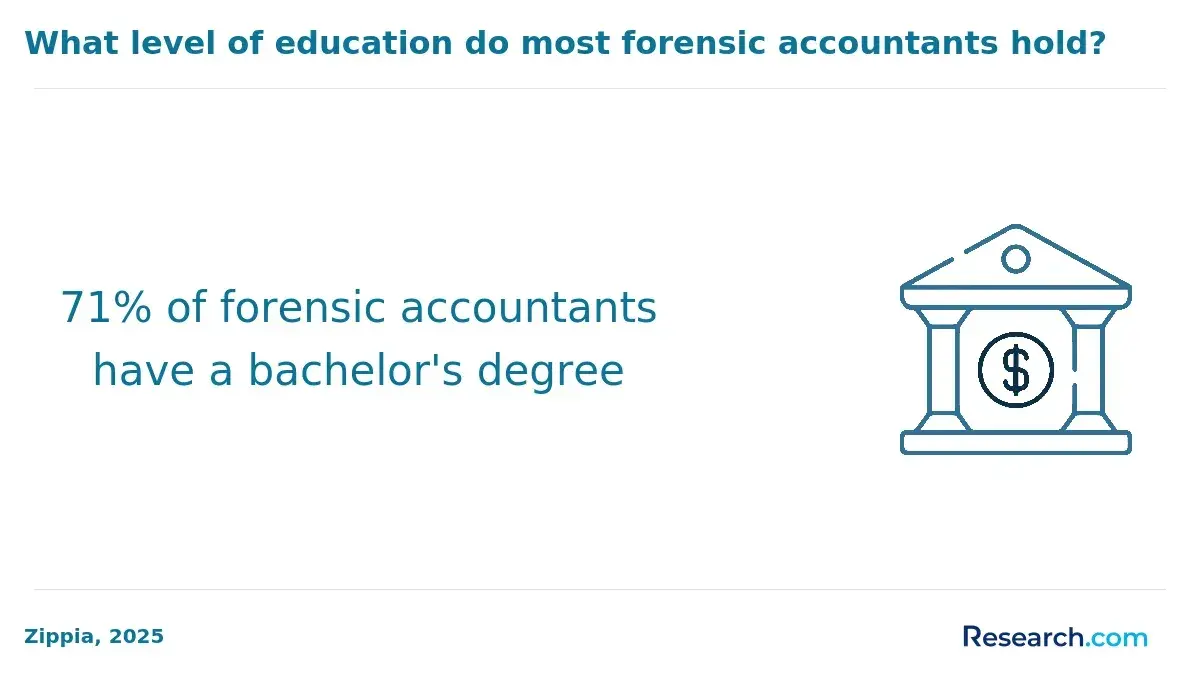
A bachelor’s degree remains the most common academic credential among accountants. A recent report found that 71% of accountants hold a bachelor’s degree.
2. Confirm CPA exam eligibility
Before applying for the CPA exam, review the Texas State Board of Public Accountancy’s eligibility criteria. Candidates typically need to satisfy education and coursework requirements before receiving approval to test. Once approved, candidates receive a Notice to Schedule (NTS), which allows them to schedule exam appointments.
3. Prepare for and pass the CPA exam
The Uniform CPA Exam tests major areas of accounting practice, including auditing and attestation, business environment and concepts, financial accounting and reporting, and regulation. Candidates often use structured review courses, practice questions, and study calendars to prepare. The exam is typically administered through NASBA in collaboration with the AICPA.
4. Complete professional experience
After passing the exam, candidates must complete required professional experience, usually under the supervision of a licensed CPA. Keep detailed records of your role, dates, responsibilities, supervisor information, and qualifying work.
5. Apply for CPA licensure
Once education, exam, and experience requirements are complete, submit the CPA license application to the Texas State Board of Public Accountancy. Include required documentation such as transcripts, exam scores, and work experience verification.
What alternative career paths can I consider if I don't become a CPA in Texas?
A CPA license is valuable, but it is not the only route for accounting graduates. Many students build careers in corporate accounting, payroll, bookkeeping, financial analysis, budget analysis, compliance, banking, insurance, consulting, or government finance without becoming CPAs. Others use accounting as a foundation for a different regulated profession or public-service role.
For example, students who want a people-focused public career may compare accounting with education by reviewing elementary school teacher requirements in Texas. That path is very different from accounting, but comparing requirements, salary expectations, and day-to-day work can help undecided students choose a career that fits their strengths and values.
What emerging trends are reshaping professional opportunities in Texas?
Accounting work in Texas is being shaped by automation, data analytics, changing compliance expectations, client demand for advisory services, and the increased use of accounting software and enterprise systems. These trends do not eliminate the need for accountants; they change what employers expect. Graduates who can interpret data, use technology, understand controls, and communicate financial insight may be better positioned than those who only know manual processes.
Other Texas professions are seeing similar shifts as technology and regulation reshape job responsibilities. Students comparing regulated career paths can review how to become a nurse practitioner in Texas to see how education, licensure, and professional expectations differ across fields.
How can I specialize in forensic accounting in Texas?
Forensic accounting is a strong fit for students who like investigation, fraud detection, litigation support, data analysis, and detailed documentation. To prepare for this area, look for coursework in auditing, fraud examination, forensic investigation, business law, ethics, data analytics, and internal controls.
Students who need flexible study can compare a forensic accounting degree online. Before enrolling, ask whether the program includes fraud-focused projects, accounting software, case analysis, and faculty with forensic or investigative experience.
Can interdisciplinary studies enhance accounting careers in Texas?
Accounting increasingly overlaps with technology, law, analytics, investigation, compliance, healthcare, and public administration. Interdisciplinary study can help students move into specialized roles such as fraud investigation, financial systems analysis, compliance review, risk management, or litigation support.
For students interested in investigation-heavy work, pairing accounting knowledge with forensic thinking can be valuable. A related comparison point is a forensic science degree in Texas, which shows how evidence, documentation, and analytical reasoning are used in a different professional setting.
Is an affordable online master’s degree in accounting a smart investment for your Texas career?
An online master’s in accounting may be worthwhile for students who need additional credits for CPA planning, want deeper technical knowledge, or are seeking roles in audit, tax, forensic accounting, reporting, or advisory services. It may not be necessary for every accounting role, especially if a student can meet career goals with a bachelor’s degree, certifications, or work experience.
Cost matters. Students comparing graduate options should evaluate tuition, fees, employer reimbursement, credit requirements, CPA alignment, and career support. A useful starting point is Research.com’s guide to the cheapest online masters in accounting.
Can accounting skills transition into specialized healthcare finance roles?
Accounting skills can transfer into healthcare finance, revenue cycle management, medical billing oversight, compliance support, and cost analysis. Healthcare organizations need professionals who understand accuracy, documentation, financial controls, and reimbursement processes.
Students interested in healthcare finance can also review how to be a medical coder in Texas to understand a related pathway that depends on precise records, coding rules, billing systems, and compliance.
What career paths are available for graduates of accounting programs in Texas?
An accounting degree can lead to several career directions. Some require CPA licensure for advancement, while others value accounting knowledge without requiring the CPA credential.
| Career path | Typical responsibilities | CPA value |
| Public accountant | Provides audit, tax, accounting, and consulting services to individuals, businesses, and agencies | Often highly valuable, especially for audit and public accounting advancement |
| Corporate accountant | Handles reporting, reconciliations, budgeting, internal controls, and financial analysis inside a company | Useful for senior reporting, controller, and leadership tracks |
| Government accountant | Manages public funds, budgets, audits, compliance, and agency financial operations | Helpful but not always required, depending on role and agency |
| Forensic accountant | Investigates fraud, embezzlement, suspicious transactions, and financial evidence for legal or compliance matters | Often beneficial because it strengthens credibility in investigative and expert roles |
| Financial analyst | Reviews financial data, evaluates investment or business decisions, and prepares recommendations | Helpful in some roles, though finance credentials or graduate business study may also be relevant; graduates may also compare the best accounting MBA programs. |
Can an Accounting Background Lead to a Career in Education in Texas?
An accounting background can support teaching, training, tutoring, curriculum development, or business education roles. Experienced accountants may teach accounting or business topics in certain settings, but school-based teaching roles may require additional certification or academic credentials.
Professionals considering this transition should review what degree do you need to be a teacher in Texas to understand how educator requirements differ from accounting career requirements.
How are ethical challenges addressed in Texas accounting programs?
Ethics is central to accounting because accountants handle financial records, controls, reporting, tax compliance, audits, and confidential information. Texas accounting programs often include ethics through business law, auditing, corporate governance, professional standards, and case-based discussions.
Students should look for programs that teach ethical decision-making through practical scenarios, not only definitions. Accounting ethics also has parallels with other public-impact professions, such as planning and regulation. Students interested in comparing ethical frameworks across fields can explore how to become an urban planner in Texas.
How can accounting students effectively build professional networks in Texas?
Networking is especially important in accounting because internships and entry-level offers often come through career fairs, student organizations, employer presentations, faculty referrals, alumni contacts, and professional associations. Students should begin networking before senior year.
- Join accounting, finance, or business student organizations early.
- Attend employer events hosted by the business school or career center.
- Connect with TXCPA chapters and local accounting professionals.
- Ask faculty about undergraduate research, tutoring, or accounting lab roles.
- Use internships to build relationships, not just resume entries.
Career development strategies often transfer across professions. For comparison, students can review how to become a high school math teacher in Texas to see how networking, credentialing, and career preparation work in another field.
Can an accounting background open doors to legal and paralegal careers in Texas?
Accounting knowledge can be useful in legal environments involving financial evidence, fraud claims, corporate compliance, contract disputes, tax matters, bankruptcy, and investigations. Some accounting graduates support litigation teams, forensic accounting practices, compliance departments, or corporate legal offices.
Students considering a legal support pathway can compare requirements by reviewing how to become a paralegal in Texas. Accounting and paralegal work are different careers, but both reward accuracy, documentation, research, and careful handling of confidential information.
What internship or work-study opportunities are available for accounting students in Texas?
Internships help accounting students turn classroom knowledge into job-ready experience. They also help students test whether they prefer tax, audit, corporate accounting, government finance, nonprofit work, or consulting.
- Paid internships at public accounting firms. Large firms such as Deloitte, EY, PwC, and KPMG offer internships in audit, tax, and advisory services. These internships may last from a few months to a year and can sometimes lead to full-time offers.
- Government and nonprofit internships. Students can explore opportunities with organizations such as the Texas State Auditor’s Office, IRS, local municipalities, and nonprofit finance departments.
- Corporate internships. Energy companies, technology firms, healthcare organizations, and other Texas employers may offer accounting and finance internships involving budgeting, reporting, analysis, or internal audit.
- University work-study roles. Campus finance offices, business departments, and administrative units may offer part-time roles connected to bookkeeping, reconciliations, reporting, or data entry.
- Small and mid-sized accounting firm internships. Regional and boutique firms may offer broader exposure because interns often assist with multiple client types and accounting tasks.
What is the job market for graduates of an accounting program in Texas?
According to analysis of O*NET Online data, Texas accountants and auditors have a positive employment outlook, with employment expected to grow by 20% until 2030. This outlook reflects continued demand for professionals who can support reporting, audit, compliance, taxation, budgeting, and financial decision-making.
Accounting remains important across industries because businesses, government agencies, nonprofits, and individuals need accurate financial information. However, graduates should not rely on demand alone. Strong internship experience, technical skills, communication ability, software proficiency, and CPA planning can all affect hiring outcomes.
How to accelerate your path to CPA in Texas?
Students who want to move faster toward CPA eligibility can consider accelerated accounting programs, summer coursework, transfer credits, dual-enrollment credits, integrated bachelor’s-to-master’s pathways, and carefully sequenced course planning. The key is to accelerate without missing required coursework or weakening your GPA.
An accelerated route can be a good fit if you already know you want the CPA path, can manage a heavy academic load, and have a clear plan for internships and exam preparation. If flexibility is more important, compare online options such as accelerated accounting degree programs and confirm that credits align with Texas CPA expectations.
What steps can help you maintain licensure and advance your career as a CPA in Texas?
CPA licensure is not the end of professional development. Licensed CPAs need to stay current with regulatory changes, professional standards, technology, tax updates, audit practices, and continuing education expectations. Regularly review CPA requirements in Texas so you understand renewal and compliance obligations.
- Track continuing education deadlines and documentation carefully.
- Choose professional development tied to your specialization, such as tax, audit, forensic accounting, analytics, or advisory services.
- Join professional organizations for networking, mentorship, and regulatory updates.
- Build technology skills in accounting systems, data analysis, automation, and reporting tools.
- Seek leadership experience through supervising staff, managing projects, or advising clients.
Tips for Choosing the Right Accounting Program in Texas
When comparing accounting programs in Texas, focus on fit and outcomes rather than reputation alone. Accreditation, curriculum, CPA alignment, cost, internship access, faculty support, and employer connections should all factor into the decision.
| Question to ask | Why it matters |
| Is the program accredited, and by whom? | Accreditation can affect confidence in program quality and may matter for graduate study or employer perception. |
| Does the curriculum support Texas CPA planning? | Students pursuing CPA licensure need to plan coursework and credits early. |
| What employers recruit from the program? | Strong recruiting pipelines can improve access to internships and first jobs. |
| What is the total estimated cost through graduation? | Tuition alone does not show the real price of the degree. |
| How does the school support online students? | Online learners should receive meaningful advising, tutoring, career services, and faculty access. |
| Can transfer credits reduce time and cost? | Transfer policies can significantly affect affordability and graduation timeline. |
Students who want a broader business education with accounting options can also compare the best business schools in Texas. A business school with strong accounting faculty, employer relationships, and career services can be especially useful for students aiming at public accounting, corporate finance, or graduate study.
References:
- American Institute of CPAs. (n.d.). CPA profession overview and national career resources. https://www.aicpa.org/
- U.S. Bureau of Labor Statistics. (2025). Accountants and auditors: Occupational Outlook Handbook. https://www.bls.gov/ooh/business-and-financial/accountants-and-auditors.htm
- Texas State Board of Public Accountancy. (2025). Welcome to the Texas State Board of Public Accountancy. https://www.tsbpa.texas.gov/index.html
- Texas State Board of Public Accountancy. (2025). Certification − Requirements. https://www.tsbpa.texas.gov/exam-qualification/certification-requirements.html
- Texas State Board of Public Accountancy. (2025). Education Requirements to take the CPA Examination. https://www.tsbpa.texas.gov/education/education-requirements.html
- Texas State Board of Public Accountancy. (2026). Examination – Requirements Overview. https://www.tsbpa.texas.gov/exam-qualification/examination-requirements.html
- Texas Workforce Commission. (n.d.). Texas wages and employment projections (LMCI). https://texaswages.com/
- TXCPA – How to Become a Texas CPA TXCPA. (2025). How to Become a CPA in Texas. https://www.tx.cpa/become-a-cpa/how-to-become-a-cpa
- ZipRecruiter. (2026). Certified public accountant salary in Texas. https://www.ziprecruiter.com/Salaries/Certified-Public-Accountant-Salary--in-Texas
Key Insights
- An accounting degree in Texas can lead to many business careers, but students pursuing CPA licensure must plan education, credits, exam timing, and experience requirements early.
- Texas accounting programs vary widely in cost, from public in-state options to higher-priced private universities, so compare total cost rather than tuition alone.
- AACSB or ACBSP accreditation, internship access, accounting faculty strength, CPA advising, and employer recruiting relationships are major quality indicators.
- Online accounting degrees can work well for flexible learners, but students should confirm CPA alignment, career support, and access to internships before enrolling.
- Accelerated and bachelor’s-to-master’s pathways can shorten the CPA timeline, but they require careful course planning and strong academic discipline.
- CPA salaries in Texas can be strong, with ZipRecruiter reporting an average annual pay of about $85,694, but earnings vary by location, experience, specialization, and employer.
- Do not choose a program based only on rankings, reputation, or advertised outcomes. The best choice is the program that fits your CPA plan, budget, schedule, and target career path.
Other Things You Should Know About Being a CPA in Texas
In 2027, Texas accounting schools adapt to CPA exam changes by updating curricula, offering workshops, and collaborating with professional organizations. They integrate new topics such as data analytics and ESG (Environmental, Social, and Governance) reporting, ensuring students are prepared for the latest industry trends and standards. --- **Question** What are the work experience requirements for a CPA in Texas? **Answer** To become a CPA in Texas, candidates must complete at least one year (2,000 hours) of work experience under the supervision of a licensed CPA. This experience must encompass accounting, attest, compilation, management advisory, financial advisory, tax, or consulting skills. --- **Question** What are the best study resources and materials to prepare for the CPA exam in Texas? **Answer** Popular CPA exam resources in Texas include Becker, Wiley, and Gleim Review courses. Many Texas accounting schools provide access to these platforms, along with faculty-led study groups, practice exams, and exam-focused seminars. --- **Question** How do the CPA requirements in Texas differ from other states? **Answer** Unlike some states, Texas requires 150 credit hours, including 30 upper-level accounting hours, and 24 business hours. Texas also mandates a three-hour ethics course and has a specific work experience requirement under a licensed CPA, differing in specifics from other states.
To become a CPA in Texas, candidates must complete 150 semester hours of college education, including a bachelor’s degree. This must encompass at least 30 semester hours in accounting and 24 in business courses. Additional specific courses like ethics are also required.
Qualifying work experience for CPA licensure in Texas generally includes providing services or advice involving the use of accounting, attest, compilation, management advisory, financial advisory, tax, or consulting skills. The experience must be gained in public accounting, industry, government, academia, or a combination of these areas.
However, the TSBPA may consider other types of relevant experience on a case-by-case basis, such as teaching accounting courses at an accredited college or university, conducting accounting research, or serving as an officer or director of a business or nonprofit organization.
To be eligible for CPA certification in Texas by 2027, candidates must first complete 150 credit hours of education, including 30 hours of upper-level accounting courses, and accumulate at least one year of professional accounting experience. This process typically takes a minimum of five years.
Texas CPA requirements include completing 150 semester hours for a bachelor's degree, passing the Uniform CPA Exam, gaining one year of relevant work experience, and taking an ethics course specific to Texas. Other states may have different educational and experience requirements, particularly in how the 150 hours can be fulfilled.


