
2027 Florida Psychology Licensure Requirements – How to Become a Psychologist for Florida

Co-Founder and Chief Data Scientist
Becoming a licensed psychologist in Florida is a long, highly regulated path that usually requires doctoral training, supervised clinical experience, national and state exams, and ongoing continuing education. The process matters because psychologists in Florida may provide independent mental health assessment, diagnosis, therapy, consultation, research-informed care, and specialized services in schools, hospitals, private practices, correctional settings, community agencies, and telehealth environments.
This guide is for students comparing psychology degree options, doctoral candidates preparing for licensure, out-of-state psychologists exploring Florida licensure, and professionals considering specialties such as forensic psychology, school psychology, substance abuse counseling, behavior analysis, or telepsychology. You will learn what Florida requires, how the licensure process works, how online programs fit into the pathway, what mistakes to avoid, and how to choose a program that supports your long-term career goals.
Quick answer: How do you become a licensed psychologist in Florida?
To become a licensed psychologist in Florida, you generally need a doctoral degree in psychology, supervised clinical experience, an internship, a background check, and passing scores on required exams, including the Examination for Professional Practice in Psychology (EPPP) and the Florida Laws and Rules Examination. Applicants commonly need about 2,000 hours of supervised experience and 2,000 hours of internship before qualifying for full licensure.
Key things to know about Florida psychology licensure:
- A doctoral degree in psychology, such as a PsyD, is typically required before you can apply for licensure as a psychologist in Florida.
- Florida had 2,680 clinical and counseling psychologists in 2024.
- Licensed psychologists in the U.S. earn an average salary of $85,330.
- Florida psychologist applicants must pass the Examination for Professional Practice in Psychology (EPPP).
- The licensure pathway generally includes about 2,000 hours of supervised experience plus 2,000 hours of internship.
- Required exams for Florida psychology licensure
- General requirements to become a licensed psychologist in Florida
- Florida Board of Psychology’s role in licensure
- Types of psychology licenses in Florida
- Online psychology degrees and Florida licensure eligibility
- Continuing education rules for Florida psychologists
- Reciprocity for out-of-state psychologists
- Ethical standards for psychologists in Florida
- How to choose the right psychology program in Florida
- Career options for licensed psychologists in Florida
- Adding substance abuse counseling to psychology practice
- Interdisciplinary collaboration in patient care
- How behavior analysis certification can expand a psychology career
- Psychology degrees compared with other mental health degrees
- Job outlook for licensed psychologists in Florida
- Financial aid options for psychology students in Florida
- Why accreditation matters for online psychology programs
- Telepsychology, licensure, and Florida practice rules
- Psychology vs. counseling licensure pathways in Florida
- Why aspiring psychologists should understand other mental health licenses
- Dual licensure and expanded professional opportunities
- Common challenges in the Florida psychology licensure process
- Benefits of specializing in forensic psychology
- Exam preparation strategies for aspiring psychologists
- Mentorship and networking resources for psychology careers in Florida
Is becoming a licensed psychologist in Florida worth it?
For students who want independent clinical authority, advanced assessment responsibilities, and the option to work in specialized mental health roles, Florida psychology licensure can be worth the investment. It is not the fastest route into mental health practice, however. The pathway is longer than most counseling, social work, or marriage and family therapy routes because psychologist licensure typically requires doctoral-level education and substantial supervised training.
This path is usually a strong fit if you want to diagnose and treat complex psychological conditions, conduct psychological testing, work in hospitals or specialty clinics, teach or conduct research, consult with legal or educational systems, or eventually operate an independent practice. It may be less practical if your main goal is to enter the counseling workforce quickly, minimize graduate school costs, or focus primarily on community-based therapy using a master’s-level license.
| Path | Typical fit | Main trade-off |
| Licensed Psychologist | Best for students seeking doctoral-level clinical, assessment, research, or specialty practice roles. | Requires the longest education and supervised experience pathway. |
| Licensed Counselor | Best for students focused on therapy, community counseling, and client-centered treatment. | Usually does not provide the same psychology-specific testing and doctoral-level scope. |
| Marriage and Family Therapist | Best for students interested in couples, families, and relational systems. | Training is more specialized around family systems than broad psychological assessment. |
| Social Worker | Best for students interested in case management, community services, advocacy, and clinical practice. | Scope and training emphasis differ from doctoral psychology practice. |
What examinations are required for psychology licensure in Florida?
Florida psychologist applicants should expect both national and state-specific testing. These exams are designed to confirm that candidates understand core psychological science, professional practice, ethics, legal responsibilities, and Florida-specific rules before practicing independently.
- Examination for Professional Practice in Psychology (EPPP): This national standardized exam is administered through the Association of State and Provincial Psychology Boards (ASPPB). It evaluates knowledge of psychology, assessment, intervention, research foundations, ethics, and professional practice.
- Florida Laws and Rules Examination: This state exam focuses on the legal and regulatory framework that governs psychology practice in Florida.
- Jurisprudence Examination: Some applicants may be required to complete a jurisprudence-related exam covering legal principles relevant to psychology practice in the state.
- Additional examinations: Depending on an applicant’s pathway and the Florida Board of Psychology’s current requirements, other testing steps may apply.
| Exam | What it checks | Why it matters |
| EPPP | Broad knowledge of psychology and professional practice. | It is the core national exam for psychologist licensure. |
| Florida Laws and Rules Examination | Florida statutes, regulations, and professional obligations. | It confirms that applicants understand how to practice legally in Florida. |
| Jurisprudence Examination | Legal principles tied to clinical decision-making and psychology practice. | It may apply depending on the applicant’s specific licensure situation. |
What are the general requirements to become a licensed psychologist in Florida?
Florida psychology licensure is a multi-step process. Candidates must document their education, training, supervised experience, exam performance, and professional fitness before receiving independent practice authority. Students comparing graduate pathways should understand that the career options for doctorate in psychology graduates often depend on meeting state licensure requirements, not simply earning the degree.
- Education: Applicants generally need a doctoral degree, such as a Ph.D. or Psy.D. in psychology, from a regionally accredited institution. Students who are not yet ready for doctoral admission may first complete a master’s in psychology online degree or another qualifying graduate pathway, depending on program admissions requirements.
- Supervised experience: Candidates typically complete around 4,000 hours of supervised training, including 2,000 hours from post-doctoral supervised experience and 2,000 from an internship.
- Examinations: Applicants must pass the Examination for Professional Practice in Psychology (EPPP), along with the Florida Laws and Rules Examination and any other required exams.
- Background check: Florida requires a criminal background screening as part of the licensure review.
- Supervised licensure: Some applicants may practice under supervision through a temporary or provisional pathway while finishing remaining requirements.
- Ethical and professional conduct: Psychologists must follow professional standards established by the Florida Board of Psychology and the American Psychological Association (APA).
Step-by-step path for first-time applicants
- Request official doctoral transcripts from the institution where you completed your psychology degree.
- Collect supervised experience verification forms showing completion of the required 4,000 hours. Supervisors must sign the relevant documentation.
- Submit the application, complete the background screening process, and pay the current nonrefundable application and examination fees.
- Pass the required Florida psychologist exams: the Examination for Professional Practice in Psychology (EPPP) Part 1–Knowledge and the Florida Laws and Rules Examination. Applicants need a score of at least 70% on both exams. As of this writing, Florida is not one of the states requiring the EPPP Part 2–Skills exam.
After the required materials are submitted, the board reviews the application and notifies the applicant of the status within 30 days.
| Requirement | What to prepare | Common applicant mistake |
| Doctoral education | Official transcripts and proof that the program meets Florida requirements. | Assuming every psychology doctorate automatically qualifies for licensure. |
| Supervised experience | Signed supervisor forms documenting hours and training setting. | Waiting until the end of training to organize hour records. |
| Exams | EPPP and Florida Laws and Rules Examination preparation materials. | Studying only clinical content and underestimating Florida law questions. |
| Application review | Complete application, fees, background screening, and supporting documents. | Submitting incomplete forms or unofficial documentation. |
What is the role of the Florida Board of Psychology in licensing psychologists?
The Florida Board of Psychology is the state body responsible for setting and enforcing licensure standards for psychologists. Its work includes reviewing education, supervised experience, examination results, ethical compliance, and application materials to determine whether an applicant is qualified to practice psychology independently in Florida.
The Board also issues licenses to qualified applicants and regulates professional conduct after licensure. If you are exploring career options in psychology, the Board’s rules matter because they shape who may practice psychology, what documentation is required, how renewals work, and what disciplinary actions may apply when psychologists violate professional standards.
Are there different types of psychology licenses available in Florida?
Florida recognizes several psychology-related credentials. The right license depends on your education, practice setting, stage of training, and professional goals.
- Licensed Psychologist (PSY): This is the primary license for independent psychology practice in settings such as private practice, clinics, hospitals, universities, and community agencies.
- Licensed School Psychologist (LSP): This credential is designed for professionals who provide psychological services in school and district settings, including assessment and support for students’ academic, behavioral, social, and emotional needs.
- Provisional Psychologist (PSYP): This option may apply to individuals who have completed a doctoral psychology degree but still need to finish requirements for full psychologist licensure. Practice occurs under supervision.
- Temporary Certified School Psychologist (TCSP): This temporary credential allows eligible professionals to work as school psychologists in Florida while completing requirements for full Licensed School Psychologist status.
The number of licensed psychologists in Florida has continued to increase. In 2024, there were approximately 5,800 licensed psychologists, increasing to around 6,000 by late 2025. This growth reflects the continuing need for mental health services across the state.
| Credential | Best for | Practice setting |
| Licensed Psychologist (PSY) | Doctoral-level professionals seeking independent psychology practice. | Private practice, hospitals, clinics, academic institutions, agencies. |
| Licensed School Psychologist (LSP) | Professionals focused on student assessment, intervention, and school-based support. | Schools and school districts. |
| Provisional Psychologist (PSYP) | Doctoral graduates still completing full licensure requirements. | Supervised practice environments. |
| Temporary Certified School Psychologist (TCSP) | School psychology applicants completing full credentialing requirements. | Florida educational settings. |
Can I pursue a psychology degree online and still qualify for licensure in Florida?
Yes, an online psychology degree can support Florida licensure if the program meets the state’s educational requirements. The delivery format matters less than whether the institution and program meet the standards recognized by the Florida Board of Psychology. Students considering a psychology degree online should verify accreditation, supervised training requirements, internship placement support, residency expectations, and whether the curriculum aligns with Florida licensure rules.
Online study can be useful for working adults and students who need flexibility, but it is not a shortcut around clinical training. Doctoral psychology licensure still requires supervised experience, internships, examinations, and board approval. Before enrolling, ask the school whether graduates have previously qualified for Florida psychology licensure and what documentation the program provides for state board applications.
| Program factor | Why it matters for Florida licensure | Question to ask before enrolling |
| Institutional accreditation | Florida requires education from an acceptable accredited institution. | Is the institution regionally accredited? |
| Clinical training structure | Applicants must document supervised experience and internship training. | How does the program help students secure approved placements? |
| Licensure alignment | State boards may reject programs that do not meet required standards. | Does the curriculum meet Florida Board of Psychology requirements? |
| Online format | Some online programs include in-person residencies or local clinical placements. | Are any campus visits, residencies, or in-person requirements mandatory? |
What are the continuing education requirements for licensed psychologists in Florida?
Florida psychologists must complete continuing education to keep their license active. The Florida Board of Psychology requires 40 hours of CE credits every two years. Required topics include 2 hours in prevention of medical errors, 3 hours in ethics and Florida laws and rules, and 2 hours in domestic violence. The remaining credits may cover approved psychology-related topics, and at least 20 of the required 40 CE credits must directly relate to the psychologist’s area of practice or specialty.
Continuing education is not just a renewal task. It helps psychologists stay current with ethical standards, evidence-based practice, telehealth expectations, cultural competence, clinical documentation, risk management, and changes in Florida law.
Does Florida offer reciprocity for psychologists licensed in other states?
Yes, Florida offers reciprocity pathways for psychologists licensed in other states, but applicants should not assume approval is automatic. Psychologists usually need an active license in good standing and must satisfy Florida-specific requirements set by the Board.
Reciprocity means that one jurisdiction may recognize a psychologist’s existing license and allow the professional to apply without repeating every step of the original licensure process. Even so, Florida may still require documentation, background screening, evidence of education and experience, state-specific exams, or proof of current professional standing. Out-of-state psychologists should compare their current credentials with Florida’s requirements before relocating or accepting Florida-based clients.
What ethical guidelines do psychologists in Florida need to follow?
Florida psychologists must follow ethical and legal standards established by the Florida Board of Psychology and the American Psychological Association (APA). These rules affect nearly every part of practice, from informed consent and documentation to telehealth, confidentiality, supervision, assessment, cultural responsiveness, and professional boundaries.
- Protect client confidentiality and disclose information only as permitted or required by law.
- Obtain informed consent before beginning psychological services, including clear explanations of fees, services, limits of confidentiality, and treatment expectations.
- Practice only within areas of demonstrated competence, training, and supervision.
- Avoid conflicts of interest, dual relationships, and financial arrangements that could impair professional judgment.
- Follow Florida laws and rules governing psychology practice.
- Complete continuing education to maintain competence and meet license renewal requirements.
- Provide culturally responsive services to clients from varied backgrounds and communities.
- Act in ways that promote client welfare and avoid preventable harm.
- Respect client autonomy, dignity, and decision-making rights.
- Seek consultation or supervision when cases exceed the psychologist’s expertise or create ethical uncertainty.
How to choose the right psychology program in Florida?
The best psychology program is not simply the one with the strongest reputation. For licensure-focused students, the right choice is a program that fits your career goal, meets Florida’s licensing expectations, offers appropriate supervised training, and provides transparent information about costs, outcomes, faculty expertise, and internship support.
Start by deciding whether you want clinical practice, school psychology, research, forensic work, industrial-organizational psychology, neuropsychology, or another specialty. Then compare programs by accreditation, faculty match, practicum opportunities, doctoral placement support, internship outcomes, and total cost. Students interested in in-state options can use the best colleges for psychology in Florida as a starting point, but rankings should be only one part of the decision.
| Selection factor | Why it matters | What to verify |
| Accreditation | Accreditation affects licensure eligibility, transferability, and employer confidence. | Confirm institutional accreditation and program-specific requirements. |
| Licensure preparation | A degree that does not align with Florida rules can delay or block licensure. | Ask whether graduates have qualified for Florida psychology licensure. |
| Clinical placements | Supervised experience is central to licensure and career readiness. | Find out who secures practica and internships: the student or the school. |
| Faculty expertise | Mentorship can shape research, specialization, and internship competitiveness. | Review faculty publications, clinical areas, and supervision availability. |
| Total cost | Tuition is only one part of the financial commitment. | Compare fees, travel, residency requirements, lost wages, books, and exam costs. |
| Format | Online, hybrid, and campus programs vary in flexibility and clinical logistics. | Confirm in-person requirements and placement expectations before enrolling. |
Questions to ask psychology programs before applying
- Does the program meet Florida Board of Psychology educational requirements?
- What percentage of students secure required internships?
- How does the school help students document supervised hours?
- Are online students eligible for the same clinical placement support as campus students?
- What are the total estimated costs beyond tuition?
- Does the program prepare students for the EPPP and Florida Laws and Rules Examination?
- Can the program provide licensure disclosure information for Florida?
- What student support exists for dissertation completion, practicum placement, and exam preparation?
What are the career opportunities for licensed psychologists in Florida?
Psychology licensure can lead to several career directions, especially for professionals who choose a specialty early and build supervised experience around that goal. Understanding the value of a college education in this field means looking beyond the credential itself and asking how the program, license, supervised training, and professional network connect to actual job settings.
- Clinical Psychologist: Provides assessment, diagnosis, therapy, and treatment planning in settings such as hospitals, private practices, clinics, and community mental health centers.
- Counseling Psychologist: Helps individuals, couples, families, and groups manage emotional, social, vocational, and life adjustment concerns.
- School Psychologist: Supports students through assessment, intervention planning, behavioral consultation, and collaboration with educators and families.
- Forensic Psychologist: Applies psychological knowledge to legal questions, evaluations, risk assessments, court-related work, and expert testimony.
- Industrial-Organizational Psychologist: Uses psychology to improve hiring, training, leadership, employee engagement, productivity, and organizational systems. Students interested in business-focused applications may also explore whether some of the best business colleges in Florida offer related coursework.
- Neuropsychologist: Assesses and treats cognitive, emotional, and behavioral issues connected to brain injury, neurological conditions, or developmental concerns.
- Research Psychologist: Conducts studies on cognition, behavior, development, emotion, mental health, organizations, or social processes in academic, government, nonprofit, or private research environments.
- Geropsychologist: Works with older adults on mental health, cognitive change, caregiving, adjustment, grief, and age-related life transitions.
- Community Psychologist: Partners with organizations, agencies, and advocacy groups to address social conditions, prevention, public mental health, and community-level intervention.
Some related occupations require different training or licensure and may pay less than licensed psychologist roles. Licensed psychologists earn about $85,330. By comparison, marriage and family therapists earn about $56,570, school counselors earn $60,140, social workers earn $55,350, and training and development specialists earn $63,080. The chart below compares salaries for these related occupations.
How can licensed psychologists integrate substance abuse counseling into their practice?
Psychologists who work with clients experiencing addiction, trauma, co-occurring disorders, or family stress may benefit from adding substance abuse counseling expertise. This can strengthen assessment, treatment planning, relapse prevention, motivational interviewing, and coordination with medical or recovery-support providers. For psychologists who want a structured credential pathway, the guide on how to become a substance abuse counselor in Florida explains certification steps and practice considerations.
How can interdisciplinary collaboration enhance patient care?
Many clients need more than one type of care. Psychologists often collaborate with psychiatrists, primary care clinicians, social workers, counselors, school teams, case managers, and community organizations to address psychological, medical, social, and environmental needs. Understanding the steps to become a psychiatrist can also help psychologists communicate more effectively with physicians who manage medication, diagnosis, and neurobiological treatment factors.
How can obtaining additional certifications, such as behavior analysis, enhance a psychologist’s career in Florida?
Additional credentials can help psychologists serve specific populations and qualify for specialized roles. Behavior analysis training, for example, can be valuable for professionals working with autism spectrum disorders, developmental disabilities, behavior intervention plans, parent training, and school or clinic-based treatment teams. Psychologists interested in this direction can review how to become a BCBA in Florida to understand how behavior analysis certification may complement psychology practice.
What distinguishes psychology degree paths from other mental health degrees?
Psychology programs, especially doctoral programs, tend to emphasize psychological theory, research methods, assessment, diagnosis, intervention, ethics, and evidence-based practice. Other mental health degrees may lead to rewarding clinical careers but often focus on different models. Social work commonly emphasizes systems, advocacy, social services, and community intervention, while marriage and family therapy focuses heavily on relational and family systems. Students comparing mental health careers can review the MSW vs MFT degree programs difference to clarify which professional pathway fits their goals.
What is the job outlook for licensed psychologists in Florida?
The outlook for psychologists in Florida is supported by ongoing demand for mental health services across clinical, school, aging, healthcare, forensic, and community settings. Florida’s population includes older adults, families, students, veterans, culturally diverse communities, and people seeking telehealth access, all of which contribute to demand for qualified mental health professionals.
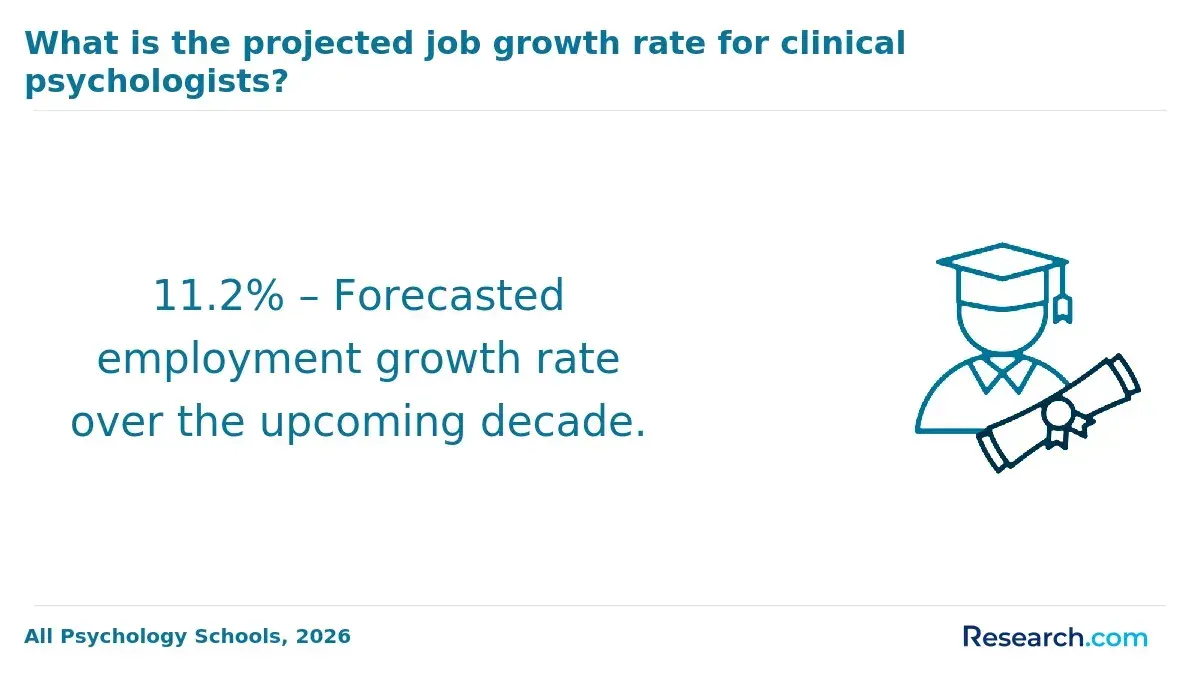
Nationally, demand for psychologists is expected to increase by six percent over the next decade. This is associated with about 12,800 job openings in the U.S. for psychologists each year, on average. Job prospects can vary by specialty, location, supervised experience, language skills, telehealth readiness, assessment expertise, and willingness to work in high-need settings.
Which mentorship and networking resources can boost my psychology career in Florida?
Mentorship can help aspiring and newly licensed psychologists make better decisions about internships, supervised experience, specialty training, private practice, ethics, documentation, referrals, and board requirements. Networking also helps professionals learn which settings are hiring, which credentials are valued, and how Florida’s mental health workforce is changing.
Useful networking options may include university faculty mentors, practicum supervisors, alumni groups, professional associations, continuing education events, research labs, hospital training programs, school district contacts, and interdisciplinary referral networks. Students who want a broader view of mental health careers may also review what degree do you need to be a social worker in Florida to understand how social work and psychology roles intersect in Florida.
What financial assistance options are available for psychology students in Florida?
Psychology education can be expensive, especially at the doctoral level. Students should compare funding options before enrolling, not after receiving an acceptance letter. The best financial plan considers tuition, fees, living costs, internship relocation, exam fees, books, technology, reduced work hours, and the time required to complete supervised training.
- Federal financial aid: Students can submit the Free Application for Federal Student Aid (FAFSA) to determine eligibility for grants, loans, and work-study opportunities.
- State grants and scholarships: Florida residents may qualify for state aid programs such as the Florida Student Assistance Grant (FSAG) or the Bright Futures Scholarship Program.
- Institutional scholarships: Colleges and universities may offer psychology-specific awards based on merit, need, research interests, or specialization.
- Graduate assistantships: Advanced students, including PsyD or PhD candidates, may find teaching or research assistantships that provide stipends, tuition support, or tuition waivers.
- Loan forgiveness programs: Graduates working in public service or underserved areas may qualify for programs such as Public Service Loan Forgiveness (PSLF) or the National Health Service Corps (NHSC) Loan Repayment Program.
- Private scholarships: Professional organizations and foundations may support psychology students, including awards for underrepresented groups, women in psychology, or students pursuing specialties such as forensic psychology or neuropsychology.
Ways to reduce the cost of psychology training
- Compare total program cost rather than tuition alone.
- Ask whether assistantships are guaranteed, competitive, or unavailable.
- Check whether transfer credits can shorten the program.
- Confirm whether online programs require travel for residencies or clinical intensives.
- Look for funded research roles, practicum stipends, or employer tuition assistance.
- Estimate loan payments before committing to a program.
Why does accreditation matter for online psychology programs in Florida?
Accreditation is one of the most important checks for any psychology student planning to seek licensure. Florida requires applicants to graduate from regionally accredited institutions to qualify. Accreditation helps verify that a school meets accepted academic standards and that the curriculum, faculty, and student support systems are subject to external review.
For online PsyD students, accreditation affects more than academic reputation. It can influence eligibility for licensing exams, supervised clinical placements, internship access, employer recognition, and board acceptance of the degree. Students comparing online PsyD programs accredited should confirm the program’s licensure disclosures and ask whether the school has experience supporting Florida applicants.
Accreditation does not guarantee licensure or employment. It is a baseline requirement that should be paired with careful review of curriculum, clinical training, supervision, documentation support, and state-specific eligibility.
How does telepsychology influence licensure and practice for psychologists in Florida?
Telepsychology has made mental health services more accessible, but it also adds compliance responsibilities. Florida psychologists providing remote care must pay attention to informed consent, client location, emergency planning, privacy, secure communication tools, documentation, and whether services cross state lines. Telehealth does not remove the obligation to follow Florida law, professional ethics, or competence standards.
Psychologists who want broader counseling skills in remote care may find it useful to compare related training paths, including the shortest path to become a counselor in Florida. This can help clarify how counseling and psychology scopes differ in telehealth practice.
How do psychology and counseling licensure pathways differ in Florida?
Psychology and counseling both serve mental health needs, but their licensure routes are different. Psychology licensure usually requires doctoral-level education, extensive supervised clinical experience, and preparation in assessment, diagnosis, research, and intervention. Counseling licensure is generally built around a master’s-level counseling program, supervised practice, and counseling-specific competencies.
Students who primarily want to provide therapy may compare both routes before committing to a doctoral psychology program. The Florida LPC license requirements can help prospective students understand whether counseling is a better fit for their timeline, budget, and preferred scope of practice.
How can aspiring psychologists in Florida benefit from understanding the requirements for other mental health licenses?
Understanding related licenses helps aspiring psychologists make smarter career decisions. For example, learning about the MFT license in Florida can clarify how family therapy differs from psychology in training model, scope, supervision, and practice focus. This knowledge also supports better referrals and collaboration after licensure.
Students sometimes choose psychology because it sounds broad, then later discover that counseling, social work, or marriage and family therapy would have matched their goals more directly. Comparing pathways early can prevent unnecessary debt, delayed employment, or a mismatch between training and preferred work.
Can pursuing dual licensure expand professional opportunities for psychologists in Florida?
Dual licensure can broaden a psychologist’s professional toolkit, but it should be pursued for a clear reason. A psychologist might consider an additional counseling credential to expand services, work in settings that value interdisciplinary credentials, or deepen training in a particular therapeutic model. However, dual licensure also adds renewal duties, continuing education obligations, fees, and compliance responsibilities.
Professionals considering this option can review how to become an LPC in Florida to compare the counseling pathway with psychology licensure before investing additional time and money.
What are common challenges in obtaining psychology licensure in Florida?
Many licensure delays are caused by documentation problems rather than lack of qualifications. Applicants may struggle to obtain official transcripts, secure supervisor signatures, verify internship hours, interpret Florida-specific rules, or prepare for legal and ethics exams while finishing clinical training.
| Common challenge | Why it creates problems | Better approach |
| Poor hour tracking | Unclear records can delay verification of supervised experience. | Track hours throughout training and confirm supervisor documentation requirements early. |
| Ignoring state-specific rules | Florida requirements may differ from another state or from a school’s general guidance. | Review Florida Board materials before selecting placements or submitting an application. |
| Choosing a program without licensure alignment | A degree may be academically legitimate but still difficult to use for Florida licensure. | Ask programs for Florida licensure disclosures before enrolling. |
| Underpreparing for the law exam | Strong clinical knowledge does not replace familiarity with Florida statutes and rules. | Create a separate study plan for state law and ethics content. |
| Waiting to network | Late networking can make it harder to find practicum, internship, and supervised roles. | Build faculty, supervisor, and professional contacts early in graduate training. |
Students interested in school-based practice should also review how to become a school psychologist in Florida because school psychology requirements and practice settings differ from the broader licensed psychologist route.
What benefits does specializing in forensic psychology offer in Florida?
Forensic psychology can be a strong specialization for professionals interested in the intersection of mental health and law. Work may involve psychological evaluations, risk assessments, competency questions, correctional environments, court-related consultation, expert testimony, or collaboration with attorneys and criminal justice agencies.
This specialization requires strong clinical judgment, careful documentation, ethical awareness, and comfort working in adversarial legal contexts. Students considering this field can explore how to become a criminal psychologist in Florida to better understand the training and career direction.
What strategies for exam preparation can aspiring psychologists use?
Exam preparation should begin before the application deadline. The EPPP and Florida Laws and Rules Examination test different knowledge areas, so candidates should create separate study plans for national psychology content and Florida-specific legal requirements.
- Map the exam content: Identify the main EPPP content areas and compare them with your strengths and weak points before choosing study materials.
- Use practice questions: Timed practice tests can help candidates build stamina, recognize question patterns, and improve pacing.
- Study Florida law separately: Do not assume that general ethics knowledge is enough for the Florida Laws and Rules Examination.
- Build a realistic schedule: Short, consistent study blocks are often more sustainable than last-minute cramming.
- Use more than one resource: Combine review books, online materials, prep courses, peer study groups, and supervisor guidance when possible.
- Review mistakes carefully: The goal is not just to complete practice questions but to understand why the correct answer is correct.
If you are at the beginning of your academic path, a 2-year psychology degree online can introduce foundational psychology concepts before you move into bachelor’s, master’s, or doctoral study.
Related Articles for Nearby States
- 2027 Georgia Psychology Licensure Requirements – How to Become a Psychologist in Georgia
- 2027 Alabama Psychology Licensure Requirements – How to Become a Psychologist in Alabama
- 2027 South Carolina Psychology Licensure Requirements – How to Become a Psychologist in South Carolina
- 2027 Mississippi Psychology Licensure Requirements – How to Become a Psychologist in Mississippi
- 2027 Tennessee Psychology Licensure Requirements – How to Become a Psychologist in Tennessee
- 2027 North Carolina Psychology Licensure Requirements – How to Become a Psychologist in North Carolina
- 2027 Louisiana Psychology Licensure Requirements – How to Become a Psychologist in Louisiana
- 2027 Kentucky Psychology Licensure Requirements – How to Become a Psychologist in Kentucky
- 2027 Arkansas Psychology Licensure Requirements – How to Become a Psychologist in Arkansas
- 2027 Virginia Psychology Licensure Requirements – How to Become a Psychologist in Virginia
Key insights
- Florida psychologist licensure usually requires doctoral education, supervised clinical experience, an internship, required exams, and board approval.
- The EPPP and Florida Laws and Rules Examination are central testing requirements; applicants need at least 70% on both exams.
- Online psychology degrees can support licensure only if they meet accreditation, curriculum, and clinical training requirements recognized by Florida.
- Accreditation, supervised placement support, total cost, and licensure alignment should matter more than rankings alone when choosing a program.
- Licensed psychologists in the U.S. earn an average of $85,330, but salary outcomes vary by setting, specialty, experience, and location.
- Florida psychologists must complete 40 hours of continuing education every two years, including required topics in medical errors, ethics and Florida laws and rules, and domestic violence.
- Students should compare psychology with counseling, social work, and marriage and family therapy before committing to a doctoral route.
- The most common licensure setbacks involve incomplete documentation, weak hour tracking, misunderstanding Florida rules, and choosing programs without checking licensure eligibility.
Resources:
- Florida Board of Psychology. (n.d.). Application for Licensure as a Psychologist. https://floridaspsychology.gov/applications/psychology-licensure-app.pdf
- Florida Board of Psychology. (n.d.). Psychologist: Continuing Education Requirements. https://floridaspsychology.gov/renewals/psychologist/#tab-ce
- Florida Health Charts. (n.d.). Psychologists. https://www.flhealthcharts.gov/ChartsDashboards/rdPage.aspx?rdReport=NonVitalIndNoGrp.Dataviewer&cid=9738
- U.S. Bureau of Labor Statistics. (2025). Psychologists: Similar Occupations. https://www.bls.gov/ooh/life-physical-and-social-science/psychologists.htm#tab-8
Other things you should know about how to become a psychologist in Florida
To apply for a psychology license in Florida in 2027, candidates must hold a doctoral degree in psychology from an accredited institution, complete a supervised internship with at least 2,000 hours, and pass the Examination for Professional Practice in Psychology (EPPP). Fulfillment of all other state-specific requirements is also necessary.
In 2027, Florida psychologists must complete 40 hours of continuing education every two years for license renewal, including 2 hours on medical error prevention and 2 hours on ethics. The Florida Board of Psychology outlines these requirements as part of the license renewal process.
To transfer an out-of-state psychology license to Florida in 2027, you must apply for licensure by endorsement. This involves submitting proof of a valid license from another state, verification of any disciplinary actions, and ensuring that your credentials meet Florida's educational and supervised practice requirements.


