
2027 Accounting Schools in Ohio: How to Become a CPA in OH

Co-Founder and Chief Data Scientist
Becoming a certified public accountant in Ohio is a practical route for students and career changers who want accounting work with stronger licensing recognition, broader employer trust, and more room to move into audit, tax, advisory, government, corporate finance, or independent practice. The decision is not only about earning an accounting degree; it is also about choosing a program that helps you meet Ohio’s CPA education rules, prepare for the Uniform CPA Exam, control costs, and build experience in the right setting.
This guide explains how accounting degrees in Ohio work, how the CPA licensing process fits into your education plan, what costs and timelines to expect, which program formats may suit different students, and how to compare schools before enrolling. It also includes a ranked list of accounting programs in Ohio for 2027, using the data sources and methodology described below.
Quick answer: Is an accounting degree in Ohio a good path to becoming a CPA?
Yes, an accounting degree in Ohio can be a strong path if your goal is CPA licensure, public accounting, corporate accounting, auditing, tax, or financial analysis. Ohio CPA candidates generally need a bachelor’s degree, 150 credits, specific accounting and business coursework, CPA Exam completion, qualifying experience, and annual license renewal. Based on the data analyzed for this guide, CPAs in Ohio earn about $84,000 to $85,000 per year on average, although pay varies by city, employer, experience, specialization, and license status.
What are the benefits of getting an accounting degree in Ohio?
- An accounting degree can position you for roles in Ohio accounting firms, consulting practices, corporate finance departments, government agencies, nonprofits, and business service organizations.
- CPA compensation in Ohio is estimated at about $84,000 to $85,000 annually, which can be higher than many nonlicensed accounting roles.
- Online accounting programs may help working students build professional connections beyond their immediate city while continuing to work during school.
What can I expect from an accounting degree in Ohio?
An accounting degree in Ohio usually covers the technical and business foundation needed for entry-level accounting work and, with the right credit mix, CPA preparation. Students commonly study financial accounting, managerial accounting, auditing, taxation, accounting information systems, business law, ethics, analytics, and finance. Graduate programs often go deeper into audit, tax, risk, compliance, data analytics, and research.
- Accounting programs in Ohio commonly include coursework in financial and managerial accounting, taxation, auditing, business law, and related business subjects.
- The full CPA pathway in Ohio can take about 1 to 2.5 years after the required education is completed, depending on exam timing, work experience, and application processing.
- Accounting degrees in Ohio may cost from $10,000 to $31,000, depending on residency status, institution type, delivery format, and program level.
Where can I work with a CPA license in Ohio?
A CPA license can open doors across Ohio’s public accounting firms, business consulting firms, corporations, banks, healthcare systems, manufacturers, technology companies, government offices, universities, and nonprofit organizations. Licensed CPAs may provide or supervise services such as tax planning, auditing, financial reporting, internal controls, outsourced accounting, incorporation support, consulting, and compliance work.
Ohio’s economy includes manufacturing, healthcare, finance, technology, public sector organizations, and small businesses, so accounting graduates are not limited to one industry. Some CPAs move into academia, others become controllers or finance leaders, and some eventually operate their own practices.
How much can I make with a CPA license in Ohio?
The estimated average annual salary for a CPA in Ohio is $84,400. That is higher than the average earnings of accountants in the state, which are around $60,000 per year.
Location also matters. The data reviewed for this guide showed higher average CPA salaries in larger Ohio cities. For example, a CPA in Columbus earns an average of $105,100 annually, while a CPA in Maumee, Ohio reportedly earns an average of $77,300 per year.
| Ohio role or location | Reported average annual pay | What to consider |
| Accountants in Ohio | Around $60,000 | May include nonlicensed accounting roles and earlier-career positions. |
| CPA in Ohio | $84,400 | CPA licensure can support access to audit, tax, advisory, and senior accounting roles. |
| CPA in Columbus | $105,100 | Major metro areas may offer more large-employer and public accounting opportunities. |
| CPA in Maumee | $77,300 | Smaller markets may have different employer mixes, client bases, and salary ranges. |
- Best Accounting Programs in Ohio for 2027
- How much can I make with a CPA license in Ohio?
- How long does it take to become a CPA in Ohio?
- How does an online accounting program compare to an on-campus program?
- What is the average cost of an accounting program in Ohio?
- What are the prerequisites for enrolling in an accounting program in Ohio?
- What types of specializations are available in accounting programs in Ohio?
- What are accelerated accounting degree options in Ohio?
- How to choose the best accounting program in Ohio?
- How to get your CPA license in Ohio?
- What Other Career Options Are Available to Accounting Graduates in Ohio?
- What career paths are available for graduates of accounting programs in Ohio?
- How do I choose a high-quality online accounting program in Ohio?
- How can a forensic accounting specialization enhance your career in Ohio?
- Can networking and professional affiliations accelerate your career growth in Ohio?
- What soft skills are essential for accounting professionals in Ohio?
- How are environmental, social, and governance (ESG) factors reshaping accounting practices in Ohio?
- What is the job market for graduates of an accounting program in Ohio?
- How do urban infrastructure developments shape accounting strategies in Ohio?
- Can accounting professionals transition into high school teaching in Ohio?
- How can legal expertise complement your accounting career in Ohio?
- How can an advanced accounting degree boost your career in Ohio?
- How do evolving regulatory standards impact accounting practices in Ohio?
- Can integrating healthcare finance skills advance your accounting career in Ohio?
- Can accounting expertise open doors to an academic career in Ohio?
- Why Choosing the Right Accounting Program in Ohio Matters
Best Accounting Programs in Ohio for 2027
How do we rank schools?
To identify accounting schools in Ohio with strong accounting degree options, the research team reviewed publicly available information from the IPEDS database, Peterson’s database, College Scorecard database, and the National Center for Education Statistics (NCES). Because an accounting degree can be a major financial commitment, this ranking follows a transparent methodology designed to compare programs using comprehensive education data.
How to use this list
Use the ranking as a starting point, not as your only decision tool. Before applying, confirm the current tuition, credit requirements, delivery format, CPA exam preparation support, accounting accreditation, transfer credit policy, internship access, and whether the program helps you meet Ohio CPA coursework rules.
| Program | Best fit | Key decision factor |
| PhD programs | Students targeting research, university teaching, or academic careers | Faculty mentorship, research fit, funding, and placement record matter more than speed. |
| Master of Accountancy or MS in Accountancy | Students who already have a bachelor’s degree and need advanced coursework or CPA credits | Check CPA alignment, cost, exam support, analytics options, and employer connections. |
| Bachelor’s in Accounting or Accountancy | First-time college students planning accounting, audit, tax, or business careers | Make sure the curriculum can lead toward the 150-credit CPA requirement. |
| Forensic accounting programs | Students interested in fraud examination, investigations, internal audit, or litigation support | Look for coursework in fraud, criminal justice, auditing, data analysis, and controls. |
1. Ohio State University PhD in Accounting and Information Systems
The Fisher College of Business at Ohio State University offers a PhD in Accounting and Information Systems for students preparing for faculty and research careers at leading universities. The Department of Accounting and Management Information Systems emphasizes accounting research and the role of accounting information in economic decision-making.
- Program Length: 4-5 tears
- Tracks/concentrations: Accounting and MIS
- Cost Per Credit: No information available
- Required Credits to Graduate: No information available
- Accreditation: Association to Advance Collegiate Schools of Business (AACSB)
2. Cleveland State University Master of Accountancy
Cleveland State University offers a hybrid Master of Accountancy through the Monte Ahuja College of Business. The program is designed for students pursuing public accounting, government accounting, internal audit, and business roles. Many graduates pursue CPA, Certified Management Accountant (CMA), Certified Internal Auditor (CIA), and/or Certified Information Systems Auditor (CISA) credentials.
- Program Length: No information available
- Tracks/concentrations: Information Systems, Analytics, Tax, Risk and Compliance, and Governance
- Cost Per Credit: starts at $602.20
- Required Credits to Graduate: No information available
- Accreditation: AACSB
3. University of Cincinnati PhD in Accounting
The Carl H. Lindner College of Business at the University of Cincinnati offers a PhD in Accounting focused on accounting literature, scholarly inquiry, and the development of high-quality research skills.
- Program Length: No information available
- Tracks/concentrations: No information available
- Tuition Per Semester: $1,000 (part-time); $11,998 (full-time resident); $16,535 (full-time nonresident)
- Required Credits to Graduate: No information available
- Accreditation: AACSB
4. University of Toledo MS in Accountancy
The University of Toledo offers a hybrid Master of Science in Accountancy through its Department of Accounting. The program is built to support Uniform CPA Exam preparation and includes advanced study in auditing, taxation, financial reporting, and electives such as data analytics.
- Program Length: 1 year
- Tracks/concentrations: No information available
- Tuition: $8,343.84 (in-state, including Monroe County, Michigan residents); $14,138.52 (out-of-state)
- Required Credits to Graduate: 30
- Accreditation: AACSB
5. Franklin University BS in Forensic Accounting
Franklin University offers a fully online BS in Forensic Accounting. Students take specialized coursework in areas such as criminal justice and accounting and fraud examination, with preparation that can support future Certified Fraud Examiner or Certified Internal Auditor goals.
- Program Length: 21 months
- Tracks/concentrations: No information available
- Cost Per Credit: $398
- Required Credits to Graduate: 124
- Accreditation: International Accreditation Council for Business Education (IACBE)
6. Ashland University BS in Business Administration and Accountancy
Ashland University offers online business education through the Dauch College of Business Economics, including an online MBA program with an accounting specialization. The curriculum includes taxation, auditing, cost accounting, marketing, management information systems, and other business coursework.
- Program Length: No information available
- Tracks/Concentrations: No information available
- Cost Per Credit: starts at $691
- Required Credits: 120
- Accreditation: AACSB
7. University of Dayton BS in Business Administration, Major in Accounting
The University of Dayton offers a BS in Business Administration with an accounting major. The program emphasizes globalization, technology use, ethics, and applied learning through capstone projects, co-ops, service-learning, and similar experiences.
- Program Length: 4 years
- Tracks/Concentrations: No information available
- Tuition: $47,600-$49,140
- Required Credits: No information available
- Accreditation: AACSB
8. Case Western Reserve University BS in Accounting
Case Western Reserve University offers a BS in Accounting that prepares students for the CPA exam pathway and other professional certifications. Graduates may pursue leadership and accounting roles in for-profit, nonprofit, and government organizations.
- Program Length: No information available
- Tracks/Concentrations: No information available
- Tuition: $66,020
- Required Credits: No information available
- Accreditation: Higher Learning Commission (HLC)
9. Miami University BS in Business, Major in Accountancy
Miami University offers a BS in Business with a major in Accountancy. The program combines a business core with accounting coursework designed to build analytical ability, financial reporting knowledge, audit readiness, and industry-aligned technical skills.
- Program Length: No information available
- Tracks/Concentrations: Accountancy, Financial Planning, Financial Analysis
- Tuition: $17,808 (residents); $40,024 (nonresidents)
- Required Credits: No information available
- Accreditation: AACSB
10. Ohio Northern University Master's Degree in Accounting
Ohio Northern University offers a master’s program in accounting with applied experiences such as live client interaction, moot courtroom exposure, and interactive software training. Core study areas include fraud examination, data analytics, ethics, and related advanced accounting topics.
- Program Length: No information available
- Tracks/Concentrations: Forensic Accounting, Audit Services
- 2024-25 Tuition: $38,250
- Required Credits: 30
- Accreditation: HLC
Here’s what graduates have to say about their accounting degrees in Ohio
My accounting studies in Ohio combined classroom structure with online flexibility. The program helped me build financial skills while managing a full schedule, and Ohio’s business environment gave me useful networking opportunities. I graduated with a broader professional network and a stronger understanding of accounting practice. - Erin
Ohio’s accounting programs gave me a solid grounding in financial concepts and helped online students build a sense of connection. Virtual discussions, case-based assignments, and internship preparation made the coursework feel connected to real accounting work. The online format was convenient while still challenging. - Jamil
Earning an accounting degree in Ohio gave me more than textbook knowledge. Internship opportunities helped me apply accounting concepts to workplace situations, and the online components fit my learning preferences while connecting me with classmates outside my local area. That mix helped shape my career direction. - Barry
Key Findings
- Ohio has about 62,551 accountants and auditors.
- A CMA license can help accountants qualify for more specialized corporate accounting and management accounting roles.
- As of 2025, the total CPA examination fee in Ohio is $1,399.20.
- An Ohio CPA license must be renewed every year between early October and December 31st.
- Job growth in all industries in Ohio is estimated to be at a 4.9% rate until 2028.
How long does it take to become a CPA in Ohio?
The Ohio CPA timeline depends on where you are starting. A traditional student may spend several years completing a bachelor’s degree and additional credits, while a graduate student or career changer may need a shorter bridge period if previous credits already satisfy some requirements. After education is complete, the CPA process may take up to 2.5 years because candidates must pass the Uniform CPA Exam, complete experience requirements, and satisfy Ohio’s ethics-related requirements.
The first major step is education. Candidates need a bachelor’s degree or higher from an accredited institution and specific accounting and business coursework. Ohio also uses credit-hour rules, so students should plan early rather than assuming that any accounting degree automatically satisfies CPA eligibility.
The CPA Exam has four sections: auditing and attestation, business environment and concepts, financial accounting and reporting, and regulation. Passing all required exam sections is only one part of the process; Ohio candidates must also document qualifying work experience, often at least one year or 2,000 hours, in areas such as auditing, tax, consulting, or related accounting services.
Even though the pathway requires planning, Ohio remains a significant accounting employment market. The chart below shows that Ohio is home to two of the five nonmetropolitan areas in the US with the highest employment of accountants and auditors.
How does an online accounting program compare to an on-campus program?
The best format depends on your schedule, learning style, location, and need for in-person networking. Campus programs can be helpful if you want face-to-face access to faculty, student organizations, recruiting events, and local employers. Online programs may work better if you are employed, have family responsibilities, live far from campus, or need more flexibility.
| Factor | Online accounting program | On-campus accounting program |
| Learning environment | Requires self-discipline, comfort with technology, and consistent participation in online discussions and assignments. | Provides scheduled classes, in-person interaction, and a more structured weekly routine. |
| Cost and convenience | May allow students to keep working and avoid some commuting or housing costs. | May involve commuting, housing, campus fees, and less schedule flexibility. |
| Networking | Can connect students with classmates and faculty across regions, especially in well-designed online cohorts. | Often offers easier access to campus recruiting, local employer events, and student accounting organizations. |
| Best for | Working adults, transfer students, military-connected students, parents, and students outside commuting range. | Students who want campus life, in-person mentoring, and direct local recruiting access. |
Ohio has online and hybrid options that may suit students planning to pursue a master degree in accounting online. Before enrolling, confirm whether online courses meet the same CPA education requirements as campus courses and whether remote students receive accounting-specific advising.
What is the average cost of an accounting program in Ohio?
For the 2025-2026 academic year, average annual tuition and fees for undergraduate accounting programs in Ohio were around $11,000 for in-state students and $32,000 for out-of-state students.
Graduate accounting programs averaged from $8,000+ to $11,900+ per year for residents and $14,000+ to $16,500+ for nonresidents.
Your actual cost can differ substantially based on public or private status, residency, online or campus delivery, transfer credits, program length, books, technology fees, housing, commuting, and whether you study full time or part time. Tuition alone is not the full price of attendance, so compare total program cost before choosing.
Financial aid options for Ohio accounting students
Students who need help paying for tuition and related education expenses should ask each school about institutional aid, graduate assistantships, employer tuition support, payment plans, and accounting-specific scholarships. Ohio students may also consider the following options:
- Accountancy Board of Ohio Education Assistance Program. This program supports financially disadvantaged students in approved accounting degrees in Ohio. Last year, it granted up to $13,067 to scholars.
- Midwest Student Exchange Program. Eligible nonresidents may receive reduced tuition through MSEP, with students saving between $500 and $7,000 yearly.
- Clarke Price Scholarship. Created in honor of the retired president of The Ohio Society of CPAs, this scholarship provides one-time awards of $2,000 paid directly to the student’s school.
- Brockman Family Scholarship. This award honors George Brockman and supports students such as first-generation college students, veterans, community college students, rural students, and those following a nontraditional path to college.
What are the prerequisites for enrolling in an accounting program in Ohio?
Admission requirements vary by school and degree level, but most Ohio accounting programs review academic preparation, transcripts, and readiness for college-level quantitative and business coursework.
- Educational background: Undergraduate applicants typically need a high school diploma or GED. Graduate applicants usually need a bachelor’s degree.
- College entrance exams: Some institutions may request SAT or ACT scores, although policies vary by school and admission cycle.
- Transcripts: Schools commonly require high school or prior college transcripts to evaluate grades, completed coursework, and transfer credit eligibility.
- Prerequisite courses: Programs may expect prior coursework in mathematics, introductory business, economics, or accounting, especially for upper-division or graduate accounting study.
What courses are typically in an accounting program in Ohio?
Ohio accounting students usually study the core subjects needed for accounting practice: financial accounting, taxation, auditing, accounting systems, business law, and managerial decision-making. Programs aimed at CPA preparation may also include ethics, advanced accounting, analytics, and business electives.
- Financial Accounting: Students learn how to record transactions, prepare and interpret financial statements, apply Generally Accepted Accounting Principles (GAAP), and evaluate financial information for business decisions.
- Taxation: This area covers federal income tax rules for individuals and businesses, tax compliance, tax planning concepts, and the practical application of tax law.
- Auditing: Students examine audit planning, evidence, risk assessment, internal controls, professional judgment, and ethical responsibilities in audit practice.
- Business Law: Coursework introduces contracts, torts, agency, business transactions, and legal concepts accountants need when advising organizations or preparing financial reports.
What types of specializations are available in accounting programs in Ohio?
Many Ohio accounting programs let students focus on one or more accounting fields of specialization. The right specialization should match the type of work you want after graduation, not just the course title that sounds most interesting.
| Specialization | What it prepares you to do | Good fit if you want... |
| Audit and Assurance | Study audit procedures, controls, compliance, risk, and evidence. | Public accounting, internal audit, compliance, or risk management work. |
| Financial Reporting and Analysis | Build deeper skills in interpreting statements, applying reporting standards, and analyzing performance. | Corporate accounting, reporting, analyst, or controller-track roles. |
| Information Systems and Technology | Connect accounting processes with systems, controls, and data flows. | Accounting systems, audit technology, systems implementation, or technology-adjacent work, including pathways related to computer science careers. |
| Data Analytics in Accounting | Use data tools to analyze financial information, detect patterns, and support decision-making. | Employers that expect accountants to work with large datasets, dashboards, and analytics platforms. |
What are accelerated accounting degree options in Ohio?
Accelerated accounting programs are designed for students who want to finish faster, enter the job market sooner, or reach Ohio’s 150-credit CPA requirement more efficiently. These options may include compressed bachelor’s programs, bachelor’s-to-master’s pathways, or graduate programs that can be completed in a shorter timeline.
Fast-track options can be useful if you already know you want CPA licensure and can manage a heavier workload. They may also reduce time away from full-time work or shorten the period before you begin earning professional experience. However, accelerated does not always mean cheaper or easier. Students should compare total credits, tuition structure, transfer policies, CPA advising, and whether the pace leaves enough time for internships and exam preparation.
If speed is a major priority, compare fast track accounting degree options carefully and confirm that the curriculum still supports your long-term CPA, audit, tax, or corporate accounting goals.
How to choose the best accounting program in Ohio?
When choosing an accounting degree program, start with CPA alignment and total cost, then evaluate quality factors such as accreditation, faculty experience, internship access, employer relationships, student support, and graduate outcomes.
- Accreditation: Confirm institutional accreditation first. Then check whether the business or accounting program holds specialized accreditation such as AACSB, IACBE, or another recognized credential. Accreditation can affect transfer credits, employer perception, graduate school eligibility, and licensure planning.
- CPA education fit: Ask the accounting department whether the degree meets Ohio’s accounting and business coursework expectations and how students typically reach 150 credits.
- Location and campus experience: If you plan to attend in person, consider commute, campus culture, student organizations, recruiting access, and proximity to accounting employers.
- Internships and job placement: Strong programs should help students connect with public accounting firms, corporate employers, government offices, and nonprofit organizations.
- Graduation and CPA Exam pass rates: Ask for current outcomes data when available. Strong completion and exam performance can indicate effective advising and rigorous preparation.
Questions to ask before enrolling
| Question | Why it matters |
| Will this program help me meet Ohio CPA education requirements? | Not every accounting degree automatically satisfies every CPA coursework rule. |
| How many credits will I still need after graduation? | Ohio CPA licensure requires 150 credits, so a 120-credit bachelor’s degree may not be enough by itself. |
| Are internships available for online and part-time students? | Experience matters for employment and CPA licensing, especially for students outside the main campus area. |
| What is the total program cost after fees? | Tuition does not always include books, technology fees, commuting, housing, or exam preparation costs. |
| Does the school offer CPA Exam advising? | Dedicated advising can help you sequence courses, register for the exam, and avoid eligibility mistakes. |
How to get your CPA license in Ohio?
To become a CPA in Ohio, candidates must satisfy education requirements, pass the Uniform CPA exam, and meet additional requirements set through CPA Examination Services (CPAES) and the Accountancy Board of Ohio. The Ohio CPA license process also includes experience, professional standards, and application requirements.
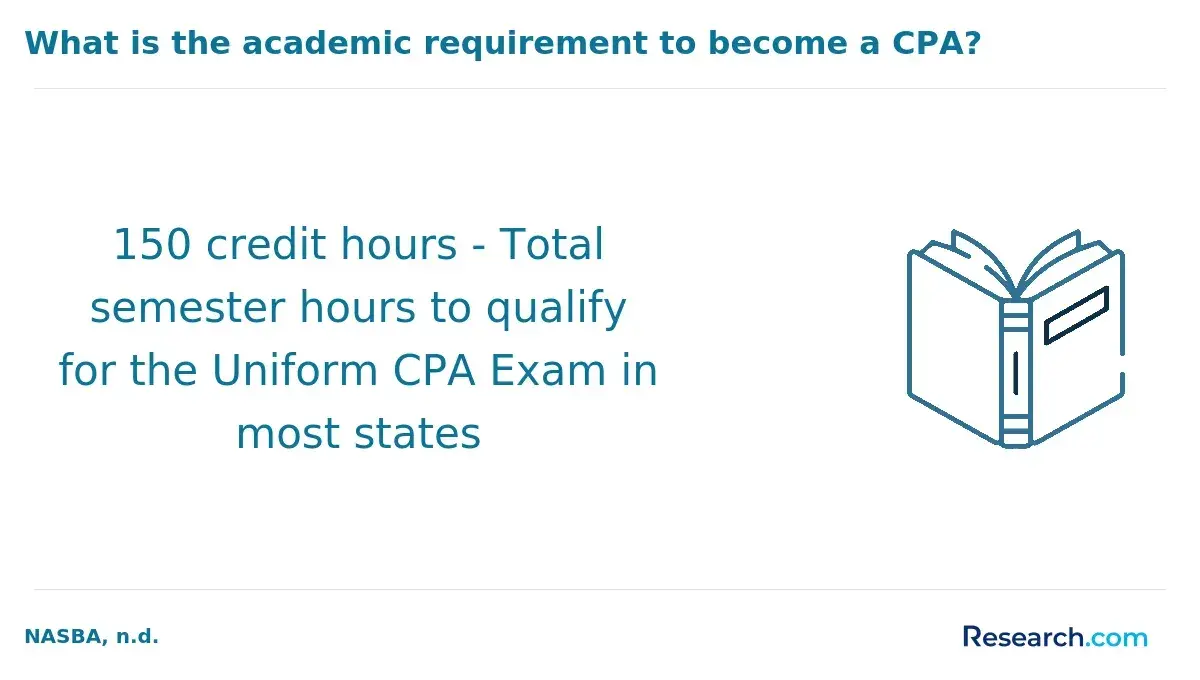
Ohio candidates must complete at least 120 semester credits or 180 quarter college credits to begin the process. For licensure, candidates need 150 credits overall, including 30 credits in accounting and 24 credits in business.
A baccalaureate degree is required to apply for an Ohio CPA license. Candidates who have completed the required accounting and business coursework but have not reached 120 semester credits may be able to sit for the CPA exam if they have a GMAT score of 670.
For candidates approved under the GMAT score criteria, the board requires four years of accounting experience for CPA certification.
After passing the exam, candidates must complete the required experience and submit the necessary documentation for the Ohio CPA certificate and license.
General Requirements
To apply for certified public accountant certification in Ohio through Examination or Transfer of Grades, a candidate must be an Ohio resident. The residency requirement can be satisfied by passing a section of the exam while an Ohio resident, and exam credit remains valid when the candidate is an Ohio resident at the time of CPA certificate application.
Applicants seeking CPA certification through Reciprocity do not have to meet the same residency requirement.
Other Ohio CPA requirements include:
- Complete and pass the criminal records check.
- Finish a Board-approved professional standards and responsibilities (PSR) course focused on Ohio accountancy law and Board rules within the previous year.
- Submit a Record of Experience form documenting performance of one or more accounting services.
How to Maintain an Ohio CPA License
Ohio CPA licenses must be renewed every year between early October and December 31st. Renewal requires Continuing Professional Education (CPE).
Ohio CPAs must complete 120 CPE credits during the 36 months before requesting the permit. These credits include three credits in Board-approved PSR, 24 CPE credits in accounting, attestation, and auditing, and 24 CPE credits in taxation. Some CPE credits may be reused for renewal when qualifying overlaps apply.
CPAs with an Ohio nonpracticing registration who want an Ohio permit must also complete CPE. Practicing permits can be requested at any time, but late renewal can result in late fees.
CPA licensing steps in Ohio
| Step | What to do | Common risk to avoid |
| 1. Plan your education | Complete a bachelor’s degree and the required accounting and business credits. | Assuming a degree title alone proves CPA eligibility. |
| 2. Reach the credit threshold | Track progress toward 120 semester credits or 180 quarter college credits for exam eligibility and 150 credits for licensure. | Graduating short of required accounting or business credits. |
| 3. Take the CPA Exam | Apply through the appropriate process and pass all required exam sections. | Waiting too long after coursework before beginning exam preparation. |
| 4. Complete experience | Document qualifying accounting services using the required Record of Experience form. | Working in a role that does not clearly satisfy experience expectations. |
| 5. Complete Ohio requirements | Finish the criminal records check and Board-approved PSR course. | Missing timing rules for the PSR course. |
| 6. Renew annually | Complete required CPE and renew between early October and December 31st. | Forgetting CPE categories or missing the renewal window. |
What Other Career Options Are Available to Accounting Graduates in Ohio?
Accounting graduates are not limited to CPA-track roles. Their quantitative, analytical, compliance, documentation, and problem-solving skills can apply to finance, consulting, operations, government administration, education, and nonprofit management. For example, graduates interested in education can review the elementary school teacher requirements in Ohio to understand how an accounting background might support a career transition into teaching. Accounting skills can also support roles in budgeting, grants management, business analysis, and financial planning.
What career paths are available for graduates of accounting programs in Ohio?
Accounting graduates in Ohio can pursue licensed and nonlicensed roles. CPA licensure is especially valuable for public accounting and certain senior roles, but many accounting degree holders build successful careers in corporate, government, nonprofit, and advisory settings.
- Public Accountant: Public accountants work with clients on audit, tax preparation, advisory, assurance, and consulting services. Employers range from local firms to national and global accounting organizations.
- Corporate Accountant/Financial Analyst: These professionals prepare reports, analyze performance, support budgeting, reconcile accounts, and help leadership make financial decisions.
- Government Accountant: Accountants in government roles manage public funds, support compliance, prepare financial reports, and help maintain transparency in public finance.
- Internal Auditor: Internal auditors evaluate controls, risk management processes, policy compliance, and operational efficiency inside organizations.
How do I choose a high-quality online accounting program in Ohio?
A strong online accounting program should offer more than recorded lectures. Look for accredited schools, CPA-aligned curriculum, accounting faculty access, academic advising, career support, tutoring, internship guidance, and hands-on work with accounting software or analytics tools. Students comparing an accounting degree online should also verify whether online learners receive the same transcript credential, course quality, and CPA advising as campus students.
How can a forensic accounting specialization enhance your career in Ohio?
Forensic accounting can help accountants move into fraud investigation, litigation support, internal audit, compliance, insurance claims, and risk management. The specialization combines accounting knowledge with investigative thinking, documentation, evidence analysis, and communication skills. Students who want a broader investigation-related background may also compare forensic accounting with a forensic science degree in Ohio, especially if they are interested in interdisciplinary work involving financial evidence and legal processes.
Can networking and professional affiliations accelerate your career growth in Ohio?
Networking can make a significant difference in accounting because internships, referrals, mentorship, and CPA Exam guidance often come through professional relationships. Students should consider accounting clubs, local CPA societies, alumni groups, employer events, career fairs, and industry conferences. Professional affiliations also help students understand the requirements for a career in accounting, including how employer expectations change by role, industry, and credential.
What soft skills are essential for accounting professionals in Ohio?
Technical accounting knowledge is essential, but it is not enough. Accountants also need to explain financial information clearly, work under deadlines, handle confidential data responsibly, and adapt to changing systems and regulations.
- Communication: Accountants must translate complex financial information for clients, managers, regulators, and colleagues who may not have accounting backgrounds.
- Critical thinking and problem-solving: Accounting work often involves judgment, risk assessment, reconciliations, exceptions, and decisions that require more than rule memorization.
- Attention to detail: Accuracy affects tax filings, audits, financial statements, compliance reports, and management decisions.
- Time management: Accountants often balance monthly close deadlines, tax season, audits, client requests, and multiple reporting cycles.
- Adaptability: Technology, reporting rules, tax regulations, and employer expectations change, so accountants need to keep learning.
- Teamwork and collaboration: Accounting professionals work with finance teams, operations staff, executives, auditors, clients, and outside advisors.
How are environmental, social, and governance (ESG) factors reshaping accounting practices in Ohio?
ESG reporting is pushing accountants to think beyond traditional financial statements. Organizations may need help gathering sustainability-related data, improving controls around nonfinancial metrics, documenting governance practices, and responding to stakeholder expectations. In Ohio, accountants who understand reporting systems, controls, compliance, and data analytics may be well positioned to support ESG-related advisory work. Students planning a CPA route should still begin with the core CPA requirements in Ohio before layering on ESG or sustainability expertise.
What is the job market for graduates of an accounting program in Ohio?
The research reviewed for this guide indicates that accounting professionals and CPAs in Ohio can expect a job growth rate of 5% until 2030. This growth may be supported by the state’s business climate, especially in major metropolitan areas such as Columbus. Job growth in all industries in the state is also projected through 2030, according to Ohio Labor Market Information employment projections.
The CPA license remains one of the most recognized credentials for accounting professionals. Accountants pursuing corporate finance, planning, cost accounting, or management roles may also explore how to become a certified management accountant because the CMA can support more specialized work in the corporate sector.
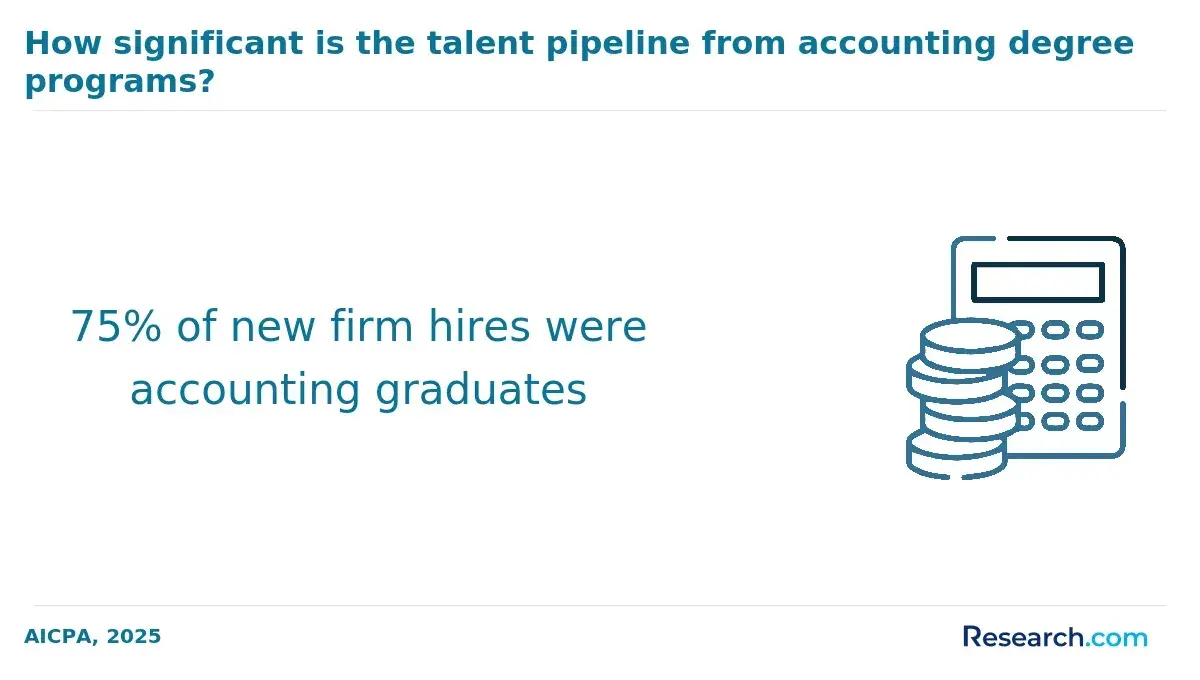
Ohio has 70 accounting schools offering credentials from certificates to doctorates. The state also has active accounting associations that support the profession, provide networking opportunities, and help students and professionals stay connected to changes in the field.
How do urban infrastructure developments shape accounting strategies in Ohio?
Urban development and infrastructure projects can affect accounting work through municipal finance, tax incentives, bond financing, property valuation, grants, public-private partnerships, and construction-related reporting. Accountants who understand regional development can provide stronger advisory support to clients involved in real estate, local government, construction, and economic development. Students interested in the planning side of these projects can explore how to become an urban planner in Ohio to understand the broader policy and development context.
Can accounting professionals transition into high school teaching in Ohio?
Accounting professionals may be able to transition into education if they meet Ohio’s teacher preparation and certification requirements. Their strengths in quantitative reasoning, business examples, budgeting, and problem-solving can be useful in math, business, or career and technical education settings. Anyone considering this move should review the pathway for how to become a high school math teacher in Ohio and confirm the credential requirements that apply to their intended teaching area.
How can legal expertise complement your accounting career in Ohio?
Legal knowledge can strengthen accounting work in tax, audit, forensic accounting, compliance, contracts, business formation, litigation support, and risk management. Accountants do not need to become lawyers to benefit from understanding legal processes, but they must also avoid giving legal advice outside their authority. Students who want legal support skills alongside accounting may review how to become a paralegal in Ohio as one possible complementary path.
How can an advanced accounting degree boost your career in Ohio?
A master’s in accounting or another advanced accounting degree can help students reach the 150-credit CPA requirement, develop specialized skills, and become more competitive for roles in audit, tax, advisory, corporate reporting, data analytics, forensic accounting, and leadership. Students asking is a masters in accounting worth it should compare the added tuition against CPA eligibility, career services, salary goals, employer demand, and whether the program meaningfully improves their qualifications.
1. Meeting the 150-Hour Requirement for CPA Licensure
A graduate accounting program can provide a structured way to complete the 150 semester-hour requirement for CPA licensure. A bachelor’s degree may satisfy the basic degree expectation, but Ohio candidates still need enough total credits and the right accounting and business coursework for licensure.
2. Higher Earning Potential
An advanced degree may support access to higher-responsibility roles, especially when combined with CPA licensure, strong experience, and a relevant specialization. In Ohio, entry-level accountants typically earn around $60,000 annually, while those with advanced degrees may earn upwards of $80,000 to $90,000, especially in specialized areas such as taxation, audit, or forensic accounting.
3. Access to Specialized Career Paths
Graduate study can help students build expertise in areas such as forensic accounting, business valuation, international tax, data analytics, risk, or compliance. These concentrations can be useful in Ohio industries such as healthcare, finance, technology, government, and manufacturing.
4. Stronger Job Security and Career Advancement
Employers often look for advanced preparation when hiring for senior accountant, audit manager, tax manager, controller-track, or advisory roles. A master’s degree does not guarantee promotion, but it can signal readiness for more complex responsibilities when paired with performance and experience.
5. Networking and Career Resources
Many graduate accounting programs provide closer access to faculty, alumni, recruiters, professional associations, and employer events. These networks can be valuable in Ohio markets where local relationships often influence internship and job opportunities.
6. Enhancing Technological and Analytical Skills
Accounting is increasingly shaped by analytics tools, accounting platforms, enterprise systems, dashboards, and automation. Graduate coursework in data analytics, software, and systems can help accountants work more effectively with large datasets and business intelligence tools such as Tableau, Excel, and QuickBooks.
How do evolving regulatory standards impact accounting practices in Ohio?
Regulatory changes affect tax compliance, audit procedures, financial reporting, ethics, data security, and industry-specific accounting requirements. Ohio accountants must keep current with federal and state rules, professional standards, and board requirements to reduce risk and maintain credibility. Professionals in other regulated fields face similar compliance pressures, and those comparing regulated career paths can review how to become a nurse practitioner in Ohio for another example of strict professional guidelines.
Can integrating healthcare finance skills advance your accounting career in Ohio?
Healthcare is a major setting for accounting, billing, compliance, reimbursement, budgeting, and financial analysis. Accountants who understand healthcare finance may find opportunities with hospitals, clinics, insurers, public health organizations, and healthcare vendors. Those interested in the revenue cycle side of healthcare can explore how to be a medical coder in Ohio to understand how billing and coding knowledge may complement accounting skills.
Can accounting expertise open doors to an academic career in Ohio?
Experienced accounting professionals may move into teaching, adjunct instruction, curriculum development, or academic administration, especially when they combine industry experience with advanced education or teaching credentials. Colleges often value instructors who can connect accounting theory with real-world audit, tax, reporting, and compliance examples. Those considering a broader education pathway can review what degree do you need to be a teacher in Ohio before planning a transition.
Why Choosing the Right Accounting Program in Ohio Matters
The accounting program you choose affects more than your transcript. It can determine whether you are on track for Ohio CPA requirements, how much debt you take on, whether you gain internship experience, what employers you meet, and how prepared you feel for the CPA Exam or your first accounting job.
Students comparing Ohio schools should consider accounting accreditation, faculty expertise, career placement, internship pipelines, online student support, transfer credit rules, CPA advising, and total program cost. If you are still comparing business schools broadly, review the best business schools in Ohio to identify institutions that match your academic and career goals.
The strongest choice is the program that fits your timeline, budget, credential goals, and preferred career path. A lower-cost program with strong CPA advising may be better than a prestigious option that leaves you short on required credits. Likewise, an online program may be the better fit if it allows you to keep working while earning the credits you need.
Common mistakes to avoid when choosing an accounting program in Ohio
| Mistake | Why it causes problems | Better approach |
| Assuming every accounting degree meets CPA requirements | CPA rules include specific credit and subject requirements. | Ask the department to map the curriculum to Ohio CPA eligibility. |
| Comparing tuition only | Fees, books, commuting, housing, and extra credits can change the real cost. | Calculate total cost of attendance and cost to reach 150 credits. |
| Ignoring accreditation | Accreditation can affect transfer, graduate admission, employer confidence, and licensure planning. | Verify institutional and business or accounting accreditation before applying. |
| Choosing a format that does not fit your life | A rigid schedule can delay completion if you work or have family responsibilities. | Compare online, hybrid, part-time, and campus options honestly. |
| Waiting to think about internships | Experience supports job placement and may matter for CPA licensing. | Ask about internships, employer events, and career services before enrolling. |
| Assuming salary outcomes are guaranteed | Pay depends on location, employer, credential, experience, and specialization. | Use salary data as a planning tool, not a promise. |
Key Insights
- Ohio can be a strong state for accounting students because it has 70 accounting schools, about 62,551 accountants and auditors, and opportunities across public accounting, corporate finance, government, healthcare, manufacturing, technology, and nonprofits.
- CPA planning should start before you enroll. Ohio candidates need 150 credits overall, including 30 accounting credits and 24 business credits, so ask each school how its program supports CPA eligibility.
- Cost varies widely. Undergraduate accounting tuition and fees averaged around $11,000 for in-state students and $32,000 for out-of-state students in 2025-2026, while graduate tuition and fees averaged from $8,000+ to $11,900+ for residents and $14,000+ to $16,500+ for nonresidents.
- Online accounting programs can be a smart choice for working adults, but only if they provide strong advising, CPA-aligned coursework, career support, and access to internships or practical experience.
- CPA licensure can improve career mobility, but it is not automatic. Candidates must pass the CPA Exam, complete experience requirements, satisfy Ohio’s professional standards requirements, and renew the license every year between early October and December 31st.
- The best accounting program is not simply the highest-ranked school. It is the one that fits your budget, schedule, credit needs, specialization interests, and long-term career plan.
Related Articles for Nearby States
- 2027 Best Accounting Schools in Indiana – How to Become a CPA in IN
- 2027 Best Accounting Schools in Kentucky – How to Become a CPA in KY
- 2027 Best Accounting Schools in West Virginia – How to Become a CPA in WV
- 2027 Accounting Schools in Pennsylvania – How to Become a CPA in PA
- 2027 Accounting Schools in Michigan – How to Become a CPA in MI
- 2027 Accounting Schools in Illinois – How to Become a CPA in IL
- 2027 Best Accounting Schools in Virginia – How to Become a CPA in VA
- 2027 Best Accounting Schools in Tennessee – How to Become a CPA in TN
- 2027 Best Accounting Schools in Missouri – How to Become a CPA in MO
- 2027 Best Accounting Schools in Maryland – How to Become a CPA in MD
References:
- Accountancy Board of Ohio. (n.d.). Becoming licensed. https://acc.ohio.gov/becoming-licensed
- Accounting.com. (2025). Ohio CPA requirements: Education and experience pathways. https://www.accounting.com/states/ohio-cpa/
- AICPA & Chartered Institute of Management Accountants. (n.d.). Everything you need to know about the CPA exam. https://www.aicpa-cima.com/resources/toolkit/cpa-exam
- National Association of State Boards of Accountancy. (n.d.). What is the Uniform CPA Examination? https://nasba.org/exams/becomingacpa/whatistheuniformcpaexam/
- National Association of State Boards of Accountancy. (2025). CPA exam candidate guide. https://nasba.org/candidate-guide/
- Ohio Administrative Code. (2026). Rule 4701-3-03: Education, subject matter, and degree requirements to sit for the CPA examination. https://codes.ohio.gov/ohio-administrative-code/rule-4701-3-03
- Ohio Revised Code. (2026). Section 4701.06: Requirements for CPA certificate. https://codes.ohio.gov/ohio-revised-code/section-4701.06
- Ohio Administrative Code. (2026). Chapter 4701-7: CPA certificate and licenses. https://codes.ohio.gov/ohio-administrative-code/chapter-4701-7
- U.S. Bureau of Labor Statistics. (2025). Accountants and auditors: Occupational outlook handbook. https://www.bls.gov/ooh/business-and-financial/accountants-and-auditors.htm
Other Things You Should Know About Being a CPA in Ohio
Yes, you can retake the CPA exam if you fail, but there are some limitations. As of 2027, the Ohio State Board of Accountancy requires candidates to pass all four sections within an 18-month rolling period and allows a retake of each failed section every quarter.
To become a CPA in Ohio in 2027, candidates must complete 150 semester hours of college-level education, which includes earning a bachelor's degree in accounting or a related field. The program should preferably be accredited by organizations such as AACSB or ACBSP to ensure quality education tailored to CPA requirements.
Ohio CPAs must complete 120 hours of continuing professional education every three years. This includes at least three hours focused on professional standards and ethics. Compliance is necessary to maintain licensure and stay updated in the profession.


![2027 Best Advanced Standing Online MSW Programs [CSWE Accredited] thumbnail](/uploads/Online_Advanced_Standing_MSW_301dbd5368.jpg)


