
2027 Best Psychology Schools in Georgia – Accredited Colleges & Programs

Co-Founder and Chief Data Scientist
Choosing a psychology school in Georgia is more than a college search. It is a decision about cost, licensure, clinical training, specialization, and whether the program can lead to the kind of work you actually want to do. Georgia’s mental health workforce needs make that decision especially important: the state remains in the bottom tier nationally for access to mental healthcare services (Mental Health America, 2025), and state-funded forensic psychologist roles continue to face a 35% vacancy rate (Georgia Department of Behavioral Health, 2025).
The need is broad, not limited to one city or employer. With 154 out of 159 counties in Georgia identified as mental health professional shortage areas, students who prepare for psychology, counseling, school psychology, forensic services, applied behavior analysis, or related behavioral health fields can play a meaningful role in expanding access to care. At the same time, Georgia has not yet closed its workforce gaps through a comprehensive legislative solution, even as recent legislative cycles have renewed attention on clinician shortages and workforce incentives (Kaiser Family Foundation, 2025).
This guide explains how to evaluate psychology schools in Georgia, what degree level you may need, how licensure works, what costs to expect, and which career paths may fit your goals. It is designed for high school students, transfer students, working adults, graduate applicants, and career changers who want a realistic view of what you can do with a degree in psychology in Georgia.
Best Psychology Schools in Georgia Table of Contents
- Is Georgia a good place to be a psychologist?
- What are the steps to becoming a psychologist in Georgia?
- Psychology Program Length in Georgia
- Tuition and Costs of Psychology Programs in Georgia
- Georgia Schools Offering Psychology Programs for 2027
- What to Look For in a Psychology Program in Georgia
- What career paths are available with a psychology degree in Georgia?
- How can I specialize in forensic psychology in Georgia?
- How can I specialize in criminal psychology in Georgia?
- What are the school psychologist requirements in Georgia?
- What are the sports psychology career opportunities in Georgia?
- What are the career opportunities for behavior analysts in Georgia?
- How can online ABA masters programs boost your career prospects in Georgia?
- Could Substance Abuse Counseling Address Georgia’s Mental Health Crisis?
- How does forensic science training enhance psychology careers in Georgia?
- What are the Georgia psychology license requirements?
- How does Georgia's diverse population impact psychology practice?
- How Can I Transition to a Mental Health Counseling Career in Georgia?
- Pathways for Aspiring Marriage and Family Therapists in Georgia
- What are the Georgia MFT license requirements?
- What continuing education and professional development resources are available in Georgia?
Quick Answer: Are psychology schools in Georgia worth considering?
Yes, Georgia can be a strong place to study psychology if you choose a program that matches your intended credential. A bachelor’s degree can prepare you for entry-level roles in human services, research support, business, or education-related settings, but it does not qualify you to practice independently as a licensed psychologist. Licensed psychologist roles generally require doctoral education, supervised experience, examination, background screening, and approval by the Georgia State Board of Examiners of Psychologists.
The decision is most worthwhile when the program is accredited, affordable for your situation, transparent about outcomes, and aligned with your target career. Students interested in clinical practice, forensic psychology, school psychology, counseling, marriage and family therapy, or applied behavior analysis should verify licensure requirements before enrolling because each path has different rules.
| Student goal | Degree path to compare | Important warning |
| Enter the workforce after college | Associate or bachelor’s degree in psychology | These degrees can support entry-level work but usually do not qualify graduates for independent clinical practice. |
| Become a licensed psychologist | Bachelor’s degree, master’s preparation, and doctoral psychology training | Licensure is regulated by the state, and applicants must follow Georgia’s board requirements. |
| Work in schools | Graduate-level school psychology preparation | School psychologist requirements differ from clinical psychologist licensure. |
| Work with families, couples, or counseling clients | Counseling or marriage and family therapy graduate degree | These are separate license tracks from psychologist licensure. |
| Work in behavioral intervention or ABA | Applied behavior analysis graduate training | Students should check certification and supervised experience requirements before choosing a program. |
Is Georgia a good place to be a psychologist?
Georgia offers both opportunity and urgency for psychology professionals. The state still ranks 49th for overall access to mental health care (Mental Health America, 2025), which means many communities have unmet behavioral health needs. For students and professionals considering psychology career opportunities in Georgia, that shortage can translate into demand across schools, hospitals, community agencies, forensic settings, private practices, and related human services organizations.
The state may also appeal to graduates who are weighing earnings against living expenses. Georgia has the fifth-lowest cost of living in the United States, with an average total personal consumption cost of $43,482 per year. Lower living costs can matter for psychology students because the path to advanced practice often involves graduate school, supervised training, exam fees, and time before full independent licensure.
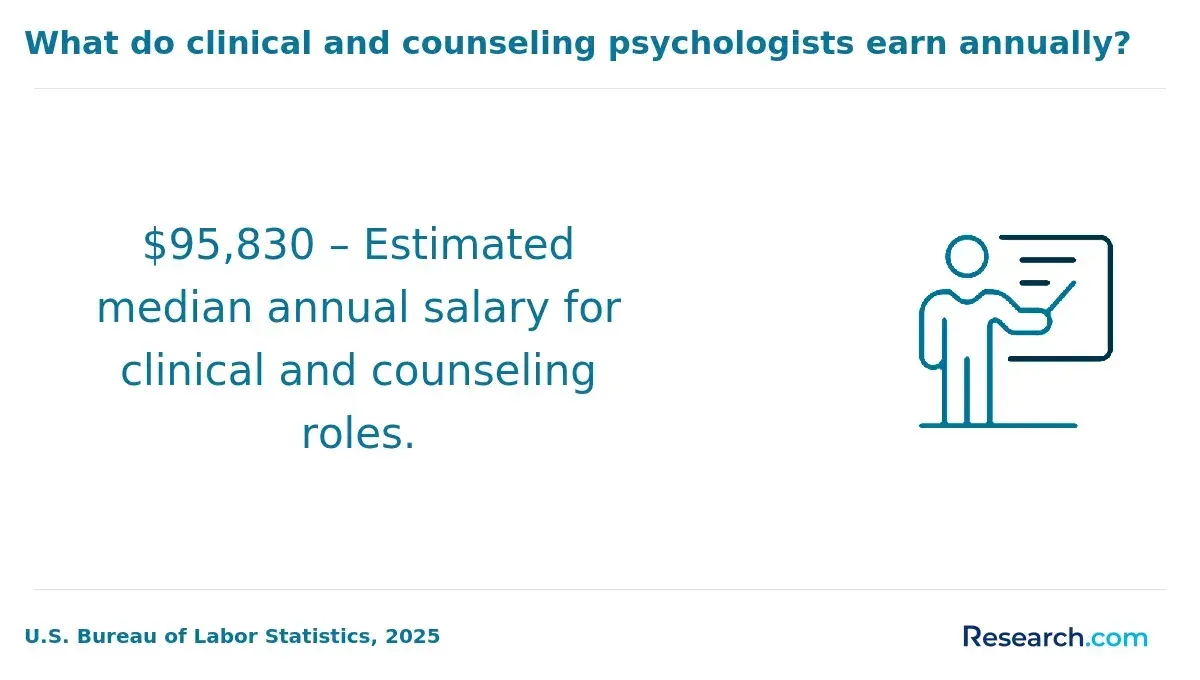
Georgia wages vary by setting, specialization, experience, employer, and license type. According to the Bureau of Labor Statistics, the annual mean wage for clinical and counseling psychologists is $79,730, while school psychologists earn $83,440. These figures should be treated as labor-market benchmarks rather than guarantees; your actual income will depend on credentials, location, workload, and sector.
Georgia can also be useful for students who want to apply psychology outside traditional therapy roles. A business psychology degree, for example, may support work in organizational development, employee training, people analytics, or human resources rather than clinical care.
| Why Georgia may be attractive | What to verify before committing |
| Mental health access gaps create real workforce need. | Whether your chosen degree leads to the license, certification, or job category you want. |
| Lower living costs may help students manage education-related expenses. | Total program cost, including fees, books, commuting, housing, and lost work time. |
| Clinical, school, forensic, counseling, ABA, and community roles may all be relevant. | Whether the program includes supervised fieldwork, practicum placements, or internships in your specialty. |
| The state’s diverse communities create demand for culturally responsive care. | Whether faculty, curriculum, and field sites prepare students for rural, urban, and underserved populations. |
What are the steps to becoming a psychologist in Georgia?
Becoming a psychologist in Georgia requires planning because the title is regulated and the pathway is longer than many undergraduate students expect. Georgia’s workforce need is significant, including a 34% vacancy rate for forensic psychologists alone (Georgia Department of Behavioral Health and Developmental Disabilities, 2025). Still, demand does not remove the need to complete the correct education, examination, background screening, documentation, and board review process.
Before choosing among psychology career paths, separate “working in a psychology-related field” from “becoming a licensed psychologist.” Many graduates work in human services, education, research, business, or behavioral health support roles with less than a doctorate. Independent psychologist licensure, however, is a higher credential with state-specific requirements.
According to the Georgia Secretary of State, the route to psychologist licensure in Georgia includes the following major steps:
- Complete the required education. Start with a bachelor’s degree in psychology or a related discipline, continue through graduate psychology study, and complete a doctoral psychology program accredited by the American Psychological Association (APA).
- Choose the correct application category. Submit an application to the Georgia Secretary of State’s Office under the appropriate route, such as licensure by examination, licensure by exam waiver, or licensure by endorsement.
- Pass the required exam. Applicants must pass the Examination for Professional Practice in Psychology (EPPP).
- Complete a fingerprint background check. Registration for fingerprinting is part of the licensure process.
- Provide required supporting records. If applicable, submit documentation related to court matters, disciplinary history, or sanctions.
- Pay the application fee. The non-refundable application fee is $100.
- Consider a temporary or provisional permit if eligible. Applicants waiting for full approval may be able to apply for a Temporary or Provisional Permit to practice in Georgia.
- Understand special license categories. Georgia also identifies license options such as Psychologist by CPQ Designation for individuals holding a Certificate of Professional Qualification and Volunteer Psychologist for retired psychologists or psychologists actively licensed in another state.
- Renew on schedule. Georgia psychology licenses expire every two years on December 31st of even-numbered years, and online renewal requires a $250 fee.
- Use inactive or reactivation status correctly. Psychologists who are not practicing may request inactive status, while reactivation requires a separate application and fee.
- Submit a complete application. The Georgia Board reviews completed files only, and incomplete applications may be withdrawn, forcing applicants to begin again.
- Maintain accurate contact information. Because the Board primarily uses email, applicants and licensees should keep their contact details current.
| Stage | What it means in practice | Decision point for students |
| Undergraduate study | Builds foundational knowledge in research methods, development, cognition, behavior, statistics, and abnormal psychology. | Choose a school that supports research experience, advising, and preparation for graduate admission. |
| Graduate preparation | Develops advanced academic and applied knowledge; requirements vary by specialty. | Ask whether the program is designed for licensure, research, counseling, school practice, or another goal. |
| Doctoral training | Typically required for licensed psychologist practice. | Verify APA accreditation and supervised training structure before applying. |
| Board application and examination | Includes application review, EPPP, background check, fees, and documentation. | Keep records from every practicum, internship, supervisor, transcript, and license-related step. |
Psychology Program Length in Georgia
Program length depends on the credential you want. Georgia currently has approximately 810 clinical and counseling psychologists, 570 school psychologists, and 420 psychologists in other specializations, according to the Bureau of Labor Statistics. Joining that licensed workforce generally requires graduate and doctoral preparation, not only undergraduate study.
A traditional bachelor’s degree in psychology usually takes four years. That degree can qualify graduates for certain entry-level jobs, including roles in case management, human resources, nonprofit services, behavioral health support, student services, and research assistance. It is also the standard academic foundation for graduate study.
Students who want to become licensed psychologists should expect a much longer timeline. Doctoral psychology programs in Georgia commonly require an additional 5-7 years and usually combine advanced coursework, research, supervised clinical experiences, internships, and dissertation or major research requirements. After doctoral training, applicants must complete any required supervised experience and pass licensing exams before they may practice legally as psychologists in Georgia.
Online psychology degree programs in Georgia may help students who need flexibility, but online format alone should not be the deciding factor. For licensure-oriented paths, students must confirm that the program satisfies Georgia requirements, includes approved supervised experiences, and is accepted by the relevant licensing board or credentialing body.
| Credential level | Typical purpose | What it can lead to | What it usually does not do |
| Associate degree | Introductory psychology and general education foundation. | Transfer to a bachelor’s program or pursue support roles requiring some college. | Does not qualify graduates for independent psychology practice. |
| Bachelor’s degree | Broad preparation in psychology, research, writing, statistics, and human behavior. | Entry-level roles or graduate school preparation. | Does not qualify graduates to become licensed psychologists. |
| Master’s degree | Advanced study that may support research, counseling-adjacent work, ABA, school psychology, or doctoral admission depending on the program. | Specialized roles or preparation for further graduate training. | May not be sufficient for psychologist licensure. |
| Doctoral degree | Advanced clinical, counseling, school, research, or specialty psychology training. | Psychologist licensure pathway when combined with state requirements. | Does not automatically grant a license without board approval and examination. |
Tuition and Costs of Psychology Programs in Georgia
The price of a psychology degree in Georgia includes tuition, mandatory fees, books, housing, transportation, technology, exam preparation, application costs, and possible income lost while completing fieldwork. According to College Tuition Compare, average undergraduate tuition and fees at psychology schools in Georgia are $4,913 for in-state students and $16,279 for out-of-state students. The cited national averages are $6,963 for in-state students and $12,914 for out-of-state students.
Credit-hour pricing also matters, especially for transfer students and part-time learners. College Tuition Compare reports an average cost per credit hour of $217 for Georgia residents and $760 for out-of-state students. Books and supplies average around $1,236.
Living arrangements can change the total cost dramatically. Students living on campus should plan for an additional $11,120, though actual expenses vary by school, housing type, meal plan, transportation, and personal circumstances.
Graduate students face a different cost structure. Public colleges report average graduate tuition of $6,983 for in-state students and $18,986 for out-of-state students, while private institutions report an average graduate tuition fee of $15,914. Students comparing master’s, doctoral, counseling, school psychology, forensic psychology, or ABA programs should request a full cost sheet before enrolling.
| Cost category | Reported amount | How to use this number |
| Average undergraduate tuition and fees for in-state students | $4,913 | Use as a starting benchmark, then compare the exact school bill. |
| Average undergraduate tuition and fees for out-of-state students | $16,279 | Ask whether residency, reciprocity, waivers, or online pricing could reduce costs. |
| Average cost per credit hour for Georgia residents | $217 | Helpful for part-time students or those calculating transfer-credit savings. |
| Average cost per credit hour for out-of-state students | $760 | Important for nonresidents comparing Georgia schools with in-state options elsewhere. |
| Average books and supplies | $1,236 | Budget beyond tuition, especially for statistics, assessment, and research courses. |
| Additional on-campus living expense | $11,120 | Compare with commuting, off-campus rent, and online study options. |
| Average graduate tuition at public colleges for in-state students | $6,983 | Use when comparing master’s or doctoral public university options. |
| Average graduate tuition at public colleges for out-of-state students | $18,986 | Calculate whether relocation or residency rules affect long-term affordability. |
| Average graduate tuition at private institutions | $15,914 | Compare net price after scholarships, assistantships, or employer tuition support. |
How to reduce the cost of a psychology degree in Georgia
- Start with transfer planning. If you begin at a two-year institution, confirm that credits apply to your target bachelor’s program before you enroll.
- Compare net cost, not sticker price. A school with higher tuition may become more affordable if it offers grants, assistantships, tuition discounts, or paid research positions.
- Ask about graduate funding early. Doctoral students should compare assistantships, stipends, tuition waivers, and practicum placement costs.
- Budget for licensure-related expenses. Application fees, background checks, exam preparation, and renewal fees can add costs after graduation.
- Avoid paying for credits that will not count. This is especially important for students switching majors, transferring schools, or entering graduate study from a related discipline.
Georgia Schools Offering Psychology Programs for 2027
Georgia students can choose from associate, bachelor’s, master’s, and doctoral psychology options. The right choice depends on whether your immediate goal is transfer, employment after graduation, graduate school preparation, research, or licensure.
This decision is becoming even more important as psychology licensing evolves. The licensing process is undergoing significant changes, including a new skills portion of the Examination for Professional Practice in Psychology, the EPPP-2, which is scheduled to become mandatory by January 1, 2026. The stated goal is to create a standardized clinical skills assessment, but the change has also raised concerns about cost, access, and diversity in the profession. Nearly 7,000 people have signed a petition expressing concern that the additional test could further limit diversity.
The following Georgia psychology programs, curated by Research.com experts, illustrate the range of on-campus options available to students pursuing the goals of psychology at different academic levels.
- Associate of Arts in Psychology at South Georgia State College: This program gives students an introductory academic base in psychology while supporting transfer to a four-year institution. It is best suited for students who want a lower-cost starting point before completing a bachelor’s degree.
- Bachelor of Science in Psychology at Columbus State University: This undergraduate program covers major psychological theories, methods, and applications. It can support students interested in clinical preparation, organizational psychology, research, or graduate study.
- Bachelor’s in Psychology at Georgia Southern University: This bachelor’s program emphasizes broad psychological knowledge with attention to research and statistical methods. It may be a good fit for students who want stronger preparation for graduate education or research-oriented work.
- Master of Arts in Psychology at the University of West Georgia: This graduate program focuses on advanced theory and research through a humanistic psychology lens. It includes optional subject-area concentrations and may serve students preparing for doctoral study or roles in areas such as mental health therapy, educational psychology, or human resources management.
- Ph.D. in Psychology at Georgia State University: This research-intensive doctoral program includes multiple specialization options, including clinical psychology and neuropsychology. It is designed for students seeking advanced research, academic, clinical, or leadership preparation in psychology.
| Program level | Example Georgia option | Best fit |
| Associate | South Georgia State College | Students planning to transfer into a bachelor’s program. |
| Bachelor’s | Columbus State University | Students seeking broad psychology preparation for work or graduate school. |
| Bachelor’s | Georgia Southern University | Students who want research and statistics preparation. |
| Master’s | University of West Georgia | Students interested in advanced theory, humanistic psychology, and possible doctoral study. |
| Doctoral | Georgia State University | Students pursuing advanced research, clinical, neuropsychology, academic, or leadership paths. |
What to Look For in a Psychology Program in Georgia
A strong psychology program should fit your career target, budget, learning style, and licensure plan. Salary potential and workforce demand can make psychology appealing in Georgia, but they do not make every program a good investment. The best school for one student may be the wrong choice for another if it lacks the right accreditation, fieldwork, faculty expertise, or graduate placement record.
- Accreditation: Verify institutional accreditation and, for licensure-focused doctoral training, confirm whether the program has American Psychological Association accreditation when required or expected. Accreditation affects transfer credit, financial aid eligibility, employer confidence, and licensure review.
- Licensure alignment: Ask the school directly whether the program is designed to meet Georgia requirements for the role you want. This is especially important for psychology, counseling, school psychology, MFT, and ABA tracks.
- Graduate and career outcomes: Request information on graduation rates, placement outcomes, doctoral admission, internship match results, and licensure exam performance when available.
- Supervised experience: Programs with practicum, internship, research lab, community placement, school-based, forensic, or clinical training opportunities can provide stronger preparation than coursework alone.
- Curriculum fit: Review required courses and electives. A student interested in forensic assessment, child development, organizational psychology, addiction counseling, or neuropsychology should not choose a program with no relevant coursework or field exposure.
- Faculty expertise: Look for faculty whose research, clinical interests, publications, and professional background connect with your goals.
- Affordability and aid: Compare tuition, fees, living costs, assistantships, scholarships, work-study options, and whether full-time enrollment would reduce your income.
- Student support: Strong advising, graduate school preparation, tutoring in statistics, research mentorship, and career services can make a major difference in psychology programs.
| Question to ask | Why it matters |
| Is the program accredited, and is any specialty accreditation relevant to my goal? | Accreditation can affect transfer, licensure, funding, and employer recognition. |
| Does the curriculum meet Georgia requirements for my intended license or certification? | Not all psychology-related degrees lead to the same professional credential. |
| What field placements, internships, or supervised experiences are available? | Applied experience is often essential for graduate admission, licensure, and employability. |
| How many credits will transfer? | Transfer policy can change your total cost and time to graduation. |
| What are recent graduates doing? | Outcome data helps you judge whether the program supports your specific goals. |
| What is the full cost after aid? | Tuition alone does not show the real price of the degree. |
Common mistakes when choosing a psychology school in Georgia
- Assuming a bachelor’s degree leads directly to licensure. A bachelor’s degree is valuable, but licensed psychologist roles generally require doctoral preparation and board approval.
- Choosing only by ranking or name recognition. A well-known school may not offer the specialization, advising, or field placements you need.
- Ignoring accreditation. Accreditation problems can affect licensure, financial aid, transfer credit, and graduate school admission.
- Comparing tuition without comparing total cost. Fees, housing, transportation, lost work time, books, and exam costs can change the real price.
- Assuming online programs automatically meet Georgia requirements. Always confirm licensure alignment before enrolling in an online or out-of-state program.
- Waiting too long to get research or field experience. Graduate psychology applications are often stronger when students have relevant experience before senior year.
What career paths are available with a psychology degree in Georgia?
A psychology degree can lead to clinical and nonclinical work, but the available roles depend heavily on degree level, licensure, specialization, and supervised experience. Students should decide early whether they want direct patient care, school-based services, legal-system work, research, business applications, or human services roles.
- Clinical psychologist: Assesses, diagnoses, and treats mental health conditions in settings such as hospitals, clinics, private practices, and mental health agencies. This role typically requires doctoral-level preparation and licensure.
- School psychologist: Supports students’ academic, behavioral, emotional, and developmental needs in educational settings. Georgia’s school mental health needs make this path especially relevant.
- Industrial-organizational psychologist: Applies psychological science to workplace issues, including hiring, training, productivity, leadership, employee engagement, and organizational systems.
- Forensic psychologist: Works at the intersection of psychology and the legal system, often contributing to assessments, court-related questions, correctional settings, or public safety agencies.
- Health psychologist: Focuses on the relationship between behavior, mental health, chronic illness, prevention, treatment adherence, and wellness.
- Research psychologist: Designs and conducts studies in academic, government, nonprofit, or private research environments.
- Human resources specialist: Uses knowledge of behavior, motivation, assessment, and communication to support recruiting, training, employee relations, and organizational development.
| Career direction | Typical work setting | Best degree planning strategy |
| Clinical or counseling psychology | Healthcare systems, clinics, private practice, community mental health | Plan for doctoral study, supervised clinical experience, and licensure. |
| School psychology | K-12 schools, districts, educational agencies | Choose graduate training that matches school psychologist credential requirements. |
| Forensic or criminal psychology | Courts, correctional settings, law enforcement-related agencies, forensic hospitals | Seek coursework and fieldwork in assessment, law, ethics, and forensic practice. |
| ABA and behavior analysis | Schools, clinics, autism services, community programs | Compare ABA master’s programs and certification preparation carefully. |
| Business or organizational psychology | Employers, consulting firms, HR departments | Build skills in statistics, research, people analytics, and organizational behavior. |
| Human services or case management | Nonprofits, social service agencies, behavioral health support programs | Use undergraduate study plus internships to build practical experience. |
How can I specialize in forensic psychology in Georgia?
Forensic psychology is a strong fit for students who want to apply psychological expertise in legal, correctional, or public safety contexts. Georgia’s need is visible in the reported 30% vacancy rate in this field, which points to pressure on forensic systems that depend on qualified behavioral health professionals.
Students interested in this specialty should look for coursework in abnormal psychology, assessment, ethics, criminal behavior, trauma, psychological testing, report writing, and the legal system. Field placements can be especially valuable because forensic work often requires clear documentation, strong boundaries, court-aware communication, and comfort working with complex cases.
A master’s degree in forensic psychology is often the minimum requirement for advanced roles, though licensed psychologist positions generally require more extensive training. Flexible options such as forensic psychology master's programs online may help working adults build specialized knowledge, but students should still verify licensure relevance, supervised experience options, and employer expectations in Georgia.
How can I specialize in criminal psychology in Georgia?
Criminal psychology focuses more directly on criminal behavior, motivation, assessment, intervention, and collaboration with legal or law enforcement professionals. In Georgia, this path may appeal to students who want to understand behavior in criminal justice contexts while contributing to more informed public safety and mental health responses.
Preparation usually includes advanced coursework, clinical or applied field experience, and training in assessment, ethics, risk factors, trauma, and justice-system processes. Students comparing this specialty should review how to become a criminal psychologist in Georgia to understand education expectations, possible credentials, and career planning steps.
What are the school psychologist requirements in Georgia?
School psychologists support students by connecting mental health, learning, behavior, assessment, and intervention within educational environments. Their work may include evaluating students, consulting with teachers and families, supporting behavior plans, responding to crises, and helping schools address academic or emotional barriers.
Students interested in this pathway should choose graduate preparation that includes school-based assessment, child and adolescent development, intervention planning, consultation, ethics, and supervised school experience. Because this role follows specialized state requirements, prospective students should review school psychologist requirements in Georgia before selecting a program.
What are the sports psychology career opportunities in Georgia?
Sports psychology combines mental performance, motivation, stress management, behavior change, and athlete well-being. In Georgia, opportunities may be connected to college athletics, competitive youth sports, fitness organizations, rehabilitation settings, private consulting, and performance-focused programs.
Students should understand that sports psychology work can vary widely. Some professionals focus on performance coaching and mental skills, while licensed psychologists may address clinical concerns affecting athletes. If you want to connect psychology with athletic performance, review how to become a sports psychologist and compare training routes carefully.
What are the career opportunities for behavior analysts in Georgia?
Behavior analysis is an applied field focused on measuring behavior, identifying environmental factors, and designing interventions that improve functioning. In Georgia, behavior analysts may work in schools, autism services, clinics, community programs, residential settings, and other behavioral health environments.
This path may suit students who want structured, data-based intervention work rather than traditional talk therapy. Preparation typically involves graduate study, supervised experience, and certification planning. Students interested in this route should examine how to become a BCBA in Georgia before choosing a degree program.
How can online ABA masters programs boost your career prospects in Georgia?
Online ABA master’s programs can help Georgia students and working professionals gain specialized training while keeping their jobs or remaining in their communities. This can matter in a state where many counties face mental health professional shortages and where local access to specialized graduate programs may be limited.
Strong ABA programs teach assessment, intervention design, data collection, ethics, supervision, and evidence-based behavior support. However, online delivery should not be confused with automatic career eligibility. Students should verify practicum or supervised experience arrangements, certification alignment, faculty qualifications, and employer recognition. Comparing ABA masters programs can help applicants identify options that fit both timeline and professional goals.
Could Substance Abuse Counseling Address Georgia’s Mental Health Crisis?
Substance abuse counseling is one of the most practical ways to serve communities affected by addiction, trauma, co-occurring mental health conditions, and limited access to care. While it is not the same as becoming a psychologist, it can be a meaningful behavioral health pathway for students who want direct client interaction and recovery-focused work.
Professionals in this field may provide screening, counseling, relapse-prevention support, group services, case coordination, and referrals. Students who want to understand this route should review how to become a substance abuse counselor in Georgia and compare its requirements with psychology, counseling, social work, and MFT pathways.
How does forensic science training enhance psychology careers in Georgia?
Forensic science training can strengthen psychology-related careers that involve legal evidence, investigative collaboration, behavioral analysis, or court-connected work. While forensic science and forensic psychology are distinct fields, cross-training may help professionals understand how behavioral evidence, scientific documentation, and legal standards interact.
This interdisciplinary background may be useful for students interested in correctional systems, victim services, law enforcement collaboration, expert support roles, or research connected to criminal justice. To compare education routes, review the degrees needed to work in forensic science in Georgia.
What are the Georgia psychology license requirements?
Georgia psychology licensure requires careful documentation and compliance with state rules. Prospective psychologists must complete required academic training, satisfy supervised experience expectations, pass required examinations, complete background screening, submit accurate records, and receive board approval before practicing independently.
Because requirements can change and vary by application route, students should not rely only on general program descriptions. Ask programs whether they are designed for Georgia licensure, whether graduates have successfully obtained licensure, and how the school supports internship, supervision, and exam preparation. For a more detailed breakdown, see the guide to Georgia psychology license requirements.
How does Georgia's diverse population impact psychology practice?
Georgia psychologists serve communities that differ by culture, race, ethnicity, language, income, geography, education, religion, immigration history, and access to healthcare. This diversity makes cultural competence a core professional skill rather than an optional add-on.
- Culturally responsive care: Psychologists need to understand how identity, history, discrimination, family systems, and community context shape mental health experiences. Effective care often requires adapting communication, assessment, and treatment planning to the client’s background.
- Specialized services for underserved communities: Georgia’s population includes communities that may face trauma exposure, stigma, limited insurance coverage, language barriers, or reduced access to providers. Graduate students who want to serve diverse client populations may benefit from specialized training, including a forensic psychology master's online accredited program when their goals align with forensic or justice-connected work.
- Community-based practice: Psychologists may work beyond the therapy room through outreach, prevention programs, school partnerships, nonprofit collaboration, workshops, and public mental health education.
- Rural and socioeconomic access issues: Many Georgia communities have fewer mental health providers and fewer nearby specialty services. Psychologists may need to collaborate with public health agencies, schools, hospitals, community organizations, and telehealth systems to reach clients.
How Can I Transition to a Mental Health Counseling Career in Georgia?
Mental health counseling can be a practical alternative for students who want to provide therapy but do not want to pursue the full psychologist licensure route. Counseling typically emphasizes client-centered treatment, diagnosis within the counselor’s scope, treatment planning, prevention, and support for emotional and behavioral concerns.
Career changers should compare counseling with psychology before enrolling because the degree, supervision, exams, scope of practice, and license title differ. Review how to become a mental health counselor in Georgia to understand the education and licensure steps for this path.
Pathways for Aspiring Marriage and Family Therapists in Georgia
Marriage and family therapy is another strong option for students drawn to mental health work. MFTs focus on relationships, family systems, communication patterns, conflict, life transitions, and relational stress. In Georgia’s diverse communities, culturally competent family-based care can be especially valuable.
Students considering this path should understand the MFT licensing requirements in Georgia before choosing a program. The process generally involves a specialized graduate degree, supervised clinical experience, state-required documentation, and examination.
MFTs may work in private practice, schools, community mental health, family service agencies, healthcare settings, and nonprofit organizations. This route can be a better fit than psychology for students who specifically want to work with couples, families, and relational systems.
What are the Georgia MFT license requirements?
Georgia MFT candidates must complete an accredited master’s degree focused on marriage and family therapy, obtain the required supervised clinical hours, and pass the state-administered examination. Applicants also need to follow state documentation and background screening procedures.
Because MFT licensure is separate from psychologist licensure, students should confirm that their degree title, coursework, practicum, and supervision match the correct board requirements. For step-by-step details, review Georgia MFT license requirements.
What continuing education and professional development resources are available in Georgia?
Psychology and behavioral health professionals in Georgia need ongoing education to keep pace with clinical methods, ethical standards, licensing rules, cultural competence, assessment practices, technology, and specialty care. Continuing education may include workshops, conferences, online courses, certificate programs, supervision training, professional association events, and specialty seminars.
Professional development is also useful for career mobility. A psychologist may add training in trauma-informed care, forensic assessment, telehealth, child and adolescent services, addiction, neuropsychology, supervision, or integrated behavioral health. Professionals considering a related credential can also compare options such as the fastest way to become a counselor in Georgia to understand how additional training may broaden their service options.
How to Choose the Best Psychology School in Georgia for Your Goals
The best psychology school in Georgia is the one that fits your intended credential, not simply the one with the most familiar name. A student planning to transfer needs a different program than a doctoral applicant. A future school psychologist needs different training than a student who wants organizational psychology, forensic work, counseling, ABA, or MFT licensure.
- Define your end goal first. Decide whether you want entry-level work, graduate school, licensed psychology practice, counseling, school psychology, ABA, forensic work, or research.
- Match the degree level to the career. Do not pay for a program until you know whether your goal requires a bachelor’s, master’s, specialist-level, or doctoral credential.
- Check accreditation and licensure alignment. Use official board and accreditor information rather than relying only on marketing language.
- Compare total cost and funding. Include tuition, fees, books, housing, transportation, exam costs, background checks, application fees, and lost income.
- Review fieldwork access. Ask where students complete internships, practicums, research placements, or supervised clinical experiences.
- Evaluate faculty fit. Faculty research and clinical expertise can influence mentorship, recommendation letters, graduate preparation, and specialty training.
- Ask for outcomes. Request graduate placement, licensure exam, employment, internship, and doctoral admission data when available.
- Plan for flexibility. If you need online, evening, part-time, or hybrid study, confirm that flexibility does not reduce access to required supervision or support.
Secure Your Career Through Psychology Schools in Georgia
Is a psychology degree worth it? In Georgia, it can be worth it when the degree is chosen strategically. The state’s shortage of mental health professionals, low access ranking, and county-level shortage areas create a strong public need, but students still need to protect their own investment by choosing accredited, affordable, outcomes-focused programs.
Psychology education can prepare graduates for many paths, from research and human resources to school services, forensic work, counseling-related careers, ABA, MFT, and licensed psychologist practice. The key is to choose the right route early and verify every licensure assumption before enrolling.
Key Insights
- Georgia has a serious mental health access problem. The state remains in the bottom tier nationally, ranks 49th for overall access to mental health care, and has 154 out of 159 counties identified as mental health professional shortage areas.
- Workforce need does not replace licensure requirements. Future psychologists still need the required education, examination, background check, board application, fees, renewal, and documentation.
- Degree level determines your options. A bachelor’s degree can support entry-level work or graduate admission, while licensed psychologist practice generally requires doctoral preparation and state approval.
- Costs vary widely by residency and school type. Reported undergraduate tuition and fees average $4,913 for in-state students and $16,279 for out-of-state students, while graduate tuition differs between public and private institutions.
- Salary data should be used carefully. Georgia’s annual mean wage is $79,730 for clinical and counseling psychologists and $83,440 for school psychologists, but actual pay depends on role, location, employer, license, and experience.
- Specialization matters. Forensic psychology, criminal psychology, school psychology, sports psychology, ABA, substance abuse counseling, mental health counseling, and MFT each follow different training and credential expectations.
- Accreditation is nonnegotiable for serious program comparison. Students should verify institutional accreditation, relevant program accreditation, fieldwork quality, and whether the program supports Georgia licensure or certification goals.
- Do not choose by convenience alone. Online and flexible programs can be useful, but students must confirm supervised experience, licensure alignment, and employer acceptance before enrolling.
- The best program is goal-specific. A low-cost transfer pathway, a research-heavy bachelor’s program, a clinical doctoral program, and an ABA master’s program serve different students and should not be compared as if they lead to the same outcome.
Related Articles for Nearby States
- 2027 Best Psychology Schools in South Carolina – Accredited Colleges & Programs
- 2027 Best Psychology Schools in Florida – Accredited Colleges & Programs
- 2027 Best Psychology Schools in Alabama – Accredited Colleges & Programs
- 2027 Best Psychology Schools in North Carolina – Accredited Colleges & Programs
- 2027 Best Psychology Schools in Mississippi – Accredited Colleges & Programs
- 2027 Best Psychology Schools in Kentucky – Accredited Colleges & Programs
- 2027 Best Psychology Schools in Virginia – Accredited Colleges & Programs
- 2027 Best Psychology Schools in Louisiana – Accredited Colleges & Programs
- 2027 Best Psychology Schools in West Virginia – Accredited Colleges & Programs
- 2027 Best Psychology Schools in Arkansas – Accredited Colleges & Programs
References:
- American Psychological Association. APA-Accredited Programs. https://accreditation.apa.org/accredited-programs
- Georgia Department of Behavioral Health and Developmental Disabilities. (2025). Annual Workforce Assessment and Forensic Services Report. https://dbhdd.georgia.gov/reports/annual-reports
- Kaiser Family Foundation. (2025). Mental Health Care Health Professional Shortage Areas (HPSAs). https://www.kff.org/other/state-indicator/mental-health-care-health-professional-shortage-areas-hpsas/
- Mental Health America. (2025). The State of Mental Health in America 2025. https://mhanational.org/issues/state-mental-health-america
- Mental Health America. (2025). The state of mental health in America 2025. https://mhanational.org/issues/2025/ranking-states
- Psychology.org. Psychologist License Requirements in Georgia. https://www.psychology.org/online-degrees/georgia/
- PsychologyDegreeGuide.org. Georgia Psychology Schools. https://psychologydegreeguide.org/state/georgia/
- U.S. Bureau of Labor Statistics. Psychologists: Occupational Outlook Handbook. https://www.bls.gov/ooh/life-physical-and-social-science/psychologists.htm
- U.S. Bureau of Labor Statistics. Field of degree: Psychology. https://www.bls.gov/ooh/field-of-degree/psychology/psychology-field-of-degree.htm
Other Things You Should Know About Psychology Schools in Georgia
In 2027, Georgia colleges offer psychology degrees such as Bachelor of Science (B.S.), Bachelor of Arts (B.A.), Master's in Clinical Psychology, and Doctorate in Psychology. Each degree fulfills specific career goals and licensing requirements, with varying course structures and durations.
The University of Georgia, Emory University, and Georgia State University feature prominently among the top accredited psychology programs in Georgia for 2027. These institutions are respected for their comprehensive curriculum, esteemed faculty, and robust research opportunities in psychology.


