
2027 Best Accelerated Psychology Degree Programs Online

Co-Founder and Chief Data Scientist
Online psychology degrees have become increasingly popular due to their flexibility, allowing students to balance their studies with personal and professional responsibilities. These programs provide the same curriculum and credentials as traditional on-campus degrees, often featuring interactive coursework, virtual labs, and real-time discussions. Accelerated online psychology degrees are an excellent option for those looking to complete their education more quickly.
These programs are designed to be completed in a shorter time than traditional degrees. In this guide, we have listed some of the best online psychology degree programs, including the program length, requirements, costs, and everything else you need to know before enrolling.
What are the benefits of getting an accelerated online degree in psychology?
- Accelerated programs often reduce the total time spent in school, which can lower tuition costs and related expenses, making education more affordable.
- The online learning format provides the flexibility to study from anywhere, allowing you to balance your education with personal and professional commitments.
- Licensed psychologists in the U.S. earn an average salary of $92,740 each year.
What can I expect from an online degree program in psychology?
An online degree program in psychology offers a comprehensive education with a flexible schedule, allowing you to balance studies with personal and professional commitments. You can expect foundational courses in various psychology fields, specialized topics like abnormal psychology and neuroscience, and training in research methods. The learning format includes interactive content such as video lectures, discussion forums, and virtual labs, providing access to extensive online resources.
Where can I work with an online degree in psychology?
With an online degree in psychology, you can pursue a variety of careers across multiple sectors. Example of these are:
- Healthcare settings:
- Educational institutions
- Corporate and business sectors
- Social services and nonprofits
- Government agencies
How much can I make with an online degree in psychology?
Based on our research, the salary you can earn with an online degree in psychology varies widely based on factors such as your level of education, job role, experience, and geographic location. Licensed psychologists earn $92,740 on average, with the highest 10% earning more than $151,880. There are also options for specialization, which can help you earn more as a professional. For example, industrial-organizational psychologists earn about $147,420, clinical and counseling psychologists earn about $96,100, and school psychologists earn about $84,940.
- 2027 List of the Best Accelerated Psychology Programs Online Program List
- How long does it take to complete an accelerated psychology program online? How long does it take to complete an accelerated psychology program online?
- How does an accelerated psychology program online compare to an on-campus program? How does an accelerated psychology program online compare to an on-campus program?
- What is the average cost of an accelerated psychology program online? Program Cost
- What are the financial aid options for students enrolling in an accelerated psychology program online? Financial Aid
- What are the prerequisites for enrolling in an accelerated psychology program online? Program Requirements
- What courses are typically offered in an accelerated psychology program online? What courses are typically offered in an accelerated psychology program online?
- What types of specializations are available in an accelerated psychology program online? What types of specializations are available in an accelerated psychology program online?
- How can I maximize earnings with an accelerated psychology degree online? How can I maximize earnings with an accelerated psychology degree online?
- How do I choose the best accelerated psychology program online? How do I choose the best accelerated psychology program online?
- What are the benefits of pursuing dual advanced degrees after an accelerated online psychology program? What are the benefits of pursuing dual advanced degrees after an accelerated online psychology program?
- Can additional certifications enhance career prospects after an accelerated psychology degree? Can additional certifications enhance career prospects after an accelerated psychology degree?
- What are the key considerations when selecting an online psychology degree program? What are the key considerations when selecting an online psychology degree program?
- How do online psychology programs prepare you for therapist licensure? How do online psychology programs prepare you for therapist licensure?
- What are the transfer opportunities after completing a 2-year psychology degree online? What are the transfer opportunities after completing a 2-year psychology degree online?
- What challenges might students encounter in an accelerated online psychology degree program? What challenges might students encounter in an accelerated online psychology degree program?
- How do accelerated online psychology programs maintain academic rigor and quality? How do accelerated online psychology programs maintain academic rigor and quality?
2027 Best Accelerated Psychology Programs Online
Choosing an accelerated online psychology program is usually a time-and-cost decision: you want to finish faster, keep working if needed, and avoid enrolling in a program that will not support your next step. Psychology is also a field where the degree level matters. A bachelor’s degree can open doors in human services, research support, business, case management, and related fields, while many counseling, clinical, school psychology, and psychologist roles require graduate education, supervised experience, and state licensure.
This guide is for students comparing fast online psychology bachelor’s programs, transfer-friendly degree-completion options, and accelerated pathways that may lead to graduate study. You will find ranked program options, estimated timelines, tuition details provided in the source article, accreditation notes, transfer considerations, financial aid options, common courses, career paths, and practical questions to ask before applying.
Quick Answer: What Is the Best Accelerated Online Psychology Program?
The best accelerated online psychology program is the one that is accredited, accepts the most usable transfer credits, matches your career goal, and fits your schedule without creating an unrealistic course load. For many students, a “fast” psychology degree is fastest when they already have an associate degree, prior college credits, military credits, or transferable general education courses. Most bachelor’s programs listed here require 120 credits, and several allow students to finish in less than four years depending on transfer credit and course pacing.
| Best fit | What to prioritize | Why it matters |
| Transfer students | Generous transfer credit policy and clear degree audit | Accepted credits can reduce both time to graduation and total cost. |
| Students planning graduate school | Research methods, statistics, faculty support, and psychology prerequisites | Graduate psychology, counseling, and social science programs often expect a strong academic foundation. |
| Working adults | Asynchronous classes, multiple start dates, part-time options, and advising | Accelerated pacing is easier to manage when the format supports employment and family obligations. |
| Students seeking licensure later | Regional accreditation and graduate-program alignment | A bachelor’s degree alone generally does not qualify graduates to become licensed psychologists or therapists. |
How Research.com Evaluates Schools
Research.com reviews accelerated online psychology programs with attention to the factors students actually need to compare: accreditation, delivery format, tuition, program length, required credits, transfer policies, curriculum relevance, and student support. Rankings are designed to help readers narrow their options, not replace direct conversations with admissions, financial aid, and academic advising offices.
To support the ranking process, Research.com uses recognized education data sources and institutional information, including:
- IPEDS
- Peterson’s database, including its Distance Learning Licensed Data Set
- College Scorecard
- National Center for Education Statistics and the NCES website
Ranked Online Accelerated Psychology Programs
The programs below include online or accelerated psychology-related options identified in the source material. Before applying, confirm current tuition, fees, transfer limits, state authorization, course availability, and whether the program format is fully online or includes campus-based components.
| School | Program length | Credits | Cost per credit/tuition | Accreditation listed |
| University of Bridgeport | Four years or less | 120 | $575 | New England Commission of Higher Education (NECHE) |
| Ottawa University | Less than four years | 120 | $499 | Higher Learning Commission (HLC) |
| University of Idaho | Four Years | 120 | $454 | Northwest Commission on Colleges and Universities |
| Westfield State University | Four Years | 120 | $368 | NECHE |
| Charter Oak State College | Four Years | at least 120 | $329 | NECHE |
| Drexel University | Four to five years | 90-120 | $459 | American Psychological Association |
| Franklin University | Four Years | 120 | $398 | Higher Learning Commission (HLC) |
| Newberry College | Two to four years | 120 | $395 | Southern Association of Colleges and Schools Commission on Colleges (SACSCOC) |
| Southern New Hampshire University | Four Years | 120 | $330 | NECHE |
| Greenville University | Two to four years | 120 | $485 | HLC |
1. University of Bridgeport
The University of Bridgeport offers psychology-related undergraduate options, including an on-campus BS in psychology and a BS in human services that may be completed through an online accelerated track. The human services and psychology curriculum emphasizes critical thinking, human behavior, and the social factors that shape decision-making. Students interested in graduate counseling study may also consider the dual-degree route designed to help them progress toward an MS in counseling more quickly.
- Program Length: Four years or less
- Tracks/concentrations: human services
- Cost per Credit/Tuition: $575
- Required Credits to Graduate: 120
- Accreditation: New England Commission of Higher Education (NECHE)
2. Ottawa University
Ottawa University provides an accelerated online bachelor’s in psychology for students preparing for roles connected to mental health, public service, and human development. The BA curriculum introduces mental, intellectual, physiological, personal, and social development while helping students analyze information from related disciplines. Ottawa University also offers other psychology-adjacent pathways, including a BA in human services, an MS in addiction counseling, and an MA in counseling.
- Program Length: Less than four years
- Tracks/concentrations: N/A
- Cost per Credit/Tuition: $499
- Required Credits to Graduate: 120
- Accreditation: Higher Learning Commission (HLC)
3. University of Idaho
The University of Idaho gives online psychology students a choice between BA and BS pathways. The program is designed for students who want flexibility to explore psychology topics and engage with research opportunities. The university also offers a psychology minor and a two plus two transfer pathway for students entering with an associate degree who want to complete a bachelor’s degree in psychology.
- Program Length: Four Years
- Tracks/concentrations: N/A
- Cost per Credit/Tuition: $454
- Required Credits to Graduate: 120
- Accreditation: Northwest Commission on Colleges and Universities
4. Westfield State University
Westfield State University offers an online BA in psychology with an emphasis on skill-based coursework, research exposure, internships, and career preparation. The program’s 15:1 student-faculty ratio may appeal to students who want more direct access to instructors while studying online. Students should ask how internships and hands-on experiences work for online learners, especially if they live outside the school’s region.
- Program Length: Four Years
- Tracks/concentrations: N/A
- Cost per Credit/Tuition: $368
- Required Credits to Graduate: 120
- Accreditation: NECHE
5. Charter Oak State College
Charter Oak State College offers an online bachelor’s degree in psychology focused on human behavior across the life span, including both typical and abnormal behavior. Students study qualitative and quantitative research methods, statistical reasoning, and data evaluation. The curriculum also addresses several psychology domains, including cognitive, behavioral, physiological, socio-cultural, psychodyamic, and humanistic perspectives. Charter Oak State College offers six start dates, which can help students begin without waiting for a traditional semester cycle.
- Program Length: Four Years
- Tracks/concentrations: life span, social and behavioral, cognition and learning, and general psychology.
- Cost per Credit/Tuition: $329
- Required Credits to Graduate: at least 120
- Accreditation: NECHE
6. Drexel University
Drexel University offers an accelerated BS/MS psychology pathway for students who want to move from undergraduate study into graduate-level psychology coursework. The structure allows students to take a graduate course during the fourth year of the bachelor’s program, helping them begin master’s-level work earlier. Students pursuing the graduate portion are expected to identify a faculty adviser and mentor for graduate training and thesis work. Because accreditation categories can differ by degree level, applicants should confirm directly with Drexel how accreditation applies to the specific undergraduate and graduate options they are considering.
- Program Length: Four to five years
- Tracks/concentrations: N/A
- Cost per Credit/Tuition: $459
- Required Credits to Graduate: 90-120
- Accreditation: American Psychological Association
7. Franklin University
Franklin University offers a fully online BS in psychology designed with transfer students in mind. The university allows up to 75% transfer credits, which can help students avoid repeating completed coursework from another accredited institution. Students who already have qualifying credits may be able to complete the program in just 21 months. The curriculum includes research and field experience opportunities, and students can select a focus area as part of their major elective requirement.
- Program Length: Four Years
- Tracks/concentrations: criminal psychology, industrial organizational psychology, and sports psychology.
- Cost per Credit/Tuition: $398
- Required Credits to Graduate: 120
- Accreditation: Higher Learning Commission (HLC)
8. Newberry College
Newberry College offers an online BA in psychology that can be completed in 18 months by eligible students. Coursework covers areas such as general psychology, research methods, applied psychology, and cognitive psychology. The accelerated format accepts transfer students with at least 45 credits, and applicants with more than 24 credits are not required to submit high school transcripts.
- Program Length: Two to four years
- Tracks/concentrations: N/A
- Cost per Credit/Tuition: $395
- Required Credits to Graduate: 120
- Accreditation: Southern Association of Colleges and Schools Commission on Colleges (SACSCOC)
9. Southern New Hampshire University
Southern New Hampshire University offers a BA in psychology for students seeking a transfer-friendly online degree. SNHU accepts up to 90 credits from accredited schools, which can reduce time and cost for students who have already completed college coursework. The program also includes a 12-credit certificate in data literacy in psychology, giving students structured practice connecting psychological theory with data interpretation.
- Program Length: Four Years
- Tracks/concentrations: addiction studies, forensic psychology, industrial organizational psychology, child and adolescent development, and mental health.
- Cost per Credit/Tuition: $330
- Required Credits to Graduate: 120
- Accreditation: NECHE
10. Greenville University
Greenville University offers an online BS in psychology oriented toward careers in human and social services. The program uses collaborative learning and includes topics such as counseling, psychopathology, clinical methods, and statistics. Students who want a psychology curriculum taught through a Christian perspective may find the faith-based approach relevant. Greenville University allows up to 90 transfer credits and does not require ACT or SAT scores from applicants.
- Program Length: Two to four years
- Tracks/concentrations: N/A
- Cost per Credit/Tuition: $485
- Required Credits to Graduate: 120
- Accreditation: HLC
Student Perspectives on Accelerated Online Psychology Study
- Lily: "The accelerated online format helped me keep my job while moving forward academically. I was able to join class discussions, work with classmates from different backgrounds, and stay connected with instructors without relocating. The experience gave me a stronger foundation for entering psychology-related work."
- Emily: "Online psychology study gave me flexibility without making the program feel isolated. Group assignments, virtual conversations, and regular faculty communication helped me build confidence and expand my professional network. Completing the degree faster made the path feel much more manageable."
- Alexander: "The accelerated program required discipline, but the convenience made it possible to study psychology while managing other responsibilities. Faculty support and online collaboration helped me stay engaged with the material and think more critically about future career options."
Key Findings
- Most online bachelor’s programs in psychology require 120 credits, but completion time can shrink when schools accept prior college, associate degree, or transfer credits.
- Accelerated does not always mean easier. Shorter terms and heavier course loads require strong time management, especially for working adults.
- Tuition varies widely across the listed programs, with examples ranging from $329 per credit to $575 per credit.
- A psychology bachelor’s degree can support entry into human services, research support, business, and graduate study, but licensed psychologist and many therapist roles typically require advanced education and state-specific requirements.
- Accreditation, transfer policy, total cost, course format, and career support should carry more weight than speed alone.
How Long Does It Take to Finish an Accelerated Online Psychology Program?
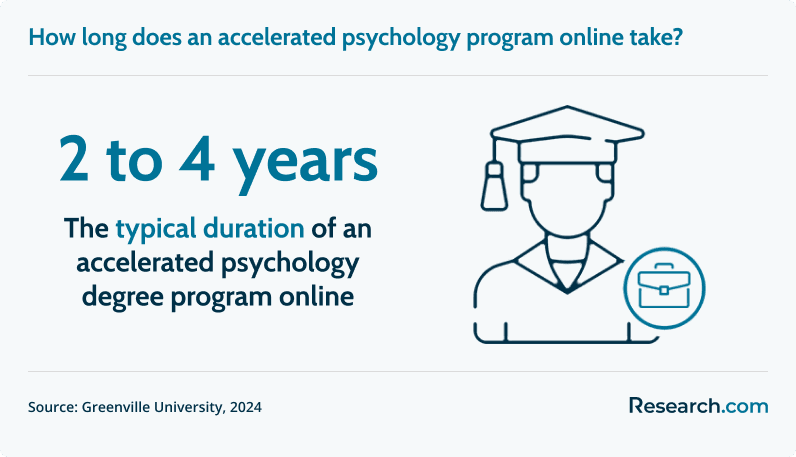
An accelerated online psychology program can be completed in as fast as two years when a student brings in enough transferable credits. Students with an associate degree often have a shorter route to a bachelor’s degree because general education and introductory coursework may already be complete. Some schools also offer dual-degree pathways that allow students to earn both an undergraduate and graduate degree in less than five years. In a traditional full-time format, an undergraduate psychology degree usually requires 120 credit hours and takes about four years to complete.
| Student situation | Likely timeline | What can speed it up |
| First-time bachelor’s student | About four years of full-time study | Year-round enrollment, heavier course loads, and accelerated terms |
| Associate degree holder | Potentially around two years | Transfer acceptance of general education and lower-division psychology courses |
| Student with substantial prior credits | Varies by credit evaluation | High transfer-credit maximums and a degree-completion plan |
| BS/MS or BA/MS student | Less than five years in some dual-degree formats | Graduate coursework taken during the undergraduate program |
How Does an Accelerated Online Psychology Program Compare With an On-Campus Program?
Accelerated online and campus-based psychology programs can cover similar academic content, but they differ in scheduling, interaction, cost structure, and student experience. The better option depends on how you learn best, whether you need flexibility, and how important in-person campus life is to your goals.
| Factor | Accelerated online psychology program | On-campus psychology program |
| Schedule | Often more flexible, especially when courses are asynchronous or offered in shorter terms. | Usually follows fixed class times and campus-based academic calendars. |
| Learning environment | Uses digital classrooms, recorded or live lectures, discussion boards, and online assignments. Students comparing college majors should consider whether they can stay organized in a self-directed format. | Provides face-to-face instruction, physical classrooms, campus labs, and in-person study groups. |
| Cost considerations | May reduce housing, relocation, and commuting expenses, though tuition and online fees still matter. | May involve housing, transportation, meal plans, campus fees, and other in-person costs. |
| Networking | Relies on virtual office hours, online communities, discussion forums, video meetings, and remote career services. | Offers more spontaneous interaction through campus events, student organizations, labs, and faculty offices. |
| Best for | Working adults, transfer students, caregivers, military students, and students who need location flexibility. | Students who want campus life, in-person mentorship, local internships, or a more structured daily routine. |
What Is the Average Cost of an Accelerated Online Psychology Program?
The cost of an accelerated online psychology program depends on tuition rate, total credits required, accepted transfer credits, fees, books, and the length of enrollment. Based on the examples in this guide, the University of Bridgeport can cost around $69,000, while Westfield State University can cost around $44,160. Charter Oak State College is listed at around $39,480, Franklin University at around $47,760, and Drexel University at around $55,080. Many online programs also charge technology fees, which can range from $100 to $500 per semester.
Do not compare schools by tuition alone. Ask each program for a written cost estimate after your transfer evaluation. A school with a higher per-credit rate may still be less expensive if it accepts more of your previous coursework.
What Financial Aid Options Are Available for Accelerated Online Psychology Students?
Financial aid for online psychology students can include federal aid, state programs, institutional scholarships, loans, employer support, and military education benefits. The first step for most eligible students is to complete the FAFSA and then compare aid packages from each school.
- FAFSA: The Free Application for Federal Student Aid (FAFSA) is used to determine eligibility for federal grants, loans, and work-study options. Eligibility depends on the student’s financial circumstances and other aid rules.
- Pell Grants: These need-based undergraduate grants do not have to be repaid. Award amounts depend on financial need, cost of attendance, and enrollment status.
- Direct Unsubsidized Loans: These federal loans are available regardless of financial need, but interest accrues while the student is enrolled.
- PLUS Loans: Graduate students and parents of dependent undergraduate students may use PLUS Loans to help cover costs that remain after other aid is applied.
- State Grants and Scholarships: Some states offer aid to residents attending eligible in-state institutions. Awards may be need-based, merit-based, or tied to a field of study.
- Institutional Aid: Colleges and universities may provide scholarships based on academic performance, financial need, leadership, or other criteria.
- Military Benefits: Eligible veterans and active-duty service members may use GI Bill benefits for tuition, fees, and education expenses. Active-duty service members may also qualify for Tuition Assistance (TA).
What Are the Admission Requirements for an Online Accelerated Psychology Program?
Admission requirements vary by school and degree level. Undergraduate psychology programs commonly evaluate academic history, transfer credits, and readiness for online learning. Graduate programs usually require a completed bachelor’s degree and may ask for additional materials that demonstrate academic and professional preparation.
- High School Diploma or Equivalent: Undergraduate applicants typically need a high school diploma or GED.
- Transcripts: Schools usually require official high school and college transcripts. Some programs may look for a minimum GPA, often around 2.5 to 3.0.
- Standardized Test Scores: Some institutions may request SAT or ACT scores, although many online programs now use test-optional policies.
- Bachelor’s Degree: Graduate psychology programs require a bachelor’s degree from an accredited institution. Psychology is often preferred, but related fields such as sociology, education, or social work may also be considered.
- Professional Experience: Some graduate programs prefer or require work experience in psychology, counseling, social services, education, or a related area.
- Letters of Recommendation: Graduate applicants may need two or three recommendations from professors, supervisors, or professional colleagues.
- Technology Requirements: Online students need reliable internet access and a computer that meets the school’s learning platform requirements.
What Courses Are Common in Accelerated Online Psychology Programs?
Accelerated online psychology programs usually combine foundational psychology courses, research training, statistics, electives, and applied learning. Course names vary, but many programs include the following topics:
- Developmental Psychology: Studies human growth and change from infancy through older adulthood, including physical, cognitive, and social development. Students comparing career-adjacent fast degrees may also review an accelerated paralegal program online.
- Cognitive Psychology: Examines attention, perception, memory, language, thinking, and problem-solving.
- Social Psychology: Explores how social settings, group dynamics, culture, and interpersonal relationships influence behavior. Related human behavior content may also appear in some cheapest online MSW programs.
- Research Methods in Psychology: Introduces experimental design, literature review, data collection, measurement, and interpretation.
- Ethics in Psychology: Covers professional standards, research ethics, confidentiality, informed consent, and responsible practice.
- Forensic Psychology: Applies psychological concepts to criminal behavior, courts, corrections, law enforcement, and legal decision-making.
What Specializations Are Available in Accelerated Online Psychology Programs?
Specializations help students align psychology coursework with a target career path or graduate-school goal. Availability differs by school, and some bachelor’s programs offer only electives rather than formal concentrations.
| Specialization | Focus | Who should consider it |
| Industrial-Organizational Psychology | Psychology applied to workplaces, employees, leadership, training, performance, and organizational behavior. | Students interested in business, human resources, consulting, or workforce analytics. |
| Clinical Psychology | Mental health assessment, psychopathology, therapy concepts, and clinical ethics. | Students planning graduate study in clinical psychology or related mental health fields. |
| Counseling Psychology | Personal adjustment, relationships, group counseling, multicultural counseling, and career development. Students seeking a faith-integrated graduate route can compare Christian counseling master’s programs. | Students who want to pursue counseling, therapy, or community mental health pathways later. |
| Forensic Psychology | Psychology in legal, correctional, criminal justice, and court-related contexts. | Students interested in law, corrections, victim services, law enforcement support, or graduate forensic study. |
| Child and Adolescent Psychology | Psychological development, family systems, adolescent behavior, pediatric topics, and youth mental health. | Students interested in schools, youth services, family support, or child-focused graduate programs. |
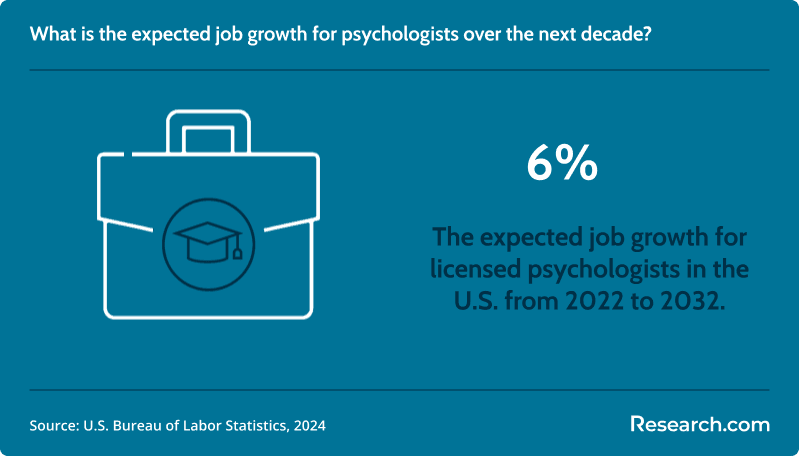
In 2022, there are 196,000 psychologists employed all over the country, and that number is still expected to increase by six percent over the next decade. Within that total, 10,100 are industrial organizational psychologists, 67,500 are clinical and counseling psychologists, 62,200 are school psychologists, and 56,300 are general licensed psychologists. These categories show why specialization matters: psychology careers can lead toward workplaces, schools, health settings, legal systems, research, and private practice depending on education level and licensure.
How Can I Maximize Earnings With an Accelerated Online Psychology Degree?
A psychology bachelor’s degree can be valuable, but earnings depend heavily on role, industry, location, experience, graduate education, and licensure. To improve long-term earning potential, students should plan beyond simply finishing the degree quickly.
- Choose a specialization with a clear labor-market use: Industrial-organizational psychology, clinical psychology, and forensic psychology may lead to different types of roles and graduate pathways. A focused academic plan can make your resume and graduate applications more coherent.
- Plan for advanced education when required: Many higher-paying psychology careers require a master’s, doctorate, supervised experience, or licensure. Students aiming for licensed clinical or counseling roles should map bachelor’s coursework to future graduate prerequisites early.
- Research career paths before selecting electives: If income is a major factor, compare roles, degree requirements, and advancement options using a guide to the highest paying jobs with a psychology degree.
The strongest strategy is to combine a fast, accredited degree with targeted experience, relevant electives, research or internship exposure, and a realistic plan for graduate study if your target job requires it.
How Do I Choose the Best Accelerated Psychology Program Online?
The best program is not automatically the cheapest, fastest, or highest ranked. It is the one that gives you the shortest legitimate path to your goal while protecting your eligibility for financial aid, transfer credit, graduate study, and future employment.
- Check accreditation first: Look for institutional accreditation from a recognized accreditor. For licensure-focused graduate pathways, verify whether the program and degree level meet the expectations of your state and future graduate programs.
- Review the curriculum carefully: Make sure the program includes research methods, statistics, core psychology areas, and electives relevant to your goals. Students comparing fast career-oriented options may also explore quick degrees that pay well, but psychology students should avoid choosing speed over academic fit.
- Ask for a transfer-credit evaluation: A written transfer review can show exactly which credits count, which requirements remain, and how many terms you realistically need.
- Compare the full cost of attendance: Include tuition, fees, books, technology costs, proctoring fees, residency requirements, and lost income if the workload affects your job.
- Confirm the format: Ask whether classes are asynchronous, synchronous, self-paced, cohort-based, or offered in short terms. Accelerated online learning can be demanding even when it is flexible.
- Evaluate career and academic support: Look for tutoring, writing support, library access, career advising, internship guidance, faculty office hours, and graduate-school advising.
| Question to ask | Why it matters |
| How many of my credits will transfer into the major, not just as electives? | Elective credit may not shorten the degree if core requirements remain unmet. |
| Is the program fully online, or are there campus, internship, or residency requirements? | In-person requirements can affect cost, scheduling, and state eligibility. |
| Does this bachelor’s program prepare me for the graduate program I want? | Some graduate programs expect specific psychology, statistics, or research coursework. |
| What is the total estimated cost after transfer credits and aid? | Per-credit tuition alone does not show the full price. |
| What student support is available outside normal business hours? | Online students often study evenings or weekends and may need flexible support access. |
What Are the Benefits of Pursuing Dual Advanced Degrees After an Accelerated Online Psychology Program?
Students who use an accelerated bachelor’s program as a launchpad for graduate study may later consider dual advanced degrees. These pathways can combine research training, clinical preparation, and advanced practice-oriented coursework, depending on the program design. They may be useful for students seeking leadership, clinical, academic, or research-intensive roles, but they also require careful cost and licensure planning. Before committing, compare curriculum structure, fieldwork expectations, total tuition, and long-term career fit in options such as masters and PsyD combined programs.
How Do Online Psychology Programs Support Career Growth and Networking?
Strong online psychology programs offer more than recorded lectures. Look for career advising, alumni access, resume support, interview preparation, faculty mentoring, internship guidance, and graduate-school planning. Online students should also ask whether the department hosts virtual research talks, student organizations, psychology clubs, or employer events. If you plan to continue beyond the bachelor’s degree, compare the cost of a master's degree in psychology alongside the quality of advising and networking support.
How Can an Accelerated Online Psychology Degree Lead to Advanced Specialization?
An accelerated online psychology degree can help students reach graduate study sooner, but the foundation has to be strong. Courses in research methods, statistics, biological bases of behavior, abnormal psychology, cognitive psychology, and developmental psychology can support later specialization. Students interested in complex assessment, brain-behavior relationships, research, or academic careers may eventually compare specialized graduate routes such as a neuropsychology PhD online.
What Career Paths Are Available After an Accelerated Online Psychology Degree?
Career outcomes depend on the degree level. A bachelor’s in psychology can support entry-level and adjacent roles, while the titles below often require graduate education, supervised practice, certification, licensure, or doctoral study. Use this section to understand possible directions, not as a guarantee that a bachelor’s degree alone is enough for every role.
- Clinical Psychologist: Clinical psychologists assess and treat mental health disorders through therapy, testing, and intervention. This path usually requires a doctoral degree. Students comparing doctoral routes can review online doctoral programs and learn more about what can you do with a doctorate in psychology.
- Counseling Psychologist: Counseling psychologists help clients address stress, relationships, life transitions, and mental health concerns. They commonly work in schools, community settings, private practices, and health organizations.
- School Psychologist: School psychologists support students’ learning, behavior, assessment needs, and mental health within elementary schools, secondary schools, and school districts.
- Industrial-Organizational Psychologist: Industrial-organizational psychologists apply psychological science to workplaces, including employee motivation, assessment, training, leadership, and organizational development.
- Forensic Psychologist: Forensic psychologists work where psychology and the legal system overlap, including courts, corrections, criminal behavior analysis, and expert consultation.
- Research Psychologist: Research psychologists study behavior and mental processes using scientific methods. They may work for universities, government agencies, research organizations, or private institutions.
Students who want to move into family systems or behavioral intervention may also compare an online masters degree in marriage and family counseling or a PhD in applied behavior analysis.
What Is the Job Market for Graduates With an Accelerated Online Psychology Degree?
The job market for psychology graduates varies by role and credential. The demand for licensed psychologists all over the country is expected to increase by six percent over the next decade, with about 12,800 job openings for psychologists each year, on average. Employers increasingly recognize accelerated online degrees when they are earned from accredited institutions, but graduates should still be ready to explain their skills, internships, projects, research experience, and career direction.
For bachelor’s graduates, the strongest opportunities may be in roles that value communication, data interpretation, human behavior knowledge, case documentation, program support, recruiting, social services, and customer or client interaction. For licensed psychologist roles, graduate education and state requirements remain central.
Current Trends in Online Psychology Education and Careers
Online psychology education is changing as mental health needs, technology, workforce expectations, and graduate-school pathways evolve. Prospective students should understand these trends before choosing a program.
More Specialized Online Tracks
Online programs increasingly organize electives around areas such as forensic psychology, neuropsychology, sports psychology, industrial-organizational psychology, and child development. Students interested in the legal system can compare pathways such as the most affordable forensic psychology master's programs online.
Technology in Learning and Practice
- AI and Machine Learning: Psychology students may encounter more coursework or projects connected to data, digital assessment, behavioral analytics, and ethical questions around artificial intelligence.
- Telepsychology Training: Remote mental health services have made virtual communication, privacy, documentation, and telehealth etiquette increasingly important for students planning counseling or clinical graduate study.
Growing Acceptance of Accredited Online Degrees
Online degrees are now common in higher education, but accreditation still matters. Employers, graduate schools, and licensing boards may evaluate online degrees differently depending on the institution, program type, field placement structure, and state rules.
Broader Psychology-Related Job Markets
Psychology graduates may find opportunities outside traditional clinical settings, including corporate wellness programs, employee experience, digital behavior analysis, community services, education support, and global mental health initiatives.
Micro-Credentials and Continuing Education
Short credentials in areas such as trauma-informed care, mindfulness, applied behavior analysis, data literacy, or digital mental health can help graduates build targeted skills. These credentials should supplement, not replace, required degrees or licensure preparation.
Can Additional Certifications Improve Career Prospects After an Accelerated Psychology Degree?
Certifications can strengthen a psychology graduate’s profile when they align with a specific career path. They may demonstrate focused skills in behavioral intervention, trauma-informed practice, data literacy, human resources, or applied behavior analysis. However, certifications do not replace state licensure where licensure is required. Students interested in behavior analysis can explore affordable online BCBA programs and confirm eligibility requirements before enrolling.
What Are the Key Factors to Consider When Selecting an Online Psychology Degree Program?
When comparing online psychology programs, focus on the factors that affect completion, cost, academic quality, and future eligibility. Accreditation should come first, followed by transfer credit, curriculum, faculty access, student support, and alignment with career or graduate-school plans. Students who want a broader set of accredited options can review psychology degree online rankings and compare them with accelerated programs.
| Factor | What to verify | Common mistake |
| Accreditation | Institutional accreditation and any program-specific requirements for your goal. | Assuming every online psychology degree supports licensure or graduate admission equally. |
| Transfer policy | Maximum transfer credits, course equivalencies, expiration rules, and major requirements. | Counting all prior credits before the school completes an official evaluation. |
| Total cost | Tuition, fees, books, technology costs, and remaining credits after transfer. | Choosing based only on the advertised per-credit rate. |
| Program pace | Term length, weekly workload, course availability, and full-time or part-time options. | Enrolling in too many accelerated courses while working full time. |
| Career alignment | Internships, research options, electives, graduate preparation, and advising. | Picking a specialization that does not match the intended career path. |
How Do Online Psychology Programs Prepare Students for Therapist Licensure?
An accelerated online psychology bachelor’s degree can provide a useful academic foundation, but it generally does not qualify graduates for therapist licensure by itself. Licensure usually depends on graduate education, supervised clinical hours, examinations, and state-specific rules. Students should confirm whether a future master’s or doctoral program meets the requirements in the state where they plan to practice. If you are comparing alternate routes into therapy, review guidance on how can you become a therapist and speak directly with your state licensing board.
What Transfer Opportunities Are Available After Completing a 2-Year Psychology Degree Online?
A 2-year online psychology degree can be a cost-conscious starting point for students planning to complete a bachelor’s degree later. The key is transferability: credits must apply to the receiving school’s general education, major, and elective requirements.
- Pathway to a Bachelor’s Degree: A 2-year psychology program may satisfy introductory psychology and general education requirements for a bachelor’s program, shortening the remaining degree plan.
- Transfer Agreements and Partnerships: Community colleges and online institutions may maintain articulation agreements with four-year universities, making credit transfer more predictable.
- Specialized Program Options: After transfer, students may pursue areas such as clinical psychology, counseling, forensic psychology, or industrial-organizational psychology. Students starting with a 2-year psychology degree online should choose courses that match likely bachelor’s requirements.
- Financial and Academic Advantages: Beginning with an associate degree can reduce overall bachelor’s costs, and strong academic performance may improve transfer scholarship opportunities.
What Challenges Do Students Face in Accelerated Online Psychology Programs?
Accelerated online psychology programs can be convenient, but they are not low-effort. Students may face compressed deadlines, heavy reading loads, limited real-time interaction, group work across time zones, and the need to manage technology independently. Working adults should be especially cautious about stacking multiple accelerated courses in the same term. Students considering graduate study after the bachelor’s degree can compare options such as the fastest masters degree in psychology, but speed should never come at the expense of academic readiness.
- Challenge: Short terms can make assignments feel constant. Better approach: Review syllabi before the term starts and block study hours weekly.
- Challenge: Online discussion can feel less personal. Better approach: Attend virtual office hours and join optional student groups when available.
- Challenge: Transfer credits may not apply as expected. Better approach: Get a written degree plan before enrolling.
- Challenge: Licensure assumptions can create future problems. Better approach: Confirm graduate and state requirements early.
How Do Accelerated Online Psychology Programs Maintain Academic Quality?
Quality accelerated online programs protect academic standards through accreditation, curriculum review, faculty oversight, clear learning outcomes, proctored or authentic assessments, and student support systems. A shorter format should change the schedule, not weaken the expectations. Programs should still require rigorous writing, research, data analysis, ethics, and applied psychology assignments. Students aiming for counseling careers should also compare graduate pathways carefully, including options such as the fastest online clinical mental health counseling masters programs, and confirm state requirements before enrolling.
Common Mistakes to Avoid
- Choosing speed over accreditation: A fast program is not worth it if the credential creates transfer, graduate admission, financial aid, or employment problems.
- Assuming online automatically means cheaper: Online students may save on housing or commuting, but tuition and fees can still be substantial.
- Ignoring transfer-credit details: Credits that transfer as electives may not reduce major requirements.
- Assuming a bachelor’s degree leads directly to licensure: Many psychology and therapy roles require graduate education, supervised practice, exams, and state approval.
- Overloading accelerated terms: Finishing faster can backfire if grades suffer or you cannot complete research-heavy coursework well.
- Relying only on rankings: Rankings help you build a shortlist, but your final decision should be based on fit, cost, transfer results, and career goals.
Practical Steps Before You Apply
- Define your target outcome: Decide whether you want immediate employment, graduate school, counseling preparation, research experience, business applications, or social services work.
- Request transfer evaluations: Send transcripts to several schools and compare how many credits apply to graduation requirements.
- Calculate the real price: Use remaining credits, tuition, fees, books, and financial aid estimates rather than advertised tuition alone.
- Verify accreditation and state rules: Confirm institutional accreditation and, if licensure is part of your plan, check state requirements for future graduate study.
- Ask about course pacing: Find out whether courses are asynchronous, synchronous, cohort-based, self-paced, or offered in short terms.
- Review support services: Look for tutoring, writing help, psychology faculty access, career services, internship support, and graduate-school advising.
- Protect your GPA: If graduate school is likely, choose a pace that allows strong performance in statistics, research methods, and upper-division psychology courses.
Key Insights
- An accelerated online psychology degree can shorten the path to graduation, especially for transfer students, but most bachelor’s programs still require 120 credits.
- The fastest option is not always the best option. Accreditation, transfer credit, curriculum quality, cost, and career alignment matter more than speed alone.
- Psychology is a degree field where long-term planning is essential. Many clinical, counseling, school, and psychologist roles require graduate education and licensure.
- Program costs vary widely, and technology fees can range from $100 to $500 per semester. Always ask for a total cost estimate after transfer credits are reviewed.
- Students can improve ROI by choosing relevant electives, gaining research or field experience, using financial aid wisely, and selecting a program that supports their next academic or career step.
Resources:
- Charter Oak State College. (2024). Affordable Tuition and Fees. https://www.charteroak.edu/prospective/tuition
- Drexel University. (2024). ONLINE BACHELOR'S DEGREE IN PSYCHOLOGY. https://www.online.drexel.edu/online-degrees/arts-and-science-degrees/bs-psychology/index.aspx#tuition
- Franklin University. (2024). B.S. PSYCHOLOGY. https://www.franklin.edu/degrees/bachelors/psychology
- Greenville University. (2024). Psychology, B.S. Online. https://www.greenville.edu/academics/online-programs/psychology-bs-online
- University of Bridgeport. (2024). Online Tuition & Fees. https://www.bridgeport.edu/cost-financial-aid/tuition-fees/online
- U.S. Bureau of Labor Statistics. (2024). Occupational Outlook Handbook: Psychologists. https://www.bls.gov/ooh/life-physical-and-social-science/psychologists.htm
- Westfield State University. (2024). Tuition & Fees for Graduate & Part-Time Undergraduate. https://www.westfield.ma.edu/graduate-and-continuing-education/tuition-and-fees
Other Things You Should Know About Accelerated Psychology Programs Online
In 2027, the duration for completing an accelerated psychology degree program online typically ranges from 12 to 18 months. The exact timeframe depends on factors such as the university’s curriculum, transfer credits, and student enrollment status (full-time or part-time).
Prerequisites often include a high school diploma or equivalent, minimum GPA requirements, and occasionally completion of specific high school coursework in math and science. Some programs may require letters of recommendation or standardized test scores, such as the SAT or ACT.
In 2027, accelerated online psychology programs incorporate virtual simulations, video conferencing sessions, and local partnerships to ensure students gain practical experience. Schools often coordinate with nearby facilities to allow online learners to complete required supervised internships, ensuring comprehensive training that meets professional standards.


