
2027 Graduate School Requirements for Psychology Students

Co-Founder and Chief Data Scientist
Navigating the path to a psychology graduate school can feel overwhelming, especially as admission requirements grow more competitive each year. For 2027, students who hesitate to prepare risk missing crucial deadlines and losing their chance at top programs. With the Bureau of Labor Statistics projecting 6% growth in the field by 2032, the demand for qualified professionals is only rising—making it essential to act now rather than later.
This article breaks down the exact qualifications, application standards, and program expectations psychology students need to know. Backed by career-planning expertise, it equips readers with the clarity and confidence to meet requirements head-on and secure their place in graduate school before opportunities pass by.
Key Benefits of a Graduate Degree in Psychology
- Opens the door to specialized roles such as licensed clinical psychologist, counseling psychologist, school psychologist, or industrial-organizational psychologist.
- Provides access to a strong earning potential, with psychologists holding a graduate degree earning a median annual wage of $92,740 in 2023 (BLS).
- Enhances professional credibility and prepares graduates for licensure, research opportunities, and advanced leadership positions in mental health and academic settings.
- What GPA do you need for graduate school in psychology? GPA Requirements
- Do you need the GRE for psychology graduate school in 2025? Do you need the GRE for psychology graduate school in 2025?
- What prerequisites are required for psychology graduate programs? Prerequisites
- How important is research experience for psychology graduate school? Research Experience
- What letters of recommendation do psychology programs require? Recommendation
- How competitive is psychology graduate school admission in 2025? How competitive is psychology graduate school admission in 2025?
- What personal statement requirements do psychology programs have? Personal Statement
- What financial requirements should psychology graduate students prepare for? Financial Requirements
- What licensure preparation do psychology graduate programs include? What licensure preparation do psychology graduate programs include?
- What career opportunities open up after psychology graduate school? What career opportunities open up after psychology graduate school?
- Are online psychology graduate programs a viable alternative? Are online psychology graduate programs a viable alternative?
- What common mistakes should you avoid in your psychology graduate school application? What common mistakes should you avoid in your psychology graduate school application?
What GPA do you need for graduate school in psychology?
Most psychology graduate programs require at least a 3.0 GPA, but competitive schools often expect closer to a 3.5 or higher. GPA serves as an important measure of academic readiness, giving admissions committees a clear sense of whether an applicant can manage the rigor of graduate-level coursework. For students researching related paths, such as those asking is it hard to become a medical assistant, the emphasis on GPA in psychology programs highlights how different healthcare careers may have distinct academic expectations.
Still, GPA is rarely the only factor considered. Many programs take a holistic approach, looking at research experience, recommendation letters, work in the field, and standardized test scores if required. In some cases, students with GPAs below the typical cutoff are admitted because they show strong qualifications in other areas. An upward trend in grades can also demonstrate determination and the ability to improve over time.
Ultimately, while a solid GPA strengthens the application, it does not decide the outcome on its own. Graduate schools in psychology weigh multiple factors to identify students with both academic ability and practical experience. Applicants who can demonstrate growth, commitment to the field, and readiness for advanced study may still succeed even if their GPA is not perfect.
Do you need the GRE for psychology graduate school for 2027?
For 2027, many psychology graduate schools no longer require the GRE, though policies vary depending on the program. A growing number of universities have moved to test-optional admissions, aiming to reduce barriers for applicants and place greater weight on academic records, research, and practical experience. This means that while some programs still expect GRE scores, particularly competitive or research-heavy tracks, others leave the choice to the student.
For applicants, the GRE can still be a helpful tool. A strong score may balance out weaknesses in other parts of an application, such as a lower GPA or limited research experience. Submitting GRE scores can also demonstrate quantitative and verbal reasoning skills that are useful for success in graduate-level psychology. In some cases, programs with large applicant pools use GRE scores as one of several ways to screen candidates. Similar to how career comparisons like med tech vs medical assistant salary highlight important differences in healthcare professions, students must weigh whether GRE submission strengthens their application or is optional for their goals.
Data on psychology degree completions also show why GRE requirements are shifting. In 2023, over 141,000 students earned a bachelor’s degree in psychology, compared to a significantly smaller number of master’s and associate’s degree graduates, as shown in the chart at the end of the section. With so many students continuing into graduate-level study, schools are finding ways to streamline the application process and make advanced study more accessible. For many institutions, removing or making the GRE optional is one way to accommodate this large and diverse applicant pool.
Overall, students should carefully check the admissions requirements of each program they plan to apply to for 2027. Even if the GRE is not required, it may still be recommended or advantageous depending on the school and degree path. Understanding how each program weighs test scores will help applicants decide whether to invest time and resources into preparing for the GRE.
What prerequisites are required for psychology graduate programs?
Graduate psychology programs typically expect applicants to have a strong academic foundation before admission. While requirements vary by school, most programs look for coursework and experiences that show readiness for advanced study. Meeting these prerequisites ensures that students can handle the academic rigor of graduate-level psychology. Applicants also often wonder about career preparation in related healthcare fields—similar to questions like is it worth becoming a medical assistant—because both paths demand specific prerequisites before advancing.
For psychology graduate programs, common prerequisites include:
- Bachelor’s degree: Usually in psychology or a closely related field such as sociology, social work, or neuroscience.
- Core psychology courses: Introductory psychology, research methods, and statistics are often mandatory.
- Upper-level psychology coursework: Classes in abnormal psychology, developmental psychology, cognitive psychology, and biological psychology are frequently recommended.
- Research experience: Many programs expect applicants to have conducted undergraduate research or completed a senior thesis.
- Clinical or applied experience: Volunteer work, internships, or job experience in mental health settings can strengthen an application.
- Minimum GPA requirement: Most programs require at least a 3.0 GPA, though competitive schools may expect higher.
For students considering their future pathways, it’s also helpful to understand how different degree levels influence career options. For instance, some of the highest paying jobs with a master's in counseling include roles in clinical supervision, behavioral health administration, military or trauma counseling, and specialized therapeutic services. Knowing these opportunities early can help applicants tailor their prerequisite experiences toward the career outcomes they want.
Data also shows that prerequisites align closely with what admissions committees value most in applicants. For the 2022–23 application cycle, doctoral programs placed the highest importance on letters of recommendation, personal statements, and interviews. As shown in the chart below, this demonstrates that while academic coursework and experience build the foundation, personal qualities, professional preparation, and strong endorsements from mentors often play a decisive role in admissions decisions.
How important is research experience for psychology graduate school?
Research experience plays a crucial role in the admissions process for graduate programs in psychology. Most programs seek to assess not only an applicant's understanding of psychological concepts but also their ability to contribute to the field through inquiry and investigation. Having research experience demonstrates that you can design studies, analyze data, and think critically, which are skills that are essential for graduate-level work.
Just like comparing the difference between a medical billing and coding diploma vs certificate, the type and depth of research experience can set applicants apart in meaningful ways. Admissions committees often view research experience as a sign of readiness for advanced study. Students who have worked in labs, assisted professors, or completed independent projects show they can handle the demands of graduate research. This experience also allows applicants to build relationships with faculty, which often leads to strong letters of recommendation.
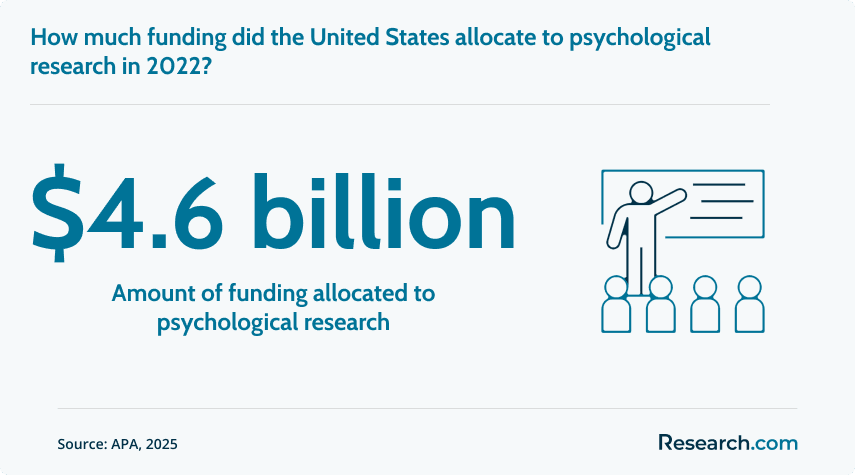
Beyond admissions, research experience is a cornerstone of success in psychology graduate school. The United States invested billions of dollars in psychological research in 2022, as shown in the image below, reflecting its vital role in advancing science, healthcare, and public policy. Whether pursuing a clinical, counseling, or experimental path, graduate students are expected to contribute to ongoing studies, complete a thesis or dissertation, and often publish their work. A strong research foundation not only eases this transition but also increases the likelihood of excelling in both coursework and professional development.
What letters of recommendation do psychology programs require?
Letters of recommendation are a key part of psychology graduate school applications. They give admissions committees insight into your academic abilities, research skills, and personal qualities from people who know your work firsthand. Most programs ask for two to three letters, and choosing the right recommenders can make a significant difference. Common requirements include:
- Academic references: At least one letter from a psychology professor who can speak to your performance in courses, research ability, and intellectual curiosity.
- Research supervisors: For applicants to research-focused programs, a letter from a lab director or faculty member who oversaw your projects is often essential.
- Clinical or professional supervisors: If applying to counseling or clinical psychology programs, letters from supervisors at internships, volunteer roles, or jobs in mental health settings are highly valued.
- Relevant professionals: In some cases, additional letters may come from professionals who can comment on your leadership, communication, or applied skills in psychology-related roles.
- Strong, personalized endorsements: More important than the title of the recommender is the depth and specificity of their knowledge about your strengths and potential.
These letters help programs gauge not only your readiness for graduate-level study but also your potential to contribute meaningfully to the field of psychology.
How competitive is psychology graduate school admission for 2027?
Psychology graduate school admissions for 2027 remain highly competitive, especially for doctoral-level programs. Master’s programs are generally more accessible, with acceptance rates ranging from about 35%–65% depending on the school and focus area. In contrast, PhD programs—particularly those in clinical psychology—accept far fewer students, often in the single digits.
This creates a challenging landscape for applicants, even those with strong academic and professional backgrounds. Students sometimes compare this competitiveness to other healthcare-related training options, such as pursuing a fast-track medical billing and coding certificate online, which is generally less selective and quicker to complete.
The most selective programs admit only a small fraction of applicants each year. For example, some clinical psychology PhD tracks report acceptance rates below 2%, while research-focused programs may admit closer to 20–30% of candidates. Much of this competitiveness comes from the limited number of seats available, with many schools only enrolling 5–10 new doctoral students per cohort. As a result, applicants are not only competing against large pools of qualified candidates but also trying to match with faculty whose research interests align with their own.
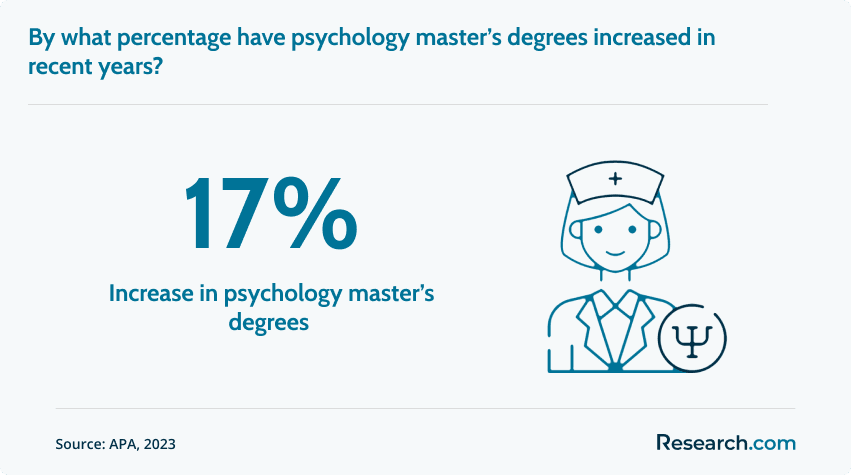
Data shown in the image below also highlights the growing demand fueling this competition. According to the APA, psychology master’s degrees have increased in recent years, showing more students are seeking advanced training to qualify for licensure or specialized roles. Yet, program capacity has not expanded at the same pace.
Funding constraints, faculty supervision requirements, and the intensive training model mean schools deliberately keep class sizes small. This combination of high demand and limited availability ensures that psychology graduate programs, especially at the doctoral level, will remain among the most selective fields of study for 2027.
What personal statement requirements do psychology programs have?
The personal statement is one of the most important parts of a psychology graduate school application. It allows admissions committees to evaluate not just your academic record, but also your motivations, career goals, and fit for the program. While exact requirements vary by school, most psychology programs ask applicants to address several key areas in their statement. Typical personal statement requirements include:
- Length guidelines: Most programs set a limit of 500–1,000 words or 2–3 double-spaced pages.
- Academic preparation: An overview of your undergraduate coursework, research training, and academic strengths.
- Research interests: Clear discussion of your areas of interest and how they align with faculty expertise in the program.
- Career goals: Explanation of whether you’re pursuing a research, clinical, or applied psychology path and your long-term objectives.
- Relevant experiences: Highlights of research projects, internships, volunteer work, or clinical experience that prepared you for graduate study.
- Program fit: Specific reasons why you chose that program, including faculty, resources, or training opportunities.
- Personal qualities: Evidence of resilience, curiosity, cultural competence, or other traits that would make you a strong candidate.
Most schools emphasize clarity, organization, and authenticity. A strong personal statement not only demonstrates your qualifications but also shows that you have a well-defined purpose for pursuing advanced study in psychology.
For students interested in culturally responsive training environments, exploring HBCU psychology graduate programs can be particularly meaningful. These programs often emphasize community engagement, diversity-centered research, and mentorship that supports psychological practice in multicultural and historically underserved communities.
What financial requirements should psychology graduate students prepare for?
Finances are a major consideration when applying to psychology graduate programs. Unlike undergraduate education, graduate students are responsible for a wide range of expenses that can vary by program type and location. Understanding these financial requirements ahead of time helps students plan realistically for their education and psychology career goals. Typical financial requirements include:
- Tuition and fees: Master’s programs often cost $20,000–$60,000 per year, while doctoral programs can range widely, with some offering partial or full tuition waivers.
- Living expenses: Rent, food, transportation, and health insurance can add significantly to the overall cost of attendance.
- Books and materials: Textbooks, assessment tools, and software may add several hundred to over a thousand dollars annually.
- Licensing and exam fees: Students pursuing clinical or counseling psychology must eventually budget for licensing exams and application fees.
- Application costs: Graduate applications typically require fees, GRE test costs (if applicable), and transcript requests.
- Opportunity costs: Doctoral students, in particular, may spend 5–7 years in school, limiting their ability to earn a full-time income during training.
Many students offset these costs through assistantships, research positions, stipends, or external scholarships. Planning ahead for both direct program expenses and long-term financial obligations can make graduate school in psychology more manageable.
What licensure preparation do psychology graduate programs include?
Psychology graduate programs are designed not only to provide academic training but also to prepare students for eventual licensure in their chosen specialty. Since licensure is required to practice as a clinical, counseling, or school psychologist, most programs embed licensure preparation into both coursework and practical training. The exact structure varies by degree type, but the core components are fairly consistent. Common licensure preparation includes:
- Accredited curriculum: Courses aligned with state and national requirements, covering ethics, assessment, intervention, and cultural competency.
- Supervised practicum experiences: Hands-on training in clinical or applied settings under licensed supervisors.
- Internship or residency requirements: Year-long internships or residencies that fulfill state licensure mandates.
- Research and assessment training: Preparation in evidence-based practices and psychological testing, both of which are central to professional practice.
- Exam preparation: Guidance and resources for licensing exams such as the Examination for Professional Practice in Psychology (EPPP).
- Documentation and professional development: Support in logging clinical hours, meeting supervision requirements, and preparing licensure applications.
By the time students graduate, they typically have completed the academic and practical benchmarks necessary to apply for licensure, with post-graduation supervised hours often being the final step.
For students seeking programs that emphasize cultural responsiveness, community engagement, and mentorship rooted in identity and social justice, exploring HBCU colleges for psychology can be especially meaningful. These institutions often offer supportive academic environments and training opportunities that prepare graduates to serve diverse populations with cultural competence and advocacy-centered practice.
What career opportunities open up after psychology graduate school?
Graduate training in psychology can lead to a wide range of career opportunities, depending on whether a student completes a master’s or doctoral program. From clinical practice to research and applied roles, the field offers pathways that combine scientific knowledge with human services.
Clinical and Counseling Psychology
Graduates with advanced degrees can pursue careers as licensed psychologists or counselors. These roles involve assessing, diagnosing, and treating mental health conditions in private practice, hospitals, schools, or community agencies. Clinical and counseling psychologists often specialize in areas such as child psychology, health psychology, or trauma-focused care.
Academic and Research Careers
Doctoral graduates frequently work in universities as professors or researchers. In these positions, they may teach psychology courses, conduct original studies, and publish scholarly work. Many also secure research roles in government agencies, nonprofit organizations, or private research firms, contributing to evidence-based practices that shape mental health policy and treatment.
School Psychology
School psychologists work directly in educational settings, supporting students’ academic, emotional, and behavioral development. They conduct assessments, collaborate with teachers and parents, and implement interventions. This career path is especially relevant for those completing specialist or doctoral programs focused on school psychology.
Industrial-Organizational Psychology
Graduates specializing in industrial-organizational psychology often work in corporate environments. Their roles include improving workplace productivity, shaping employee training programs, and enhancing organizational culture. This field allows psychology professionals to apply behavioral science directly to business and management contexts.
Applied and Nontraditional Careers
Beyond traditional roles, psychology graduates can pursue careers in areas like forensic psychology, sports psychology, or health psychology. Others leverage their skills in policy development, program evaluation, or human resources.
Understanding the earnings associated with these roles can also help students plan their career direction. For example, many prospective professionals want to know how much do school counselors make, especially when comparing school-based mental health careers to clinical or private-practice roles. Salaries can vary based on education level, district size, geographic region, and years of experience, but the field generally offers stable employment and growth potential.
Workforce data shown in the chart below indicate that outside of schools, large shares of psychologists are employed in ambulatory healthcare services, are self-employed, or work in government roles and hospitals. This diversity shows that graduate degrees in psychology provide flexibility to tailor careers toward individual interests and strengths.
Key Findings
- About 141,000 bachelor’s degrees in psychology were awarded in 2022, making it the most common degree level in the field.
- In 2022–23, psychology doctoral programs placed the most importance on letters of recommendation (85%), personal statements (84%), and interviews (74%) over standardized testing.
- The United States allocated $4.6 billion to psychological research in 2022, underscoring the field’s national importance.
- Psychology master’s degrees have increased by 17% in recent years, reflecting rising interest in advanced credentials for licensure and specialized careers.
- The largest employers of psychologists include elementary and secondary schools (24%), ambulatory healthcare services (24%), and self-employment (23%), with smaller shares working in government (8%) and hospitals (5%).
Here’s What Graduates Have to Say About Graduate Degrees in Psychology
- Harry: "Earning my graduate degree in psychology gave me the chance to specialize in clinical practice while also contributing to research that makes a real difference. The mix of advanced coursework and supervised training prepared me for licensure and gave me confidence in my career path. "
- Tom: "Pursuing a master’s degree in psychology opened the door to leadership roles in mental health services. The experience taught me how to apply theory to real-world problems, and I now feel better equipped to support diverse communities. "
- Yara: "My graduate studies in psychology deepened my understanding of human behavior and provided valuable research skills. It was challenging, but the sense of accomplishment and the opportunities it created have been life-changing. "
Are online psychology graduate programs a viable alternative?
Online programs in psychology offer flexibility and cost efficiency while maintaining rigorous academic standards. Prospective students should verify accreditation, curriculum design, and opportunities for practical training to ensure that an online format meets both academic and licensure requirements. Evaluating metrics such as faculty expertise, alumni career outcomes, and examination success rates is crucial for making an informed decision. For example, exploring options like the cheapest BCBA online masters program can help balance quality with affordability.
What common mistakes should you avoid in your psychology graduate school application?
Applicants often falter by submitting generic personal statements that do not clearly convey unique research interests or career objectives. Overlooking the importance of aligning recommendation letters to specific program requirements and neglecting to verify that each program’s accreditation meets licensure prerequisites can weaken an application. Additionally, some candidates underestimate the value of targeted program research and fail to tailor supporting materials. For doctoral candidates, insufficient attention to specialized online curricula—such as those found in PsyD online programs—may result in missed opportunities that enhance both academic and professional outcomes.
References:
- American Psychological Association. (2023). Potential psychology degree decline. Monitor on Psychology. American Psychological Association.
- American Psychological Association. (2024). Admission criteria: Graduate psychology programs. Monitor on Psychology. American Psychological Association.
- American Psychological Association. (2025). Data point: Funding psychological research. Monitor on Psychology. American Psychological Association.
- Data USA. (2023). Psychology. Data USA.
- U.S. Bureau of Labor Statistics. (2024). Psychologists. In Occupational Outlook Handbook. U.S. Bureau of Labor Statistics.
Other Things You Should Know About Graduate Degrees in Psychology
For 2027 psychology graduate school applications, the GRE General Test is often required, though some programs may accept the MAT. Be sure to check specific program requirements as they can vary. Some schools may also require a subject-specific test.
Psychology graduate programs in 2026 typically last two to seven years, depending on the degree type. Master's programs generally take two to three years, while doctoral programs, such as Ph.D. or Psy.D., can take four to seven years to complete.


