
2027 High-Paying Jobs You Can Get with a Master’s Degree in Counseling

Co-Founder and Chief Data Scientist
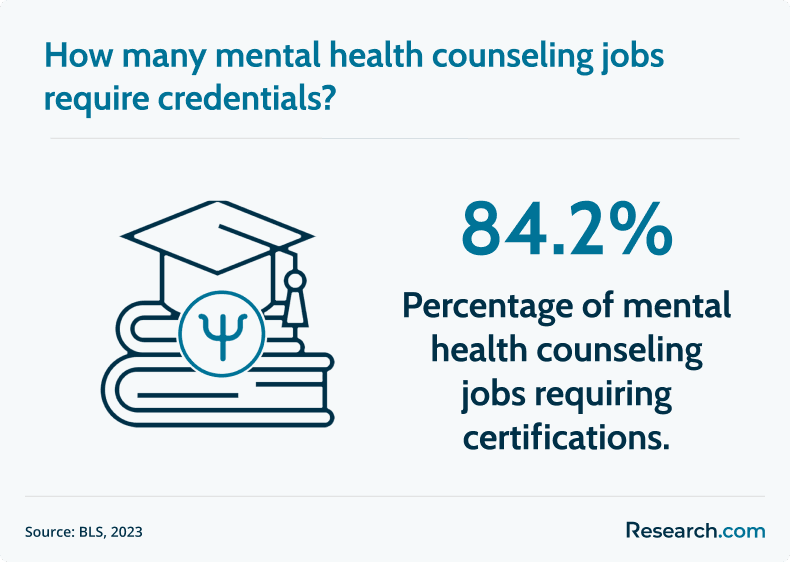
Most counseling careers depend on advanced education, and data confirm how central graduate training has become. In 2023, 85.0% of mental health counseling roles in the United States required a master’s degree, underscoring how essential this credential is for entering and advancing in the field (Bureau of Labor Statistics, 2023). This reliance on graduate-level preparation makes obtaining a master’s degree in counseling a critical gateway to professional opportunities across settings.
In this article, I will show you which high-paying jobs are tied to a master’s degree in counseling, the sectors and regions that offer the strongest rewards, and how factors like licensure, certifications, and career progression can influence long-term outcomes.
Key Things About the Highest-Paying Jobs for Master's in Counseling Degree Holders
- Advanced private practice, forensic counseling, military and veteran counseling, marriage and family therapy, and corporate counseling are the top-paying career paths for graduates with a master’s degree in counseling.
- Among counseling careers, private practice stands out as the most lucrative path, with Glassdoor reporting that private practice therapists average $111,606 annually.
- Master’s-level counselors secure high-paying roles in diverse sectors, including education, healthcare, corrections, corporate wellness, military services, and higher education institutions.
- List of High-Paying Jobs You Can Get with a Master's Degree in Counseling for 2027 High-Paying Jobs
- What industries or sectors hire graduates with a master’s degree in counseling for high-paying careers? Industries Hiring
- What career ladder opportunities exist after earning a master’s degree in counseling? Career Ladder
- Which states pay the highest salaries for graduates with a master’s degree in counseling? High-Paying States
- How do rural and urban salaries differ for counseling professionals? How do rural and urban salaries differ for counseling professionals?
- Which high-paying counseling careers are in highest demand across the U.S.? Job Outlook
- What factors affect the ROI of a master’s degree in counseling? ROI
- Does earning licensure boost salaries for graduates with a master’s degree in counseling? Does earning licensure boost salaries for graduates with a master’s degree in counseling?
- Is an Online MFT Degree a Viable Option for Aspiring Counselors? Is an Online MFT Degree a Viable Option for Aspiring Counselors?
- Which certifications lead to higher-paying counseling positions? Certifications
- Can Accelerated Psychology Programs Enhance Counseling Career Growth? Can Accelerated Psychology Programs Enhance Counseling Career Growth?
- What academic roles are available with a master’s degree in counseling? What academic roles are available with a master’s degree in counseling?
High-Paying Jobs You Can Get with a Master’s Degree in Counseling for 2027
A master’s degree in counseling can lead to several licensed career paths, but the highest-paying options are not evenly distributed across the field. Pay depends heavily on specialization, state licensure, employer type, location, reimbursement access, and whether the counselor works in a school system, healthcare setting, corporate program, correctional facility, military service environment, or private practice.
This guide is for students comparing counseling graduate programs, current counselors planning their next move, and professionals deciding whether a counseling master’s degree is worth the time and cost. It explains which counseling roles tend to pay more, where demand is strongest, how location affects earnings, why licensure matters, and what questions to ask before choosing a program or specialization.
Quick answer: What are the highest-paying counseling jobs with a master’s degree?
The highest-paying counseling careers for master’s-prepared professionals tend to be advanced private practice therapy, military and family life counseling, marriage and family therapy, forensic counseling, corporate or employee assistance counseling, and licensed clinical mental health counseling. School counseling and substance abuse counseling can also provide stable careers, though pay varies widely by district, agency funding, state, and experience level.
| Career area | Common job titles | Salary signals from available sources | Best fit for |
| Advanced private practice | LPC, LMHC, private practice therapist | Glassdoor reports $111,606 average annual pay for Private Practice Therapists, with top earners reaching $179,661 | Licensed counselors who want autonomy, can manage business operations, and are comfortable building a client base |
| Military and veteran counseling | MFLC, Veteran Counselor | Glassdoor reports about $122,788 annually for Military and Family Life Counselors; ZipRecruiter lists $62,532 for Veteran Counselors | Counselors interested in service members, veterans, family transitions, trauma, and deployment-related stress |
| Marriage and family therapy | LMFT, Marriage and Family Therapist | BLS reports $63,780 median annual wage; Glassdoor reports $95,226 average annual pay | Professionals drawn to couples, family systems, relationship dynamics, and outpatient therapy |
| Forensic and correctional counseling | Forensic Counselor, Forensic Mental Health Clinician | ZipRecruiter reports $87,877 average annual pay for Forensic Counselors; Glassdoor reports $80,667 for Forensic Mental Health Clinicians | Counselors comfortable working with courts, correctional systems, risk assessment, and complex behavioral health cases |
| Corporate and EAP counseling | Corporate Counselor, EAP Counselor | ZipRecruiter reports $70,214 for Employee Assistance Program Counselors; Glassdoor reports $82,350 for Corporate Counselors | Counselors interested in workplace mental health, stress, burnout, career transition, and organizational support |
| Clinical mental health counseling | LMHC, LPCC, Mental Health Therapist | BLS reports $59,190 median annual pay for substance abuse, behavioral disorder, and mental health counselors; ZipRecruiter reports $75,386 average pay for LMHCs | Students seeking broad clinical practice options across clinics, hospitals, agencies, and private practice |
Clinical Mental Health Counseling
Clinical mental health counseling is one of the broadest master’s-level counseling pathways. Job titles may include Clinical Mental Health Counselor, Licensed Mental Health Counselor (LMHC), Mental Health Therapist, and Licensed Professional Clinical Counselor (LPCC). These professionals assess clients, provide individual or group therapy, document treatment plans, respond to crises, and coordinate care with physicians, social workers, schools, or community agencies.
Salary varies because the same degree can lead to very different work environments. A counselor in a community agency may have a different pay range than a licensed clinician in a hospital, group practice, specialty clinic, or private practice.
- BLS median wage: The median annual pay for substance abuse, behavioral disorder, and mental health counselors was $59,190 as of May 2024.
- ZipRecruiter national average: Licensed Mental Health Counselors earn an average of $75,386, with the 25th to 75th percentile range running from $58,500 to $88,000 and the top 10% reaching $101,500 as of August 2025.
- APOS clinical average: Clinical Mental Health Counselors earn approximately $72,478 per year, with the top 10% earning up to $115,025 as of 2025.
This path is usually a strong choice for students who want the flexibility to work across many populations and settings. It is less ideal for those who want a clearly defined school-based role or who prefer organizational consulting over ongoing clinical treatment.
School and Educational Counseling
School and educational counselors help students with academic planning, social and emotional development, college readiness, career exploration, and crisis support. Common roles include School Counselor and Career Counselor. Work settings include K-12 public schools, private schools, colleges, career centers, and advising offices.
- BLS median wage: School and career counselors and advisors earned a median annual wage of $65,140 in May 2024, with the top 10% earning more than $105,870.
- ZipRecruiter average: School Counselors earn an average of $60,409, with a 25th percentile figure of $48,000, a 75th percentile figure of $69,500, and top salaries reaching $82,500.
- Glassdoor average: The national average for School Counselors is $77,624, with an interquartile range of $59,123–$102,695 and top salaries near $131,400.
These data points show why school counselor salary outcomes should be evaluated by district, region, contract structure, and years of experience rather than by national averages alone. Larger urban and suburban districts may offer more competitive salary schedules, especially for counselors who take on testing coordination, college advising leadership, crisis response, or student services responsibilities.
Marriage and Family Therapy
Marriage and family therapy focuses on relationships, family systems, communication patterns, and emotional health within couples, families, and individuals. Common titles include Licensed Marriage and Family Therapist (LMFT) and Marriage and Family Therapist. Many LMFTs work in outpatient clinics, community agencies, group practices, and private practice settings.
- BLS median wage: The Bureau of Labor Statistics reports a median annual wage of $63,780 for marriage and family therapists as of May 2024.
- ZipRecruiter national average: The average annual salary is $85,006, with a typical range from $62,500 at the 25th percentile to $98,500 at the 75th percentile, and top 10% earners making about $121,500.
- Glassdoor national average: Glassdoor reports an average of $95,226 annually for Marriage and Family Therapists, with a range from $77,245 at the 25th percentile to $118,540 at the 75th percentile, and top earners approaching $143,722.
This specialization can be a good fit for students who want to treat relational issues rather than only individual symptoms. It can also support private practice growth because couples and family therapy are common cash-pay and insurance-reimbursed service areas, depending on state rules and payer networks.
Substance Abuse and Addiction Counseling
Substance abuse and addiction counselors support clients dealing with substance use disorders, relapse risk, recovery planning, co-occurring mental health concerns, and family or community reintegration. Roles may include Substance Abuse Counselor and Licensed Addiction Counselor. Work settings include residential treatment centers, outpatient programs, hospitals, correctional facilities, and community agencies.
- BLS median wage: The BLS groups substance abuse counselors with clinical mental health counselors, so the median annual wage is $59,190 as of May 2024.
- ZipRecruiter hourly rate: Substance Abuse Counselors earn about $25.47 per hour, with most wages ranging from $21.39 at the 25th percentile to $28.85 at the 75th percentile as of August 2025.
- Glassdoor national average: The annual average salary is $64,446, with an interquartile range of $52,787–$79,320 and top salaries reaching $95,298.
This field can offer strong job availability, especially in regions expanding behavioral health and recovery services. However, compensation may depend on whether the employer is publicly funded, privately operated, hospital-based, or part of a specialized treatment network.
Corporate and Organizational Counseling
Corporate and organizational counseling applies counseling skills to the workplace. Job titles may include Corporate Counselor and Employee Assistance Program (EAP) Counselor. These professionals help employees manage stress, burnout, grief, conflict, substance use concerns, career disruption, and short-term mental health needs. Some also consult with human resources teams or provide crisis response after workplace incidents.
- ZipRecruiter average: Employee Assistance Program Counselors earn approximately $70,214 annually, with a range from $55,000 at the 25th percentile to $89,000 at the 75th percentile as of mid-2025.
- Glassdoor national average: Corporate Counselors report average annual salaries of $82,350, with a typical range of $65,000–$110,000 and top earners over $130,000.
This route may appeal to counselors who want to work with adults in professional environments rather than in traditional clinical agencies. It can also reward professionals who combine counseling training with coaching, organizational behavior, HR knowledge, or crisis management experience.
Military and Veteran Counseling
Military and veteran counseling serves active-duty service members, veterans, and military families. Roles include Military and Family Life Counselor (MFLC) and Veteran Counselor. These counselors may work on military installations, in VA-related services, through contractors, or in community organizations serving military-connected populations.
- Lightcast job postings median: Advertised salaries for military and family life counselors show a national median of about $73,600 per year and approximately $35 hourly, based on 2023 job-posting data.
- ZipRecruiter annual average: Veteran Counselors report an average salary of $62,532 per year, with a 25th–75th percentile range of $48,000–$69,000 and top earners reaching $89,500.
- Glassdoor average for MFLCs: Military and Family Life Counselors earn around $122,788 annually, with a typical range of $102,297–$149,388 and a 90th-percentile figure near $177,487.
This path can be financially attractive, but applicants should look closely at contract terms, travel expectations, security requirements, population served, and whether the role is temporary, embedded, remote, or installation-based.
Forensic and Correctional Counseling
Forensic and correctional counseling places mental health professionals in legal, court, juvenile justice, correctional, and forensic hospital settings. Job titles may include Forensic Counselor and Forensic Mental Health Clinician. Daily work may involve risk assessment, treatment planning, group counseling, crisis management, competency-related services, or coordination with courts and probation systems.
- Glassdoor average: Forensic Mental Health Clinicians report an average annual salary of $80,667, with a typical range of $65,792–$99,702 and top earners near $120,221.
- ZipRecruiter average: Forensic Counselors earn an average of $87,877 annually, with a 25th–75th percentile range of $58,500–$111,000 and top salaries around $129,000.
This specialization can pay well because it requires clinical judgment in high-stakes environments. It is best suited to counselors who can manage safety concerns, documentation demands, legal collaboration, and emotionally difficult cases.
Advanced Private Practice Opportunities
Private practice is often where licensed counselors see the widest earning range. Licensed Professional Counselors (LPCs), Licensed Mental Health Counselors (LMHCs), and similarly credentialed clinicians may operate solo practices, join group practices, provide telehealth, run therapy groups, or build niche services in areas such as anxiety, trauma, couples work, grief, men’s mental health, adolescent therapy, or perinatal mental health.
- Glassdoor average: Private Practice Therapists report an average annual salary of $111,606, with the typical range between $87,121 at the 25th percentile and $143,638 at the 75th percentile, and top earners reaching $179,661.
- ZipRecruiter annual average: Licensed Mental Health Counselors in private practice earn about $75,386 annually, with a 25th–75th percentile range of $58,500–$88,000 and 90th-percentile pay near $101,500.
Private practice can offer higher income, but it is not automatically more profitable. Counselors must account for unpaid administrative time, office or telehealth costs, insurance credentialing, taxes, marketing, documentation systems, continuing education, malpractice insurance, and uneven client volume.
What Industries Hire Master’s-Level Counselors for Higher-Paying Roles?
Master’s-prepared counselors are hired in several sectors where mental health, student support, public safety, recovery services, workplace wellness, and family stability are priorities. Higher pay is usually more likely when the employer has structured salary scales, strong reimbursement streams, public funding, specialized clinical needs, or demand for licensed professionals.
| Sector | Why it hires counselors | Salary information from available sources | What to evaluate before applying |
| Public education systems | Academic planning, student mental health, college readiness, career advising, and crisis response | School and career counselors earned a median of $65,140 in 2024, with top salaries over $105,000 in local government and large districts | District salary schedule, certification requirements, caseload size, contract length, and advancement opportunities |
| Healthcare and behavioral clinics | Assessment, therapy, care coordination, crisis intervention, and treatment planning | Substance abuse, behavioral disorder, and mental health counselors reported a median of $59,190, with higher wages in hospital-based and specialty clinical settings | Supervision quality, licensure support, productivity expectations, and clinical population |
| Criminal justice and correctional facilities | Forensic assessment, treatment, rehabilitation, crisis support, and reentry planning | Forensic counselors in courts and correctional programs fall under broader BLS categories, while ZipRecruiter lists average salaries of $87,877 | Safety protocols, documentation burden, legal collaboration, and trauma exposure |
| Corporate wellness and EAP programs | Short-term counseling, employee support, stress management, workplace crisis response, and referrals | Employee Assistance Program counselors average $70,214 annually | Whether the role is clinical, coaching-oriented, consultative, remote, contracted, or employee-based |
| Military and veteran services | Deployment stress, family transitions, trauma support, reintegration, and service-related adjustment | Military and Family Life Counselors earn about $122,788 on Glassdoor, while Veteran Counselors average $62,532 on ZipRecruiter | Contract status, travel, security requirements, licensure portability, and population served |
| Higher education institutions | Student mental health, academic advising, career services, retention, and wellness programming | Colleges employ career and mental health counselors, often hiring professionals trained through a master’s in educational counseling online | Whether the job is counseling, advising, teaching, supervision, or student services administration |
The best-paying sector is not the same for every counselor. A licensed clinician may earn more in private practice, while a school counselor may prefer the predictability of a district salary schedule, and a forensic counselor may accept a more demanding environment in exchange for specialized compensation.
The chart below compares salary averages across counseling roles using figures from BLS, ZipRecruiter, and Glassdoor. It shows why specialization matters: private practice, forensic counseling, and some military-connected roles can trend higher than school or substance abuse counseling, though individual outcomes still depend on licensure, employer, and location.
Career Ladder Opportunities After a Master’s Degree in Counseling
A counseling master’s degree is usually the entry point for professional practice, not the final career step. Higher-paying roles often require supervised experience, full licensure, specialization, leadership responsibility, or ownership of a counseling practice.
| Career stage | Typical role | What changes at this stage | How it can improve earnings |
| Graduate or associate-level counselor | Supervised therapist, counselor associate, case-linked clinician | Works under supervision while completing state requirements | Builds clinical hours needed for independent licensure |
| Fully licensed counselor | LPC, LMHC, LPCC, LMFT, licensed school counselor | Can practice within the authority granted by the state credential | Expands access to clinical roles, insurance reimbursement, and higher-responsibility positions |
| Specialist | Trauma therapist, addiction counselor, play therapist, forensic clinician, EAP counselor | Develops a focused clinical or organizational niche | Can compete for specialized roles or build a stronger referral base |
| Supervisor or program leader | Clinical Supervisor, Program Director, Director of Student Services | Oversees teams, budgets, quality standards, interns, or service delivery | Moves beyond direct-service pay scales into management compensation |
| Practice owner or senior consultant | Private practice owner, group practice director, corporate wellness consultant | Combines counseling expertise with business development | Creates income potential beyond a salaried caseload, but also adds business risk |
| Academic or doctoral pathway | Faculty member, researcher, doctoral-level clinician, training director | Adds scholarship, supervision, research, or advanced clinical authority | Can open higher-level teaching, research, and leadership roles |
Common advancement routes include Clinical Supervisor, Program Director, specialized licensure such as Licensed Professional Clinical Counselor (LPCC) or Licensed Marriage and Family Therapist (LMFT), Private Practice Owner, Higher Education Faculty, Director of Student Services, and Chief Wellness Officer. The pattern is consistent across most sectors: counselors who combine licensure, experience, specialization, and leadership responsibility usually have access to stronger compensation options.
Students who are still comparing graduate pathways may also benefit from reviewing the requirements for a master’s in psychology. Counseling and psychology graduate routes can overlap in student interests, but they may lead to different licensure structures, training models, and long-term career options.
Which States Pay the Highest Salaries for Master’s-Level Counselors?
Counselor salaries differ substantially by state. Pay can be shaped by cost of living, licensing rules, public funding, healthcare infrastructure, school district resources, demand for behavioral health services, and the supply of licensed professionals. APOS salary data for clinical mental health counselors identifies several states with higher reported earnings.
| State | Annual salary | Hourly rate | What may influence pay |
| Florida | $101,198 annually | $48.65 hourly | Highest nationally in the reported state data |
| California | $94,657 annually | $45.51 hourly | Large healthcare, education, and metropolitan employer networks |
| New York | $83,924 annually | $40.35 hourly | Concentration of roles in major metro areas |
| Washington | $74,682 annually | $35.90 hourly | Behavioral health investment and regional demand |
| North Carolina | $71,489 annually | $34.37 hourly | Growth across the Southeast |
| Colorado | $69,084 annually | $33.21 hourly | Demand in urban centers such as Denver |
| Oregon | $64,721 annually | $31.12 hourly | Statewide behavioral health initiatives |
| Minnesota | $63,982 annually | $30.76 hourly | Public health infrastructure and regional employer demand |
| Illinois | $62,742 annually | $30.16 hourly | Higher compensation potential in Chicago and surrounding suburbs |
| Wisconsin | $60,929 annually | $29.29 hourly | Regional need across education and healthcare settings |
These figures show why students should not judge counseling ROI using national salary data only. If relocation is realistic, state-level salary patterns can change the financial value of a degree. Students comparing the best counselor education online programs should also confirm whether a program’s curriculum and supervised experience structure align with the state where they intend to practice.
Which cities pay the highest salaries for graduates with a master’s degree in counseling?
City-level pay can exceed state averages because major metro areas often have more hospitals, universities, specialty clinics, private practices, school districts, and public agencies. Higher living costs can also push salaries upward, though take-home value depends on housing, taxes, commuting, and benefits.
| City | Annual salary | Hourly rate |
| San Diego, CA | $95,010 annually | $45.68 hourly |
| Los Angeles, CA | $93,469 annually | $44.94 hourly |
| Sacramento, CA | $83,494 annually | $40.14 hourly |
| Riverside, CA | $81,048 annually | $38.97 hourly |
| Minneapolis, MN | $66,836 annually | $32.13 hourly |
| Vernon, WI | $64,224 annually | $30.88 hourly |
| Portland, OR | $63,349 annually | $30.46 hourly |
| Waukesha, WI | $60,906 annually | $29.28 hourly |
| Snohomish, WA | $59,104 annually | $28.42 hourly |
| Salem, OR | $58,742 annually | $28.24 hourly |
The graph below shows a useful contrast: California cities dominate the highest-paying metropolitan list, while Florida reports the highest state-level figure in the available data.
How Rural and Urban Counseling Salaries Differ
Urban counseling jobs often pay more than rural roles because cities usually have a denser mix of hospitals, universities, private clinics, school districts, correctional systems, and specialty behavioral health employers. Rural areas may have strong need for counselors but fewer employers, smaller budgets, and greater reliance on publicly funded community programs.
For school and career counselors, BLS data shows median annual pay above $75,000 in urban districts such as New York-Newark, while counselors in rural regions of states such as Oklahoma or Arkansas earn closer to $55,000. Behavioral health counseling follows a similar pattern: urban averages exceed $60,000, while nonmetropolitan areas often fall below $50,000.
Marriage and family therapists also tend to see stronger salary opportunities in large metro areas. California metropolitan areas such as Los Angeles and San Francisco report salaries above $80,000, while nonmetropolitan regions in the Midwest and South average under $60,000.
That said, rural practice should not be dismissed. Some counselors may value lower competition, broader clinical responsibility, community impact, loan forgiveness eligibility, or telehealth-supported service models. The best comparison is not salary alone; it is salary plus cost of living, supervision access, benefits, caseload expectations, and long-term career fit.
Students exploring entry routes often ask, “can you be a counselor with an associate's degree?” In most licensed professional counseling roles, the answer is no: a master’s degree is typically required for licensure. However, a two-year degree or relevant certification may support entry-level roles such as behavioral health aide, peer support specialist, or case support worker, depending on employer and state rules.
Which High-Paying Counseling Careers Are in Highest Demand?
Demand is strongest in counseling areas tied to behavioral health access, substance use treatment, family services, and student support. Job growth does not guarantee a high salary for every graduate, but it can improve job availability and strengthen negotiating power for licensed counselors in shortage areas.
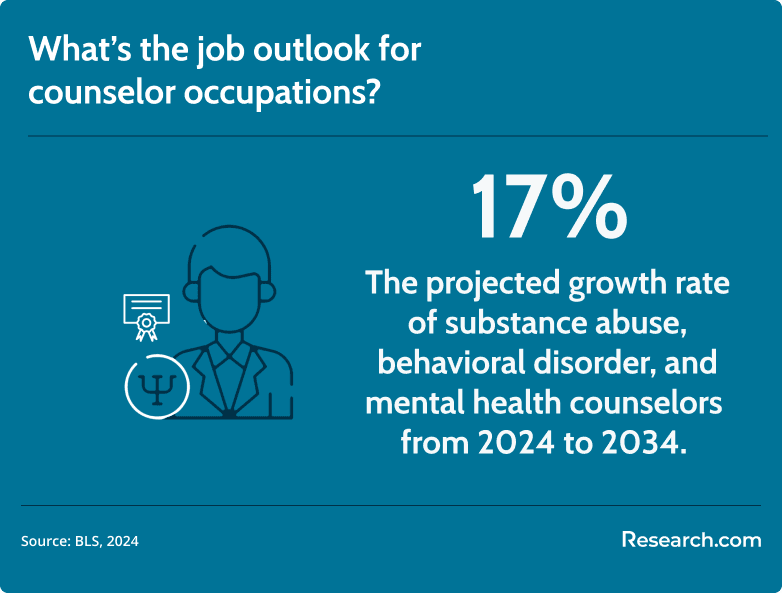
- Substance abuse, behavioral disorder, and mental health counselors: Projected job growth is 17% from 2024 to 2034, which is significantly faster than the national average.
- Marriage and family therapists: Projected job growth is 13% over the same period. Students who want to enter the field efficiently often compare program formats, including the shortest online marriage and family counseling master's degree.
- School and career counselors: Projected job growth is 5%, reflecting continued need in K-12 education, postsecondary advising, and career development.
- Behavioral health occupations overall: These roles continue to outpace many other fields, showing sustained need for trained mental health and counseling professionals.
Current trends shaping counseling careers
- Telehealth is now part of many counseling workplaces: Online therapy has expanded access, but counselors still need to follow state licensure rules, privacy requirements, documentation standards, and payer policies.
- Employers increasingly value specialization: Trauma-informed care, addiction treatment, child and adolescent counseling, family systems, crisis response, and workplace mental health can help counselors stand out.
- Insurance reimbursement matters: Licensed counselors who can join insurance panels may have access to broader client demand than unlicensed graduates.
- School and college counseling roles are evolving: Student mental health, career readiness, retention, and crisis response have become central responsibilities in many education settings.
- AI tools may affect documentation and administration: Counselors may see more digital tools for scheduling, note support, screening, and workflow management, but clinical judgment, ethics, privacy, and human rapport remain central to the profession.
What Factors Affect the ROI of a Master’s Degree in Counseling?
The return on investment for a counseling master’s degree depends on how much the degree costs, how long it takes to become fully licensed, and what salary the graduate can reasonably expect in their target role and location. Counseling can be a meaningful and stable profession, but students should evaluate the numbers before enrolling.
| ROI factor | Why it matters | What to check before enrolling |
| Graduate tuition and fees | The National Center for Education Statistics reported average graduate tuition of $9,800 at public institutions in 2023–24, while private institutions charged more | Total tuition, mandatory fees, technology fees, practicum costs, books, travel, and whether tuition differs for online students |
| Licensure timeline | States that require additional supervision hours can delay independent practice and higher earning potential | Required hours, exam requirements, supervision availability, associate license rules, and portability across states |
| Employment setting | Median wages differ by sector; school and career counselors earned $65,140 in May 2024, while marriage and family therapists earned $63,780 | Whether the target job is public, nonprofit, hospital-based, school-based, private practice, corporate, or correctional |
| Geographic location | Top states for clinical counseling salaries exceed $90,000, while lower-paying regions are closer to $60,000 | State salary data, cost of living, relocation options, and license transfer rules |
| Loan forgiveness | Public Service Loan Forgiveness forgives federal student loans after 120 qualifying payments for eligible borrowers in qualifying employment | Whether the employer qualifies, whether the loans qualify, and whether the repayment plan meets program rules |
| Accreditation and licensure alignment | A degree that does not meet state requirements can delay or block licensure | Program accreditation, state board approval, required practicum and internship hours, and exam preparation |
Preparation time also affects ROI because counselors may not reach full earning potential until they complete supervised practice and licensure requirements. The chart below outlines Specific Vocational Preparation (SVP) levels associated with counseling roles.
Some students also compare master’s-level counseling with doctoral pathways. Reviewing PsyD in counseling admission requirements can help applicants decide whether they want a long-term route that may support broader clinical, supervisory, academic, or leadership goals.
Does Licensure Increase Salaries for Counseling Graduates?
Licensure is one of the most important salary drivers in counseling. Graduates often begin in supervised roles, but independent practice, insurance reimbursement, senior clinical positions, and many supervisory jobs typically require a state-recognized counseling credential.
Common credentials include Licensed Professional Counselor (LPC), Licensed Marriage and Family Therapist (LMFT), Licensed Mental Health Counselor (LMHC), and state-specific variations such as LPCC. These credentials do more than add letters after a name. They define legal scope of practice, allow independent clinical responsibility where permitted, and may qualify the counselor for insurance panels.
Unlicensed graduates are often limited to supervised counseling, case management, intake, behavioral health support, or agency-based roles. Hospitals, private practices, EAP programs, schools, and healthcare systems commonly reserve higher-responsibility positions for licensed professionals.
Private practice is the clearest example. Without full licensure, a counselor usually cannot operate independently as a professional therapist. With licensure, the counselor may be able to build a caseload, contract with insurers, set fees within market limits, join a group practice, or open a solo practice.
Students who want a shorter route from enrollment to supervised practice may compare program formats such as an accelerated online master’s degree in clinical mental health counseling. Speed can help, but only if the program still meets the licensure standards of the state where the student plans to work.
Questions to ask before choosing a counseling master’s program
- Does the curriculum meet licensure requirements in the state where I plan to practice?
- Is the program accredited or otherwise recognized by the relevant state board?
- How are practicum and internship placements arranged?
- Will online coursework create any issues for state licensure, school counseling certification, or field placement approval?
- What percentage of graduates pursue licensure, school certification, or related credentials?
- Does the program prepare students for the counseling specialization I actually want?
- How much supervision will I need after graduation before I can practice independently?
- What is the full cost, including fees, travel, background checks, exams, and supervision-related expenses?
Is an Online MFT Degree a Viable Option for Aspiring Counselors?
An online MFT degree can be a practical option if the program is properly accredited, includes supervised clinical training, and aligns with the licensure rules of the state where the student plans to practice. The main advantage is flexibility: online coursework can help working adults, parents, military spouses, and students outside major metro areas complete graduate study without relocating.
The main risk is assuming that every online counseling or MFT program leads to licensure everywhere. Marriage and family therapy licensure is state-based, and requirements can vary. Before enrolling, students should confirm field placement support, internship hour requirements, faculty qualifications, accreditation status, exam preparation, and whether the program has experience placing students in their state.
Online learning may also prepare students for modern counseling delivery models, including telehealth, digital documentation, remote supervision, and hybrid care settings. Students comparing program quality and career alignment can review options for an MFT degree online.
Which Certifications Can Support Higher-Paying Counseling Positions?
Licensure is usually the required credential for independent practice, but certifications can strengthen a counselor’s profile in specialized, supervisory, school-based, corporate, or private practice roles. A certification does not automatically raise pay, but it can signal advanced preparation and help counselors compete for niche positions.
| Certification | Issuing organization | How it may help |
| National Certified Counselor (NCC) | National Board for Certified Counselors (NBCC) | Shows that the counselor meets national professional standards and may strengthen applications for clinical or supervisory roles |
| Certified Clinical Mental Health Counselor (CCMHC) | NBCC | Signals advanced clinical mental health competence and may support credibility with employers or referral sources |
| Approved Clinical Supervisor (ACS) | Center for Credentialing & Education | Supports eligibility and credibility for supervision, training, and leadership roles |
| Board Certified Coach (BCC) | NBCC | Can help counselors expand into executive coaching, career coaching, organizational consulting, or workplace wellness |
| Registered Play Therapist (RPT) | Association for Play Therapy | Supports specialization in child and adolescent therapy and may help build a niche private practice |
| National Certified School Counselor (NCSC) | NBCC | Strengthens school counseling credentials for K-12 and postsecondary academic and career counseling roles |
The best certification depends on the counselor’s target population and work setting. A future clinical supervisor may benefit from the ACS, while a child therapist may prioritize the RPT, and a counselor moving into workplace wellness may find the BCC more relevant.
Can Accelerated Psychology Programs Enhance Counseling Career Growth?
Accelerated psychology programs may help counseling professionals add research literacy, assessment knowledge, human behavior theory, or preparation for further graduate study in a shorter format. They are most useful when the added credential supports a specific goal, such as doctoral admission, leadership, program evaluation, teaching, or a shift into a more psychology-focused role.
However, students should not assume that an accelerated psychology program replaces counseling licensure requirements. Counseling, psychology, school counseling, and marriage and family therapy follow different training and credentialing pathways. Before enrolling, confirm whether the program supports the career outcome you want, especially if the goal involves clinical authority or state licensure.
For professionals who want a shorter academic route to broader psychology training, a fast track psychology degree online may be worth comparing with counseling certificates, doctoral prerequisites, or specialized continuing education.
What Academic Roles Are Available with a Master’s Degree in Counseling?
A master’s degree in counseling can support academic and student support roles, especially in advising, career services, practicum supervision, wellness programming, and adjunct teaching. These jobs may not always match the highest private practice earnings, but they can offer stability, benefits, institutional career ladders, and opportunities to shape student development.
- Adjunct Faculty Member: Colleges and universities may hire experienced master’s-level counselors to teach introductory, skills-based, or practice-oriented courses.
- Academic Advisor: Counseling graduates can help students choose courses, understand degree requirements, plan careers, and stay on track to graduate.
- Clinical Supervisor for Practicum or Internship: Experienced licensed counselors with appropriate supervision qualifications may guide counseling students during field training.
- Program Coordinator: Counseling-trained professionals may oversee advising centers, wellness programs, retention initiatives, or student support services.
- Student Services Specialist: These roles may involve outreach, student development, crisis referral, wellness programming, or coordination across academic departments.
- Career Services Counselor: Colleges hire counselors to provide career assessments, workshops, resume support, employer outreach, and job search advising.
Students who are considering both academic and practice-based roles may also want to understand what are the requirements to be a substance abuse counselor, since addiction counseling requirements vary and can influence teaching, supervision, and practice options.
Can teaching positions in colleges or community programs be high-paying?
Some teaching-related roles can pay well, but the details matter. Adjunct teaching is often paid by the course and may not include the salary stability or benefits of a full-time role. Full-time academic advising, program coordination, clinical supervision, or student services leadership can be more financially attractive, especially at larger universities or well-funded community colleges.
The strongest academic compensation often comes when teaching is combined with administration, program oversight, clinical supervision, grant-supported work, or leadership in student services. Counselors who want predictable income and institutional benefits may prefer this path even if private practice offers higher upside.
Do research roles in counseling psychology offer competitive salaries?
Research roles can be competitive, but they are highly dependent on the employer, funding source, and required degree. Universities may place research staff or faculty on institutional pay scales, while medical centers, federal agencies, or nonprofit research organizations may offer stronger compensation for project leadership, program evaluation, behavioral health research, or grant-funded work.
A master’s degree may support research coordination, program evaluation, data collection, or applied behavioral health project roles. Independent research leadership and tenure-track academic posts more often require doctoral training.
Is a doctoral degree required to move from counseling practice to academia?
A doctoral degree is not always required for academic work, but it expands the range of opportunities. Master’s-prepared counselors may teach as adjuncts, supervise practicum students, work in academic advising, or lead student support programs. Tenure-track faculty positions, full-time research roles, and senior academic leadership posts typically favor or require doctoral preparation.
For counselors who want to combine practice and teaching, a master’s degree may be enough for part-time or practice-based academic roles. For those who want permanent faculty status, research authority, or higher-level university leadership, doctoral study is usually the more strategic route.
Common Mistakes to Avoid When Pursuing a High-Paying Counseling Career
| Mistake | Why it can hurt your career | Better approach |
| Choosing a program without checking licensure alignment | A degree that does not meet state requirements can delay or prevent licensure | Verify requirements with the state counseling, MFT, or school counseling board before enrolling |
| Comparing programs by tuition only | Fees, travel, field placement costs, supervision, and exam expenses can change the real cost | Calculate total program cost and expected time to licensure |
| Assuming online programs are automatically accepted in every state | State rules may differ for clinical hours, internships, coursework, and supervision | Ask the program for state-by-state licensure disclosures and placement support details |
| Ignoring specialization | A general degree may not position you for the highest-paying niche roles | Choose electives, internships, and certifications that match your target population or setting |
| Relying only on salary averages | Averages can hide wide differences by location, employer, experience, and license status | Research local job postings, salary schedules, and reimbursement conditions |
| Assuming private practice means instant high income | Practice owners must manage marketing, billing, taxes, cancellations, software, and unpaid administrative time | Build business skills, understand payer systems, and consider starting part time or in a group practice |
Here’s What Graduates Have to Say About Their Master’s Degree in Counseling
- : "Private practice did not feel realistic to me until I understood the business side of counseling. Training in documentation, payer relationships, and ethics helped me approach credentialing with more confidence. I began part time, measured client outcomes, and built a focused practice around men’s anxiety treatment. Within a year, I was full time and had a waitlist that allowed me to manage my schedule and fees responsibly. — Matthew"
- : "Online coursework made the degree possible while moving as a military spouse. I stayed on track academically and completed site requirements through hybrid placements. After graduation, I worked with a contractor serving military families and later moved into an MFLC role. The credential’s portability and the program’s practical training made the transition much easier. — Joanne"
- : "I started as a case manager and later moved into leading trauma-informed groups for adults and teenagers. The program helped me understand diagnostics in a more structured way, and my confidence with risk assessment grew quickly. My agency created a lead therapist position to retain me, including protected time for program design. The degree clearly changed my career path. — Sloane"
Key Insights
- A master’s degree in counseling can lead to high-paying roles, but income depends most on licensure, specialization, location, employer type, and whether the counselor can practice independently.
- Advanced private practice, military and family life counseling, forensic counseling, marriage and family therapy, and corporate or EAP counseling show some of the strongest salary signals among master’s-level counseling paths.
- School counseling and substance abuse counseling can provide stable and meaningful careers, but salaries vary widely by district, agency funding, state, and experience.
- Licensure is a major financial turning point. It can unlock independent practice, insurance reimbursement, senior clinical roles, supervision, and leadership opportunities.
- Geography matters. State and metro salary differences can change the ROI of the degree, especially for students willing to relocate or pursue telehealth-compatible roles where permitted.
- Online and accelerated programs can be useful, but only if they meet state licensure requirements and provide strong field placement support.
- The best program is not simply the cheapest or fastest one. Students should compare accreditation, licensure alignment, clinical placements, total cost, supervision requirements, and career fit before enrolling.
References
- APOS. (2025). Clinical mental health counselor salary. https://careers.apos-society.org/salary/clinical-mental-health-counselor
- APOS salary data source. https://careers.apos-society.org/salary/clinical-mental-health-counselor
- Association for Play Therapy. (2025). Become a Registered Play Therapist. https://www.a4pt.org/page/CredentialsOverview
- Bureau of Labor Statistics. (2023). Occupational requirements survey: Mental health counselors. U.S. Department of Labor. https://www.bls.gov/ors/factsheet/pdf/mental-health-counselors.pdf
- Bureau of Labor Statistics. (2024). School and Career Counselors and Advisors. Occupational Outlook Handbook. https://www.bls.gov/ooh/community-and-social-service/school-and-career-counselors.htm
- Bureau of Labor Statistics. (2024). Substance Abuse, Behavioral Disorder, and Mental Health Counselors. Occupational Outlook Handbook. https://www.bls.gov/ooh/community-and-social-service/substance-abuse-behavioral-disorder-and-mental-health-counselors.htm
- Franklin University. (2023). How much salary do military and family life counselors make? https://www.franklin.edu/career-guide/marriage-and-family-therapists/how-much-salary-do-military-and-family-life-counselors-make
- Glassdoor. (2025). Corporate Counselor Salaries. https://www.glassdoor.com/Salaries/corporate-counselor-salary-SRCH_KO0,16.htm
- Glassdoor. (2025). Military Family Life Counselor Salaries. https://www.glassdoor.com/Salaries/military-family-life-counselor-salary-SRCH_KO0,30.htm
- Glassdoor. (2025). Private Practice Therapist Salary. https://www.glassdoor.com/Salaries/private-practice-therapist-salary-SRCH_KO0,26.htm
- Glassdoor. (2025). School Counselor Salaries. https://www.glassdoor.com/Salaries/school-counselor-salary-SRCH_KO0,16.htm
- Glassdoor. (2025). Substance Abuse Counselor Salaries. https://www.glassdoor.com/Salaries/substance-abuse-counselor-salary-SRCH_KO0,25.htm
- ZipRecruiter. (2025). Employee Assistance Program Counselor Salary. https://www.ziprecruiter.com/Salaries/Employee-Assistance-Program-Counselor-Salary
- ZipRecruiter. (2025). Entry Level School Counselor Salary. https://www.ziprecruiter.com/Salaries/Entry-Level-School-Counselor-Salary
- ZipRecruiter. (2025). Licensed Mental Health Counselor Salary. https://www.ziprecruiter.com/Salaries/Licensed-Mental-Health-Counselor-Salary
- ZipRecruiter. (2025). LMHC Private Practice Salary. https://www.ziprecruiter.com/Salaries/Lmhc-Private-Practice-Salary
- ZipRecruiter. (2025). Substance Abuse Counselor Salary. https://www.ziprecruiter.com/Salaries/Substance-Abuse-Counselor-Salary
- ZipRecruiter. (2025). Veteran Counselor Salary. https://www.ziprecruiter.com/Salaries/Veteran-Counselor-Salary
Other Things You Should Know About the Highest-Paying Jobs for Master's Degree in Counseling Graduates
Relevant clinical experience, such as internships in mental health settings, significantly enhances job prospects for high-paying counseling positions in 2027. Supervised practice, especially in specialized areas like substance abuse or family therapy, can also be advantageous in demonstrating expertise and increasing earning potential.
In 2027, obtaining the Licensed Professional Counselor (LPC) certification is crucial for many high-paying counseling roles. Additionally, specialized certifications like Certified Clinical Mental Health Counselor (CCMHC) can significantly enhance job prospects and salary potential.


