
2027 Best Florida Psychology Degrees Online

Co-Founder and Chief Data Scientist
Choosing an online psychology degree in Florida is not just a question of which school has the lowest tuition. The better question is whether the program fits your career goal, licensing plans, budget, transfer-credit situation, and need for online flexibility. This matters because psychology is a broad field: a bachelor’s degree can support careers in human services, research support, business, education, and human resources, but becoming a licensed psychologist in Florida requires advanced graduate study and state approval.
Florida is also a large mental health and healthcare market. The state has more than 21 million residents and ranks fourth among states with the highest employment level for clinical and counseling psychologists. For students who need to study while working or managing family responsibilities, online psychology programs can make the first step more accessible. This guide explains what to expect from online psychology degrees in Florida, how the strongest programs compare, what they cost, which careers they may support, and how to avoid expensive mistakes before enrolling.
Quick answer: Is an online psychology degree in Florida worth it?
An online psychology degree in Florida can be worth it if you choose an accredited school, understand the degree level required for your target job, and compare total cost instead of tuition alone. A bachelor’s degree is useful for entry-level roles in human services, business, case management, research support, and graduate-school preparation. However, students who want to become licensed psychologists should plan for a doctoral degree, supervised clinical experience, and Florida licensing requirements.
What are the benefits of getting an online psychology degree in Florida?
- Career flexibility: Graduates may use psychology training in healthcare, schools, government agencies, nonprofit organizations, corporate settings, and human resources roles.
- Strong earning potential at advanced levels: Depending on specialization and credentials, psychology professionals in Florida can earn competitive wages, with clinical and counseling psychologists earning as much as $94,920.
- More control over scheduling: Online study can help working adults, caregivers, military learners, and transfer students complete coursework without relocating or commuting to campus.
What can I expect from an online psychology degree in Florida?
An online psychology degree in Florida usually combines foundational psychology courses, research training, statistics, writing assignments, and applied learning. At the bachelor’s level, students study behavior, cognition, development, social interaction, mental health, personality, and research methods. Some programs also include optional concentrations, internships, fieldwork, or supervised experiences, especially when the curriculum is designed for counseling, behavior analysis, forensic psychology, or graduate-school preparation.
The average cost per credit varies but generally falls within the range of $300 to $600. Program length can span 4 to 6 years for a bachelor’s degree, while master’s programs typically take 2 years to complete. Your actual timeline depends on transfer credits, enrollment intensity, course availability, internship requirements, and whether you study full time or part time.
| Degree level | Typical purpose | Common timeline | Important limitation |
| Bachelor’s in Psychology | Entry-level work, graduate-school preparation, human services, business, research support | 4 to 6 years | Does not qualify graduates to practice independently as licensed psychologists |
| Master’s in Psychology or related field | Counseling-related roles, research, applied psychology, behavior analysis, career advancement | 2 years | Licensure depends on program type, accreditation, supervised hours, and Florida rules |
| Ph.D. or Psy.D. | Clinical practice, counseling psychology, research, academic roles, advanced assessment | Varies by program | Florida psychologist licensure generally requires a qualifying doctoral education pathway and supervised experience |
Where can I work with an online psychology degree in Florida?
Data published in 2025 by the Bureau of Labor Statistics show that psychology graduates often work in educational industries, healthcare sectors, and, to a lesser extent, government organizations. The Miami-Fort Lauderdale-West Palm Beach metropolitan area has one of the nation’s highest employment levels for psychologists, which can make the region especially relevant for students planning internships, supervised experiences, or post-graduation employment.
Graduates may work in clinical support settings, schools, universities, corporate departments, nonprofits, research organizations, marketing teams, government agencies, and administrative roles. The right setting depends heavily on degree level. A bachelor’s graduate may qualify for support, coordination, research, or human services roles, while clinical diagnosis and independent therapy generally require graduate education, supervised practice, and licensure.
In Florida, the BLS ranks the following by employment level based on current demand:
- Clinical and Counseling Psychologists
- School Psychologists
- Psychology Teachers
- Other Psychologists
How much can I make with an online psychology degree in Florida?
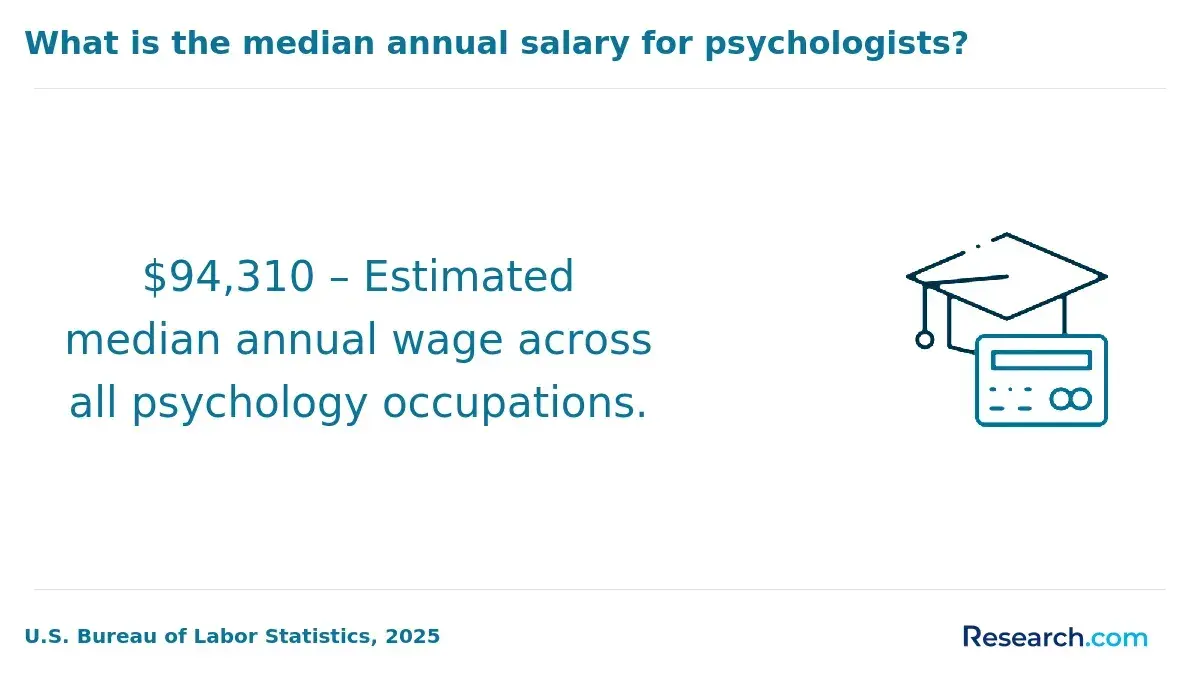
Salary depends on role, degree level, license status, employer, location, specialization, and experience. Depending on your specialization, you can earn as much as an annual mean wage of $100,570 in Florida, according to the BLS. School psychologists earn an annual mean wage of $74,290, while clinical and counseling psychologists can receive $94,240. Licensed psychologists with a doctoral degree and several years of experience can command salaries well above $100,000, especially in high-demand metropolitan areas like Miami-Fort Lauderdale-West Palm Beach.
Other similar occupations and their annual median salary nationwide are the following:
- Postsecondary Teachers: $80,840
- Training and Development Specialists: $63,080
- School and Career Counselors and Advisors: $60,140
- Marriage and Family Therapists: $56,570
- Substance Abuse, Behavioral Disorder, and Mental Health Counselors: $49,710
Best Florida Psychology Degrees Online Table of Contents
- 2027 List of the Best Online Psychology Programs in Florida
- How long does it take to complete an online psychology program in Florida?
- How does an online psychology program in Florida compare to an on-campus program?
- What is the average cost of an online psychology program in Florida?
- What are the financial aid options for students enrolling in an online psychology program in Florida?
- What are the prerequisites for enrolling in online psychology programs in Florida?
- What courses are typically in an online psychology program in Florida?
- What types of specializations are available in online psychology programs in Florida?
- How to choose the best online psychology program in Florida?
- What are the emerging trends shaping psychology careers in Florida?
- What Specialized Career Paths Can Online Psychology Graduates Pursue?
- What advantages do combined degree programs offer for psychology graduates in Florida?
- What are the licensing and regulatory requirements for online psychology graduates in Florida?
- How can advanced neuropsychology training impact your career progression?
- What career paths are available for graduates of online psychology programs in Florida?
- Can Supplemental Certifications Enhance Career Opportunities?
- How can you maximize the return on investment of your online psychology degree in Florida?
- What is the job market for graduates with an online psychology degree in Florida?
- What are the technological skills necessary for success in an online psychology program in Florida?
- What are the best career development resources for online psychology students in Florida?
- What alternative pathways can lead to a career in therapy without a full psychology degree?
- What Are the Career Prospects in Forensic Psychology for Florida Graduates?
- Exploring the Potential of Business Psychology for Florida Graduates
2027 List of the Best Online Psychology Programs in Florida
How do we rank our schools?
Because psychology students often compare programs with different tuition models, transfer policies, and career outcomes, Research.com rankings are built to make school selection clearer. The process uses data from the IPEDS database, Peterson’s database, the College Scorecard database, and the National Center for Education Statistics. We also consider program credibility, academic quality, and student decision factors. For a fuller explanation of ranking criteria, review the Research.com methodology page.
| School | Tracks or concentrations | Cost | Credits | Accreditation listed |
| University of Florida Online | Psychology (BA) | $129.18 per credit hour for in-state students, $552.62 for out-of-state students | 120 | Southern Association of Colleges and Schools Commission on Colleges (SACSCOC), American Psychological Association (APA) |
| Trinity College of Florida | Psychology (BA), Counseling Psychology (BA, BS) | $510 per credit hour | 123 | Council on Higher Education Accreditation (CHEA), Association for Biblical Higher Education (ABHE) Commission on Accreditation |
| Florida International University | Psychology (BA), Psychology with Applied Behavior Analysis Track (BA), Master of Health Services Administration, Human Resource Management (MS), Research Design and Analysis (MS) | $235.57 for in-state BA Psychology students, $648.87 for out-of-state BA Psychology students | 120 | SACSCOC, APA |
| University of Central Florida | Clinical Psychology, Experimental Psychology, Human Factors Psychology, Industrial/Organizational Psychology, Neuroscience, General | $179.19 per credit hour for in-state students, $715.80 for out-of-state students | 120 | SACSCOC |
| Carlos Albizu University Miami | Applied Behavior Analysis, Speech-Language Pathology | $342 per credit hour | 120 | Middle States Commission on Higher Education (MSCHE) |
| Nova Southeastern University | Applied Behavior Analysis, Neuroscience, Forensic Studies, Psychology, Psychology for Health Sciences | $35,880 per year | 117 | SACSCOC |
| Saint Leo University | General (BA), Clinical and Counseling Psychology, Psychology (MS), Human Services Administration (MS) | $410 to $675 per credit hour for undergraduates, $630 to $760 for graduate students | 120 for undergraduate students | SACSCOC |
| University of West Florida | Psychology (BA) | $218.98 per credit hour for in-state students, $648.37 for out-of-state students | 120 | SACSCOC |
| Florida Institute of Technology | Applied Psychology, Organizational Psychology, Forensic Psychology, Child Advocacy, Clinical Psychology | $510 per credit hour | 121 | SACSCOC |
| Palm Beach Atlantic University | Community Psychology (BS), Organizational Leadership (BS), Ethics and Organizational Behavior (MS) | $400 per credit hour | 120 | SACSCOC |
1. University of Florida Online
University of Florida Online offers an online psychology bachelor’s pathway built around a science-based liberal arts education. Students develop research, writing, communication, and problem-solving skills that can support graduate study or entry-level work in fields where understanding human behavior is valuable.
- Tracks/Concentrations: Psychology (BA)
- Cost: $129.18 per credit hour for in-state students, $552.62 for out-of-state students
- Required Credits to Graduate: 120
- Accreditation: Southern Association of Colleges and Schools Commission on Colleges (SACSCOC), American Psychological Association (APA)
2. Trinity College of Florida
Trinity College of Florida provides online psychology options that combine psychological theory, ethical reasoning, evidence evaluation, and Christian values. The program may appeal to students who want a faith-integrated approach to psychology, counseling preparation, or human services work.
- Tracks/Concentrations: Psychology (BA), Counseling Psychology (BA, BS)
- Cost: $510 per credit hour
- Required Credits to Graduate: 123
- Accreditation: Council on Higher Education Accreditation (CHEA), Association for Biblical Higher Education (ABHE) Commission on Accreditation
3. Florida International University
Florida International University has offered online learning since its first online course in 1998. Its psychology programs emphasize research-based study, applied learning, and student engagement. FIU may be a strong fit for learners interested in applied behavior analysis, research design, health administration, or human resource management options connected to psychology.
- Tracks/Concentrations: Psychology (BA), Psychology with Applied Behavior Analysis Track (BA), Master of Health Services Administration, Human Resource Management (MS), Research Design and Analysis (MS)
- Cost per Credit: $235.57 for in-state BA Psychology students, $648.87 for out-of-state BA Psychology students
- Required Credits to Graduate: 120
- Accreditation: SACSCOC, APA
4. University of Central Florida
University of Central Florida offers an online psychology program with multiple undergraduate tracks. Students can study core psychological theories while selecting an area such as human factors, industrial/organizational psychology, neuroscience, clinical psychology, or experimental psychology. The program may suit students who want more concentration choice at the bachelor’s level.
- Tracks/Concentrations: Clinical Psychology, Experimental Psychology, Human Factors Psychology, Industrial/Organizational Psychology, Neuroscience, General
- Cost: $179.19 per credit hour for in-state students, $715.80 for out-of-state students
- Required Credits to Graduate: 120
- Accreditation: SACSCOC
5. Carlos Albizu University Miami
Carlos Albizu University offers an online undergraduate psychology program focused on behavioral science, cognitive science, inclusivity, and preparation for mental health-related graduate study. Minors in Applied Behavior Analysis and Speech-Language Pathology can help students align coursework with human services, case management, social work support, or related career goals.
- Tracks/Concentrations: Applied Behavior Analysis, Speech-Language Pathology
- Cost: $342 per credit hour
- Required Credits to Graduate: 120
- Accreditation: Middle States Commission on Higher Education (MSCHE)
6. Nova Southeastern University
Nova Southeastern University uses an experiential learning model that may include internships, faculty research involvement, and exposure to specialized areas. Its online psychology options may interest students who want choices in applied behavior analysis, neuroscience, forensic studies, psychology, or health sciences.
- Tracks/Concentrations: Applied Behavior Analysis, Neuroscience, Forensic Studies, Psychology, Psychology for Health Sciences
- Cost: $35,880 per year
- Required Credits to Graduate: 117
- Accreditation: SACSCOC
7. Saint Leo University
Saint Leo University, founded in 1889, provides online psychology programs shaped by a Catholic educational mission. Students may study counseling foundations, statistical analysis, mental health topics, and research while gaining opportunities to participate in projects or psychology conferences.
- Tracks/Concentrations: General (BA), Clinical and Counseling Psychology, Psychology (MS), Human Services Administration (MS)
- Cost: $410 to $675 per credit hour for undergraduates, $630 to $760 for graduate students
- Required Credits to Graduate: 120 for undergraduate students
- Accreditation: SACSCOC
8. University of West Florida
University of West Florida offers an online psychology bachelor’s program with a learner-centered format and small-sized classes. Students study core psychology topics and may benefit from a collaborative online environment. Graduate-level options may include clinical internships for students pursuing advanced practice preparation.
- Tracks/Concentrations: Psychology (BA)
- Cost: $218.98 per credit hour for in-state students, $648.37 for out-of-state students
- Required Credits to Graduate: 120
- Accreditation: SACSCOC
9. Florida Institute of Technology
Florida Institute of Technology offers online psychology programs that emphasize communication, critical thinking, research skills, and applied psychological concepts. Coursework can cover topics such as learning, motivation, and substance abuse, with concentration options that may fit students interested in applied, organizational, forensic, child advocacy, or clinical psychology themes.
- Tracks/Concentrations: Applied Psychology, Organizational Psychology, Forensic Psychology, Child Advocacy, Clinical Psychology
- Cost: $510 per credit hour
- Required Credits to Graduate: 121
- Accreditation: SACSCOC
10. Palm Beach Atlantic University
Palm Beach Atlantic University provides psychology-related programs within a Christ-centered academic environment. Students may participate in internships, research projects, and coursework that emphasizes communication, ethical behavior, servant leadership, and community engagement.
- Tracks/Concentrations: Community Psychology (BS), Organizational Leadership (BS), Ethics and Organizational Behavior (MS)
- Cost: $400 per credit hour
- Required Credits to Graduate: 120
- Accreditation: SACSCOC
Here’s what graduates have to say about their online psychology degree in Florida
-
: "
“Studying psychology online in Florida helped me keep my full-time job while moving toward a field I care about. The virtual discussions and team projects made the material more practical and gave me a real sense of community.” Anis
"
-
: "
“The program gave me access to webinars, virtual labs, and faculty expertise without requiring me to rearrange my entire life. I could plan coursework around my schedule while still building useful skills.” Christopher
"
-
: "
“My online psychology degree connected me with classmates from many backgrounds. Forum discussions, digital resources, and responsive professors made the experience more engaging than I expected.” Lee
"
Key findings
- An online bachelor’s degree typically takes approximately 4 years, while a master’s program can be completed in 2 years.
- Financial aid options include federal student aid, state aid programs, institutional aid, scholarships, employer tuition assistance, private loans, and military benefits, while the OLC offers specific grants and scholarships for online learners.
- Typical courses include introduction to psychology, statistics, research methods, abnormal psychology, developmental psychology, and social psychology.
- Available specializations may include clinical psychology, counseling psychology, industrial-organizational psychology, health psychology, forensic psychology, sports psychology, school psychology, and neuropsychology.
- Graduates can pursue roles such as counselors, human resources specialists, market research analysts, case managers, behavior analysts, and graduate-school pathways.
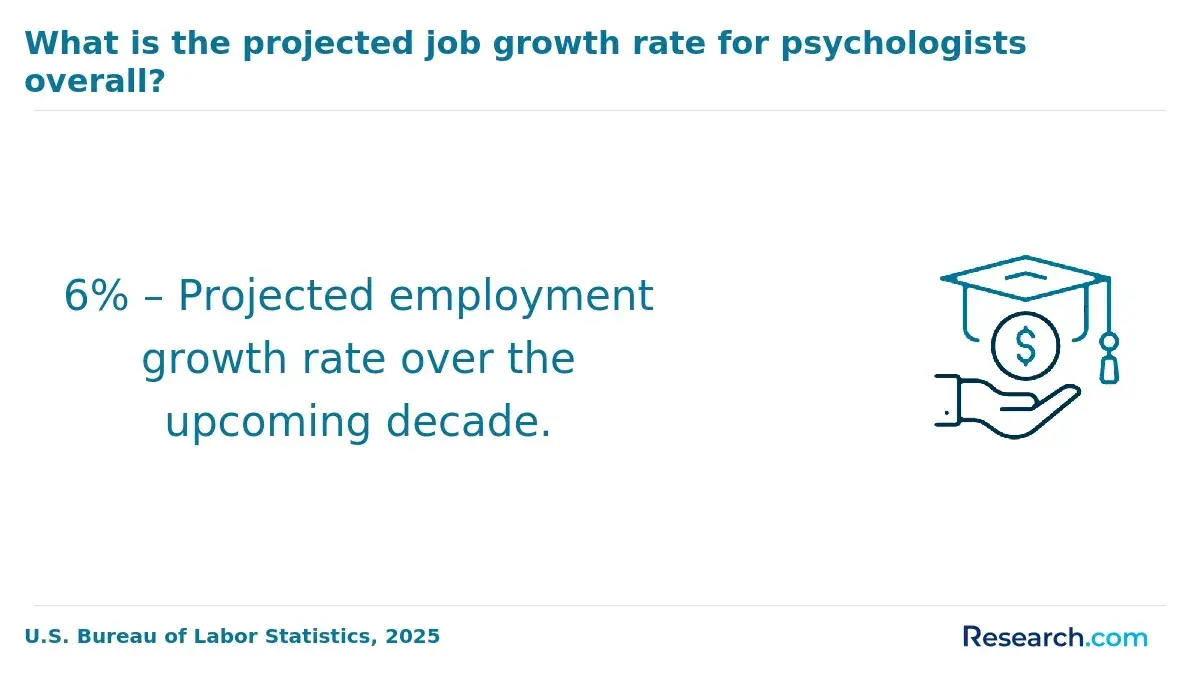
- In 2025, the U.S. Department of Labor projected an 11.2% employment change for psychologists nationwide from 2024 to 2034, leading to approximately 8,500 yearly openings over the decade.
How long does it take to complete an online psychology degree in Florida?
A bachelor’s degree typically takes around 4 years, while a master’s program can be completed in 2 years. Students planning to become clinical, counseling, or research psychologists often continue into a Ph.D. or Psy.D. program. A Ph.D. usually emphasizes research, comprehensive exams, and a dissertation, while a Psy.D. is more practice-oriented. Licensure-related supervised experience and internships can add additional time.
If your goal is to qualify for more advanced psychology job opportunities, build your timeline backward from the credential your target job requires. For example, a student aiming for a bachelor’s-level human services role has a much shorter path than someone pursuing independent clinical practice.
How does an online psychology program in Florida compare to an on-campus program?
Online and campus-based psychology programs can lead to similar academic credentials when offered by accredited institutions, but the learning experience is different. Online programs work best for students who need scheduling flexibility and are comfortable managing deadlines independently. Campus programs may be better for students who want face-to-face instruction, in-person labs, immediate campus access, and a more traditional college routine.
| Factor | Online psychology program | On-campus psychology program |
| Schedule | Often better for working adults and students with family or military responsibilities | More structured class meeting times and campus attendance |
| Location | Study from any location with reliable internet access | Requires commuting or living near campus |
| Interaction | Uses discussion boards, video meetings, group platforms, and digital office hours | Relies more on face-to-face classroom discussion and campus events |
| Hands-on learning | May require local placements, virtual labs, or arranged internships | May offer easier access to campus labs, faculty projects, and in-person activities |
| Best fit | Self-directed learners who need flexibility | Students who prefer routine, campus culture, and in-person support |
What is the average cost of an online psychology program in Florida?
Generally, a bachelor’s degree can have an annual tuition ranging from approximately $4,000 to $18,000 for in-state residents, while out-of-state residents might pay a higher range, such as $18,000 to $30,000. Master’s programs can have an annual cost ranging from $10,000 to $20,000 for in-state residents and potentially $15,000 to $30,000 for out-of-state residents. Doctoral programs, with their extended duration, can incur annual costs spanning from $15,000 to $40,000 or more.
When comparing programs, calculate total cost instead of relying only on the advertised per-credit rate. Include tuition, distance learning fees, books, technology costs, internship travel, transcript fees, graduation fees, exam preparation, and potential licensing expenses.
The chart below illustrates the median debt of Psychology majors.
What are the financial aid options for students enrolling in an online psychology program in Florida?
Online psychology students in Florida may be eligible for several forms of aid, but eligibility depends on the school, enrollment status, citizenship or residency status, academic progress, and program type. Start with the FAFSA, then compare institutional and outside funding sources before using private loans.
- Federal Student Aid: Eligible students can use the Free Application for Federal Student Aid (FAFSA) to be considered for federal grants, work-study, and low-interest student loans.
- State Aid Programs: Florida-based grants and scholarships may be available through state programs. Students should check current options with the Florida Department of Education.
- Institutional Aid: Colleges may offer scholarships, grants, tuition discounts, or online-student awards through their financial aid offices.
- Scholarships: Professional associations, private foundations, employers, and community organizations may fund psychology students based on merit, need, identity, career interest, or specialization.
- Employer Tuition Assistance: Some employers reimburse or prepay tuition for employees pursuing approved degrees.
- Private Loans: Private education loans can fill gaps but usually should be considered after federal and grant options because terms vary by lender.
- Military Benefits: Veterans, active-duty service members, and eligible dependents may qualify for GI Bill or other education benefits.
- Online Learning Consortium (OLC) Grant and Scholarship Opportunities: OLC offers grants and scholarships intended for online learners and distance education.
What are the prerequisites for enrolling in online psychology programs in Florida?
Admission requirements vary by institution and degree level. For an online bachelor’s program, students generally need proof of high school completion or a GED equivalent. Transfer students may need college transcripts and minimum credit or GPA requirements.
- Transcripts: Schools commonly request high school transcripts, GED documentation, and any prior college records.
- Application Form: Applicants complete an online admissions form with personal, academic, and residency information.
- Letters of Recommendation: Some programs ask teachers, counselors, supervisors, or professional contacts to comment on the applicant’s readiness.
- Personal Statement or Essay: A writing sample may explain the student’s interest in psychology, career goals, and reasons for choosing the program.
- Standardized Test Scores: Some schools may request SAT or ACT scores, though this is not universal.
- Resume or CV: A resume can strengthen applications by showing work experience, volunteer service, leadership, or related activities.
- Interview: Certain programs may require an interview before admission, especially at the graduate level.
What courses are typically in an online psychology program in Florida?
Online psychology curricula are designed to teach both the science of behavior and the methods used to study it. Students should expect reading-heavy courses, research assignments, statistical analysis, writing projects, and ethical discussions. The exact mix depends on whether the program is a BA, BS, applied track, counseling-oriented pathway, or graduate degree.
- Introduction to Psychology: Covers major theories, subfields, historical foundations, and basic concepts in psychology.
- Statistics for Psychology: Teaches the quantitative tools used to interpret psychological research and behavioral data.
- Research Methods in Psychology: Explains experimental design, surveys, ethics, data collection, and research evaluation.
- Abnormal Psychology: Examines psychological disorders, symptoms, causes, classification, and treatment approaches.
- Developmental Psychology: Studies psychological changes across the lifespan, from infancy through older adulthood.
- Social Psychology: Looks at attitudes, group behavior, persuasion, social influence, and interpersonal relationships.
- Cognitive Psychology: Focuses on perception, memory, attention, problem-solving, and other mental processes.
- Personality Psychology: Reviews major theories explaining individual differences, traits, motivation, and behavior patterns.
- Health Psychology: Connects psychological behavior, stress, wellness, physical health, and illness management.
- Forensic Psychology: Introduces the use of psychology in legal, criminal justice, correctional, and investigative settings.
What types of specializations are available in online psychology programs in Florida?
Specializations help students connect psychology coursework to a clearer career direction. At the undergraduate level, concentrations are often introductory and career-exploratory. At the graduate level, specialization becomes more important because it may affect practicum placement, licensing eligibility, and job options.
| Specialization | Focus | Best suited for students interested in |
| Clinical Psychology | Assessment, diagnosis, and treatment of psychological disorders | Advanced clinical training and licensed practice pathways |
| Counseling Psychology | Therapeutic support for life transitions, stress, and personal challenges | Counseling-related graduate study and helping professions |
| Industrial-Organizational Psychology | Workplace behavior, leadership, productivity, hiring, and employee well-being | Human resources, training, consulting, and business roles |
| Health Psychology | Behavior, health habits, stress, illness, and wellness | Healthcare, wellness programs, and patient-support environments |
| Forensic Psychology | Psychology in legal and criminal justice settings | Courts, corrections, investigations, and forensic assessment preparation |
| Sports Psychology | Performance, motivation, mindset, and athlete well-being | Athletics, coaching support, performance consulting, and wellness |
| School Psychology | Student assessment, intervention, learning, and behavioral support | K-12 educational settings and child-focused services |
| Neuropsychology | Brain-behavior relationships, cognitive assessment, and rehabilitation | Research, clinical assessment, and neurorehabilitation pathways |
How to choose the best online psychology program in Florida
The best program is the one that matches your goal without creating avoidable debt or licensing problems. Start by deciding whether you want a bachelor’s-level career, a master’s-level counseling or applied role, or a doctoral path toward psychologist licensure. Then compare programs using objective criteria rather than brand recognition alone. If you are still comparing broader national options, review Research.com’s guide to online colleges for psychology degree.
- Match the specialization to your career plan. A general bachelor’s degree may be enough for broad entry-level roles, but forensic, counseling, school, behavior analysis, and I-O psychology goals often require targeted coursework or graduate study. Students interested in justice-related work may also compare forensic psychology degrees and career paths.
- Verify accreditation carefully. Obtaining an online psychology doctoral degree in Florida may be difficult since the APA currently does not accredit fully online doctorate programs. In its January 2025 list of accredited programs, APA has approved only 19 in-person doctoral programs in Florida. Likewise, the CACREP also accredits only 17 Floridian institutions offering counseling programs.
- Check Florida licensure alignment before enrolling. The Florida Board of Psychology requires that its applicants obtain a doctorate from APA-accredited institutions. Otherwise, students must get an endorsement from them and the American Board of Professional Psychology (ABPP). Students should also review ASPPB requirements for state-specific licensure rules.
- Look for real applied experience. Strong programs provide internships, practica, mentorship, research participation, or supervised field experiences that help students apply theory outside the classroom.
- Compare student support services. In a study, it was found that 56% of students who found online campus support were encouraged to stay enrolled during the pandemic. Prioritize programs with accessible advising, library help, tutoring, mental health resources, career services, and IT support.
Questions to ask before enrolling
- Is the institution regionally accredited, and is any program-level accreditation relevant to my career goal?
- Will this degree meet Florida licensing requirements for the role I want?
- How many transfer credits will the school accept, and how will they apply to major requirements?
- Are internships, practica, or supervised hours required, and can I complete them near where I live?
- What is the total estimated cost after fees, books, technology, and residency rules?
- What career services are available to online students?
- What percentage of courses are asynchronous, synchronous, or hybrid?
Common mistakes to avoid
| Mistake | Why it can hurt you | Better approach |
| Choosing only by tuition | A low per-credit price may not include fees, delayed graduation, or poor transfer-credit fit | Calculate total program cost and time to completion |
| Assuming any psychology degree leads to licensure | Licensed psychologist roles require advanced education and Florida approval | Confirm degree-level and supervised-experience requirements before enrolling |
| Ignoring accreditation | Accreditation can affect transfer credits, financial aid, graduate admission, and licensure | Verify institutional and programmatic accreditation directly |
| Overlooking field experience | Graduate programs and employers may value applied experience | Choose programs with internships, research, practica, or local placement support |
| Relying only on rankings | A highly ranked school may not be the best fit for your budget, schedule, or career plan | Use rankings as a starting point, then compare fit factors |
What are the emerging trends shaping psychology careers in Florida?
Psychology careers in Florida are being influenced by mental health access needs, technology, school-based services, employer well-being programs, and the state’s aging population. Students should pay attention to these trends when choosing electives, internships, and graduate pathways.
Telepsychology and remote mental health services
Telepsychology has expanded access to care for patients who face transportation, scheduling, or location barriers. Students interested in clinical or counseling pathways should become comfortable with digital communication, privacy practices, online rapport-building, and telehealth documentation expectations.
Greater focus on mental health in schools
Schools continue to need professionals who can support students’ behavioral, emotional, and academic development. Students interested in child psychology, assessment, intervention planning, and education systems may find school-related pathways especially relevant.
Workplace well-being and organizational psychology
Florida employers in tourism, healthcare, technology, and business services increasingly pay attention to employee engagement, retention, leadership development, and workplace culture. Students interested in business settings may explore I-O psychology and compare highest paying psychologist career options tied to advanced specialization.
Artificial intelligence and psychological practice
AI tools are affecting assessment support, research workflows, documentation, and data analysis. Psychology students do not need to become software engineers, but they should understand data ethics, bias, privacy, and the limits of automated tools in mental health contexts.
Geriatric psychology
Florida’s large retirement community creates ongoing need for professionals who understand aging, cognitive health, grief, caregiver stress, depression, and quality-of-life concerns among older adults.
What specialized career paths can online psychology graduates pursue?
Online psychology graduates in Florida can move beyond general human services roles by focusing their electives, internships, and graduate study on a niche. For example, careers in school psychology involve working with students, families, teachers, and school teams to support learning and social-emotional development. Other focused paths include neuropsychology, forensic psychology, environmental psychology, behavioral health, applied behavior analysis, and organizational psychology.
The key is to understand which paths require graduate education or licensure. A bachelor’s degree can introduce a specialty, but many specialized roles require a master’s, doctorate, supervised experience, certification, or state credential.
What advantages do combined degree programs offer for psychology graduates in Florida?
Combined degree programs can reduce duplication between graduate levels by integrating advanced coursework, clinical training, and structured progression toward higher credentials. For students who already know they want a doctoral practice pathway, a combined route may provide a clearer academic sequence than applying separately to multiple programs.
These programs can be useful for students pursuing clinical, counseling, or research roles, but they require careful review. Ask whether the program supports Florida licensure, what supervised experiences are included, whether the doctoral portion has appropriate accreditation, and whether leaving early affects the credential earned. Students comparing integrated options can explore masters and PsyD combined programs.
What are the licensing and regulatory requirements for online psychology graduates in Florida?
Students who want to practice as psychologists in Florida must satisfy state licensing rules. In general, candidates should expect doctoral education requirements, supervised clinical experience, formal examinations, and application review. Common requirements include supervised internships or practica, the Examination for Professional Practice in Psychology (EPPP), and any Florida-specific requirements in effect at the time of application.
Do not assume that an online degree automatically qualifies you for clinical licensure. Requirements vary by profession, and online graduate programs may or may not meet Florida’s standards. Prospective students should check Florida’s licensing boards before enrolling and budget for licensing-related costs, examination fees, applications, and preparation materials. These costs may be significant and should be considered alongside the cost of masters degree in psychology.
How can advanced neuropsychology training impact your career progression?
Advanced neuropsychology training can help psychology graduates develop expertise in brain-behavior relationships, cognitive assessment, neurological disorders, rehabilitation, and research methods. In Florida, this can be relevant to clinical settings, academic research, hospitals, neurorehabilitation centers, and aging-related care.
Students considering this path should understand that neuropsychology is advanced and typically requires graduate-level preparation, supervised clinical experience, and specialized training beyond a general bachelor’s degree. Flexible options such as PhD neuropsychology programs online may help students compare academic pathways, but licensure and clinical training requirements must be verified carefully.
What career paths are available for graduates of online psychology programs in Florida?
Psychology is useful because it teaches research, communication, behavioral analysis, writing, ethics, and data interpretation. While some students compare psychology with other college degrees that pay well, the strongest outcomes usually come from aligning the psychology degree with a specific skill set, internship, certification, or graduate pathway.
- Clinical Psychologist: Diagnoses and treats mental health disorders in clinics, hospitals, private practice, or related settings; this path requires advanced licensure.
- Counselor or Therapist: Provides counseling in areas such as mental health, substance abuse, marriage and family, or life transitions, depending on license type.
- Industrial-Organizational Psychologist: Applies psychology to workplace productivity, leadership, hiring, training, and employee well-being.
- School Psychologist: Supports student learning, behavioral development, assessment, intervention, and family-school collaboration.
- Human Resources Specialist: Uses communication, assessment, and organizational behavior knowledge in hiring, employee relations, and training.
- Substance Abuse Counselor: Helps individuals address addiction and behavioral health challenges through counseling and support services.
- Forensic Psychologist: Applies psychological principles to legal, correctional, investigative, and court-related questions.
- Sports Psychologist: Works with athletes on motivation, performance, stress, focus, and mental well-being.
- Market Research Analyst: Studies consumer behavior and market trends to support business decisions. Students can strengthen this path with skills from an online data analytics program.
- Behavior Analyst: Works with individuals with behavioral or developmental needs, often in education, clinical services, or community programs.
- Career Counselor: Helps clients evaluate career goals, transitions, strengths, and decision-making strategies.
The chart below illustrates some of the entry-level annual wages for occupations that fall under the 100 top-paying jobs in Florida, according to USA Wage.
Can supplemental certifications enhance career opportunities?
Yes. Supplemental certifications can help psychology graduates show practical skills beyond the degree, especially in areas such as applied behavior analysis, data analysis, crisis support, human resources, addiction counseling, and research methods. Certifications do not replace licensure, but they may improve employability for specific roles or make a graduate-school application stronger.
For example, students interested in behavior analysis may compare affordable pathways such as cheap online BCBA programs. Before enrolling in any certification, confirm whether it is recognized by employers, licensing boards, or professional organizations relevant to your intended career.
How can you maximize the return on investment of your online psychology degree in Florida?
To improve ROI, choose the lowest-cost accredited program that still supports your specific career goal. The best value is not always the cheapest degree; it is the program that helps you graduate on time, transfer credits efficiently, gain relevant experience, and qualify for your next step.
- Use transfer credits strategically: Ask for a degree audit before enrolling so you know exactly how many credits remain.
- Choose a specialization with a clear labor-market use: For example, students interested in legal settings may compare cheapest forensic psychology masters programs online.
- Build practical experience early: Seek internships, research assistant roles, volunteer work, or behavioral health support positions.
- Add technical skills: Statistics, research software, data visualization, telehealth etiquette, and documentation skills can strengthen your resume.
- Avoid unnecessary debt: Apply for grants, scholarships, employer support, military benefits, and institutional aid before private borrowing.
- Plan for graduate school if needed: If your target career requires a master’s or doctorate, treat the bachelor’s degree as one stage in a longer credential plan.
What is the job market for graduates with an online psychology degree in Florida?
In 2024, the U.S. Department of Labor, through O*Net Online, revealed that psychology jobs in the state will have an employment change of 11% from 2022 to 2032. This will provide 300 yearly openings in 10 years. Students can improve their competitiveness by pairing the degree with internships, research experience, bilingual communication skills, technology skills, and graduate education where required.
Some roles are accessible with a bachelor’s degree, while others require advanced credentials. Students considering graduate school can review what can you do with a masters degree in psychology to understand how a master’s degree may expand options.
What are the technological skills necessary for success in an online psychology program in Florida?
Online psychology students need enough technology fluency to participate fully, complete research assignments, protect privacy, and collaborate with classmates. These skills also matter after graduation because psychology-related workplaces increasingly use digital records, telehealth platforms, survey tools, and data systems.
- Learning Management Systems: Students should be comfortable using Canvas, Blackboard, Moodle, or similar platforms to access readings, submit assignments, monitor grades, and participate in discussions.
- Video Conferencing Tools: Zoom, Microsoft Teams, and similar tools are commonly used for live lectures, advising, group work, office hours, and presentations.
- Research and Data Analysis Tools: Psychology students may use PsycINFO, PubMed, library databases, SPSS, R, or spreadsheet tools for literature reviews and research assignments.
- Collaborative Platforms: Google Docs, Dropbox, Slack, and other shared-work tools support group projects, peer feedback, and team presentations.
- Basic Troubleshooting: Students should know how to address common issues such as browser problems, software updates, file uploads, microphone settings, and internet disruptions.
What are the best career development resources for online psychology students in Florida?
Career development should begin before the final semester. Online students should use university resources to build a resume, find field experience, prepare for graduate applications, and understand which jobs match their degree level.
- Virtual Career Counseling and Job Search Support: Career offices can help online students with resumes, interview preparation, job search strategy, graduate-school planning, and career direction.
- Internship and Practicum Opportunities: Strong programs help students identify placements with clinics, schools, hospitals, nonprofits, research settings, or community organizations.
- Networking Events and Conferences: Webinars, professional meetings, and psychology conferences help students meet practitioners and learn about specialty areas. Students pursuing forensic options may also compare the best online forensic psychology master's programs.
- Alumni Networks: Alumni can provide mentorship, informational interviews, job leads, and realistic insight into the Florida psychology job market.
- Professional Development Workshops: Workshops on ethics, research, leadership, trauma-informed care, cultural competence, and assessment can strengthen career readiness.
- Job Portals and Career Resources: University job boards may list openings in mental health clinics, schools, hospitals, research organizations, private practices, and nonprofit agencies.
What alternative pathways can lead to a career in therapy without a full psychology degree?
Not every therapy-related career requires a full psychology degree, but every legitimate clinical path has education, supervision, ethics, and licensing rules. Alternatives may include counseling, social work, marriage and family therapy, substance abuse counseling, peer support, behavioral health technician roles, or certificate-based support roles, depending on the scope of practice.
Students should be cautious with short programs that promise fast access to therapy careers without explaining licensure limits. For a clearer breakdown of the education needed to be a therapist, compare accredited pathways and confirm what each credential legally allows in Florida.
What are the career prospects in forensic psychology for Florida graduates?
Forensic psychology connects behavioral science with legal and criminal justice questions. Florida graduates with relevant training may pursue roles related to corrections, victim advocacy, court services, criminal justice research, legal consulting support, or graduate study in forensic assessment. Advanced roles usually require graduate education, supervised experience, and specialized credentials.
Students interested in this path should build skills in research methods, abnormal psychology, assessment, ethics, criminal justice systems, report writing, and testimony-related communication. Review the forensic psychology job market to understand how training, certification, and degree level affect opportunities.
Exploring the potential of business psychology for Florida graduates
Business psychology, often connected to industrial-organizational psychology, applies psychological research to workplace problems. For Florida students who want to use psychology outside clinical practice, this can be a practical direction because it connects behavior, data, leadership, employee motivation, and organizational performance.
What is business psychology?
Business psychology uses psychological principles to improve hiring, training, leadership, teamwork, culture, employee engagement, and productivity. Professionals may use surveys, interviews, assessments, data analysis, and behavioral science to help organizations make better workforce decisions.
Career opportunities in business psychology
- Human Resources Specialist: Supports recruiting, onboarding, employee relations, and training programs.
- Organizational Development Consultant: Helps companies manage change, improve workflows, and strengthen workplace culture.
- Training and Development Manager: Designs learning programs that build employee skills and leadership capacity.
- Market Research Analyst: Studies consumer behavior and uses evidence to guide marketing decisions.
- Workplace Well-being Coordinator: Develops programs that support employee mental health, engagement, and work-life balance.
Benefits of a business psychology degree in Florida
Florida’s economy includes major activity in tourism, healthcare, technology, education, and business services. Students who understand both human behavior and organizational decision-making may be able to apply psychology in nonclinical settings. This path can be especially useful for students who enjoy analytics, communication, leadership, and workplace problem-solving.
Exploring your educational path
Students interested in this direction can compare coursework in organizational behavior, leadership, employee motivation, assessment, research design, and statistics. A business psychology degree can help students evaluate whether this applied path fits their career goals.
Key insights
- Degree level determines career options: A bachelor’s degree can support entry-level and applied roles, but licensed psychologist practice in Florida requires advanced education and state approval.
- Accreditation is nonnegotiable: Verify institutional accreditation and, when relevant, program-level accreditation before enrolling, especially if licensure or graduate school is part of your plan.
- Online flexibility is valuable but requires discipline: The best online students are organized, comfortable with technology, and proactive about advising, internships, and deadlines.
- Cost comparisons should include more than tuition: Fees, transfer-credit policies, time to completion, books, technology, internships, and licensing costs can change the real price of a degree.
- Specialization improves focus: Clinical, counseling, school, forensic, business, behavior analysis, and neuropsychology paths have different education and credential requirements.
- Practical experience matters: Internships, research work, volunteer experience, and applied projects can make a psychology degree more marketable.
- Plan backward from your target job: Before choosing a program, identify the exact role you want, the credential it requires, and whether the school can help you reach that requirement.
References:
- American Psychological Association. (2025). APA-Accredited Programs. https://accreditation.apa.org/accredited-programs
- U.S. Bureau of Labor Statistics. (2025). Psychologists. https://www.bls.gov/ooh/life-physical-and-social-science/psychologists.htm
- ABD Guide. (2024). Photography Occupations, Career Overview & ROI. https://allbachelordegrees.com/degrees/arts-and-design/digital-photography/photography-degree-career-overview-and-roi/
- Psychology.org. (2025, October 6). Fastest Growing Careers In Psychology. https://www.psychology.org/resources/fastest-growing-careers-in-psychology/
- Florida Department of Commerce. (2025). Florida Employment Trends: Clinical and Counseling Psychologists (2024-2032). https://www.onetonline.org/link/localtrends/19-3033.00?st=FL
- O*NET Online. (2024). Maryland Employment Outlook: 19-3039.00 - Psychologists, All Other. https://www.onetonline.org/link/stdata/19-3039.00?st=MD
Other Things You Should Know About Online Psychology Degrees in Florida
Top Florida universities offering online psychology programs in 2027 feature flexible learning schedules, comprehensive curricula encompassing various psychology fields, and experienced faculty. They often provide robust networking opportunities and access to virtual resources, ensuring a supportive environment for online learners seeking to excel in the psychology field.
Admission requirements typically include a high school diploma or equivalent, a minimum GPA, and application submissions by specified deadlines. Some programs may also require standardized test scores or a personal statement. Verify specific requirements directly with each institution.
In 2027, top-ranked online psychology degree programs in Florida include those from the University of Florida, Florida State University, and the University of Central Florida. These programs are noted for their innovative curricula, flexibility, and strong student support, making them excellent choices for students aiming to pursue psychology careers.


