
2027 MPCAC-Accredited Psychology Master's Programs by State

Co-Founder and Chief Data Scientist
Earning a master’s degree in psychology or in counseling is an important step for those who want to advance in counseling, mental health services, or applied psychology careers. With rising rates of anxiety, depression, and stress-related disorders across the U.S., the demand for qualified professionals who can address these pressing mental health challenges has never been greater. Choosing a program accredited by the Masters in Psychology and Counseling Accreditation Council (MPCAC) ensures that students receive high-quality training rooted in ethical practice, cultural competence, and evidence-based approaches.
This article breaks down MPCAC-accredited psychology master’s programs by state, making it easier for prospective students to find the right program that meets their educational and career goals.
What are the benefits of pursuing an MPCAC-accredited counseling or psychology master's program?
- Quality Education: Programs are evaluated to ensure they provide strong training in ethics, multicultural competence, and evidence-based practice.
- Licensure Preparation: Many MPCAC-accredited programs align with state requirements for mental health counseling and related licenses.
- Career Competitiveness: Graduates stand out to employers who value the credibility and rigor of accredited training.
- Consistency Across Programs: Students can be confident that their education matches national expectations for psychology and counseling practice.
- Adaptability to Modern Needs: Accreditation requires programs to evolve with changes in mental health care, keeping training relevant to today’s challenges.
What can you do with an MPCAC-accredited counseling or psychology master's degree?
An MPCAC-accredited counseling or psychology master’s degree opens the door to a wide range of career paths in counseling, mental health, and applied psychology. Graduates are prepared for professional practice in diverse settings, working directly with individuals, families, and communities to address mental health challenges. Depending on state requirements, this degree can also serve as a pathway to licensure in counseling or related roles.
With this credential, graduates often pursue careers such as:
- Licensed Mental Health Counselor (LMHC) or equivalent state title: Providing therapy and counseling to clients across different populations.
- School or College Counselor: Supporting students with academic, emotional, and social needs.
- Community Mental Health Professional: Working in clinics, nonprofits, or hospitals to deliver accessible care.
- Research or Program Specialist: Assisting with program evaluation, mental health initiatives, or applied psychology research.
- Corporate or Organizational Consultant: Applying psychological principles to improve workplace well-being and performance.
This flexibility makes an MPCAC-accredited psychology master’s degree valuable not only for traditional counseling roles but also for emerging opportunities in health care, education, and organizational settings.
Where can you work with an MPCAC-accredited counseling or psychology master's degree?
Graduates of MPCAC-accredited counseling or psychology master’s programs are well-prepared to work in a variety of professional environments that address mental health, counseling, and applied psychology needs. Because these programs emphasize both practical skills and ethical training, alumni can pursue roles in settings such as:
- Private Practice: Offering counseling and therapy to individuals, couples, or families.
- Hospitals and Health Care Systems: Providing mental health services as part of interdisciplinary care teams.
- Community Mental Health Centers: Serving diverse populations and addressing public health challenges.
- Schools and Universities: Supporting student well-being and academic success as counselors or mental health professionals.
- Nonprofit Organizations: Delivering services to vulnerable or underserved communities.
- Corporate and Organizational Settings: Applying psychology to workplace wellness, employee support, and organizational development.
This range of opportunities allows graduates to tailor their careers to personal interests and community needs, making the degree highly versatile in today’s mental health landscape.
How much can you earn with an MPCAC-accredited counseling or psychology master's degree?
Having an MPCAC-accredited counseling or psychology master’s degree tends to boost earning potential, especially when paired with licensure and experience. Below are examples of typical salary ranges:
- Mental Health Counselor: On average, mental health counselors earn more than $60,000 per year, according to Salary.com. Entry level positions might start lower at about $54,000, while more experienced or licensed counselors in high cost-of-living areas can make over $75,000.
- Licensed Mental Health Counselor (LMHC/Equivalent): According to the American Psychosocial Oncology Society, those with full licensure earn an average of over $78,000 per year, with top earners exceeding $105,000 per year depending on state, caseload, specialization, and agency vs private practice.
- School Counselor: The average salary for school counselors is about $49,000 per year, according to Zippia. Salaries can range from $36,000 to $68,000, depending heavily on geographic location, level of education, district funding, and years of experience.
- What is an MPCAC accreditation and what does it signify? MPCAC Overview
- List of MPCAC-Accredited Counseling and Psychology Master's Programs by State List of Programs
- How hard is it for counseling and psychology master's programs to obtain an MPCAC accreditation? Difficulty
- Is graduating from an MPCAC-accredited psychology master's program a requirement for licensure? Is graduating from an MPCAC-accredited psychology master's program a requirement for licensure?
- How is MPCAC different from CACREP? MPCAC vs. CACREP
- Where do counseling and psychology master’s programs differ in terms of outcome? Where do counseling and psychology master’s programs differ in terms of outcome?
- Where do counseling and psychology master’s programs intersect? Where do counseling and psychology master’s programs intersect?
- Can you become a counselor with a master's degree in psychology? Can you become a counselor with a master's degree in psychology?
- How many hours of supervised applied experience does MPCAC require? How many hours of supervised applied experience does MPCAC require?
- Does an MPCAC accreditation support licensure portability? License Portability
- Is the investment in an MPCAC-accredited program financially worthwhile? Is the investment in an MPCAC-accredited program financially worthwhile?
What is an MPCAC accreditation and what does it signify?
The Masters in Psychology and Counseling Accreditation Council (MPCAC) is a national accrediting body that evaluates graduate programs in psychology and counseling to ensure they meet high standards of professional preparation. When a master’s program is accredited by MPCAC, it signifies that the curriculum provides rigorous training in areas such as counseling skills, multicultural competence, ethical practice, and evidence-based approaches to mental health care.
Understanding accreditation is as important for students selecting programs as knowing the nurse consultant salary by state is for healthcare professionals evaluating career opportunities and geographic compensation differences.
Accreditation also means that the on-campus or online masters in psychology or counseling program has undergone a thorough review process, demonstrating that it prepares graduates to serve diverse communities effectively and responsibly. For students, this translates into confidence that their education is recognized by employers and aligns with many state licensure requirements. Ultimately, MPCAC accreditation signals quality, credibility, and a commitment to keeping training relevant to the evolving needs of the mental health field.
The chart below shows the annual median salaries for the various types of counselors. Wages are primary considerations when deciding what area you will specialize in. And your specialization or concentration is also a consideration when picking accredited programs.
List of MPCAC-Accredited Counseling and Psychology Master's Programs by State
Arizona
- Program: Master of Counseling
- Location: Tempe, Arizona 85281
- Accreditation Date: Jun 2025 – Jun 2033
California
- Program: M.A. in Clinical Mental Health Counseling
- Location: Rohnert Park, California 94929
- Accreditation Date: Sep 2022 – Sep 2030
- Program: M.A. in Counseling Psychology
- Location: San Diego, California 92121
- Accreditation Date: Mar 2024 – Mar 2032
Colorado
- Program: M.A. in Clinical Mental Health Counseling
- Location: Denver, Colorado 80208
- Accreditation Date: Aug 2017 – Aug 2027
Florida
- Program: M.A. in Psychology, Counseling Concentration
- Location: Pensacola, Florida 32514-5751
- Accreditation Date: May 2002 – Sep 2032
- Program: M.S. in Clinical Psychology
- Location: Miami Shores, Florida 33161
- Accreditation Date: Sep 2023 – Sep 2031
- Program: M.A in Clinical Psychology
- Location: Orlando, Florida 32816
- Accreditation Date: Sep 2023 – Sep 2031
- Program: M.S.Ed. in Mental Health Counseling
- Location: Coral Gables, Florida 33124
- Accreditation Date: Dec 2024 – Dec 2032
Florida International University
- Program: Professional Counseling Psychology
- Location: Miami, Florida 33199
- Accreditation Date: Jun 2025 – Jun 2033
Georgia
- Program: M.S. in Psychology, Clinical Track
- Location: Augusta, Georgia 30904
- Accreditation Date: Sep 2005 – Jul 2027
- Program: M.S. in Clinical Counseling Psychology
- Location: Gainesville, Georgia 30501
- Accreditation Date: Jan 2007 – Feb 2027
- Program: M.S. in Clinical Counseling Psychology
- Location: Morrow, Georgia 30260
- Accreditation Date: Dec 2016 – Dec 2026
- Program: M.Ed. in Professional Counseling-Mental Health Emphasis
- Location: Athens, Georgia 30602
- Accreditation Date: May 2019 – May 2029
Hawaii
- Program: M.A. Program in Counseling Psychology (Mental Health Counseling Specialization)
- Location: Hilo, Hawaii 96720
- Accreditation Date: Mar 2011 – Jun 2029
Illinois
- Program: M.A. in Counseling Psychology
- Location: Chicago, Illinois 60654
- Accreditation Date: Dec 2018 – Dec 2028
- Program: M.S. in Clinical Community Mental Health
- Location: Macomb, Illinois 61455-1390
- Accreditation Date: Apr 2007 – Aug 2027
Indiana
- Programs: M.A. Counseling: Clinical Mental Health Counseling concentration; Masters in Social Psychology & Clinical Mental Health Counseling
- Location: Muncie, Indiana 47306
- Accreditation Date: Sep 2024 – Sep 2032
- Program: Department of Applied Psychology in Education and Research Methodology
- Location: Bloomington, Indiana 47405
- Accreditation Date: Aug 2018 – Aug 2028
- Program: Masters of Arts in Mental Health Counseling
- Location: Indianapolis, Indiana 46227
- Accreditation Date: Jul 2015 – Jan 2026
Kansas
- Program: M.S. in Counseling Psychology
- Location: Lawrence, Kansas 66045
- Accreditation Date: Jul 2017 – Jul 2027
Kentucky
- Program: M.S. Program in Clinical Psychology
- Location: Morehead, Kentucky 40351
- Accreditation Date: Apr 2011 – Sep 2030
- Program: M.A. or M.S. in Clinical Psychology
- Location: Murray, Kentucky 42071
- Accreditation Date: Dec 2003 – Dec 2032
Maryland
- Program: M.S. in Counseling Psychology
- Location: Frostburg, Maryland 21532
- Accreditation Date: Mar 2008 – Aug 2028
- Program: M.A. in Psychology, Counseling Psychology Concentration
- Location: Towson, Maryland 21252
- Accreditation Date: Feb 2016 – Feb 2026
- Program: M.S. in Applied Psychology, Counseling Psychology Concentration
- Location: Baltimore, Maryland 21201
- Accreditation Date: Feb 2022 – Feb 2030
Massachusetts
- Program: M. A. in Clinical Counseling Psychology
- Location: Worcester, Massachusetts 01609
- Accreditation Date: Dec 2018 – Dec 2028
- Program: M.A. in Mental Health Counseling
- Location: Chestnut Hill, Massachusetts 02467
- Accreditation Date: Mar 2017 – Mar 2027
- Program: M.A. in Clinical Psychology
- Location: Bridgewater, Massachusetts 02325
- Accreditation Date: Feb 2015 – Feb 2026
University of Massachusetts-Boston
- Program: M.S. in Mental Health Counseling
- Location: Boston, Massachusetts 02125
- Accreditation Date: Mar 2024 – Mar 2032
- & -
- Program: M.Ed in School Counseling
- Location: Boston, Massachusetts 02125
- Accreditation Date: Sep 2024- Sep 2032
Mississippi
University of Southern Mississippi
- Program: M.S. in Counseling Psychology
- Location: Hattiesburg, Mississippi 69404
- Accreditation Date: Apr 2018 – Apr 2028
Missouri
University of Missouri-Kansas City
- Program: M.A. in Counseling
- Location: Kansas City, Missouri 64110
- Accreditation Date: Feb 2014 – Aug 2032
New Jersey
- Program: M.A. in Counseling Psychology
- Location: Lodi, New Jersey 07644
- Accreditation Date: Jun 2014 – Dec 2025
- Program: M.A. in Clinical and Counseling Psychology Program
- Location: Wayne, New Jersey 07470-2103
- Accreditation Date: Dec 2004 – Jan 2026
New Mexico
New Mexico Highlands University
- Program: M.S. Program in Clinical Counseling Psychology
- Location: Las Vegas, New Mexico 87701
- Accreditation Date: Nov 2011 – May 2030
New York
College of Staten Island, City University of New York
- Program: M.A. in Mental Health Counseling
- Location: Staten Island, New York 10314
- Accreditation Date: Aug 2016 – Aug 2026
Columbia University, Teachers College
- Program: Ed.M. in Counseling Psychology
- Location: New York, New York 10027
- Accreditation Date: Feb 2016 – Feb 2026
- Program: M.A. in Pastoral Counseling
- Location: Bronx, New York 10458
- Accreditation Date: May 2017 – May 2027
-
- Program: M.S.Ed. in Mental Health Counseling
- Location: New York, New York 10023
- Accreditation Date: Jan 2015 – Jan 2026
- & -
- Program: M.S.Ed. in School Counseling
- Location: New York, New York 10023
- Accreditation Date: Jan 2015 – Jan 2026
- Program: M.A. in Counseling for Mental Health and Wellness
- Location: New York, New York 10012
- Accreditation Date: Jan 2015 – Jan 2026
- & -
- Program: M.A. in School Counseling
- Location: New York, New York 10012
- Accreditation Date: Jan 2015 – Jan 2026
- Program: M.A. in Counseling and Community Psychology
- Location: Troy, New York 12180
- Accreditation Date: Aug 2010 – Nov 2028
- Program: M.S. in Mental Health Counseling
- Location: Albany, New York 12222
- Accreditation Date: Sep 2013 – Mar 2033
University at Buffalo, The State University of New York
- Program: M.S. in Mental Health Counseling
- Location: Buffalo, New York 14260-1000
- Accreditation Date: Feb 2018 – Feb 2028
Oklahoma
University of Central Oklahoma
- Program: M.A. in Counseling Psychology
- Location: Edmond, Oklahoma 73034
- Accreditation Date: Feb 2017 – Feb 2027
Oregon
- Program: M.A. in Applied Clinical Psychology
- Location: Hillsboro, Oregon 97123
- Accreditation Date: Aug 2017 – Aug 2027
- Program: M.S. in Clinical Mental Health Counseling
- Location: Portland, Oregon 97213
- Accreditation Date: Mar 2025- Mar 2033
Pennsylvania
- Program: M.A. in Counseling Psychology
- Location: Glenside, Pennsylvania 19038-3295
- Accreditation Date: Aug 2011 – Jun 2030
- Program: M.S. in Counseling Psychology, Counseling Psychology Department
- Location: Pittsburgh, Pennsylvania 15232
- Accreditation Date: Apr 2017 to Apr 2027
- Program: M.S. in Clinical and Counseling Psychology
- Location: Philadelphia, Pennsylvania 19118 | Center Valley, Pennsylvania 18034
- Accreditation Date: Feb 2018 – Feb 2028
- Program: M.A. in Counseling Psychology
- Location: Doylestown, Pennsylvania 18901
- Accreditation Date: Apr 2019 – Apr 2029
- Program: M.A. in Counseling Psychology
- Location: St. Davids, Pennsylvania 19087-3696
- Accreditation Date: Aug 2014 – Feb 2026
- & -
- Program: M.Ed. in School Counseling
- Location: St. Davids, Pennsylvania 19087-3696
- Accreditation Date: Aug 2014 – Aug 2025
- Program: M.Ed. in Mental Health Counseling
- Location: Bethlehem, Pennsylvania 18015
- Accreditation Date: Aug 2014 – Feb 2026
- Program: M.S. in Counseling Psychology
- Location: Moon Township, Pennsylvania 15108
- Accreditation Date: Feb 2021 – Feb 2029
- Program: M.S.Ed. Executive Program in School and Mental Health Counseling
- Location: Philadelphia, Pennsylvania 19104
- Accreditation Date: Jun 2025 – Jun 2033
- & -
- Program: M.Phil.Ed. in Professional Counseling
- Location: Philadelphia, Pennsylvania 19104
- Accreditation Date: Jun 2025 – Jun 2033
South Carolina
- Program: M.S. in Applied Psychology
- Location: Florence, South Carolina 29501-0547
- Accreditation Date: Feb 2008 – Apr 2028
- Program: M.A. in Clinical Counseling
- Location: Charleston, South Carolina 29409
- Accreditation Date: Jun 2002 – Jun 2030
University of South Carolina Aiken
- Program: M.S. in Applied Clinical Psychology
- Location: Aiken, South Carolina 29801
- Accreditation Date: Mar 2004 – Sep 2025
Texas
- Program: M.A. Program in Clinical and Counseling Psychology
- Location: Wichita Falls, Texas 76308
- Accreditation Date: Jun 2023 – Jun 2031
Texas A&M International University
- Program: Masters in Counseling Psychology Program
- Location: Laredo, Texas 78041-1900
- Accreditation Date: Jan 2018 – Jan 2028
Utah
- Program: M.Ed. in Clinical Mental Health Counseling
- Location: Salt Lake City, Utah 84112
- Accreditation Date: Jun 2018 – Jun 2028
- & -
- Program: M.Ed. in School Counseling
- Location: Salt Lake City, Utah 84112
- Accreditation Date: Jul 2018 – Jul 2028
Washington
- Program: M.Ed. in School Counseling Program
- Location: Spokane, Washington 99251
- Accreditation Date: Dec 2020 – Dec 2028
- Program: M.A. in Counseling Psychology
- Location: Kenmore, Washington 98103
- Accreditation Date: Mar 2024 – Mar 2032
Wisconsin
University of Wisconsin-Madison
- Program: M.S. in Counseling
- Location: Madison, Wisconsin 53706
- Accreditation Date: Dec 2023-Dec 2031
University of Wisconsin Milwaukee
- Program: M.S. in Clinical Mental Health Counseling
- Location: Milwaukee, Wisconsin 53211
- Accreditation Date: Jan 2014 – Dec 2032
- Program: M.S. in Community Psychology
- Location: Milwaukee, Wisconsin 53219
- Accreditation Date: Jun 2025 – Jun 2033
How hard is it for counseling and psychology master's programs to obtain an MPCAC accreditation?
Earning MPCAC accreditation is a rigorous process for counseling and psychology master’s programs, as it requires schools to meet high academic and professional training standards. Programs must undergo a comprehensive review that evaluates their curriculum, faculty qualifications, clinical training opportunities, diversity initiatives, and adherence to ethical and professional guidelines. This often involves submitting detailed self-studies, hosting site visits from reviewers, and demonstrating compliance with all MPCAC competency areas.
Just as students evaluate the most valuable healthcare management certifications to invest in programs that will yield the greatest career impact, counseling programs seek MPCAC accreditation to ensure their graduates are well-prepared and highly competitive in the mental health field.
Because the process is extensive, it can take several years for a program to achieve accreditation. Schools may need to revise courses, expand practicum or internship opportunities, or strengthen faculty development to meet MPCAC standards. The difficulty lies not only in meeting the initial requirements but also in maintaining accreditation through periodic reviews, which ensures programs continue to evolve with the needs of the mental health field. Ultimately, this rigorous process is what makes MPCAC-accredited counseling psychology degree online and on-campus programs stand out as reliable and high-quality training pathways for future professionals.
When looking for MPCAC-accredited counseling and psychology master's programs to enroll in, you may also check out states with high levels of employment for counselors. The chart below shows the top five states with the most number of substance abuse, behavioral disorder, and mental health counselors.
Is graduating from an MPCAC-accredited psychology master's program a requirement for licensure?
Graduating from an MPCAC-accredited counseling or psychology master’s program is not always a strict requirement for licensure, but it can make the process smoother. Each state sets its own rules for mental health counselor or related licenses, and many emphasize coursework, supervised clinical hours, and competency areas that align closely with MPCAC standards.
This means that students from MPCAC-accredited programs are often better positioned to meet state requirements without needing to take extra classes or provide additional documentation. Understanding which states with LPC reciprocity exist is equally important, as it allows licensed counselors to practice across multiple jurisdictions with fewer barriers.
In states that do not explicitly require MPCAC accreditation, having this credential still strengthens a graduate’s application by showing that their training meets nationally recognized standards. It also reassures employers and licensing boards that the program provides high-quality, competency-based education. While not the only path to licensure, graduating from an MPCAC-accredited program gives students a clear advantage when pursuing professional credentials and entering the mental health workforce.
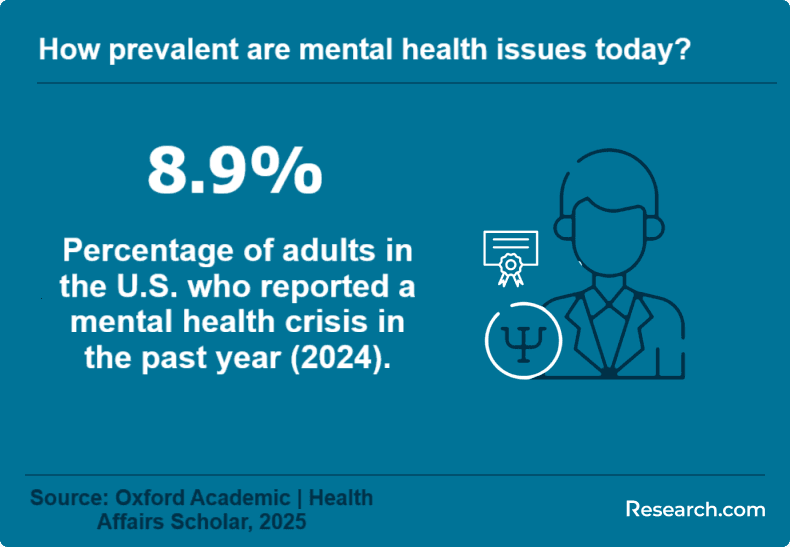
Licensed counselors should expect to engage in professional development every renewal period—usually every two years—to keep their license active and their skills current. They need to update their skills in order to effectively support the growing number of people, as shown below, who experience mental health issues.
How is MPCAC different from CACREP?
While both MPCAC and the Council for Accreditation of Counseling and Related Educational Programs (CACREP) accredit graduate-level counseling programs, their focus and scope differ in important ways.
Here's a general overview of MPCAC vs CACREP accreditation:
- MPCAC emphasizes psychology-based training for counselors, with a strong focus on multicultural competence, evidence-based practice, and integration of psychological science into counseling. It accredits both psychology and counseling master’s programs, providing flexibility for schools that want to train students for a wide range of applied psychology and mental health roles.
- CACREP, on the other hand, is narrower in scope, focusing specifically on counseling programs. Its standards are often tied directly to state licensure requirements for Licensed Professional Counselors (LPCs), making CACREP accreditation highly recognized in states where it is listed as the preferred or required credential.
In short, MPCAC offers a psychology-oriented pathway with an emphasis on science and diversity, while CACREP provides a counseling-specific track that directly aligns with many state licensure processes. Both are respected accreditors, but the best choice depends on a student’s career goals and the licensure requirements of the state where they plan to practice.
Where do counseling and psychology master’s programs differ in terms of outcome?
While counseling and psychology master’s programs overlap in many foundational areas, their outcomes often diverge in terms of career paths and professional focus. Graduates of counseling master’s programs are typically prepared to pursue licensure as professional counselors (such as LPCs or LMHCs), working directly with clients in therapeutic settings like schools, community agencies, hospitals, and private practice. These programs emphasize applied counseling skills, client interaction, and preparation for state licensure.
By contrast, on-campus and online psychology masters programs may lead to a broader range of outcomes. In some states, they also prepare students for counseling licensure, but many programs are designed to support careers in research, assessment, program evaluation, or applied psychology roles outside of therapy. Graduates may work in academic, organizational, or policy settings, applying psychological principles beyond one-on-one counseling.
In short, counseling master’s programs are often more practice- and licensure-focused, while psychology master’s programs can provide a wider scope of opportunities that extend into research, consulting, and applied psychology fields.
Where do counseling and psychology master’s programs intersect?
Although counseling and psychology master’s programs have different emphases, they share significant overlap in preparing students to support mental health and well-being. Both types of programs train graduates in core areas such as counseling theories, human development, multicultural competence, ethics, and evidence-based interventions. Students in either program also complete supervised clinical experiences, building skills to work directly with clients in real-world settings.
Just as professionals seek the best healthcare management certifications to enhance expertise and career opportunities, students benefit from programs that provide comprehensive training and practical experience.
Another point of intersection is their shared commitment to addressing today’s mental health challenges, from anxiety and depression to trauma and substance use. Whether under a counseling or psychology specialization framework, these programs equip students to assess client needs, develop treatment plans, and apply scientifically grounded techniques. Ultimately, both pathways prepare graduates for careers as mental health professionals, often with overlapping job opportunities in community agencies, schools, hospitals, and private practice.
Can you become a counselor with a master's degree in psychology?
Yes, you can pursue careers in counseling with a master’s degree in psychology, but it depends on your state’s licensure requirements. In many states, a psychology master’s degree that includes the right coursework and supervised clinical hours can qualify you to pursue licensure as a counselor (such as Licensed Professional Counselor or Licensed Mental Health Counselor). However, in other states, only degrees from counseling-specific or CACREP-accredited programs may directly meet licensure requirements.
If your psychology program is MPCAC-accredited, you are more likely to meet state standards since MPCAC emphasizes counseling competencies like ethics, multicultural practice, and clinical training. Still, it’s essential to check the exact requirements where you plan to practice, since each state determines whether a psychology master’s degree aligns with its counseling licensure pathway.
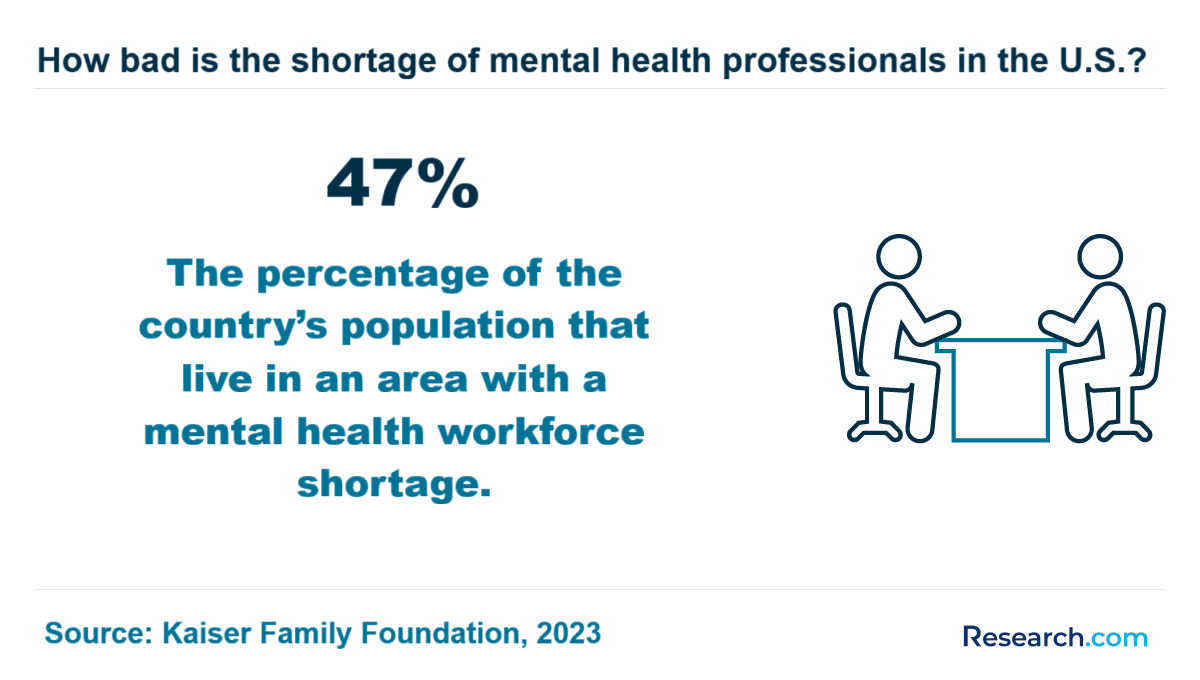
MPCAC states that the demand for mental health services is greater than the mental health field’s ability to meet it. The image below shows how bad the mental health workers shortage is in the U.S. This shortage underscores the fact that the number of graduates of counseling programs, those who pass the exams, and those who get granted new licenses is not enough to fill in the needs of the population.
How many hours of supervised applied experience does MPCAC require?
MPCAC mandates that master’s programs include a minimum of 600 hours of supervised field placement experience, spread across at least two semesters. Of these 600 hours, at least 240 hours must be “direct contact hours,” which means direct work with clients face-to-face or otherwise direct client interaction.
Additionally, MPCAC requires that supervisors for this applied experience be appropriately credentialed, matching the program’s goals and state requirements.
The table below shows the projected employment growth rate for the various types of counselors or therapists, based on data from the U.S. Bureau of Labor Statistics. This strong demand for counselors makes the many hours of supervised field placement experience and post-graduate clinical hours worth it in the long run.
| Type of Counselor | Projected Employment Growth (2024-2034) | Projected Annual Job Openings (2024-2034) |
| Substance Abuse, Behavioral Disorder, and Mental Health Counselors | 17% | 48,300 |
| Rehabilitation Counselors | 1% | 10,000 |
| Marriage and Family Therapists | 13% | 7,700 |
| School and Career Counselors and Advisors | 4% | 31,000 |
Does an MPCAC accreditation support licensure portability?
Licensure portability, which is the ability to transfer counseling credentials from one state to another, has become an important issue as mental health professionals increasingly move or work across state lines. While licensure requirements differ by state, graduating from an MPCAC-accredited program can support portability because the accreditation ensures training in nationally recognized competencies, such as ethics, multicultural counseling, and evidence-based practice. These align closely with what many states require for counselor licensure.
However, MPCAC accreditation does not automatically guarantee licensure portability. Some states explicitly prefer or require degrees from CACREP-accredited programs, while others accept MPCAC-accredited or psychology-based master’s degrees if they meet coursework and supervised experience requirements. This means graduates of MPCAC programs may still need to verify their credentials and, in some cases, complete additional coursework to practice in a new state.
In short, MPCAC accreditation strengthens the case for licensure portability by demonstrating program quality and compliance with core standards, but students should always check state-specific regulations to ensure a smooth transition.
Is the investment in an MPCAC-accredited program financially worthwhile?
A critical consideration for prospective students is balancing tuition costs with long-term career returns. Evaluating program affordability should encompass tuition rates, availability of scholarships, assistantships, and other financial aid options. Analyzing flexible formats—whether on-campus, hybrid, or fully online—can reveal pathways that maintain educational quality while reducing costs. For comparative insights on economical online education, review our guide to cheap online BCBA degree programs. Aligning your financial investment with anticipated career outcomes is essential to ensuring sustained professional growth and a smooth transition into practice.
Key Findings
- The Bureau of Labor Statistics projects employment of substance abuse, behavioral disorder, and mental health counselors to grow 17% from 2024 to 2034, much faster than average, with tens of thousands of openings expected annually.
- The median annual wage for substance abuse, behavioral disorder, and mental health counselors was $59,190 as of May 2024.
- According to data from the Kaiser Family Foundation, 47% of the country’s population in 2022 lived in an area with a mental health workforce shortage. Some of these states require up to 700 more qualified professionals.
- Nearly 1 in 10 adults (8.9%) reported a mental health crisis in the past year. Among those who sought help (72.6%), majority (53.2%) relied on health care providers.
- Federal and sector reports note persistent provider shortages; one widely cited estimate warned that the U.S. could be short about 31,000 full-time equivalent mental-health practitioners by 2025, stressing the need for more trained master’s-level clinicians.
- The American Psychological Association reported growth in master’s degrees in health-service psychology, noting that by 2023, there were 38,033 master’s degrees awarded in that area — evidence that graduate training capacity is expanding.
Here’s What Graduates of MPCAC-Accredited Psychology Master's Programs Have to Say About Their Career
- Raine: "Completing my MPCAC-accredited counseling master’s program gave me the clinical confidence I needed to work directly with clients. The emphasis on multicultural competence and evidence-based practices prepared me to serve a diverse community in my current role as a licensed mental health counselor. I also found that employers valued the accreditation when I applied for jobs, which gave me a competitive edge. It was a rigorous journey, but it has opened so many doors in my career. "
- Kirk: "My MPCAC-accredited psychology master’s program not only equipped me with solid theoretical knowledge but also provided 600 hours of supervised applied experience. That hands-on training was critical in helping me transition into a school counseling role, where I now support students every day. The program’s reputation reassured my employer that I was well-prepared for the demands of the job. Looking back, I know choosing an accredited program made all the difference."
- Patty: "I wanted a program that emphasized both science and practice, and my MPCAC-accredited master’s in psychology delivered exactly that. The faculty challenged us to apply psychological research to real-world problems, and the clinical practicum experiences gave me practical skills to work in community mental health. Because of the program’s accreditation, I met my state’s licensure requirements smoothly, which saved me time and stress. Today, I feel confident that I’m making an impact because of the quality of my training."
References:
- American Psychosocial Oncology Society. (n.d.). Licensed Mental Health Counselor (LMHC) - Salary. APOS.
- Anderson, A. et al. (2025, August 18). Mental health crises and help-seeking among US adults in 2024-2025. Oxford Academic | Health Affairs Scholar.
- National Council for Mental Wellbeing. (2023, April 25). New Study: Behavioral Health Workforce Shortage Will Negatively Impact Society. thenationalcouncil.org.
- Page, C. et al. (2025, September 1). Master’s degrees in health service psychology outpacing other psychology subfields. American Psychological Association.
- Salary.com. (2025, September 1). Mental Health Counselor Salary in the United States. salary.com.
- Salary.com. (2025, September 1). School Counselor Salary in the United States. salary.com.
- United States Bureau of Labor Statistics. (2024, May). Occupational Employment and Wage Statistics Query System. BLS.
- United States Bureau of Labor Statistics. (2025, August 28). Occupational Outlook Handbook | Marriage and Family Therapists. BLS.
- United States Bureau of Labor Statistics. (2025, August 28). Occupational Outlook Handbook | Rehabilitation Counselors. BLS.
- United States Bureau of Labor Statistics. (2025, August 28). Occupational Outlook Handbook | School and Career Counselors and Advisors. BLS.
- United States Bureau of Labor Statistics. (2025, August 28). Occupational Outlook Handbook | Substance Abuse, Behavioral Disorder, and Mental Health Counselors. BLS.
- U.S. Centers for Disease Control and Prevention - National Center for Health Statistics. (n.d.). Mental Health. CDC.
- Zippia. (2025, January 8). School counselor salary. zippia.com.
Other Things You Should Know About MPCAC-Accredited Psychology Master's Programs
Admission requirements for 2027 MPCAC-accredited psychology master’s programs typically include a bachelor’s degree in psychology or a related field, GRE scores (though some programs may waive this), letters of recommendation, a statement of purpose, and relevant work or research experience.
Most MPCAC-accredited psychology master's programs for 2027 do not require a minimum GRE score for admission. However, some institutions might still consider your GRE scores as part of their holistic review process, even if it's not mandatory.
In 2027, several states offer MPCAC-accredited psychology master's programs, including California, New York, Illinois, Massachusetts, and Texas. These programs are designed to meet rigorous educational standards necessary for students pursuing careers in professional counseling and related fields, ensuring adherence to comprehensive ethical and practice guidelines.


