
2027 Most Valuable Healthcare Management Certifications

Co-Founder and Chief Data Scientist
As a career planning and education expert, I understand how challenging it can be to find clear, reliable information on professional credentials. When exploring the most valuable healthcare management certifications, you're often faced with a sea of data that can be difficult to interpret.
The goal of this guide is to cut through that noise and provide a definitive resource. I've gathered and analyzed the most current, accurate data on a variety of certifications, including their requirements, career impact, and earning potential, to help you make the best strategic decisions for your professional journey.
What are the benefits of healthcare management certification?
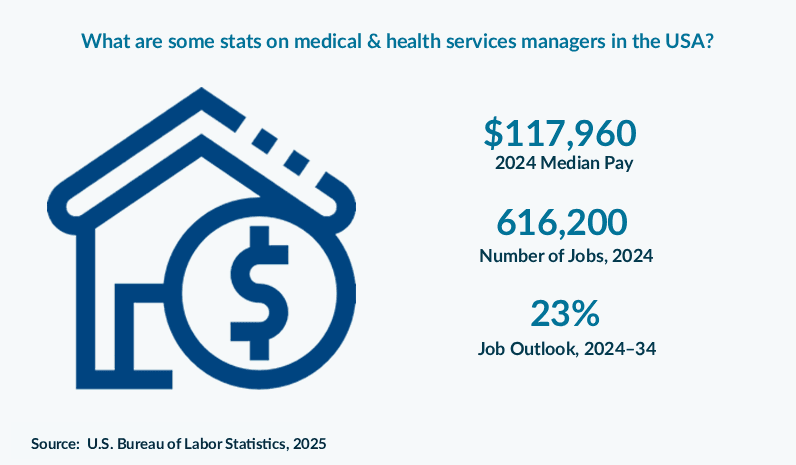
- Career Advancement: Opens doors to roles like Medical & Health Services Manager, Department Director, and Senior Healthcare Executive. Median salary for Medical & Health Services Managers is $117,960/year in May 2024.
- Earning Potential: Certified professionals often earn higher wages — e.g., hospital managers ~ $130,690; government health agency roles ~ $132,620.
- Credibility & Competitive Edge: Holding a recognized certification (especially from accredited bodies) signals strong skills to employers, improves job placement, and may raise starting salaries compared to non-certified peers.
What can I expect from a healthcare management certification program?
- Focused Advanced Topics: Expect intensive coverage of areas like healthcare finance, compliance, patient safety, and leadership.
- Structured Curriculum: Delivery often combines online modules, live sessions, case studies, and competency-based exams.
- Applied Strategic Knowledge: Emphasis on applying management principles to real-world healthcare operations and challenges.
- Condensed Timeline: Many certifications can be completed within 6–12 months, allowing for faster career impact.
- Networking Opportunities: Connect with credentialed professionals, healthcare executives, and national associations.
Where can I work with a healthcare management certification?
- Hospitals and Health Systems: Lead operations, finance, compliance, or patient services.
- Physician Practices: Manage clinical administration, billing, and staff coordination.
- Insurance and Payers: Oversee compliance, claims management, and provider networks.
- Government and Public Health: Support healthcare policy, regulatory oversight, and program management.
- Consulting Firms: Advise healthcare organizations on efficiency, quality, and compliance improvements.
- Pathway to Leadership: Certifications strengthen candidacy for senior roles like Director, VP, or Chief Executive in healthcare organizations.
How much can I make with a healthcare management certification?
- Specialist-Level (Entry/Analyst): Certifications like AAHAM, CHAM, CMM, CPHQ, and CPHRM prepare specialists earning $50,000–$80,000/year, depending on focus (billing, compliance, quality, or risk).
- Mid-Level Management: Credentials such as CHCQM, CHFP, CHC, CPHIMS, and CPHQ support managers earning $85,000–$115,000/year, covering finance, IT, compliance, and quality leadership.
- Senior Management: Certified professionals in roles like practice administrators, risk managers, or department directors earn $110,000–$140,000/year across most certifications.
- Executive-Level Roles: Higher-tier credentials like CHFP, CHC, and CNL prepare leaders for roles paying $125,000–$150,000/year, especially in finance, compliance, and advanced nursing leadership.
- Top Leadership (FACHE & Senior Executives): The most prestigious certification, FACHE, positions healthcare executives and CEOs to earn $150,000–$200,000+/year.
- What are the most valuable health care management certifications for 2027? Valuable Certifications
- What are some financial aid options for healthcare management certifications? Financial Aid
- What is the return on investment (ROI) for healthcare management certifications? ROI
- What are the typical career opportunities for professionals with healthcare management certifications? Career Opportunities
- What is the job outlook for professionals with healthcare management certifications? Job Outlook
- What are some of the key skills gained from healthcare management certifications? Key Skills
- What are the typical salaries for professionals with healthcare management certifications? Salaries
- What are the biggest challenges faced by professionals pursuing healthcare management certifications? What are the biggest challenges faced by professionals pursuing healthcare management certifications?
- What are the biggest opportunities for professionals with healthcare management certifications? What are the biggest opportunities for professionals with healthcare management certifications?
- What are some current and future trends in healthcare management certifications? Trends
What are the most valuable health care management certifications for 2027?
Healthcare leadership and management certifications play a vital role in validating expertise, advancing careers, and ensuring high standards across the industry. The following list highlights eleven of the most respected credentials, detailing their purpose, requirements, and renewal expectations.
Just as professionals must understand LPC reciprocity states to know where their licenses are recognized and transferable, healthcare managers should be aware of certification requirements and portability to maximize career flexibility and opportunities across different organizations and regions.
1. AAHAM Certifications for Revenue Cycle Specialists and Managers
- Description: A tiered series of certifications for professionals in healthcare revenue cycle management.
- Significance: Earning an AAHAM certification demonstrates a high level of achievement and distinguishes you as a leader and role model in the revenue cycle industry. It validates your proficiency and commitment to your profession and can play an integral role in your career strategy.
- Key Knowledge Areas: The specific topics depend on the certification level, but they generally cover: a. Patient Access and Registration b. Billing and Account Resolution c. Denial Management and Collections d. Revenue Integrity and Compliance e. Strategic Revenue Cycle Management (for executive levels)
- Purpose: To set the professional standard for roles in patient access, billing, and collections.
- Requirements: These vary by certification level but typically involve a combination of experience and passing an exam.
- Certification body: American Association of Healthcare Administrative Management (AAHAM)
- Duration: Each certification has its own maintenance and renewal requirements, which generally include continuing education.
2. Certification in Healthcare Quality Management (CHCQM)
- Description: This certification is for physicians, nurses, and other healthcare professionals focused on quality improvement.
- Significance: Certified professionals are deeply committed to patient safety and effective care. They demonstrate a superior ability to evaluate industry literature and identify evidence-based best practices.
- Key Knowledge Areas: The exam covers a broad range of topics, including: a. Accreditation Organizations (e.g., Joint Commission, NCQA) b. Quality Improvement Concepts and Applications (e.g., CQI, TQM) c. Regulatory Environment (e.g., HIPAA, ACA) d. Credentialing and Privileging e. Pay-for-Performance and Value-Based Care
- Purpose: To validate a professional's ability to critically evaluate industry literature and identify evidence-based best practices.
- Requirements: Hold a current, non-restricted professional license and provide documentation of at least 208 hours of active involvement in healthcare quality within the past five years.
- Certification body: American Board of Quality Assurance and Utilization Review Physicians (ABQAURP)
- Duration: The certification is valid for two years and requires continuing education for renewal.
3. Certified Clinical Nurse Leader (CNL)
- Description: This certification is for highly educated nurses who oversee patient care by integrating evidence-based practices.
- Significance: The CNL credential distinguishes master's-prepared nurses who act as a lateral integrator of care, leading multidisciplinary teams to improve patient outcomes and care coordination.
- Key Knowledge Areas: The exam is divided into four main domains: a. Nursing Leadership and Interprofessional Communication b. Lateral Integration of Care Services c. Clinical Outcomes Management d. Care Environment Management (including healthcare finance, informatics, and quality improvement)
- Purpose: To demonstrate expertise in healthcare leadership, patient advocacy, and care environment management.
- Requirements: Must have a Bachelor of Science in Nursing (BSN), be a licensed Registered Nurse (RN), and have a Master of Science in Nursing (MSN) with a CNL specialization.
- Certification body: Commission on Nurse Certification (CNC), an arm of the American Association of Colleges of Nursing (AACN).
- Duration: The certification is valid for five years and can be renewed by completing continuing education or retaking the exam.
4. Certified Healthcare Access Manager (CHAM)
- Description: A leading certification for professionals who work in patient access services.
- Significance: CHAM-certified managers promote the highest standards of patient access, which is critical for positive patient experiences and a healthy revenue cycle. It signals a deep knowledge of the financial, regulatory, and patient experience aspects of healthcare access.
- Key Knowledge Areas: The exam is divided into four sections: a. Pre-Arrival (including scheduling and pre-registration) b. Arrival (including patient check-in and registration) c. Access Management (including statistical reporting and patient experience) d. Leadership and Management
- Purpose: To promote high standards in areas like patient admissions, registration, and finance.
- Requirements: Two years of management experience in the healthcare or finance industry, plus either a high school diploma/GED with 90 professional development contact hours, or a four-year degree from an accredited institution.
- Certification body: National Association of Healthcare Access Management (NAHAM)
- Duration: The certification is valid for two years and requires a minimum of 60 educational contact hours for renewal.
5. Certified Healthcare Financial Professional (CHFP)
- Description: A certification for financial leaders and professionals in healthcare.
- Significance: The CHFP demonstrates a comprehensive understanding of the financial realities in healthcare. It signifies expertise in business acumen, financial strategy, and the nuances of the evolving payment models.
- Key Knowledge Areas: The certification is earned through two modules covering: a. Business of Health Care: An overview of healthcare finance, risk mitigation, evolving payment models, and cost analysis. b. Operational Excellence: Case studies and exercises on applying business acumen in a healthcare context.
- Purpose: To demonstrate a deep understanding of healthcare finance, including financial strategy, accounting, and evolving payment models.
- Requirements: Active membership with the Healthcare Financial Management Association (HFMA) and successful completion of two online modules and their associated exams.
- Certification body: Healthcare Financial Management Association (HFMA)
- Duration: The certification is valid for two years and requires continuing education units (CEUs) or a re-examination for renewal.
6. Certified in Healthcare Compliance (CHC)
- Description: A certification for professionals who ensure legal, ethical, and professional standards are met and communicated throughout a healthcare organization.
- Significance: The CHC credential demonstrates a high level of expertise in healthcare regulations and the ability to reduce compliance risks. It is a recognized standard for professionals responsible for developing and implementing compliance programs.
- Key Knowledge Areas: The exam covers seven main areas: a. Standards, Policies, and Procedures b. Compliance Program Administration c. Screening and Evaluation of Employees and Vendors d. Communication, Education, and Training e. Monitoring, Auditing, and Internal Reporting f. Discipline for Non-compliance g. Investigations and Remedial Measures
- Purpose: To demonstrate a high level of knowledge of healthcare regulations and the ability to reduce compliance risks.
- Requirements: At least one year of full-time work experience in a compliance role or 1,500 hours of direct compliance activities, and 20 continuing education units (CEUs) with at least 10 from live training sessions.
- Certification body: Compliance Certification Board (CCB)
- Duration: The certification is valid for two years and requires a minimum of 40 CEUs for renewal.
7. Certified Medical Manager (CMM)
- Description: This credential focuses on the administrative management of medical practices, from small clinics to larger physician groups.
- Significance: The CMM certifies an individual's knowledge of the full scope of medical practice administration, from finance and human resources to patient relations and regulatory compliance. It is ideal for those managing a healthcare office.
- Key Knowledge Areas: The curriculum typically covers: a. Personnel Management and Employee Relations b. Financial Management and Budgeting c. Compliance Requirements (e.g., HIPAA, OSHA) d. Managed Care Delivery Systems and Contracts e. Revenue Cycle Management
- Purpose: To validate knowledge across a wide range of administrative domains, including human resources, financial management, and revenue management.
- Requirements: The requirements vary by experience level, from entry-level to advanced.
- Certification body: Professional Association of Health Care Office Management (PAHCOM)
- Duration: The certification is valid for two years and requires continuing education for renewal.
8. Certified Professional in Healthcare Information and Management Systems (CPHIMS)
- Description: A certification for professionals who use information systems to improve patient care and organizational efficiency.
- Significance: The CPHIMS credential validates an individual’s expertise in applying healthcare IT to solve real-world problems. It is a mark of professional competency in a rapidly evolving, technology-driven field.
- Key Knowledge Areas: The exam focuses on three main knowledge domains: a. General Healthcare Environment b. Technology Environment c. Healthcare Information and Management Systems (including systems analysis, design, implementation, and privacy)
- Purpose: To validate expertise in healthcare information technology (IT) and management systems, which is crucial in today's digital healthcare landscape.
- Requirements: A bachelor's degree with five years of experience in an information and management systems role, with three years in a healthcare setting. An associate degree requires seven years of experience, with five years in healthcare.
- Certification body: Healthcare Information and Management Systems Society (HIMSS)
- Duration: The certification is valid for three years and requires continuing education for renewal.
9. Certified Professional in Healthcare Quality (CPHQ)
- Description: A certification for healthcare professionals dedicated to improving quality and safety.
- Significance: The CPHQ is the only accredited certification in the healthcare quality profession. It signals a deep understanding of quality improvement methodologies and a commitment to patient safety, making it highly valued by employers.
- Key Knowledge Areas: The exam is divided into four main sections: a. Organizational Leadership b. Health Data Analytics c. Performance and Process Improvement d. Patient Safety
- Purpose: To validate expertise in quality improvement, patient safety, and regulatory compliance, and is widely recognized by employers.
- Requirements: There are no formal education or experience requirements to sit for the exam, but the National Association for Healthcare Quality (NAHQ) recommends at least two years of experience in a healthcare quality-related role.
- Certification body: National Association for Healthcare Quality (NAHQ)
- Duration: The CPHQ certification is valid for two years and can be renewed by either completing continuing education or retaking the exam.
10. Certified Professional in Healthcare Risk Management (CPHRM)
- Description: A leading certification for those who work to minimize risks in healthcare settings.
- Significance: The CPHRM is a highly respected credential that demonstrates an individual's expertise in protecting healthcare organizations from financial loss, legal liability, and clinical risks.
- Key Knowledge Areas: The exam covers five main areas: a. Clinical/Patient Safety b. Risk Financing c. Legal and Regulatory Issues d. Healthcare Operations e. Claims and Litigation
- Purpose: To demonstrate expertise in clinical and patient safety, legal issues, and claims management.
- Requirements: A bachelor's degree and three years of experience in healthcare risk management. Other experience and education combinations may also qualify.
- Certification body: American Hospital Association (AHA) Certification Center
- Duration: The certification is valid for three years and is maintained through continuing education.
11. Fellow of the American College of Healthcare Executives (FACHE)
- Description: A high-level certification for experienced healthcare leaders, often seen as a "board certification" for health administrators.
- Significance: This credential signifies a commitment to professional excellence and is often seen as a mark of a seasoned healthcare executive. Earning it demonstrates mastery of management principles and a dedication to a strong code of ethics.
- Key Knowledge Areas: The exam covers 10 core knowledge domains essential for a healthcare executive. These include: a. Healthcare Technology & Information Management b. Finance c. Human Resources d. Quality & Performance Management e. Management & Leadership f. Laws & Regulations g. Professionalism & Ethics h. Governance & Organizational Structure i. Business j. Healthcare
- Purpose: To demonstrate mastery of management principles, adherence to a strong code of ethics, and commitment to professional development.
- Requirements: Must be a member of ACHE, have a master's degree, five years of healthcare management experience, a minimum of 20 continuing education hours, and pass a comprehensive exam.
- Certification body: American College of Healthcare Executives (ACHE)
- Duration: The certification is valid for three years and requires continuing education and other criteria for renewal.
Take note that the roles and responsibilities of a healthcare administrator are quite heavy and require focus and dedication.
What are some financial aid options for healthcare management certifications?
Financial assistance can help offset the cost of pursuing a certification, making these valuable credentials more accessible. There are several avenues to explore for funding your education and professional development.
Just as many nurses are asking when will DNP be required for nurse practitioner roles to plan their advanced education, healthcare professionals should consider financial aid options early to ensure they can pursue certifications without undue financial burden.
- Employer Tuition Assistance: Many healthcare organizations offer tuition reimbursement or professional development funds for employees seeking to advance their skills.
- Scholarships and Grants: Numerous professional organizations, foundations, and universities offer scholarships specifically for students and professionals in healthcare management.
- Federal Student Aid: While certifications themselves may not qualify for federal aid, certificate programs at accredited universities might, and many students use federal loans to fund their broader educational pursuits that lead to certification eligibility.
- Professional Organization Scholarships: Societies like the American College of Healthcare Executives (ACHE) and the Healthcare Information and Management Systems Society (HIMSS) provide scholarships to their members who demonstrate academic excellence and leadership potential.
- Military and Veteran Benefits: Resources like the GI Bill and the Department of Defense's COOL program can be used to cover the costs of many healthcare certifications.
- State and Local Workforce Development Programs: Some government programs provide funding for professional training and certification to help workers gain skills in high-demand fields like healthcare management.
- Contests and Awards: Some organizations, such as the Richard J. Stull Essay Competition, offer scholarships for professionals who submit top-ranked essays on key issues in the field.
- Loan Programs: Private loans are a common option for those who do not qualify for other forms of aid, though it is important to carefully consider the interest rates and repayment terms.
- Credit Union or Bank Loans: Many financial institutions offer personal loans specifically for education and professional development purposes.
- University-Specific Aid: If you are pursuing a certification through a university, their financial aid office will have a list of institutional scholarships and grants.
Exploring a combination of these options can significantly reduce the financial burden of obtaining a valuable healthcare management certification. A strategic approach to funding can make these career-advancing credentials a realistic goal.
According to the U.S. Bureau of Labor Statistics, the highest levels of employment for medical and health services managers are concentrated in several key industries. The data indicate that general medical and surgical hospitals employ the most professionals, with a national figure of 147,250. This is followed by offices of physicians, which provide 68,370 jobs, and outpatient care centers, which employ 38,150. A significant number of these managers also work in nursing care facilities, with 28,100 positions in skilled nursing facilities, and in home health care services, which accounts for 25,749 jobs.
The data, shown in the graph below, reveals a clear trend of employment being highest in traditional hospital settings but also shows substantial opportunities in a growing number of non-hospital environments, such as physician offices and home health services.
What is the return on investment (ROI) for healthcare management certifications?
The return on investment for a certification is typically measured by the increase in salary and career opportunities versus the cost and time invested. For healthcare management certifications, the ROI can be substantial and far-reaching. Similarly, nurses pursuing advanced education through MSN dual track FNP AGACNP programs often consider the potential salary boost and expanded career options to evaluate the value of their investment in specialized training.
- Increased Earning Potential: Earning a certification is often associated with a higher salary, with some certified professionals earning significantly more than their uncertified counterparts. Accelerated healthcare leadership program enrollments have increased significantly over the past few years.
- Career Advancement: Certifications can give you a competitive edge when seeking promotions, helping you stand out as a highly qualified candidate for leadership roles.
- Expanded Job Opportunities: Many certifications open doors to specialized positions in areas like finance, compliance, or health informatics that may have otherwise been unavailable.
- Professional Credibility: A certification serves as a third-party validation of your skills and knowledge, which builds trust with employers, peers, and clients.
- Job Security: In a competitive job market, certified professionals are often seen as more valuable assets, which can lead to greater job security.
- Networking: The professional societies that offer these certifications provide extensive networking opportunities, connecting you with other leaders and innovators in the field.
- Skill Development: The process of earning and maintaining a certification ensures you are continually learning new skills and staying up-to-date on industry changes, which makes you a more effective and versatile professional.
The ROI of a healthcare management certification is not just monetary; it also includes the value of professional growth, career security, and a wider network of industry contacts. For many professionals, the investment of time and money pays for itself multiple times over throughout their career.
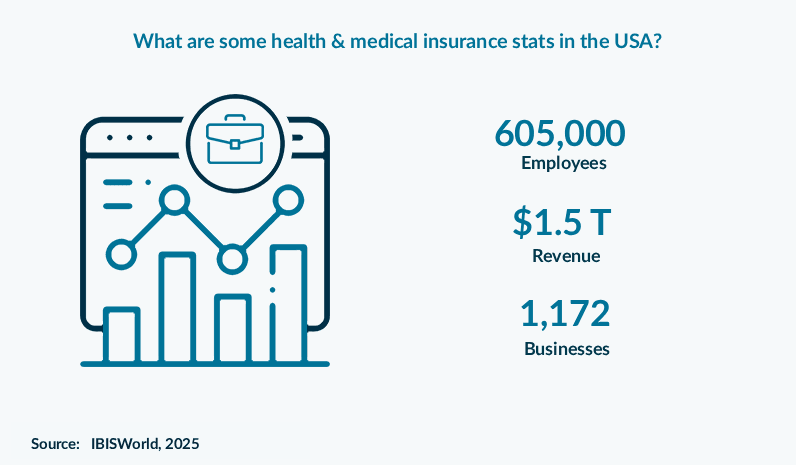
In 2025, the U.S. health and medical insurance industry generated $1.5 trillion in revenue, with a similar amount reported in the past five-year growth. The industry is comprised of 1,172 businesses and employs 605,000 people. It experienced notable revenue fluctuations in recent years, with strong growth in 2020 and 2021 due to increased healthcare spending from COVID-19, followed by a slowdown in 2022 due to inflation affecting consumer purchasing power.
Performance rebounded in 2023, and revenue saw a significant rise in 2024, driven by a surge in investment income. The data, shown in the graphic below, indicates that the industry's financial performance is strongly influenced by broader economic shifts and healthcare expenditure trends.
What are the typical career opportunities for professionals with healthcare management certifications?
A certification in healthcare management and other healthcare certifications can unlock a wide range of career opportunities across various settings. These credentials signal specialized knowledge and leadership potential to employers, leading to roles with greater responsibility and higher earning potential.
- Hospital Administrator: Overseeing the day-to-day operations of a hospital, ensuring quality care and financial stability.
- Clinical Director: Managing a specific department within a hospital or clinic, such as surgery or nursing, and ensuring compliance with regulations.
- Practice Manager: Running the business and administrative side of a private medical practice or physician's office.
- Health Information Manager: Managing patient data, electronic health records, and ensuring the privacy and security of health information.
- Compliance Officer: Developing and implementing programs to ensure the organization adheres to all relevant legal and ethical standards.
- Healthcare Consultant: Advising healthcare organizations on strategies for improving efficiency, profitability, or patient care.
- Revenue Cycle Manager: Overseeing all administrative and clinical functions that contribute to the capture, management, and collection of patient service revenue.
- Quality and Patient Safety Director: Leading initiatives to improve patient outcomes and minimize risks, often in a hospital or large health system.
- Chief Financial Officer (CFO): A senior executive role responsible for the financial well-being and strategic financial planning of a healthcare organization.
- Chief Nursing Officer (CNO): A high-level nursing executive who oversees nursing staff and standards of care.
- Nursing Home Administrator: Managing the operations of a long-term care or assisted living facility, a role that often requires state-specific licensure.
- Project Manager: Leading projects related to new technology implementation, facility construction, or process improvement.
A healthcare management certification can act as a catalyst for career growth, providing the credentials necessary to move from a staff-level position into a managerial or executive role. The opportunities are diverse, spanning from small clinics to large government health agencies.
What is the job outlook for professionals with healthcare management certifications?
The job outlook for medical and health services managers is exceptionally strong, making certifications in this field a wise investment, as shown in the graphic below. The demand for qualified professionals is projected to grow significantly faster than the average for all occupations.
Just as students weigh the advantages of MSW dual degree programs to enhance career opportunities and expand their expertise, healthcare professionals benefit from certifications that improve job prospects, mobility, and earning potential.
- Faster-Than-Average Growth: The U.S. Bureau of Labor Statistics (BLS) projects a 23% growth in employment for medical and health services managers over the next decade.
- Aging Population: A primary driver of this growth is the aging baby-boomer population, which will increase the demand for healthcare services in hospitals, clinics, and residential care facilities.
- Technological Advancements: The increasing use of technology in healthcare, such as electronic health records and data analytics, is creating a need for skilled managers who can oversee and implement these systems.
- High Number of Openings: The BLS projects an average of 62,100 job openings for medical and health services managers each year over the next decade.
- Diverse Workplaces: Job opportunities are not limited to hospitals; strong growth is also expected in physicians' offices, outpatient care centers, and nursing homes.
- Specialization in Demand: Certifications in specialized areas like health informatics, compliance, and finance will be particularly valuable as the industry becomes more complex and data-driven. Accelerated healthcare administration degree online programs offer specializations through elective courses.
The healthcare industry is a foundational component of the U.S. economy, and the need for skilled leaders to manage its growth and complexity is expected to remain high. Obtaining a certification provides a competitive advantage in a robust and expanding job market.
What are some of the key skills gained from healthcare management certifications?
Healthcare management certifications are designed to equip professionals with a specific and advanced set of skills. They provide a structured framework for understanding the unique challenges and operational needs of the healthcare industry.
- Leadership and Management: Certifications build skills in leading teams, making strategic decisions, and managing organizational change effectively.
- Financial Acumen: You gain a deep understanding of budgeting, cost analysis, revenue cycle management, and healthcare reimbursement models.
- Regulatory Compliance: Certifications provide expertise in navigating complex regulations, laws, and ethical standards, such as HIPAA, Stark Law, and the Anti-Kickback Statute.
- Data Analytics: Professionals learn to use data to measure quality, identify trends, improve processes, and make data-driven decisions.
- Quality and Process Improvement: Certifications often train professionals in methodologies like Six Sigma and Lean to enhance efficiency and patient safety.
- Risk Management: You acquire the ability to identify, assess, and mitigate risks related to patient safety, legal liability, and financial loss.
- Health Informatics: Certifications in this area provide knowledge of electronic health records (EHR), data security, and the use of technology to improve care delivery.
- Communication: Certifications reinforce the importance of clear and effective communication with clinicians, patients, and administrators.
- Strategic Planning: You learn to develop long-term plans that align an organization's goals with the changing healthcare landscape.
- Human Resources Management: Certifications can cover topics like talent recruitment, employee motivation, compensation, and conflict resolution.
These skills are not only essential for effective management but are also highly transferable and valued by a wide range of employers. The certification process provides a practical, real-world application of these competencies, making the professional more valuable.
What are the typical salaries for professionals with healthcare management certifications?
The salary for a healthcare manager is influenced by a variety of factors, including education, experience, geographic location, and the type of facility. However, holding a professional certification can significantly increase a professional's earning potential.
- Median Annual Salary: The median annual wage for medical and health services managers is approximately $110,680, with a wide range depending on the specific role and location.
- Executive-Level Salaries: For senior and executive roles like Chief Operating Officer (COO) or Hospital CEO, salaries can be substantially higher, often exceeding $200,000 to $300,000 annually.
- Salary by Industry: Salaries can vary by industry, with managers in government or hospitals often earning more than those in physicians' offices or nursing care facilities.
- Certification Premium: Certifications act as a salary premium, often distinguishing a candidate and justifying a higher wage compared to a peer without the credential.
- Experience Level: As professionals gain more experience and move into higher-level roles, their salary potential increases significantly, especially with a certification to back their skills.
In the competitive landscape of healthcare management, certifications can significantly impact a professional's salary.
For instance, the FACHE (Fellow of the American College of Healthcare Executives) certification stands out with a reported average salary of $174,000, reflecting its status as an elite credential for seasoned executives. Other high-earning certifications include the CNL (Certified Clinical Nurse Leader), with an average salary of $129,716, and the CPHQ (Certified Professional in Healthcare Quality), at $110,000, both of which focus on specialized, in-demand skills.
Certifications like CPHIMS (Certified Professional in Healthcare Information & Management Systems), at $99,008, and CPHRM (Certified Professional in Healthcare Risk Management), at $99,363, also show strong earning potential, highlighting the value of expertise in health information and risk management. These are shown in the graph below.
The data suggests that for those seeking to maximize their income in healthcare management, pursuing a certification that aligns with a strategic and high-level role is a sound investment. The cheapest online healthcare administration degree programs can also be very helpful to those with extreme financial need.
What are the biggest challenges faced by professionals pursuing healthcare management certifications?
Pursuing a professional certification while working in a demanding field like healthcare can present several challenges. Professionals must balance their day-to-day responsibilities with the rigorous requirements of studying and preparation.
- Time Commitment: Many healthcare professionals have demanding work schedules, making it difficult to find the time for self-study, attending courses, or preparing for a challenging exam.
- Financial Burden: The costs associated with certifications, including application fees, exam fees, study materials, and continuing education, can be a significant financial investment.
- Rigorous Content: The exam content for many certifications is broad and complex, requiring a deep understanding of multiple domains, from finance and compliance to leadership and technology.
- Maintaining Relevance: After earning a certification, professionals must stay up-to-date with continuing education requirements, which can be an ongoing time and cost commitment.
- Balancing Work and Life: The intense focus required to earn a certification can often make it difficult to maintain a healthy work-life balance, leading to burnout.
- Keeping Pace with Change: The healthcare industry is constantly evolving with new technologies, regulations, and care models, requiring continuous learning to keep certification-related knowledge current.
Despite these challenges, a strategic approach to time management, a clear understanding of the financial commitment, and support from employers can make a certification a manageable and rewarding goal.
What are the biggest opportunities for professionals with healthcare management certifications?
The opportunities for certified professionals in healthcare management are significant and are driven by the industry's need for skilled and credible leaders. Certifications provide a clear pathway for advancement and specialization.
- Career Advancement: Certifications are often a requirement or a strong preference for promotions into mid- and senior-level management positions.
- Increased Job Marketability: In a competitive job market, a certification can differentiate a professional, making them more attractive to prospective employers.
- Specialization in High-Demand Fields: Certifications allow professionals to specialize in areas like compliance, risk management, or health informatics, which are experiencing strong demand.
- Leadership Roles: The knowledge and skills gained from certifications prepare professionals to take on greater leadership responsibilities and manage complex organizational challenges.
- Executive-Level Opportunities: Elite certifications, such as the FACHE, are specifically designed for executives and can provide a pathway to the highest levels of healthcare leadership.
- Earning Potential: The specialized knowledge validated by a certification often leads to a higher salary and better compensation packages.
- Networking and Mentorship: The communities and professional societies associated with certifications offer invaluable opportunities for networking with peers and connecting with mentors.
- Driving Organizational Change: Certified professionals are often at the forefront of implementing new technologies and quality improvement initiatives that positively impact patient care and organizational efficiency.
A healthcare management certification is more than just a credential; it is a tool for personal and professional growth that can lead to a fulfilling and impactful career.
What are some current and future trends in healthcare management certifications?
The landscape of healthcare management is constantly evolving, and certifications are adapting to reflect these changes. Several key trends are shaping the future of these professional credentials.
- Focus on Digital Health and AI: With the rise of telehealth, remote patient monitoring, and artificial intelligence in diagnostics, certifications that focus on technology integration and health informatics are becoming increasingly important.
- Value-Based Care: Certifications are shifting to emphasize knowledge of value-based care models, which tie payments to patient outcomes rather than the volume of services provided.
- Data-Driven Decision Making: The growing role of big data in healthcare is making certifications in data analytics and information management more valuable, as they equip professionals to use data to improve care and operational efficiency.
- Patient-Centered Care: Certifications are increasingly incorporating principles of patient-centered care, focusing on patient experience, engagement, and emotional intelligence.
- Regulatory Changes: Certifications in compliance are continually updated to reflect new and evolving regulations and policies, such as those related to cybersecurity and patient privacy. An option is to enroll in university cyber security certifications online programs for increased experience.
- Specialized Micro-Credentials: In addition to full certifications, a trend is emerging for micro-credentials or digital badges that validate a professional's competency in a specific, niche skill set, such as a particular software or quality improvement methodology.
- Workforce Challenges: As the healthcare industry faces staffing shortages, certifications that focus on workforce management, recruitment, and employee retention are gaining prominence.
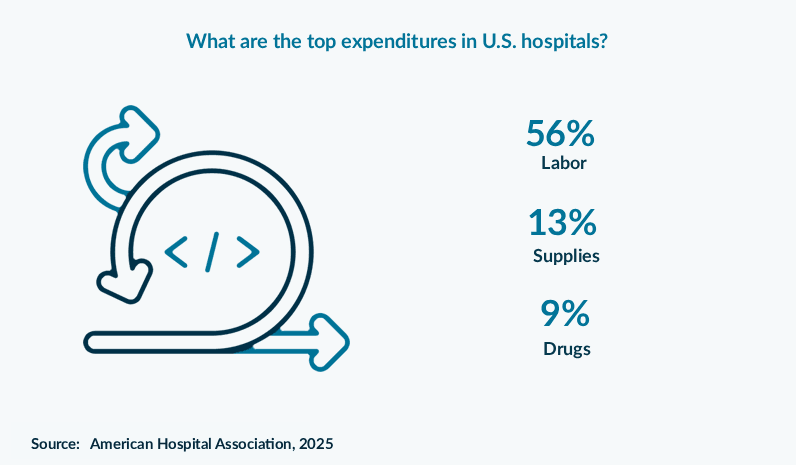
In 2024, an analysis of average hospital expenses revealed that labor costs continued to be the largest category of spending. Labor accounted for 56% of total expenditures, amounting to $890 billion. The second-largest category was "other" expenses, which made up 22% of the budget at $352 billion. Supplies represented 13% of the spend, totaling $202 billion, while drugs were the smallest category at 9%, or $144 billion.
The data, shown in the graphic below, highlights a consistent trend in hospital finance, where labor costs are the primary driver of institutional spending, far outweighing expenditures on supplies and drugs.
As healthcare continues to transform, certifications will remain a vital tool for professionals to demonstrate their expertise in these emerging areas. Staying abreast of these trends is crucial for choosing a credential that will be valuable for years to come.
Here's What Graduates Say About Their Healthcare Management Certifications
- Corinna: "I was feeling stagnant in my career as a nurse manager. The Certified Clinical Nurse Leader (CNL) certification gave me the confidence and advanced skills to lead my team more effectively. It helped me implement an evidence-based practice initiative that improved patient outcomes by 15%, a truly rewarding experience."
- Javier: "Earning my Certified Healthcare Financial Professional (CHFP) was a game-changer for my career. I now have the financial literacy to contribute to strategic decisions, and my salary increased by 20% within the first year of certification. It's incredibly empowering to know I have a seat at the table where the big decisions are made."
- Lenora: "The FACHE (Fellow of the American College of Healthcare Executives) certification was the perfect capstone to my career. It's a gold-standard credential that validated my decades of experience, and the networking opportunities have been invaluable. I feel proud to be recognized as a leader among my peers and a champion for ethical healthcare."
Key Findings
- Healthcare employment and industry trends: According to the U.S. Bureau of Labor Statistics, employment for medical and health services managers is highly concentrated in hospitals (147,250), followed by offices of physicians (68,370) and outpatient care centers (38,150).
- Healthcare employment and industry growth: Projected 23% increase over the next decade, creating an average of 62,100 job openings annually.
- Hospital financials: In 2024, labor accounted for 56% of hospital expenses ($890B), far exceeding supplies at 13% ($202B) and drugs at 9% ($144B); labor remains the primary driver of hospital expenses.
- Health insurance market: In 2025, the U.S. health and medical insurance industry generated $1.5 trillion in revenue and employed 605,000 people across 1,172 businesses.
- Health insurance market growth: Robust growth in 2020–2021 due to COVID-19, a slowdown in 2022 as inflation reduced consumer spending, and a strong rebound in 2024 driven by a significant rise in investment income.
- Certification salaries: Entry-level certified professionals earn $50,000–$80,000; mid-level managers with credentials earn $85,000–$115,000; senior-level certified professionals earn $110,000–$140,000.
- Certification salaries — top credentials: The most prestigious certification, FACHE, positions top executives well over $150,000 (average reported $174,000); specialized certifications average from $99,008 (CPHIMS) to $129,716 (CNL).
References:
- American Hospital Association. (2025). The cost of caring: April 2025. American Hospital Association.
- Centers for Disease Control and Prevention. (2025). Chronic disease facts and statistics. U.S. Department of Health & Human Services.
- Glassdoor. (2025). Medical manager salary. Glassdoor.
- IBISWorld. (2025). Health & medical insurance in the US: Market research report. IBISWorld.
- PayScale. (2025). Certified healthcare access manager (CHAM) salary. PayScale.
- PayScale. (2025). Certified healthcare financial professional (CHFP) salary. PayScale.
- PayScale. (2025). Certified in healthcare compliance (CHC) salary. PayScale.
- PayScale. (2025). Certified professional in healthcare quality (CPHQ) salary. PayScale.
- PayScale. (2025). Certified professional in healthcare risk management (CPHRM) salary. PayScale.
- PayScale. (2025). Fellow of the American College of Healthcare Executives (FACHE) certification salary. PayScale.
- U.S. Bureau of Labor Statistics. (2024). Occupational employment and wage statistics: Medical and health services managers. U.S. Department of Labor.
- ZipRecruiter. (2025). AAHAM certification jobs salary. ZipRecruiter.
- ZipRecruiter. (2025). Certified clinical nurse leader (CNL) salary. ZipRecruiter.
- ZipRecruiter. (2025). Certified professional in healthcare information and management systems (CPHIMS) salary. ZipRecruiter.
Other Things You Should Know About Healthcare Management Certifications
In 2027, some of the top certifications for advancing careers in healthcare management include the Certified Healthcare Financial Professional (CHFP), the Certified in Healthcare Compliance (CHC), and the Certified Professional in Healthcare Information and Management Systems (CPHIMS). Each provides specialized knowledge, enhancing strategic decision-making skills in healthcare facilities.
In 2027, valuable healthcare management certifications include the Certified Healthcare Leader (CHL), Certified Professional in Healthcare Information and Management Systems (CPHIMS), and Fellow of the American College of Healthcare Executives (FACHE). Requirements vary by certification; for example, CHL focuses on leadership skills, CPHIMS on IT management, and FACHE on executive experience.
Eligibility criteria for healthcare management certifications in 2027 typically include a bachelor's degree in a related field, relevant work experience, and passing a certification exam. Specific requirements can vary, so it's essential to check the certification body's guidelines.


