
2027 Biotechnology Careers: Guide to Career Paths, Options & Salary

Co-Founder and Chief Data Scientist
Choosing a biotechnology career is really a decision about the kind of science work you want to do every day. Some people are drawn to hands-on laboratory testing. Others want to work in bioinformatics, drug development, biomanufacturing, public health, agriculture, or regulatory affairs. Because biotechnology sits at the intersection of biology, data, engineering, medicine, and manufacturing, the best path depends on your interests, education level, and long-term goals.
This updated guide is built to help you make that decision with more confidence. You will learn what biotechnology jobs actually involve, which degrees fit different career goals, what skills employers expect, how salaries and job outlook vary by role, and how to compare programs before enrolling. If you are still sorting out your options, you can also use this article alongside career exploration resources and other STEM career guides.
Quick Answer: Is Biotechnology a Good Career Path?
Biotechnology can be a strong career choice if you enjoy science, problem-solving, lab work, and applied research. It offers multiple entry points, from technician roles that may start with an associate degree to advanced positions in research, engineering, management, and regulatory work that often require a bachelor’s degree, master’s degree, doctorate, or specialized training.
The smartest way to enter the field is to match your education to your target job, build lab or internship experience early, strengthen data and quality-control skills, and verify that any school or program you choose is accredited and aligned with employer expectations.
Biotechnology Careers: What This Guide Covers
- Why biotechnology attracts students and career changers
- Biotechnology salary and job outlook
- Skills employers expect
- How to enter the field
- Trends shaping biotechnology jobs
- Resources that can help you advance
- Why bioinformatics matters
- How to grow into advanced roles
- Paths that may lead to higher pay
- Biotechnology and public health
- Alternative careers for biotechnology graduates
- Biotechnology in pharmaceuticals
- Real-world applications of biotechnology
- Accredited biotech programs and online options
- Ethical and regulatory issues
- How biotech skills connect to healthcare administration
Why Consider a Career in Biotechnology?
Biotechnology appeals to people who want science to solve practical problems. Instead of working with biology only in theory, biotechnology professionals use living systems, cells, organisms, genetic data, and laboratory tools to develop products, improve production, test treatments, strengthen food systems, and support environmental and medical research.
It combines several disciplines in one career path
One reason biotechnology is so flexible is that it draws from biology, chemistry, math, engineering, computer science, medicine, and manufacturing. That mix makes the field a good fit for students who do not want to stay in only one subject area. It also explains why interdisciplinary study matters so much in higher education and why biotech training often overlaps with concepts found in engineering degree programs.
It has impact in healthcare, food, and environmental work
Biotechnology has been part of human life for centuries through processes like fermentation, one of the earliest forms of biotechnology. Today, the field also supports genetic engineering, food testing, crop improvement, disease resistance, diagnostics, and nutritional research. If you want a career that connects science to visible outcomes, this field offers that opportunity.
Education costs can be a major factor
Biotechnology programs can be expensive, especially for students who plan to continue into graduate study. Since college in America is so expensive, it makes sense to compare more than tuition. Look at scholarships, fellowships, assistantships, employer tuition help, and research funding. Students can also review biotechnology scholarships and fellowships before choosing a program.
It supports several industries, not just one
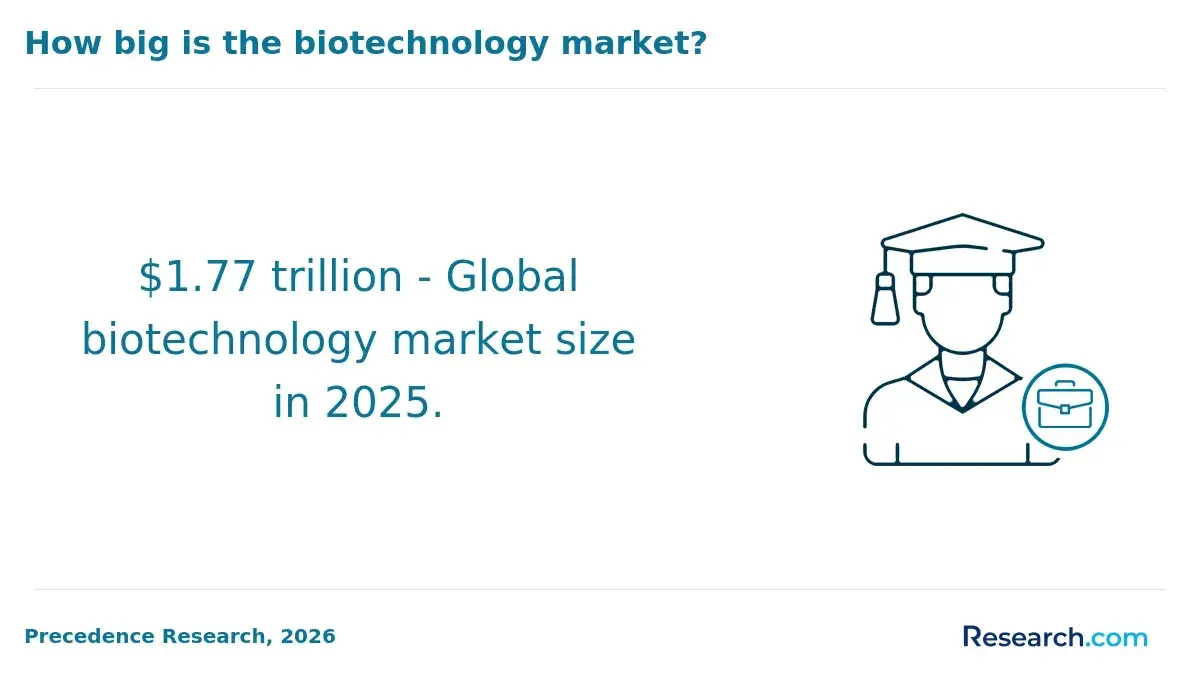
Biotechnology is not one job title or one employer type. It appears in therapeutics, diagnostics, agricultural science, environmental monitoring, biomanufacturing, laboratory testing, and research. In the U.S., large segments include therapeutics, diagnostics and analytical services, and other services and suppliers. Globally, health-related applications account for 51.2% of the biotechnology market in 2025.
Biotechnology Salary and Job Outlook
Pay in biotechnology varies widely. Degree level, specialization, location, employer type, and whether the role is technical, clinical, research-based, engineering-based, or managerial all influence earnings. Biotechnology is included among the top 50 highest-paying college majors, but that does not mean every job in the field pays the same.
In May 2025, biological technologists earned an average of about $58,327 per year, while the highest top 10% earned $92,500 and above, according to ZipRecruiter, 2025. Biological scientists earned as much as $161,500 annually, according to ZipRecruiter, 2025.
Salary estimates also depend on how a source defines the role. For biological technicians, navigational, measuring, electromedical, and control instruments manufacturing was identified as a top-paying industry, with a median annual wage of $52,000. As of January 2026, the average biological technician salary in the United States was $20.24 an hour or $42,105 per year, according to ZipRecruiter, 2026.
The U.S. Bureau of Labor Statistics projects 3% employment growth for biological technologists by 2034, with 2,900 job openings each year on average. The field already includes 82,700 biological technicians in the United States, according to BLS, 2026. That does not guarantee individual job outcomes, but it does show that technician work remains a real entry point into the broader biotech labor market.
| Role | Salary | Demand |
| Environmental Science and Protection Technicians | $46,850 | 8% |
| Chemical Technicians | $49,820 | 3% |
| Occupational Health and Safety Technicians | $72,530 | 4% |
| Clinical Laboratory Technologists | $54,180 | 7% |
| Zoologists and Wildlife Biologists | $66,350 | 4% |
| Microbiologists | $84,400 | 3% |
| Epidemiologists | $74,560 | 5% |
| Biomedical Engineers | $92,620 | 5% |
| Agricultural and Food Scientists | $68,830 | 6% |
| Medical Scientists | $91,510 | 6% |
| Biochemist and Biophysicists | $94,270 | 4% |
| Natural Sciences Managers | $137,940 | 5% |
How to read biotechnology salary data
- Entry-level work often starts in technician roles. These jobs may pay less than research, engineering, or management positions, but they can build valuable experience.
- Advanced education can raise earning potential. Research, public health, medical science, and leadership roles often prefer or require graduate study.
- Industry affects pay. Pharmaceuticals, medical devices, diagnostics, government labs, universities, agriculture, and manufacturing all have different compensation patterns.
- Location matters. Biotech hubs may offer more openings, but they may also come with higher living costs and stronger competition.
Skills Biotechnology Employers Look For
The U.S. Department of Labor’s Bioscience Competency Model is a useful way to understand what employers expect in biotechnology and related bioscience roles. In most settings, employers want people who can follow procedures, document work carefully, use equipment correctly, understand biological systems, and communicate results clearly.
Technical skills that matter
- Bioscience fundamentals. Biology, chemistry, math, physics, and engineering help students understand experiments, processes, and product development.
- Research and development. Biotech workers often need experience with experimental design, laboratory methods, data collection, and documentation.
- Manufacturing and production. Many biotechnology products must move from discovery into controlled production, so process control and biomanufacturing knowledge are valuable.
- Quality control and quality assurance. Entry-level jobs often include testing, checking materials, reviewing procedures, and catching errors early.
- Health, safety, and security. Biotechnology work can involve biological materials, chemical hazards, regulated workflows, and waste handling.
Professional skills that employers value
- Communication. Biotech professionals must explain procedures, findings, errors, and risks to coworkers, managers, clients, and sometimes regulators.
- Critical thinking. Unexpected results, contamination issues, and equipment problems are common. Employers want people who can reason carefully and stay calm.
- Planning and organization. Experiments, production schedules, and quality reviews often happen under strict timelines.
- Innovation. The field rewards people who can troubleshoot, improve systems, and connect ideas across disciplines.
- Integrity. Biotechnology deals with patient samples, genetic data, animal research, and public health concerns, so ethics matters.
| If you enjoy... | Look at biotechnology roles in... | Skills to build first |
| Hands-on lab work | Research assistance, quality control, diagnostics, biomanufacturing | Lab safety, sample handling, documentation, equipment use |
| Data and computation | Bioinformatics, genomics, computational biology | Data analytics, sequencing tools, modeling, programming basics |
| Health and medicine | Clinical laboratory science, medical research, diagnostics, public health | Molecular biology, clinical testing concepts, ethics, regulatory awareness |
| Product development | Pharmaceuticals, medical devices, bioprocessing, quality assurance | Manufacturing, validation, quality systems, cross-functional communication |
| Leadership and strategy | Research management, operations, regulatory affairs, healthcare administration | Project management, compliance, budgeting, team leadership |
How to Enter a Biotechnology Career
The right entry point depends on the role you want. An associate degree can prepare students for technician work in labs, environmental testing, quality control, and production support. A bachelor’s degree can open more paths in research assistance, clinical laboratory work, microbiology, agricultural science, and biotech operations. Graduate study may be necessary for independent research, advanced public health work, medical science, leadership, and faculty positions.
Online learning can make education more manageable for working adults and students with family or location constraints. Still, biotechnology is a hands-on field, so when you compare online degrees, check for lab components, in-person intensives, internships, transfer policies, and local lab partnerships.
Biotechnology degree options at a glance
| Education level | Best fit | Common outcomes | Important caution |
| Certificate | People adding a focused skill or proving current training | Continuing education, specialization, job support | Usually not enough on its own for many biotech roles |
| Associate degree | Students who want a faster path into technical work | Lab technician, environmental technician, chemical technician support roles | Advancement may require experience, certifications, or more education |
| Bachelor’s degree | Students seeking broader scientific preparation | Clinical lab, microbiology, research assistant, quality control, field biology roles | Some jobs may still require licensure, clinical training, or graduate study |
| Master’s degree | Professionals who want specialization or applied leadership | Epidemiology, biomedical engineering support, food science, bioinformatics, regulatory roles | Concentrations vary widely, so choose carefully |
| Doctorate | Students aiming for independent research or senior scientific leadership | Medical scientist, biochemist, biophysicist, natural sciences management track | The time commitment is significant, so review return on investment early |
What you can do with an associate degree in biotechnology
Environmental science and protection technicians. These technicians collect samples, support lab analysis, monitor environmental safety, and help prevent pollution. Some positions may require hazardous-materials or waste-handling training. Median Annual Salary: $44,940.
Chemical technicians. Chemical technicians help chemists and chemical engineers by preparing experiments, maintaining lab equipment, recording results, and supporting tests. Internship experience can improve your chances. Median Annual Salary: $53,919.
Occupational health and safety technicians. These professionals help maintain safety in the workplace, support compliance, and teach coworkers about safe procedures. One in five health and safety technicians works in manufacturing, and experience or more education can support advancement. Median Annual Pay: $64,889.
What you can do with a bachelor’s degree in biotechnology
Clinical laboratory technologists. These professionals analyze body fluids and other specimens to help identify disease. BLS lists related specialties such as blood bank technologists, clinical chemistry technologists, cytotechnologists, immunology technologists, microbiology technologists, and molecular biology technologists. Median Annual Salary: $59,840.
Zoologists and wildlife biologists. These scientists study animals, habitats, behavior, food sources, and ecosystems. A bachelor’s degree can be the starting point, but more independent research often requires graduate education. Specializations can include ornithology, ichthyology, or entomology. Median Annual Salary: $51,620.
Microbiologists. Microbiologists study microorganisms and their effects on humans, animals, environments, and industrial systems. The pandemic showed how important this work is, and microbiologists were widely recognized as essential contributors. Rob Knight’s TED Talk on how microbes shape who we are also highlights the field’s broader scientific reach. Median Annual Salary: $58,036.
Can a certificate alone get you a biotechnology job?
A certificate can help you build a specific skill set, but it usually does not replace a degree for most biotechnology jobs. Many entry-level technician roles still expect at least an associate degree, while research, clinical, engineering, and leadership positions often expect a bachelor’s degree or higher. Certificates are most useful when they add a narrow but valuable skill such as quality assurance, biomanufacturing, bioinformatics, safety, regulatory affairs, or supervision.
If you are considering a certificate-only path, review current job postings first. If the positions you want consistently ask for a degree, treat the certificate as a supplement rather than the main credential.
Trends Shaping Biotechnology Careers
Biotechnology is changing quickly because of computational biology, artificial intelligence, advanced biomanufacturing, genome editing, and synthetic biology. CRISPR and other gene-editing tools continue to influence personalized medicine, agricultural science, and experimental design. Synthetic biology is also expanding the ways scientists engineer organisms for industrial use, including biofuels and bioplastics.
Big data and machine learning are now part of many biotech workflows. Drug discovery, genomic analysis, biological modeling, clinical trial design, and diagnostics increasingly depend on people who can combine biological knowledge with data skills. That is why bioinformatics and computational biology can make a biotechnology graduate more competitive.
Sustainability is another major force in the field. Green biotechnology, bioeconomy initiatives, agricultural resilience, and environmental applications are tied to climate change, resource use, food production, and public health. Students who want adjacent healthcare technology paths may also compare options such as online radiology tech programs to see whether they prefer lab science, imaging, diagnostics, or patient-facing work.
The main takeaway is simple: biotechnology is a field where learning never really stops. New tools, regulations, and employer expectations can shift quickly, so continuing education and professional networking matter.
Resources and Habits That Can Help You Advance
People who want to grow in biotechnology should keep up with scientific news, employer skill requirements, regulatory changes, and new lab technologies. Reading industry publications, attending conferences, taking short courses, joining professional communities, and reviewing job postings can help you see which skills are becoming more valuable.
If you are comparing biotech careers, study real job descriptions instead of relying on job titles alone. Similar roles can have different names depending on the employer, and the same title can mean different work in different settings.
Why Bioinformatics Improves Biotechnology Career Options
Bioinformatics expands biotechnology career possibilities because many modern problems now involve large biological datasets. Genomic sequencing, drug discovery, personalized medicine, molecular diagnostics, and computational biology all require professionals who can read data as well as understand biology. A biotechnology graduate with data analytics, sequencing, modeling, and database skills may be more competitive in interdisciplinary roles than someone with lab skills alone.
If you want to move into a data-heavy path, you may want to explore a bioinformatics degree online to deepen your preparation in computational methods, biological data, and applied analysis.
How to Move Into Advanced Biotechnology Roles
Career growth in biotechnology usually comes from a mix of education, specialization, documented experience, and the ability to work across teams. If your goal is leadership, independent research, product development, regulatory strategy, or senior scientific work, an advanced degree may be important. If you want to advance technically, targeted certifications, quality systems experience, and specialized lab training may matter more immediately.
What you can do with a master’s in biotechnology
Epidemiologists. Epidemiologists study public health problems, analyze disease patterns, and help design responses to health risks. Most work for state governments, and a master’s degree is typically needed for entry. Median Annual Salary: $67,964.
Biomedical engineers. Biomedical engineers design, build, and test technologies such as medical devices, monitoring systems, and artificial body parts. Their work overlaps with biotechnology when biological science and engineering are combined to solve medical problems. Median Annual Salary: $70,584.
Agricultural and food scientists. This field includes animal scientists, food scientists, plant scientists, and soil scientists. These professionals may focus on nutrition, crops, food safety, livestock, or production improvements. Median Annual Salary: $70,461.
What jobs can you get with a doctorate in biotechnology or a related field?
Medical scientists. Medical scientists conduct research aimed at understanding, treating, or curing disease. A doctorate is generally required for independent scientific work and team leadership. Median Annual Salary: $82,138.
Biochemists and biophysicists. These scientists study biological processes and conduct research that can contribute to medicine, agriculture, industry, and basic science. By 2029, 1,400 professionals with a doctorate will be needed to perform this job in America. Median Annual Salary: $69,727.
Natural sciences managers. Natural sciences managers oversee research teams, coordinate budgets and schedules, and communicate findings to executives. These roles usually require advanced education plus years of experience. Median Annual Salary: $81,000.
Which certifications can be useful in biotechnology?
There is no single licensure exam for all biotechnology professionals. The value of a certification depends on your specialization. A quality assurance specialist, lab technician, biomanufacturing worker, regulatory affairs professional, or future manager may each need a different credential.
Professionals who want to move toward management may also consider non-science credentials, including leadership certifications. Biotechnology-related certificates are also available through universities, professional organizations, and established institutions, including some of the oldest colleges in the U.S. Examples include Agriculture Education Services & Technology Inc., MIT Professional Education, and The University of Florida.
| Goal | Credential or experience to prioritize | Why it matters |
| Move from technician to senior technician | Hands-on lab experience, quality control, safety training | Shows reliability in regulated lab or production settings |
| Enter bioinformatics | Graduate coursework, data analytics, sequencing tools | Connects biology with computational problem-solving |
| Work in biomanufacturing | Production, quality assurance, process control training | Supports product scale-up and compliance-driven work |
| Lead teams | Advanced degree, project management, leadership certification | Prepares scientists to manage people, timelines, and budgets |
| Enter regulated industries | Regulatory affairs, documentation, compliance training | Helps professionals work with approvals, audits, and product standards |
Biotechnology Paths That May Lead to Higher Pay
Higher-paying biotechnology and biology-related jobs usually require specialized expertise, not just a general science background. People who move into bioinformatics, regulatory affairs, advanced biomanufacturing, medical science, biomedical engineering, or scientific management may have stronger earning potential because those roles combine technical knowledge with data, compliance, business, or leadership responsibilities.
If you are comparing high-paying biology jobs, look closely at the actual requirements. The real question is not only which role pays more, but also what degree, experience, location, and specialization the role expects.
How Biotechnology Supports Public Health Innovation
Biotechnology plays a major role in public health by improving diagnostics, disease surveillance, vaccine development, laboratory testing, and targeted interventions. Biotech tools help researchers identify pathogens, track outbreaks, develop treatments, and turn lab findings into practical health solutions. Public health agencies, research institutions, hospitals, and biotech companies often work together to make that happen.
Students who want to combine lab science with population health may also want to compare biotechnology with public health study options, including the cheapest public health degrees online.
Alternative Careers for Biotechnology Graduates
A biotechnology degree does not have to lead only to bench science. Graduates can also move into science communication, education, veterinary technology, sales, regulatory work, technical support, or healthcare operations. These paths can appeal to people who like science but do not want a lab-centered career forever.
Other career paths to consider
Veterinary technologists and technicians. Biotechnology graduates who like animal care may consider this path. Those who complete an associate degree accredited by the American Association of Veterinary State Board are eligible for the Veterinary Technician National Examination. These professionals assist veterinarians and scientists with exams, testing, and animal care procedures. Median Annual Salary: $39,536.
Medical writers. Medical writers create scientific and medical content for journals, technical reports, books, educational resources, and more. This path suits graduates who understand science and can explain it clearly to different audiences. Median Annual Salary: $78,400.
Postsecondary teachers. Biotech professionals with advanced degrees may teach biology or related sciences at the college level. Postsecondary teachers prepare lessons, teach classes, assess students, mentor learners, and may conduct research. There are 64,700 employed postsecondary teachers in biological sciences, and by 2029, 6,000 more job openings will be available to teachers of this subject matter. Median Annual Salary: $46,559.
How Biotechnology Supports Pharmaceutical Innovation
Biotechnology is closely tied to pharmaceutical research because many modern therapies depend on biological mechanisms, genetic data, molecular targets, and advanced testing methods. Gene editing, high-throughput screening, biomanufacturing, and data-driven research can help scientists identify promising treatments, improve trial design, and evaluate safety and effectiveness.
This overlap creates career options for professionals who understand both science and regulation. Some students may choose pharmacy, pharmaceutical science, or biotechnology depending on whether they want to work with patients, drugs, manufacturing, research, or regulatory systems. One related option to compare is online PharmD programs accredited.
What Are the Real-World Applications of Biotechnology?
Biotechnology matters because it turns biological knowledge into products and processes people use every day. Its applications appear in healthcare, agriculture, environmental protection, food safety, and industrial production.
- Healthcare innovation. Biotechnology contributes to vaccines, diagnostics, gene therapy, drug development, personalized medicine, and molecular testing. The rapid creation of mRNA vaccines during the COVID-19 pandemic showed how fast biotechnology can respond to urgent public health needs.
- Agricultural improvement. Biotechnology can support crops with better resistance to pests, disease, and environmental stress, while also improving yields, nutrition, and food security.
- Environmental solutions. Bioremediation uses living organisms to help clean polluted environments, and biotechnology also supports biofuel development and other lower-impact approaches.
- Food production and safety. Biotechnology improves contaminant detection, pathogen testing, fermentation, and nutritional enhancement so food systems can be safer and more efficient.
People who want to lead projects in these areas may need graduate-level study. Programs such as online biotechnology master's programs can help build deeper expertise in research, product development, or applied biotechnology.
Best Accredited Biotechnology Programs and Online Degrees
When you choose a biotechnology program, look at career fit, accreditation, lab access, cost, flexibility, transfer policies, and graduate outcomes. A strong program should teach more than biology. It should prepare you to work safely and competently in scientific, clinical, manufacturing, or data-heavy settings.
Why accreditation matters
Accreditation helps show that a college or program meets accepted academic standards. Students should look for institutions accredited by recognized regional accreditors approved by the U.S. Department of Education. For engineering-related biotechnology programs, the Accreditation Board for Engineering and Technology (ABET) may also be relevant. Accreditation can affect financial aid, transfer credit, graduate school admission, and employer recognition.
Online bachelor’s degree programs in biotechnology
Online biotechnology degrees can help students who need more flexibility because of work, family, or location. Still, biotechnology is a lab-based field, so a fully online format may not fit every goal. When you review an accredited online bachelor degree, ask how the school handles laboratory learning, internships, faculty support, and career placement.
What to look for in a biotechnology program
- Relevant curriculum. Look for coursework in molecular biology, genetics, microbiology, bioinformatics, chemistry, lab methods, and quality systems.
- Hands-on training. Internships, research projects, campus labs, partner labs, and in-person intensives can build practical experience.
- Specialization options. Tracks in medical biotechnology, agricultural biotechnology, bioinformatics, or biomanufacturing can help align study with your career goal.
- Career support. Advising, employer partnerships, mentoring, resume help, and internship coordination can matter a lot for new graduates.
- Transfer and graduate school policies. If you plan to continue later, check how credits transfer and whether prerequisites are built into the program.
| Question to ask before enrolling | Why it matters |
| Is the institution properly accredited? | Accreditation can affect financial aid, transfer credit, graduate admission, and employer recognition. |
| How are laboratory requirements completed? | Employers often expect hands-on lab readiness, not theory alone. |
| Does the program match my target role? | A bioinformatics student and a clinical lab student usually need different coursework and experience. |
| What internships or research opportunities are available? | Practical experience can make you more competitive for entry-level jobs. |
| What are the total costs beyond tuition? | Fees, lab supplies, travel, technology, and lost work time can change the real cost. |
| Do graduates enter related jobs or graduate programs? | Outcome data can help you judge whether the program supports your goals. |
What Ethical and Regulatory Challenges Affect Biotechnology?
Biotechnology often raises questions that go beyond technical ability. Gene editing, genetic data, clinical trials, animal research, patient privacy, food modification, and access to new therapies can all create ethical and regulatory issues. Professionals need to understand compliance, documentation, risk management, informed consent, and data protection, not just the science itself.
Regulation matters because biotechnology products can affect patients, consumers, ecosystems, and public health. Professionals who understand both science and administrative systems may find roles that combine compliance, operations, research, and healthcare documentation. Related administrative training, such as affordable medical billing and coding programs online, may also be relevant for people who want to work on the operational side of healthcare.
How Biotechnology Skills Can Complement Healthcare Administration
Biotechnology knowledge can be useful in healthcare administration when organizations need people who understand scientific innovation, clinical operations, diagnostics, product development, or research strategy. Someone with both biotech and management skills may work in project coordination, laboratory operations, research administration, compliance, commercialization, or health technology implementation.
If you want to move away from bench science while staying connected to healthcare innovation, management-focused education may be worth comparing. Options such as the cheapest healthcare administration degree online can help you decide whether administration, operations, or scientific research is the better long-term fit.
Is Biotechnology the Right Career for You?
Biotechnology may be a good match if you like science, pay close attention to detail, follow procedures well, and want your work to contribute to healthcare, agriculture, environmental protection, diagnostics, or research. It is also a strong fit for people who enjoy learning new tools and collaborating with scientists, technicians, engineers, clinicians, and managers.
It may not be the best fit if you dislike lab procedures, do not want to keep learning after graduation, prefer low-regulation work, or expect a degree alone to guarantee a high salary. Biotechnology can offer strong opportunities, but outcomes still depend on specialization, experience, location, education level, and how well you adapt as the field changes.
In 2026, biotechnology remains resilient despite market swings. Recent reporting has pointed to renewed momentum, including more mergers and acquisitions, stronger stock performance, robust preclinical work, and continued clinical trial activity. New companies are still raising capital, and larger pharmaceutical firms remain interested in acquiring promising innovators.
The pandemic also reminded employers how much society depends on laboratory and diagnostic professionals. Reports have highlighted the need for medical laboratory professionals. Biotechnology is one pathway into that wider workforce. If you are comparing related options, understanding what STEM is can help you place biotechnology alongside other science, technology, engineering, and mathematics fields.
Common Mistakes to Avoid When Planning a Biotechnology Career
- Skipping accreditation checks. Accreditation can affect aid, transfer credit, graduate admission, and employer confidence.
- Assuming all biotech degrees lead to the same job. Bioinformatics, clinical lab science, agricultural biotechnology, biomanufacturing, and medical research can require different preparation.
- Ignoring hands-on experience. Coursework matters, but internships, research projects, and lab training often help more at job-hunt time.
- Chasing salary without checking requirements. Better-paying roles may require graduate study, experience, relocation, or a narrower specialty.
- Assuming online programs always meet career needs. Some roles require in-person labs, clinical preparation, licensure-related coursework, or supervised experience.
- Overlooking data skills. Bioinformatics, genomics, AI-supported research, and computational biology are increasingly important.
- Waiting too long to specialize. Review job postings early so you can choose electives, internships, and projects strategically.
Key Insights
- Biotechnology is a broad career field. It includes lab science, diagnostics, pharmaceuticals, agriculture, environmental work, bioinformatics, biomanufacturing, public health, and management.
- Education level shapes your options. Associate degrees can support technician roles, bachelor’s degrees open broader scientific paths, and graduate degrees are often needed for research, leadership, and specialized work.
- Pay varies by role and specialization. Do not rely on one average salary for the whole field. Compare the specific job titles you want.
- Experience matters as much as coursework. Internships, lab projects, quality-control training, and research experience can strongly influence hiring outcomes.
- Bioinformatics is becoming more important. Data analytics, sequencing, and modeling can expand opportunities in personalized medicine, diagnostics, and drug discovery.
- Accreditation and program fit should come first. Before enrolling, confirm accreditation, lab access, transfer policies, costs, internships, and alignment with your target role.
- Ethics and regulation are part of the job. Biotechnology professionals need to understand safety, privacy, compliance, clinical standards, and public trust.
- The best path is the one that matches your goal. Someone aiming for clinical lab work, bioinformatics, or research should not choose the same program without checking the details.
References:
- Biotech-Careers.org. Career education resources. Biotechnology career education resource
- Biotech.org. Careers in biotechnology. Biotechnology career information
- EnvironmentalScience.org. Biotechnologist career guide: Salary, education & outlook. Biotechnologist career guide
- ERIC. Catalyzing career success through sub-degree credentials. Sub-degree credentials report
- ERIC. Educational aids and biotechnology careers. Biotechnology careers educational resourceAdditional ERIC credential sourceAdditional biotechnology career source
- National Center for Education Statistics. College Navigator. College Navigator
- National Institutes of Health. NIH Careers in Research. NIH research career opportunitiesNCES College Navigator
- O*NET OnLine. Occupational information network. O*NET occupational databaseCollege program dataBiotechnologist career outlook source
- U.S. Bureau of Labor Statistics. Biological technicians. BLS biological technicians profile
- U.S. Bureau of Labor Statistics. Life, physical, and social science occupations. BLS life, physical, and social science occupations
- U.S. Bureau of Labor Statistics. Biochemists and biophysicists. BLS biochemists and biophysicists profileBLS biochemists and biophysicists sourceBLS science occupations overview
Other Things You Should Know About Biotechnology Careers
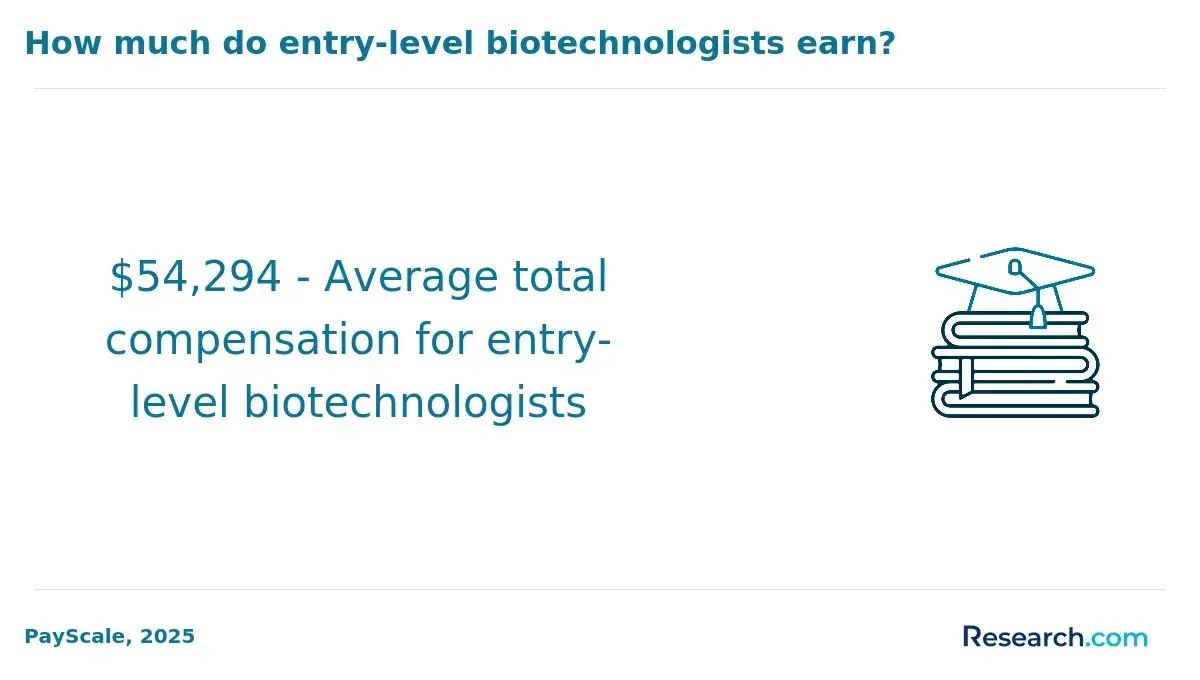
In 2027, the average salary for biotechnology careers varies significantly based on role, experience, and location. Generally, entry-level positions start around $50,000, while more experienced professionals, such as biotechnologists or bioinformatics specialists, can earn above $100,000 annually. Management and specialized roles may offer even higher compensation.
By 2026, the biotechnology industry is expected to see substantial growth, driven by advancements in medical research, agricultural biotech, and bioinformatics. This growth will lead to an increased demand for professionals skilled in these areas, boosting employment and potentially creating new career opportunities within the industry.
In 2027, biotechnology careers require a blend of scientific expertise and technical skills, including proficiency in molecular biology, data analysis software, and laboratory techniques. Strong communication and problem-solving skills are also vital for collaborating in interdisciplinary teams and advancing innovation.
Yes, in 2027, biotechnology is seeing the emergence of new roles like genetic data analyst and bioinformatics software developer. These positions are driven by advancements in genomic research and computational biology, requiring cutting-edge skills in data analysis and software development.
In 2027, the career outlook for biotechnologists is positive, driven by advancements in genetic engineering, pharmaceuticals, and sustainable agriculture. The demand is expected to grow as industries seek innovations for health and environmental challenges, offering opportunities in research, development, and application.


