
2027 How to Become an Occupational Therapist in Texas

Co-Founder and Chief Data Scientist
Texas offers a promising future for occupational therapists, with employment expected to grow 21% until 2032, much faster than the average for all jobs. This demand stems from the state’s expanding healthcare needs and aging population. Choosing a career as an occupational therapist in Texas means job security, competitive salaries, and the chance to make a real difference in people’s lives every day.
This article breaks down the steps to become an occupational therapist in Texas. It’s crafted by career planning experts to help you navigate licensing, education requirements, and practical tips to kickstart your journey confidently and informed. You’ll find all the key info needed to launch your OT career in the Lone Star State.
Key Things to Know About Becoming an Occupational Therapist in Texas
- Earn a Master’s or Doctorate in Occupational Therapy from an accredited program—Texas has over 10 schools offering these, so you’ve got options.
- Pass the National Board for Certification in Occupational Therapy (NBCOT) exam, which is required before you get your Texas license.
- Apply for your Texas state license through the Texas Occupational Therapy Association; you’ll need a background check and to meet continuing education requirements to keep your license active.
- What are the education requirements to become an occupational therapist in Texas? Educational Requirements
- How do you get a state license to practice occupational therapy in Texas? How do you get a state license to practice occupational therapy in Texas?
- How often do you need to renew an OT license in Texas? License Renewal
- What continuing education is required for OT license renewal in Texas? Continuing Education
- How much does it cost to become an occupational therapist in Texas? Cost
- What financial aid options are available for OT students in Texas? Financial Aid
- Can out-of-state occupational therapists work in Texas? Can out-of-state occupational therapists work in Texas?
- Could caregiver certification broaden your occupational therapy career opportunities in Texas? career
- What skills do you need to be a successful occupational therapist in Texas? Skills
- What specializations are available for occupational therapists in Texas? Specializations
- What is the average salary of an occupational therapist in Texas? Salary
How to Become an Occupational Therapist in Texas: What to Know Before You Start
Becoming an occupational therapist in Texas is a graduate-level pathway that requires careful planning. You need the right prerequisite courses, an accredited occupational therapy program, supervised fieldwork, national certification, and a Texas license before you can practice independently. The process is manageable, but it is not something to enter casually because tuition, time in school, clinical placements, exam fees, and renewal requirements all affect your return on investment.
This guide is for students comparing occupational therapy programs in Texas, career changers moving into rehabilitation or healthcare, and licensed OTs from other states who want to practice in Texas. You will learn the education steps, licensing process, renewal rules, continuing education requirements, costs, financial aid options, specializations, salary factors, and common mistakes to avoid before committing to this career path.
Quick answer: What does Texas require to become an occupational therapist?
To become an occupational therapist in Texas, you generally need a bachelor’s degree with required prerequisites, completion of an ACOTE-accredited Master or Doctor of Occupational Therapy program, supervised fieldwork, a passing NBCOT exam result, and a license from the Texas Board of Occupational Therapy Examiners. Texas occupational therapy licenses must be renewed every two years, and both OTs and OTAs must complete 24 contact hours of continuing education during each renewal cycle.
| Step | What it involves | Decision point for students |
| Undergraduate preparation | Earn a bachelor’s degree and complete prerequisite courses such as anatomy with lab, psychology, and statistics. | Choose a major that helps you finish prerequisites efficiently rather than assuming one specific major is required. |
| Graduate OT education | Complete an accredited Master or Doctor of Occupational Therapy program. | Compare tuition, fieldwork placement support, format, admission requirements, and degree level. |
| Fieldwork | Complete supervised clinical practice before becoming eligible for certification and licensure. | Ask programs where students are placed and whether placements fit your career goals. |
| Certification | Pass the NBCOT exam to become certified as an occupational therapist. | Review each program’s graduate preparation resources before enrolling. |
| Texas licensure | Apply to the Texas Board, complete the jurisprudence exam, submit documents, and complete fingerprinting and a background check. | Do not accept employment that requires practice before your license is active. |
| Renewal | Renew every two years and complete required continuing education. | Track continuing education throughout the cycle instead of waiting until the deadline. |
What education do you need to become an occupational therapist in Texas?
Occupational therapy is not an entry-level career you can enter with only a short certificate. Texas occupational therapists need graduate-level professional training because the work combines rehabilitation, anatomy, psychology, adaptive equipment, clinical reasoning, patient safety, documentation, and individualized care planning.
The education pathway usually starts before graduate school. You can major in many undergraduate fields, but your course choices should match the prerequisites required by occupational therapy programs. Strong preparation often includes biology, anatomy, psychology, statistics, and social science coursework.
- Bachelor’s degree: Start by completing a bachelor’s degree from an accredited institution. No single undergraduate major is required for every OT program, but courses in biology, anatomy, psychology, and social sciences can make you a stronger applicant and help you meet prerequisite requirements.
- Accredited graduate OT program: After undergraduate study, apply to an accredited Master or Doctor of Occupational Therapy program. Texas programs, including options such as the University of Texas Health Science Center at San Antonio, are designed to build advanced clinical judgment, intervention planning, and professional practice skills. Many programs no longer require the GRE, but applicants should confirm current admissions rules with each school.
- Prerequisite coursework: Graduate programs commonly require recent prerequisite classes such as anatomy with lab, psychology, and statistics. Competitive applicants usually complete these courses with strong grades and verify whether each program has expiration rules for older coursework.
- Supervised fieldwork: Hands-on training is essential. Texas OT students typically complete at least six months of supervised clinical practice in settings such as hospitals, schools, outpatient clinics, rehabilitation facilities, or community-based programs.
- Certification and licensure preparation: After completing the degree and fieldwork, graduates prepare for the NBCOT exam. Passing the exam is the key step toward becoming a Registered Occupational Therapist and applying for a Texas license. Continuing education is then required to maintain the license.
If you are still comparing healthcare career paths and want to understand non-clinical options as well, this Research.com guide to medical coding career preparation may help you evaluate an alternative route.
Master’s vs. doctoral OT programs in Texas
Both master’s and doctoral occupational therapy programs can prepare graduates for licensure when they meet accreditation and fieldwork requirements. The better choice depends on your budget, timeline, career goals, and interest in advanced practice, leadership, teaching, or program development.
| Program type | Best fit | What to compare before applying |
| Master of Occupational Therapy | Students who want a direct professional route into OT practice and want to control graduate school cost where possible. | Accreditation status, prerequisite fit, fieldwork sites, tuition, graduation requirements, and exam preparation support. |
| Doctor of Occupational Therapy | Students interested in expanded leadership, program development, advanced clinical projects, or academic pathways. | Total cost, capstone expectations, length of study, faculty expertise, and whether the added investment supports your goals. |
How do you get licensed as an occupational therapist in Texas?
A Texas license is required before you can legally practice occupational therapy in the state. Graduation alone is not enough. The Texas Board of Occupational Therapy Examiners reviews your education, fieldwork, examination status, background information, and understanding of Texas practice laws before issuing a license.
- Graduate from an ACOTE-accredited OT program: Your occupational therapy degree must come from a program recognized by the Accreditation Council for Occupational Therapy Education. This protects your eligibility for certification and state licensure.
- Complete the required clinical experience: Occupational therapists complete at least six months of supervised clinical work. Occupational therapy assistants complete two months. This is where classroom learning is tested in real patient-care environments.
- Pass the NBCOT exam: Certification through the National Board for Certification in Occupational Therapy is required. Applicants must score at or above the 70th percentile on the national exam to demonstrate entry-level competency.
- File your Texas licensure application: Submit the state application with required materials such as transcripts, proof of NBCOT certification, and a photo. The application fee varies by license type.
- Complete the Texas Jurisprudence Exam: Texas requires a 20-question open-book exam covering state laws, rules, ethics, and professional responsibilities for occupational therapy practice.
- Submit fingerprints and complete the background check: Fingerprinting is part of the licensure process. Applicants with prior convictions may use the Board’s pre-application evaluation process to better understand potential issues before applying.
- Review special pathways if they apply to you: Applicants licensed in another state, military service members, and some experienced practitioners may qualify for endorsement or expedited processing depending on their situation.
Students considering administrative healthcare work instead of direct patient care may also want to review the daily responsibilities of medical billers and coders.
Questions to ask before applying for a Texas OT license
- Is my OT program ACOTE-accredited?
- Have I completed all required fieldwork hours and documentation?
- Do I have official transcripts and NBCOT certification proof ready?
- Have I completed the Texas Jurisprudence Exam?
- Have I scheduled fingerprinting early enough to avoid delays?
- If I am licensed elsewhere, should I apply by endorsement, compact privilege, or another route?
How often do occupational therapists renew a Texas license?
Texas occupational therapy licenses are renewed every two years. The renewal deadline typically falls on the last day of the licensee’s birth month. Missing the deadline can interrupt your ability to practice, and Texas does not provide an official grace period that allows you to keep working legally while your renewal is unresolved.
Renewal is more than an administrative task. It confirms that you are still meeting the Board’s professional standards, completing continuing education, and staying aware of legal and ethical expectations. If you miss a renewal deadline, you may need to go through reinstatement steps and pay late fees before returning to practice.
For most licensees, the safest approach is to track continuing education throughout the two-year period, complete the required human trafficking prevention training, keep certificates organized, and submit renewal materials before the final month. Waiting until the final week increases the risk of technical problems, missing documentation, or avoidable delays.
- : "A Texas occupational therapist who completed a local program described the first renewal as stressful because the process required tracking continuing education, checking documents, and watching the deadline closely. After building a routine, the therapist said the renewal cycle became easier and served as a useful reminder to stay current with professional updates."
What continuing education is required to renew an OT license in Texas?
Continuing education helps Texas occupational therapists maintain clinical competence, follow current rules, and respond to changing patient needs. It also gives the Board a way to verify that licensed professionals are continuing to develop after graduation.
- 24 hours every two years: Texas OTs and OTAs must complete at least 24 contact hours of continuing education during each two-year renewal period.
- Relevant professional content: Acceptable coursework generally relates to clinical practice, ethics, patient safety, professional development, or other topics tied to occupational therapy competence. Courses approved by the American Occupational Therapy Association or the Texas Occupational Therapy Association are commonly used to meet these expectations.
- Human trafficking prevention training: A human trafficking course approved by the Texas Health and Human Services Commission must be included within the 24 hours.
- Recordkeeping: Keep certificates, verification letters, and course records for at least two years after renewal in case the Board requests proof.
- Audit readiness: You usually do not submit every continuing education document during routine renewal, but you must provide evidence if audited or if your renewal is late by over 90 days.
- OTA requirements: Occupational therapy assistants follow the same continuing education requirements as occupational therapists, including the human trafficking training.
- Activities that may not count: Routine job duties, professional association membership by itself, and volunteering unrelated to clinical education do not typically satisfy the requirement.
- Timing matters: Completing continuing education early reduces the chance that login problems, missing certificates, or payment issues delay renewal.
| Requirement | Texas rule to remember | Practical way to stay compliant |
| Renewal cycle | Every two years | Set reminders before the last day of your birth month. |
| Continuing education | 24 contact hours | Complete hours gradually rather than at the end of the cycle. |
| Required topic | Human trafficking prevention training | Confirm the course is approved by the Texas Health and Human Services Commission. |
| Documentation | Keep records for at least two years after renewal | Store certificates digitally and in a backup location. |
| Late renewal risk | Proof may be required if renewal is late by over 90 days | Do not rely on memory; keep a continuing education log. |
If you are exploring complementary healthcare documentation skills, you can also compare short training options such as online medical billing and coding courses, although these do not replace OT continuing education unless specifically approved for your license requirements.
How much does it cost to become an occupational therapist in Texas?
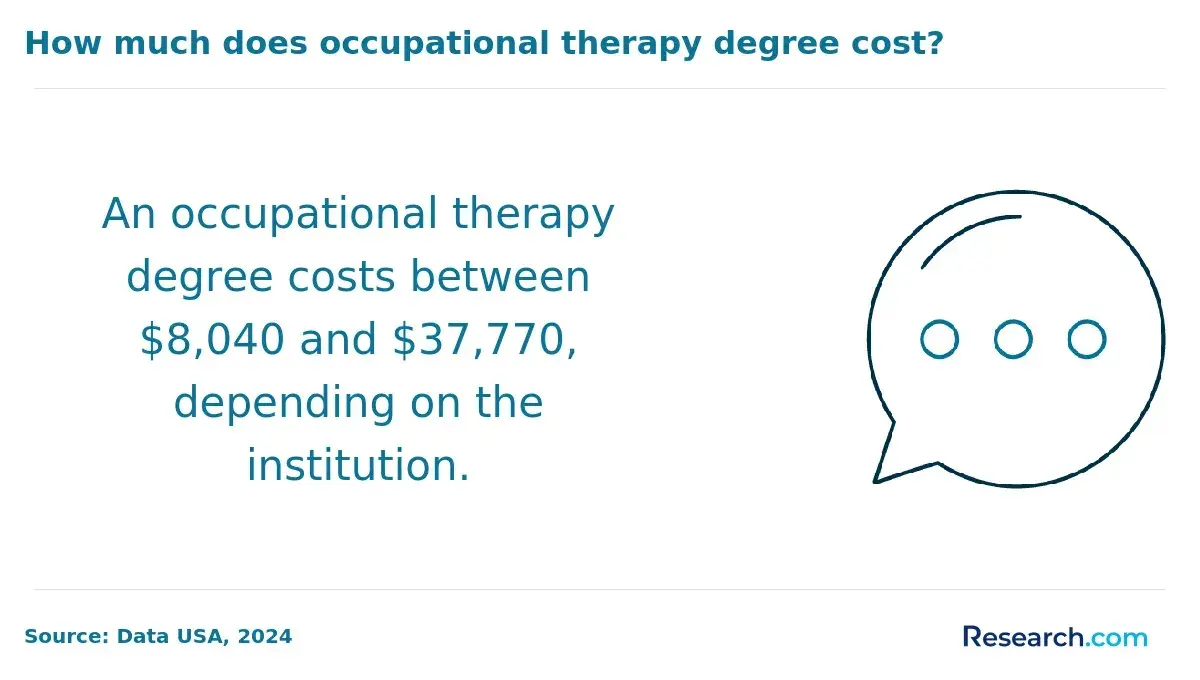
The total cost of becoming an occupational therapist in Texas depends mostly on the graduate program you choose, whether you attend a master’s or doctoral program, how much prerequisite coursework you still need, and whether you can reduce expenses through scholarships, employer support, or loan repayment programs.
| Expense | Cost information stated in available program and licensing sources | How to evaluate it |
| Graduate tuition and fees | A master’s program may cost around $36,700 at some schools and over $90,000 at others. A doctoral program may cost $110,000 or more when tuition, fees, books, and supplies are included. | Compare total program cost, not only per-credit tuition. Ask whether fees, books, lab costs, and clinical requirements are included. |
| NBCOT exam | The exam fee is about $555 as of 2024. | Budget for the exam before graduation so certification does not become delayed. |
| Texas initial licensure | The initial application costs around $140, with possible small additional fees. | Confirm the current fee schedule before applying because fees can vary by role and situation. |
| Background check and fingerprinting | Fingerprinting and background check costs generally range from $40 to $80 depending on location. | Schedule early because processing time can affect licensure timing. |
| Professional memberships | Student memberships in groups such as the American Occupational Therapy Association usually cost about $78 a year. | Membership is optional, but it may provide networking, resources, and scholarship access. |
How to reduce OT school costs in Texas
- Apply to more than one accredited program so you can compare tuition and aid offers.
- Ask whether scholarships are automatic with admission or require a separate application.
- Use transfer or prerequisite credits carefully, but confirm that each OT program accepts them.
- Compare living costs, commute costs, lab fees, books, and clinical placement expenses.
- Ask employers about tuition support if you already work in healthcare.
- Review loan repayment options before borrowing, especially if you plan to work in public service or underserved communities.
What financial aid options can Texas OT students use?
Occupational therapy school can be expensive, especially at the graduate level. Financial aid can come from federal programs, the state, universities, professional associations, employers, and loan repayment programs. The best strategy is to combine several sources rather than depending on one scholarship or one loan type.
- Federal grants: These are most relevant to undergraduates with significant financial need who have not yet earned a bachelor’s or higher degree. A Pell Grant, for example, may help students completing prerequisite coursework before graduate study.
- Federal student loans: Graduate OT students may use Direct Unsubsidized and Grad PLUS loans. These do not require financial need, but borrowing limits and repayment obligations matter. Some graduates later qualify for repayment assistance or forgiveness programs if they meet employment and payment requirements.
- Texas state grants and aid: State aid is often focused on undergraduates, including programs such as the TEXAS Grant. Some support may also exist for graduate students entering high-demand fields or serving underserved communities.
- University scholarships and grants: Texas OT programs may offer scholarships based on merit, leadership, financial need, or program-specific criteria. Some awards are automatic, while others require separate applications and deadlines.
- Professional association scholarships: Organizations such as the American Occupational Therapy Foundation and Texas-based professional groups may offer awards for OT students. Amounts can range from a few hundred to several thousand dollars.
- External and employer-sponsored support: Healthcare employers, hospitals, rehabilitation providers, and organizations such as the VA may offer tuition help or scholarships in exchange for work commitments after graduation.
- Loan repayment and forgiveness: Graduates working in qualifying public service roles or underserved areas may be able to reduce federal loan burdens after meeting program rules.
Questions to ask a financial aid office before enrolling
- What is the full program cost after tuition, fees, books, supplies, and clinical expenses?
- How much aid is grant or scholarship aid versus loans?
- Are scholarships renewable each year, or are they one-time awards?
- Does the program offer assistantships, stipends, or paid student roles?
- Do fieldwork placements create travel, housing, or unpaid time-off costs?
- What is the average debt burden for recent graduates, if the school makes that information available?
Common mistakes that increase the cost of becoming an OT
- Choosing a program without calculating the total cost of attendance.
- Assuming the lowest tuition is always the cheapest option after travel and living costs.
- Missing scholarship deadlines because the application process starts before admission.
- Borrowing the maximum available amount without estimating repayment.
- Ignoring whether a longer doctoral pathway supports your actual career goals.
- Failing to plan for exam, licensure, and fingerprinting fees after graduation.
Can out-of-state occupational therapists work in Texas?
Occupational therapists licensed in another state must receive authorization from the Texas Board of Occupational Therapy Examiners before practicing in Texas. A license from another state does not automatically allow independent OT practice in Texas.
Many out-of-state applicants use the endorsement route. This pathway is generally for therapists who already hold a license elsewhere in the United States and have passed the NBCOT exam. Applicants typically submit an application, pay required fees, verify current licensure, document education and fieldwork, complete the Texas Jurisprudence Exam, and undergo fingerprint-based background screening.
Texas may also allow practice through the Occupational Therapy Licensure Compact for eligible therapists from participating states. A compact privilege is not the same as simply moving and beginning work; the therapist must obtain the privilege before practicing under it. Some applicants, including military service members or individuals waiting on exam results, may qualify for temporary or expedited options depending on Board rules.
- : "One occupational therapist who relocated to Texas said the endorsement process was organized but more detailed than expected. The therapist emphasized that the jurisprudence exam and background check added time, yet also helped clarify Texas-specific practice rules before beginning work with clients."
Best path for out-of-state OTs
| Your situation | Likely pathway to review | What to verify first |
| You hold an active OT license in another U.S. state | Licensure by endorsement | NBCOT status, license verification, education and fieldwork documentation, jurisprudence exam, and fingerprinting requirements. |
| You are from a compact state | Compact privilege | Whether your state participates and whether you have received the privilege before practicing in Texas. |
| You are connected to military service | Possible expedited or special processing | Which documents the Texas Board requires for your specific status. |
| You recently graduated and are awaiting results | Possible temporary option | Whether a temporary license is available and what supervision or practice limits apply. |
Can caregiver certification help an OT career in Texas?
Caregiver certification is not a substitute for occupational therapy licensure, but it may strengthen your understanding of home-based support, daily living assistance, and patient-centered care. This can be useful for occupational therapists working in home health, community-based rehabilitation, aging services, or interdisciplinary care teams.
The value depends on your career goals. If you want to work more closely with family caregivers, home care teams, or clients who need support with day-to-day routines, caregiver training may add practical context. If your goal is advanced OT specialization, however, OT-specific certifications, clinical mentorship, or continuing education may be a better use of time and money. For a separate credential pathway, review this guide on becoming a caregiver in Texas.
What skills matter most for occupational therapists in Texas?
Occupational therapists help people participate more fully in daily life after illness, injury, disability, developmental delay, mental health challenges, or age-related change. In Texas, OTs may work with children in schools, adults in rehabilitation hospitals, older adults in home health, or clients in community-based settings. The work requires both clinical knowledge and strong interpersonal judgment.
- Clear communication: OTs must listen carefully, explain treatment plans in plain language, document progress accurately, and coordinate with families, physicians, teachers, nurses, and other professionals.
- Clinical reasoning: Therapists assess limitations, identify barriers, choose interventions, and adjust treatment when a client’s environment, condition, or goals change.
- Emotional intelligence: Clients may feel frustrated, discouraged, or overwhelmed. Effective OTs build trust while keeping therapy realistic, respectful, and goal-focused.
- Motor and sensory awareness: Safe assessment and intervention often require close observation, physical positioning, adaptive techniques, and attention to sensory needs.
- Adaptability: Texas practice settings vary widely, from major urban hospitals to rural schools and home health routes. OTs need to modify care plans based on setting, resources, culture, and client priorities.
- Documentation and compliance: Accurate notes, billing awareness, plan-of-care updates, and regulatory compliance are essential in most OT jobs.
- Collaboration: Occupational therapy rarely happens in isolation. Strong therapists work effectively across medical, educational, behavioral health, and community teams.
What specializations can occupational therapists pursue in Texas?
Specialization can help occupational therapists focus their practice, serve specific populations, and become more competitive for certain roles. The right specialty should match your preferred clients, work environment, and long-term career plans.
| Specialization | Typical clients or conditions | Common work settings |
| Pediatrics | Children who need support with daily activities, school participation, developmental skills, autism-related needs, or sensory processing challenges. | Schools, outpatient clinics, early intervention programs, and pediatric therapy centers. |
| Geriatrics | Older adults working to maintain independence, reduce fall risk, improve mobility, or manage cognitive changes. | Long-term care facilities, rehabilitation hospitals, assisted living, and home health agencies. |
| Mental health | Clients with psychiatric, emotional, behavioral, or functional participation challenges. | Community health centers, schools, psychiatric hospitals, and integrated care programs. |
| Hand therapy | Patients recovering from hand, wrist, or upper-extremity injuries, surgery, arthritis, or fractures. | Orthopedic clinics, hospitals, outpatient rehabilitation centers, and specialty practices. |
| Physical rehabilitation | Patients recovering from stroke, injury, surgery, neurological conditions, or significant functional decline. | Acute care hospitals, inpatient rehabilitation facilities, skilled nursing facilities, and outpatient clinics. |
Specialization can support advancement, but it should be chosen strategically. Before investing in advanced training, ask whether employers in your region value that specialty, whether it changes your job options, and whether it aligns with the population you want to serve. Students interested in healthcare documentation can also explore affordable online medical billing and coding courses, but these are separate from OT clinical specialization.
Current trends affecting occupational therapy careers in Texas
Occupational therapy practice is changing as healthcare delivery, education services, and patient expectations evolve. Texas OTs should be prepared for more interdisciplinary care, greater use of digital documentation, continued demand for home and community-based services, and close attention to compliance and measurable outcomes.
- Home and community-based care: Many clients want to recover or age safely at home, which can increase the value of OTs who understand home safety, caregiver training, adaptive equipment, and functional independence.
- School-based services: Pediatric and school-based OTs often support students with developmental, sensory, motor, and participation needs. This setting requires collaboration with educators and families.
- Technology in practice: Digital documentation, telehealth tools, adaptive devices, and data-driven care planning are becoming more important. OTs do not need to become software experts, but they do need to be comfortable learning new systems.
- Compliance and ethics: Renewal rules, continuing education, human trafficking training, documentation standards, and state-specific practice laws remain central to safe professional practice.
- Employer focus on outcomes: Employers increasingly expect therapists to show how interventions improve independence, safety, participation, and quality of life.
What is the average salary of an occupational therapist in Texas?
Occupational therapist pay in Texas varies by experience, employer type, region, specialization, and work setting. Salary figures should be treated as estimates rather than guarantees because individual compensation depends on local demand, schedules, productivity expectations, benefits, and whether the role is full-time, part-time, travel-based, or contract-based.
- Experience level: Entry-level occupational therapists may earn around $89,000 per year. With experience, specialized duties, or supervisory responsibilities, earnings can rise well over $100,000.
- Employer type: Hospitals and home health agencies often pay more than some outpatient clinics or school systems. Home health OT roles in Texas may advertise salaries from $97,000 up to $120,000 annually.
- Location: Pay differs by region. In Waco, for example, OTs earn about $52.84 an hour, which is slightly above a state average range of $48 to $57 per hour.
- Practice setting: Acute care hospitals, skilled nursing facilities, outpatient clinics, schools, and home health agencies each use different compensation models. Home health can pay more, but travel, scheduling, and caseload expectations should be weighed carefully.
- Specialization and credentials: Advanced training in areas such as hand therapy, pediatrics, geriatrics, or rehabilitation can strengthen a candidate’s profile and may support higher pay in some settings.
- Local workforce demand: Regions with greater need for rehabilitation providers may offer stronger compensation to attract therapists, while more competitive markets may have slower wage growth.
If you are comparing clinical and non-clinical healthcare careers, you may also want to read about becoming a certified medical coder and biller from home.
How to evaluate an OT salary offer in Texas
| Factor | Why it matters | Question to ask |
| Base pay | Hourly and salaried offers can look different once productivity, travel, and unpaid time are considered. | Is the position hourly, salaried, contract, or productivity-based? |
| Benefits | Health insurance, retirement contributions, paid time off, and continuing education support affect total compensation. | What benefits are included, and when do they start? |
| Caseload | A higher salary may come with heavier documentation or productivity expectations. | What is the expected caseload or productivity target? |
| Travel | Home health and multi-site roles may require significant driving. | Is mileage reimbursed, and is travel time paid? |
| Professional development | Support for continuing education can reduce renewal costs and help with specialization. | Does the employer pay for CE, certifications, or association membership? |
Is becoming an occupational therapist in Texas worth it?
Becoming an OT in Texas can be worth it for students who want a hands-on healthcare career focused on function, independence, and long-term patient outcomes. It may be a strong fit if you enjoy problem-solving, working directly with people, adapting environments, and helping clients participate in meaningful daily activities.
However, it is not the right path for everyone. OT school requires graduate-level commitment, significant tuition, fieldwork hours, licensing steps, continuing education, and emotional resilience. If you want a faster healthcare entry point, lower-cost training, or primarily administrative work, another healthcare path may be more practical.
| Choose occupational therapy if... | Consider another path if... |
| You want direct patient care and long-term functional improvement work. | You prefer a shorter training route with less graduate school debt. |
| You are comfortable with anatomy, psychology, rehabilitation, and documentation. | You do not want licensure, continuing education, or clinical compliance responsibilities. |
| You can manage graduate school, fieldwork, and exam preparation. | You need to start earning in healthcare as quickly as possible. |
| You are interested in settings such as schools, hospitals, home health, pediatrics, or rehabilitation. | You prefer back-office healthcare roles such as billing, coding, or administration. |
Common mistakes to avoid when pursuing OT in Texas
- Ignoring accreditation: Do not enroll until you verify that the OT program meets accreditation requirements for certification and licensure.
- Focusing only on tuition: Total cost includes fees, books, equipment, living expenses, fieldwork travel, exam fees, licensure, and fingerprinting.
- Assuming online flexibility means easy completion: Even hybrid or online-heavy programs can require labs, fieldwork, campus visits, and strict schedules.
- Waiting too long on prerequisites: Some programs require prerequisite courses to be recent and completed with strong grades.
- Underestimating fieldwork: Clinical placements can be demanding and may affect work schedules, transportation, and family responsibilities.
- Forgetting state-specific rules: Texas requires licensure, a jurisprudence exam, renewal, continuing education, and human trafficking prevention training.
- Assuming salary outcomes are guaranteed: Pay depends on region, setting, employer, experience, and role expectations.
- Choosing a specialization too early: Explore multiple practice areas during school and fieldwork before investing in advanced credentials.
What do occupational therapists in Texas say about the career?
- : "My occupational therapy education at the University of Texas at Arlington gave me the clinical base I needed to begin confidently. Working in a local school has been meaningful because I can see how therapy changes the way children participate in everyday routines. Texas also pushes me to adapt because students come from many cultural and community backgrounds. The work is steady, but the most rewarding part is seeing small gains become real independence. — Cameron"
- : "Texas Woman’s University helped prepare me for the realities of OT practice, and my work in an academic setting continues to challenge me in the best way. Serving students across such a large and diverse state has strengthened my problem-solving and deepened my empathy. I value this career because it combines personal growth, community impact, and ongoing professional learning. — Raya"
- : "Baylor College of Medicine’s occupational therapy program opened opportunities I had not expected. In a Texas school district, my role blends therapy, education, and community support every day. Working across urban and rural contexts has made me more thoughtful about how I tailor interventions. Helping children build independence while growing professionally keeps the work energizing. — Sophie"
Related Articles for Nearby States
- 2027 How to Become an Occupational Therapist in Louisiana
- 2027 How to Become an Occupational Therapist in Oklahoma
- 2027 How to Become an Occupational Therapist in Arkansas
- 2027 How to Become an Occupational Therapist in New Mexico
- 2027 How to Become an Occupational Therapist in Kansas
- 2027 How to Become an Occupational Therapist in Missouri
- 2027 How to Become an Occupational Therapist in Colorado
- 2027 How to Become an Occupational Therapist in Mississippi
- 2027 How to Become an Occupational Therapist in Tennessee
- 2027 How to Become an Occupational Therapist in Arizona
Key Insights
- Texas occupational therapists need a graduate OT degree from an accredited program, supervised fieldwork, NBCOT certification, and state licensure before practicing.
- Licensure is not a one-time task. Texas OTs renew every two years and must complete 24 contact hours of continuing education, including approved human trafficking prevention training.
- Program choice has a major financial impact. Master’s programs may cost around $36,700 at some schools and over $90,000 at others, while doctoral programs may reach $110,000 or more.
- Out-of-state OTs cannot simply transfer into Texas practice without Board authorization. Endorsement, compact privilege, temporary options, or expedited pathways may apply depending on the applicant.
- Salary depends on setting, region, experience, and specialization. Entry-level pay may be around $89,000 per year, while some experienced or specialized roles can exceed $100,000.
- The best OT path is the one that fits your preferred patients, financial situation, tolerance for graduate school, and long-term career goals.
References:
- Occupational therapy skill development resource: https://otaonline.stkate.edu/blog/occupational-therapy-skills/
- Texas license renewal regulation, 40 Tex. Admin. Code § 370.1: https://www.law.cornell.edu/regulations/texas/40-Tex-Admin-Code-SS-370-1
- Baylor University entry-level OTD tuition and financial aid information: https://otd.robbins.baylor.edu/entry-level-otd/entry-level-otd-tuition-financial-aid
- Texas OT license renewal guidance from ECPTOTE: https://ptot.texas.gov/ot-license-renewal/
- University of the Incarnate Word Doctor of Occupational Therapy tuition and fees: https://physical-therapy.uiw.edu/academics/doctor-of-occupational-therapy-program/tuition-and-fees.html
- West Texas A&M University pre-occupational therapy specialization information: https://www.wtamu.edu/academics/advising/pre-professional-specializations/pre-occupational-therapy.html
- Occupational therapy school cost overview from University of St. Augustine for Health Sciences: https://www.usa.edu/blog/how-much-is-occupational-therapy-school/
- Texas occupational therapy licensure overview: https://www.growwithcoral.com/blog/obtain-ot-license-texas
- Texas Occupational Therapy Association licensing information: https://www.tota.org/licensing
- Texas occupational therapy continuing education summary: https://otpotential.com/ot-continuing-education-requirements/texas
Other Things You Should Know About Becoming an Occupational Therapist in Texas
To maintain an occupational therapy license in Texas, practitioners must complete 24 hours of continuing education every two years. This must include at least two hours in ethics. Courses need approval from the Texas Board of Occupational Therapy Examiners.
To apply for an occupational therapy license in Texas in 2026, complete an accredited OT program, pass the National Board for Certification in Occupational Therapy (NBCOT) exam, submit your application to the Texas Board of Occupational Therapy Examiners, and undergo a background check.


