
2027 Most Affordable Online Nurse Practitioner Programs

Co-Founder and Chief Data Scientist
A note from the author, Imed Bouchrika, PhD, career planning expert:
The shortage of healthcare workers is reaching a critical point, affecting approximately 92 million people (HRSA, 2025). This crisis highlights the importance of advanced nursing practitioners in addressing the population’s healthcare needs.
As a career planning expert with more than 10 years of experience, I recommend that registered nurses (RNs) take advantage of the opportunity to advance their careers through online nurse practitioner (NP) programs.
In this guide, I have looked into the most affordable online NP programs to help RNs find flexible options demanding the least strain on their schedules and budgets. I will also present a more in-depth analysis of how RNs can accelerate their practice toward becoming an NP, the costs of NP programs, and the requirements involved in this program.
What are the benefits of getting a nurse practitioner degree?
- RNs play more important roles in patient care or nurse leadership by becoming nurse practitioners.
- NPs can earn anywhere from $98,000 to $170,000 or more, depending on their specialty, making it one of the most lucrative degrees.
- Opting for an online nursing practitioner program provides the flexibility to balance academic pursuits with professional and personal responsibilities.
What can I expect from a nurse practitioner program?
Nurse practitioner programs usually tackle more advanced topics in patient care and combine theoretical knowledge with practical skills. Taking this program online also has its own perks and unique experiences. Here are some of the things you can expect in your class:
- Delving into specialized nursing theories, healthcare policies, clinical decision-making processes, and nursing workforce advocacies
- Elevating fundamental nursing skills to possess a comprehensive understanding of patient-centered care
- Utilizing technology to practice clinical skills and foster collaboration
- Integrating a few onsite clinical classes or internships to strengthen hands-on capabilities
- Choosing full- or part-time options and evening or weekend classes to accommodate working professionals
- Learning research methodologies and the application of evidence-based practices in healthcare
Where can I work with a nurse practitioner degree?
A nurse practitioner degree opens up a diverse range of employment opportunities across various healthcare settings. Many nurse practitioners find roles in primary care hospitals and clinics, providing expansive healthcare services to patients of all ages. This often involves diagnosing and treating illnesses, prescribing medications, and focusing on preventive care.
Additionally, nurse practitioners can work alongside physicians to deliver specialized care. Moreover, they may work in emergency departments, intensive care units, or surgical services, addressing acute medical needs and collaborating with interdisciplinary teams.
Beyond clinical practice, nurse practitioners can explore opportunities in education, research, and healthcare administration, contributing their expertise to shape healthcare policies and train the next generation of nursing professionals. Lastly, NPs can also establish private practices or work in telehealth. The versatility of a nurse practitioner degree allows for a dynamic and impactful career across various healthcare domains.
How much can I make with a nurse practitioner degree?
Based on my research on the latest data from the U.S. Bureau of Labor Statistics, NPs have the potential to earn the following wage estimates:
- 10% percentile: $97,960
- 25% percentile: $109,940
- 50% percentile: $129,210
- Mean annual wage: $132,000
- 75% percentile: $149,570
- 90% percentile: $169,950
Note that salaries may depend on other factors, such as your specialization, level of expertise, location, and employer circumstances. Considering these provides a clearer understanding of the nuanced aspects influencing nurse practitioner salary.
- List of the Best Online Nurse Practitioner Programs for 2027 List of Programs
- How long does it take to complete an online nurse practitioner program? Completion Time
- How does an online nurse practitioner program compare to an on-campus program? How does an online nurse practitioner program compare to an on-campus program?
- What is the average cost of an online nurse practitioner program? Program Cost
- What are the financial aid options for students enrolling in an online nurse practitioner program? Financial Aid
- What are the prerequisites for enrolling in an online nurse practitioner program? Program Prerequisites
- What courses are typically in an online nurse practitioner program? What courses are typically in an online nurse practitioner program?
- What types of specializations are available in online nurse practitioner programs? Specializations
- How to choose the best online nurse practitioner program? How to choose the best online nurse practitioner program?
- What career paths are available for graduates of online nurse practitioner programs? Career Paths
- What is the job market for graduates with an online nurse practitioner degree? Job Outlook
- How do regional factors influence NP salaries and career opportunities? How do regional factors influence NP salaries and career opportunities?
- Can an ASN-to-FNP Bridge Program accelerate your career transition? Can an ASN-to-FNP Bridge Program accelerate your career transition?
- How do online nurse practitioner programs address diversity and cultural competency? How do online nurse practitioner programs address diversity and cultural competency?
- Are online nurse practitioner programs accredited to guarantee academic quality? Are online nurse practitioner programs accredited to guarantee academic quality?
- What networking opportunities are available in online nurse practitioner programs? What networking opportunities are available in online nurse practitioner programs?
- Affordable and Accelerated Pathways to Becoming a Nurse Practitioner Affordable and Accelerated Pathways to Becoming a Nurse Practitioner
- What are the key skills developed in online nurse practitioner programs What are the key skills developed in online nurse practitioner programs
- How are clinical placements arranged in online nurse practitioner programs? How are clinical placements arranged in online nurse practitioner programs?
- Should I pursue a Doctor of Nursing Practice (DNP) degree after completing an online NP program? Should I pursue a Doctor of Nursing Practice (DNP) degree after completing an online NP program?
- Licensure and Certification for Nurse Practitioners Licensure and Certification for Nurse Practitioners
- How are emerging technologies enhancing online NP education? How are emerging technologies enhancing online NP education?
Best Online Nurse Practitioner Programs for 2027: Rankings, Costs, Licensure, and Career Fit
Choosing an online nurse practitioner program is not just a question of convenience. The program you select can affect your certification eligibility, state licensure, clinical placement options, total debt, specialty preparation, and long-term career mobility. This guide is designed for registered nurses comparing online MSN, RN-to-MSN, BSN-to-MSN, bridge, and advanced practice pathways and trying to decide which option is practical, accredited, affordable, and aligned with their specialty goals.
You will find a ranked list of online nurse practitioner and advanced nursing programs, followed by decision-focused guidance on timelines, costs, prerequisites, clinical placements, accreditation, licensure, specializations, salaries, job outlook, financial aid, and common mistakes to avoid. Use this guide as a starting point, then confirm each program’s current admission rules, clinical requirements, state authorization, and certification outcomes directly with the school and your state board of nursing.
Quick answer: What is the best online nurse practitioner program?
The best online nurse practitioner program is an accredited MSN or DNP pathway that prepares you for your intended NP specialty, supports clinical placement in your state, meets state licensure requirements, and fits your budget and schedule. For most students, the strongest choice is not simply the lowest-cost program or the fastest program; it is the program that leads to the certification exam and practice authority they actually need.
- Choose an FNP program if you want broad primary care training across the lifespan.
- Choose PMHNP if you want to focus on psychiatric and mental health care.
- Choose Adult-Gerontology, Pediatric, Women’s Health, or Neonatal NP if you already know the patient population you want to serve.
- Avoid enrolling until you verify accreditation, clinical placement policies, state authorization, certification exam eligibility, and total program cost.
How we ranked these schools
Research.com builds rankings to help students compare education options with more confidence. For this guide, we reviewed program information using our established methodology and focused on factors that matter to working nurses: online availability, cost indicators, completion time, accreditation, specialty options, and the type of advanced nursing preparation offered.
We also considered publicly available education data from reliable sources, including the Integrated Postsecondary Education Data System (IPEDS), Peterson’s database and its Distance Learning Licensed Data Set, College Scorecard, and the National Center for Education Statistics (NCES). Rankings should support your research, not replace direct verification with schools, certifying bodies, and state boards of nursing.
At-a-glance comparison of ranked online nurse practitioner and advanced nursing programs
| Rank | School | Program focus listed | Program length | Cost listed | Credits listed | Accreditation listed |
| 1 | The University of Mississippi | Adult/Gerontology, Primary Care, Mental Health | Two years | $545 per credit | 60 | CCNE |
| 2 | The University of Alabama | Psychiatric Mental Health, Family | Two years | $385 per credit | 30 | SACSCOC |
| 3 | University of North Carolina at Pembroke | Clinical Prevention & Population Health, Nurse Educator | Two years | $103.21 per credit | 63 | CCNE |
| 4 | Clayton State University | Family | Two years | $442 per credit | 47 | SACSCOC |
| 5 | Western Governors University | Leadership and Management in Healthcare Organizations | Two years | $4,367 per term | 60 | CCNE |
| 6 | University of Wisconsin-Green Bay | Nursing Leadership | Two years | $576 per credit | 36 | CCNE |
| 7 | Arkansas State University | Family, Mental Health | Two years | $331 per credit | 41 | ACEN |
| 8 | Briar Cliff University | Family, Psychiatric Mental Health, Adult-Gerontology Primary Care | Three years | $650 per credit | 47 | CCNE |
| 9 | Thomas Edison State University | Healthcare Executive | Two years | $675 per credit | 36 | CCNE |
| 10 | University of West Florida | Family | Eight to 16 weeks | $500 per credit | 45 | CCNE |
Important note: Some programs in this list are advanced nursing or MSN pathways rather than direct nurse practitioner preparation tracks. Before applying, confirm whether the specific track you choose qualifies you for your intended national NP certification exam and state APRN license.
1. The University of Mississippi
The University of Mississippi offers an online RN-MSN pathway through its School of Nursing, which is connected to the University of Mississippi Medical Center, the state’s only academic health sciences center. The program is designed for registered nurses who want to move into graduate-level nursing while continuing to manage work and family responsibilities. Students can choose from six primarily online options, including nurse practitioner, nurse educator, and administrator tracks.
- Program length: Two years
- Tracks/concentrations: Adult/Gerontology, Primary Care, Mental Health
- Cost per credit: $545
- Required credits to graduate: 60
- Accreditation: Commission on Collegiate Nursing Education (CCNE)
2. The University of Alabama
The Capstone College of Nursing at the University of Alabama offers an online MSN with a Dual NP Concentration in Psychiatric Mental Health and Family Nurse Practitioner preparation. Students in the dual concentration are positioned to pursue national board certification exams for both Psychiatric-Mental Health Nurse Practitioner across the lifespan and FNP roles. Students may also select single-role preparation in either FNP or PMHNP. Coursework is primarily online, but the program includes a two-day on-campus and virtual clinical orientation. Students arrange clinical sites and preceptors, while CCN helps establish the required Clinical Affiliation Agreement.
- Program length: Two years
- Tracks/concentrations: Psychiatric Mental Health, Family
- Cost per credit: $385
- Required credits to graduate: 30
- Accreditation: Southern Association of Colleges and Schools Commission on Colleges (SACSCOC)
3. University of North Carolina at Pembroke
UNC Pembroke is a public university offering an online MSN for registered nurses who already hold a bachelor’s degree. The curriculum emphasizes specialty knowledge, theory, research, health service coordination, leadership, and systems-level thinking. Graduates develop a stronger understanding of how political, economic, organizational, and regulatory factors shape care delivery for diverse communities.
- Program length: Two years
- Tracks/concentrations: Clinical Prevention & Population Health, Nurse Educator
- Cost per credit: $103.21
- Required credits to graduate: 63
- Accreditation: CCNE
4. Clayton State University
Clayton State University provides an online MSN with an FNP Certificate concentration for registered nurses preparing to deliver culturally responsive primary care to individuals, families, and communities. The curriculum addresses care across age groups and integrates advanced health assessment, pharmacology, and pathophysiology into the advanced practice nursing role. Students combine online coursework with clinical experiences intended to build practical readiness for family-focused care.
- Program length: Two years
- Tracks/concentrations: Family
- Cost per credit: $442
- Required credits to graduate: 47
- Accreditation: SACSCOC
5. Western Governors University
Western Governors University offers an online BSN-to-MSN program in Nursing Leadership and Management. The curriculum is built around evidence-based practice, healthcare systems, leadership, and management skills. Students also complete practice-based learning experiences, including virtual reality simulations and real-time scenarios intended to strengthen applied decision-making in healthcare organizations.
- Program length: Two years
- Tracks/concentrations: Leadership and Management in Healthcare Organizations
- Cost per term: $4,367
- Required credits to graduate: 60
- Accreditation: CCNE
6. University of Wisconsin-Green Bay
The University of Wisconsin-Green Bay offers an online MSN designed for nurses seeking advanced leadership preparation. The program emphasizes evidence-based practice, research literacy, healthcare policy, workplace culture, and care improvement for vulnerable populations. It may be a strong fit for nurses who want to influence systems and care delivery rather than pursue direct NP clinical certification.
- Program length: Two years
- Tracks/concentrations: Nursing Leadership
- Cost per credit: $576
- Required credits to graduate: 36
- Accreditation: CCNE
7. Arkansas State University
Arkansas State University offers an online MSN-FNP designed to prepare nurses to provide holistic care across the lifespan. The program focuses on advanced assessment, diagnosis, treatment planning, and management of common health concerns. Coursework also introduces specialized areas such as radiology interpretation, telehealth strategies, and dental health.
- Program length: Two years
- Tracks/concentrations: Family, Mental Health
- Cost per credit: $331
- Required credits to graduate: 41
- Accreditation: Accreditation Commission for Education in Nursing (ACEN)
8. Briar Cliff University
Briar Cliff University is a private Catholic institution with an online MSN for bachelor’s-prepared nurses. Students may prepare for FNP, Adult/Gerontology Primary Care NP, or Psychiatric Mental Health NP roles. The program emphasizes holistic patient relationships, health promotion, nursing theory, research-informed practice, leadership, policy awareness, and evaluation of nursing outcomes.
- Program length: Three years
- Tracks/concentrations: Family, Psychiatric Mental Health, Adult-Gerontology Primary Care
- Cost per credit: $650
- Required credits to graduate: 47
- Accreditation: CCNE
9. Thomas Edison State University
Thomas Edison State University offers an online MSN for nurses who want to strengthen leadership, management, and healthcare systems skills. Courses such as Nursing Research, Healthcare Policy and Ethics, and Nursing Leadership and Management support preparation for administrative, executive, and organizational roles in healthcare.
- Program length: Two years
- Tracks/concentrations: Healthcare Executive
- Cost per credit: $675
- Required credits to graduate: 36
- Accreditation: CCNE
10. University of West Florida
The University of West Florida offers an online MSN-FNP focused on comprehensive primary care in outpatient settings for patients across the lifespan. Students study advanced health assessment, evaluation, diagnosis, and management of acute and chronic conditions through a patient-centered care model. The curriculum also reinforces nursing concepts and theories used in advanced practice.
- Program length: Eight to 16 weeks
- Tracks/concentrations: Family
- Cost per credit: $500
- Required credits to graduate: 45
- Accreditation: CCNE
What Online Nurse Practitioner Graduates Say About Their Programs
- Amanda: "Completing my nurse practitioner coursework online made it possible to keep working and remain present for my family. I did not expect the virtual simulations and online discussions to be so useful, but they helped me strengthen my clinical reasoning and confidence."
- Janette: "The online format gave me access to lectures and assignments wherever I was, which made scheduling much more manageable. Even though the program was remote, I still built relationships with classmates and felt supported throughout the process."
- Ian: "I chose an online nurse practitioner program because I wanted advanced credentials without stepping away from my responsibilities. The program helped me deepen my patient care knowledge, focus on a specialty I care about, and pursue new professional opportunities."
Key Findings
- Online NP programs can be a practical option for working RNs, but students must verify clinical placement support and state authorization before enrolling.
- Program costs vary widely. Listed tuition figures in this guide range from $103.21 per credit to $675 per credit, with one program listing $4,367 per term.
- Most nurse practitioner pathways require a BSN, active RN license, official transcripts, recommendations, a personal statement, and often a GPA of at least 3.0 on a 4.0 scale.
- Accreditation matters because it can affect certification exam eligibility, federal financial aid access, employer recognition, and state licensure.
- The NP labor market remains strong, with 45% employment growth projected through 2034.
How Long Does It Take to Complete an Online Nurse Practitioner Program?
Students often begin by asking, “How many years of schooling to be a nurse?” For nurse practitioners, the full educational path commonly takes six to seven years: about four years for a BSN and another two to three years for an MSN. That timeline includes didactic coursework and required supervised clinical hours.
The exact length depends on your starting point, specialty, enrollment status, transfer credits, and the program’s clinical structure. Full-time students may finish faster, while part-time students may extend their timeline to keep working. Some specializations also require different clinical sequences, which can affect completion time.
Registered nurses without a bachelor’s degree may choose an RN-to-MSN pathway. Some full-time RN-to-MSN programs can be completed in 24 months, while others may take about three-and-a-half years. Another option is to complete one of the cheapest online RN to BSN programs first and then apply to an MSN or DNP program.
Students who do not already have a nursing degree but want to become NPs may consider direct-entry MSN programs, which can take 18 to 24 months. Nurses who want doctoral-level preparation can also compare affordable online DNP programs, which may take about two to six years.
| Starting point | Common pathway | Timeline listed | Best fit |
| RN with ADN | RN-to-MSN or RN-to-BSN, then MSN | 24 months to about three-and-a-half years for RN-to-MSN options | RNs who want graduate preparation without completing a separate traditional BSN first |
| RN with BSN | BSN-to-MSN NP program | Two to three years | Nurses ready to specialize in advanced clinical practice |
| Non-nursing bachelor’s degree holder | Direct-entry MSN | 18 to 24 months | Career changers who need nursing preparation and graduate training |
| MSN-prepared nurse | DNP or post-master’s certificate | About two to six years for DNP options | Nurses seeking advanced clinical leadership, policy, or doctoral preparation |
Online vs. On-Campus Nurse Practitioner Programs: Which Format Is Better?
Online NP programs are offered across several nursing degree levels and are especially useful for licensed nurses who need flexibility. However, online learning is not automatically easier. You still complete advanced coursework, exams, clinical hours, and often synchronous activities or campus intensives.
| Format | Advantages | Trade-offs | Best for |
| Online NP program | Flexible access to coursework, digital resources, virtual collaboration, asynchronous lectures, and online discussions | Clinical placement may require more student initiative; self-discipline is essential | Working RNs, parents, rural students, and nurses who need schedule flexibility |
| On-campus NP program | In-person faculty access, structured class schedule, campus labs, networking events, and face-to-face peer interaction | Less flexible for nurses working shifts or living far from campus | Students who prefer fixed routines, direct interaction, and campus-based support |
| Hybrid NP program | Combines online coursework with required campus sessions or intensives | Travel may be required; schedule flexibility varies | Students who want online convenience but value periodic in-person training |
Online programs may include interactive technologies, real-time group activities, virtual simulation, remote advising, and live online meetings. On-campus programs may provide easier access to laboratories, libraries, faculty offices, clinical skills sessions, and local professional events.
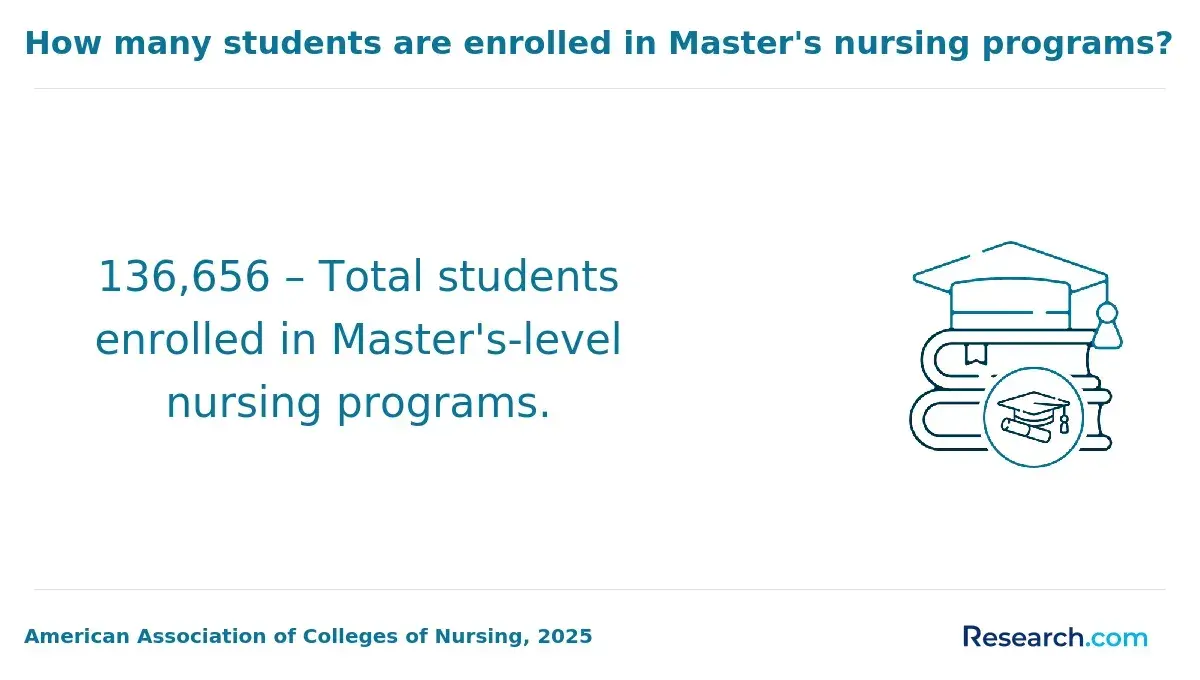
The number of RN-to-MSN programs has nearly doubled over the past 25 years, with more than 170 programs today, according to the American Association of Colleges of Nursing. This expansion gives RNs more choices, but it also makes comparison more important. Your best format depends on your learning style, clinical placement access, work schedule, and state licensure needs.
How Much Does an Online Nurse Practitioner Program Cost?
The cost of master degrees in healthcare, including online nurse practitioner programs, depends on the school, specialty, credit requirements, residency status, fees, clinical costs, and whether you already hold a BSN. Traditional schools offering NP programs can range from $20,000 to $250,000. Students who still need a bachelor’s degree should also factor in the approximate $102,000 cost of a four-year program before pursuing the NP pathway through one of the cheapest online MSN options.
Accredited online nurse practitioner schools typically average around $17,000 annually. Online students may pay technology fees that campus students do not, but they may save on relocation, commuting, and housing. Do not compare tuition alone. Ask each school for the full estimated cost of attendance, including fees, background checks, immunizations, liability insurance, clinical onboarding, travel for campus intensives, books, software, and certification exam preparation.
Cost factors to compare before enrolling
| Cost category | Why it matters | Question to ask the school |
| Tuition | Usually the largest expense and may be charged per credit or per term | Is tuition different for in-state, out-of-state, or online students? |
| Program fees | Technology, simulation, lab, or clinical fees can add up | What mandatory fees are not included in tuition? |
| Clinical costs | Students may pay for onboarding, background checks, immunizations, travel, or site requirements | What clinical expenses should I budget for each term? |
| Campus visits | Some online programs require intensives or orientations | How many in-person sessions are required, and where are they held? |
| Certification and licensure | Graduates may pay for exam applications, state licensure, and renewals | Which certification exam does this track prepare graduates to take? |
Financial Aid Options for Online Nurse Practitioner Students
The cost of nursing programs can be high, but graduate nursing students may have several funding options. Availability depends on your enrollment status, school, employer, service commitments, military status, and financial need.
- Federal financial aid: Graduate students can complete the FAFSA to determine eligibility for federal aid. Federal grants are typically need-based and do not require repayment, while state grants may consider both merit and need and may target fields such as nursing. A school’s financial aid office can explain which grant and loan options apply.
- Scholarships: Scholarships may be based on academic achievement, financial need, professional goals, demographics, or service commitments. The Nurse Corps Scholarship program is one example of a government scholarship that covers tuition and fees and provides a monthly stipend.
- Grants: Graduate nursing grants may support students with financial need, students from specific backgrounds, nurses in targeted practice areas, or students conducting original research.
- Military programs: The United States Army, Navy, and Air Force offer scholarship and tuition support options for nurses. Eligible veterans and military spouses may also qualify for education funding or loan forgiveness programs.
- Employer education assistance: Some healthcare employers reimburse part of graduate tuition, especially when the coursework relates to the nurse’s role. Some require a work commitment after graduation; others include tuition assistance as a broader employee benefit.
In 2025, AANP awarded $138,500 total grants and scholarships to 35 members through the AANP Grants and Scholarships Program, and in 2026, it plans to increase the total awards to more than $155,000 (American Association of Nurse Practitioners, 2026). Students should apply early because many scholarships and grants have limited funding and annual deadlines.
Admission Requirements for Online Nurse Practitioner Programs
Whether you are reviewing school nurse requirements or NP program requirements, admission planning starts with the same principle: confirm what the school requires before you spend time and money applying. Most advanced nursing programs ask applicants to provide the following:
- BSN degree
- Associate Degree in Nursing (ADN) for accelerated programs
- Active RN license
- GPA of at least 3.0 in a 4.0 scale
- Official transcripts
- Letters of recommendation
- Personal statements or essays
Some schools also require at least one year of clinical nursing experience or GRE/GMAT scores. Applicants with a non-nursing bachelor’s degree may need prerequisite coursework in anatomy, biology, chemistry, statistics, or related science and math areas before entering a direct-entry nurse practitioner pathway. Always ask whether admission requirements differ by specialty, state, and clinical placement location.
Common Courses in Online Nurse Practitioner Programs
Online NP curricula combine advanced science, clinical reasoning, leadership, research, and specialty practice. If you are comparing NP education with another healthcare path, such as learning how to become a medical coder, the course load is much more clinically intensive and is designed for advanced patient care decision-making.
| Course area | What students learn | Why it matters in practice |
| Advanced Health Assessment | Comprehensive histories, physical exams, diagnostic reasoning, and patient evaluation | Supports accurate assessment and safe treatment planning |
| Advanced Pharmacology | Drug mechanisms, interactions, prescribing considerations, and advanced medication management | Prepares NPs for prescribing responsibilities where permitted by law |
| Evidence-Based Nursing Practice | Research appraisal, clinical evidence, and application of findings to patient care | Helps NPs make decisions grounded in current evidence |
| Informatics for Nurses | Electronic health records, healthcare data, informatics systems, and digital documentation | Builds competence with technologies used in modern clinical settings |
| Nurse Leadership | Management principles, team coordination, ethical decision-making, and systems thinking | Prepares NPs to lead care teams and contribute to organizational improvement |
Online Nurse Practitioner Specializations
An online nurse practitioner degree program should match the patient population and practice setting you want. Specialty choice affects coursework, clinical placements, national certification, state licensure, and job options. Some common NP concentrations include the following:
- Family Nurse Practitioner: Focuses on primary care for patients across the lifespan. This is one of the most common tracks in many cheapest online MSN programs.
- Adult-Gerontology Nurse Practitioner: Prepares nurses to care for adult and older adult populations, including geriatric patients with complex health needs.
- Psychiatric-Mental Health Nurse Practitioner: Emphasizes psychiatric assessment, diagnosis, treatment planning, and evidence-based mental health care.
- Pediatric Nurse Practitioner: Focuses on preventive care, immunizations, illness management, and primary care for children.
- Women’s Health Nurse Practitioner: Centers on women’s health across life stages, from adolescence through menopause and beyond.
- Neonatal Nurse Practitioner: Prepares nurses for specialized newborn care, often in neonatal intensive care units.
According to the latest AANP data, 68.7% of NPs focus on primary family care. The chart below shows a more detailed view of NP primary focus areas based on the latest AANP data.
How to Choose the Best Online Nurse Practitioner Program
The right online NP program should satisfy three conditions: it must be academically legitimate, clinically feasible, and aligned with your licensure and career goals. Use the factors below to compare programs beyond headline tuition and ranking position.
- Confirm accreditation. Look for recognized nursing accreditation, especially CCNE or ACEN, and verify it on the accreditor’s website.
- Check certification alignment. Ask which national certification exam the track prepares graduates to take.
- Verify state authorization. Make sure the program can enroll students from your state and that graduates can pursue APRN licensure where you plan to practice.
- Understand clinical placement policies. Find out whether the school secures placements, supports placements, or expects students to find preceptors independently.
- Compare total cost. Include tuition, fees, travel, clinical expenses, technology, books, exam prep, and lost income if you reduce work hours.
- Evaluate faculty and student support. Ask about advising, technical help, faculty access, clinical coordination, and career services.
- Review outcomes carefully. Look for certification pass rates, graduation rates, employment support, and alumni feedback when available.
Questions to ask before applying
| Question | Why it matters |
| Is this exact specialty track accredited and approved for my state? | Licensure and certification rules vary by state and specialty. |
| Who is responsible for finding clinical sites and preceptors? | Clinical placement problems can delay graduation. |
| Are campus visits required? | Travel can increase cost and scheduling complexity. |
| What is the full estimated cost of attendance? | Tuition alone rarely reflects the real price. |
| Which certification exam do graduates take? | Your program must match your intended professional credential. |
| Can I complete clinical hours in my community? | Local placement access affects feasibility for working students. |
Career Paths for Online Nurse Practitioner Program Graduates
NP graduates often pursue advanced clinical practice, but graduate nursing education can also lead to teaching, leadership, consulting, writing, management, or related healthcare careers. Based on industry reports from the BLS and ZipRecruiter, the following roles and potential incomes are associated with advanced healthcare and nursing-adjacent paths:
- Medical Social Worker: $68,090
- Nurse Educator: $79,940
- Legal Nurse Consultant: $86,694
- Genetic Counselor: $98,910
- Senior Medical Writer: $120,247
- Physician Assistant: $133,260
- Medical and Health Services Manager: $117,960
- Travel Nurse Practitioner: $165,094
Some NPs later pursue doctoral education, including a DNP or a related public health credential such as an online doctorate of public health. Doctoral study may support advanced leadership, research, policy, academic, or systems-improvement roles, depending on the program and the nurse’s goals.
Job Market for Online Nurse Practitioner Degree Graduates
The job market for nurse practitioner graduates is strong, with 45% employment growth projected through 2034. The latest BLS data record that there were 385,000 NPs in the U.S. According to the AANP, the largest employers of NPs are:
- Hospital Outpatient Clinic: 14.4%
- Hospital Inpatient Unit: 11.5%
- Private Group Practice: 10.4%
- Private Physician Practice: 6.7%
- Urgent Care: 4.9%
- Federally Qualified Health Center: 4.2%
Location also matters. Florida had the highest NP employment, with 24,690 nurse practitioners employed in the state. Texas and California follow closely, succeeded by New York and Ohio.
Demand is shaped by access to primary care, mental health needs, population aging, state scope-of-practice laws, employer hiring patterns, and regional shortages. Students should review job postings in their target state before choosing a specialty because local demand may differ from national trends.
How Regional Factors Affect NP Salaries and Opportunities
Geography can change the financial return of an NP degree. Salary levels, job openings, cost of living, state scope-of-practice rules, clinical site availability, and local demand for specialties all influence career outcomes. A state with higher wages may also have higher living costs or more competition, while a rural or underserved area may offer stronger demand for certain specialties.
Regional salary comparisons, such as Research.com’s psychiatric nurse practitioner salary by state report, can help students think beyond national averages. Before choosing a program, compare employment trends in your target region and ask whether the school has clinical relationships in the state where you plan to practice.
Can an ASN-to-FNP Bridge Program Speed Up the Transition?
For associate-degree RNs, bridge programs can shorten the route to advanced practice by building on existing nursing experience while adding bachelor’s- and graduate-level coursework. These programs can be attractive for nurses who do not want to complete a separate BSN before entering graduate study.
A strong bridge program should still include rigorous coursework, supervised clinical rotations, accreditation, and alignment with licensure rules. Students comparing ASN to FNP programs should ask whether the bridge pathway leads to the same certification eligibility as a traditional BSN-to-MSN NP program.
How Online NP Programs Teach Diversity and Cultural Competency
Nurse practitioners care for patients across different cultures, languages, income levels, communities, and health belief systems. Online NP programs may address this through coursework in cultural humility, health disparities, population health, communication, ethics, and community-based care. Some programs also use case studies, simulations, and clinical experiences to help students practice equitable decision-making.
Students interested in programs with a strong focus on underserved communities may also review nursing pathways at HBCU with the best nursing programs. The goal is not just to meet a curriculum requirement; it is to prepare NPs to deliver respectful, effective, patient-centered care in diverse settings.
Are Online Nurse Practitioner Programs Accredited?
Online NP programs can be accredited, but students must verify accreditation for the specific school and nursing program before enrolling. Reputable nursing accreditors include the Commission on Collegiate Nursing Education (CCNE) and the Accreditation Commission for Education in Nursing (ACEN). Accreditation can affect federal financial aid access, transferability, certification exam eligibility, employer acceptance, and state licensure.
When comparing affordable FNP programs, do not assume that low tuition means lower quality or that a well-known university automatically meets your licensing needs. Confirm accreditation, state authorization, clinical hour requirements, and certification alignment in writing.
Networking Opportunities in Online Nurse Practitioner Programs
Online students can build professional relationships, but they usually need to be intentional. Strong networking can help with clinical placements, mentorship, job referrals, specialty exploration, and long-term professional development.
- Virtual meetups and study groups: Online discussions, group projects, and scheduled video sessions can help students exchange resources and build peer support.
- Professional organizations: Groups such as the American Association of Nurse Practitioners and state NP associations offer webinars, conferences, committees, and specialty communities.
- Social media and online forums: LinkedIn groups and professional communities can help students follow job openings, clinical discussions, and specialty-specific advice.
- Mentorship programs: Some schools connect students with experienced NPs who can provide guidance on clinical practice, certification, and career planning.
- Clinical placement relationships: Preceptors, site supervisors, and clinical colleagues can become references, mentors, or future employers.
Affordable and Accelerated Pathways to Becoming a Nurse Practitioner
Accelerated pathways can help motivated nurses move toward advanced practice faster, but speed should not come at the expense of clinical quality, certification eligibility, or manageable workload. Intensive programs may require fewer calendar months, but they can demand substantial weekly study time and careful planning around work shifts.
Budget-conscious students should compare low-cost, accelerated, and high-completion options together. Research.com’s guide to cheap accelerated nursing programs can help students identify programs that combine affordability with stronger completion indicators. Always verify whether an accelerated option includes sufficient clinical support and meets licensure expectations in your state.
Key Skills Developed in Online Nurse Practitioner Programs
Online NP programs are designed to move registered nurses from bedside or staff-level practice into advanced assessment, diagnostic reasoning, treatment planning, leadership, and evidence-based care. While curricula vary, most programs develop the following competencies:
- Advanced clinical knowledge: Students deepen their understanding of disease processes, diagnostics, pharmacology, pathophysiology, and treatment protocols.
- Patient assessment and diagnosis: Programs train students to gather histories, perform physical exams, interpret findings, and build care plans.
- Evidence-based practice: Students learn to evaluate research and apply clinical evidence to patient care decisions.
- Leadership and collaboration: Coursework and clinical practice strengthen communication, care coordination, and team-based decision-making.
- Healthcare technology proficiency: Students may use electronic health records, telehealth platforms, simulation tools, and digital clinical resources.
- Cultural competence and patient-centered care: Programs emphasize care that respects cultural, social, economic, and community differences.
Students looking for a less competitive entry point may compare the easiest nurse practitioner specialty programs, but they should still prioritize accreditation, clinical quality, and certification fit over admissions convenience alone.
How Clinical Placements Work in Online Nurse Practitioner Programs
Clinical placement is one of the most important parts of an online NP program. Even when coursework is remote, students must complete hands-on clinical experiences with qualified preceptors in approved settings. Schools vary widely in how much help they provide.
| Placement model | What it means | Risk for students |
| School-arranged placement | The program identifies and coordinates approved clinical sites | May be limited by geography or availability |
| Student-secured placement with school approval | The student finds a preceptor, and the school approves the site | Can delay graduation if local preceptors are difficult to find |
| Shared placement support | The school provides leads, contracts, or coordination while the student participates in the search | Requires early planning and strong communication |
Applicants should ask whether the school already has clinical affiliations in their region, how far students may need to travel, what happens if a placement falls through, and whether specialty-specific placements are available. Students interested in pediatric care can also compare online PNP programs that may offer more structured support for pediatric rotations.
Should You Earn a DNP After an Online NP Program?
A Doctor of Nursing Practice can be valuable for NPs who want advanced clinical leadership, policy influence, quality improvement, academic roles, or systems-level practice. It is not the right next step for every graduate immediately after an MSN. The decision depends on your career goals, employer expectations, specialty, cost tolerance, and interest in doctoral-level work.
DNP programs typically deepen training in evidence-based practice, health systems leadership, policy, and applied clinical improvement. Nurses who want a faster doctoral route can review 12-month online DNP programs, but they should compare workload, clinical expectations, accreditation, and whether the pace is realistic with work obligations.
Licensure and Certification for Nurse Practitioners
Licensure and certification are required steps for nurse practitioners. Graduation alone does not automatically authorize independent NP practice. Requirements vary by state and specialty, so students should review their state board of nursing rules before enrolling in any program.
1. State licensure
Every U.S. state requires nurse practitioners to hold state-specific authorization to practice. Common requirements include:
- Educational credentials: Completion of an accredited NP program, commonly accredited by CCNE or ACEN.
- National certification exam: Passing the certification exam that matches the NP specialty, often through organizations such as AANP or ANCC.
- Background checks: Many states require criminal background screening before issuing licensure.
- Continuing education: NPs must complete ongoing education to keep their license active according to state rules.
2. National certification
National certification validates specialty preparation and is commonly required for state licensure. Examples include:
- Family Nurse Practitioner: Certified by ANCC or AANP; FNPs provide primary care across the lifespan.
- Psychiatric-Mental Health Nurse Practitioner: Certified by ANCC; PMHNPs focus on psychiatric and mental health care.
- Adult-Gerontology Nurse Practitioner: Certified by ANCC; AGNPs focus on adult and older adult care.
3. Certification process
- Confirm eligibility: Make sure your program, RN license, specialty coursework, and clinical hours meet certifying body rules.
- Submit the application: Provide transcripts, documentation, fees, and any required proof of clinical preparation.
- Pass the exam: Complete the national certification exam for your NP specialty.
- Maintain certification: Renew on schedule by meeting continuing education and practice requirements.
4. Maintaining licensure and certification
- Continuing education: Complete required CE credits in your specialty and state.
- Professional development: Attend courses, workshops, and conferences that support current practice.
- Clinical practice: Maintain hands-on competence and meet any practice-hour requirements set by your certifying body or state.
5. Renewal timing
Licensure is typically renewed every two years, while certification renewal schedules vary by certifying body. Track deadlines carefully because a lapse can interrupt employment, prescribing privileges, or reimbursement eligibility.
6. Accelerated pathways
Students who want a shorter route to advanced practice can compare fast track nurse practitioner programs. These programs may suit students who already hold a BSN or related preparation and can manage a demanding academic pace. Faster does not always mean better, so verify accreditation, clinical hours, preceptor support, and certification outcomes.
7. Final steps before practice
- Submit your state licensure application with required documents and fees.
- Pass the national certification exam for your specialty.
- Receive certification from the appropriate certifying organization.
- Complete any remaining state-specific requirements before beginning NP practice.
How Emerging Technologies Are Changing Online NP Education
Online NP programs increasingly use digital tools to strengthen clinical learning. Examples include virtual reality scenarios, telehealth modules, online simulations, remote collaboration platforms, and AI-supported learning feedback. These tools can help students practice decision-making before entering clinical settings, but they do not replace supervised patient care hours.
Technology also reflects changing healthcare practice. NPs may use electronic health records, telehealth tools, clinical decision support, remote monitoring, and digital patient communication in their future roles. Students comparing program design can also review Research.com’s guide to the easiest nursing degree to understand how nursing programs vary in access, selectivity, and format.
Common Mistakes to Avoid When Choosing an Online NP Program
- Choosing based only on tuition: A lower per-credit rate may not include fees, travel, clinical costs, or certification expenses.
- Ignoring accreditation: Non-accredited or improperly accredited programs can create problems with certification, licensure, and employment.
- Assuming online means no campus visits: Some online programs require orientations, intensives, or skills sessions.
- Overlooking clinical placement responsibility: If you must find your own preceptor, start early and ask how the school helps when placements are unavailable.
- Choosing the wrong specialty: An FNP, PMHNP, AGNP, PNP, WHNP, and NNP pathway can lead to different certification and job outcomes.
- Assuming salary is guaranteed: Income depends on location, specialty, experience, employer, scope-of-practice laws, and local demand.
- Failing to check state authorization: A program may be online but still unable to enroll students or support licensure in every state.
References
- American Association of Colleges of Nursing. (2025). Highlights from AACN’s 2024 Annual Survey. https://www.aacnnursing.org/Portals/0/PDFs/Data/Highlights-AACN-2024-Annual-Survey.pdf
- American Association of Nurse Practitioners. (2026). 2026 AANP Grants and Scholarships Program Funding Cycle Announced. https://www.aanp.org/news-feed/2026-aanp-grants-and-scholarships-program-funding-cycle-announced
- American Association of Nurse Practitioners. (2024). AANP 2024 Practice Report. https://www.aanp.org/practice/practice-related-research/research-reports
- Health Resources & Services Administration. (2025). State of the U.S. Health Care Workforce, 2025. https://bhw.hrsa.gov/sites/default/files/bureau-health-workforce/data-research/State-of-US-Health-Care-Workforce-2025.pdf
- U.S. Bureau of Labor Statistics. (2025). Occupational projections and worker characteristics. https://www.bls.gov/emp/tables/occupational-projections-and-characteristics.htm
- ZipRecruiter. (2026). Travel Nurse Practitioner Salary. https://www.ziprecruiter.com/Salaries/Travel-Nurse-Practitioner-Salary
Key Insights
- The best online nurse practitioner program is the one that matches your specialty, state licensure requirements, clinical placement needs, budget, and schedule.
- Accreditation is non-negotiable. Verify CCNE or ACEN accreditation and confirm that your specific track prepares you for the correct national certification exam.
- Clinical placement support can make or break an online NP experience. Ask who finds preceptors, how sites are approved, and what backup support exists.
- Cost comparisons should include more than tuition. Add fees, travel, clinical expenses, books, exam preparation, and possible reduced work hours.
- Online learning offers flexibility, but NP education still requires advanced coursework, clinical hours, certification exams, and state licensure.
- Specialty choice matters. FNP offers broad primary care preparation, while PMHNP, AGNP, PNP, WHNP, and NNP pathways prepare students for more specific populations and practice settings.
- The NP job outlook is strong, with 45% employment growth projected through 2034, but salaries and opportunities vary by state, employer, specialty, and local demand.
Other Things You Should Know About Online Nurse Practitioner Programs
Financial aid options for affordable online nurse practitioner programs in 2027 may include federal student loans, grants like the Pell Grant, and scholarships specific to nursing. Students should complete the FAFSA to determine eligibility for these financial supports.
Students should evaluate accreditation status, tuition fees, financial aid availability, and program length. It's also important to consider clinical placement support and technology resources offered by the institution to ensure quality education and practice readiness.
When choosing an affordable online nurse practitioner program, students should look for accreditation from recognized bodies such as the Commission on Collegiate Nursing Education (CCNE) or the Accreditation Commission for Education in Nursing (ACEN). These accreditations ensure the program meets industry standards, providing a quality education that is essential for future licensure and practice.


