
2027 What Can You Do with a Master’s in Educational Psychology Degree: Costs & Job Opportunities

Co-Founder and Chief Data Scientist
A note from the author, Imed Bouchrika, PhD, career planning expert:
If you’re unsure which graduate studies to pursue in psychology, a master’s in educational psychology may interest you. There’s a need for educational psychologists who focus on improving teaching and learning through assessments, interventions, and counseling. The latest National Assessment of Educational Progress report revealed historic declines in American students’ skills. Average scores have significantly declined in reading and little to no change in mathematics.
Drawing from my over a decade of experience in career planning, I prepared this guide to help you get a clear picture of what a master’s in educational psychology can lead you to. Below, you’ll find my analysis and insight culled from a wide range of government data and academic reports.
What are the benefits of getting a master’s degree in educational psychology?
- Some major career paths for master’s in educational psychology graduates include educational researcher role, curriculum designer, school psychologist, and educational consultant.
- Educational psychologists can earn a median annual wage of $86,930 each year.
- Online master’s programs in educational psychology can be accessible to students who cannot relocate or commit to full-time on-campus study.
What can I expect from a master’s in educational psychology degree?
- A master’s degree in educational psychology is a graduate-level program that focuses on applying psychological principles and theories to the field of education.
- Its curriculum typically includes courses in educational statistics, research methods, human development, learning and cognition, motivation, assessment and evaluation, and intervention strategies.
- It may also provide the opportunity to specialize in specific areas of educational psychology, such as instructional design, educational technology, or school psychology.
- The core skills you can gain from this degree include an understanding of human development, knowledge of learning theories, data analysis and research skills, critical thinking, and problem-solving skills.
Where can I work with a master’s in educational psychology degree?
A master’s degree in educational psychology can lead to career paths in education, research, or related fields. The industries with the highest levels of employment include:
- Elementary and secondary schools (53,600)
- Educational support services (4,030)
- Colleges, universities, and professional schools (1,400)
According to the U.S. Bureau of Labor Statistics (BLS), 67,200 school psychologists are employed in the country. Significant levels of employment are seen in states with large school systems, like California, New York, Texas, Illinois, and Massachusetts.
How much can I make with a master’s in educational psychology degree?
BLS data revealed that educational psychologists earned an average of $86,930 each year. Meanwhile, clinical and counseling psychologists earned $95,830 annually, while all psychologists earned $94,310.
It might be beneficial to research specific job roles or organizations in your area to get a better idea of the salary range. Networking with professionals already working in educational psychology could also provide valuable insights.
- Best Master’s in Educational Psychology Programs for 2027 List of Programs
- How long does it take to complete a master’s in educational psychology program? Completion Time
- How does an online master’s in educational psychology compare to an on-campus program? How does an online master’s in educational psychology compare to an on-campus program?
- What is the average cost of a master’s in educational program? Program Cost
- What are the financial aid options for students enrolling in a master’s in educational psychology program? Financial Aid Options
- What are the prerequisites for enrolling in a master’s in educational psychology program? What are the prerequisites for enrolling in a master’s in educational psychology program?
- What courses are typically in a master’s in educational psychology program? What courses are typically in a master’s in educational psychology program?
- What types of specializations are available in master’s in educational psychology programs? What types of specializations are available in master’s in educational psychology programs?
- How to Choose the Best Master’s in Educational Psychology Program How to Choose the Best Master’s in Educational Psychology Program
- What career paths are available for graduates of master’s in educational psychology? Career Paths
- What is the intersection between educational and behavioral psychology? What is the intersection between educational and behavioral psychology?
- Are accelerated master’s programs in educational psychology a strategic career choice? Are accelerated master’s programs in educational psychology a strategic career choice?
- What is the job market for graduates of a master’s in educational psychology program? Job Market
- What support services are available to master’s in educational psychology students? What support services are available to master’s in educational psychology students?
- What challenges may students encounter during a master’s in educational psychology program? What challenges may students encounter during a master’s in educational psychology program?
- Licensing and Certification for Educational Psychologists Licensing and Certification for Educational Psychologists
- How does accreditation impact program quality and career outcomes? How does accreditation impact program quality and career outcomes?
- What are emerging trends and opportunities for educational psychologists? What are emerging trends and opportunities for educational psychologists?
- How to Find the Most Affordable Master’s in Educational Psychology Programs How to Find the Most Affordable Master’s in Educational Psychology Programs
- Can a master’s in educational psychology prepare you to teach at the college level? Can a master’s in educational psychology prepare you to teach at the college level?
- What should international students consider when enrolling in a master’s in educational psychology program? What should international students consider when enrolling in a master’s in educational psychology program?
- What is the return on investment of a master’s in educational psychology? What is the return on investment of a master’s in educational psychology?
Best Master’s in Educational Psychology Programs for 2027
A master’s in educational psychology is for students and working professionals who want to understand how people learn, why learners struggle, and how schools, colleges, training teams, and education organizations can use research to improve outcomes. The degree can lead to roles in instructional design, educational research, curriculum support, consulting, student services, and, with the right state-approved preparation, school psychology or counseling-related pathways.
This guide is designed to help you compare master’s in educational psychology programs with a decision-focused lens. You will find ranked program options, cost and credit details where available, online versus campus considerations, admissions requirements, common courses, specialization choices, career paths, licensing issues, financial aid options, and practical questions to ask before enrolling.
Quick Answer: What is the best master’s in educational psychology program?
The best master’s in educational psychology program depends on your career goal, location, budget, preferred format, and whether you need a program that supports licensure or certification. Students focused on research may prioritize thesis options and faculty expertise, while working educators may prefer flexible online programs. Those pursuing school psychology or counseling-related work should verify state-specific licensure requirements before applying.
How we ranked these programs
To identify strong master’s in educational psychology programs, I reviewed available program information and institutional data from the IPEDS database, Peterson’s database, the College Scorecard database, and the National Center for Education Statistics.
Research.com also applies our ranking methodology to organize program information in a way that helps students compare options more clearly. Because graduate study can be expensive, applicants should use rankings as a starting point—not as a substitute for checking accreditation, licensure alignment, total cost, faculty fit, and career support.
Best Master’s in Educational Psychology Programs at a Glance
| Rank | School and Program | Format or Focus | Credits | Cost Information | Accreditation Listed |
| 1 | University of Wisconsin-Madison MS in Educational Psychology | Research and professional educator preparation | 30 credits | $12,252 resident; $25,578 nonresident; $19,992 Minnesota resident | Higher Learning Commission (HLC) |
| 2 | Florida State University MS in Educational Psychology | Online program focused on learning, development, and motivation | 33 credits | $479.32 in-state per credit hour; $1,110.72 out-of-state per credit hour | Southern Association of Colleges and Schools Commission on Colleges (SACSCOC) |
| 3 | University of Georgia MA in Educational Psychology | Applied cognition and development | 34 credits | $21,386 | SACSCOC |
| 4 | University College London MA in Education Psychology | Education and psychology with cognitive, developmental, and social psychology content | 180 credits | £12,700 UK students; £31,100 international students | Not specified in the source information |
| 5 | University of Edinburgh-Moray House School of Education MSc Education: Child and Adolescent Psychology | Child and adolescent psychology pathway | 180 credits | N/A | Association to Advance Collegiate Schools of Business (AACSB) International |
| 6 | Eastern Michigan University MA in Educational Psychology | Human development, motivation, learning, research, and diversity | 30 credits | $815 per credit | American Speech-Language-Hearing Association; Council for Accreditation of Counseling and Related Educational Programs; Council for the Accreditation of Educator Preparation |
| 7 | Marist College MA in Educational Psychology | Designed for teachers seeking professional teaching certification | 36 credits | $850 per credit | New York State Education Department; Association for Advancing Quality in Educator Preparation |
| 8 | University of Memphis MSc in Educational Psychology | Online program aligned with the on-campus version | 36 credits | $512 per credit | SACSCC |
| 9 | University of Illinois Urbana-Champaign MEd in Educational Psychology | Online or on-campus study with research involvement | 30 credits | $732 per credit | HLC |
| 10 | University of Arizona MA in Educational Psychology | Foundational theory, methods, and thesis or outcome assessment | 30 credits | $928 per credit | American Psychological Association (APA) |
1. University of Wisconsin-Madison MS in Educational Psychology
The University of Wisconsin-Madison offers an MS in Educational Psychology that prepares students to connect psychological research with educational practice. The program is a strong fit for learners who want to study how theory can inform teaching, learning environments, assessment, and applied education work.
- Program Length: No information available
- Tuition & Fees: $12,252 resident; $25,578 nonresident; $19,992 Minnesota resident
- Required Credits: 30 credits
- Accreditation: Higher Learning Commission (HLC)
2. Florida State University MS in Educational Psychology
The online MS in Educational Psychology from Florida State University is built for students who want to examine learning, human development, and motivation while maintaining flexibility. Its online structure may appeal to working professionals who need to study around job and family obligations.
- Program Length: 2 to 3 years
- Rate Per Credit Hour: $479.32 in-state; $1,110.72 out-of-state
- Required Credits: 33 credits
- Accreditation: Southern Association of Colleges and Schools Commission on Colleges (SACSCOC)
3. University of Georgia MA in Educational Psychology
The University of Georgia MA in Educational Psychology emphasizes applied cognition and development. Students who want to understand learning processes and use psychological principles in educational settings may find this program relevant.
- Program Length: 2 years
- Tuition: $21,386
- Required Credits: 34 credits
- Accreditation: SACSCOC
4. University College London MA in Education Psychology
The UCL MA in Education Psychology examines the psychological foundations of learning. Students study areas such as cognitive psychology, developmental psychology, and social psychology, making the program relevant for those interested in learning science and education practice.
- Program Length: 1 year
- Cost: £12,700 UK students; £31,100 international students
- Required Credits: 180 credits
- Accreditation: Not specified in the source information
5. University of Edinburgh-Moray House School of Education MSc Education: Child and Adolescent Psychology
The University of Edinburgh MSc Education: Child and Adolescent Psychology pathway focuses on development from childhood through adolescence. Coursework addresses areas such as social and emotional development, language development, and developmental disorders.
- Program Length: 2 semesters
- Cost: N/A
- Required Credits: 180 credits
- Accreditation: Association to Advance Collegiate Schools of Business (AACSB) International
6. Eastern Michigan University MA in Educational Psychology
The Eastern Michigan University MA in Educational Psychology covers human development, learning, motivation, research design, research application, and the role of diversity in learning. It may suit students who want a broad foundation for education-related research or practice.
- Program Length: 18 to 24 months
- Cost Per Credit: $815
- Required Credits: 30 credits
- Accreditations: American Speech-Language-Hearing Association, Council for Accreditation of Counseling and Related Educational Programs, Council for the Accreditation of Educator Preparation
7. Marist College MA in Educational Psychology
The Marist College MA in Educational Psychology is intended for teachers who already hold initial teaching certifications and want to pursue professional teaching certification. Students begin building a New York-approved electronic portfolio early in the program to document professional skills and knowledge.
- Program Length: 2 years
- Cost Per Credit: $850
- Required Credits: 36 credits
- Accreditations: New York State Education Department, Association for Advancing Quality in Educator Preparation
8. University of Memphis MSc in Educational Psychology
The University of Memphis MSc in Educational Psychology is an online program designed to mirror the school’s on-campus option. It emphasizes human development, learning and cognition, and research.
- Program Length: 2 to 3 years
- Cost Per Credit: $512
- Required Credits: 36 credits
- Accreditation: SACSCC
9. University of Illinois Urbana-Champaign MEd in Educational Psychology
The University of Illinois Urbana-Champaign MEd in Educational Psychology is available online or on campus. The program is designed for students who want to develop and apply new approaches in educational psychology while engaging with research.
- Program Length: No information available
- Cost Per Credit: $732
- Required Credits: 30 credits
- Accreditation: HLC
10. University of Arizona MA in Educational Psychology
The University of Arizona MA in Educational Psychology introduces students to core concepts, theories, and research methods in the field. Students complete either a thesis or an outcome assessment, making it useful for applicants who want formal research preparation.
- Program Length: No information available
- Cost Per Credit: $928
- Required Credits: 30 credits
- Accreditation: American Psychological Association (APA)
What Graduates Say About Online Master’s in Educational Psychology Programs
- Rachel: "My online master’s in educational psychology gave me the flexibility to keep working while studying learning theory, development, and intervention design. The virtual discussions with educators from different settings helped me see learner needs from a wider perspective and strengthened how I approach evidence-based educational support."
- David: "The online format made educational psychology feel practical rather than abstract. Case discussions, digital collaboration, and applied assignments helped connect theory to real classrooms and learning environments. The experience also introduced me to educators with different professional backgrounds and goals."
- Sophia: "Studying educational psychology online allowed me to learn at a manageable pace while still engaging deeply with classmates and faculty. Multimedia resources, live discussions, and collaborative projects helped me think more carefully about how to support diverse learners."
Key Findings
- A master’s in educational psychology is most useful when it matches a clear goal, such as research, instructional design, school-based support, teacher advancement, or preparation for further graduate study.
- Program costs vary significantly, so students should compare total tuition, fees, residency rules, transfer credit policies, and financial aid—not just the per-credit price.
- Online programs can offer flexibility, but students pursuing licensure or certification must confirm whether online coursework, practica, and internships meet state or country requirements.
- Educational psychology overlaps with school psychology, counseling, instructional design, learning science, and behavioral psychology, but these paths can have different credential requirements.
How Long Does It Take to Complete a Master’s in Educational Psychology Program?
Most master’s in educational psychology programs can be completed in about 1 to 3 years, depending on the program structure, credit load, and whether the student enrolls full time or part time. Part-time students may need 2.5 to 4 years, especially if they are balancing graduate study with teaching, counseling, research, or family responsibilities.
Online programs often provide more scheduling flexibility, although flexibility does not always mean a shorter timeline. Some accelerated formats may allow students to complete the degree in about 1 year by taking a heavier or more compressed course sequence.
Students interested in school psychology should pay close attention to credential requirements. NASP states that school psychologists typically complete at least 60 graduate semester hours over three years, ending with a year-long 1,200- to 1,500-hour supervised internship. If you are still comparing psychology education pathways, this guide to how long it takes to earn a psychology degree can help you understand broader timelines.
| Enrollment Path | Typical Timeline | Best For | Important Caution |
| Accelerated | Possibly around 1 year | Students who can handle a condensed schedule | May limit time for work, internships, or research depth |
| Full time | Often 1 to 3 years | Students prioritizing faster completion | Requires stronger time and financial planning |
| Part time | 2.5 to 4 years | Working professionals and caregivers | Longer completion can increase total expenses |
| School psychology-oriented pathway | Three years, including internship expectations | Students seeking school psychology credentials | May require at least 60 graduate semester hours and a 1,200- to 1,500-hour internship |
How Does an Online Master’s in Educational Psychology Compare to an On-Campus Program?
Online and on-campus master’s programs in educational psychology can cover similar academic material, but the student experience can differ in important ways. The better option depends on your schedule, learning style, need for field experiences, access to faculty, and whether you must complete in-person requirements for certification or licensure.
| Factor | Online Program | On-Campus Program | Best Choice If... |
| Flexibility | Often easier to balance with work or family obligations | Typically requires more fixed attendance | Choose online if relocation or commuting is difficult |
| Networking | Usually relies on discussion boards, video meetings, group projects, and digital communities | Offers more spontaneous face-to-face interaction with faculty and classmates | Choose campus if in-person networking is a priority |
| Hands-on learning | May use simulations, recorded lectures, virtual tools, and arranged local placements | May provide easier access to labs, campus resources, and local practicum sites | Choose the format that best supports required fieldwork |
| Technology requirements | Requires comfort with learning platforms, video tools, and online collaboration | Still uses digital systems, but less of the experience may depend on them | Choose online only if you can manage independent digital learning |
| Licensure fit | Must be checked carefully by state or country | May be easier to align with local requirements | Choose the program that explicitly meets your credential goal |
Networking and Interaction
- Campus-based programs often make it easier to build relationships through direct faculty contact, peer study groups, campus events, and local school partnerships.
- Online programs use digital communication tools to create interaction. This can work well, but students must be comfortable participating virtually. Similar expectations appear in other distance-based helping-profession degrees, including online counseling degrees.
Learning Experience
- On-campus programs may offer direct access to research labs, school partnerships, in-person practica, and campus-based academic resources.
- Online programs may use recorded lectures, virtual simulations, multimedia modules, and remote collaboration to deliver applied learning experiences.
Accessibility
- Online study can be a practical option for students who cannot relocate, commute, or attend classes at fixed campus times.
- Campus study may be a better fit for students who prefer face-to-face instruction or need regular access to specialized facilities, faculty labs, or local field placements.
What Is the Average Cost of a Master’s in Educational Psychology Program?
According to my research, the average tuition and fees for master’s degrees during the 2025-2026 academic year were $9,850 at public four-year institutions and $32,600 at private nonprofit four-year schools (Ma et al., 2025). However, the total price of a master’s in educational psychology can differ widely based on institution type, residency status, delivery format, program length, fees, and whether fieldwork or travel is required.
Applicants should calculate the full cost of attendance, not just tuition. Fees, books, technology requirements, transportation, residency rules, internship expenses, and lost work hours can change the real price of the degree.
What Financial Aid Options Are Available for Master’s in Educational Psychology Students?
Graduate students in educational psychology may be able to use several funding sources. Because this field can lead to education, psychology, research, or consulting-related roles, students should compare funding opportunities within the department, college of education, graduate school, employer, and professional associations. Students comparing degree-to-career value may also want to review broader information on majors associated with high-paying jobs, while remembering that salary outcomes are never guaranteed.
- Scholarships and Grants: Universities may offer merit-based, need-based, or field-specific awards for graduate students. These do not usually require repayment.
- Assistantships and Fellowships: Research or teaching assistantships may include tuition support and a stipend in exchange for university work.
- Federal Financial Aid: Graduate students may qualify for federal aid, including Direct Unsubsidized Loans, by completing the FAFSA.
- Work-Study Programs: Some universities offer part-time campus or community-based jobs that help students offset educational expenses.
- Education Tax Benefits: Tax provisions such as the Lifetime Learning Credit or the American Opportunity Tax Credit may help eligible students reduce education-related costs.
What Are the Prerequisites for a Master’s in Educational Psychology Program?
Admissions requirements vary by school, but most programs expect applicants to show academic readiness, interest in learning and development, and the ability to complete graduate-level research and writing. Always confirm requirements with each program before applying.
- Bachelor’s Degree: Most programs require a bachelor’s degree from an accredited institution. Many programs ask for a minimum undergraduate GPA of 3.0 on a 4.0 scale, while some set a higher standard.
- Prerequisite Courses: Some programs expect prior coursework in areas such as introductory psychology, child development, or philosophy and theories of education.
- Letters of Recommendation: Schools commonly request recommendations from professors, supervisors, or employers who can speak to the applicant’s academic ability and professional potential.
- Personal Statement: Applicants may need to explain their academic background, career goals, research interests, and reasons for pursuing educational psychology.
What Courses Are Typically Included in a Master’s in Educational Psychology Program?
Coursework in educational psychology usually connects learning theory, human development, cognition, motivation, assessment, and research methods. The exact curriculum depends on whether the program leans toward research, school-based practice, instructional design, teacher development, or preparation for doctoral study.
- Foundations of Educational Psychology: Students examine the major theories, historical developments, and research traditions that shape the field.
- Learning Theories: This course compares perspectives such as behaviorism, cognitivism, and constructivism and explores how each informs teaching and learning strategies.
- Human Development and Learning: Students study how cognitive, social, emotional, and developmental factors influence learning across the lifespan.
- Cognitive Psychology in Education: This course looks at memory, attention, problem-solving, and other cognitive processes that affect instruction and student performance.
Educational psychology is different from psychiatry. If you are comparing mental health and psychology pathways, this explanation of the difference between psychology and psychiatry can help clarify the distinction.
Students who are weighing psychology-related careers should also compare educational requirements, licensure expectations, and earning potential across roles. Research.com’s guide to high-paying psychology careers provides a broader look at psychology career options, including why psychiatry can have a high ROI because psychiatrists are medical doctors specializing in mental health care.
What Specializations Are Available in Master’s in Educational Psychology Programs?
Specializations help students connect educational psychology to a specific professional goal. Before choosing one, ask whether the concentration is designed for practice, research, licensure preparation, instructional technology, or advancement within education.
| Specialization | What It Focuses On | Possible Fit | Important Detail |
| Educational Psychology | Psychological theories and research that improve learning and development | Students interested in educational research, learning science, or education support roles | There were approximately 4,030 psychologists employed in the Educational Support Services industry in the United States, including K-12 schools, colleges, and universities |
| Instructional Design | Designing learning materials, training programs, and instructional systems | Students interested in curriculum, corporate learning, online education, or training design | Instructional designers analyze learner needs, design instruction, develop materials, and evaluate effectiveness |
| School Psychology | Student support, counseling-related services, assessment, and academic or social-emotional intervention | Students seeking school-based roles | NASP reports the current national ratio is 1,071 students to 1 school psychologist |
| Educational Consultancy | Advising schools, districts, families, or education organizations | Experienced educators or specialists who want consulting roles | Educational consultants earn around $91,798 annually |
Choosing a specialization may be less complicated than deciding which bachelor degree is best, but it still requires careful planning. Educational psychology is broad, and overlapping areas can lead to very different outcomes.
Research continues to shape how learning is understood. A review in Annual Reviews notes that educational psychology is revolutionizing learning. Students comparing psychology master’s options may also want to review Research.com’s guide to online master’s in industrial organizational psychology programs to see how educational and workplace-focused psychology pathways differ.
How to Choose the Best Master’s in Educational Psychology Program
The right program is the one that supports your career goal at a price and pace you can realistically manage. Do not choose based only on prestige or convenience. Educational psychology programs can differ substantially in research focus, practicum access, licensure alignment, and career outcomes.
- Check accreditation first: Confirm institutional accreditation and, when relevant, programmatic recognition from agencies such as the Council for Accreditation of Counseling and Related Educational Programs (CACREP) or the National Association of School Psychologists (NASP). Accreditation can affect financial aid eligibility, transferability, employer recognition, and licensure preparation.
- Match the format to your life: Decide whether online, on-campus, or hybrid learning fits your schedule. An online master’s in psychology may work better for students who need flexibility. However, as with some online nursing programs, certain fields may still require in-person components.
- Compare the full cost: Look beyond tuition. Include fees, technology expenses, books, transportation, internship costs, and lost work time. Students planning long-term education pathways may also compare lower-cost undergraduate options, such as affordable online bachelor’s degree programs, before moving into graduate study.
- Verify licensure alignment: If your goal is school psychology, counseling, or another regulated role, ask the program to confirm whether it meets requirements in your state. You can also review state-focused psychology education resources, including this guide to psychology licensure.
- Review faculty and research fit: Look for faculty who study topics that match your interests, such as motivation, assessment, child development, online learning, behavioral interventions, or educational equity.
- Ask about fieldwork: If the program includes practica, internships, or research placements, ask how placements are secured and whether online students receive the same support as campus students.
| Question to Ask | Why It Matters |
| Is the institution regionally or nationally accredited? | Accreditation can affect aid, transfer credit, employer acceptance, and future doctoral admission. |
| Does the program meet licensure or certification requirements in my state? | Not all educational psychology programs prepare students for regulated practice. |
| Are internships, practica, or research placements required? | Field experience can affect employability and credential eligibility. |
| What is the total cost, including fees? | Per-credit tuition can hide additional expenses. |
| Can online students access advising, faculty, and career services? | Support quality can differ by format. |
| What career outcomes do recent graduates pursue? | Graduate outcomes help you judge whether the program aligns with your goal. |
What Career Paths Are Available With a Master’s in Educational Psychology?
Graduates may work in schools, colleges, education companies, research organizations, nonprofits, government agencies, or training departments. Some roles are available with a master’s degree, while others require certification, licensure, additional supervised experience, or doctoral study.
- School Psychologist: School psychologists support K-12 students through assessment, intervention planning, consultation, and academic or social-emotional support. This pathway usually requires state-specific credentials.
- Counselor or Therapist: Some graduates pursue counseling-related work in educational settings, but independent counseling or therapy roles often require additional licensure and supervised experience.
- Instructional Coordinator: Instructional coordinators improve curriculum, instructional materials, and teacher development efforts within schools or education organizations.
- Researcher: Educational psychology graduates may contribute to research projects, policy studies, program evaluation, or academic research that improves teaching and learning practices.
During COVID-19, educational psychologists contributed to strategies designed to support pandemic learning recovery. Those approaches reflected the field’s focus on evidence-based learning support, motivation, assessment, and student development.
What Is the Intersection Between Educational and Behavioral Psychology?
Educational psychology and behavioral psychology overlap when professionals use evidence-based behavior principles to improve learning, engagement, classroom management, and student support. Educational psychology focuses broadly on how people learn and develop in educational settings, while behavioral psychology emphasizes observable behavior, reinforcement, intervention design, and data-based decision-making.
This combination is useful in schools, special education, instructional design, and intervention planning. Professionals who want deeper preparation in behavior-focused methods can compare educational psychology with a behavioral psychology degree online to determine which path better supports their goals.
Are Accelerated Master’s Programs in Educational Psychology a Strategic Career Choice?
Accelerated master’s programs can make sense for students who already have relevant experience, strong academic preparation, and enough time to handle an intensive schedule. A shorter format may help some professionals return to the workforce sooner or qualify faster for advancement opportunities.
The trade-off is workload. Accelerated programs can leave less time for research, fieldwork, networking, and reflection. Before choosing this route, confirm accreditation, student support, internship options, faculty access, and whether the format supports your career target. Students exploring faster psychology pathways may compare options such as an accelerated psychology degree online.
What Is the Job Market for Master’s in Educational Psychology Graduates?
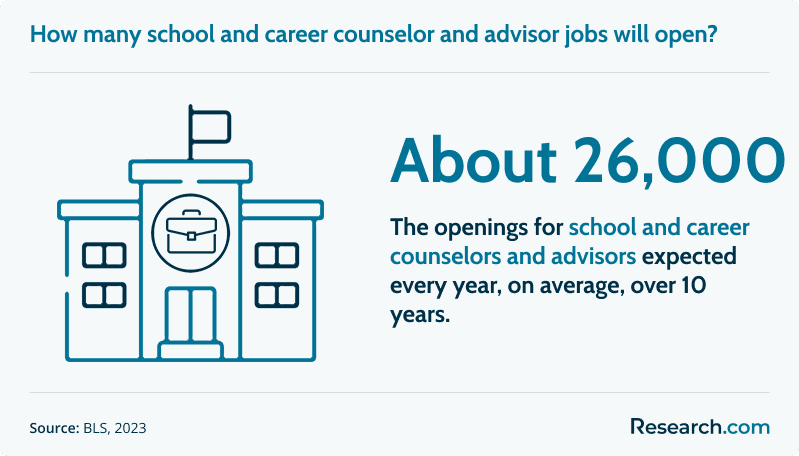
The job market for educational psychology graduates varies by role, credential, location, and experience. Graduates may find opportunities in education, research, mental health support, instructional design, student services, and consulting. For school and career counselors, the U.S. Bureau of Labor Statistics projects employment growth of 5% over the next decade.
Schools are expected to need more advisors and counselors to help students with academic, developmental, and career-planning concerns. Career support is also relevant for workers changing occupations, laid-off employees seeking new roles, and military veterans entering the civilian workforce.
Demand is also influenced by schools’ efforts to support personalized learning, inclusive education, mental health needs, and diverse learner populations. Still, applicants should avoid assuming that the degree alone guarantees a specific job or salary.
What Support Services Are Available to Master’s in Educational Psychology Students?
Strong support services can make a major difference, especially for online and working students. Look for programs that provide academic advising, research guidance, faculty mentoring, writing support, career counseling, internship placement assistance, and access to digital libraries.
Students should ask whether support is available to all students or only to campus-based learners. Online peer communities, research workshops, and career development resources can help students stay engaged and prepare for long-term advancement. Those comparing advanced psychology options can also examine pathways such as affordable PsyD programs.
What Challenges May Students Encounter During a Master’s in Educational Psychology Program?
Educational psychology programs can be demanding because students must combine theory, research, writing, data interpretation, and applied practice. Common challenges include managing time, understanding research methods, finding quality supervision, completing field requirements, and paying for graduate school.
Students can reduce these risks by asking detailed questions before enrolling. Confirm the weekly workload, research expectations, faculty availability, practicum structure, technology requirements, and total cost. If affordability is a major concern, comparing related lower-cost graduate options—such as the most affordable master’s in forensic psychology programs—can provide useful context.
Licensing and Certification for Educational Psychologists
Licensing and certification requirements depend on the role, state, and country. A master’s in educational psychology may support some education and research roles, but it does not automatically qualify graduates for school psychology, counseling, or independent clinical practice.
Students who want to become school psychologists typically need state-specific licensure or certification. Requirements often include supervised practice or internship hours and a relevant exam, such as the Praxis School Psychologist Test.
Graduates who want to provide counseling or clinical services may need additional supervised experience and a professional license. Some pathways may require exams such as the Examination for Professional Practice in Psychology (EPPP). Because requirements vary widely, students should check the rules in the state or country where they plan to work before enrolling.
How Does Accreditation Affect Program Quality and Career Outcomes?
Accreditation is one of the most important filters when comparing programs. Institutional accreditation indicates that a school has undergone external review for academic quality, faculty qualifications, student services, and administrative standards. Programmatic accreditation or recognition may also matter for specific career paths.
Accreditation can influence financial aid eligibility, employer confidence, doctoral admission, certification pathways, and licensure preparation. Students comparing online affordability should verify that a lower-cost option is properly accredited before enrolling. Research.com’s guide to affordable online master’s in psychology programs can help with cost comparisons.
What Emerging Trends and Opportunities Affect Educational Psychology?
Educational psychology is being shaped by student mental health needs, digital learning, inclusive education, data-informed instruction, and growing interest in personalized learning. These trends create opportunities for professionals who can translate research into practical strategies for schools, colleges, and learning organizations.
- Mental Health Support: Schools are paying closer attention to stress, anxiety, social-emotional learning, and student well-being. Educational psychologists can help design interventions and support systems.
- Digital and Hybrid Learning: Online and blended learning environments create new challenges in engagement, motivation, assessment, and accessibility. Educational psychologists with instructional design skills can help improve virtual learning experiences.
- Inclusivity and Diversity: Schools continue to focus on neurodiverse learners, cultural responsiveness, differentiated instruction, and equitable access. Educational psychologists can support inclusive learning design and evidence-based intervention.
Students interested in how psychology applies beyond schools may also review Research.com’s business psychology degree guide, which explains how psychological principles can support productivity, leadership, and workplace well-being.
How to Find the Most Affordable Master’s in Educational Psychology Programs
Finding an affordable master’s in educational psychology requires more than searching for the lowest tuition. A low-cost program may still be expensive if it has high fees, limited aid, poor transfer policies, or weak career support. The goal is to find a program that is accredited, career-aligned, and financially realistic.
- Start with public universities and state schools: Public institutions often offer lower rates for in-state students. If you qualify for residency-based tuition, this can significantly affect the final cost.
- Compare online programs: Online study can reduce commuting or relocation expenses. Some students may also compare related education programs, such as affordable online master’s in education programs, when evaluating cost and career fit.
- Look for assistantships: Research and teaching assistantships can reduce tuition costs and add relevant experience to your resume.
- Ask about employer tuition support: Teachers, school staff, training specialists, and education employees may qualify for reimbursement or sponsorship from their employers.
- Calculate total cost: Include tuition, fees, books, technology, travel, internship expenses, and any lost income from reducing work hours.
- Submit the FAFSA: Graduate students should complete the FAFSA to determine eligibility for federal student loans and other aid options.
| Common Mistake | Better Approach |
| Choosing the cheapest program without checking accreditation | Verify institutional and relevant programmatic accreditation first. |
| Assuming online programs always meet licensure requirements | Ask the program and your state licensing board before enrolling. |
| Comparing only tuition | Compare the full cost of attendance and available aid. |
| Relying only on rankings | Use rankings as one input, then assess faculty fit, outcomes, support, and credentials. |
| Ignoring fieldwork requirements | Confirm whether practica, internships, or supervised hours are required and how placements work. |
Can a Master’s in Educational Psychology Prepare You to Teach at the College Level?
A master’s in educational psychology may support teaching opportunities at community colleges, online education providers, training programs, or institutions that hire master’s-prepared instructors for foundational courses. Graduates may be able to teach topics such as educational theory, developmental psychology, learning science, or introductory psychology, depending on employer requirements.
However, many four-year colleges and universities prefer or require a doctoral degree for full-time faculty or tenure-track roles. Students interested in college teaching should review hiring requirements in their target institutions and consider whether a doctorate may eventually be necessary.
What Should International Students Consider Before Enrolling?
International students should evaluate program recognition, visa requirements, language proficiency expectations, tuition differences, online study restrictions, and whether the degree is accepted for employment or further study in their home country or target country.
They should also ask whether the program offers support for non-native English speakers, international advising, career placement assistance, and guidance on regional certification requirements. Students who need a shorter route may compare options such as an accelerated master’s program in psychology, while confirming that the format meets any professional or immigration-related requirements.
What Is the Return on Investment of a Master’s in Educational Psychology?
The ROI of a master’s in educational psychology depends on total program cost, time to completion, lost income while studying, career change potential, certification requirements, and long-term advancement opportunities. The degree may be valuable for educators seeking advancement, professionals moving into instructional design or research, and students preparing for further psychology-related training.
Prospective students should compare full-time, part-time, online, and accelerated formats. Related pathways, including accelerated master’s programs in clinical mental health counseling, can provide useful comparison points for students considering counseling or mental health-oriented careers. The best ROI comes from choosing a program that is affordable, accredited, career-aligned, and realistic for your schedule.
Key Insights
- Start with the career goal. Educational psychology can lead to research, instructional design, consulting, school-based support, or further graduate study, but each path has different requirements.
- Licensure is not automatic. If you want to work as a school psychologist, counselor, therapist, or licensed psychologist, confirm state or country rules before applying.
- Online programs are practical but require verification. Flexibility is valuable, but students must check fieldwork, internship, and credential requirements.
- Cost comparisons should be comprehensive. Tuition is only one part of the financial picture; fees, residency status, travel, technology, and lost work time also matter.
- Accreditation protects your investment. Accreditation can affect financial aid, employer recognition, doctoral admission, and licensure preparation.
- The strongest program is the one that fits your next step. A highly ranked program is not necessarily the best choice if it does not match your specialization, budget, format needs, or credential requirements.
References:
- Ma, J., Pender, M., & Hu, X. (2025). Trends in College Pricing and Student Aid 2025. College Board.
- National Assessment of Educational Progress. (2024). How did students perform in 2024? The Nation's Report Card.
- National Association of School Psychologists. (2026). State Shortages Data Dashboard. NASP.
- U.S. Bureau of Labor Statistics. (2024). Field of degree: Psychology. BLS.
- U.S. Bureau of Labor Statistics. (2025). Psychologists. BLS.
- ZipRecruiter. (2026). Educational Consultant Salary. ZipRecruiter.
Other Things You Should Know About Master’s in Educational Psychology Programs
To enroll in a Master’s in Educational Psychology program in 2027, applicants usually need a bachelor’s degree in psychology or a related field, letters of recommendation, a personal statement, and sometimes GRE scores. Always check specific program requirements for accuracy.
In 2027, pursuing a Master’s in Educational Psychology typically entails costs like tuition, which can range from $15,000 to $30,000 per year, depending on the institution. Additional expenses include books, supplies, and potential fees for online or hybrid programs. Scholarships and financial aid might help offset these costs.


