2027 Environmental Science Specializations for Climate Careers

Co-Founder and Chief Data Scientist
Facing growing regulatory pressures and increasingly complex climate models, professionals seeking to enter environmental science careers must identify specializations that align with evolving workforce demands without sacrificing flexibility. The U.S. Bureau of Labor Statistics projects a 9% increase in environmental science roles over the next decade, yet many students struggle with programs that offer limited online or part-time options, constraining timely credential acquisition and career mobility.
Meanwhile, recent Department of Education data shows that 39% of undergraduate enrollments now involve at least some online coursework, signaling a shift toward hybrid learning critical for working adults balancing upskilling with job responsibilities. This article will examine key environmental science specializations, focusing on their accessibility, market relevance, and career trajectories to guide strategic education decisions for climate-focused professionals.
Key Things You Should Know
- Hydrogeology specialization offers a 15% higher median salary but requires advanced GIS proficiency, slowing entry by 1-2 years compared to broader environmental science degrees, impacting cost and time-to-employment.
- Employers prioritize climate modeling and data analytics skills, with 62% of hiring managers in environmental roles demanding proven programming expertise, challenging traditional degree holders to upskill post-graduation.
- Renewable energy policy tracks face resource constraints; only 24% of accredited U.S. programs combine policy with technical training, limiting immediate job-readiness and requiring supplementary certification for many career pivots.
What are the most in-demand environmental science specializations for climate-focused careers?
Specializing in climate modeling, atmospheric science, and renewable energy systems shapes distinct career trajectories within environmental science specializations for climate resilience careers, influenced heavily by employer demand and technical requirements. Climate modelers deliver regional projections essential for targeted municipal actions like heatwave response planning, demonstrating a direct link between technical expertise and policy application. Atmospheric scientists enhance predictive accuracy used by sectors such as agriculture and insurance, where weather variability translates to operational risk, tying their work to economic outcomes in climate-focused environmental science careers in North America.
Professionals in renewable energy systems must reconcile technical knowledge with regulatory navigation, as project success hinges on both environmental compliance and cross-disciplinary coordination. This specialization emphasizes practical skills to address real-world implementation challenges rather than theoretical mastery alone.
Key employability factors include proficiency in advanced GIS tools, climate data analytics, and familiarity with evolving regulatory frameworks. While certifications in sustainability and climate risk can boost marketability, they pose tradeoffs in time and cost against rapidly shifting standards.
Given the median wage of $80,060 and opportunities for top earners surpassing $134,830, these specializations balance economic incentives with necessary technical and regulatory competencies. Prospective students analyzing these pathways should also consult resources like the best online EHS programs to align education with workforce expectations.
How do environmental science degrees prepare students for climate change and sustainability work?
Environmental science degree benefits for climate change careers hinge on their practical alignment with workforce skills needed in a data-driven job market. Graduates proficient in geospatial tools like GIS, remote sensing, and advanced analytics stand to fill an estimated 6,900 annual openings for environmental scientists and specialists, as projected by the U.S. Bureau of Labor Statistics. Yet, the critical advantage lies in manipulating large datasets and applying quantitative techniques within policy and sustainability frameworks. For instance, professionals navigating urban planning might need to balance regional economic development against mandates to reduce carbon emissions, demonstrating real-world tradeoffs embedded in curricula.
Sustainability skills developed through environmental science programs extend beyond theory to encompass fieldwork, lab analysis, and simulation modeling, aligning student experience with employer expectations for compliance and interdisciplinary collaboration. Mastery of programming languages such as Python or R to automate workflows is increasingly essential, alongside effective communication tailored to diverse stakeholders. Internships and industry projects serve as crucial bridges to workforce readiness, embedding familiarity with federal and state environmental regulations.
Students pivoting from other disciplines should assess how programs blend technical rigor with applied practice to avoid impractical theoretical overreach that can hinder employability. For those interested in integrating broader data competencies, especially in environmental contexts, considering advanced study options may provide added leverage, as seen in the wave of online data science doctorate offerings including online data science doctorate programs that reinforce these technical demands.
What climate-related career paths can you pursue with different environmental science specializations?
Environmental science specializations for climate change careers produce distinct employment outcomes shaped by educational level and technical focus. Associate-level graduates specializing in renewable energy and low-carbon systems often enter as wind turbine technicians, earning between $56,230 and $83,580. This track entails hands-on expertise in clean energy infrastructure installation and maintenance, catering to students prioritizing swift entry into technical trades.
By contrast, those with a bachelor's in environmental engineering typically pursue roles in sustainability consulting, green infrastructure design, or environmental compliance, with average salaries near $92,120. These positions demand integration of engineering and regulatory knowledge to enhance energy efficiency and emission reduction across systems.
Specialists in environmental policy and natural resource management navigate legislative advisory, conservation planning, or corporate sustainability strategist roles requiring advanced negotiation skills and collaboration with government entities. Salaries vary widely between public and private sectors. Meanwhile, expertise in environmental data analysis and climate modeling positions candidates for research, risk assessment, and environmental impact evaluations, with employers favoring mastery of GIS and statistical software.
Prospective students must assess preferred work environments, technical skill acquisition, and education length when choosing which climate-related career opportunities in environmental science fields best align with their goals. For example, those deciding between rapid workforce entry and longer-term analytical roles will face tradeoffs in salary potential and job nature. To explore flexible options, consider how to study exercise science online as a model for remote degree pathways that may parallel some environmental science program designs.
What are the typical courses and skills in climate-focused environmental science programs?
Climate-focused environmental science courses and skills emphasize mastering specialized scientific knowledge alongside applied competencies needed for climate resilience careers. Coursework typically integrates atmospheric science, climate modeling, hydrology, environmental policy, and sustainable resource management with technical areas like Geographic Information Systems (GIS) and statistical modeling to equip students for complex problem-solving and data-driven decision-making.
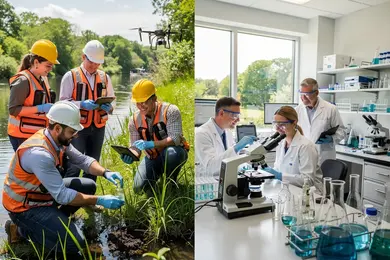
Key skills taught in environmental science climate programs extend beyond theory, focusing on interdisciplinary collaboration and regulatory navigation. For instance, an environmental engineer designing flood controls within state government must merge hydrologic analysis with policy compliance, highlighting the importance of both technical and administrative expertise. Practical applications such as environmental impact assessments and resilience planning are essential components often developed through hands-on labs and capstone projects.
U.S. labor market data from 2023 shows about 41,300 environmental engineers employed, with significant placement in engineering services (24%), consulting services (18%), and state government (18%). This distribution implies that crafting skills aligned with diverse employer requirements-including stakeholder communication and project management-can determine job prospects.
Prospective students should recognize the tradeoffs between theoretical breadth and applied specialization when selecting programs or electives. For those considering parallel technical fields, exploring options like the best military friendly online electrical engineering degrees provides an alternative pathway with distinct labor market dynamics.
How do online and campus environmental science programs compare for climate specializations?
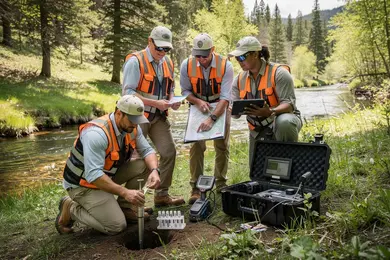
Field experience remains the highest currency for environmental science roles focused on hydrology and climate applications. While online environmental science programs provide necessary theoretical frameworks and flexibility for working professionals, they often fall short in delivering the practical, hands-on training essential for operating the specialized equipment and conducting field sampling expected by employers. For example, hydrologists specializing in climate-driven water systems earn a median wage of $84,030 annually, a figure tied closely to technical proficiency that campus-based training better supports.
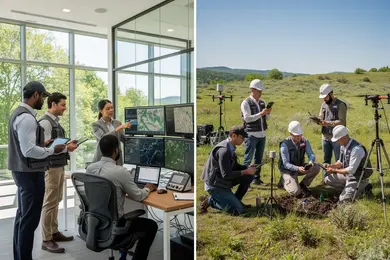
Employers prioritize candidates skilled in GIS mapping, environmental modeling, and direct fieldwork-competencies seldom fully developed through online-only curricula without supplemental internships or co-ops. The tradeoff between formats is clear:
- Campus programs offer structured access to labs and ecosystems, meeting the needs of early-career students targeting research or regulatory jobs with stringent field requirements.
- Online programs serve mid-career individuals pursuing conceptual expertise for roles where on-site practice is less critical.
- Hybrid options balance theoretical coursework with localized field components, enhancing job readiness and employer appeal.
Students must critically assess how a program's design aligns with labor market demands for applied skills, particularly in water resource management roles. Maximizing outcomes often means combining flexible learning with proactive engagements in practical settings.
What are the admission requirements and prerequisites for climate-focused environmental science degrees?
Securing a climate-focused environmental science degree demands more than meeting baseline academic criteria; it involves navigating a complex intersection of STEM proficiency, regulatory knowledge, and practical experience that directly impacts employability. Admission typically requires a solid foundation in biology, chemistry, physics, and math through precalculus or calculus with a minimum GPA around 3.0. Test scores (SAT/ACT) remain significant at many institutions, though test-optional policies are increasingly common.
For graduate-level entry, especially among career changers without a STEM background, prerequisite courses in statistics, ecology, and earth sciences often extend the path by 6-12 months-delaying workforce entry and raising costs. This gap is a critical consideration when planning for a strategic career pivot.
Programs emphasizing climate policy necessitate familiarity with public policy, environmental law, or economics, aligning with employers' demand for expertise in navigating regulatory frameworks. The U.S. Bureau of Labor Statistics projects a 3-4% job growth in regulatory-related environmental science roles through 2034, highlighting where market opportunities reside.
Admission requires a statement of purpose detailing relevant experience and research focus, supported by letters of recommendation evidencing analytical skills and applied scientific work. Internships and volunteer experience with government bodies or NGOs are strongly valued for translating academic knowledge into practical climate solutions.
How long do environmental science programs with climate specializations take, and what do they cost?
Choosing an environmental science program with a climate specialization requires balancing duration, costs, and job market alignment. Typically, a full-time master's takes two years, with bachelor's degrees lasting four. Part-time study extends these timelines by one to two years, increasing overall expense and delaying workforce entry.
Focus areas such as sustainability management or corporate climate strategy have tangible employment advantages; according to Iowa State University's Environmental Science Graduate Program, 91% of such graduates secure relevant positions within six months. This suggests that program specialization significantly influences hiring outcomes.
Cost structures differ widely: public institutions charge between $15,000 and $35,000 annually for in-state graduate students, while private and out-of-state options often surpass $50,000. Online or hybrid formats can reduce tuition but may incorporate additional fees, impacting affordability.
Professionals aiming for rapid career shifts might weigh accelerated or executive master's programs, which compress study into 12-18 months but typically cost $30,000 or more. New graduates may find traditional two-year programs with assistantships more cost-effective, though at the expense of longer study periods.
Shorter certificates or professional courses can supplement knowledge but rarely provide the comprehensive credentials employers seek for leadership roles in climate strategy or sustainability management, where multi-year degrees still predominate.
What is the job outlook and industry demand for climate-focused environmental science careers?
Employment in climate-focused environmental science roles, particularly in conservation and climate-smart ecosystem management, is projected to grow by 5% through 2033, matching overall occupational growth but driven by increasing government climate initiatives. Median wages remain modest-conservation scientists earn about $67,950 and foresters $70,660-requiring candidates to weigh financial tradeoffs against steady demand.
Career success hinges on combining core scientific expertise with practical skills in GIS mapping, ecosystem assessment, and sustainable resource planning. For instance, a forester working for a state agency must navigate the tension between wildfire risk mitigation and habitat preservation, demanding both technical rigor and negotiation with stakeholders. This dynamic illustrates how professionals must manage complex, intersecting environmental and regulatory challenges.
Students should prioritize educational pathways that incorporate applied internships or cooperative experiences to meet employer expectations for job readiness. Geographic mobility is equally important, with opportunities concentrated in climate-sensitive regions like the Pacific Northwest or Southeastern U.S.
Key considerations include:
- Balancing relatively moderate wages against growing availability of climate resilience roles
- Preparing for interdisciplinary demands spanning science, policy, and community engagement
- Focusing on credentials and experiences that demonstrate practical competencies, not just academic knowledge
The labor market reflects a need for environmental science professionals capable of integrating technical skills with real-world ecosystem management challenges amid evolving policy landscapes.
What salaries can environmental science graduates expect in climate-related roles?
Entry-level environmental science and protection technicians focused on environmental health and climate typically start with a median wage near $49,490, accompanied by an expected employment growth of 7% over a decade. This wage band often represents the practical ceiling for early-career roles centered on hazard monitoring and public health protection.
Progression beyond technician roles demands specialized skills and credentials. For instance, climate analysts employed by urban planning firms or energy consultancies may begin around $60,000 but quickly surpass $70,000 with certifications in GIS or climate risk assessment. Salaries vary notably by employer type; government and nonprofit sectors often offer different compensation structures than private firms emphasizing data modeling and sustainability management.
Decision-makers must weigh the costs and time investment of graduate degrees or certifications against stagnant earnings without them. Advanced qualifications are pivotal for roles requiring policy development, comprehensive climate modeling, or corporate sustainability leadership, where pay scales climb accordingly.
Students and professionals should also consider geographic and sector-specific workforce dynamics. Metropolitan markets may provide higher pay but face intense competition, while public health roles frequently operate under budgetary constraints that limit upward mobility. Aligning expectations with these factors can help clarify realistic career pathways and timing for additional education or skill acquisition.
How can students evaluate accredited, reputable environmental science programs for climate careers?
Accreditation by agencies recognized by the U.S. Department of Education or CHEA is the essential baseline to ensure an environmental science program delivers credible credentials and unlocks licensure or federal employment pathways. Reputation alone offers limited insight-graduates should probe employment data, especially in specific sectors like urban planning or environmental engineering, where those with master's and doctoral degrees earn between $70,630-$144,810 annually. This reflects real-world premiums tied to advanced expertise.
Curricula emphasizing applied skills-GIS, renewable energy technologies, climate policy modeling-better prepare students than programs leaning heavily on theoretical or outdated content. Those targeting EPA, NOAA, or consulting roles must assess program connections that facilitate internships or direct pipelines to such agencies, critical for hands-on experience and networking.
Career outcomes should guide selection. For example, switching into environmental engineering requires rigorous STEM training, whereas urban planning-specialized programs offer more policy and social equity intersection. Tuition affordability and delivery mode-online versus on-campus-are substantial factors for working professionals balancing study with employment.
Faculty expertise and active federally funded research indicate alignment with emerging climate challenges, enhancing instruction relevance. Programs heavily invested in climate modeling and sustainability innovation position graduates to meet evolving job market demands where specialized knowledge drives competitive advantage.
Other Things You Should Know About Environmental Science
Most entry-level roles in environmental science related to climate are accessible with a bachelor's degree, but advancing to leadership, specialized research, or high-impact policy roles typically requires a master's. Employers prioritize candidates with graduate degrees for positions involving complex data analysis, modeling, or management of large projects. For professionals balancing work and education, prioritizing a master's program with practical experience components or strong industry ties will improve advancement prospects.
Internships and fieldwork are critical to standing out in climate-focused environmental science, as they provide hands-on experience with real-world data and regulatory processes. Programs lacking robust internship connections risk leaving graduates underprepared for employer expectations around applied skills. Candidates should prioritize programs that integrate substantial, supervised fieldwork or partnership projects with agencies, as this directly correlates with faster job placement and practical competency.
While both are important, students should align their focus with career targets. Technical skills in GIS, remote sensing, and statistical modeling are essential for scientific and regulatory roles, where data precision dictates impact. Policy expertise is more relevant for advocacy, consulting, or government liaison positions, where interpreting and influencing regulations is key. Balancing both is ideal, but specializing early in the skill set demanded by your chosen sector accelerates career growth.
In 2027, environmental science specializations with high demand in climate careers include renewable energy management, climate modeling, sustainable agriculture, and environmental policy. These areas are pivotal in addressing climate change challenges and require skilled professionals to drive innovation and policy development.
References
- 10+ Green Job Opportunities Worth Considering https://www.berry.edu/articles/blog/2024/environmental-job-opportunities
- Environmentalscience https://www.environmentalscience.org
- Explore UM | University of Manitoba - Environmental Science (BEnvSC) https://umanitoba.ca/explore/programs-of-study/environmental-science-benvsc
- Can High Schools Prepare Students for Green Jobs? | MDRC https://www.mdrc.org/work/publications/can-high-schools-prepare-students-green-jobs
- Educational Pathways for Climate Careers: Degrees and Certifications | EuroClimateJobs https://www.euroclimatejobs.com/article/764/educational-pathways-for-climate-careers-degrees-and-certifications
- Education | Teaching children about climate change and sustainability https://www.britishscienceassociation.org/blog/teaching-children-climate-change
- 10 careers you can have with an environmental science degree - SMWC https://www.smwc.edu/10-careers-you-can-have-with-an-environmental-science-degree-blog-july-20/
- Environmental Career Profiles Australia https://environmentaljobs.com.au/resources/environmental-sustainability-careers
- Environmental Job Market Trends | ECO Canada https://eco.ca/research-and-resources/environmental-job-market-trends/
- Great Colleges for Climate Action and Environmental Studies — College Kickstart https://www.collegekickstart.com/blog/item/great-colleges-for-climate-action-and-environmental-studies