
2027 Behavioral Psychology Careers: Guide to Career Paths, Options & Salary

Co-Founder and Chief Data Scientist
Choosing a career in behavioral psychology is more complicated than many students expect. The title can refer to several roles, and each one comes with different education requirements, licensing rules, salary potential, and day-to-day work. If you are trying to decide whether this path fits your goals, the key questions are simple: What level of schooling do you need? What jobs can you qualify for at each stage? And which roles actually require licensure?
This guide gives you a practical, decision-focused overview of behavioral psychology careers in 2026. You’ll learn what the field involves, which skills matter most, the education and credentialing paths to consider, likely career options by degree level, and the main trade-offs between clinical, research, education, and organizational roles. It also covers salary and job outlook data, common mistakes to avoid, and the questions you should ask before choosing a program or career track.
Quick answer: Is behavioral psychology a good career path?
Yes, if you want a field that combines human behavior, mental health, research, and applied problem-solving. Behavioral psychology can lead to meaningful work in clinical care, schools, research, healthcare, and business settings. But it is not a quick entry career for most people. Many roles require graduate study, supervised experience, and state licensure. If you only want the fastest route into the field, support roles such as behavioral health technician or research assistant are more realistic starting points than licensed psychologist roles.
The best path depends on your long-term goal. If you want to provide therapy or diagnose mental health conditions, plan on graduate education and licensure. If you want to work in applied behavior analysis, counseling-adjacent support, research, or workplace behavior, your path may be shorter or more flexible.
Key things to know before starting a behavioral psychology career
- Behavioral psychologists earn an average of $92,378 annually.
- About 28% of behavioral psychologists are self-employed.
- There’s an estimated need for 95,970 psychologists by 2036 to help meet growing demand for mental health services.
- The job outlook is projected to grow 7% until 2033.
- Employers expect about 12,800 job openings for psychologists each year until 2032.
- Why pursue a behavioral psychology career?
- What skills do behavioral psychologists need?
- What education is required?
- What is the average salary?
- What does the job market look like?
- What does a behavioral psychologist do?
- How do you start this career?
- How do you advance in the field?
- What jobs can you get by degree level?
- Can a certificate be enough?
- What alternative careers use these skills?
- How do behavioral psychologists affect policy and programs?
- What common challenges should you expect?
- What job search strategies work best?
- What interview questions should you prepare for?
- Do you need a traditional psychology degree?
- Can a dual degree help you compete?
- How is technology changing the field?
- How can you manage burnout?
- How does continuing education shape your career?
- What educational paths make the most sense?
- How do networking and mentorship help?
- How do you navigate legal and regulatory issues?
- What emerging roles are shaping the field?
Graduate perspectives on behavioral psychology careers
"Working in behavioral psychology has been deeply meaningful. Seeing clients make real progress through evidence-based support makes the work worthwhile, and the variety of cases keeps me learning." - Alaina
"As an industrial-organizational psychologist, I enjoy helping workplaces function better. Improving team performance and employee morale gives the job a strong sense of purpose." - Gabriel
"My role as a school-based behavioral specialist is rewarding because I get to help students build confidence and overcome challenges. Watching that growth happen is motivating." - Eric
Why pursue a behavioral psychology career?
This field appeals to people who want a career centered on human behavior, mental health, and practical change. It can be personally fulfilling, but it also requires patience, emotional resilience, and a willingness to keep learning as the field evolves.
- You can make a direct difference. Behavioral psychology gives you a chance to support people facing anxiety, addiction, developmental challenges, trauma, workplace stress, and other behavior-related concerns.
- You learn how behavior changes. The field is built around understanding why people act the way they do and how evidence-based interventions can improve outcomes.
- You can work in many settings. Psychologists and behavior specialists are employed in schools, clinics, hospitals, private practice, research settings, nonprofits, and organizations.
- The work stays intellectually challenging. Each client, population, and setting brings new questions, which can make the career engaging over the long term.
- You can contribute to broader awareness. Behavioral psychologists often help reduce stigma and improve access to mental health support through education, consultation, and advocacy.
According to the Bureau of Labor Statistics, psychologists work in a range of settings, including offices of health practitioners, elementary and secondary schools, government, and ambulatory healthcare services. That range matters because it gives you more than one way to build a career.
What skills do behavioral psychologists need?
Behavioral psychology is a people-centered profession, but it is also data-informed. Success depends on a mix of interpersonal skill, analytical thinking, and professional judgment. If you are still building those skills, that does not rule you out. It means you should choose education and early experience that help you develop them deliberately.
- Communication. You need to explain concepts clearly, listen carefully, and adapt your language to clients, families, teams, and supervisors.
- Empathy. Understanding client experiences without becoming overwhelmed by them is a core professional skill.
- Observation. Behavioral work often depends on noticing patterns, triggers, and changes over time.
- Critical thinking. You need to interpret behavior accurately and choose interventions based on evidence, not assumptions.
- Problem-solving. Many cases require you to identify the source of a behavior and adjust strategies when something is not working.
- Patience. Behavioral change usually happens gradually, especially in clinical or high-need settings.
- Ethical judgment. Confidentiality, informed consent, boundaries, and scope of practice are not optional.
- Data literacy. In many roles, you will track progress, document outcomes, and interpret behavioral data.
What education is required for a career in behavioral psychology?
The education path depends on the job you want. Support roles may require an associate’s or bachelor’s degree. Licensed psychologist roles usually require a doctoral degree plus supervised experience and licensure. Many students make the mistake of assuming “behavioral psychology” is one single career track. It is not.
Here is the basic structure most students should expect:
- Associate’s degree. Usually enough for entry-level support jobs, but not for independent practice as a psychologist.
- Bachelor’s degree. A common starting point for assistant roles, research support, human services, and some business-facing jobs.
- Master’s degree. Often required for counseling-related, behavior analysis, school support, or leadership roles, depending on the state and employer.
- Doctoral degree. Typically needed to become a licensed psychologist or pursue high-level clinical or academic work.
- Licensure and certification. Required for many practice-based jobs and often essential for credibility and advancement.
Before enrolling, check whether the program is designed for licensure, whether it meets your state’s requirements, and whether supervised hours are built into the curriculum. If not, the degree may not lead to the job you expected.
What is the average salary for behavioral psychologists?
Salary depends on degree level, role, licensing status, location, setting, and years of experience. Public data can help you estimate your range, but it cannot guarantee what you will earn.
Data published in 2024 by ZipRecruiter reported a typical annual salary of $92,378 for a behavioral psychologist in the US. It also listed salaries ranging from $49,000 to $156,500, with most falling between $60,000 and $116,500. Top earners were listed at $148,500. These figures help show the spread across jobs in psychology field, but your actual salary will depend on the role you pursue and where you work.
| Career level | Typical use of the degree | Salary implication |
| Support role | Assisting licensed professionals, research teams, or service programs | Usually lower starting pay, but faster entry |
| Bachelor’s-level role | Research, human services, coordination, or workplace support | Moderate pay, broader options |
| Master’s-level role | Counseling-adjacent, behavior analysis, school support, program leadership | Higher earning potential than bachelor’s-level roles |
| Doctoral/licensed role | Independent practice, diagnosis, advanced clinical, academic, or consulting work | Highest earning potential, but longest training path |
What does the job market look like for behavioral psychologists?
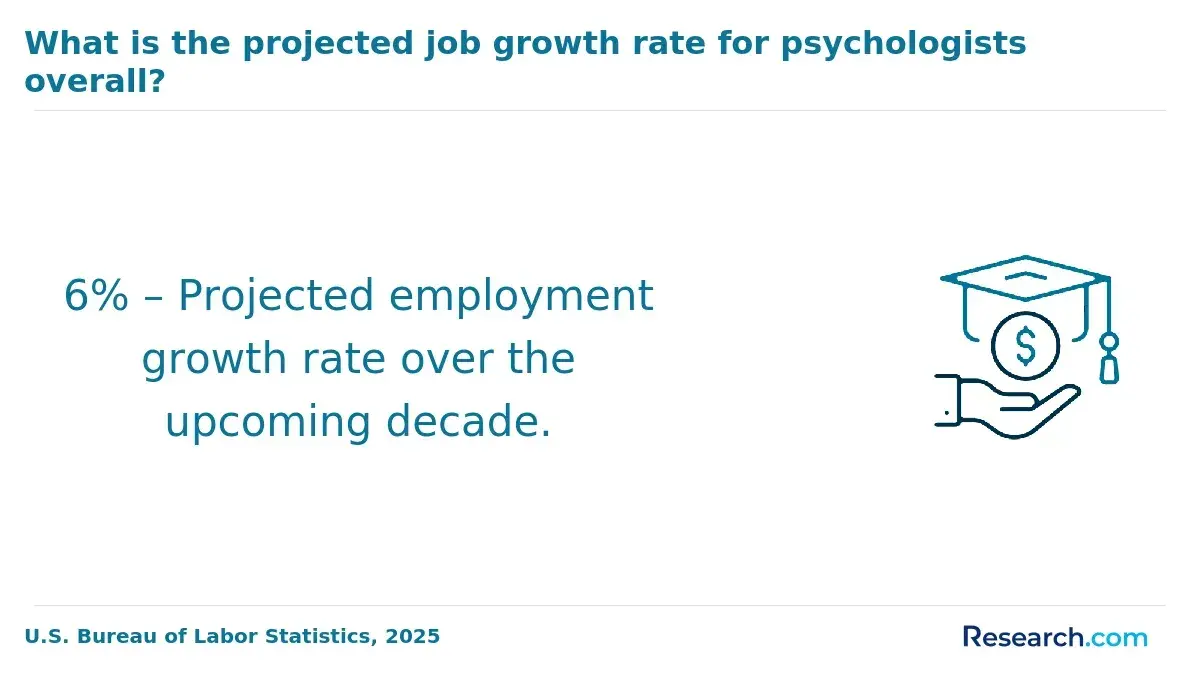
The long-term outlook is positive, but competition can still be strong in desirable locations and higher-paying settings. The Bureau of Labor Statistics projects 7% growth for psychologists from 2023 to 2033 and expects about 12,800 openings each year through 2032. That means the field is growing, but not every role is equally accessible.
Demand is being shaped by several factors: greater awareness of mental health, expansion of behavioral health services, aging workforce replacement needs, and more employers offering psychology-informed roles in schools, hospitals, and organizations. If you want a practical career plan, focus on the specific license or credential employers in your target setting actually require.
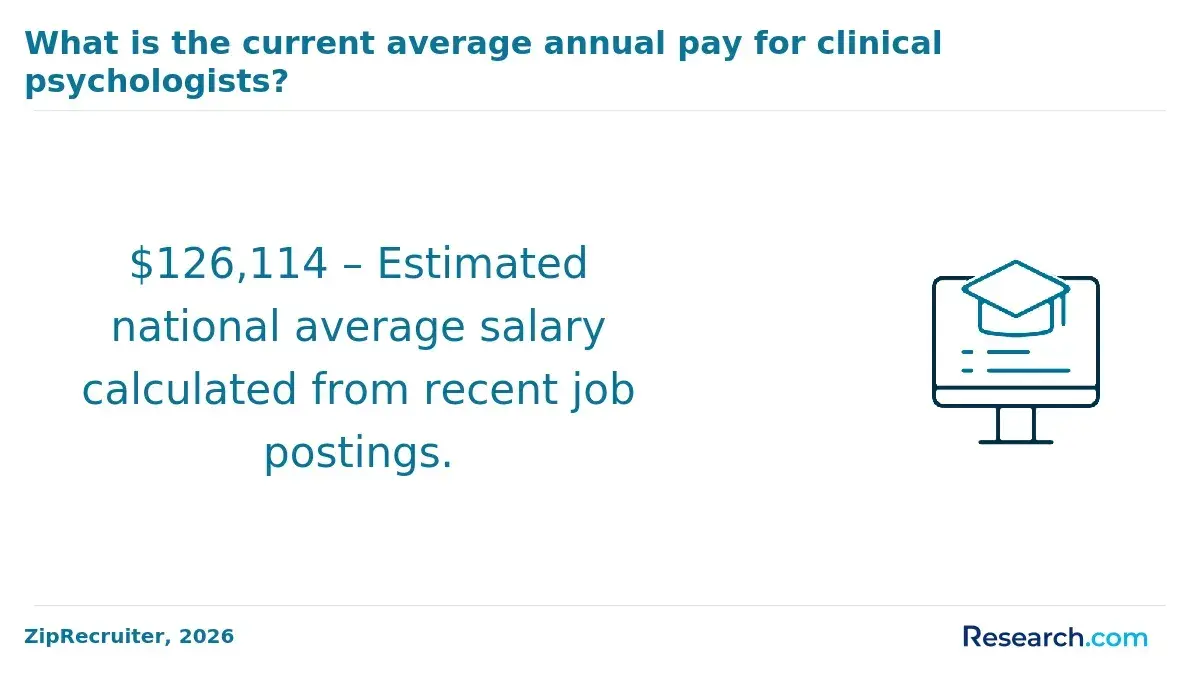
Clinical and counseling psychologists continue to see strong demand in many settings, but licensure and supervised practice remain major gatekeepers.
What does a behavioral psychologist do?
A behavioral psychologist studies how people think and act, then uses that knowledge to support change. The exact duties vary by setting. A school-based specialist, a clinician, and a researcher will not spend their days doing the same work.
- Assess behavior. They collect information through interviews, observations, records, and testing.
- Identify patterns. They look for triggers, habits, environmental influences, and outcomes.
- Create intervention plans. They choose strategies that are appropriate for the client and setting.
- Support behavior change. They apply evidence-based methods such as reinforcement strategies, counseling approaches, or behavior modification.
- Track results. They evaluate whether the intervention is helping and adjust it when needed.
- Collaborate with others. They may coordinate with teachers, physicians, social workers, counselors, families, or workplace leaders.
- Contribute to research. Some professionals collect data, publish findings, or help improve treatment methods and program design.
If you are looking for a faster route into applied behavior work, programs such as the fastest online master's in applied behavior analysis may be worth comparing with broader psychology programs.
How do you start a career in behavioral psychology?
Start by choosing the end role first. If your goal is licensure and independent practice, your roadmap will be very different from someone who wants to work in research, school support, or workplace behavior.
- Earn a bachelor’s degree in psychology or a related field.
- Look for internships, volunteer work, lab work, or assistant roles early.
- Decide whether you need a master’s degree, a doctoral degree, or a specialized certification.
- Check state licensure rules before choosing a graduate program.
- Compare online and campus formats only after confirming program quality and licensure alignment.
- Apply for supervised roles that match your target setting.
- Build experience with documentation, ethics, assessment, and data tracking.
Students often compare behavioral psychology with clinical psychology because the two fields can overlap in practice, especially at the graduate level. If that is part of your decision, reviewing online masters in clinical psychology programs can help you compare training goals and licensure pathways.
| Path | What it usually focuses on | Typical entry roles | Best for |
| Clinical treatment | Therapy, assessment, and behavior change | Behavioral health technician, counselor, psychologist | People who want direct client work |
| Research and education | Studies, teaching, program evaluation | Research assistant, researcher, professor | People who enjoy data and academic work |
| Prevention and policy | Community programs, advocacy, systems change | Rehabilitation specialist, service coordinator, policy support roles | People interested in public impact |
What can you do with each education level?
The strongest career choice is the one that matches your actual education, licensure goals, and preferred work environment. Below is a practical breakdown of common roles by degree level.
Associate’s degree options
Behavioral health technician
Behavioral health technicians work under supervision in clinics, hospitals, or treatment programs. They support clients with mental health or substance use needs and may help with daily care, documentation, and session support.
Median annual salary: $36,570
Social services assistant
Social services assistants help individuals and families connect with resources. They often work in government or nonprofit settings and assist with case support, referrals, and client coordination.
Median annual salary: $33,408
Research assistant
Research assistants support studies by collecting data, organizing records, and helping with reports. This role is a good fit if you are interested in psychology research but are not yet ready for graduate study.
Median annual salary: $31,195
Human resources assistant
Human resources assistants help with recruiting, onboarding, employee records, and workplace support. A behavioral background can be useful when the job involves communication and employee relations.
Median annual salary: $40,151
Rehabilitation specialist
Rehabilitation specialists support people with physical or mental disabilities through daily living support, job training, and social adjustment. These roles often exist in hospitals, rehab centers, and community organizations.
Median annual salary: $33,372
Bachelor’s degree options
Social worker
A bachelor’s degree can support entry into social work-related roles, especially when paired with relevant field experience. Some positions focus on child welfare, substance use, mental health, or family support.
Median annual salary: $48,000
Human resources specialist
HR specialists handle recruiting, employee relations, onboarding, and workplace programs. Behavioral psychology knowledge can strengthen your work in training, conflict management, and organizational culture.
Median annual salary: $62,544
Market research analyst
Market research analysts study consumer behavior and help companies make business decisions. This is a strong alternative if you like research but do not want a clinical setting.
Median annual salary: $63,920
Case manager
Case managers coordinate services for clients across healthcare or social support systems. The job often requires organization, communication, and a strong understanding of client needs.
Median annual salary: $90,477
Substance abuse counselor
Substance abuse counselors support clients dealing with addiction and recovery. Depending on state rules and employer expectations, additional training or credentialing may be needed beyond the bachelor’s degree.
Median annual salary: $48,520
Certificate pathway: is it enough?
A certificate can help you qualify for some entry-level support roles, but it is usually not enough for independent psychology practice. It may be useful if you want to test the field before committing to a longer degree or if you already work in a related setting and need focused upskilling.
Certificates can help with exposure to behavior concepts, research basics, and communication skills. But if your goal is licensure, you should verify whether the certificate is recognized by employers or state boards. Not all short programs carry the same weight.
If you are comparing schools, it can also help to look at broader psychology options such as psychology colleges in Texas and similar state-level resources for accredited pathways.
The unmet need in the behavioral health workforce continues to shape hiring, especially in support and community-facing roles. That makes certificates more useful as an entry point than as a terminal credential.
Master’s degree options
Behavioral health counselor
Behavioral health counselors work with individuals, families, or groups experiencing mental health or behavioral issues. They may work in clinics, hospitals, community health centers, or private settings, depending on licensure and training.
Median annual salary: $70,537
Clinical psychologist
Clinical psychologists diagnose and treat mental, emotional, and behavioral disorders. This is a more advanced role that usually requires doctoral preparation and licensure.
Median annual salary: $167,000
Social and community service manager
This role involves planning or overseeing community programs and services. It is a strong fit for students who want leadership work in government, nonprofit, or healthcare settings.
Median annual salary: $74,000
Researcher
Researchers study behavior, interventions, and outcomes. Many work in universities, research centers, or private industry, where strong data and analysis skills matter.
Median annual salary: $53,586
School psychologist
School psychologists help students with learning, behavior, and emotional concerns. They often work with teachers, families, and administrators to support student success.
Median annual salary: $78,780
If your interest is school-focused work, exploring colleges for child psychologist can help you compare programs with child development and school-based training.
Doctoral degree options
Professor
A doctorate can lead to university teaching and research. This path usually appeals to people who want to publish, mentor students, and contribute to the academic side of psychology.
Median annual salary: $143,823
Consultant
Consultants advise organizations on behavior, workplace performance, or psychological issues. This path can offer flexibility, but income often depends on reputation and client demand.
Median annual salary: $50,000
Executive or leadership positions
Some doctoral graduates move into leadership roles in healthcare, education, HR, or marketing. The value of the degree here is often strategic knowledge, not just clinical skill.
Median annual salary: $814,273
Forensic psychologist
Forensic psychologists apply behavioral expertise to legal questions, such as criminal cases or custody disputes. This is a highly specialized path and may require additional training depending on the employer and setting.
Median annual salary: $133,200
If this area interests you, reviewing schools with criminal psychology majors may help you compare related pathways.
Which certification is best for behavioral psychology?
The right certification depends on the role you want to pursue. Certifications matter most when they align with employer expectations, state rules, and your target population. The most commonly recognized credential in applied behavior settings is the Board Certified Behavior Analyst (BCBA), offered by the Behavior Analyst Certification Board (BACB).
BCBA training is especially relevant for professionals working in behavior intervention, developmental disabilities, and autism-related services. Other certifications may fit broader counseling, rehabilitation, HR, or assessment-related work, including Certified Clinical Mental Health Counselor (CCMHC), Certified Rehabilitation Counselor (CRC), Certified Employee Assistance Professional (CEAP), and Certified Specialist in Psychometry (CSP).
Before choosing a credential, ask three questions: Is it required for my target job? Does my state recognize it? Will it help me move into the setting I want?
What alternative careers use behavioral psychology skills?
Your training can transfer into several careers outside traditional psychology. This is important if you want a related role but do not want the full licensure path, or if you decide later that a different work environment suits you better.
| Alternative role | Why behavioral psychology helps | Salary figure listed in the source |
| Human resources specialist | Useful for hiring, training, and workplace behavior | $22,550 |
| Data scientist | Research methods and analysis transfer well to data work | $125,053 |
| User experience researcher | Behavior insight helps explain how people use products | $77,352 |
| Marketing researcher | Consumer behavior knowledge supports audience analysis | $63,920 |
| User experience designer | Behavioral insight helps improve digital usability | $95,572 |
If you want to broaden your options, you may also want to compare best online data analytics programs with psychology-focused graduate study.
How do behavioral psychologists improve mental health policies and programs?
Behavioral psychologists contribute to systems-level change by turning research into practice. Their work can shape school programs, workplace wellness efforts, community interventions, and public mental health planning.
- They support evidence-based design. Research on behavior change helps policymakers choose interventions that are more likely to work.
- They help build programs. Their input can improve prevention, early intervention, and treatment programs across institutions.
- They advise on policy. Psychologists can help identify barriers to care and suggest changes that improve access and reduce stigma.
- They train other professionals. Their expertise helps schools, agencies, and clinics implement behavior strategies correctly.
- They evaluate outcomes. Monitoring results helps organizations improve programs instead of relying on assumptions.
- They support outreach. Public education can increase awareness and make communities more likely to seek help earlier.
What are the common career challenges for behavioral psychologists?
Even rewarding careers have friction points. In behavioral psychology, the biggest challenges usually involve education cost, licensure requirements, emotional fatigue, and job competition in preferred settings. Some roles also involve unclear job titles, which can make it hard to know what qualifications employers actually want.
Other common issues include scope-of-practice limits, documentation demands, reimbursement pressures, and the need to keep up with changing ethical and legal expectations. If you are considering adjacent careers, it can help to compare paths such as how to become a psychiatrist so you understand the differences in training, authority, and responsibility.
What job search strategies work best for entry-level roles?
Entry-level candidates usually do best when they combine targeted experience with a focused application strategy. A generic psychology resume is rarely enough.
- Tailor your resume. Emphasize coursework, practicum work, labs, volunteer service, and technical skills that match the role.
- Use relevant experience. Even unpaid work can help if it shows client contact, data handling, or behavioral support.
- Network intentionally. Reach out to supervisors, professors, alumni, and professionals in the settings you want.
- Search the right boards. Look at psychology, healthcare, school, nonprofit, and behavior-analytic job listings.
- Apply broadly at first. Support roles can lead to stronger future opportunities if you choose them strategically.
- Prepare for interviews early. Practice discussing ethical judgment, teamwork, and behavioral examples.
- Follow up professionally. Small actions can improve your chances in a competitive market.
What interview questions should behavioral psychologists expect?
Interviewers usually want to know whether you understand behavior, ethics, teamwork, and client sensitivity. They may also want to see how you handle difficult situations without overstepping your role.
- How have you worked with different populations?
- How do you design or support a treatment plan?
- Tell us about a behavioral intervention that worked well.
- What do you do when a client resists treatment?
- How do you apply ethical guidelines in practice?
- How do you stay current with research?
- Describe a difficult case and what you learned from it.
- How do you work with other professionals?
- How do you protect confidentiality?
- How do you maintain cultural competence?
Do you really need a traditional psychology degree?
Not always. Some people enter related roles through certification, supervised experience, or a degree in a nearby field such as counseling, social work, education, rehabilitation, or human services. The right path depends on the title you want, the setting you plan to work in, and whether licensure is required.
This is where many students make a costly mistake: they choose a flexible program without checking whether it supports the actual career they want. Before enrolling, confirm that the curriculum, practicum, and licensure alignment match your goal. If you are comparing alternate routes, this guide on can I become a therapist without a degree may help you think through nontraditional options.
Can dual degree programs create a competitive advantage?
They can, especially if you want to combine clinical work with research, administration, policy, or business. Dual-degree study can make sense for students who want broader options and are willing to take on a more demanding academic load.
That said, dual degrees are not automatically better. They can cost more time and money, and they may be unnecessary if your target role only requires one credential. If you are exploring this route, look carefully at the actual outcomes of the program, not just the title. Related options include psychology dual degree programs.
How is technology changing behavioral psychology practice?
Technology is reshaping how behavioral psychology is delivered, documented, and studied. Telehealth has expanded access, digital assessments can speed up screening, and data tools can help clinicians and researchers monitor patterns more efficiently.
AI and automation are also changing the field, but not in a way that replaces the need for trained professionals. Instead, they are more likely to support scheduling, documentation, trend detection, and access to care. Human judgment still matters for diagnosis, ethics, relationship-building, and treatment planning.
If you want to build stronger digital skills, programs such as accelerated psychology master's programs may help you stay current while moving efficiently through graduate study.
How can behavioral psychologists manage burnout?
Burnout is a real risk in emotionally demanding helping professions. The best prevention strategies are practical, not abstract: reasonable caseloads, clear boundaries, supervision, peer support, and regular recovery time.
- Set limits on work hours when possible.
- Use supervision and consultation instead of carrying difficult cases alone.
- Track stress symptoms early, before they become severe.
- Keep documentation organized so admin work does not become overwhelming.
- Build routines that protect sleep, exercise, and downtime.
- Consider roles or settings with lower emotional intensity if needed.
Choosing a program that prepares you for sustainable work matters too. For some students, that means looking at accelerated online clinical mental health counseling masters programs or other structured options that balance training with practicality.
How does ongoing education shape a behavioral psychologist’s career?
Continuing education is not just a requirement. It is how you stay employable, ethical, and effective. The field changes through new research, better interventions, updated laws, and changing client needs.
- It expands your skill set. Advanced training can help you work with new populations or complex cases.
- It supports career mobility. Additional credentials can open doors to leadership, specialization, or private practice.
- It improves client care. Evidence-based updates can make your interventions more effective.
- It helps you keep pace with change. Technology, ethics, and policy do not stay static.
Programs such as BCBA programs can be especially useful if your work is moving toward applied behavior analysis.
What educational paths make the most sense for aspiring behavioral psychologists?
The best path depends on how far you want to go. If you want to work quickly in a related support role, an associate’s or bachelor’s degree may be enough. If you want counseling, school psychology, or behavior analysis, a master’s degree is often the more practical next step. If your goal is independent clinical practice or university-level work, you should plan for doctoral study.
If you are still undecided, a masters in behavioral psychology can be a strong middle ground because it builds advanced knowledge without requiring the longest training route. It can also serve as a bridge to specialized practice, research, or further graduate study.
How do networking and mentorship help career growth?
Networking and mentorship can shorten your learning curve. They help you understand what employers want, which credentials matter in your region, and what early-career mistakes to avoid.
Good mentors can help you compare settings, build confidence, and choose between licensure tracks, research roles, or organizational work. Professional associations, graduate faculty, supervisors, and alumni are all useful starting points. A program such as the 1-year master's in psychology online can also help you connect with peers and professionals while you study.
How do behavioral psychologists navigate legal and regulatory challenges?
Psychology practice is shaped by state rules, licensure laws, confidentiality standards, ethics codes, and employer policies. These requirements can change, so staying compliant is part of the job.
Before accepting a role or enrolling in a program, check:
- whether the state requires licensure for the role;
- what supervised hours are needed;
- which exams must be passed;
- whether the program meets those requirements;
- how confidentiality and recordkeeping are handled;
- what your scope of practice will be.
Shorter programs such as 1 year psychology masters may be appealing, but speed should never matter more than licensure fit and program quality.
What emerging careers are shaping the field?
Behavioral psychology is expanding into technology, design, data, and public policy. These roles are attractive if you want to apply behavioral science outside a traditional therapy office.
- Behavioral data analyst. Uses behavior data to identify patterns and improve decisions in business, government, or healthcare.
- VR therapist. Applies immersive technology in treatment for anxiety, PTSD, and phobias.
- Digital wellness consultant. Helps people or organizations reduce tech-related stress and build healthier habits.
- Behavioral UX designer. Uses psychology to improve product usability and user satisfaction.
- Behavioral health policy advisor. Helps shape programs and public strategies based on behavioral evidence.
- Psychology-focused content creator. Translates mental health ideas into accessible media for broader audiences.
If you are exploring high-growth alternatives, comparing them with highest paying psychology jobs can help you see where your interests and income goals overlap.
Questions to ask before choosing a behavioral psychology program
Before enrolling, ask direct questions. They can save you years of time and unnecessary debt.
- Does this program support the license or job title I want?
- What supervised hours are built into the curriculum?
- Is the program accredited, and by whom?
- Do graduates actually get hired in the setting I want?
- How much does the full program cost, including fees?
- Can I transfer credits if I change schools later?
- Is this program designed for working adults, and if so, how?
- What kinds of internships, practicum, or fieldwork are available?
Common mistakes to avoid
- Choosing a program without checking accreditation or licensure alignment.
- Assuming an online program automatically meets state requirements.
- Focusing only on tuition instead of total cost and career return.
- Believing salary figures guarantee your own earnings.
- Assuming every psychology job title means the same thing.
- Skipping supervised experience and then wondering why you are not eligible for advanced roles.
- Using rankings alone instead of comparing curriculum, outcomes, and support.
Key insights
Behavioral psychology is a strong career choice for people who want to understand behavior and help others in practical, evidence-based ways. The field offers multiple entry points, but the right path depends on your goals. Support roles may only require an associate’s or bachelor’s degree, while licensed psychologist positions usually require graduate education, supervision, and licensure.
If you want faster entry, consider assistant, research, human services, or workplace roles first. If you want independent practice, plan for a longer training path and verify state requirements early. If you want flexibility, look at adjacent careers in HR, UX, research, data, or policy. The most important decision is not whether behavioral psychology is “good” in general. It is whether a specific program and credential will lead to the role you actually want.
Use the salary and job outlook data as a guide, not a promise. Check licensure, accreditation, cost, and supervised training before enrolling. That is the difference between a degree that looks good on paper and one that actually moves your career forward.
References:
- American Psychological Association. (2024, October). Stress in America 2024: A Nation in Flux. https://www.apa.org/news/press/releases/stress/2024/nation-flux-high-stress
- PsychologyJobs.com. (2026). Clinical Psychologist Salary Guide 2026. https://psychologyjobs.com/career-advice/clinical-psychologist-salary/
- Monster. (2024). Monster’s 2024 Work Watch Report: Professionals Are Looking for New Roles. https://www.monster.com/career-advice/article/work-watch-2024-report
- U.S. Bureau of Labor Statistics. (2025). Psychologists: Occupational Outlook Handbook. https://www.bls.gov/ooh/life-physical-and-social-science/psychologists.htm
- Precedence Research. (2025). Behavioral Health Market Size to Hit USD 330.35 Billion By 2034. https://www.precedenceresearch.com/behavioral-health-market
- ZipRecruiter. (2026). Salary: Clinical Psychologist (Feb, 2026). https://www.ziprecruiter.com/Salaries/Clinical-Psychologist-Salary
Other Things You Should Know About Behavioral Psychology Careers
In 2027, certifications such as Board Certified Behavior Analyst (BCBA) are vital for advancing in behavioral psychology careers. Certification requirements include completing a relevant master’s degree and accumulating supervised experience hours, plus passing a rigorous examination administered by the Behavior Analyst Certification Board (BACB).
In 2027, career paths in behavioral psychology vary from clinical roles to research positions. Clinical psychologists require a doctoral degree and licensure, while research careers often necessitate a Ph.D. Common settings include hospitals, schools, and private practices, ensuring diverse opportunities.
In 2027, behavioral psychology professionals earn an average annual salary ranging from $45,000 to $90,000. Salaries depend on factors like specialization, experience, and location. For instance, clinical psychologists may earn on the higher end, while research assistants might be on the lower end.


