
Is UNC Asheville Worth It? Tuition, Debt & Career Outcomes Explained

Co-Founder and Chief Data Scientist
Dreaming of a personalized, private college experience but dreading the potential six-figure debt? The University of North Carolina at Asheville (UNC Asheville) offers a strategic solution to this common dilemma. Ranked as the #8 Best College in North Carolina on Research.com, it provides the close faculty mentorship and seminar-style learning of an elite private college at a public university price point. This is not just a school for students who want a degree; it is a destination for independent thinkers who want to design their own intellectual path without mortgaging their future.
Dreaming of a personalized, private college experience but dreading the potential six-figure debt? The University of North Carolina at Asheville (UNC Asheville) offers a strategic solution to this common dilemma. Ranked as the #8 Best College in North Carolina on Research.com, it provides the close faculty mentorship and seminar-style learning of an elite private college at a public university price point. This is not just a school for students who want a degree; it is a destination for independent thinkers who want to design their own intellectual path without mortgaging their future.
Key Benefits of Attending UNCA
- With annual in-state tuition and fees of approximately $7,500 (2025-26), UNC Asheville offers a world-class liberal arts curriculum for a fraction of the cost of private competitors in the region.
- The 13:1 student-to-faculty ratio ensures you are an individual, not a number, with full-time professors teaching nearly every class rather than teaching assistants.
- As a founding member of the National Conference on Undergraduate Research, UNC Asheville sees 60% of its students complete original research, giving undergrads a distinct competitive edge for grad school.
- Academic Identity and Mission
- Degree Offerings and Program Structure
- Career Outcomes and Alumni Success
- Research and Practical Experience
- Campus Environment and Student Life
- Athletics and Recreation
- Accreditation and Educational Quality
- The Surrounding Community: Asheville, NC
- Admissions, Costs, and Financial Aid
- Next Steps: Your Admissions Checklist
Academic Identity and Mission
UNC Asheville's mission is rooted in the conviction that the complex challenges of the modern world—from climate change to social equity—require leaders who can think across disciplines. As the designated liberal arts institution within the UNC System, the curriculum prioritizes broad-based knowledge, critical thinking, and clear communication. Unlike large research universities, where students might get siloed early, UNCA encourages cross-pollination; a biology major might minor in creative writing, making them a more effective communicator of scientific data.
The academic culture is defined by accountability and connection. Because the university focuses exclusively on undergraduate education, there are no PhD students competing for faculty attention. This structural commitment means your professors are there specifically for you. The campus reality is that "hiding" in the back of a lecture hall isn't an option here; the small class sizes force you to show up, participate, and own your education.
Degree Offerings and Program Structure
While the philosophy is "liberal arts," the degree options are pragmatic and diverse. The university offers over 30 majors, ranging from the Fine Arts to Computer Science. The "Integrative Liberal Studies" core curriculum ensures that every graduate possesses the ethics, quantitative reasoning, and cultural literacy—often called "soft skills"—that employers in North Carolina's growing economy are desperately seeking.
Notable Programs:
- Mechatronics Engineering: A unique joint degree program with NC State University that allows students to study high-tech engineering in a small-campus setting.
- New Media: Reflecting Asheville's status as an arts hub, this major blends digital design with interactive storytelling.
- Environmental Studies: Leveraging the campus's location in the biodiversity-rich Blue Ridge Mountains, this program functions as a living laboratory for sustainability.
- Psychology: A flagship program that emphasizes clinical exposure and experimental design.
Career Outcomes and Alumni Success
The ultimate goal of this investment is a sustainable career, and the data shows that the "ROI" varies significantly by path. According to our data, Engineering graduates earn $62,948 on average in their early careers, while Computer Science majors earn $51,950. For majors like Psychology (avg. $22,208), the degree is often a strategic stepping stone; the low starting salary reflects the industry reality that licensure and high earnings require graduate school—a transition UNCA prepares students for exceptionally well.
Beyond the numbers, UNC Asheville graduates are known for their adaptability—a crucial trait in a shifting economy. Because the curriculum emphasizes writing and critical thinking, alumni are often "future-proofed" against automation in ways that narrow vocational training is not. Whether working for major employers in the Research Triangle or launching startups in Asheville, UNC Asheville Bulldogs have a reputation for solving problems that don't have textbook answers.

Research and Practical Experience
At many large universities, "undergraduate research" often means washing test tubes for a graduate student's dissertation. At UNC Asheville, the dynamic is completely different: you are the lead investigator. Because there are no grad students to prioritize, undergraduates write the grants, design the experiments, and present findings at national conferences.
This hands-on approach directly translates into career readiness. Approximately 60% of students engage in original research or creative projects. Whether it is archiving local history for the library or testing water quality in the French Broad River, students graduate with a portfolio of real-world work. This is a critical asset when applying to competitive graduate programs, as it proves you have already operated at a professional level.
Campus Environment and Student Life
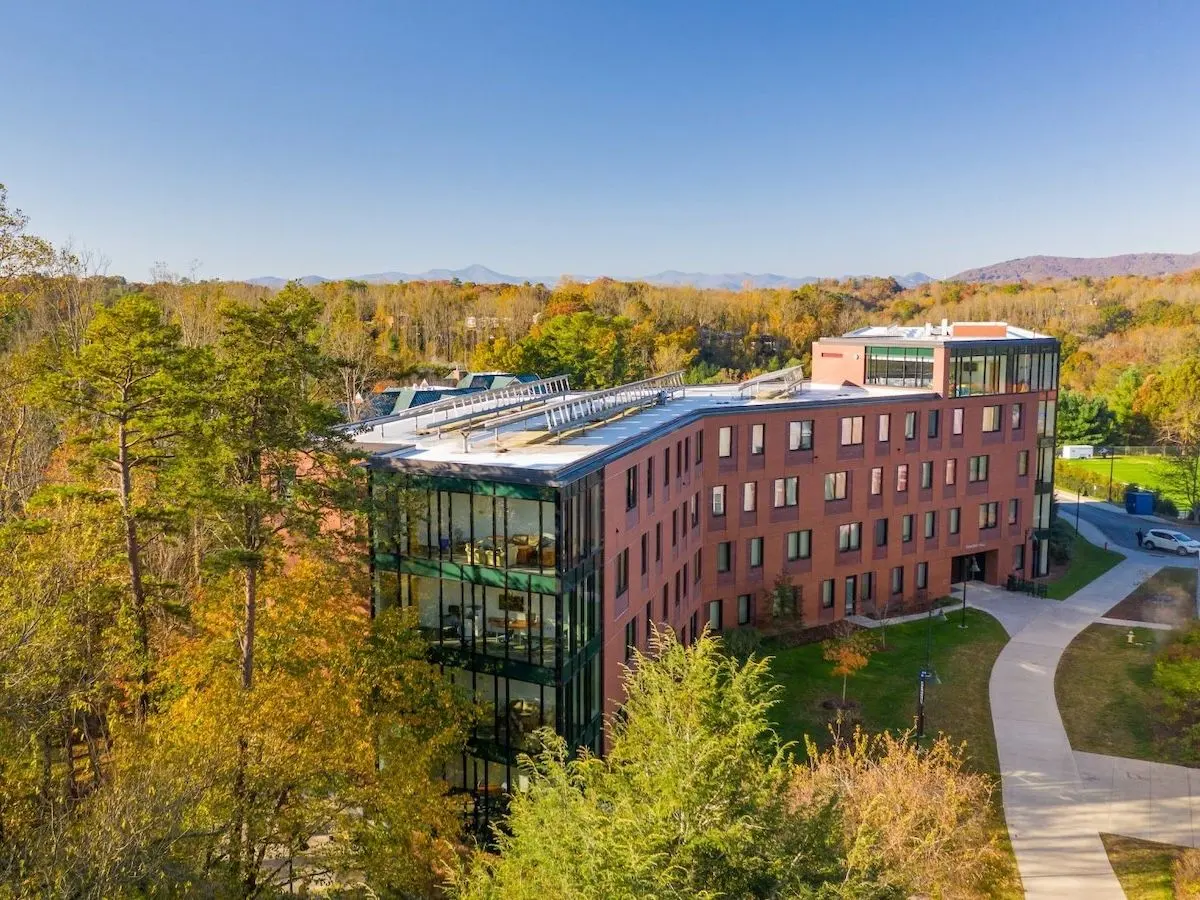
If you browse student forums or talk to alumni, you will quickly hear about the specific "vibe" of UNC Asheville. It is frequently described as inclusive, quirky, and accepting—a haven for students who may have felt like outsiders in high school. The campus is not dominated by Greek life or big-time football culture; instead, social life revolves around the arts, environmental activism, and the unique geography of the Blue Ridge Mountains.
However, prospective students should be aware of the campus's physical reality. It is located in the mountains, which means navigating hills and stairs is a daily workout—many students joke about developing "calves of steel" within their first semester. While the on-campus food scene is solid, the lifestyle is heavily influenced by the proximity to Asheville's legendary culinary scene, just a short bus ride or drive away.
Athletics and Recreation
UNC Asheville competes at the highest level of collegiate sports as a member of the NCAA Division I (Big South Conference). While the school is small, the presence of D1 athletics—particularly the Bulldogs basketball teams—injects a level of school spirit and national visibility rare for a liberal arts college. For the student body, this provides the "big school" experience of game days without the overwhelming crowds.
For those who want to participate rather than watch, the university leverages its location through extensive outdoor programs. The Student Recreation Center offers everything from intramural leagues to rock climbing, but the real draw is the guided hiking, rafting, and camping trips. This is a significant value-add for students, allowing them to explore the world-class terrain of western North Carolina safely and affordably.
Accreditation and Educational Quality
When evaluating a college, accreditation is your non-negotiable safety check. It ensures your credits are transferable and your degree is respected by employers. UNC Asheville holds the following prestigious credentials:
- SACSCOC (Institutional): Fully accredited by the Southern Association of Colleges and Schools Commission on Colleges to award baccalaureate and master's degrees. This is the regional gold standard in the U.S.
- AACSB International (Business): The Management and Accountancy programs hold this distinction, placing them in the top 5% of business schools worldwide.
- ABET (Engineering): The Mechatronics engineering curriculum is fully accredited, meeting the rigorous technical standards required for professional licensure.
- CAEP (Education): The Education program is accredited by the Council for the Accreditation of Educator Preparation, ensuring graduates are ready for state licensure.
The Surrounding Community: Asheville, NC
The relationship between the university and the city is symbiotic. Asheville is widely recognized as one of America's best college towns, offering a vibrant mix of art galleries, music venues, and outdoor adventure. For students, the city serves as an extended classroom—a place to intern with non-profits, study urban sociology in downtown, or decompress on the Blue Ridge Parkway.
However, students must approach the city with a realistic financial plan. While the cultural amenities are excellent, the cost of living in Asheville is notably higher than in many other parts of North Carolina. Rent prices are a frequent topic of discussion among students, with many noting that finding affordable off-campus housing requires diligent planning, early searches, and often, roommates. This economic reality makes the university's low tuition even more critical—it helps balance the cost of living in a desirable location.
Admissions, Costs, and Financial Aid
A college degree is an investment, and you need to analyze the numbers carefully. UNC Asheville is ranked as the #16 Best Value College in North Carolina by Research.com, validating its status as a "Best Buy." With an acceptance rate of 94%, the university maintains an accessible admissions policy that looks at the whole student, not just test scores.
2025-2026 Estimated Financial Breakdown:
- In-State Tuition & Fees: $7,501 (The "Public Price" Advantage)
- Out-of-State Tuition & Fees: ~$24,849
- Housing & Food: ~$14,246 (On-campus estimate)
- Total Direct Cost (In-State): ~$21,747
This value proposition becomes even more critical when viewed against the broader economic landscape. Data from the BEA released in 2024 shows that while Real Personal Income in North Carolina is robust (surpassing $591 billion), real personal consumption expenditures have also climbed to nearly $488 billion. In an economy where the cost of living is actively competing with income growth, choosing a university with manageable tuition is a vital strategy for long-term financial stability.
Next Steps: Your Admissions Checklist
If this profile aligns with your academic goals and financial strategy, here is your recommended timeline:
- Visit: Book a campus tour to test the "calves of steel" terrain yourself.
- Calculate: Use the Net Price Calculator on the financial aid website to get a personalized estimate.
- Apply: Submit your application via CFNC or the Common App (Deadlines: Early Action in Nov, Regular Decision in Feb).
References:
- AACSB International. (n.d.). Global listing of AACSB accredited schools. Retrieved January 20, 2026, from AACSB.
- BEST NC. (2025, April). Facts & figures: Education in North Carolina (2025 ed.). Retrieved from BEST NC.
- College Board. (n.d.). University of North Carolina at Asheville. BigFuture. Retrieved January 20, 2026, from College Board.
- Council on Undergraduate Research. (n.d.). History of NCUR. Retrieved January 20, 2026, from CUR.
- University of North Carolina Asheville. (n.d.). Tuition and fees. Retrieved January 20, 2026, from UNC Asheville.
- University of North Carolina Asheville. (n.d.). Undergraduate research. Retrieved January 20, 2026, from UNC Asheville.
Frequently Asked Questions
It comes down to size and focus. Chapel Hill is a massive Tier-1 research university with tens of thousands of students and a focus on graduate studies. UNCA is a small, undergraduate-focused liberal arts college where you will know your professors personally.
It can be challenging. On-campus housing is guaranteed for freshmen, but upperclassmen seeking off-campus housing often face a competitive market with rents above the state average. We advise starting your housing search months in advance.
UNC Asheville does not offer engineering degrees. However, students interested in engineering can participate in a dual-degree program in collaboration with other universities, where they study at UNC Asheville for three years and then transfer to complete their engineering degree.


