
2027 What Can You Do with a Human Services Degree? Costs & Job Opportunities

Co-Founder and Chief Data Scientist
Navigating a career path that aligns with a genuine concern for others can be a complex task. After all, the multitude of educational choices centered around serving communities can make it challenging to identify the most impactful route. Pursuing a human services degree is a commendable option for those seeking to provide genuine and unblemished assistance to others.
I have crafted this guide to aid aspiring individuals in embarking on their journey to make a positive and direct impact on people’s well-being. In this guide, you will discover information on the most reputable human services degree programs, associated costs, and employment prospects within the field.
What are the benefits of getting a Human Services degree?
- A human services degree teaches skills to assist diverse individuals in providing effective community service.
- Graduates of human services programs can find employment in various sectors like hospitals, human programs administration, and more.
- Salaries for common careers in human services range from $51,500 and $75,000.
What can I expect from a Human Services degree?
- A human services degree imparts knowledge on how to assist diverse individuals, focusing on personalized plans and community programs.
- The curriculum covers case management, social welfare policy, research, and crisis intervention.
- Graduates gain skills in evaluating information for effective community service and learn ethical communication.
- This social sciences degree opens doors to careers in social advocacy, counseling, and child welfare, offering opportunities in government, community organizations, and nonprofits to address vital social needs.
Where can I work with a Human Services degree?
A human services degree opens up diverse career opportunities across various sectors, allowing professionals to make a positive impact on individuals and communities. Here are some common areas where individuals with a human services degree can work:
- General and medical hospitals
- Administration of human programs jobs
- Mental Health and Counseling Centers
- Elementary and secondary schools
- Corrections and rehabilitation:
- Community organizations
- Elderly care facilities
- Individual and family services
How much can I make with a Human Services degree?
The salary potential for individuals with a human services degree can vary based on factors such as experience, location, specific job role, and the sector of employment. Here are some general salary ranges for common careers pursued by those with a human services degree:
- Social worker $61,330
- Substance abuse counselor $59,190
- Social and Community Service Manager $78,240
- 2025 Best Human Services Degree Programs Best Degrees
- How long does it take to complete a human services degree program? Completion Time
- How does an online human services degree program compare to an on-campus program? Online vs. On-Campus
- What is the average cost of a human services degree program? Degree Cost
- What are the financial aid options for students enrolling in a human services degree program? Financial Aid
- What are the prerequisites for enrolling in a human services degree program? Prerequisites
- What courses are typically in a human services degree program? What courses are typically in a human services degree program?
- What types of specializations are available in human services degree programs? What types of specializations are available in human services degree programs?
- How to choose the best human services degree program? How to choose the best human services degree program?
- What career paths are available for graduates of human services degree programs? What career paths are available for graduates of human services degree programs?
- Can advanced education further enhance my Human Services career? Can advanced education further enhance my Human Services career?
- What advanced academic opportunities can boost a Human Services career? What advanced academic opportunities can boost a Human Services career?
- What is the job market for graduates with human services degrees? What is the job market for graduates with human services degrees?
- How can advanced licensure programs boost career prospects in Human Services? How can advanced licensure programs boost career prospects in Human Services?
- How do professional networks and mentorship programs boost career growth in Human Services? How do professional networks and mentorship programs boost career growth in Human Services?
- What certifications can complement a human services degree? What certifications can complement a human services degree?
- How do human services professionals contribute to social change? How do human services professionals contribute to social change?
- What are the challenges in pursuing a human services career? What are the challenges in pursuing a human services career?
- How do digital tools and technology enhance Human Services careers? How do digital tools and technology enhance Human Services careers?
- Emerging Trends in Human Services Degree Programs Emerging Trends in Human Services Degree Programs
- How can integrating psychology enhance my Human Services career? How can integrating psychology enhance my Human Services career?
- How can self-care strategies improve my performance in Human Services careers? How can self-care strategies improve my performance in Human Services careers?
2026 Best Human Services Degree Programs
If you are comparing human services degree programs, you are probably trying to answer a practical question: which school offers the right mix of affordability, flexibility, accreditation, and career preparation? That matters even more in 2026, when students are weighing rising college costs, online learning options, and a job market that values both helping skills and real-world experience.
This guide is built to help you choose a program with confidence. You will learn what a human services degree includes, how long it can take, how online and campus programs differ, what the programs below offer, how much they may cost, and what to check before you apply.
Quick Answer: Which Human Services Degree Program Should You Choose?
The best human services degree program is the one that matches your goals, schedule, budget, and career plans. If you want flexibility, an online program may be the better fit. If you want more face-to-face support and campus resources, an on-campus program may be more practical. Accreditation, internship access, and cost should carry the most weight in your decision.
For many students, the smartest choice is a program that is accredited, offers field experience, and keeps tuition manageable. If you plan to work in counseling, community services, case management, or social support roles, look closely at curriculum, practicum opportunities, and any concentration options that align with your career path.
How We Rank Human Services Degree Programs
At Research.com, we evaluate degree programs using a research-based approach designed to support informed decision-making. For this article, we reviewed program details from credible sources including the research methodology, the IPEDS database, Peterson’s database (including the Distance Learning Licensed Data Set), the College Scorecard database, and the National Center for Education Statistics.
When reviewing human services programs, we pay attention to accreditation, delivery format, credit requirements, curriculum focus, concentration options, internship or practicum opportunities, and student support services. We do not treat rankings as a substitute for your own goals. A top-ranked school is only a good fit if it matches your schedule, budget, and career direction.
Best Human Services Degree Programs in 2026
Below are ten human services degree programs that stand out for structure, flexibility, and program design. Each one offers something different, so the right choice depends on whether you want a faster finish, a fully online format, a broader liberal arts foundation, or more field-based training.
1. Southern New Hampshire University
Southern New Hampshire University offers an online Bachelor of Arts (BA) in Human Services. The program includes 120 credits delivered in 8-week terms and is accredited by the New England Commission of Higher Education (NECHE). Students study subjects such as Introduction to Psychology, Lifespan Development, Sociology of Social Problems, Introduction to Human Services, and Communication Skills for Human Service Professionals. Learners can choose a general track or specialize in child and family services, gerontology, or substance abuse.
2. University of North Dakota
The University of North Dakota offers a Bachelor of Science (B.S.) in Rehabilitation and Human Services. The program is accredited by the Council on Social Work Education (CSWE) and requires 120 credits. Coursework includes Helping Skills in Community Services, Contemporary Issues in Rehabilitation, Dialogue on U.S. Diversity, Inclusion in Recreation Settings, and Community Living Topics. The faculty bring substantial academic training, including doctoral-level expertise in relevant fields.
3. Ottawa University
Ottawa University offers a Human and Social Services program that requires 120 credits and is accredited by the Higher Learning Commission (HLC). Students can complete the program in four years if studying full time, and accelerated options are available. Common courses include Introduction to Human Services, Social Policy and The Community, Marriage and Family, Group Work in Human Services, and Skills and Techniques in Human Services. The program also includes concentrations in Communication and Management of Community-Based Organizations.
4. Saint Mary-of-the-Woods College
Saint Mary-of-the-Woods College provides a BS in Human Services accredited by NECHE. The degree requires 120 credit hours and is typically completed in four years. Students may take courses such as Into the Woods, Out of the Woods, Communities and Education, Introduction to Human Communication, Bioethics for Healthcare Professionals, Intercultural Communication, and Introduction to Human Services. The college also supports learners through its Learning Resource Center, which offers writing support, tutoring, college success courses, and other academic services.
5. Lees-McRae College
Lees-McRae College offers an online Human Services degree accredited by the Southern Association of Colleges and Schools Commission on Colleges (SACSCOC). The program requires 60 credit hours and can usually be completed in two years. Students study the Essential Skills of Human Services, Culture and Diversity, Human Growth and Development, Personal and Professional Identity, and Social Barriers and Public Policy. The program is also designed to provide small class sizes and individualized support from faculty.
6. Drury University
Drury University offers a BS in Human Services that requires 120 credits and usually takes four years to complete. The program is accredited by HLC. Coursework includes Principles of Psychology, Methods in Social Science Research, Applied Human Development, Social Psychology, and Positive Psychology. Students may also gain practical experience through internship opportunities in human service settings.
7. East Tennessee State University
East Tennessee State University provides a BS in Human Services that requires 120 credits over four years. The program is accredited by SACSCOC. Students take courses such as Family Development, Child Psychology, Introduction to Human Services, Child/Family/Community Relations, and Administration of Human Services Organizations. The curriculum also includes practicum and internship experiences intended to build workplace readiness.
8. University of the Cumberlands
University of the Cumberlands offers a BS in Human Services accredited by SACSCOC. The degree includes 120 credit hours and is structured over four years. Students study Counseling and Communication Skills, Crisis Intervention and Trauma Informed Care, Case Management, Disability Studies, and Substance Abuse and Mental Health. Internship placements may include hospitals, battered women’s shelters, and substance abuse clinics.
9. Southeastern University
Southeastern University offers a BS in Human Services that requires 120 credits and is designed to be completed in four years. The program is accredited by SACSCOC. Courses include Social Policy and Advocacy, Introduction to Human Services, Case Management, Human Development and Behavior, and Counseling and Communication Skills. The curriculum is built to strengthen critical thinking and decision-making for work in social support settings.
10. LeTourneau University
LeTourneau University offers a Bachelor of Human Services accredited by SACSCOC. The program requires 120 credits and is available fully online. Courses follow an accelerated 7-week format, and students study Introduction to Criminal Justice, Addiction, Introduction to Human Services, Theories and Techniques of Counseling, and Case Management. The program is designed around flexible online attendance and assignment completion, with a Christian faith perspective woven into the curriculum.
Human Services Degree Programs at a Glance
| School | Format | Credits | Accreditation | Notable Feature |
| Southern New Hampshire University | Online | 120 | NECHE | General track plus three concentrations |
| University of North Dakota | Campus-based | 120 | CSWE | Rehabilitation and human services focus |
| Ottawa University | Flexible | 120 | HLC | Accelerated options available |
| Saint Mary-of-the-Woods College | Campus-based | 120 | NECHE | Learning Resource Center support |
| Lees-McRae College | Online | 60 | SACSCOC | Can be finished in two years |
| Drury University | Campus-based | 120 | HLC | Internship opportunities included |
| East Tennessee State University | Campus-based | 120 | SACSCOC | Practicum and internship experiences |
| University of the Cumberlands | Campus-based | 120 | SACSCOC | Field placements in varied service settings |
| Southeastern University | Campus-based | 120 | SACSCOC | Emphasis on social policy and advocacy |
| LeTourneau University | Online | 120 | SACSCOC | Accelerated 7-week classes |
What Human Services Graduates Say About the Degree
- Andrew: "A human services degree can be a turning point for students who want meaningful work with people and communities. The coursework and field experience often strengthen both practical skills and personal confidence."
- Mia: "Many students choose human services because the degree connects theory with direct service. Internships and community-based learning often help students see how broad social issues affect real lives."
- Ryan: "A strong human services program usually builds cultural awareness, communication, and problem-solving. Those skills can matter just as much as technical knowledge when you work with diverse populations."
How Long Does a Human Services Degree Take?
Completion time depends on the credential you choose, how many credits you already have, and whether you study full time or part time. Some programs move quickly, while others are built for students who need more flexibility.
Here is a general timeline for common human services credentials:
- Diploma in Health and Human Services: typically eight months
- Associate of Science in Health and Human Services: usually completed in 24 months
- Bachelor of Science in Health and Human Services: typically takes 48 months
- Master’s degree: generally one to two years, depending on the program
- Doctorate: typically takes four to five years to complete
Transfer credits, accelerated terms, and year-round enrollment can shorten the timeline. If you already completed general education requirements, you may be able to move through the degree more quickly.
Online vs. On-Campus Human Services Programs
The right format depends on how you learn best and what support you need. Online programs offer flexibility. On-campus programs usually offer more direct interaction and physical access to student services.
| Factor | Online Program | On-Campus Program |
| Learning style | Best for students who work independently and need scheduling freedom | Best for students who want structured class meetings and direct discussion |
| Interaction | Communication happens through learning platforms, email, and virtual meetings | Students get face-to-face access to faculty and classmates |
| Resources | Depends heavily on digital tools and online student support | Often includes libraries, career services, clubs, and campus-based support |
| Cost | May reduce commuting or housing costs | May include housing, transportation, and meal expenses |
| Flexibility | Useful for working adults and caregivers | Better for students who want a fixed routine |
Choose online if you need flexibility, live far from campus, or want to keep working while studying.
Choose on campus if you want more direct support, stronger in-person networking, or a more traditional college experience.
What Does a Human Services Degree Cost?
Cost varies by school type, residency, degree level, and format. Public in-state programs usually cost less than public out-of-state or private programs. Two-year options are also less expensive than four-year degrees.
In-state schools for a degree in human services charge an average tuition fee of $11,260 while out-of-state institutions average at $29,150.
The College Board’s Trends in College Pricing and Student Aid found that for the 2025-26 school year, public college costs have climbed by nearly 3%. The College Board estimates that full-time undergraduate tuition now averages $4,150 at two-year in-district colleges and $11,950 at four-year in-state schools. Total sticker prices, including living expenses, are now roughly $21,320 and $30,990, respectively.
Those totals help explain why you should look beyond tuition alone. Books, fees, room and board, commuting, and personal expenses can change the real price of attendance. If you want a fuller picture of housing expenses, review what is included in room and board in college.
| Degree Type | Public In-State (Tuition and Fees Only) | Public Out-of-State (Tuition and Fees Only) | Private (Tuition and Fees Only) |
| Associate Degree | $4,150 | $11,950 | $16,350 |
| Bachelor's Degree | $11,260 | $29,150 | $41,540 |
| Graduate Studies | Starts at $7,523 | Starts at $22,652 | Starts at $33,400 |
Financial Aid Options for Human Services Students
Students in human services programs can often use more than one type of financial support. Federal aid may help, but it is not the only option.
Scholarships from professional organizations are worth checking because they can support both new students and working professionals. The National Organization for Human Services offers annual scholarship opportunities, including $500 student scholarships that may vary from year to year.
You should also check for funding through the college itself, state programs, employer tuition assistance, grants, and work-study opportunities. A combined aid package may reduce borrowing and make a degree more affordable.
What Do You Need to Apply?
Admission standards differ by school, but most human services programs ask for a similar set of academic and personal qualifications.
Common Admission Requirements
- Proof of graduation. You usually need a high school diploma or equivalent, though some schools may accept completion of 30 credit hours in a general education program.
- Transcripts. A strong academic record helps. Many programs consider GPAs in the 2.5 to 3.0 range, depending on selectivity.
- SAT or ACT scores. Some colleges still ask for standardized test results. Benchmarks often fall around 1200 to 1500 for the SAT and 25 to 35 for the ACT, though requirements vary.
- Additional materials. Letters of recommendation, essays, or advisor forms may strengthen your application.
Skills That Help You Succeed
- Communication. Human services work depends on clear speaking and writing.
- Social perceptiveness. You need to notice how people respond and understand what those reactions mean.
- Active listening. Good professionals listen carefully, avoid interrupting, and ask useful follow-up questions.
- Service orientation. A strong desire to help others is central to success in this field.
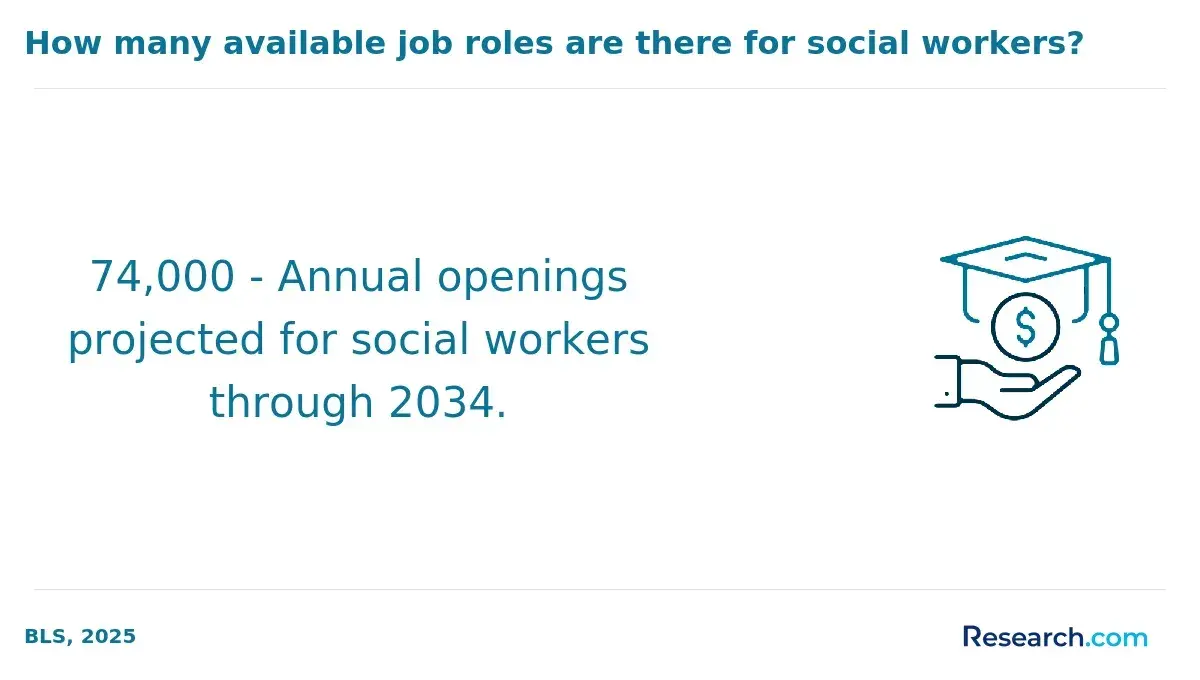
Application competition can be stronger when more students are applying to college. In spring 2025, a total of 3.9 million students graduated from high school, reaching a historic peak. As of fall 2025, approximately 17.5% of recent graduates enrolled in two-year institutions, while 45.4% enrolled in four-year institutions.
What Courses Are Usually Included?
Human services programs usually combine behavioral science, social policy, communication, and service delivery. Course titles vary, but the subject matter is often similar across schools.
- Introduction to Human Services. Covers the field’s purpose, history, and professional roles.
- Social Work and Social Welfare. Examines policy, service systems, and welfare frameworks.
- Counseling Theories and Techniques. Introduces major counseling approaches and applied methods.
- Human Development. Focuses on physical, emotional, and psychological growth across the lifespan.
- Case Management. Teaches assessment, referral, and service coordination.
- Ethics in Human Services. Covers professional conduct and ethical decision-making.
- Cultural Competence. Builds skills for serving people from different backgrounds.
- Substance Abuse Counseling. Introduces prevention, treatment, and recovery concepts.
- Group Dynamics. Explores how groups function and how to guide group interaction.
- Family Systems. Studies family structure and intervention strategies.
- Crisis Intervention. Examines immediate support strategies in emergencies.
- Psychopathology. Reviews mental health conditions and treatment approaches.
- Research Methods in Human Services. Teaches how to study social problems and human behavior.
- Community Engagement and Advocacy. Focuses on community involvement and policy-oriented change.
What Specializations Can You Pursue?
Many human services programs let students focus on a specific population or service area. A concentration can help you match coursework to a career goal.
- Mental Health. Prepares you for support roles in mental health agencies and related services.
- Military Families and Culture. Addresses the needs of service members, veterans, and their families.
- Disaster, Crisis, and Intervention. Focuses on crisis response planning and emergency support.
- Community and Social Services. Prepares students for leadership in community support programs.
- Criminal Justice. Explores the justice system and its impact on victims, offenders, and communities.
How to Choose the Best Human Services Degree Program
The best program is not always the most affordable or the most highly ranked. It is the one that supports your intended career path and gives you a realistic return on your time and money.
- Check accreditation first. Accreditation helps confirm that the school meets recognized quality standards. Look for institutional accreditation and, when relevant, program-level recognition through the Council for Standards in Human Service Education.
- Match the curriculum to your goals. If you want to work in addiction services, family support, or community programs, choose a school with courses and electives in those areas.
- Look for field experience. Practicums, internships, and service-learning projects matter because human services is a hands-on field.
- Compare total cost, not just tuition. Add books, technology fees, transportation, and housing before deciding.
- Review student support services. Advising, tutoring, and writing support can make a major difference, especially for first-generation and adult learners.
- Ask about transfer credit policies. If you have prior college coursework, make sure the school will accept it.
| Question to Ask | Why It Matters |
| Is the school accredited? | Accreditation affects credit transfer, financial aid, and employer trust. |
| Does the program include internships or practicum hours? | Fieldwork helps build experience before graduation. |
| Are there concentrations or electives? | Specializations can better align the degree with your goals. |
| What is the total estimated cost? | Tuition alone does not show the full financial picture. |
| Can I study part time or online? | Flexibility matters if you are working or caring for family. |
What Careers Can You Pursue With a Human Services Degree?
A human services degree can lead to work in community support, social assistance, program management, and related public service fields. Some roles are directly aligned with the degree, while others may require additional training or licensure.
- Social and Human Service Assistant. These professionals help clients access services and support in areas such as rehabilitation, psychology, or social work. Human services graduates are often a fit, though this role is also commonly associated with a social worker degree.
- Counselor. Graduates may find roles that involve planning services, supporting clients, and helping with intervention and follow-up care.
- Social and Community Service Manager. These professionals coordinate programs, supervise staff, and work with community stakeholders.
- Medical and Health Services Manager. This role focuses on improving service delivery, staffing, compliance, and facility operations.
- Public Administration and Social Service. These professionals help implement policy and support public programs. Some come from human services or a public administration major.
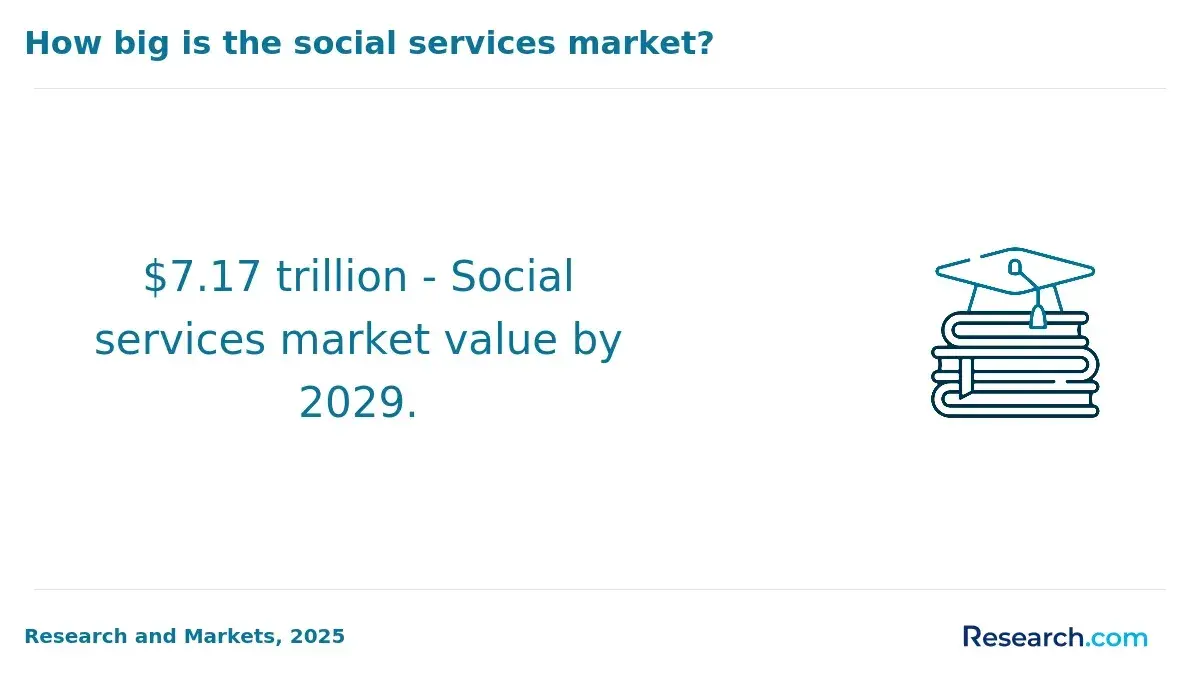
In 2025, a total of 12,541 human services degrees were awarded. That makes it smart to think broadly about career options, including fields with overlapping skills such as sociology. Graduates may also consider careers linked to a sociology degree.
Can Graduate Study Improve a Human Services Career?
Yes, graduate study can expand your options if you want to move into leadership, policy, specialized counseling, or research-focused work. A master’s degree or other advanced credential can deepen your understanding of behavioral health, program design, and service systems.
For some students, a focused graduate path can be especially useful. For example, a christian counseling degree online may make sense for learners who want counseling-related training in a faith-based setting. The right choice depends on whether you need clinical preparation, administrative growth, or specialized population knowledge.
What Advanced Academic Paths Can Support Career Growth?
Beyond the bachelor’s degree, students often explore graduate and professional pathways that add depth to their credentials. These options can strengthen leadership skills, research ability, and subject expertise.
A master's in psychology online may be useful for professionals who want more insight into behavior, assessment, and intervention. Other interdisciplinary graduate programs can add skills in public health, policy, behavioral science, or administration, depending on your long-term goals.
What Does the Job Market Look Like for Human Services Graduates?
The job market for human services graduates is tied closely to healthcare, social assistance, and community service needs. As of late 2025, there are approximately 1.25 million job openings specifically within the healthcare and social assistance sector. The community and social service job outlook is expected to grow by 6.6% through 2034.
Within that broader outlook, jobs for social and human service assistants are projected to increase by 6% and substance abuse counselors by 17% from 2024 to 2034. Those figures suggest continued demand for people who can support clients, coordinate services, and work across agencies.
This chart based on the US BLS in 2025 shows the expected job prospects for various human services positions.
How Can Licensure Change Your Career Options?
Licensure can expand what you are allowed to do professionally, but the rules depend on the state and the specific role. A human services degree alone may qualify you for support and coordination roles, while some counseling or therapy positions require additional graduate coursework, supervised experience, exams, and state approval.
That is why it is important to confirm licensure requirements before choosing a program. If your goal is to become a licensed clinician, look for a pathway that aligns with state standards. For example, some students explore online PsyD programs that lead to licensure when they want advanced psychology training.
Why Mentorship and Networking Matter in Human Services
Human services is a relationship-based field. Classroom learning is important, but professional growth often depends on the people you know, the settings where you train, and the feedback you receive along the way.
Professional associations, internships, and supervised field placements can help you learn how agencies operate, how to communicate with clients, and how to navigate difficult situations. Mentorship can also help you decide whether to specialize, pursue graduate school, or move into management.
Continuing education can support that growth as well. For example, students comparing specialized options may also want to review topics such as forensic psychology master's program cost to understand how advanced credentials fit into long-term planning.
Which Certifications Can Help Human Services Graduates?
Certifications are not always required, but they can make your profile more competitive and help you build expertise in a specific area.
- Certified Substance Abuse Counselor (CSAC): useful for addiction-focused roles.
- Certified Family Life Educator (CFLE): valuable for family education and support work.
- Trauma-Informed Care Certification: helpful for professionals working with people affected by abuse, neglect, or crisis.
- Crisis Intervention Certification: relevant for emergency support and high-pressure client situations.
- Case Management Certification (CCM): useful for coordinating services and managing client care plans.
How Human Services Professionals Support Social Change
Human services professionals do more than assist individuals one at a time. They often help communities respond to larger social problems by connecting people to resources, strengthening support systems, and advocating for policy improvements.
- They advocate for vulnerable groups. This includes children, older adults, low-income families, and people with disabilities.
- They support mental health awareness. Their work can reduce stigma and make care easier to access.
- They build community programs. These programs may address addiction, homelessness, unemployment, or domestic violence.
- They influence policy. Many professionals participate in local or state-level advocacy.
- They connect people to support networks. Access to the right services can change long-term outcomes.
What Are the Biggest Challenges in This Career Path?
Human services can be deeply rewarding, but it is not an easy field. Students should understand the demands before committing to the major.
- Emotional strain. Working with people in crisis can be draining.
- Stress. Caseloads, deadlines, and urgent client needs can create pressure.
- Irregular schedules. Some jobs require nights, weekends, or on-call availability.
- Burnout risk. Long-term exposure to trauma and high workloads can wear people down.
- Ongoing training. Many roles require continuing education or new credentials over time.
- Bureaucracy. Large organizations often involve paperwork, rules, and funding limits.
- Client resistance. Not every client is ready to accept help right away.
If you are considering a path that may lead into counseling or therapy, it can help to understand what added education is needed for roles such as a marriage and family therapist.
How Technology Is Changing Human Services
Technology is changing how human services professionals document cases, communicate with clients, and deliver support. Digital tools can improve case management, data tracking, and access to remote services. They also make it easier to work across agencies and coordinate care.
This shift means future professionals should be comfortable using online platforms, virtual meetings, and electronic records. Students who want to broaden their digital and behavioral training may also explore online psychology master's programs as part of their long-term plan.
Current Trends in Human Services Degree Programs
Human services programs are adapting to the way students live and the way employers hire. The most noticeable trends in 2026 include:
- More online options. Schools continue to expand flexible formats for working adults and commuters.
- More technology integration. Programs are giving students more exposure to digital tools and data systems.
- Stronger mental health focus. Many schools are adding coursework and concentrations tied to behavioral health.
- More experiential learning. Internships, practica, and service learning remain central.
- Faster completion paths. Accelerated options can help students finish sooner. You can compare options such as the shortest accelerated human services degree programs.
- More attention to diversity and inclusion. Cultural competence is now a core expectation, not an optional extra.
- Greater emphasis on social justice. Programs are preparing students to work with underserved communities and systemic barriers.
How Psychology Can Strengthen a Human Services Career
Psychology and human services overlap in meaningful ways. Psychology can help you better understand behavior, trauma, motivation, and mental health, which can improve how you support clients and communicate across teams.
If you want stronger behavioral science training, a program such as the fastest psychology programs online may complement a human services background. That combination can be useful for students who plan to work in counseling-adjacent roles, case coordination, or community support services.
What Ethical Standards Should Guide Your Work?
Ethics matter in every human services role. Professionals must protect confidentiality, respect client autonomy, maintain professional boundaries, and make decisions that support client welfare. Cultural sensitivity and informed consent are also essential.
Good programs teach ethics through case studies and applied discussions rather than simple memorization. If you move into advanced counseling or psychology training, ethics remain central. Some clinical paths, including options such as the cheapest doctor of psychology degree online, also require a strong commitment to ethical practice.
How Self-Care Supports Better Performance
Self-care is not a luxury in human services. It is part of staying effective. Professionals who manage stress well are better prepared to make good decisions, maintain empathy, and avoid burnout.
Helpful habits include regular supervision, healthy boundaries, time off when possible, stress management strategies, and peer support. Students who want to build stronger counseling skills may also explore online masters programs in mental health counseling for more targeted training.
Common Mistakes to Avoid When Choosing a Human Services Program
- Choosing a school without checking accreditation.
- Focusing only on tuition and ignoring fees, books, and living costs.
- Assuming every online program meets licensure needs in your state.
- Skipping internship and practicum details.
- Relying only on rankings instead of fit and outcomes.
- Ignoring transfer credit policies if you already have college coursework.
- Assuming a degree guarantees a job or a specific salary.
Questions to Ask Before You Enroll
- Is this program accredited by a recognized agency?
- Does the curriculum match my target job or graduate school plan?
- Are internships, practica, or field placements included?
- Can I complete the degree online, on campus, or in a hybrid format?
- What is the total cost after fees, books, and housing?
- What financial aid is available?
- Will this program help me meet licensure requirements if I plan to pursue licensure later?
- How strong is the advising, tutoring, and career support?
References
- Bureau of Labor Statistics. (2025). Community and social service occupations. Occupational Outlook Handbook. https://www.bls.gov/ooh/community-and-social-service/
- Bureau of Labor Statistics. (2025). Employment projections — 2024-2034 [Press release]. https://www.bls.gov/news.release/pdf/ecopro.pdf
- Bureau of Labor Statistics. (2026). Social and human service assistants. Occupational Outlook Handbook. https://www.bls.gov/ooh/community-and-social-service/social-and-human-service-assistants.htm
- Bureau of Labor Statistics. (2026,). Substance abuse, behavioral disorder, and mental health counselors. Occupational Outlook Handbook. https://www.bls.gov/ooh/community-and-social-service/substance-abuse-behavioral-disorder-and-mental-health-counselors.htm
- Higher Ed Dive. (2024). High school graduates to peak in 2025, with slightly deeper-than-expected declines ahead. https://www.highereddive.com/news/high-school-graduates-to-peak-in-2025-with-slightly-deeper-than-expected-d/735175/
- National Center for Education Statistics. (n.d.). Glossary: Bachelor's degree. https://nces.ed.gov/programs/handbook/glossary.asp
- National Student Clearinghouse Research Center. (2026). Fall undergraduate enrollment shows overall growth despite decline at private colleges. https://www.studentclearinghouse.org/news/fall-undergraduate-enrollment-shows-overall-growth-despite-decline-at-private-colleges/
- Western Interstate Commission for Higher Education (WICHE). (2024). Knocking at the college door: Projections of high school graduates (11th ed.). https://knocking.wiche.edu/
Key Insights
- Human services degree programs are best evaluated by accreditation, internship access, cost, and format—not by school name alone.
- Online programs suit students who need flexibility, while on-campus programs usually offer stronger in-person support and campus resources.
- Completion time ranges widely, from short diplomas and associate degrees to four-year bachelor’s programs and graduate study.
- Costs vary significantly by school type and residency, so students should compare total attendance cost rather than tuition only.
- Coursework usually centers on communication, case management, human development, ethics, and community support.
- Career paths can include service assistant roles, program management, counseling-adjacent positions, and public service work, but some roles require extra licensure or graduate study.
- Technology, mental health services, diversity training, and accelerated formats are shaping the field in 2026.
- The strongest program for you is the one that matches your career target, schedule, and financial plan while giving you real field experience.
Other Things You Should Know About Human Services Degrees
To verify accreditation of a Human Services degree program in 2027, check the U.S. Department of Education's database of accredited postsecondary institutions and programs. Additionally, consult the Council for Higher Education Accreditation website which lists recognized accrediting agencies confirming legitimacy.
Communication Skills: Learn to effectively communicate with diverse populations, including clients, colleagues, and stakeholders.
Counseling Techniques: Develop skills in counseling and intervention strategies to support individuals facing various challenges.
Advocacy and Social Justice: Gain an understanding of social justice issues and advocacy methods to address systemic inequalities.
Case Management: Learn to assess needs, create treatment plans, and coordinate services for clients in different settings.
Ethical Decision-Making: Understand ethical principles and guidelines to navigate complex situations ethically and responsibly.
Human Services professionals in 2027 may need certifications like the Certified Human Services Professional (CHSP) or a state-specific license, depending on the job and location. Requirements vary, so check with your local licensing board for specific conditions and mandatory exams.
![2027 Best Advanced Standing Online MSW Programs [CSWE Accredited] thumbnail](https://research.com/resized/uploads/Online_Advanced_Standing_MSW_301dbd5368.jpg?format=thumbnail)


