
2027 What Degree Do You Need To Be a Social Worker: Education Requirements in California

Co-Founder and Chief Data Scientist
Many aspiring social workers in California struggle to understand the specific education requirements essential for entering this vital profession. Recent data shows that California employs over 150,000 social workers, with demand expected to grow by 12% through 2030. Pursuing the correct degree—a Bachelor of Social Work (BSW) or Master of Social Work (MSW)—is crucial for licensure and career advancement.
This article, crafted by experts in career planning, offers a clear roadmap of the necessary academic qualifications and licensure pathways. It equips readers with authoritative guidance to navigate California’s education prerequisites and successfully launch a social work career.
Key Things to Know About Social Work Education Requirements in California
- A Bachelor of Social Work (BSW) degree is the minimum educational requirement to enter the social work workforce in California, allowing for licensed entry-level positions.
- A Master of Social Work (MSW) degree is required for clinical licensing (LCSW) and advanced practice, which significantly enhances career opportunities and earning potential.
- California’s Board of Behavioral Sciences mandates accredited program completion and supervised fieldwork hours—typically 3,200 hours post-MSW—for clinical licensure eligibility.
- What is the minimum degree required to become a licensed social worker in California?
- What courses are covered in a social work degree program in California?
- How long does it take to complete a social work degree program in California?
- How much does a social work degree cost in California?
- What degrees are required for different social work specializations in California?
- What financial aid options are available to social work students in California?
- What are the alternative pathways to become a social worker in California?
- What is the licensure process after earning a social work degree in California?
- What Are the Career Prospects and Earning Potential for Social Work Graduates in California?
- Are online social work degrees recognized in California?
- What organizations accredit social work degree programs in California?
- What are the top institutions offering social work degree programs in California?
What is the minimum degree required to become a licensed social worker in California?
California sets a notably high standard for social work licensure by requiring advanced academic credentials. The following list outlines the essential degrees for social workers seeking licensure in the state.
- Master of Social Work (MSW): A CSWE-accredited master’s degree in social work is mandatory for all licensure pathways in California, reflecting the state’s emphasis on advanced training and serving as the minimum degree for a social worker license in California.
- Associate Clinical Social Worker (ASW): After obtaining an accredited MSW, candidates must register as an ASW to begin acquiring supervised experience essential for independent clinical practice.
- Licensed Clinical Social Worker (LCSW): This is the primary license for independent practice, requiring a CSWE-accredited MSW, completion of additional supervised experience, and successful passage of licensing examinations.
- CSWE Accreditation Requirement: The Council on Social Work Education’s accreditation is strictly required; degrees from non-accredited programs or related fields do not qualify for licensure.
For those interested specifically in social work children and families, completing an MSW from one of the recognized, accredited MSW programs in California is essential before progressing through the licensure process.
What courses are covered in a social work degree program in California?
Having a well-designed coursework curriculum is essential in preparing competent social workers who can effectively serve California's diverse populations. The program must ensure foundational knowledge while meeting state-specific regulatory standards. Below is a concise outline of the core courses commonly featured in accredited social work degree programs in California:
- Human Behavior and the Social Environment: Examines individual, family, and community dynamics through psychological, social, and cultural perspectives to understand factors influencing well-being.
- Social Work Practice: Covers intervention techniques with various client systems, emphasizing ethical standards and evidence-based methods.
- Social Welfare Policy: Studies the development and impact of social policies at multiple governmental levels affecting vulnerable populations.
- Diversity and Cultural Pluralism: Focuses on equity, social justice, and effective engagement with California's diverse communities, addressing race, gender, and systemic inequality.
- Social Work Research: Provides knowledge of research methodologies and data analysis critical for applying evidence in professional practice.
- Field Education/Practicum: Requires supervised, hands-on experience in community settings; California mandates completion of practicum hours, with multiple semesters needed in MSW programs.
- Social Work Electives and Concentrations: Offers specialized coursework tailored to specific practice areas such as child welfare, mental health, and substance use.
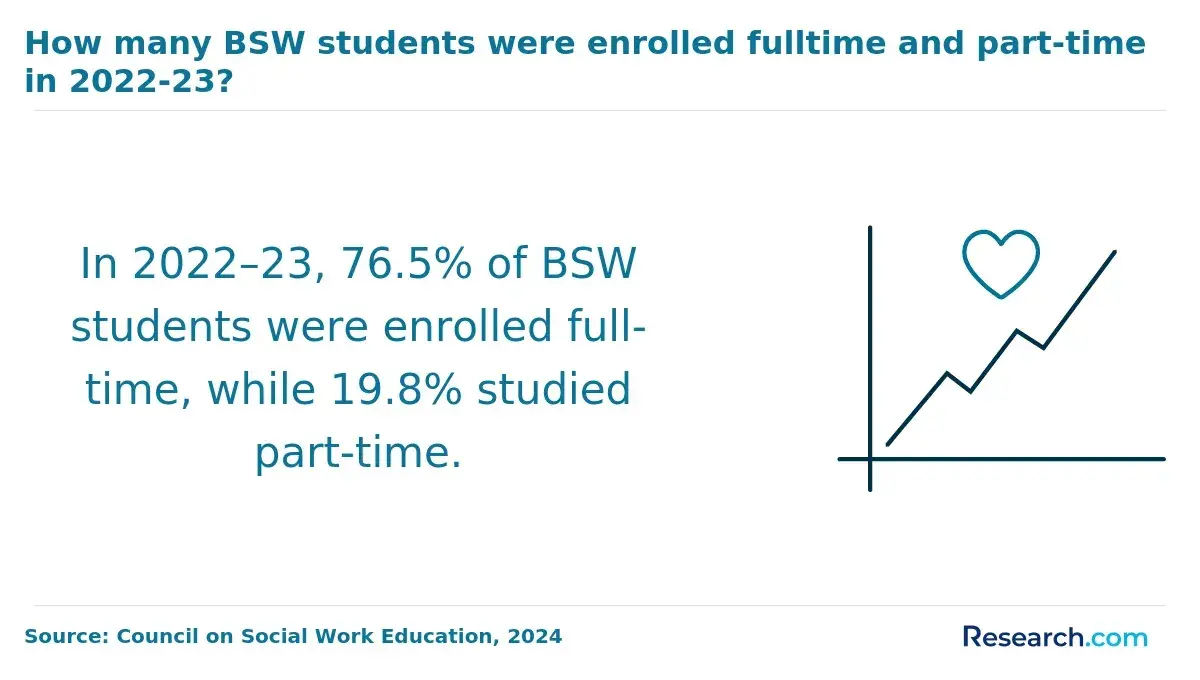
The image highlights enrollment patterns in BSW programs, where most students pursue full-time study while a smaller share enroll part-time. This balance reflects how California’s rigorous coursework demands significant commitment, yet programs remain flexible to accommodate diverse student needs.
How long does it take to complete a social work degree program in California?
When planning to enter the social work profession in California, understanding the typical duration of degree programs is essential. Program length influences how soon graduates can begin their careers and how they balance education with personal responsibilities. Various factors, including enrollment status and prior education, affect how long it takes to complete social work degrees in California.
- Bachelor of Social Work (BSW): Full-time students usually complete their BSW in four years, aligning with traditional undergraduate timelines, while part-time students may require five to six years due to reduced course loads and fieldwork commitments.
- Master of Social Work (MSW): Full-time programs typically last two years, whereas part-time options extend to around three years; students with a CSWE-accredited BSW can leverage advanced standing to finish in as little as one year full-time or two years part-time.
- Doctor of Social Work (DSW): Offered by select California institutions, these practice-focused doctorates generally take two to three years full-time, with part-time study potentially extending to four or more years depending on dissertation demands.
- PhD in Social Work: Research-oriented doctorates involve four to five years full-time, including significant dissertation work, with part-time candidates sometimes requiring six years or longer depending on research progress.
- Advanced Standing Eligibility: Students entering MSW programs with a qualifying BSW may significantly reduce their study duration, often graduating in one year full-time.
- Fieldwork Requirements: Field placements mandated by CSWE can affect timelines due to their competitive nature in California’s urban centers.
- Enrollment Status: Part-time students generally take one to two additional years to complete degrees compared to full-time peers.
- Program Format and Institutional Policies: Online and hybrid programs offer flexible pacing, but universities like CSU San Marcos enforce maximum completion limits, such as five years for MSW degrees.
I spoke with a social worker from California who graduated from a local university’s MSW program. She shared that balancing part-time studies with full-time work stretched her timeline to just over three years, longer than she initially anticipated. “Finding and securing a field placement felt like a hurdle that sometimes slowed me down more than coursework,” she recalled. Despite these challenges, she valued the support from faculty and peers, which kept her motivated.
“Looking back, the extended timeline allowed me to deeply engage with both academic and practical experiences. It was a tough journey but rewarding to feel prepared stepping into the profession.” Her experience highlights how individual circumstances and program requirements shape the overall duration of social work education in California.
How much does a social work degree cost in California?
Knowing the cost of a social work degree in California helps prospective students evaluate their educational investment and plan for long-term financial responsibilities. Tuition and fees vary by program level, institution type, and residency status, which affects overall affordability and decision-making.
- Bachelor of Social Work (BSW): Public universities charge in-state students approximately $7,000 to $11,000 per year, while out-of-state tuition can exceed $18,000. Private colleges typically range from $35,000 to $55,000 annually, with online programs offering similar pricing but added flexibility.
- Master of Social Work (MSW): Tuition for MSW programs at public institutions is usually $8,000 to $15,000 per year for residents, with non-residents paying an additional $10,000 to $20,000. Private MSW programs cost between $40,000 and $60,000 per year, while online options may reduce some fees but mirror on-campus tuition.
- Doctor of Social Work (DSW): Less common in California, these programs are mainly at private universities with tuition ranging from $30,000 to $50,000 annually. Part-time or hybrid formats can lower costs slightly but not significantly.
- PhD in Social Work: Public universities often provide tuition remission and stipends but may charge $5,000 to $10,000 in fees yearly. Private institutions charge between $25,000 and $55,000, with competitive fellowships available to offset expenses.
Students should carefully compare tuition for BSW and MSW programs to understand funding options and explore financial aid. Using resources like the how much do social workers make guide can also support budget planning and career expectations.
What degrees are required for different social work specializations in California?
Different social work specializations in California demand varied educational qualifications due to the unique responsibilities and legal standards tied to each role. Meeting the specific degree requirements for social work specializations in California is essential to ensure compliance with licensing regulations and to succeed professionally.
- Clinical Social Work (LCSW): A master’s degree in social work (MSW) from a CSWE-accredited program is required, followed by 3,000 hours of supervised post-master’s experience and passing relevant exams. Bachelor’s degrees alone do not qualify for clinical licensure in California.
- School Social Work: Typically requires an MSW with specialized coursework or fieldwork related to educational settings, along with possible certification from the California Commission on Teacher Credentialing for working in public schools.
- Healthcare Social Work: An MSW is generally necessary, especially in roles involving patient advocacy or counseling, and clinical licensure is required for diagnosis and treatment functions. Healthcare social workers earn some of the highest salaries in the state.
- Child and Family Services: Entry-level roles may accept a bachelor’s degree in social work (BSW) or related fields, but advancement to specialized or supervisory positions usually requires an MSW and LCSW licensure for clinical work.
- Non-Clinical Social Work: Does not require licensure but commonly expects at least a BSW or bachelor’s degree in related disciplines like psychology. These roles focus on case management and advocacy without involving clinical diagnosis.
The chart highlights the top employment areas for PhD graduates in social work, with tenure-track and research positions leading. This underscores how advanced degrees in California can open academic, research, and leadership pathways beyond traditional clinical and community practice roles.
What financial aid options are available to social work students in California?
Financial aid is essential for students pursuing social work degrees in California, as it helps mitigate the significant costs associated with tuition and living expenses. Access to financial aid for social work students in California enables individuals to concentrate on their studies and professional development without the overwhelming burden of debt.
- Federal Grants: The Federal Pell Grant and FSEOG provide need-based awards for eligible undergraduates, offering funds that do not require repayment, with Pell Grants awarding up to $7,395 annually.
- Cal Grants: These state-funded grants offer need-based aid up to $6,000 per year to California residents enrolled in BSW or MSW programs, requiring FAFSA or California Dream Act Application submission.
- California College Promise Grant: This program waives tuition fees for eligible California Community College students, supporting those beginning their social work education at the community college level.
- Title IV-E Child Welfare Stipend Program: MSW students working full-time and committing to public child welfare agencies can receive stipends up to $25,000 per year for two years, addressing workforce needs in California.
- Work-Study Programs: Federal and state options provide part-time employment for students with financial need, allowing them to earn income while gaining practical social work experience.
- Scholarships for BSW and MSW Programs: A variety of scholarships are available, ranging from $500 to $5,000, including awards for disadvantaged, Native American, and advanced MSW students to support educational expenses.
- School-Based Scholarships and Stipends: Universities such as SDSU and CSUSM offer competitive scholarships, stipends, and fellowships up to $18,500 annually, often tied to internships or specific fields within social work.
- Student Loans: Federal Direct Loans with income-driven repayment options and Public Service Loan Forgiveness are accessible to social work students, assisting with financing graduate and undergraduate education.
- Professional Association and Diversity Scholarships: Organizations like the NASW California Chapter provide scholarships to underrepresented groups, enhancing diversity and inclusion within the social work profession.
For those exploring affordable options, reviewing the cheapest MSW programs online may provide additional pathways to financial efficiency in obtaining a social work degree.
What are the alternative pathways to become a social worker in California?
Individuals holding degrees in related fields or from other disciplines can transition into social work in California without restarting their education entirely. Several alternative pathways recognize prior academic and professional experience, enabling efficient entry into the profession.
- Traditional MSW Programs for Non-BSW Holders: Candidates with bachelor’s degrees in psychology, sociology, or liberal arts can enroll in two-year Master of Social Work programs that combine coursework and field training.
- Advanced Standing MSW Programs: Those with a CSWE-accredited BSW may qualify for accelerated one-year MSW tracks, while others complete the standard two-year curriculum.
- Foundation in Related Degrees: Degrees in psychology, sociology, or human services are accepted prerequisites supporting MSW admissions and foundational knowledge.
- Post-Bachelor’s Certificate and Bridge Programs: Designed for individuals with unrelated undergraduate degrees, these programs fulfill prerequisites to strengthen MSW applications.
- State-Specific Alternative Certification: Licensed social workers from other states with active LCSW status may obtain California licensure through credentialing, bypassing repeated education.
A social worker from California shared his experience of shifting careers through the alternative pathway after graduating locally. “Initially, it felt overwhelming to leave a stable job outside social work,” he recalled. Navigating the transition required balancing bridge coursework and field placements while managing personal commitments. However, the support from faculty and the relevance of his previous experience proved invaluable.
He emphasized, “Being able to leverage my background and not start entirely from zero made all the difference; it was challenging but ultimately rewarding.” This pathway, he noted, allowed him to meet California’s licensure requirements while pursuing his passion with confidence.
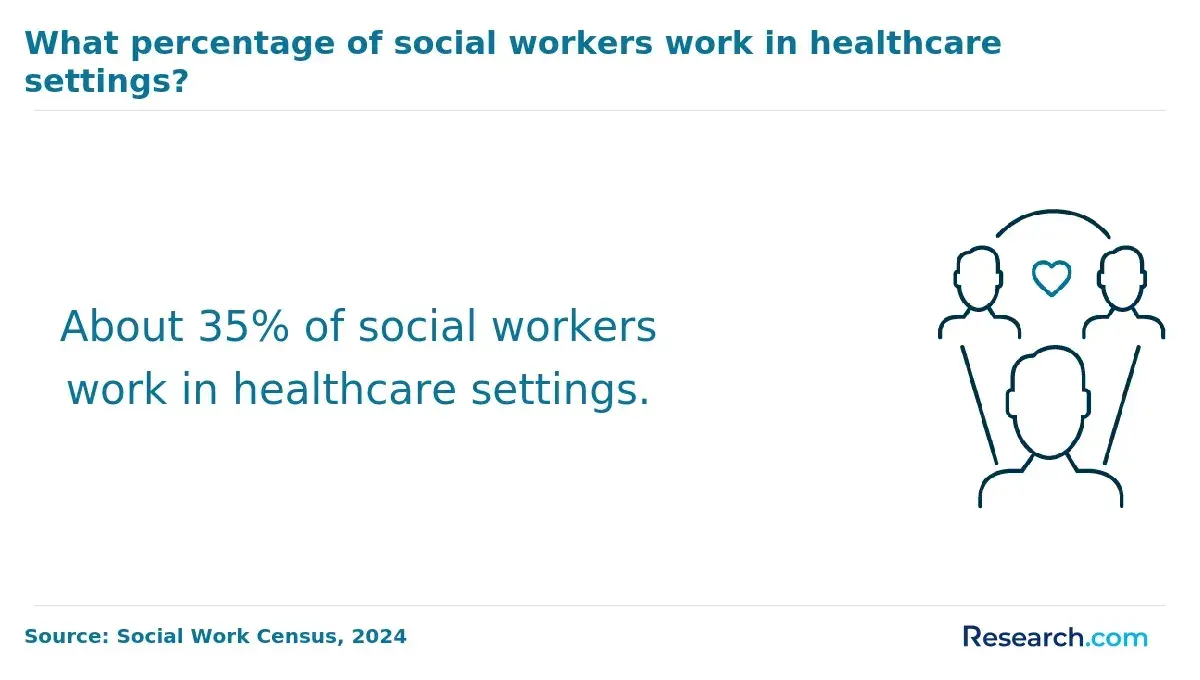
The image shows that about 35% of social workers are employed in healthcare, highlighting a major career destination for those entering through alternative pathways. In California, flexible routes enable career changers to access this vital, in-demand field.
What is the licensure process after earning a social work degree in California?
After graduating from a CSWE-accredited BSW or MSW program, candidates must navigate a structured licensure process. This involves completing the required number of supervised fieldwork hours, compiling detailed documentation of clinical experience, and successfully passing the mandatory licensing exam. Applicants should prepare to submit comprehensive credentials to the California Board of Behavioral Sciences for evaluation. For a step-by-step guide and additional insights on preparing for this transition, please review how to become a social worker in California.
What Are the Career Prospects and Earning Potential for Social Work Graduates in California?
California’s diverse sectors offer robust career opportunities for social work graduates, spanning clinical practice, administrative leadership, community services, and government agencies. The state’s high demand for qualified professionals translates into competitive salary packages and long-term job stability. Employers prioritize both academic excellence and practical experience, making advanced certifications and specialized training key factors in career advancement. Graduates can leverage these strengths to secure roles that not only meet state licensure requirements but also provide a pathway for professional growth. For a focused counseling trajectory, refer to the fastest way to become a counselor in California.
Are online social work degrees recognized in California?
Online Bachelor of Social Work (BSW) and Master of Social Work (MSW) programs have rapidly expanded in popularity, offering students greater flexibility to manage work, family, and education simultaneously. For California students, recognition of these degrees is vital to secure licensure as Licensed Clinical Social Workers (LCSW) or Licensed Master Social Workers (LMSW) and to enhance employment prospects within a competitive job market.
The California Board of Behavioral Sciences requires graduation from a program accredited by the Council on Social Work Education (CSWE) for licensure, irrespective of delivery mode. California hosts the nation’s largest number of CSWE-accredited MSW programs, including several fully online options. A 2022 National Association of Social Workers survey found that over 70% of California employers regard accredited online MSW degrees as equivalent to on-campus credentials. Online MSW enrollment nationally grew by 30% from 2019 to 2023, reflecting increasing acceptance and demand.
Students should ensure their program facilitates the required supervised fieldwork—typically 1,200 hours for standard MSW candidates—through local agency placements. Hybrid programs combine online coursework with limited campus presence, supporting both flexibility and practical experience. Prioritizing enrollment in California-based CSWE-accredited institutions is crucial to meet licensure criteria and access relevant field internships, thereby securing full professional recognition throughout the state.
The chart below highlights delivery methods for BSW programs, showing that while entirely in-person learning remains most common, blended, hybrid, and online formats are gaining traction. For California students, this reflects the growing recognition of flexible, CSWE-accredited pathways toward licensure and employment.
What organizations accredit social work degree programs in California?
Accreditation ensures that social work degree programs maintain high educational standards, which is vital for licensure eligibility and professional recognition. This quality assurance benefits graduates by confirming their qualifications meet both national and state expectations.
- Council on Social Work Education (CSWE): Serving as the primary accrediting authority for social work programs across the U.S., CSWE accreditation is mandatory for Bachelor of Social Work (BSW) and Master of Social Work (MSW) degrees to qualify graduates for clinical licensure in California.
- Regional Accrediting Agencies: Institutions in California must also hold accreditation from a U.S. Department of Education-recognized regional body, such as the Western Association of Schools and Colleges (WASC). Regional accreditation is a prerequisite for CSWE accreditation and ensures institutional quality.
- California Board of Behavioral Sciences (BBS): While not an accrediting entity, the BBS regulates licensing and requires all MSW credentials to come from CSWE-accredited programs at regionally accredited schools, verifying that educational criteria meet state standards.
With over 45 CSWE-accredited social work programs available in California, including numerous MSW programs, students can confidently select institutions that comply with these rigorous criteria. Such accreditation frameworks ensure graduates are prepared for licensure and employment opportunities throughout California’s diverse social service sectors.
What are the top institutions offering social work degree programs in California?
Choosing the right school for your social work degree in California is essential to ensure proper accreditation, preparation for state licensure, and effective career readiness while considering the financial investment involved. Accredited programs also offer stronger field placements and specialized training aligned with California’s diverse population and workforce needs.
- University of Southern California (USC): USC’s Suzanne Dworak-Peck School of Social Work boasts high graduate earnings and extensive field placement options with advanced practice tracks in mental health, military social work, and community organization.
- University of California, Berkeley (UC Berkeley): Known for rigorous academics and social justice focus, UC Berkeley offers specialized tracks in child and family services, health, and aging, leveraging strong partnerships with Bay Area agencies.
- San Diego State University (SDSU): SDSU emphasizes practical learning through diverse field placements and provides both on-campus and hybrid MSW programs with a focus on community practice and multicultural competence.
- California State University, Fullerton (CSUF): CSUF offers flexible MSW program formats including evening and full-time options, featuring direct practice concentrations and substantial fieldwork to support California licensure requirements.
- Azusa Pacific University (APU): Accredited BSW and MSW programs at APU are known for their flexible scheduling and strong community-based internships, ideal for students seeking part-time or advanced standing pathways.
Prospective students should research these best social work schools in California to find accredited MSW programs California that best suit their professional goals. For those considering varied formats beyond traditional on-campus learning, options such as bachelors in social work online also offer flexible pathways into the field.
What Do Social Workers in California Say About Their Degree
- Completing my social work degree at San Francisco State University gave me the foundation and confidence to thrive in a local school setting. The program’s emphasis on cultural competence really prepared me to connect with students from diverse backgrounds, which is crucial in California’s rich cultural landscape. Starting my career here has been deeply fulfilling as I get to directly support the well-being and academic success of young people. This role constantly reminds me why I chose this path—to make a genuine difference in students’ lives every day. Leo
- Working as a social worker in a California school after graduating from UCLA has been a transformative journey. The state’s unique challenges, like addressing mental health with the backdrop of rapid demographic changes and varied community needs, constantly push me to grow professionally. The program equipped me with strong clinical skills and a solid network, helping me advance quickly in my career. I find it incredibly rewarding to contribute to a nurturing environment where students not only learn but also heal and thrive. Allie
- My education at California State University, Long Beach enriched my understanding of the community impact a social worker can have, especially in diverse urban schools. The program’s focus on empowerment and advocacy inspired me to engage deeply with local families and support systems. California’s abundant resources and progressive policies present unique opportunities to implement innovative programs that genuinely help underserved populations. This work has been a catalyst for my own personal growth and professional development. Dante
Related Articles for Nearby States
- 2027 What Degree Do You Need To Be a Social Worker: Education Requirements in Nevada
- 2027 What Degree Do You Need To Be a Social Worker: Education Requirements in Oregon
- 2027 What Degree Do You Need to Be a Social Worker: Education Requirements in Arizona
- 2027 What Degree Do You Need To Be a Social Worker: Education Requirements in Idaho
- 2027 What Degree Do You Need To Be a Social Worker: Education Requirements in Utah
- 2027 What Degree Do You Need To Be a Social Worker: Education Requirements in Washington
- 2027 What Degree Do You Need To Be a Social Worker: Education Requirements in New Mexico
- 2027 What Degree Do You Need To Be a Social Worker: Education Requirements in Colorado
- 2027 What Degree Do You Need To Be a Social Worker: Education Requirements in Montana
- 2027 What Degree Do You Need To Be a Social Worker: Education Requirements in Wyoming
References:
- California Baptist University. Social Work, MSW.
- California Social Work. Best Social Work Schools in California.
- CaliforniaSocialWorkEDU. Most Affordable MSW Programs in California.
- CSU Dominguez Hills. Three-Year Program (Part-Time).
- CSU San Marcos. Program Costs, Financial Aid and Grants | Department of Social Work.
- CSUN Tseng College. Master of Social Work (MSW) - Tuition and Fees.
- MSW Degrees. Social Work Programs in California | No GRE/CSWE Accredited.
- Niche. Best Colleges with Social Work and Youth Services in California.
- Psychology.org. Most Affordable Master's Degree In Social Work.
- Social Work License Map. MSW Programs in California (CA) - Online & On-Campus.
Other Things You Need to Know About Education Requirements in California
To become a licensed social worker in California in 2027, you need to: obtain a Bachelor’s in Social Work (BSW) or related field, pursue a Master’s in Social Work (MSW) from an accredited program, complete supervised hours, and pass the relevant licensing exams.
A Bachelor of Social Work program in California typically covers subjects such as human behavior, social welfare policy, research methods, and ethics. These courses provide foundational knowledge and practical skills needed for entry-level positions in social work and are prerequisites for advanced studies.
To become a social worker in California in 2027, you typically need a Bachelor of Social Work (BSW) for entry-level roles. For clinical positions, a Master of Social Work (MSW) is required, along with state licensure. Each program may have specific admission requirements.
![2027 Best Advanced Standing Online MSW Programs [CSWE Accredited] thumbnail](https://research.com/resized/uploads/Online_Advanced_Standing_MSW_301dbd5368.jpg?format=thumbnail)


