
2027 Most Affordable Online Master’s Degrees in Human Resources

Co-Founder and Chief Data Scientist
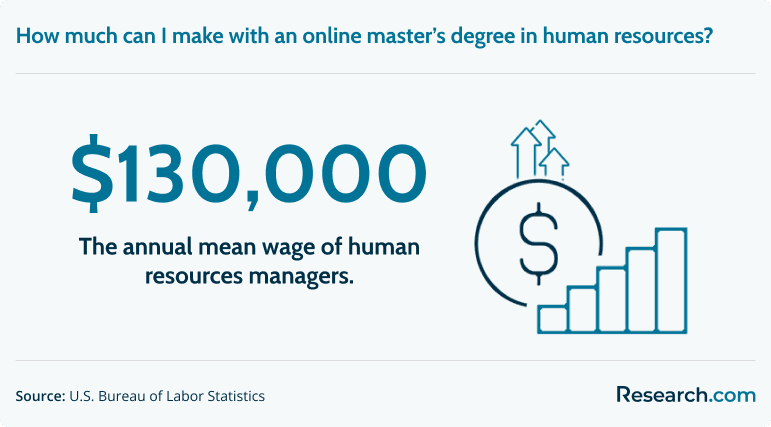
The cost of pursuing master’s degrees can be prohibitive for many individuals, especially for those who want to pursue advanced studies in human resources. A master's degree in human resources can open doors to lucrative career opportunities, with human resources managers earning as much as $130,000, according to a 2023 report by the U.S. Bureau of Labor Statistics.
As a career counselor, I understand the importance of finding cost-effective solutions for advancing your career. That's why, in this article, I leverage my expertise and experience to showcase programs offering exceptional master's level education in human resources at an affordable rate. This g
What are the benefits of getting an affordable online master's degree in human resources?
- A master's degree in human resources can lead to various roles, such as HR manager, compensation and benefits manager, or training and development specialist.
- Professionals with a master's degree in human resources typically command higher salaries than those with a bachelor's degree. The median annual salary of master's degree holders in 2023 typically ranges from $81,848 to higher.
- Pursuing this degree online allows for flexibility in scheduling, making it easier for working professionals to balance their education with other commitments.
What can I expect from an affordable online master's degree in human resources?
- A master's degree in human resources goes beyond essential HR functions and focuses on developing leadership skills, including negotiation, strategic thinking, and conflict resolution.
- Courses typically explore advanced topics such as organizational behavior, employment law, strategic HR management, and analytics.
- An online master's degree in human resources may take 1.5 to 3 years to complete.
- Despite being online, online master's degree programs in human resources often facilitate networking opportunities through virtual events, discussion forums, and collaboration on group projects.
- Upon completing an online master's degree in human resources, you'll be well-prepared to pursue advanced HR roles or seek career advancement opportunities within your organization.
Where can I work with an affordable online master's degree in human resources?
With an online master's degree in human resources, you can pursue advanced roles and higher-paying jobs in large corporations and multinational companies. These organizations often have dedicated HR departments, where your expertise becomes instrumental in overseeing recruitment, fostering employee relations, and implementing strategic HR initiatives aligned with organizational objectives.
Additionally, you can pursue careers in consulting firms, where you can provide your HR expertise to businesses of all sizes. HR consulting firms offer services such as organizational development, talent management, HR strategy, and compliance with employment laws and regulations. Some graduates with master’s degrees in human resources also find rewarding positions in government agencies, nonprofit organizations, and educational institutions.
How much can I make with an affordable online master's degree in human resources?
According to recent U.S. Bureau of Labor Statistics (BLS) data, the median annual wage for human resources managers is $130,000. Those in the top 10% earn more than $224,360 annually, while those in the lowest 10% earn less than $76,610,.
HR manager salaries also vary depending on the industry. For instance, HR managers working in professional, scientific, and technical services earn a median annual wage of $153,830, while those in manufacturing earn $128,620.
Overall, earning an online master's degree in human resources can significantly enhance your earning potential and open doors to lucrative career opportunities in the field.
- Most Affordable Online Master's Degrees in Human Resources for 2027 Affordable Online Master's
- How long does it take to complete an online master's degree in human resources? Program Duration
- How does an online master's degree in human resources compare to an on-campus program? Online vs Campus
- What is the average cost of an online master's degree in human resources? Program Cost
- What are the financial aid options for students enrolling in an online master's degree in human resources? Financial Aid
- What are the prerequisites for enrolling in an online master's degree in human resources? Admission Requirements
- What courses are typically in an online master's degree in human resources? Curriculum
- What types of specializations are available in an online master's degree in human resources? Specialization
- How to choose the best affordable online master's degree in human resources? How to choose the best affordable online master's degree in human resources?
- What career paths are available for graduates of an online master's degree in human resources? What career paths are available for graduates of an online master's degree in human resources?
- How are emerging HR trends and technologies integrated into online master's programs in human resources? How are emerging HR trends and technologies integrated into online master's programs in human resources?
- Does an Online Master's Degree in Human Resources Deliver a Strong Return on Investment? Does an Online Master's Degree in Human Resources Deliver a Strong Return on Investment?
- What challenges might I face during an online master's degree in human resources? What challenges might I face during an online master's degree in human resources?
- How are online master's programs preparing students for emerging HR technologies and trends? How are online master's programs preparing students for emerging HR technologies and trends?
- How do online master's programs in human resources support career changers without prior HR experience? How do online master's programs in human resources support career changers without prior HR experience?
- How do online master's programs in human resources prepare students for HR certifications? How do online master's programs in human resources prepare students for HR certifications?
- What is the job market for graduates with an online master's degree in human resources? What is the job market for graduates with an online master's degree in human resources?
- How can I leverage my online master's degree in human resources to stand out in a competitive job market? How can I leverage my online master's degree in human resources to stand out in a competitive job market?
- How do I evaluate the flexibility and format of online master's programs in human resources? How do I evaluate the flexibility and format of online master's programs in human resources?
- How Do Online Master's Programs in Human Resources Incorporate Workplace Safety and Sustainability? How Do Online Master's Programs in Human Resources Incorporate Workplace Safety and Sustainability?
- What student support services are available online? What student support services are available online?
- How Important is Accreditation and Industry Alignment for Online Master’s Degrees in Human Resources? How Important is Accreditation and Industry Alignment for Online Master’s Degrees in Human Resources?
Most Affordable Online Master's Degrees in Human Resources for 2027
An online master’s degree in human resources can help working professionals move into HR leadership, talent management, employee relations, training and development, HR analytics, or organizational development without leaving their jobs. The challenge is choosing a program that is affordable, accredited, flexible, and relevant to the way HR work is changing.
This guide is designed for students comparing low-cost online HR master’s programs, career changers entering human resources, and HR professionals deciding whether graduate school is worth the investment. You will find ranked affordable programs, cost and credit details, admissions expectations, common courses, specialization options, career paths, online-versus-campus trade-offs, and practical questions to ask before enrolling.
Quick Answer: What Is the Most Affordable Online Master’s Degree in Human Resources?
Based on the programs listed in this guide, Fort Hays State University has the lowest stated annual cost at $4,478 per year for its online Master of Professional Studies with a concentration in Human Resource Management. Several other programs also list annual tuition or per-credit costs below many typical graduate tuition ranges, including Wichita State University, Midwestern State University, Athens State University, California Coast University, Fitchburg State University, Amberton University, and Columbia Southern University.
The best choice is not always the lowest sticker price. Students should compare accreditation, total credits, program format, HR specialization, employer recognition, transfer policies, fees, and whether the curriculum supports HR certification preparation or advancement into management.
How We Rank Affordable Online Human Resources Master’s Programs
Research.com evaluates schools using multiple reputable education data sources so students can compare programs with more context than tuition alone. Our ranking process draws on the IPEDS database, Peterson's database, including distance learning data, the College Scorecard database, and the National Center for Education Statistics.
Students who want to understand the ranking process in more detail can review our Research.com methodology.
Affordable Online Master’s Degrees in Human Resources: At-a-Glance Comparison
| Rank | School and Program | Program Length | Cost Information | Credits | Accreditation |
| 1 | Fort Hays State University — Online Master of Professional Studies, Human Resource Management | 1.5 to 2 years | $4,478 per year | 36 | Higher Learning Commission (HLC) |
| 2 | Wichita State University — Online Master of Human Resource Management | 1.5 to 2 years | $4,620 per year | 30 | Higher Learning Commission (HLC) |
| 3 | Midwestern State University — Online Master of Arts in Human Resource Development | 1-2 years | $4,754 per year | 39 | Southern Association of Colleges and Schools Commission on Colleges (SACSCOC) |
| 4 | Athens State University — Online Master of Science in Strategic Human Resource Management | 1-2 years | $325 per credit | Information not available | Southern Association of Colleges and Schools Commission on Colleges (SACSCOC) |
| 5 | California Coast University — Online MBA in Human Resource Management | 1 to 2 years | $4,875 per year | 39 | Accrediting Commission of the Distance Education Accrediting Commission (DEAC) |
| 6 | Fitchburg State University — Online MBA in Human Resources Management | 12 months | $436 per credit | 30 | New England Commission of Institutions of Higher Education (NECICHE) |
| 7 | Amberton University — Online Master of Science in Human Resource Training Development | 1 to 2 years | $300 per credit | 36 | Southern Association of Colleges and Schools Commission on Colleges |
| 8 | Columbus State University — Online Master of Science in Organizational Leadership, Human Resources Management | 12 to 18 months | No information available | 36 | Southern Association of Colleges and Schools Commission on Colleges (SACSCOC) |
| 9 | Briar Cliff University — Online Master of Arts in Management, Human Resource | 1 to 2 years | No information available | 33 | Accreditation Council for Business Schools and Programs |
| 10 | Columbia Southern University — Online MBA, Human Resource Management | 1 to 2 years | $349.00 per credit | 36 | Distance Education and Training Council (DETC) |
Ranked Affordable Online Master’s Programs in Human Resources
1. Fort Hays State University — Online Master of Professional Studies in Human Resource Management
Fort Hays State University offers an online Master of Professional Studies with a human resource management concentration for students who want graduate-level HR preparation in a flexible format. The curriculum covers areas commonly needed in HR leadership, including strategic HR management, employee relations, talent acquisition, and organizational development.
- Program Length: 1.5 to 2 years
- Tracks/concentrations: None
- Cost: $4,478 per year
- Required Credits to Graduate: 36
- Accreditation: Higher Learning Commission (HLC)
2. Wichita State University — Online Master of Human Resource Management
Wichita State University’s online Master of Human Resource Management is built for students seeking a focused graduate HR degree rather than a broader MBA. Coursework emphasizes strategic HR planning, organizational development, employee relations, and HR analytics, making it relevant for professionals who want to strengthen both people-management and data-informed decision-making skills.
- Program Length: 1.5 to 2 years
- Cost per Credit: $4,620 per year
- Required Credits to Graduate: 30
- Accreditation: Higher Learning Commission (HLC)
3. Midwestern State University — Online Master of Arts in Human Resource Development
Midwestern State University’s online Master of Arts in Human Resource Development is a strong fit for students interested in workforce development, training, consulting, and organizational improvement. The program emphasizes applied HR knowledge, making it especially useful for learners who want to connect theory to real workplace challenges.
- Program Length: 1-2 years
- Cost: $4,754 per year
- Required Credits to Graduate: 39
- Accreditation: Southern Association of Colleges and Schools Commission on Colleges (SACSCOC)
4. Athens State University — Online Master of Science in Strategic Human Resource Management
Athens State University offers an online Master of Science in Strategic Human Resource Management for students who want to connect HR practices with broader organizational strategy. The program addresses HR planning, talent acquisition, organizational development, and performance management, with an emphasis on aligning workforce decisions with business goals.
- Program Length: 1-2 years
- Cost per Credit: $325
- Required Credits to Graduate: Information not available
- Accreditation: Southern Association of Colleges and Schools Commission on Colleges (SACSCOC)
5. California Coast University — Online MBA in Human Resource Management
California Coast University’s online MBA in Human Resource Management combines business administration coursework with HR-focused study. Students examine strategic HR management, recruitment and selection, compensation and benefits, and legal issues in human resources. This option may appeal to students who want HR expertise within a broader management degree.
- Program Length: 1 to 2 years
- Cost: $4,875 per year
- Required Credits to Graduate: 39
- Accreditation: Accrediting Commission of the Distance Education Accrediting Commission (DEAC)
6. Fitchburg State University — Online MBA in Human Resources Management
Fitchburg State University offers an online MBA with a specialization in human resources management. The program uses online discussions and collaborative learning groups taught by Fitchburg State faculty. Students build skills that may support roles in HR leadership, recruitment, risk management, employee development, and senior HR consulting.
- Program Length: 12 months
- Cost per Credit: $436
- Required Credits to Graduate: 30
- Accreditation: New England Commission of Institutions of Higher Education (NECICHE)
7. Amberton University — Online Master of Science in Human Resource Training Development
Amberton University’s online Master of Science in Human Resource Training Development focuses on the design, delivery, and evaluation of workforce learning programs. It is particularly relevant for students who want to work in training and development, recruiting, HR leadership, or consulting across public and private organizations. The program also offers opportunities to earn stackable certifications in HR management areas.
- Program Length: 1 to 2 years
- Cost per Credit: $300
- Required Credits to Graduate: 36
- Accreditation: Southern Association of Colleges and Schools Commission on Colleges
8. Columbus State University — Online Master of Science in Organizational Leadership, Human Resources Management
Columbus State University offers a Master of Science in Organizational Leadership with a concentration in human resources management. The program blends leadership, organizational behavior, economics, global management, and strategic leadership with HR concentration courses in recruiting, employee development, performance management, and labor relations.
- Program Length: 12 to 18 months
- Cost per Credit: No information available
- Required Credits to Graduate: 36
- Accreditation: Southern Association of Colleges and Schools Commission on Colleges (SACSCOC)
9. Briar Cliff University — Online Master of Arts in Management, Human Resource
Briar Cliff University’s Master of Arts in Management with a human resource concentration is designed for students who want management preparation with an HR focus. The program emphasizes leadership, workforce strategy, and ethics. Graduates may pursue roles connected to compensation and benefits, labor relations, recruiting and staffing, or HR direction.
- Program Length: 1 to 2 years
- Cost per Credit: No information available
- Required Credits to Graduate: 33
- Accreditation: Accreditation Council for Business Schools and Programs
10. Columbia Southern University — Online MBA in Human Resource Management
Columbia Southern University offers an online MBA with a concentration in human resource management. The program emphasizes data-driven decision-making, organizational control and management, global business strategy, and financial principles, while the HR concentration develops knowledge of HR practices used to support organizational effectiveness.
- Program Length: 1 to 2 years
- Cost per Credit: $349.00
- Required Credits to Graduate: 36
- Accreditation: Distance Education and Training Council (DETC)
What Graduates Say About Affordable Online HR Master’s Programs
- Ashley: "Online study made it possible for me to keep working, stay present for my family, and complete my coursework without constant commuting. The virtual platform helped me communicate with instructors and classmates, and that support made the program feel much less isolating. Since finishing the degree, I have been able to pursue HR opportunities I had not seriously considered before."
- Peter: "Choosing an online master’s program in human resources was the right move for my schedule and budget. Studying from home reduced travel time and gave me steady access to faculty and course materials. I also valued the self-paced parts of the program because they gave me more time to work through complex HR topics."
- Eleanor: "My online HR master’s program gave me access to graduate education even though I live far from a major campus. The virtual format helped me connect with classmates, and the applied projects gave me practical experience in a setting that fit my life."
Key Findings
- The most affordable listed option is Fort Hays State University at $4,478 per year, but total cost should be evaluated alongside credits, fees, program length, and accreditation.
- Most listed programs take 1 to 2 years or 1.5 to 2 years, while some can be completed in 12 months.
- Students can choose among focused HR degrees, human resource development degrees, organizational leadership degrees with HR concentrations, and MBA programs with HR specializations.
- Online HR master’s programs are especially useful for working professionals, career changers, and students who cannot relocate for graduate school.
- Before enrolling, students should verify accreditation, confirm the full cost of attendance, review certification alignment, and ask whether online students receive career services and networking support.
How Long Does It Take to Complete an Online Master’s Degree in Human Resources?
Most online master’s programs in human resources take about 1.5 to 3 years of full-time study. Students who enroll part time often need about 2 to 4 years or more, depending on course load, transfer credit policies, capstone requirements, and whether the program offers courses year-round.
Accelerated programs may shorten the timeline, but faster is not always better. A 12-month program can be attractive if you have strong time-management skills and a stable schedule, while a slower part-time format may be more realistic for students balancing work, caregiving, or unpredictable job demands.
| Enrollment Format | Typical Timeline | Best For | Trade-Off |
| Accelerated online | As short as 12 months in some programs | Students who can handle a heavy course load | Less time for internships, networking, or slower skill development |
| Full-time online | About 1.5 to 3 years | Students who want steady progress without relocating | May be difficult with a demanding full-time job |
| Part-time online | About 2 to 4 years or more | Working professionals and caregivers | Longer time before seeing career benefits |
How Does an Online Master’s Degree in Human Resources Compare to an On-Campus Program?
An online HR master’s degree can provide the same type of graduate-level HR content as a campus program, but the learning experience is different. The better option depends on your schedule, location, learning style, networking goals, and whether you need in-person experiences.
Accessibility
Online programs remove the need to relocate or commute, which is a major advantage for students who live far from a university or work full time. Campus programs may offer easier access to in-person faculty meetings, local employers, and on-site events, but they require students to be physically present.
Flexibility
Online HR programs often work better for students with jobs, family responsibilities, or irregular schedules. Asynchronous courses allow students to complete assignments around their availability, while synchronous courses require live attendance. On-campus programs usually follow a set weekly class schedule.
Learning Experience
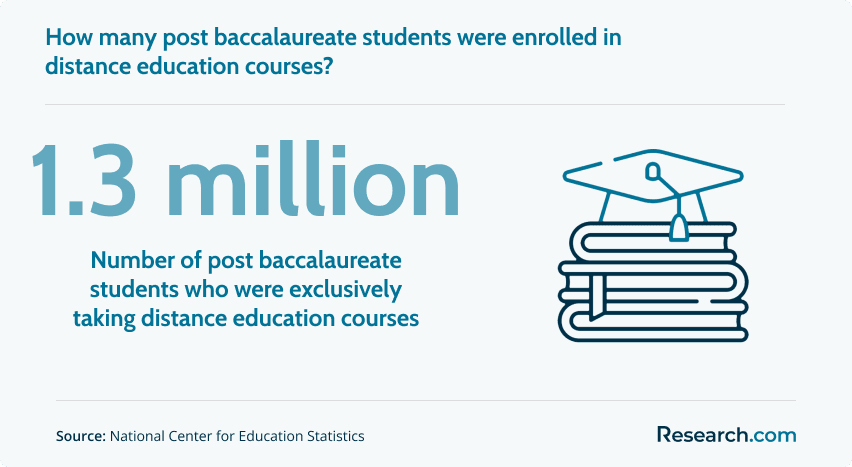
Campus programs may provide more face-to-face interaction, workshops, seminars, and local internships. Online programs rely on learning platforms, video lectures, discussion boards, group projects, and digital collaboration tools to create interaction. According to a recent NCES report, 1.3 million post-baccalaureate students were exclusively taking distance education courses.
| Factor | Online HR Master’s | On-Campus HR Master’s |
| Location | Study from nearly anywhere with reliable internet | Requires commuting or relocation |
| Schedule | Often more flexible, especially if asynchronous | Usually tied to set class meeting times |
| Networking | Depends on virtual events, group projects, alumni networks, and career services | Often easier to build in-person relationships |
| Hands-on learning | May include virtual projects, case studies, capstones, or local internships | May offer easier access to campus workshops and employer events |
| Best fit | Working adults, remote learners, and students who need schedule flexibility | Students who prefer in-person learning and campus-based networking |
What Is the Average Cost of an Online Master’s Degree in Human Resources?
Tuition for an online master’s degree in human resources varies widely by institution type, residency status, credit requirements, and fees. On average, tuition ranges from $15,000 to $30,000 per academic year for in-state students at public universities. Out-of-state students may pay higher rates. Private institutions typically cost more, with tuition ranging from $30,000 to $50,000 per academic year.
Students should calculate total cost, not just advertised tuition. Required fees, books, software, technology needs, background checks, capstone expenses, graduation fees, and possible travel for residencies or internships can change the final price.
Some students compare HR master’s programs with business degrees because an MBA with an HR concentration may offer a broader management credential. If cost is the main priority, it may be useful to compare HR programs with online masters under 10k to see whether an MBA route is more affordable or better aligned with your career goals.
What Financial Aid Options Are Available for Online HR Master’s Students?
Graduate students in online human resources programs may qualify for several types of financial support. Students comparing HR programs with related business degrees, such as the cheapest online MACC programs, should review aid options early because funding rules, deadlines, and eligibility vary by institution.
- Federal financial aid: Eligible students can complete the Free Application for Federal Student Aid (FAFSA) to be considered for federal loans, grants, and work-study opportunities. Federal options such as the Federal Pell Grant and Direct Loans may be available to students who meet eligibility rules.
- Scholarships and grants: Universities, professional associations, and private organizations may offer awards for graduate HR students based on merit, need, leadership, diversity, or professional goals.
- Employer tuition assistance: Many working professionals should ask their HR department whether the company offers tuition reimbursement or tuition assistance. Students can also review which companies pay for MBA programs if they are considering an MBA in HR.
- Military benefits: Active-duty service members, veterans, and eligible dependents may be able to use GI Bill benefits or Military Tuition Assistance for an online HR master’s degree.
- Private student loans: Alternative loans from banks, credit unions, or other lenders can help cover remaining costs, but students should compare interest rates, repayment terms, and protections against federal loan options.
- Graduate assistantships: Some programs offer teaching, research, or administrative assistantships that provide stipends or tuition support, although availability may be more limited for fully online students.
What Are the Prerequisites for an Online Master’s Degree in Human Resources?
Admissions requirements differ by school, but most online HR master’s programs expect applicants to show academic readiness, professional motivation, and communication skills. A bachelor’s degree is usually the baseline requirement.
- Bachelor’s degree: Most programs require a bachelor’s degree from an accredited institution. HR, business administration, psychology, sociology, management, and related backgrounds are common, but applicants from other fields may also be considered. Students comparing adjacent business fields may also explore a supply chain management degree.
- Work experience: Some programs prefer or require professional experience in HR, management, operations, training, recruiting, or related areas.
- Letters of recommendation: Schools may ask for academic or professional references who can speak to your readiness for graduate work.
- Statement of purpose: Applicants often need to explain their career goals, why they want graduate HR training, and how the program fits their plans.
- Resume or CV: A current resume helps admissions teams understand your professional background, leadership experience, and transferable skills. Related credentials, including an affordable online supply chain management degree, should be included if relevant.
- Minimum GPA: Some programs set a minimum GPA requirement, commonly between 2.5 to 3.0 on a 4.0 scale.
What Courses Are Typically Included in an Online Master’s Degree in Human Resources?
Online HR master’s programs usually combine core HR courses, leadership courses, legal and compliance topics, analytics, and electives. The exact curriculum depends on whether the degree is a Master of Human Resource Management, Master of Human Resource Development, MBA in HR, or organizational leadership degree with an HR concentration.
- Human resource management: Students study the major functions of HR, including hiring, employee relations, performance management, compensation, benefits, and HR strategy.
- Organizational behavior: This course examines motivation, leadership, communication, teamwork, organizational culture, diversity, and group dynamics.
- Employment law and compliance: Students learn about workplace regulations, employment discrimination, labor relations, safety, and federal and state compliance obligations.
- Training and development: Coursework focuses on needs assessment, instructional design, training delivery, evaluation, and employee learning strategy.
- Compensation and benefits: Students examine pay structures, incentives, benefits packages, and legal considerations. Because this area overlaps with finance and workforce budgeting, students comparing business paths may also find value in reviewing an accounting specialization.
- Strategic human resource management: This course connects HR planning, workforce analytics, talent management, succession planning, and organizational change to business goals.
What Specializations Are Available in Online HR Master’s Programs?
Specializations help students tailor an HR master’s degree to a specific career direction. Some programs offer formal concentrations, while others allow students to choose electives in a focused area.
| Specialization | What You Study | Good Fit For |
| Talent management | Recruiting, workforce planning, employee development, succession planning, and performance management | Students interested in recruiting leadership, workforce strategy, or employee retention |
| Organizational development | Change management, leadership development, culture transformation, and organizational diagnosis | Students who want to improve systems, teams, and workplace culture; those comparing an organizational leadership degree |
| Diversity and inclusion | Bias awareness, inclusive leadership, diversity recruiting, cultural competence, and inclusive workplace practices | Students interested in equity, employee experience, and organizational culture |
| Employee relations | Conflict resolution, labor relations, grievances, union-management relations, and employment law compliance | Students who want to work in employee advocacy, compliance, investigations, or labor relations |
| HR technology and analytics | HR platforms, workforce data, analytics tools, process improvement, and data-informed HR decisions | Students interested in HR systems, people analytics, or digital transformation; students more focused on analytics can compare the cheapest online data science master's programs |
HR technology is an especially important area to review when comparing programs. Students can use resources such as SHRM’s discussion of HR technology to understand how platforms, analytics, and automation are shaping the profession.
How to Choose the Best Affordable Online Master’s Degree in Human Resources
Choosing an affordable HR master’s program should be a structured decision, not a quick search for the lowest tuition. Similar to comparing the best part time MBA programs, students should weigh cost against quality, outcomes, format, and fit.
- Verify accreditation first. Confirm institutional accreditation and, when relevant, business accreditation. Accreditation affects employer trust, transfer credit, and access to many forms of financial aid.
- Calculate total program cost. Multiply tuition by required credits, then add fees, books, technology costs, and residency or travel expenses. Annual tuition alone may not reflect the full cost.
- Compare degree type. A dedicated HR master’s degree may be best for deep HR preparation. An MBA in HR may be better for students who want broader business leadership options.
- Review the curriculum carefully. Look for employment law, HR analytics, strategic HR, talent acquisition, employee relations, compensation, and organizational development.
- Check certification alignment. Ask whether coursework supports preparation for SHRM-CP, SHRM-SCP, PHR, or SPHR expectations.
- Evaluate faculty and career resources. Review whether faculty have HR experience and whether online students receive advising, career coaching, internship support, and alumni networking.
- Match the format to your life. Decide whether you need asynchronous courses, live sessions, accelerated pacing, part-time options, or no required campus visits.
- Use rankings as one input, not the only input. Rankings can help narrow your list, but students should still compare outcomes, admissions policies, and employer relevance. Those comparing broader business credentials can also review top MBA programs.
| Question to Ask | Why It Matters |
| Is the university institutionally accredited? | Accreditation helps protect degree credibility and financial aid eligibility. |
| What is the total cost through graduation? | Low tuition may still become expensive after fees and required credits. |
| Are courses asynchronous, synchronous, or hybrid? | The format determines whether the program fits your work schedule. |
| Does the curriculum include HR analytics and employment law? | These areas are increasingly important for strategic and compliant HR practice. |
| Do online students receive career services? | Career support can affect internships, networking, job searches, and advancement. |
| Does the program support HR certification preparation? | Certification alignment can strengthen your professional profile after graduation. |
What Career Paths Are Available with an Online Master’s Degree in Human Resources?
Graduates of online HR master’s programs can pursue roles across recruiting, employee relations, training, compensation, compliance, organizational development, and HR leadership. Job titles vary by employer, experience level, industry, and whether the graduate already has HR experience.
| Career Path | Typical Responsibilities | Who It Fits Best |
| Human resources manager | Oversees hiring, employee relations, training, compensation, benefits, performance management, and HR strategy | Experienced HR professionals seeking leadership roles |
| Talent acquisition specialist or recruiter | Sources candidates, screens applicants, coordinates interviews, negotiates offers, and supports hiring strategy | Students interested in recruiting, employer branding, and workforce planning |
| Training and development manager | Designs learning programs, assesses training needs, develops materials, delivers training, and evaluates effectiveness | Professionals interested in employee growth and organizational learning |
| HR consultant | Advises organizations on HR strategy, talent management, compliance, organizational design, and workforce processes | Experienced professionals who want project-based or advisory work |
| Organizational development specialist | Supports change management, leadership development, employee engagement, culture initiatives, and organizational improvement | Students interested in change, culture, and performance improvement |
How Are Emerging HR Trends and Technologies Integrated into Online Master’s Programs?
Strong online HR master’s programs increasingly address digital transformation, remote workforce management, HR analytics, artificial intelligence in recruitment, employee engagement tools, and compliance in technology-enabled workplaces. These subjects matter because HR professionals are expected to make faster, more evidence-informed decisions while protecting employee rights and organizational risk.
Programs may use case studies, simulations, capstone projects, and scenario-based assignments to help students apply these tools to real HR problems. Students who are still building undergraduate-level business foundations can also compare options such as the cheapest online college bachelor degree before moving into graduate study.
Does an Online Master’s Degree in Human Resources Offer a Strong Return on Investment?
The ROI of an online master’s degree in human resources depends on cost, prior experience, career goals, employer support, program reputation, and the type of HR role you want. A low-cost program can improve ROI, but only if the degree is credible, relevant, and useful for your target jobs.
Students should compare tuition against likely career benefits such as leadership readiness, professional network growth, HR certification preparation, and access to roles that prefer or require graduate education. A broader overview of HR education options is available in Research.com’s guide to a human resources degree.
What Challenges Might Students Face in an Online HR Master’s Program?
Online learning gives students flexibility, but it also requires discipline. Common challenges include managing deadlines without in-person reminders, staying engaged in virtual discussions, handling group projects across time zones, troubleshooting technology issues, and building a professional network remotely.
Students considering an MBA path should compare workload, business core requirements, and HR specialization depth. For a focused comparison, review Is HR MBA worth it?.
How Do Online HR Master’s Programs Prepare Students for New HR Technologies?
Many programs now incorporate HR analytics, digital employee engagement, data-driven decision-making, and artificial intelligence in talent acquisition. Students may analyze workforce data, evaluate HR systems, or complete projects that mirror modern HR responsibilities.
For students entering HR from another field, it can help to understand entry-level pathways before committing to a master’s degree. Research.com’s guide on how to be an HR coordinator explains one common starting point in the profession.
How Do Online HR Master’s Programs Support Career Changers?
Career changers can succeed in online HR master’s programs, but they should look for schools that offer foundational HR coursework, career coaching, mentorship, and applied projects. Transferable skills from management, operations, education, customer service, sales, administration, military service, or nonprofit work can be valuable in HR when paired with training in employment law, recruiting, compensation, and employee relations.
Students who want an accessible entry point into HR education can compare the easiest human resources degree online options before deciding whether a master’s degree is the right first step.
How Do Online Master’s Programs in Human Resources Prepare Students for HR Certifications?
Many online HR master’s programs are designed around core HR competencies that overlap with professional certification exams. A degree does not automatically award certification, but relevant coursework can help students prepare for credentials such as the Professional in Human Resources (PHR) and Senior Professional in Human Resources (SPHR).
- Curriculum alignment: Courses often cover employment law, talent management, organizational behavior, compensation, and employee relations.
- Applied experience: Capstones, projects, and internships can help students connect academic concepts to workplace practice.
- Exam preparation resources: Some programs provide study groups, workshops, practice materials, or faculty guidance for certification planning.
- Professional networking: Programs may connect students with alumni, HR associations, and certified professionals who can explain credentialing pathways.
- Continuing education mindset: Graduate study can help students build habits for ongoing professional development, which is important because many certifications require continuing education.
What Is the Job Market for Graduates with an Online Master’s Degree in Human Resources?
Based on recent U.S. Bureau of Labor Statistics (BLS) data, employment of human resources specialists is projected to grow 6% from 2022 to 2032. Demand is influenced by employment law complexity, recruiting needs, employee retention challenges, employee relations, and workplace diversity priorities.
Globalization and technology also affect demand for HR professionals with advanced skills. Projections Central data on globalization and technology highlights long-term occupational projections. In 2022, HR specialists held about 874,500 jobs. The top employers were employment services (18%) and professional services (13%).
The chart below shows the largest employers of human resources specialists in 2023.
How Can You Use an Online HR Master’s Degree to Stand Out?
A master’s degree can strengthen your resume, but employers still want evidence that you can solve practical workforce problems. Students should use the program to build proof of skills, not just earn credits.
- Add certification where relevant: If your program aligns with SHRM-CP, PHR, or related credentials, consider whether certification supports your target role.
- Showcase applied projects: Include capstones, analytics projects, training plans, policy audits, or recruiting strategy work on your resume and LinkedIn profile.
- Build an HR network: Join HR associations, attend virtual events, connect with alumni, and participate in online professional communities.
- Emphasize online-learning strengths: Completing an online graduate program can demonstrate time management, self-direction, communication, and adaptability.
- Connect coursework to business impact: Employers respond to examples involving reduced risk, stronger retention, improved hiring processes, better training outcomes, or more effective employee engagement.
How Should Students Evaluate Flexibility and Program Format?
Flexibility is one of the main reasons students choose online HR master’s programs, but program formats vary. Before enrolling, students should know whether courses are asynchronous, synchronous, hybrid, accelerated, part-time friendly, or cohort-based.
| Format | How It Works | Best For | Possible Drawback |
| Asynchronous online | Students complete coursework on their own schedule within deadlines | Working adults with unpredictable schedules | Requires strong self-discipline |
| Synchronous online | Students attend live online classes or discussions | Learners who want structure and real-time interaction | Less flexible for shift workers or frequent travelers |
| Hybrid | Online coursework plus some in-person residencies or intensives | Students who want online convenience with occasional face-to-face networking | May require travel and added costs |
| Accelerated | Compressed course schedules and faster completion | Students who want to finish quickly | Can be demanding and less forgiving |
Students who want speed and affordability should compare programs carefully. Research.com’s guide to the cheapest quickest online master's degree options can help identify programs designed for faster completion.
How Do Online Master’s Programs in Human Resources Incorporate Workplace Safety and Sustainability?
HR professionals often help organizations manage workplace policies, risk, compliance, employee well-being, and ethical leadership. Online HR master’s programs may include content on workplace safety, legal compliance, risk management, and sustainable business practices through case studies, policy analysis, and scenario-based assignments.
Students who want deeper preparation in compliance, risk, and workplace safety may also consider an environmental health and safety online degree, especially if they plan to work in industries where safety regulations are central to HR operations.
What Student Support Services Are Available in Online HR Master’s Programs?
Support services can make a major difference in online graduate study. Before enrolling, students should confirm that online learners have access to the same core academic, career, technical, library, and wellness resources as campus students.
Academic Support
Online HR programs may provide virtual tutoring, writing assistance, academic advising, and faculty office hours. These services are useful for students completing research papers, employment law assignments, HR analytics projects, or capstone work.
Career Services
Career support may include resume reviews, mock interviews, job boards, internship guidance, alumni events, and virtual networking. Strong career services are particularly important for career changers and students seeking promotions.
Technical Support
Reliable technical support helps students access the learning management system, submit assignments, use course tools, and resolve platform problems. Orientation sessions can also help students adjust to online learning before courses begin.
Library and Research Resources
Online students should have access to digital libraries, e-books, journals, HR databases, citation tools, and research support. These resources are essential for graduate-level assignments and capstone projects.
Financial Support
Students should ask about scholarships, grants, tuition payment plans, employer tuition assistance, and federal aid eligibility. Research.com also offers guidance on online schools that take FAFSA.
Mental Health and Wellness
Graduate school can be stressful, especially for students balancing work and family responsibilities. Online counseling, wellness workshops, stress-management resources, and time-management support can help students stay on track.
How Important Are Accreditation and Industry Alignment for Online Master’s Degrees in Human Resources?
Accreditation is one of the most important quality checks for an online HR master’s program. It signals that a school has been reviewed against educational standards and can affect financial aid eligibility, credit transfer, employer recognition, and future doctoral study.
Industry alignment is also critical. A strong HR program should address current employment law, HR analytics, strategic workforce planning, talent management, HR technology, and ethical leadership. Students evaluating career outcomes can review Research.com’s guide to master's in human resources jobs.
Common Mistakes to Avoid When Choosing an Online HR Master’s Program
| Mistake | Why It Can Hurt You | Better Approach |
| Choosing only by tuition | The cheapest advertised price may not include fees, books, required credits, or travel costs. | Calculate total cost through graduation. |
| Ignoring accreditation | An unrecognized program may limit financial aid, transfer options, or employer acceptance. | Verify institutional accreditation before applying. |
| Assuming all online programs are flexible | Some programs require live attendance, group meetings, or residencies. | Ask whether courses are asynchronous, synchronous, hybrid, or cohort-based. |
| Overlooking career services | Online students may need extra support for networking, internships, and job searches. | Confirm that online learners receive career advising and alumni access. |
| Picking a degree type without a career plan | An MBA in HR and a specialized HR master’s degree can lead to different positioning. | Match the degree to your target roles and employer expectations. |
| Assuming salary gains are guaranteed | A degree can support advancement, but outcomes depend on experience, location, industry, and employer demand. | Evaluate ROI using realistic career goals and total cost. |
References
- Hanson, M. (2024, August 20). Average cost of a master's degree: 2023 analysis. Education Data Initiative.
- National Center for Education Statistics. (2024). Fast Facts: Distance learning (80). National Center for Education Statistics.
- Projections Central. (n.d.). Long-term occupational projections (2020-2030). Projections Central.
- U.S. Bureau of Labor Statistics. (2024). Human Resources Specialists. U.S. Bureau of Labor Statistics.
Key Insights
- Fort Hays State University lists the lowest annual cost in this guide at $4,478 per year, but students should compare total cost, required credits, and fees before deciding.
- Most affordable online HR master’s programs can be completed in about 1 to 2 years or 1.5 to 2 years, though part-time students may need longer.
- A specialized HR master’s degree is usually best for deep HR preparation, while an MBA in HR may be better for students who want broader business leadership training.
- Accreditation, curriculum relevance, certification preparation, HR analytics, employment law, and online student support are more important than rankings alone.
- Students should ask direct questions about course format, career services, faculty access, transfer policies, employer tuition assistance, and whether the program supports their target HR role.
- An online HR master’s degree can be worthwhile when the cost is manageable, the program is credible, and the student uses the degree to build practical evidence of HR leadership, analytics, compliance, and talent-management skills.
Other Things You Should Know About Affordable Online Master's Degrees in Human Resources
Admission criteria typically include a bachelor's degree, a minimum GPA (often 3.0), and sometimes a personal statement or letters of recommendation. Standardized test scores may not be required, making the programs more accessible and appealing to a broader range of applicants.
Affordable online master's programs in human resources in 2027 typically provide resources like career services, academic advising, and virtual libraries to support student success. These programs often include online discussions, project collaborations, and mentorship opportunities to enhance learning and career readiness.


