
2027 Steps to Become a Registered Dietitian in Texas

Co-Founder and Chief Data Scientist
Many aspiring nutrition professionals in Texas feel uncertain about becoming a registered dietitian. With employment projected to grow 15% over the next decade, demand for qualified dietitians is strong.
This article, prepared by career planning experts, outlines education, supervised practice, and licensing requirements, providing clear guidance to help readers confidently navigate the pathway and build a successful career in nutrition.
Key Things to Know About Becoming a Registered Dietitian in Texas
- In Texas, becoming a registered dietitian requires a bachelor’s and master’s degree in nutrition or related fields, completion of an ACEND-accredited DPD program, supervised practice, and passing the CDR exam.
- Candidates must complete at least 900–1,000 supervised practice hours through an ACEND-accredited internship, typically lasting 9–24 months.
- Exam eligibility requires a graduate degree, ACEND coursework, program director verification, passing the CDR exam, and completing the Texas Jurisprudence Exam for state licensure.
- What degree is required to become a registered dietitian in Texas?
- How many supervised practice hours are needed to become a registered dietitian in Texas?
- What are the eligibility requirements for the dietetic registration exam in Texas?
- How can you get a license after passing the dietetic registration exam in Texas?
- What types of dietitian specializations can you pursue in Texas?
- What is the average salary of a registered dietitian in Texas?
- What do you need to keep your dietitian registration active in Texas?
- How long does it take to become a registered dietitian in Texas?
- Can international students qualify to become registered dietitians in Texas?
- What career paths can registered dietitians pursue in Texas?
- What are the continuing education and professional development opportunities for registered dietitians in Texas?
- How can aspiring dietitians stand out in a competitive job market?
What degree is required to become a registered dietitian in Texas?
Becoming a registered dietitian in Texas requires completing specific academic programs that align with both national standards and state requirements. Below are the key degree requirements:
- Bachelor’s Degree in Nutrition or Related Field: Candidates must earn a bachelor’s degree from an accredited college or university, typically in nutrition, dietetics, or a closely related field. This serves as the academic foundation for advanced study.
- Completion of Didactic Program in Dietetics (DPD): A DPD, accredited by the Accreditation Council for Education in Nutrition and Dietetics (ACEND), provides the required coursework to meet nutrition education standards in Texas.
- Supervised Practice Program: After completing DPD coursework, candidates must complete a supervised practice or internship program. This hands-on training develops applied skills in clinical, community, and foodservice settings.
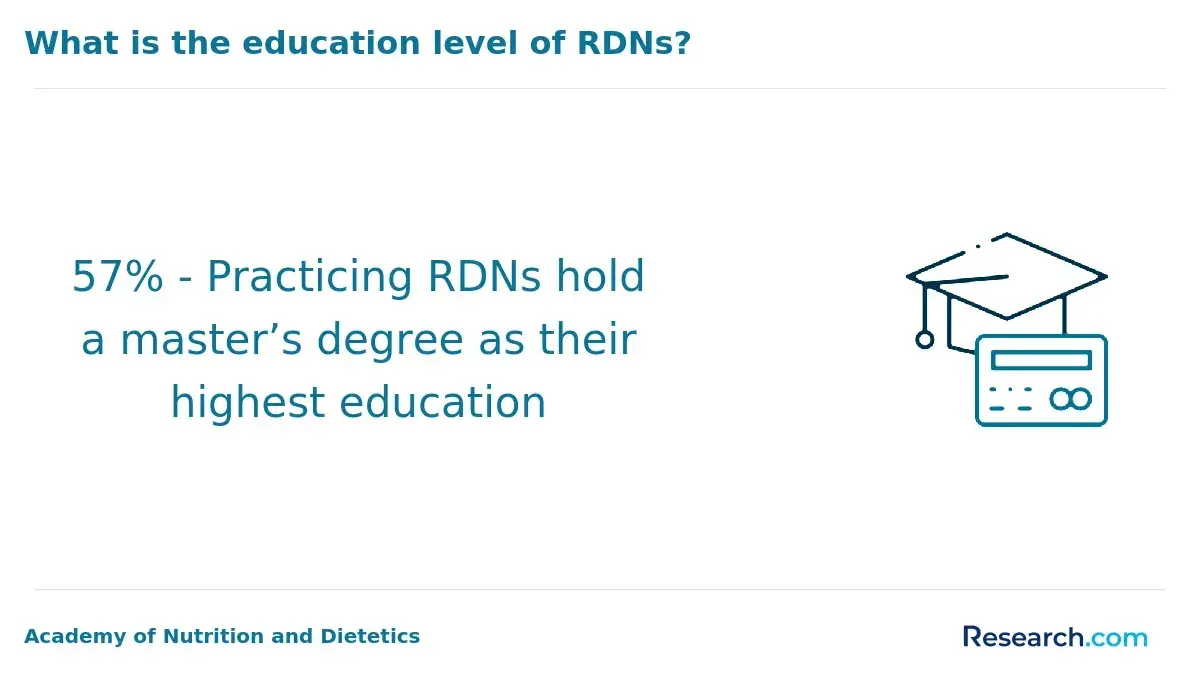
- Master’s Degree Requirement: Texas follows the national requirement for a master’s degree to qualify as a registered dietitian. This advanced degree strengthens clinical knowledge and ensures eligibility for professional registration.
Following these steps aligns with the Texas dietitian degree requirements and prepares you well for the registration exam and future career. For those curious about career outlooks, exploring what is the highest paying job in the medical field might give you some extra motivation. To put Texas’s career potential into perspective, the chart below shows how the state ranks among those with the highest employment levels of dietitians.
How many supervised practice hours are needed to become a registered dietitian in Texas?
Becoming a registered dietitian in Texas requires completing supervised practice hours through an ACEND-accredited program. These hours provide essential hands-on experience in clinical, community, and foodservice settings. Below are the key points regarding supervised practice hours in Texas:
- ACEND Accreditation Standard: Most Texas programs follow national guidelines, requiring at least 1,000 supervised practice hours to ensure comprehensive practical training.
- State Regulatory Minimum: Texas law sets a minimum of 900 hours under direct supervision of a licensed or registered dietitian, although program standards typically exceed this number.
- Eligible Programs: Supervised practice can be completed through dietetic internships, coordinated undergraduate programs, ISPPs, or other ACEND-accredited pathways recognized by the CDR.
- No Additional State Hours: Texas does not impose extra supervised practice hours beyond national standards, but applicants must document completion for licensure.
- Recent Updates: Beginning January 1, 2024, a master’s degree is required, and supervised practice must be completed through a graduate-level ACEND-accredited program in Texas.
- Licensure Documentation: Applicants must submit an active CDR registration number to confirm supervised practice completion when applying for state licensure.
- Professional Readiness: Completion of supervised practice ensures candidates are equipped with practical skills for safe and effective dietetic practice.
What are the eligibility requirements for the dietetic registration exam in Texas?
To take the dietetic registration exam in Texas, candidates must meet specific educational and program requirements. These standards ensure applicants are prepared to practice safely and professionally in the state.
Below are the key requirements:
- Minimum Educational Qualification: Candidates must hold at least a graduate degree from a U.S. Department of Education-accredited institution or possess an equivalent foreign degree, regardless of the field of study.
- Required Nutrition Coursework: Completion of an ACEND-accredited dietetics program is required. Acceptable pathways include a Didactic Program in Dietetics (DPD), Coordinated Program (CP), or Graduate Program (GP).
- Program Director’s Role: The program director must submit documentation verifying the candidate’s eligibility to the Commission on Dietetic Registration (CDR) before exam registration is permitted.
- National Registration Exam: Candidates must register for and pass the Registration Examination for Dietitians administered by the CDR. Passing this exam is mandatory before applying for licensure in Texas.
- State-Specific Licensure Requirements: Texas requires successful completion of the Texas Jurisprudence Examination, which tests knowledge of state laws and ethical standards, along with following the application process through the Texas Department of Licensing and Regulation.
Keep in mind that while supervised practice hours are a critical part of your preparation, they’re completed within your accredited program and verified by your program director. If you want to dive deeper into nutritionist requirements or get a broader view of this field, check out this helpful guide on nutritionist requirements. Meeting these criteria is a solid step forward for anyone focused on Texas dietitian registration exam qualifications and ready to build a rewarding career in dietetics.
How can you get a license after passing the dietetic registration exam in Texas?
After passing the dietetic registration exam, candidates must complete several steps to secure licensure in Texas. These steps ensure compliance with state laws and professional standards.
Below are the key steps:
- Pass the Texas Jurisprudence Exam: Complete the online test covering Texas-specific laws and rules for dietitians. Pay the $35 fee and retain proof of passing for your application.
- Gather Your Documents: Collect CDR exam results, active registration card, proof of passing the jurisprudence exam, and verification of completing an approved dietetic internship or 900 hours of professional experience.
- Fill Out the License Application: Apply online or via a downloadable form for mail submission, ensuring all information is accurate.
- Pay the Application Fee: Submit the non-refundable $108 fee whether applying online or by mail.
- Submit Everything Together: Include all required documents and fees to avoid delays in processing.
- Wait for Approval: The Texas Department of Licensing and Regulation reviews your application; complete submissions help expedite the process.
- Receive Your License: Upon approval, you are officially licensed to practice as a dietitian in Texas and may use the title legally.
What types of dietitian specializations can you pursue in Texas?
Dietitian specializations in Texas offer diverse career paths tailored to healthcare, community, and organizational needs. These roles allow professionals to focus on specific populations, advance research, or provide consulting services, depending on their interests and expertise.
Below are the key dietitian specializations available in Texas:
- Clinical Dietitian: Works in hospitals or clinics providing medical nutrition therapy for patients with chronic illnesses or post-surgery recovery.
- Community Nutrition/Public Health Dietitian: Develops programs to improve nutrition for entire communities, collaborating with public health departments and nonprofits.
- Foodservice Management Dietitian: Manages large-scale meal planning in schools, long-term care, or correctional facilities, ensuring compliance with nutrition standards.
- Sports Dietitian: Focuses on nutrition for athletes to optimize performance and recovery, supporting Texas’s collegiate and professional sports programs.
- Pediatric Dietitian: Specializes in the nutritional needs of infants and children, addressing growth, feeding disorders, and clinical nutrition concerns.
- Geriatric Dietitian: Provides dietary care for older adults, managing chronic diseases and promoting healthy aging in senior living and long-term care settings.
- Research Dietitian: Conducts nutrition science studies in academic or industry settings, often collaborating with universities.
- Corporate Wellness Dietitian: Leads workplace health initiatives, focusing on disease prevention and healthy eating programs for employees.
- Private Practice/Consulting Dietitian: Offers personalized nutrition counseling and wellness coaching, providing flexibility and entrepreneurial opportunities.
What is the average salary of a registered dietitian in Texas?
Registered dietitians in Texas earn salaries that vary by location, experience, and work setting. Below are key factors affecting compensation:
- Average Annual Salary: Dietitians in Texas earn between $63,200 and $70,800 per year, or about $33 to $38 per hour.
- Comparison to National Average: This is lower than the national average, where dietitians earn roughly $50.24 per hour.
- Location Variations: Major cities such as Houston, Dallas, and Austin generally offer higher pay, with specialized clinical roles reaching up to $54 per hour.
- Experience Level: Entry-level dietitians start near the lower end of the scale, while experienced professionals with advanced degrees can earn above $76,600 annually.
- Work Setting Influence: Hospitals and specialty clinics typically provide higher salaries than schools or community programs with limited budgets.
- Demand and Market Trends: Texas has a less active dietitian job market, but steady salary growth is expected as healthcare emphasizes nutrition and preventive care. Urban hospital systems and advanced certifications can further boost earning potential.
The chart below from the US BLS shows the highest paying metropolitan areas for dietitians and nutritionists.
What do you need to keep your dietitian registration active in Texas?
Maintaining an active dietitian registration in Texas ensures legal compliance and professional credibility. Staying current allows dietitians to provide high-quality care while meeting state and national standards.
Below are the key requirements:
- License Renewal: Renew your license every two years online through the Texas Department of Licensing and Regulation to maintain active status.
- Continuing Education: Complete at least 12 hours of approved dietetics-related courses within each renewal period. This ensures knowledge remains current.
- Jurisprudence Exam: Pass the Texas Jurisprudence Exam every two years. This no-fail test covers state laws and ethical requirements for dietitians.
- Renewal Fee: Pay a $90 fee every two years when renewing your license online to process your application.
- CDR Registration: If nationally registered, renew your Commission on Dietetic Registration credentials every five years, completing 75 hours of approved continuing education.
- Documentation: Maintain records of all continuing education and exam completions. These may be required for audits to verify compliance.
How long does it take to become a registered dietitian in Texas?
The process of becoming a registered dietitian in Texas generally requires five to seven years, encompassing undergraduate and graduate education, supervised practice, and successful completion of the national registration exam. This timeline reflects the comprehensive preparation necessary to meet professional credentialing standards, though individual factors such as program structure, part-time study, or internship scheduling can affect the overall duration.
Typically, candidates complete a four-year bachelor’s degree, followed by a one- to two-year master’s program, which has been required for exam eligibility since 2024. Supervised practice through a dietetic internship usually spans nine to twenty-four months, providing essential hands-on experience. Accelerated or combined degree-internship programs may shorten the timeline, while gaps between programs or part-time study can extend it. Careful planning ensures efficient progression toward credentialing and professional practice in Texas.
For those exploring options, checking out the best online nutrition programs could be a smart way to find a path that fits your lifestyle.
Can international students qualify to become registered dietitians in Texas?
International students can pursue a career as registered dietitians in Texas by completing key academic, professional, and legal requirements. These steps ensure foreign education and experience meet U.S. standards.
Below are the key requirements:
- Degree Evaluation and Equivalency: Foreign degrees must be evaluated by an authorized credential evaluation agency to confirm equivalency to a U.S. bachelor’s or master’s degree from a regionally accredited institution.
- ACEND-Accredited Coursework and Practice: Completing coursework and supervised practice through an ACEND-accredited program, such as a U.S.-based Didactic Program in Dietetics or an International Dietitian Education program, is mandatory.
- English Language Proficiency: Applicants must demonstrate proficiency in English through standardized tests such as TOEFL or IELTS to ensure effective communication during education and practice.
- Visa and Immigration Status: Maintaining a valid visa, typically F-1, is required during studies and supervised practice to comply with U.S. immigration laws.
- CDR Registration Examination: Candidates must pass the Commission on Dietetic Registration (CDR) exam, with a minimum scaled score of 25 out of 50, to qualify for licensure in Texas.
- Texas State Licensure: After passing the CDR exam, applicants must apply for Texas licensure, providing proof of at least 900 hours of supervised practice and an active CDR registration card.
For those seeking a flexible and reputable academic route in Texas, exploring the best dietetics masters programs can serve as an example of how specialized education pathways can be pursued alongside professional goals. This reflects the diverse options available to international students aiming to advance their careers while managing work and study commitments.
What career paths can registered dietitians pursue in Texas?
Thinking about the different career opportunities for registered dietitians in Texas? There are plenty of paths where you can make a real impact, each with its own vibe, work setting, and pay scale.
- Clinical Dietitian: Work in hospitals or clinics assessing patient nutrition and creating care plans; average salary is around $67,100 with solid job stability.
- Community Dietitian: Help design public health programs for agencies or nonprofits, with pay matching state averages and a growing job market.
- Consulting Dietitian: Offer nutrition advice independently or contractually, earning up to $94,210 yearly depending on clients and experience.
- Corporate Dietitian: Develop nutrition strategies for companies’ wellness programs or products, with steady job growth and average salaries.
- Nutrition Researcher: Conduct studies in universities or labs, with competitive pay and advancement potential if you pursue a masters in nutrition.
- School Nutrition Dietitian: Manage school meal programs ensuring federal compliance, earning $57,880 to $70,990 depending on district size.
- Administrative Dietitian: Lead food service operations in hospitals or schools, often making over $70,000 in cities like Dallas and Houston.
- Sports Dietitian: Advise athletes on nutrition for performance, with growing demand especially in major Texas cities.
What do registered dietitians in Texas say about their career?
- Starting my career as a registered dietitian in Texas allows me to combine nutrition education with a passion for student wellness. Addressing diverse dietary needs and promoting healthier lifestyles has been rewarding, and seeing students thrive motivates me every day. —Javier
- Working as a dietitian in Texas provides opportunities to create tailored nutrition programs that respect cultural diversity and regional health challenges. The role has strengthened my skills in community engagement and health promotion while supporting youth well-being. —Angel
- Being a registered dietitian in Texas offers professional growth while addressing unique challenges like geography and food access. Collaborating with local organizations to improve nutrition has enhanced my expertise and fueled my passion for health equity. —Martin
What are the continuing education and professional development opportunities for registered dietitians in Texas?
Registered dietitians in Texas can expand their expertise and remain competitive by engaging in accredited continuing education programs, professional workshops, and specialized training courses that address emerging healthcare trends. These structured opportunities ensure that practitioners stay current with evolving evidence-based practices and advancements in nutrition science. Additionally, interdisciplinary courses can bolster clinical and communication skills without duplicating core academic content. For supplementary insights, professionals may also consider exploring how to become a medical assistant in Texas to gain a broader perspective on integrated patient care strategies within the healthcare industry.
How can aspiring dietitians stand out in a competitive job market?
Successful dietitians differentiate themselves by pursuing advanced certifications, engaging in targeted networking, and expanding their practical expertise beyond foundational requirements. They leverage specialized training—such as in clinical nutrition or pediatric dietetics—to enhance professional credibility and meet evolving industry standards. Participation in professional associations and state-specific conferences further bolsters visibility in a competitive market. For those interested in diversifying their skill set, reviewing resources on how to become a nutritionist in Texas offers additional insights.
Related Articles for Nearby States
- 2027 Steps to Become a Registered Dietitian in Louisiana
- 2027 Steps to Become a Registered Dietitian in Oklahoma
- 2027 Steps to Become a Registered Dietitian in Arkansas
- 2027 Steps to Become a Registered Dietitian in New Mexico
- 2027 Steps to Become a Registered Dietitian in Kansas
- 2027 Steps to Become a Registered Dietitian in Missouri
- 2027 Steps to Become a Registered Dietitian in Colorado
- 2027 Steps to Become a Registered Dietitian in Mississippi
- 2027 Steps to Become a Registered Dietitian in Tennessee
- 2027 Steps to Become a Registered Dietitian in Arizona
References:
- Become a Nutritionist. (n.d.). How to become a registered dietitian in Texas - TX. Retrieved from Become a Nutritionist
- Nutritioned.org. (n.d.). How to become a registered dietitian in Texas - TX | Exam, license, and education requirements in Texas. Retrieved from Nutritioned.org
- Texas Academy of Nutrition and Dietetics. (n.d.). Texas programs. Retrieved from Texas Academy of Nutrition and Dietetics
- Texas A&M University. (n.d.). Career opportunities in dietetics - Department of Nutrition. Retrieved from Texas A&M University
- Texas Christian University. (n.d.). Dietetics. Retrieved from Texas Christian University
- Texas State University. (n.d.). Find your career path and mentorship: Nutrition and foods program. Retrieved from Texas State University
- Texas Tech University. (n.d.). Nutritional science and dietetics degree Texas | Nutritional sciences | Health & human sciences. Retrieved from Texas Tech University
- Texas Woman’s University. (n.d.). BS in nutrition (dietetics). Retrieved from Texas Woman’s University
- University of Houston. (n.d.). Career pathways. Retrieved from University of Houston
- University of Texas at Austin. (n.d.). Dietetics programs | Department of Nutritional Sciences. Retrieved from University of Texas at Austin
Other Things You Should Know About Becoming a Registered Dietitian in Texas
To become a registered dietitian in Texas in 2027, start with a bachelor's degree from an ACEND-accredited program. You must also complete a dietetic internship and pass the Commission on Dietetic Registration (CDR) exam. Licensure in Texas is necessary and can be obtained through the Texas Department of Licensing and Regulation.
To qualify for dietetics prerequisites in Texas in 2027, a bachelor's degree in dietetics, nutrition, or a related field from an accredited program is typically required. Alternative majors may be accepted, but additional prerequisite courses in nutrition and science subjects will be necessary.
In 2027, registered dietitians in Texas must complete 12 hours of Continuing Professional Education (CPE) annually. These hours must be related to their field, and license renewal may be contingent upon fulfilling this requirement, overseen by the Texas Department of Licensing and Regulation.


