
2027 How to Become a Licensed Counselor (LPC) in Florida

Co-Founder and Chief Data Scientist
Becoming a licensed counselor in Florida is not just a matter of finishing a graduate program. You need the right degree, the right accreditation, the right supervised experience, the correct examination, and ongoing continuing education after licensure. The process matters because choosing the wrong counseling program can delay eligibility, increase costs, or leave you short of Florida Board requirements.
This guide is for students comparing licensed professional counselor programs in Florida, career changers planning a counseling pathway, and graduates preparing for licensure as a Licensed Mental Health Counselor (LMHC). You will learn how Florida’s requirements work, how online and campus programs compare, what costs to expect, which program factors matter most, and how to think realistically about salary, job demand, specialization, and long-term career options.
Quick Answer: How do you become a licensed counselor in Florida?
To become a licensed mental health counselor in Florida, you typically need a qualifying master’s degree in mental health counseling or a closely related field, at least 60 semester hours of graduate coursework, two years of post-master’s supervised clinical experience, at least 1,500 hours of direct client contact, a passing score on an accepted counseling examination, a background check, and approval from the Florida Board of Clinical Social Work, Marriage & Family Therapy, and Mental Health Counseling. After licensure, Florida counselors must renew their licenses and complete continuing education requirements.
Key Things You Should Know about Becoming an LPC in Florida
- Graduates of licensed professional counselor programs in Florida can expect a median salary ranging from $40,000 to $60,000 per year, although actual earnings depend on experience, region, employer type, and specialization.
- A full-time licensed professional counselor program in Florida commonly takes 2 to 3 years to complete before the post-graduate supervision period begins.
- According to 2025 data, in-state tuition at public universities in Florida for graduate programs can range from $10,500 to $15,500 per year, while out-of-state tuition is significantly higher.
- The most commonly held degree among licensed counselors in Florida is a master’s degree, held by 48% of licensed counselors, followed by a bachelor’s degree at 42%.
- Florida’s counseling field includes licensed mental health counselors, marriage and family therapists, substance abuse counselors, and related behavioral health professionals. Approximately 17,230 mental health counselors are employed in the state, with projections indicating growth to 22,220 by 2032.
- Employment of substance abuse, behavioral disorder, and mental health counselors in Florida is projected to grow 22% through 2031, much faster than the average for all occupations.
- Licensed Professional Counselor Programs in Florida for 2027
- Educational Requirements for Licensed Counselors in Florida
- Florida LMHC Licensure Application and Renewal Process
- How Long It Takes to Become a Licensed Counselor in Florida
- Are Online Counseling Programs Accepted in Florida?
- Online vs. On-Campus Counseling Programs in Florida
- Average Cost of LPC Programs in Florida
- How to Choose the Best LPC Program in Florida
- Counseling Specializations Available in Florida
- Career Paths for Licensed Counselors in Florida
- Florida Support and Funding Options for Aspiring Counselors
- Next Steps After Becoming a Licensed Mental Health Counselor in Florida
- How to Specialize in Substance Abuse Counseling in Florida
- How Telehealth Can Expand LPC Services in Florida
- Legal and Ethical Considerations for Florida LPCs
- How LPCs Can Specialize in Child Counseling in Florida
- How to Establish a Private Practice as an LPC in Florida
- Financial Management and Insurance Billing for Florida LPCs
- Behavior Analyst Certification and Counseling Practice in Florida
- Fastest Way to Become a Counselor in Florida
- How Regional Differences Affect LPC Opportunities in Florida
- Florida LPC License Requirements
- Continuing Education Requirements for Florida Counselors
- Benefits of Joining Professional Counseling Organizations
- Job Market for Licensed Counselors in Florida
- Affordable Education Paths for Aspiring LPCs in Florida
- Career Transition Paths for LPCs in Florida
Licensed Professional Counselor Programs in Florida for 2027
How to use this list
The programs below can help students identify Florida counseling degrees that align with LMHC preparation, but rankings and program descriptions should not replace direct licensure verification. Before enrolling, confirm with the school and the Florida Board that the curriculum, accreditation, practicum, internship, and credit-hour requirements match your intended license path.
How do we rank schools?
Research.com evaluates education options using transparent data sources to help students compare programs more confidently. Our ranking process draws from sources such as the IPEDS database, Peterson's database and its Distance Learning Licensed Data Set, the College Scorecard database, and the National Center for Education Statistics. For a full explanation of our criteria, review our methodology.
| School and program | Program length | Credits | Cost per credit | Accreditation |
| Barry University Master of Science in Counseling | 2.5 years | 75 | $800 | Council for Accreditation of Counseling and Related Educational Programs |
| Florida Atlantic University Master in Education in Counselor Education and Mental Health | 2-3 Years | 60 | $425 (In-State), $1,242 (Out-of-State) | Council for Accreditation of Counseling and Related Educational Programs |
| Florida Gulf Coast University Master of Arts in Clinical Mental Health Counseling | 2 Years | 61 | $203 (In-State), $839 (Out-of-State) | Council for Accreditation of Counseling and Related Educational Programs |
| Florida International University Master of Science in Clinical Mental Health Counseling | 2 Years | 60 | $219 (In-State), $632 (Out-of-State) | Council for Accreditation of Counseling and Related Educational Programs |
| Rollins College Master of Arts in Clinical Mental Health Counseling | 3 Years | 62 | $727 | Council for Accreditation of Counseling and Related Educational Programs |
| Florida State University MS in Clinical Mental Health Counseling | 5 semesters | 60 | N/A | Council for Accreditation of Counseling and Related Educational Programs (CACREP) |
| University of Florida Dual Masters (M.Ed.) and Educational Specialist (Ed.S.) in Mental Health Counseling | 2 years | 72 | $575 | Council for Accreditation of Counseling and Related Educational Programs (CACREP) |
| University of South Florida Clinical Rehabilitation & Mental Health Counseling Program | 2 to 3 years | 60 | N/A | Council for Accreditation of Counseling & Related Educational Programs (CACREP) |
| University of North Florida Clinical Mental Health Counseling Program | 60 hours | 60 | N/A | Council for Accreditation of Counseling and Related Educational Programs (CACREP) |
| University of Central Florida MA in Counselor Education | 2 to 3 years | 63 | $327.32 | Council for Accreditation of Counseling and Related Educational Programs (CACREP) |
1. Barry University Master of Science in Counseling
The Barry University Master of Science in Counseling is built for students who want preparation in helping individuals, couples, and families address personal, relational, and emotional concerns. Students may pursue Clinical Mental Health Counseling, School Counseling, or Marital, Couple, and Family Counseling. The clinical mental health option introduces students to professional counseling practice and mental health service delivery, while the school counseling option focuses on counseling work in educational settings.
- Program Length: 2.5 years
- Tracks/Concentrations: Master of Science in Counseling
- Cost per Credit: $800
- Required Credits to Graduate: 75
- Accreditation: Council for Accreditation of Counseling and Related Educational Programs
2. Florida Atlantic University Master in Education in Counselor Education and Mental Health
Florida Atlantic University offers a Master in Education in Counselor Education and Mental Health that combines counseling theory, applied techniques, and specialty coursework in mental health. The curriculum is designed to build competence in individual, family, and group counseling using theory-informed and research-supported approaches. Students complete work in common counseling core areas such as human development, social and cultural foundations, helping relationships, group counseling, career development, assessment, research, program evaluation, professional orientation, and ethics.
- Program Length: 2-3 Years
- Tracks/Concentrations: Master of Education in Counselor Education/Mental Health
- Cost per Credit: $425 (In-State), $1,242 (Out-of-State)
- Required Credits to Graduate: 60
- Accreditation: Council for Accreditation of Counseling and Related Educational Programs
3. Florida Gulf Coast University Master of Arts in Clinical Mental Health Counseling
The Florida Gulf Coast University Master of Arts in Clinical Mental Health Counseling emphasizes professional knowledge, research-based practice, counseling skills, and supervised field experience. Coursework includes ethics, career development, assessment, counseling theories, group counseling, practicum, research, and program evaluation. Students also take specialized mental health counseling courses in areas such as internship, human sexuality, addictions, organization, administration and supervision, and professional development.
- Program Length: 2 Years
- Tracks/Concentrations: Master of Arts in Clinical Mental Health Counseling
- Cost per Credit: $203 (In-State), $839 (Out-of-State)
- Required Credits to Graduate: 61
- Accreditation: Council for Accreditation of Counseling and Related Educational Programs
4. Florida International University Master of Science in Clinical Mental Health Counseling
Florida International University offers a Master of Science in Clinical Mental Health Counseling for students preparing for mental health counselor licensure. The program emphasizes advanced clinical preparation and the ability to serve diverse individuals across varied settings. Its urban and multicultural focus is especially relevant for students who want to practice in multiethnic, multilingual, and community-based environments.
- Program Length: 2 Years
- Tracks/Concentrations: Master of Science in Clinical Mental Health Counseling
- Cost per Credit: $219 (In-State), $632 (Out-of-State)
- Required Credits to Graduate: 60
- Accreditation: Council for Accreditation of Counseling and Related Educational Programs
5. Rollins College Master of Arts in Clinical Mental Health Counseling
The Rollins College Master of Arts in Clinical Mental Health Counseling uses a cohort model and emphasizes social justice, advocacy, ethical practice, and academic rigor. The curriculum is experiential and framed through multicultural counseling principles. Students develop skills in assessment, diagnosis, treatment planning, and intervention. The program also offers certificates in family and relationship therapy and college and university counseling, including the Certificate Program in College and University Counseling (CCUC).
- Program Length: 3 Years
- Tracks/Concentrations: Master of Arts in Clinical Mental Health Counseling
- Cost per Credit: $727
- Required Credits to Graduate: 62
- Accreditation: Council for Accreditation of Counseling and Related Educational Programs
6. Florida State University MS in Clinical Mental Health Counseling
FSU offers a mental health counseling program that connects counseling theory with practical training. Students study areas such as counseling methods, psychopathology, and multicultural counseling while developing a broad understanding of mental health concerns. Faculty mentorship and research opportunities support both academic growth and professional development.
- Program Length: 5 semesters
- Tracks/concentrations: Clinical Mental Health Counseling
- Cost per Credit: N/A
- Required Credits to Graduate: 60
- Accreditation: Council for Accreditation of Counseling and Related Educational Programs (CACREP)
7. University of Florida Dual Masters (M.Ed.) and Educational Specialist (Ed.S.) in Mental Health Counseling
UF offers a mental health counseling pathway that combines interdisciplinary study with evidence-based practice. Students complete demanding coursework, supervised field experiences, and research-oriented learning. The program’s emphasis on collaboration and innovation may appeal to students interested in emerging practices and scholarship in counseling.
- Program Length: 2 years
- Tracks/concentrations: Mental health counseling
- Cost per Credit: $575
- Required Credits to Graduate: 72
- Accreditation: Council for Accreditation of Counseling and Related Educational Programs (CACREP)
8. University of South Florida Clinical Rehabilitation & Mental Health Counseling Program
USF emphasizes diversity, cultural responsiveness, and applied community-based training in its Clinical Rehabilitation & Mental Health Counseling Program. Through coursework, field placements, and community engagement, students learn to work with varied client populations. Partnerships with local agencies can help students gain internship experience in real service settings.
- Program Length: 2 to 3 years
- Tracks/concentrations: Mental health counseling
- Cost per Credit: N/A
- Required Credits to Graduate: 60
- Accreditation: Council for Accreditation of Counseling & Related Educational Programs (CACREP)
9. University of North Florida Clinical Mental Health Counseling Program
UNF focuses on experiential training and professional formation in clinical mental health counseling. Students build practical counseling skills through supervised client work and applied learning. Faculty support and mentorship are important features for students who want a more guided transition from graduate coursework to counseling practice.
- Program Length: 60 hours
- Tracks/concentrations: Mental health counseling
- Cost per Credit: N/A
- Required Credits to Graduate: 60
- Accreditation: Council for Accreditation of Counseling and Related Educational Programs (CACREP)
10. University of Central Florida MA in Counselor Education
UCF offers an MA in Counselor Education with a clinical mental health counseling track. The program combines counseling theory, practical skill development, and preparation for diverse mental health needs. Its attention to research and technology can be useful for students preparing for a field increasingly shaped by digital tools and hybrid service delivery.
- Program Length: 2 to 3 years
- Tracks/concentrations: Clinical mental health counseling
- Cost per Credit: $327.32
- Required Credits to Graduate: 63
- Accreditation: Council for Accreditation of Counseling and Related Educational Programs (CACREP)
Here’s What Graduates Have to Say About Becoming an LPC in Florida
-
: "
My counseling program helped me learn how to sit with clients in difficult moments and create the kind of trust that makes honest work possible. As a Licensed Mental Health Counselor, I now see how powerful a safe therapeutic relationship can be when people are trying to heal, make sense of pain, and build strength. - Jessica
"
-
: "
The clinical training gave me counseling techniques, but it also changed how I understood myself. Practicum work, supervision, and coursework taught me how to manage difficult conversations and support others with more patience. In school counseling, those skills help me guide students through academic stress, family issues, and emotional challenges. - Melissa
"
-
: "
Studying counseling forced me to examine my assumptions and become more aware of how my own experiences affect the counseling relationship. That self-awareness has made my work with clients more grounded, compassionate, and effective. - Mike
"
What are the educational requirements for licensed counselors in Florida?
Florida requires prospective licensed mental health counselors to complete a qualifying graduate degree from an accredited institution. The degree must prepare students for clinical counseling practice and satisfy Florida Board coursework expectations.
- Master's in Mental Health Counseling: This is the most direct academic route for LMHC licensure, especially when the program is CACREP-accredited and designed around clinical mental health counseling competencies.
- Master's in a Related Field: A graduate degree in counseling, school counseling, marriage and family therapy, or another closely related discipline may qualify if it includes the required counseling coursework. Students comparing cost-conscious options can review the cheapest online master's in counseling, but affordability should never replace licensure fit.
Degree statistics can vary by source and occupation category. One cited figure reports that the master’s degree is the most commonly held degree among licensed counselors, with 54% of licensed counselors holding one, while the bachelor’s degree follows at 34% (Zippia, 2025). Students interested in research, teaching, advanced clinical leadership, or psychology careers may also compare counseling master’s programs with online PHD programs in psychology.
| Education option | When it may make sense | Important caution |
| Master’s in clinical mental health counseling | Best fit for students whose primary goal is Florida LMHC licensure. | Verify accreditation, credit hours, practicum, internship, and Florida-specific content before enrolling. |
| Master’s in a related counseling field | May work for students with interests in school counseling, family counseling, or related practice areas. | Related does not automatically mean licensure-eligible; coursework gaps can delay approval. |
| Doctoral study in psychology or counseling | Useful for advanced clinical, academic, research, or leadership goals. | A doctorate is not the standard entry requirement for Florida LMHC licensure and can add time and cost. |
What is the licensure application and renewal process for licensed professional counselors in Florida?
Florida licenses mental health counselors through the Florida Board of Clinical Social Work, Marriage & Family Therapy, and Mental Health Counseling. The process is documentation-heavy, so applicants should keep syllabi, transcripts, supervision records, exam records, and application materials organized from the start.
- Complete the required graduate education. Earn a master’s degree in mental health counseling or a closely related field from an accredited program. The program must include at least 60 semester hours of coursework.
- Register and complete supervised experience. Florida requires at least two years of post-master’s supervised experience, including a minimum of 1,500 hours of direct client contact. Supervision must be provided by a qualified supervisor recognized under Florida Board rules.
- Pass the required examination. Candidates must pass the National Clinical Mental Health Counseling Examination (NCMHCE) administered by the National Board for Certified Counselors (NBCC) or the Clinical Mental Health Counselor Examination (CMHC) by the NBCC.
- Submit the licensure application. Apply to the Florida Board of Clinical Social Work, Marriage & Family Therapy, and Mental Health Counseling, pay the required fee, and provide all requested documentation.
- Complete the background check. Florida requires a background check as part of the licensure review process. If you are considering advanced clinical education later, you can compare counseling licensure with options such as the fastest PsyD programs.
- Renew the license on schedule. Licensed counselors must submit a renewal application to the Florida Board of Clinical Social Work, Marriage & Family Therapy, and Mental Health Counseling, typically through the Board’s online system.
- Pay renewal fees and complete CE. Renewal requires applicable fees and the required continuing education for the renewal period.
| Stage | What to document | Common mistake to avoid |
| Graduate education | Official transcripts, course descriptions, syllabi, accreditation status. | Assuming a counseling-related degree automatically satisfies Florida requirements. |
| Supervised practice | Supervisor credentials, dates, hours, direct client contact, supervision logs. | Waiting until the end of supervision to verify whether the supervisor qualifies. |
| Examination | Exam registration, score report, Board submission instructions. | Taking the wrong exam or missing Board-specific reporting steps. |
| Application | Fees, background check, transcripts, experience forms, identity information. | Submitting incomplete documents, which can slow approval. |
| Renewal | Continuing education certificates and renewal payment confirmation. | Leaving CE courses until the final weeks of the renewal cycle. |
How long does it take to become a licensed professional counselor in Florida?
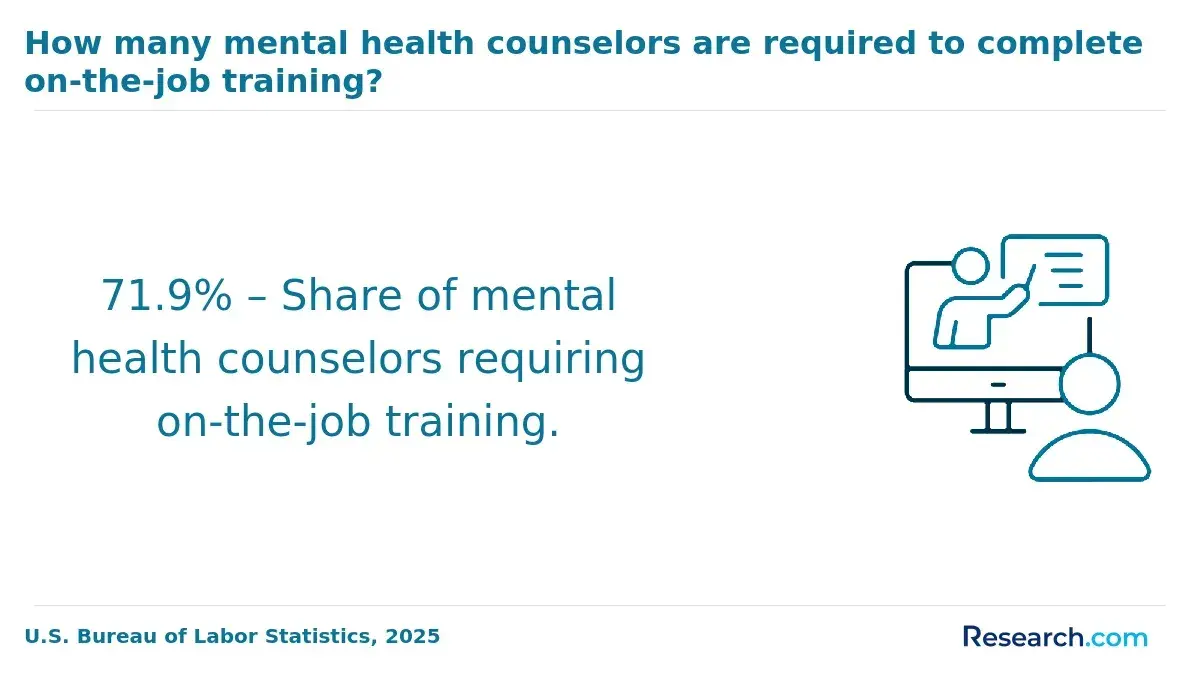
The full path usually takes longer than the master’s degree alone. A full-time counseling master’s program commonly takes about 2 to 3 years, followed by at least two years of supervised post-master’s clinical experience and the licensure examination process.
- Graduate degree: Students first complete a master’s degree in mental health counseling or a related field. Programs often require 60 to 90 graduate credits, depending on the curriculum.
- Supervised clinical experience: Florida requires post-master’s supervised clinical experience, including a minimum of two years of supervised experience and at least 1,500 hours of direct client contact.
- Examination and application: After meeting education and supervised experience requirements, candidates must pass a recognized examination, commonly the National Clinical Mental Health Counseling Examination (NCMHCE), and complete the state application process.
| Phase | Typical time involved | What can affect the timeline |
| Master’s program | 2 to 3 years full-time | Part-time enrollment, transfer credits, prerequisites, cohort schedule. |
| Post-master’s supervision | At least two years | Availability of qualified supervisors, caseload, work setting, direct client hours. |
| Exam and application review | Varies by applicant | Exam scheduling, complete documentation, Board processing, background check. |
Are online counseling programs accepted for LPC licensure in Florida?
Online counseling programs may qualify for Florida counseling licensure, but the delivery format is not the main issue. Accreditation, curriculum, fieldwork, and Florida Board approval are what matter. An online program that lacks required accreditation or coursework can create the same licensure problems as an unsuitable campus program.
- Accreditation: Confirm whether the program is accredited by CACREP or another accepted accreditor. Starting July 1, 2025, only CACREP, MPCAC, or equivalent accreditation will be accepted for licensure eligibility.
- Curriculum requirements: Check that the program includes the minimum 60 credit hours and the required counseling content areas expected by the Florida Board.
- Practicum and internship: Ask how online students secure field placements in Florida and whether the school assists with site approval and supervision documentation.
- State authorization: If the school is outside Florida, confirm that it is authorized to enroll Florida students and that its curriculum is designed for Florida licensure or can clearly meet Florida standards.
Online study can be a strong option for working adults, rural students, and career changers, but it requires careful verification before enrollment. Never rely only on a school’s marketing language; ask for licensure alignment in writing.
How does an online counseling program in Florida compare to an on-campus program?
Online and on-campus LPC programs can both lead to licensure preparation when they meet Florida requirements. The better choice depends on your schedule, learning style, access to placements, and need for in-person support.
| Factor | Online counseling program | On-campus counseling program |
| Flexibility | Often better for students balancing work, caregiving, or long commutes. | Usually follows fixed class times and campus-based expectations. |
| Faculty and peer interaction | May use live sessions, discussion boards, video meetings, and group projects. | Provides more immediate face-to-face contact and informal networking. |
| Resources | Digital libraries, virtual advising, online counseling labs, and remote support may be available. | Students may have easier access to campus libraries, counseling labs, faculty offices, and in-person events. |
| Practicum and internship | Students may need to take a more active role in finding approved local placements. | Programs may have established relationships with nearby agencies and clinics. |
| Learning pace | May include synchronous and asynchronous coursework, giving students more scheduling control. | Usually follows a traditional semester rhythm with shared pacing. |
| Best fit | Independent learners who need flexibility and can manage local field placement tasks. | Students who want structured routines, campus access, and frequent in-person interaction. |
Flexibility
Online LPC programs are often attractive to students who must keep working or manage family responsibilities while in graduate school. Campus programs may offer less scheduling flexibility but can provide more structure for students who prefer a set routine.
Interactivity and Engagement
Campus-based programs usually make it easier to build relationships through classroom discussions, informal conversations, and in-person practice activities. Online programs can still be highly interactive, but the experience depends heavily on course design, faculty responsiveness, and whether live sessions are required.
Access to Resources
Both formats can provide strong academic support. The difference is how that support is delivered. Campus students may benefit from physical labs and offices, while online students may value 24/7 digital access and remote advising.
Practicum and Internship Opportunities
Fieldwork is one of the most important points to compare. Ask each program how placements are approved, who confirms supervisor qualifications, and what happens if you cannot secure a local site on time.
Learning Pace
Online coursework may include self-paced elements, but counseling programs still require deadlines, clinical skills practice, and supervised fieldwork. On-campus programs typically keep students on a more uniform timeline.
What is the average cost of LPC programs in Florida?
The cost of becoming a counselor in Florida depends on the school, residency status, program length, delivery format, fees, books, commuting, and whether you can continue working while enrolled. Generally, in-state tuition at public universities in Florida can range from about $6,000 to $12,000 per year for graduate programs. For out-of-state students, tuition can be significantly higher, often two to three times the in-state rate.
Private university tuition is usually higher, ranging from about $20,000 to $40,000 per year or more, depending on the institution. Online programs may reduce commuting and relocation costs, but tuition may be similar to campus tuition.
| Cost factor | Why it matters | Question to ask |
| Tuition per credit | Counseling programs often require 60 or more credits, so small per-credit differences add up. | What is the total tuition for the full program, not just one semester? |
| Residency status | Public universities may charge different in-state and out-of-state rates. | Do I qualify for Florida resident tuition? |
| Fees | Technology, clinical, student service, graduation, and distance-learning fees can increase total cost. | What mandatory fees are charged each term? |
| Field placement expenses | Students may need liability insurance, background checks, transportation, or unpaid internship time. | What out-of-pocket costs are tied to practicum and internship? |
| Opportunity cost | Full-time study can reduce working hours or income. | Can I complete the program part-time without disrupting licensure preparation? |
How to choose the best LPC program in Florida?
The best LPC program in Florida is not simply the cheapest, fastest, or highest-ranked option. It is the program that meets Florida licensure requirements, fits your schedule and budget, provides strong clinical training, and supports the type of counseling career you want.
- Start with accreditation. Confirm whether the program is CACREP-accredited or otherwise accepted under Florida’s current licensure standards. Accreditation is one of the most important safeguards for licensure eligibility.
- Match the curriculum to Florida requirements. Review required courses, clinical hours, practicum, internship, and total credits. If anything is unclear, ask the program director for written confirmation.
- Evaluate clinical placement support. Strong programs help students identify appropriate field sites, understand documentation rules, and prepare for supervision expectations.
- Look closely at faculty expertise. Faculty with active clinical, research, supervision, or community mental health experience can strengthen your training and professional network.
- Ask about licensure exam preparation. Programs should help students understand exam expectations, supervised experience steps, and Florida Board documentation requirements.
- Compare total cost, not just tuition. Include fees, books, transportation, technology, fieldwork expenses, and lost income if your schedule changes.
| Before enrolling, ask the school | Why this question matters |
| Does this program meet Florida LMHC education requirements? | You need licensure alignment, not just a counseling-related degree title. |
| Is the program CACREP-accredited, MPCAC-accredited, or considered equivalent? | Accreditation rules affect eligibility, especially for students entering programs near or after July 1, 2025. |
| How are practicum and internship placements arranged? | Field placement delays can extend your graduation timeline. |
| What is the program’s total cost through graduation? | Per-credit tuition does not show the full financial commitment. |
| Can graduates sit for the required counseling examination? | Exam eligibility is a key step toward licensure. |
| What support is available for working adults or online students? | Advising, scheduling, and placement support can determine whether the program is manageable. |
What types of specializations are available within counseling in Florida?
Counseling specializations help students prepare for specific client populations, treatment settings, and career goals. Florida programs may offer formal tracks, certificates, electives, or field placements related to specific counseling roles.
- Addiction counseling: Focuses on substance use disorders, relapse prevention, recovery planning, and treatment in settings such as rehabilitation centers, hospitals, community agencies, and private practice.
- School counseling: Prepares counselors to support students’ academic, social, emotional, and career development in educational settings.
- Marriage and family therapy: Emphasizes relationship systems, family dynamics, communication, and life transitions.
- Child and adolescent counseling: Concentrates on developmental issues, behavioral concerns, family disruption, trauma, and age-appropriate therapeutic methods.
- Social work: Some students choose an M.S.W. with a clinical focus and pursue Licensed Clinical Social Worker status instead of LMHC licensure. If you are comparing helping professions, review the differences between social work and counseling.
Florida’s need for behavioral health professionals remains significant. A 2023 report states that Florida has 237 mental health workforce shortage areas, and the chart below shows how access to mental health care compares across states.
What career paths are available for LPCs in Florida?
Licensed professional counselors in Florida can work in many settings, including community agencies, hospitals, schools, residential programs, rehabilitation centers, colleges, integrated health clinics, and private practice. The right path depends on your preferred population, risk tolerance, income goals, schedule needs, and clinical interests.
- Private practice: Counselors may provide therapy to individuals, couples, families, or groups. This route offers independence but requires business planning, marketing, billing systems, documentation procedures, and liability protection.
- Clinical mental health settings: LPCs can work in outpatient clinics, hospitals, residential treatment programs, and community mental health agencies serving clients with depression, anxiety, bipolar disorder, trauma, and other concerns.
- School counseling: Counselors in educational environments help students manage academic, emotional, social, and career-related challenges. Requirements may differ from LMHC practice depending on the role.
- Career counseling: Career counselors support people making education choices, changing jobs, managing workplace stress, or planning long-term career development.
- Substance abuse counseling: Counselors specializing in addiction may work in rehab centers, hospitals, outpatient programs, and community health settings focused on recovery and relapse prevention.
| Career setting | Best for counselors who want | Trade-off to consider |
| Community mental health | Broad clinical exposure and service to high-need populations. | Caseloads and documentation demands can be heavy. |
| Hospital or integrated care | Collaboration with medical teams and complex clinical cases. | Schedules and protocols may be more structured. |
| School or college counseling | Work with students and developmental concerns. | May require additional education, certification, or role-specific credentials. |
| Substance abuse treatment | Specialized work in addiction recovery and behavioral change. | May require additional training or certification. |
| Private practice | Autonomy, niche specialization, and business ownership. | Income can be less predictable, especially when starting out. |
How does Florida support aspiring counselors through state-funded initiatives?
Florida’s behavioral health workforce needs have increased attention on programs that reduce financial and access barriers for mental health professionals. Students should investigate funding and service-based incentives early, especially if they are willing to work in underserved communities after graduation.
Some support options may include tuition reimbursement programs for mental health professionals serving underserved areas, county-level grant programs for counseling students, and service-linked incentives. Availability can change, so students should verify current details with state agencies, county offices, employers, and school financial aid departments.
Florida also participates in the National Health Service Corps (NHSC) Loan Repayment Program, which can benefit eligible mental health professionals who commit to working in designated Health Professional Shortage Areas (HPSAs). These opportunities can reduce graduate education debt while addressing local access gaps.
Students considering related family systems work can compare counseling licensure with the steps explained in this guide to how to become a marriage and family therapist in Florida.
What are the next steps after becoming a licensed mental health counselor in Florida?
After earning licensure, counselors should move from “meeting requirements” to building a sustainable professional identity. Useful next steps include choosing a clinical niche, joining a supervision or consultation group, strengthening documentation habits, completing advanced training, learning insurance billing, and deciding whether to pursue agency leadership, private practice, school-based work, addiction counseling, or another specialization.
If you are still mapping the full pathway, review the broader process for how to become a licensed mental health counselor in Florida. Licensed counselors should also continue monitoring Florida Board updates, telehealth rules, CE requirements, and ethical standards that affect day-to-day practice.
How can I specialize in substance abuse counseling in Florida?
Substance abuse counseling requires more than general counseling skills. Counselors need focused training in addiction theory, assessment, relapse prevention, co-occurring disorders, motivational interviewing, treatment planning, family impact, and recovery systems. Supervised experience with clients affected by substance use disorders is especially important because addiction work often involves complex ethical, medical, legal, and family-system issues.
Professionals considering this specialization should look for graduate electives, post-graduate certificates, workshops, and supervised placements tied to addiction treatment. For state-specific pathway details, review how to become a substance abuse counselor in Florida.
How can telehealth expand LPC services in Florida?
Telehealth can help Florida counselors reach clients who face transportation barriers, rural access limitations, mobility issues, or scheduling challenges. It can also support hybrid practice models in which some sessions occur online and others occur in person. However, telehealth does not remove a counselor’s responsibility to follow privacy, informed consent, emergency planning, documentation, and state practice rules.
Counselors who want to serve addiction recovery clients remotely should understand both clinical and technology-related expectations. Digital service delivery is increasingly relevant to the substance abuse counselor job outlook, particularly for professionals comfortable with both in-person and virtual care.
What are the legal and ethical considerations for practicing as an LPC in Florida?
Florida LPCs must practice within state law, Board rules, and professional ethical standards. Core responsibilities include confidentiality, informed consent, appropriate boundaries, accurate documentation, mandated reporting, competence within scope of practice, and risk management for clients who may be in crisis.
Telehealth adds additional considerations, including identity verification, secure platforms, client location, emergency contacts, privacy protections, and documentation of consent for remote services. Counselors comparing mental health professions can also review how to become a psychologist in Florida to understand how psychology licensure differs from counseling licensure.
How can LPCs specialize in child counseling in Florida?
Child counseling requires specialized knowledge of development, family systems, school environments, trauma, behavior, attachment, and age-appropriate interventions. LPCs interested in this area should pursue advanced coursework, supervised child and adolescent clinical experience, and training in evidence-based approaches for younger clients.
Because children are usually connected to parents, guardians, schools, pediatric providers, or courts, child counseling also requires careful attention to consent, confidentiality, documentation, and collaboration. For a broader training pathway, review how to become a child counselor.
How can I successfully establish a private practice as an LPC in Florida?
Starting a private counseling practice in Florida requires clinical readiness and business preparation. Before opening, develop a business plan, choose your service niche, confirm local business and zoning requirements, obtain professional liability insurance, create informed consent and privacy documents, set fees, decide whether to accept insurance, and build referral relationships.
Private practice also requires systems for scheduling, records, billing, crisis planning, telehealth, marketing, and taxes. Counselors who want to stay connected to the education pipeline and potential referral networks may monitor regional training resources, including good colleges for psychology in Florida.
How can LPCs optimize financial management and insurance billing in Florida?
Strong financial systems help counselors keep a practice stable. LPCs should establish clear fee policies, verify insurance benefits when applicable, use accurate billing codes, maintain organized records, track denied claims, budget for taxes, and plan for expenses such as liability coverage, software, supervision or consultation, continuing education, rent, and marketing.
Counselors who are comparing allied mental health fields can review how to become a social worker in Florida to understand how practice settings, reimbursement options, and professional roles may differ.
Can gaining behavior analyst certification boost my counseling practice in Florida?
Behavior analyst certification can strengthen a counselor’s ability to address behavior patterns, skill-building goals, and structured intervention plans, particularly when working with clients who benefit from behavior-focused treatment models. It may also expand collaboration opportunities with schools, families, and behavioral health teams.
This path is not necessary for every counselor, but it can be valuable for professionals who want to integrate behavior analysis with counseling services. To understand the education and certification steps, explore how to become a behavior analyst in Florida.
What is the fastest way to become a counselor in Florida?
The fastest realistic route is to choose a licensure-aligned master’s program from the beginning, enroll full-time if possible, complete practicum and internship on schedule, secure a qualified supervisor immediately after graduation, track hours carefully, and prepare early for the required examination. Cutting corners is risky; Florida licensure depends on meeting every education, supervision, exam, and application requirement.
Students who want a more detailed timeline can review the fastest way to become a counselor in Florida.
How do regional differences within Florida influence LPC licensure and practice opportunities?
Florida’s regions can offer different counseling opportunities. Large metro areas may provide more employers, internship sites, specialty clinics, hospitals, and private practice competition. Rural or underserved areas may have fewer providers and stronger need for community-based mental health services, but fewer local supervision and placement options.
Before choosing a program or job location, ask whether the area has qualified supervisors, practicum sites, bilingual service needs, substance abuse treatment centers, school-based opportunities, telehealth demand, and potential loan repayment eligibility. Counselors interested in educational settings can also compare requirements for becoming a school counselor in Florida.
What are the Florida LPC license requirements?
Florida’s LPC pathway, commonly tied to LMHC licensure, requires more than a counseling degree. Candidates need a qualifying graduate education, supervised clinical experience, direct client contact hours, an approved examination, background verification, and complete application documentation. Ethical fitness and adherence to state rules are also essential.
Because rules can change and individual academic histories can vary, applicants should confirm their eligibility with the Board before making major education or employment decisions. For a focused checklist, review Florida LPC license requirements.
What continuing education requirements are necessary to maintain an LPC license in Florida?
Florida counselors must continue learning after licensure. Continuing education helps counselors stay current on ethics, legal responsibilities, clinical methods, and emerging practice issues.
- Total CE hours required: Licensed counselors in Florida must complete 30 hours of continuing education every two years as part of the license renewal process.
- Ethics courses: Of the required 30 hours, at least 3 must be in ethics, including topics such as confidentiality, professional boundaries, and ethical decision-making.
- Medical error prevention: Florida requires a 2-hour course on prevention of medical errors as part of continuing education.
- Telehealth training: Telehealth coursework is highly recommended because online therapy is more common, even though it is not mandated in the stated requirement.
- Domestic violence: Florida counselors must complete a 2-hour domestic violence course every third renewal cycle.
- Online vs. in-person options: Online CE can be convenient, while in-person conferences and workshops may provide networking and peer consultation opportunities.
What are the benefits of joining professional counseling organizations?
Professional counseling organizations can help students, registered interns, and licensed counselors stay connected to the field. Membership is not a substitute for licensure, but it can support professional growth and reduce isolation.
- Continuing education: Associations often offer webinars, workshops, and conferences that may help counselors meet CE requirements.
- Networking: Members can connect with peers, supervisors, mentors, employers, and referral sources.
- Clinical resources: Organizations may provide journals, practice tools, research updates, and professional publications.
- Discounts: Some groups offer reduced rates for events, certification-related costs, liability insurance, or professional services.
- Advocacy: Professional associations monitor policy issues that affect counselors and client access to care.
- Ethical support: Guidelines, consultation resources, and peer communities can help counselors think through difficult professional questions.
- Career development: Job boards, mentorship programs, leadership opportunities, and specialty divisions can support long-term advancement.
What is the job market for licensed counselors in Florida?
According to the U.S. Bureau of Labor Statistics (BLS), employment of substance abuse, behavioral disorder, and mental health counselors is projected to grow 22% by 2031, which is much faster than the average for all occupations.
Florida’s demand is shaped by population size, regional workforce shortages, substance abuse treatment needs, aging residents, and the growing integration of behavioral health into medical settings. Annual salaries for counselors in Florida range from $38,420 at the low end to $84,160 among top earners (BLS, 2025). Students comparing counseling roles can also review broader careers in counseling therapy.
- Growing population: Florida’s population growth increases demand for mental health services across age groups, including older adults.
- Substance abuse treatment: Florida has many rehabilitation and recovery-focused providers that need trained counselors.
- Integrated health care: Behavioral health is increasingly connected with primary care and medical settings. Florida’s healthcare environment, including its position among the best states for nurses, can create interdisciplinary opportunities.
- Diverse population: Counselors with bilingual skills or strong cultural competency may find opportunities serving Hispanic communities, retirees, and other diverse groups.
What are affordable educational paths for aspiring LPCs in Florida?
Counseling education can be expensive, but students can reduce costs by comparing public universities, online options, assistantships, scholarships, employer support, transfer policies, and total program length. Online programs may lower commuting or relocation expenses, though tuition is not always cheaper. Students interested in lower-cost education options can compare the most affordable online school counseling degrees.
- Choose accredited programs first: A low-cost program is not a bargain if it does not support licensure eligibility.
- Compare total program cost: Include tuition, fees, books, travel, technology, clinical requirements, and exam-related expenses.
- Ask about aid for counseling students: Scholarships, grants, graduate assistantships, employer tuition support, and service-based programs may reduce debt.
- Consider resident tuition: Florida residents may qualify for lower tuition at public institutions.
- Protect your timeline: A slightly more expensive program with reliable placement support may cost less overall than a cheaper program that delays graduation or supervision.
Exploring Career Transition Paths for LPCs in Florida
Licensed Professional Counselors in Florida can use their clinical foundation in several directions. Some transitions require additional education, certification, supervision, or employer-specific qualifications, so counselors should verify requirements before assuming their LMHC background is enough.
| Transition path | Why an LPC may choose it | Likely next step |
| Marriage and family therapy | To focus more deeply on couples, families, and relational systems. | Complete specialized training and review the marriage and family therapist education level. |
| Substance abuse counseling | To work with addiction recovery, relapse prevention, and co-occurring disorders. | Pursue addiction-focused coursework, certification, and supervised experience. |
| School counseling | To support children, adolescents, and students in educational settings. | Confirm school-specific credential and certification requirements. |
| Clinical supervision or management | To move into leadership, training, program direction, or team oversight. | Build supervisory experience, leadership skills, and administrative competence. |
| Research or academia | To teach, publish, evaluate programs, or contribute to counseling scholarship. | Consider advanced graduate study, research experience, or faculty pathways. |
| Corporate wellness | To apply counseling skills in employee wellbeing, stress management, and organizational support. | Develop knowledge of workplace mental health, consultation, and program design. |
1. Marriage and Family Therapy (MFT): LPCs interested in relationship dynamics may move toward family systems work. This transition often calls for additional training or credentials focused on couples and families.
2. Substance Abuse Counseling: Addiction counseling can lead to roles in rehabilitation centers, outpatient treatment, hospitals, and community programs. Additional coursework or certification may strengthen eligibility and competence.
3. School Counseling: LPCs who want to work with students may pursue school counseling roles, but they should check education-sector credential rules before assuming clinical licensure is sufficient.
4. Clinical Supervision and Management Roles: Experienced counselors may become clinical supervisors, program managers, directors, or administrators. These positions require strong leadership, documentation, compliance, and team-development skills.
5. Research and Academia: Counselors drawn to scholarship may pursue doctoral study, research projects, teaching, or policy work that shapes future counseling practice.
6. Corporate Wellness Programs: LPCs may also work in organizational wellness, employee assistance, stress reduction, and workplace mental health initiatives. This path suits counselors who want to apply clinical skills outside a traditional therapy office.
Common mistakes to avoid when choosing an LPC program in Florida
- Choosing a program before checking accreditation: Accreditation can directly affect licensure eligibility, especially under changing Florida standards.
- Looking only at tuition: Fees, unpaid internship time, travel, supervision, exam costs, and delayed graduation can change the true cost.
- Assuming online means easier: Online counseling programs still require rigorous clinical training, field placements, and licensure documentation.
- Ignoring field placement support: A program with weak practicum and internship support can create major delays.
- Not saving syllabi and records: The Board may need detailed course and supervision documentation.
- Assuming salary outcomes are guaranteed: Earnings vary by setting, location, specialization, experience, and business model.
- Waiting too long to plan supervision: Post-master’s supervision is a major licensure step and should be arranged carefully.
Key Insights
- Florida’s counseling pathway centers on a qualifying graduate degree, supervised post-master’s experience, direct client contact hours, a recognized examination, background review, and ongoing continuing education.
- Program choice is the highest-stakes decision. Confirm accreditation, Florida curriculum alignment, practicum and internship support, and total cost before enrolling.
- Online counseling programs can work for Florida licensure, but only if they meet the same accreditation, coursework, and fieldwork standards expected of campus programs.
- The master’s degree usually takes 2 to 3 years full-time, but the full licensure timeline also includes at least two years of supervised clinical experience.
- Florida’s mental health workforce shortage and projected counseling job growth create opportunity, but location, specialization, licensure status, and experience strongly affect career outcomes.
- Specializations such as addiction counseling, child and adolescent counseling, school counseling, family therapy, and telehealth can improve career focus when supported by appropriate training and supervision.
- The smartest next step is to contact each prospective program and ask for written confirmation that its degree meets Florida LMHC education requirements.
Related Articles for Nearby States
- 2027 How to Become a Licensed Counselor (LPC) in Georgia
- 2027 How to Become a Licensed Counselor (LPC) in Alabama
- 2027 How to Become a Licensed Counselor (LPC) in South Carolina
- 2027 How to Become a Licensed Counselor (LPC) in Mississippi
- 2027 How to Become a Licensed Counselor (LPC) in Tennessee
- 2027 How to Become a Licensed Counselor (LPC) in North Carolina
- 2027 How to Become a Licensed Counselor (LPC) in Louisiana
- 2027 How to Become a Licensed Counselor (LPC) in Kentucky
- 2027 How to Become a Licensed Counselor (LPC) in Arkansas
- 2027 How to Become a Licensed Counselor (LPC) in Virginia
References:
- American Counseling Association. (2025). Licensure requirements for professional counselors. https://www.counseling.org
- Centers for Disease Control and Prevention. (2025). Mental health data and statistics. https://www.cdc.gov/mentalhealth
- Council for Accreditation of Counseling and Related Educational Programs. (2025). CACREP accredited programs directory. https://www.cacrep.org
- Florida Board of Clinical Social Work, Marriage & Family Therapy, and Mental Health Counseling. (2025). Licensed mental health counselor requirements. https://floridasmentalhealthprofessions.gov/licensed-mental-health-counselor/
- Florida Board of Clinical Social Work, Marriage & Family Therapy, and Mental Health Counseling. (2025). Licensing and renewals. https://floridasmentalhealthprofessions.gov/licensing-renewals/
- Florida Department of Health. (2026). Health care licensing and regulation overview. https://www.floridahealth.gov/licensing-regulations/
- National Institute of Mental Health. (2025). Mental health workforce and demand. https://www.nimh.nih.gov/health/statistics
- U.S. Bureau of Labor Statistics. (2025). Occupational Employment and Wage Statistics: Florida. https://www.bls.gov/oes/current/oes_fl.htm
- U.S. Bureau of Labor Statistics. (2025). Occupational employment and wages: Mental health counselors. https://www.bls.gov/oes/current/oes211018.htm
- Substance Abuse and Mental Health Services Administration. (2025). Behavioral health workforce projections. https://www.samhsa.gov/workforce
- Zippia. (2025, January 8). Licensed Counselor Demographics and Statistics In The US. https://www.zippia.com/licensed-counselor-jobs/demographics/
Other Things You Should Know About Becoming an LPC in Florida
In 2027, to apply for LPC licensure in Florida, complete a graduate degree in counseling, obtain the necessary supervised clinical experience, and pass the National Clinical Mental Health Counseling Examination (NCMHCE). Submit your application along with the fee to the Florida Board of Clinical Social Work, Marriage & Family Therapy, and Mental Health Counseling.
To become a Licensed Counselor (LPC) in Florida in 2027, candidates must earn a master’s degree in counseling or a closely related field from an accredited institution. The program should include at least 60 semester hours of coursework, covering areas such as human development, counseling techniques, and ethical and legal issues.
LPCs in Florida must complete 30 hours of continuing education every two years to maintain their license. This includes 2 hours in medical error prevention, 2 hours on laws and rules, and 3 hours on ethics. Compliance ensures the ability to renew licensure.
To obtain LPC licensure in Florida, candidates must complete extensive supervised clinical experience. This includes a minimum of 1,500 hours of face-to-face client counseling under the supervision of a qualified professional, such as a licensed mental health counselor or equivalent. These hours must include at least 100 hours of direct supervision, with 50 hours of individual supervision. The supervised experience typically occurs in settings like mental health clinics, hospitals, or private practices, providing practical, hands-on experience in diagnosing and treating mental health issues. This rigorous training ensures that candidates are well-prepared to provide effective and ethical counseling services upon licensure.


