
2027 Best Cybersecurity Courses Online with Certificates

Co-Founder and Chief Data Scientist
Where do you begin if you're interested in entering the dynamic field of cybersecurity? The ever-expanding digital landscape presents a growing challenge: cybersecurity threats. In 2023 alone, global ransomware damages were estimated to reach a staggering $1.1 billion.
One excellent pathway into a cybersecurity career is to enroll in online cybersecurity courses with certificates. Using my decades of experience as a career planner, I put together this guide to the top ten cybersecurity courses available online, each offering a certificate to help you stand out in this rapidly evolving field. Whether you're a student or a professional looking to pivot your career, these courses will provide you with the necessary skills and credentials to succeed.
What are the benefits of getting a certificate from the best cybersecurity courses online?
- Acquiring a degree in cybersecurity opens doors to a spectrum of lucrative job opportunities, including roles such as cybersecurity analyst, information security specialist, and network security engineer.
- The median pay for information security analysts stands at $120,360 annually, showcasing the considerable earning potential associated with this field.
- Pursuing a cybersecurity degree online offers flexibility, allowing students to balance their studies with work or other commitments while gaining practical skills in a rapidly evolving industry.
What can I expect from the best cybersecurity courses online with certificates for 2027?
- The best cybersecurity courses online with certificates for 2027 deliver comprehensive instruction on cutting-edge security concepts and techniques.
- These courses typically cover various topics, including network security, cryptography, ethical hacking, and incident response. Students can expect to engage with hands-on projects and simulations that mimic real-world scenarios, providing valuable practical experience.
- The cost of cybersecurity courses may range from $100 to more than $7,000. Costs depend on factors like the institution offering the program and course length.
- Cybersecurity courses may last from several weeks to several months. These courses are designed for self-paced learning, so you can adjust the completion time based on your schedule and dedication.
- With flexible scheduling and accessible online platforms, these courses cater to learners of all backgrounds, allowing them to acquire in-demand cybersecurity expertise at their own pace and convenience.
Where can I work with a certificate from the best cybersecurity courses online?
Graduates with certificates from the best cybersecurity courses online can pursue rewarding career opportunities in various industries and sectors. Some common areas of employment include:
- Technology Companies: Tech giants and startups alike require cybersecurity professionals to safeguard their systems and data against cyber threats.
- Government Agencies: Federal, state, and local government entities employ cybersecurity experts to protect sensitive information and critical infrastructure.
- Financial Institutions: Banks, insurance companies, and investment firms rely on cybersecurity specialists to ensure the security of financial transactions and customer data.
- Healthcare Organizations: Healthcare providers and medical facilities need cybersecurity professionals to safeguard electronic health records and patient information from cyber-attacks.
- Consulting Firms: Consulting firms offer cybersecurity services to businesses across industries, providing expertise in risk assessment, compliance, and security strategy.
- Defense Contractors: Companies that work with defense and military organizations require cybersecurity professionals to protect classified information and defense systems.
- Nonprofit Organizations: Nonprofits and NGOs may hire cybersecurity experts to protect their digital assets and maintain donor trust.
These are just a few examples of where individuals with cybersecurity certifications can find employment opportunities. As cyber threats continue to evolve, the demand for skilled cybersecurity professionals is expected to grow across various sectors.
How much can I make with a certificate from the best cybersecurity courses online?
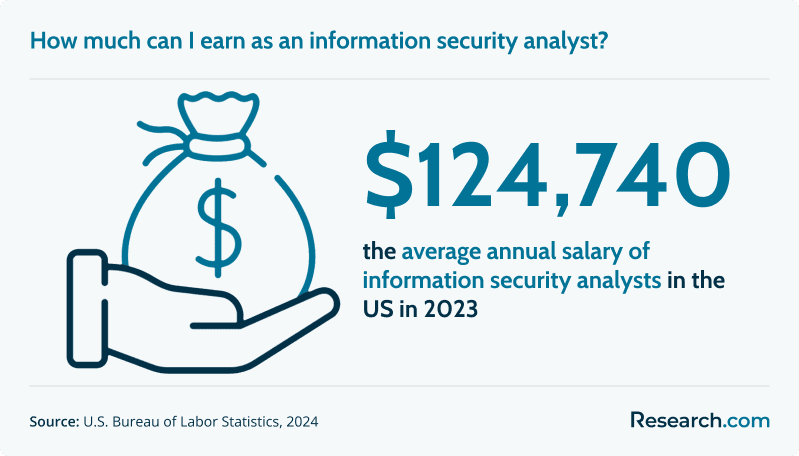
In 2023, the median annual wage for computer and information technology occupations was $104,420. However, specifically for information security analysts, the average annual salary was notably higher, standing at $124,740.
Moreover, the highest-paying industries for information security analysts in 2023 included computer and peripheral equipment manufacturing, with an average salary of $184,190, and web search portals, libraries, archives, and other information services, with an average salary of $182,660.
These figures highlight the lucrative earning potential for cybersecurity professionals, particularly those with specialized skills and certifications.
- 10 Best Cybersecurity Courses Online with Certificates for 2027 List of Courses
- How do online cybersecurity courses compare to in-person classes? Online vs. In-Person
- What prerequisites are needed for online cybersecurity courses? Requirements
- How long does it take to complete an online cybersecurity course? How long does it take to complete an online cybersecurity course?
- How much do online cybersecurity courses typically cost? Cost
- What topics are covered in a typical cybersecurity course? Topics
- Are online cybersecurity course certificates recognized by employers? Are online cybersecurity course certificates recognized by employers?
- What career opportunities are available after completing a cybersecurity course? What career opportunities are available after completing a cybersecurity course?
- What is the role of certifications in shaping a cybersecurity career path? What is the role of certifications in shaping a cybersecurity career path?
- How much can I expect to earn with a cybersecurity certification? Salary Outlook
- What is the job outlook for cybersecurity professionals in the foreseeable future? Job Outlook
- Can combining cybersecurity training with an affordable online computer science degree boost career prospects? Can combining cybersecurity training with an affordable online computer science degree boost career prospects?
- How can AI-driven innovations shape cybersecurity training and career development? How can AI-driven innovations shape cybersecurity training and career development?
- How can mentorship and networking boost career advancement in cybersecurity? How can mentorship and networking boost career advancement in cybersecurity?
- How can cybersecurity professionals stay updated with the latest industry trends? How can cybersecurity professionals stay updated with the latest industry trends?
- What are the most important skills gained from completing an online cybersecurity certification? Skills
- What other online certifications can I consider for career advancement? What other online certifications can I consider for career advancement?
- Should I choose a cyber security degree online over a certificate program? Should I choose a cyber security degree online over a certificate program?
- Specialized Pathways in Cybersecurity: Exploring Cybercrime Specialized Pathways in Cybersecurity: Exploring Cybercrime
- Are online cybersecurity certifications financially worth the investment? Are online cybersecurity certifications financially worth the investment?
- How can a health informatics online degree amplify cybersecurity expertise? How can a health informatics online degree amplify cybersecurity expertise?
10 Best Online Cybersecurity Courses with Certificates for 2027
Choosing an online cybersecurity course is not just about finding a recognizable brand name. The better question is whether the course matches your current experience, budget, schedule, and career goal. Some learners need a short introduction before committing to a degree. Others need hands-on labs, certification preparation, or a structured bootcamp that can help them move into analyst, security operations, or IT security roles.
This guide compares 10 online cybersecurity courses and certificate options, explains how they differ, and shows what to consider before paying for a program. You will also learn how online courses compare with in-person training, what prerequisites to expect, how long courses usually take, what employers may value, and when a certificate may or may not be enough for your career plan.
Quick Answer: What Is the Best Online Cybersecurity Course with a Certificate?
The best online cybersecurity course depends on your goal. Beginners who want an affordable, self-paced introduction may prefer the Google Cybersecurity Certificate, IBM Cybersecurity Analyst Professional Certificate, ISC2 Certified in Cybersecurity, or IBM’s introductory Coursera course. Learners who want a more intensive career-change format may consider UPenn’s Cybersecurity Boot Camp or Fullstack Academy’s Cybersecurity Analytics Bootcamp. Students who want a rigorous technical foundation from a specialized security training provider may find SANS SEC275 a stronger fit.
Before enrolling, compare cost, time commitment, hands-on labs, certification preparation, employer recognition, refund rules, and whether the program teaches tools used in real security work, such as SIEM platforms, Linux, Wireshark, Metasploit, Nessus, command-line workflows, and incident response methods.
How Research.com Evaluates Cybersecurity Course Options
Cybersecurity training can be a meaningful financial commitment, especially when a bootcamp costs thousands of dollars. Research.com reviews programs with attention to transparency, practical value, and learner decision-making. The ranking process draws from established education and labor-market sources, including the IPEDS database, Peterson's database, the College Scorecard database, and The National Center for Education Statistics. To understand how Research.com evaluates education options, see the Research.com methodology page. If you are comparing broader online education pathways, you can also review this list of nationally accredited online schools.
Best Online Cybersecurity Courses with Certificates: Side-by-Side Comparison
| Course or Program | Best For | Course Length | Estimated Cost | Structure |
| Google Cybersecurity Certificate | Beginners seeking entry-level cybersecurity training | 6 months at 7 hours a week | $49 (from Coursera) | Self-paced |
| UPenn’s Cybersecurity Boot Camp | Learners wanting a structured, intensive bootcamp | 24-week program at 9 hours a week | $13,995 | Self-paced |
| IBM Cybersecurity Analyst Professional Certificate | Students interested in analyst tools, SIEM, incident response, and forensics | 4 months at 10 hours a week | $49 (from Coursera) | Self-paced |
| SANS Institute SEC275 | Learners who want a deeper technical foundation from a cybersecurity-focused provider | 4 months (around 50 to 60 hours) | $3,020 to $3,400 (GFACT Certification) | Self-paced, materials available for 4 months |
| Microsoft Cybersecurity Analyst Professional Certificate | Learners focused on Zero Trust, identity, infrastructure, governance, and risk | 6 months at 10 hours a week | $49 (from Coursera) | Self-paced |
| Fullstack Academy Cybersecurity Analytics Bootcamp | Career changers who want bootcamp-style training and portfolio-oriented practice | 12 to 26 weeks | $14,995 (payment plans available); starts at $261 per month | Self-paced |
| Cybersecurity for Everyone by University of Maryland, College Park | Nontechnical learners, managers, and beginners who need broad cybersecurity literacy | 3 weeks at 7 hours a week | $49 (from Coursera) | Self-paced |
| Introduction to Cybersecurity Fundamentals by Coursera Instructor Network | Learners who want a very short cybersecurity overview | 2 hours to complete | $49 (from Coursera) | Self-paced |
| Certified in Cybersecurity by ISC2 | Beginners seeking an entry-level industry certification pathway | 4 weeks | Free | Self-paced |
| Introduction to Cybersecurity Tools & Cyber Attacks by IBM | Beginners who want a free introduction to cyber attacks and security tools | 11 hours | Free | Self-paced |
1. Google Cybersecurity Certificate
The Google Cybersecurity Certificate is designed for learners who want a structured introduction to cybersecurity without first completing a technical degree. Offered through Coursera, the program introduces core areas such as network security, cryptography, threat detection, and incident response. Its main advantage is accessibility: students can build foundational knowledge while completing practical labs and projects that connect the concepts to real workplace tasks.
This option is a good starting point for people targeting entry-level roles such as cybersecurity analyst or IT security specialist. It is not a substitute for advanced certifications or years of technical experience, but it can help beginners learn the language, tools, and workflows used in the field.
- Course Length: 6 months at 7 hours a week
- Estimated Cost: $49 (from Coursera)
- Structure: Self-paced
2. UPenn’s Cybersecurity Boot Camp
UPenn’s Cybersecurity Boot Camp is a part-time program built for learners who want a more intensive pathway than a short certificate course. The curriculum covers IT, networking, and information security, with exposure to tools such as Wireshark, Kali Linux, Metasploit, Nessus, and other technologies commonly used in cybersecurity practice.
The program may appeal to career changers or working professionals who want a structured training schedule and career support. It also introduces knowledge connected to certifications such as CompTIA Security+, Network+, Linux+, Server+, Cloud+, and Certified Ethical Hacker (CEH). Because the cost is much higher than subscription-based course options, prospective students should ask about outcomes, financing terms, refund policies, and the level of career support before enrolling.
- Course Length: 24-week program at 9 hours a week
- Estimated Cost: $13,995
- Structure: Self-paced
3. IBM Cybersecurity Analyst Professional Certificate
The IBM Cybersecurity Analyst Professional Certificate focuses on skills associated with analyst work, including data protection, endpoint protection, SIEM, network fundamentals, compliance, threat intelligence, incident response, and forensics. It is a practical option for learners who want to understand how security teams monitor systems, investigate alerts, and respond to events.
This certificate can be useful for beginners who want to explore security operations work before committing to a bootcamp, degree, or advanced certification. Students should be prepared to practice with tools and concepts rather than simply watch lectures.
- Course Length: 4 months at 10 hours a week
- Estimated Cost: $49 (from Coursera)
- Structure: Self-paced
4. The SANS Institute’s SEC275: Foundations: Computers, Technology, and Security
SANS SEC275 is a cybersecurity foundations course for learners who want a more technical introduction from a provider known for security training. The course introduces computer systems, security concepts, programming foundations, and hands-on exercises, making it suitable for students who want to move beyond surface-level awareness training.
This course is best for learners who can commit to a higher-cost training option and want a structured technical foundation. Since the materials are available for 4 months, students should plan their weekly schedule before purchasing access.
- Course Length: 4 months (around 50 to 60 hours)
- Estimated Cost: $3,020 to $3,400 (GFACT Certification)
- Structure: Self-paced, materials available for 4 months
5. Microsoft Cybersecurity Analyst Professional Certificate
The Microsoft Cybersecurity Analyst Professional Certificate is centered on applying security strategy to organizational systems. Topics include Zero Trust principles, identity security, device protection, data security, application security, network protection, infrastructure security, governance, risk compliance, security operations, and security posture management.
This program can be especially relevant for learners who expect to work in Microsoft-heavy environments or want exposure to security architecture and enterprise defense concepts. Students should review the course details carefully to confirm the credential, exam alignment, and level of technical depth before enrolling.
- Course Length: 6 months at 10 hours a week
- Estimated Cost: $49 (from Coursera)
- Structure: Self-paced
6. Cybersecurity Analytics Bootcamp by Fullstack Academy
Fullstack Academy’s Cybersecurity Analytics Bootcamp is built for learners who want a bootcamp format with applied training. The program introduces tools and skills such as Kali Linux, command-line work, and Python, which can help students practice tasks associated with cybersecurity analysis.
The bootcamp may suit learners who want a more immersive career-preparation experience than a short course. It also includes access to a free elective course on generative AI featuring tools like ChatGPT and Bing AI. Because the tuition is significant, prospective students should compare the curriculum, schedule, payment terms, career services, and expected workload with lower-cost certificate options.
- Course Length: 12 to 26 weeks
- Estimated Cost: $14,995 (payment plans available); starts at $261 per month
- Structure: Self-paced
7. Cybersecurity for Everyone by University of Maryland, College Park
Cybersecurity for Everyone, offered by the University of Maryland, College Park, is a short course for learners who want to understand cybersecurity without immediately diving into a highly technical training program. Led by Dr. Charles Harry, who has experience at the NSA (National Security Agency), the course introduces cybersecurity fundamentals along with governance, privacy, and risk management considerations.
This course can be useful for beginners, business professionals, policy-minded learners, or anyone who needs cybersecurity literacy for work. It is less suitable for learners who already need deep hands-on technical labs or direct certification exam preparation.
- Course Length: 3 weeks at 7 hours a week
- Estimated Cost: $49 (from Coursera)
- Structure: Self-paced
8. Introduction to Cybersecurity Fundamentals by Coursera Instructor Network
Introduction to Cybersecurity Fundamentals is a compact course for learners who want a fast overview of core cybersecurity ideas. It covers common attack methods such as phishing, social engineering, and ransomware, along with basic approaches to data protection and online privacy.
Because the course can be completed quickly, it is best used as a first step rather than a full career-training program. It can help you decide whether cybersecurity interests you before you invest in a longer certificate, bootcamp, or degree.
- Course Length: 2 hours to complete
- Estimated Cost: $49 (from Coursera)
- Structure: Self-paced
9. Certified in Cybersecurity by ISC2
The ISC2 Certified in Cybersecurity (CC) certification is an entry-level credential for people beginning a cybersecurity career. It is designed to help learners demonstrate foundational knowledge and enter the profession with a recognized certification path. ISC2’s One Million Certified in Cybersecurity initiative offers free CC online self-paced training and exams to one million individuals worldwide for a limited time.
Passing the exam and completing the application process allows individuals to become ISC2 members. Certification also requires ongoing professional development, including continuing professional education (CPE) credits. This makes the credential useful not only as a first milestone but also as an introduction to the continuing-learning expectations common in cybersecurity.
- Course Length: 4 weeks
- Estimated Cost: Free
- Structure: Self-paced
10. Introduction to Cybersecurity Tools & Cyber Attacks by IBM
IBM’s Introduction to Cybersecurity Tools & Cyber Attacks is a beginner-friendly course covering cybersecurity history, cyber attack types, attacker motives, current threats, basic system concepts, terminology, and tools. It is useful for learners who want context before studying analyst workflows or more technical topics.
This course can help students build a base vocabulary and explore whether the cybersecurity analyst path is a good fit. Since it is free and short, it can be a practical first step before enrolling in a longer IBM certificate or another structured training program.
- Course Length: 11 hours
- Estimated Cost: Free
- Structure: Self-paced
If you need a program that fits around employment, caregiving, or other responsibilities, you may also want to compare the best online degree programs for working adults.
How to Choose the Right Online Cybersecurity Course
The strongest course for one learner may be the wrong choice for another. A short introductory course is useful if you are testing your interest. A professional certificate may be better if you want structured skill development. A bootcamp can make sense if you want a more intensive schedule and career services. A degree may be more appropriate if you need a broader academic credential for long-term advancement.
| Your Situation | Better Fit | Why It Makes Sense |
| You are completely new to cybersecurity | Short introductory course or beginner certificate | Lower risk, lower cost, and easier to complete before committing to a larger program |
| You want entry-level analyst skills | Professional certificate with labs and security tools | Hands-on practice helps you build evidence of applied ability |
| You are changing careers and want structure | Bootcamp or longer certificate program | More scheduled learning, broader projects, and career-support services may help maintain momentum |
| You want long-term advancement in IT or cybersecurity | Degree plus certifications | A degree can build broader computing knowledge, while certifications show specific security competencies |
| You already work in IT | Certification-aligned cybersecurity training | Your existing technical background may let you move faster into security specialization |
Student Perspectives on Online Cybersecurity Certificates
- Martina: "Completing an online cybersecurity certificate turned out to be a strong career move for me. The instructors explained the material clearly, and the lessons reflected tools and standards used in the field. I was surprised by how much practical knowledge I gained without attending a campus class."
- Kris: "Online study made it possible for me to keep working while building new cybersecurity skills. The self-paced format fit my schedule, and interacting with other learners helped me stay motivated."
- Janice: "The certificate worked well with my schedule because I could study when I had time. The flexibility mattered, and the skills I built have already helped me earn a promotion at work."
Key Findings
- Online cybersecurity courses range from brief introductory lessons to multi-month bootcamps, so the right choice depends on your career goal and starting point.
- Costs vary widely across the listed options, from Free courses to bootcamps priced at $14,995.
- Hands-on labs, tool exposure, projects, and certification alignment usually matter more to employers than a certificate title alone.
- Cybersecurity certificates can support entry-level career preparation, but some roles may still require broader IT experience, advanced certifications, or a degree.
- Information security analysts earned an average annual salary of $124,740 in 2023, but actual pay depends on location, industry, experience, and role.
Online Cybersecurity Courses vs. In-Person Classes: Which Is Better?
Online cybersecurity courses are often the better fit for learners who need flexibility. They can be completed from any location with internet access, and many allow students to move through lessons at their own pace. This format is useful for working adults, career changers, parents, and students who cannot attend scheduled campus sessions.
In-person classes may be better for learners who need live accountability, immediate instructor feedback, structured lab access, or face-to-face peer interaction. They may also help students who struggle to stay consistent in a self-paced environment.
Online training has improved because many programs now include virtual labs, video lessons, simulations, discussion boards, and guided projects. Similar flexibility is available in full degree pathways, including online cybersecurity degrees. However, students should verify whether the course includes meaningful hands-on work rather than relying only on lecture videos.
| Format | Advantages | Limitations | Best For |
| Online cybersecurity course | Flexible schedule, remote access, often self-paced, usually easier to fit around work | Requires self-discipline; hands-on quality varies by provider | Working adults, self-directed learners, beginners testing the field |
| In-person cybersecurity class | Live interaction, scheduled accountability, immediate feedback, possible on-site lab support | Less flexible; may require commuting or fixed class times | Learners who need structure, live support, or campus resources |
| Hybrid program | Combines online convenience with some live or in-person support | May still require scheduled attendance | Students who want flexibility but benefit from instructor contact |
What Prerequisites Do Online Cybersecurity Courses Usually Require?
Introductory cybersecurity courses often require little more than basic computer literacy, internet familiarity, and willingness to learn technical concepts. These beginner courses are usually more accessible than advanced computing programs, including the cheapest data science masters online options, which commonly expect stronger quantitative, programming, or technical preparation.
For a beginner course, it helps to understand operating systems, files, browsers, passwords, networks, and common software tools. You do not always need programming experience, but comfort with problem-solving and careful troubleshooting will make the learning process easier.
Advanced cybersecurity courses may expect prior coursework or work experience in IT, networking, programming, systems administration, or security operations. Some may also assume familiarity with Linux, scripting, cloud platforms, vulnerability scanning, or security frameworks. Before enrolling, check whether the provider lists required tools, technical setup instructions, or prerequisite certifications.
How Long Does It Take to Complete an Online Cybersecurity Course?
Completion time depends on the course format, difficulty level, and the number of hours you can study each week. Some cybersecurity courses are designed to be completed in a few hours, while others take several months and require steady weekly effort.
Among the programs listed in this guide, examples include a 6-month course at 7 hours a week, a 24-week program at 9 hours a week, a 4-month course at 10 hours a week, and a 4-month option requiring around 50 to 60 hours in total. Other formats include 12 to 26 weeks, 3 weeks at 7 hours a week, 2 hours to complete, 4 weeks, and 11 hours.
When estimating your timeline, be realistic. Cybersecurity concepts often require practice, not just reading or watching videos. If a course includes labs, command-line work, or projects, budget extra time for troubleshooting and review.
How Much Do Online Cybersecurity Courses Cost?
Online cybersecurity course pricing varies sharply. In the programs reviewed here, some options are Free, several Coursera-based options list $49 (from Coursera), SANS SEC275 lists $3,020 to $3,400 (GFACT Certification), UPenn’s Cybersecurity Boot Camp lists $13,995, and Fullstack Academy’s Cybersecurity Analytics Bootcamp lists $14,995 with payment plans available and starts at $261 per month.
Lower-cost courses can be a smart way to test your interest or learn fundamentals. Higher-cost bootcamps may offer more structure, career support, and applied practice, but the price should be evaluated carefully. Do not compare only tuition. Ask about financing terms, refund deadlines, included exam fees, lab access, career services, job-placement claims, and how long you can access course materials.
If you are also comparing degree routes, remember that some course options may cost less than the cheapest online bachelor's degree offerings, but a short certificate and a full degree serve different purposes.
What Topics Are Covered in a Typical Cybersecurity Course?
A well-designed cybersecurity course should help learners understand both the threat environment and the defensive methods used to protect systems. Common topics include:
- Cybersecurity fundamentals: Core terminology, security principles, common roles, and basic protection concepts.
- Threat landscape analysis: Malware, phishing, ransomware, social engineering, and other common attack patterns.
- Security architecture and design: Methods for building more secure systems, networks, and workflows.
- Cryptography: Encryption, secure communication, key concepts, and data-protection methods.
- Network security: Firewalls, intrusion detection, VPNs, secure configuration, and network monitoring.
- Incident response and forensics: How teams detect, investigate, document, and respond to security incidents.
- Risk management: Identifying vulnerabilities, assessing likelihood and impact, and prioritizing controls.
- Compliance and legal issues: Security obligations connected to frameworks and regulations such as GDPR and HIPAA.
These topics can support work across many sectors. In 2023, the most common industry for information security analysts was computer systems design and related services, with 40,290 professionals employed. The chart below provides additional detail.
Do Employers Recognize Online Cybersecurity Course Certificates?
Employers may recognize online cybersecurity certificates when they come from credible providers and show relevant, practical training. A certificate alone does not guarantee a job, but it can help demonstrate initiative, foundational knowledge, and exposure to tools or workflows used in security roles.
Certificates are usually strongest when paired with hands-on labs, projects, technical portfolios, IT experience, or industry-recognized exams. In some hiring situations, traditional degrees and established certifications may carry more weight than short online certificates, just as even the cheapest online software engineering degree may signal broader academic preparation than a short course.
To improve the value of an online certificate, save proof of projects, document tools used, build a cybersecurity portfolio, and prepare to explain what you can actually do. Employers are often more interested in demonstrated competency than in the delivery format of the course.
What Jobs Can You Pursue After Completing a Cybersecurity Course?
Completing a cybersecurity course can help you prepare for entry-level or adjacent roles, especially if you already have IT experience or continue building practical skills. The exact role you can qualify for depends on your background, the depth of the course, your portfolio, certifications, and employer requirements.
- Cybersecurity Analyst: Reviews security data, monitors systems, investigates alerts, and supports protective measures.
- Security Engineer: Helps design, implement, and maintain security infrastructure such as firewalls, encryption systems, and detection tools.
- Incident Responder: Investigates security events, identifies causes, documents findings, and helps reduce the risk of repeat incidents.
- Penetration Tester: Conducts authorized testing to find weaknesses in systems, applications, and networks.
- Security Consultant: Advises organizations on security practices, risk assessments, controls, policies, and improvement plans.
- Security Architect: Designs security solutions that support organizational systems and compliance needs.
- Security Operations Center (SOC) Analyst: Monitors alerts, triages potential incidents, and coordinates response activities.
- Cryptographer: Works with cryptographic methods used to protect sensitive communications and data.
- Compliance Officer: Supports alignment with security regulations and standards such as GDPR, HIPAA, and PCI DSS.
- Cybersecurity Manager/Director: Leads security teams, manages programs, and develops strategic initiatives to reduce organizational risk.
Career growth often requires continued learning. Some professionals pair cybersecurity training with business or IT education. For example, learners considering leadership paths may compare the online executive MBA cost, including options around $15,000, or explore online masters under 10k. Others may build a broader technical foundation through affordable online information technology degree programs.
In 2023, information security analysts earned an average annual salary of $124,740 per year. Actual earnings vary by role, experience, location, employer, and industry.
How Certifications Shape a Cybersecurity Career Path
Certifications can help organize your cybersecurity career path by showing employers that you have studied a specific area of practice. They are especially useful in fields where skills evolve quickly and where employers need evidence of knowledge in areas such as network security, ethical hacking, cloud security, governance, incident response, or risk management.
Beginners often start with entry-level credentials or foundational certificates before moving into specialized certifications. More experienced professionals may pursue advanced credentials to support roles in management, architecture, audit, or senior security operations. The best certification sequence depends on your target role, current experience, and the technologies used by employers in your field.
Certifications also encourage ongoing learning. Many require renewal, continuing education, or professional development. That expectation fits cybersecurity well because threats, tools, regulations, and employer needs change frequently.
How Much Can You Earn with Cybersecurity Training or Certification?
Cybersecurity training can support access to well-paid roles, but pay is never guaranteed by a certificate alone. Your salary depends on experience, location, industry, technical depth, certifications, education, and the responsibilities of the job.
According to the salary data cited in this guide, information security analysts in the US earned an average annual salary of $124,740 in 2023. Some learners may also increase their long-term options by adding broader computing education, such as a 2 year computer science degree.
In certain industries, including computer and peripheral equipment manufacturing, information services, media streaming distribution, software publishing, and financial investments, information security analysts had median annual wages ranging from $145,410 to $184,190 in 2023. The chart below shows the highest-paying industries for information security analysts.
What Is the Job Outlook for Cybersecurity Professionals?
The cybersecurity labor market remains strong in the data cited here. The projected job outlook for information security analysts in the US from 2022 to 2032 is 32%. That growth is expected to result in approximately 53,200 new jobs by 2032.
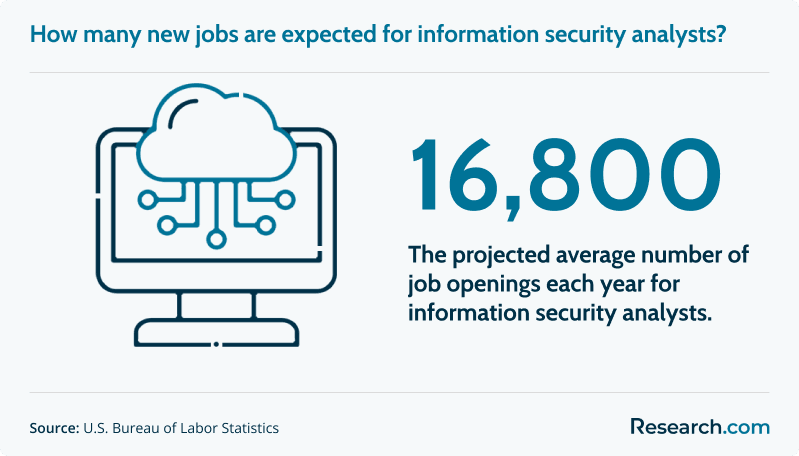
The projected average annual job openings for these occupations from 2022 to 2032 are estimated at 377,500. These projections point to continued employer demand, although competition can still be significant for entry-level positions. Candidates usually improve their chances by combining coursework with labs, projects, internships, IT experience, networking, and recognized certifications.
Should You Combine Cybersecurity Training with an Online Computer Science Degree?
Cybersecurity certificates can teach practical defensive skills, but computer science education can add deeper knowledge of programming, algorithms, systems, databases, and software design. That broader foundation can help professionals understand how systems are built, why vulnerabilities occur, and how to design more secure solutions.
If you want long-term flexibility beyond a first cybersecurity role, combining certificates with an affordable online computer science degree may be worth comparing. This path can be especially useful for learners interested in security engineering, application security, cloud security, or technical leadership.
How AI Is Changing Cybersecurity Training and Career Development
Artificial intelligence is increasingly relevant to cybersecurity because security teams use automation, analytics, and machine learning-informed tools to detect threats, prioritize alerts, and support response workflows. Learners should look for courses that explain how AI-related tools fit into security operations without treating automation as a replacement for human judgment.
Useful training may include AI-related case studies, labs, threat-detection workflows, and examples of how machine learning can support risk analytics. Professionals who want deeper specialization may compare cybersecurity learning with an advanced route such as an online master AI.
How Mentorship and Networking Support Cybersecurity Career Growth
Cybersecurity careers often advance through a mix of technical learning, practical experience, and professional relationships. Mentors can help you choose certifications, prepare for interviews, review projects, understand security roles, and avoid wasting money on credentials that do not match your goals.
Networking can also expose you to job openings, study groups, capture-the-flag events, professional associations, and peer feedback. Alumni networks, online communities, security meetups, and workplace mentors can all help. Some learners also bring value from adjacent technical fields; for example, knowledge similar to what may be gained in an affordable electrical engineering degree can strengthen systems thinking and technical troubleshooting.
How Cybersecurity Professionals Can Stay Current
Cybersecurity changes quickly, so a single course is rarely enough for an entire career. Professionals need a continuing-learning plan that keeps them aware of new threats, tools, regulations, and employer expectations.
- Continue formal learning: Add advanced courses or certifications such as Certified Information Systems Security Professional (CISSP) or Offensive Security Certified Professional (OSCP) when they match your career level and goals.
- Attend security events: Conferences and webinars such as Black Hat, DEF CON, or RSA Conference can expose professionals to current research, tools, and attack trends.
- Use threat intelligence resources: Platforms such as FireEye, Palo Alto Networks, or IBM X-Force can help professionals follow emerging threats and attacker behavior.
- Join professional communities: Organizations such as (ISC)², ISACA, or SANS Institute can provide training resources, discussions, events, and professional connections.
- Read security reporting: Sources such as Krebs on Security, Dark Reading, or Threatpost can help professionals follow breaches, vulnerabilities, and research.
- Follow experts and podcasts: LinkedIn, Twitter, "Security Now," and "Darknet Diaries" can provide ongoing exposure to security issues, stories, and practitioner perspectives.
Most Important Skills You Can Build in an Online Cybersecurity Certification
A strong cybersecurity certificate should help you build practical, job-relevant skills rather than only memorize definitions. The most valuable skills usually include:
- Network security: Understanding how to protect network infrastructure, configure defensive tools, and identify suspicious activity.
- Risk management: Assessing weaknesses, estimating impact, and prioritizing security controls.
- Cryptography: Learning how encryption supports secure communication and protects sensitive data.
- Incident response: Investigating events, identifying root causes, documenting activity, and applying corrective measures.
- Threat intelligence: Monitoring attacker tactics and using threat information to improve defenses.
- Ethical hacking and penetration testing: Testing systems with authorization to identify weaknesses before attackers exploit them.
- Compliance and legal awareness: Understanding security obligations related to regulations and standards such as GDPR, HIPAA, and PCI-DSS.
- Security software tools: Practicing with tools such as Wireshark, Metasploit, and Nessus for scanning, analysis, and testing tasks.
These skills can support your next step whether you pursue the cheapest online cyber security degree, a professional certificate, or a more advanced cybersecurity credential.
Other Online Certifications to Consider for Career Advancement
Cybersecurity professionals often benefit from credentials in adjacent areas such as data science, artificial intelligence, cloud computing, networking, and systems administration. These areas can strengthen your ability to analyze large datasets, secure cloud environments, automate tasks, and understand enterprise infrastructure.
If you are comparing broader credential options, Research.com’s guide to online certifications can help you evaluate programs that may support career growth inside or outside cybersecurity.
Should You Choose an Online Cybersecurity Degree Instead of a Certificate?
A certificate is usually better when you need focused, faster training in a specific skill area. A degree is usually better when you want broader academic preparation, general computing knowledge, eligibility for more roles, and a credential that may carry weight across employers over time.
Choose a certificate if you are testing the field, adding a skill to an existing IT background, preparing for a specific certification, or trying to fill a targeted knowledge gap. Consider a degree if you are early in your career, want a more complete technical foundation, or expect to pursue roles that may prefer formal education. To compare the degree pathway, review options for a cyber security degree online.
Specialized Cybersecurity Pathway: Cybercrime and Digital Investigation
Some cybersecurity professionals focus less on defense operations and more on investigation. Cybercrime work can involve analyzing attacks, preserving digital evidence, supporting investigations, and understanding online fraud, identity theft, intellectual property violations, and other illegal digital activity.
This path may appeal to learners interested in digital forensics, law enforcement support, corporate investigations, or incident analysis. If that focus matches your goals, compare programs in areas such as a cybercrime degree online to build knowledge in forensic methods, investigative procedures, and cybercriminal behavior.
Are Online Cybersecurity Certifications Financially Worth It?
Online cybersecurity certifications can be worth the investment when they help you gain practical skills, prepare for a recognized exam, build a portfolio, or qualify for a better role. They are less valuable when they are expensive, light on hands-on practice, poorly recognized, or disconnected from your target job.
To judge value, compare total cost, time commitment, employer recognition, included labs, project work, exam preparation, support services, and whether the certificate fills a clear gap in your resume. If you are deciding between certificates and formal education, review this guide on whether a cybersecurity degree is worth it.
How Interdisciplinary Education Can Strengthen Cybersecurity Careers
Cybersecurity problems often overlap with data analysis, business operations, healthcare, engineering, law, and policy. Professionals who understand more than one field may be better prepared to protect specialized systems, communicate with nontechnical teams, and solve complex security problems.
For example, advanced study through an MS in bioinformatics online may strengthen data-analysis skills and expose learners to large, sensitive datasets. While bioinformatics is not cybersecurity training, interdisciplinary knowledge can be useful in sectors where security, privacy, and data integrity are closely connected.
How a Health Informatics Online Degree Can Complement Cybersecurity Skills
Healthcare organizations manage sensitive data, regulated systems, and critical digital infrastructure. Cybersecurity professionals who understand healthcare data standards, privacy obligations, and clinical information systems may be better positioned to work in health-related security roles.
A health informatics online degree can complement cybersecurity training by adding context about healthcare data, compliance expectations, and digital health tools. This combination may be useful for professionals interested in securing healthcare environments or supporting privacy and risk management in health systems.
Common Mistakes to Avoid When Choosing an Online Cybersecurity Course
| Mistake | Why It Can Hurt You | Better Approach |
| Choosing only by brand name | A well-known provider may still offer a course that does not match your goal or skill level | Compare curriculum, labs, tools, career support, and certification alignment |
| Looking only at tuition | Exam fees, subscriptions, materials, financing terms, and refund rules can change the real cost | Calculate total cost before enrolling |
| Assuming any certificate guarantees a job | Employers usually evaluate skills, experience, projects, and fit, not only certificates | Build a portfolio and practice explaining your hands-on work |
| Skipping prerequisite checks | You may enroll in a course that assumes networking, Linux, or programming knowledge you do not yet have | Review technical requirements and start with fundamentals if needed |
| Ignoring hands-on practice | Cybersecurity roles require applied troubleshooting and analysis | Prioritize courses with labs, projects, simulations, or tool-based assignments |
| Relying only on rankings | A ranked course may not fit your schedule, budget, or career target | Use rankings as a starting point, then compare program details |
Questions to Ask Before Enrolling
- Does the course match my current skill level?
- What tools will I actually use during the program?
- Are labs, projects, or simulations included?
- Does the certificate prepare me for a recognized industry exam?
- How long will I have access to the course materials?
- What is the full cost, including subscriptions, exam fees, and materials?
- Are career services included, and what do they actually provide?
- Can I speak with an advisor or review student outcomes before enrolling?
- Will this course help me qualify for my target role, or do I also need IT experience, a degree, or another certification?
Key Insights
- The best online cybersecurity course is the one that matches your goal: awareness, entry-level training, certification preparation, career change, or long-term advancement.
- Low-cost and Free courses are useful starting points, but higher-cost bootcamps should be evaluated carefully for curriculum depth, hands-on practice, and career support.
- Employers may value online certificates, but the strongest candidates can demonstrate practical skills through labs, projects, tools, and clear explanations of what they learned.
- Cybersecurity training should be viewed as a step in a longer learning path. Certifications, degrees, IT experience, networking, and continuous education often work together.
- Before paying for any program, verify prerequisites, total cost, refund policies, time commitment, tool access, and whether the credential supports your target cybersecurity role.
References:
- Hellmann, K. (2023, September 22). See yourself in cybersecurity. DOL Blog.
- U.S. Bureau of Labor Statistics. (2024). Information security analysts. Retrieved May 22, 2024, from BLS.
- U.S. Bureau of Labor Statistics. (2024). Occupational employment and wages, May 2023 - 15-1212 Information security analysts. Retrieved May 22, 2024, from BLS.
- U.S. Bureau of Labor Statistics. (2024). Computer and information technology occupations. Retrieved May 22, 2024, from BLS.
Other Things You Should Know About Cybersecurity Courses Online with Certificates
Yes, many of the best online cybersecurity courses in 2027 require a basic understanding of IT and networking principles. Some courses might also ask for familiarity with programming languages like Python. Always check the specific course requirements before enrolling.
In 2027, leading institutions offering top online cybersecurity courses with certificates include Stanford University, MIT, and the University of Maryland. Platforms like Coursera and edX host their programs, providing both comprehensive learning experiences and industry-recognized certifications.
The 2027 best cybersecurity courses online with certificates focus on skills such as network security, ethical hacking, risk management, and cryptography. These courses also emphasize hands-on experience with real-world cyber defense strategies to ensure learners can effectively protect digital assets.


