
2027 Best HBCUs with Cybersecurity Programs

Co-Founder and Chief Data Scientist
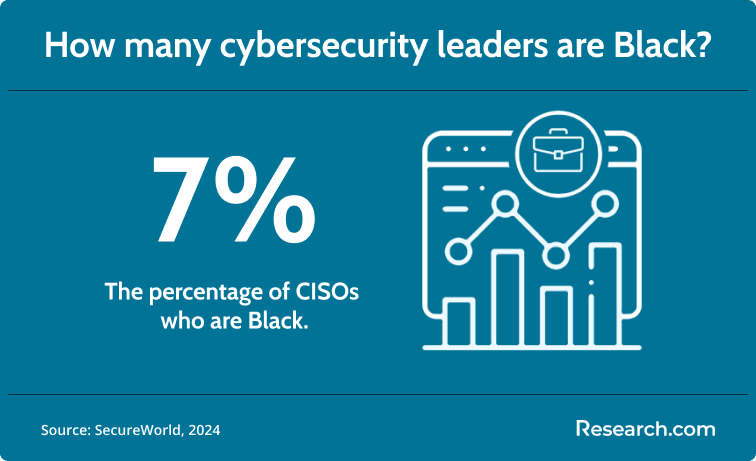
Many aspiring cybersecurity leaders feel they have to make a choice between a university that offers a strong sense of community and one that provides elite technical training. This is a significant concern in a field where only 7% of top security executives are Black. The great news is that you don't have to choose. The best programs offer both.
This guide was built by career planning experts to be more than just a ranking. It is a clear roadmap to the top HBCUs with cybersecurity programs that deliver a rigorous, career-focused education within a uniquely supportive environment, preparing you to lead in a field that desperately needs your talent.
What are the benefits of getting a cybersecurity program from an HBCU?
- You will be prepared for a high-demand career and gain access to a powerful, targeted recruitment pipeline as top companies and federal agencies work to improve representation in the field.
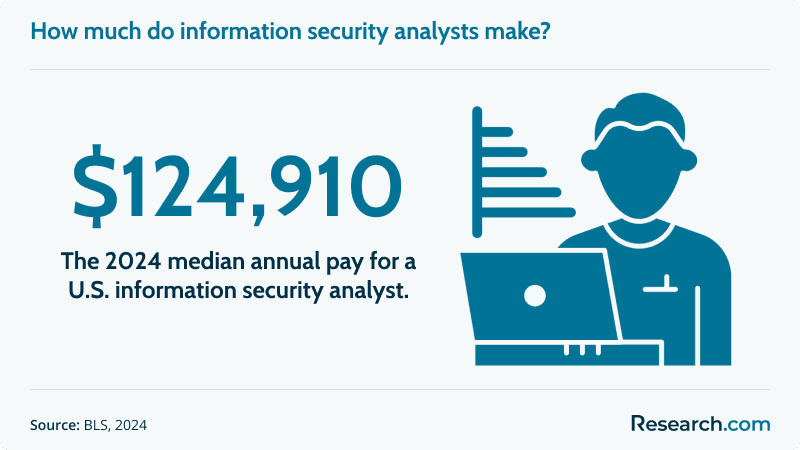
- You can expect to enter a financially rewarding career, with the median salary for information security analysts currently standing at $124,910 per year.
- You will join a uniquely supportive, culturally rich learning environment and build connections through a lifelong alumni network that provides career-long advantages.
What can I expect from a cybersecurity program in an HBCU?
When the average cost of a single data breach is now over $10 million, the quality of your training is absolutely critical. In a strong HBCU cybersecurity program, you can expect a rigorous, accredited curriculum that covers the core domains of the field. Many of these programs hold the elite National Security Agency (NSA) designation as a Center of Academic Excellence (CAE), which is a federal benchmark for quality.
What often sets these programs apart are the smaller class sizes. This structure allows for more direct mentorship from faculty who are invested in your success. This kind of hands-on guidance is invaluable for understanding complex topics, securing competitive internships, and getting strong references for your first job after graduation.
Where can I work with a cybersecurity program?
Graduates with a cybersecurity degree can work in nearly every sector, including the federal government, defense contracting, finance, healthcare, and technology. While many people think of jobs only with big tech companies or federal agencies like the NSA, the reality is that every industry needs security professionals. Hospitals need to protect patient data, banks need to secure financial transactions, and retail companies need to protect customer information.
This universal demand offers incredible flexibility in your career path. For graduates from HBCUs with cybersecurity programs, there is a particularly strong pipeline into federal government and contractor roles, as these organizations have specific mandates to recruit from a diverse talent pool. This creates a direct and powerful opportunity to enter the public sector.
How much can I make with a cybersecurity program?
Entry-level salaries for cybersecurity professionals are highly competitive, with many graduates starting between $70,000 and $90,000. The overall median pay for information security analysts is $124,910, showing a strong potential for growth. Your specific starting salary will depend on your location, specialization, and any professional certifications you hold.
This strong earning potential is a direct result of the massive talent shortage in the industry, which creates intense competition for qualified graduates. While the financial rewards are significant, it is important to pursue a role that aligns with your interests to build a sustainable and fulfilling long-term career.
Best HBCUs with Cybersecurity Programs for 2027
Choosing a cybersecurity program at an HBCU is not only about finding a degree with the right title. Students also need to compare accreditation, hands-on training, cost, transfer options, career support, and whether the program prepares them for the security roles employers actually hire for. This guide is designed for students considering undergraduate or graduate cybersecurity study at historically Black colleges and universities, including first-time college students, transfer students, working adults, and graduates planning to move into security leadership.
You will find a ranked list of HBCU cybersecurity programs, a practical comparison of program formats and costs, guidance on admissions and financial aid, common cybersecurity courses and specializations, career outcomes, and questions to ask before enrolling.
Quick Answer: What Are the Best HBCUs with Cybersecurity Programs?
The best HBCUs with cybersecurity programs combine accredited academic training, applied technical work, faculty and career support, and strong alignment with current cybersecurity workforce needs. Several programs below also operate through NSA-designated Centers of Academic Excellence in Cyber Defense, which can be a useful quality signal for students planning to work in government, defense, critical infrastructure, or private-sector security roles.
| School | Program | Best Fit | Key Cost or Credit Detail |
| Howard University | BBA in Information Systems, Cybersecurity Concentration | Students who want cybersecurity plus business, analytics, and supply chain context | 120 credits; estimated undergraduate tuition of $34,988 per year |
| Tennessee State University | B.S. in Computer Science, Cybersecurity Concentration | Students seeking an ABET-accredited computer science base with cybersecurity depth | 120 credits; estimated undergraduate tuition of $9,642 per year for in-state students |
| Florida A&M University | M.S. in Cybersecurity | Graduates preparing for advanced technical, research, or leadership roles | 30 credits; in-state cost per credit of $423.84 |
| Bowie State University | B.S. in Computer Science, Cybersecurity Concentration | Students interested in secure computing, ethical hacking, and information assurance | 120 credits; in-state cost per credit of $293.50 |
| Talladega College | B.A. in Cybersecurity | Students who want a cybersecurity major with a liberal arts foundation | 125 semester hours; total tuition of $14,324 per year |
| Grambling State University | B.S. in Cybersecurity | Students seeking a dedicated cybersecurity degree in Louisiana | 120 credits; estimated in-state tuition of $7,837 per year |
| Hampton University | B.S. in Computer Science, Cyber Security Track | Students who want a rigorous computer science pathway into cybersecurity | 127 credits; total tuition of $32,192 per year |
| Southern University at New Orleans | B.S. in Computer Information Systems, Cybersecurity Concentration | Students who want applied security skills within an information systems degree | 120 credits; estimated in-state tuition of $7,598 per year |
How We Rank Schools
Because cybersecurity degrees can require a major financial and time commitment, our ranking process emphasizes transparent, comparable information that students can use before applying. Research.com evaluates programs using established education data sources, including the IPEDS database, Peterson's database, the College Scorecard, and The National Center for Education Statistics.
These sources help support comparisons involving program structure, institutional data, affordability, and student decision factors. For a fuller explanation of how Research.com evaluates programs, review our ranking methodology.
Ranked HBCU Cybersecurity Programs
1. Howard University - BBA in Information Systems, Cybersecurity Concentration
Howard University offers a cybersecurity concentration inside a business administration degree, making it a strong option for students who want to understand security through the lens of organizations, data, operations, and decision-making. Its NSA-designated Center of Academic Excellence in Cyber Defense adds credibility for students interested in cyber defense careers connected to business systems, supply chains, and enterprise risk.
- Program Length: 4 years
- Concentration: Cybersecurity
- Required Credits to Graduate: 120
- Estimated Undergraduate Tuition: $34,988 per year
- Accreditation: Association to Advance Collegiate Schools of Business (AACSB)
2. Tennessee State University - B.S. in Computer Science, Cybersecurity Concentration
Tennessee State University provides a computer science-centered route into cybersecurity through its NSA-designated Center of Academic Excellence in Cyber Defense. Students who want a technical foundation in computing, algorithms, systems, and applied cyber defense may find this path especially useful for government, consulting, and private-sector security positions.
- Program Length: 4 years
- Concentration: Cybersecurity
- Required Credits to Graduate: 120
- Estimated Undergraduate Tuition (In-State): $9,642 per year
- Accreditation: Computing Accreditation Commission of ABET
3. Florida A&M University - M.S. in Cybersecurity
Florida A&M University offers a graduate cybersecurity program for students who already hold a bachelor’s degree and want deeper expertise in advanced security topics. The program is a better fit for students seeking specialized technical roles, research-oriented work, or advancement into positions that require strategic cyber risk knowledge.
- Program Length: 2 years
- Required Credits to Graduate: 30
- Cost per Credit (In-State): $423.84
- Accreditation: Southern Association of Colleges and Schools Commission on Colleges (SACSCOC)
4. Bowie State University - B.S. in Computer Science, Cybersecurity Concentration
Bowie State University builds cybersecurity preparation on top of a computer science curriculum, helping students develop both programming and security skills. Its NSA-designated Center of Academic Excellence supports students who want exposure to network defense, ethical hacking, information assurance, and secure computing.
- Program Length: 4 years
- Concentration: Cybersecurity
- Required Credits to Graduate: 120
- Cost per Credit (In-State): $293.50
- Accreditation: Computing Accreditation Commission of ABET
5. Talladega College - B.A. in Cybersecurity
Talladega College combines cybersecurity training with a liberal arts education. This structure can appeal to students who want technical security knowledge along with communication, ethics, policy, and critical thinking skills that are increasingly important in risk management and security leadership.
- Program Length: 4 years
- Tracks: Cyber Defense; and Network Security
- Required Semester Hours to Graduate: 125
- Total Tuition: $14,324 per year
- Accreditation: Southern Association of Colleges and Schools Commission on Colleges (SACSCOC)
6. Grambling State University - B.S. in Cybersecurity
Grambling State University offers a dedicated cybersecurity bachelor’s degree and was the first in Louisiana to provide this degree. Through its NSA-designated Center of Academic Excellence, the program focuses on preparing students for cyber defense and information security roles connected to a persistent workforce need.
- Program Length: 4 years
- Required Credits to Graduate: 120
- Estimated Tuition (In-State): $7,837 per year
- Accreditation: Southern Association of Colleges and Schools Commission on Colleges (SACSCOC)
7. Hampton University - B.S. in Computer Science, Cyber Security Track
Hampton University offers a cyber security track within a computer science degree. Students who want to work on secure software, system architecture, network infrastructure, or technical security engineering may benefit from this computing-heavy route.
- Program Length: 4 years
- Track: Cyber Security
- Required Credits to Graduate: 127
- Total Tuition: $32,192 per year
- Accreditation: Computing Accreditation Commission of ABET
8. Southern University at New Orleans - B.S. in Computer Information Systems, Cybersecurity Concentration
Southern University at New Orleans provides a cybersecurity concentration in computer information systems through its NSA-designated Center of Academic Excellence in Cyber Defense. This program is suited to students who want applied security skills for protecting business information systems, networks, and organizational data.
- Program Length: 4 years
- Concentration: Cybersecurity
- Required Credits to Graduate: 120
- Estimated Tuition (In-State): $7,598 per year
- Accreditation: Southern Association of Colleges and Schools Commission on Colleges (SACSCOC)
How Long Does It Take to Complete an HBCU Cybersecurity Program?
A bachelor’s degree in cybersecurity or a related computing field usually requires 4 years of full-time study. A master’s degree commonly takes 18 to 24 months, depending on whether the student attends full time, takes summer courses, or needs prerequisite coursework before entering advanced technical classes.
| Path | Typical Timeline | When It Makes Sense | What Can Change the Timeline |
| Bachelor’s degree | 4 years | Best for first-time college students and students seeking broad technical preparation | Transfer credits, course load, summer enrollment, major changes, or part-time study |
| Master’s degree | 18 to 24 months | Best for students who already have a bachelor’s degree and want advanced skills | Bridge courses, thesis or capstone requirements, work schedule, and course availability |
| Community college transfer route | Often planned as a 2+2 pathway | Best for students trying to reduce bachelor’s degree costs before transferring | Transfer agreements, accepted credits, GPA requirements, and prerequisite alignment |
| Part-time enrollment | Longer than full-time study | Best for working adults or students with family responsibilities | Number of courses taken each term and whether required courses are offered every semester |
Students who want a lower-cost route should ask whether credits from a community college will transfer directly into the HBCU cybersecurity major. A 2+2 plan can reduce total cost, but only if the transfer courses satisfy degree requirements. Students who need flexible admission pathways may also compare online colleges that accept a low GPA before moving into a four-year cybersecurity program.
How Much Does an HBCU Cybersecurity Program Cost?
The cost of an HBCU cybersecurity program varies by school type, residency status, degree level, and whether the student studies online or on campus. Public institutions are often less expensive for in-state students, while private institutions may have higher listed tuition but can sometimes offer stronger institutional aid packages. The most useful number is not always the published tuition; it is the net price after grants, scholarships, and other aid are applied.
Cost Factors Students Should Compare
| Cost Factor | Why It Matters | Question to Ask |
| Tuition and fees | Published tuition does not always include required fees, technology charges, or lab costs. | What is the full estimated cost of attendance for my residency and enrollment status? |
| Residency status | In-state pricing can be significantly different from out-of-state pricing at public institutions. | Do I qualify for in-state tuition, tuition waivers, or regional exchange programs? |
| Transfer credits | Accepted credits can reduce both time and cost. | Which of my completed courses apply directly to the cybersecurity degree plan? |
| Financial aid | Grants and scholarships reduce out-of-pocket cost and borrowing. | What institutional scholarships are available for cybersecurity, STEM, or HBCU students? |
| Internship and career support | Strong employer connections can improve access to paid experience before graduation. | Which employers recruit cybersecurity students from this program? |
Understanding Return on Investment
Students should evaluate cybersecurity programs as career investments, but they should avoid assuming that a degree guarantees a specific salary. The median annual pay for information security analysts is $124,910, but actual earnings depend on location, employer, experience, security clearance, certifications, job function, and technical depth. Students comparing long-term earnings can review Research.com’s guide to cybersecurity master’s salary outcomes to understand how advanced education may affect career growth.
What Financial Aid Options Are Available for HBCU Cybersecurity Students?
Cybersecurity students at HBCUs may qualify for federal financial aid, state aid, institutional scholarships, private scholarships, employer tuition assistance, and service-based scholarship programs. The first step is usually completing the FAFSA, then comparing each school’s financial aid offer by net cost rather than by tuition alone.
Scholarships, Grants, and Service Programs
- Federal aid: Students should complete the FAFSA to determine eligibility for grants, loans, and work-study options.
- Institutional scholarships: Many HBCUs offer awards based on academic achievement, financial need, major, leadership, or service.
- Cybersecurity and STEM scholarships: Some awards target students in high-demand technical fields.
- HBCU-focused scholarships: Foundations, companies, and agencies often create awards specifically for HBCU students.
- Scholarships for service: Programs such as the Department of Defense Cyber Scholarship Program can cover tuition, books, fees, and provide a living stipend in exchange for post-graduation federal service commitments.
Why Diversity Funding Matters in Cybersecurity
Cybersecurity continues to face representation gaps, and employers, federal agencies, and nonprofit organizations are investing in pipelines that bring more Black professionals into security roles. For HBCU students, that can mean more scholarship opportunities, employer-sponsored programs, internships, mentorship initiatives, and pathways into government or defense-related cyber work.
Students planning to specialize after a bachelor’s degree can also compare the best online master’s in network security programs to see how graduate study, financial aid, and career goals might fit together.
What Are the Prerequisites for HBCU Cybersecurity Programs?
Undergraduate cybersecurity applicants generally need a high school diploma or GED. Admissions offices may look for evidence of readiness in math, science, computing, and problem-solving, but students do not need to be expert programmers before starting a bachelor’s program.
Graduate cybersecurity programs typically require a bachelor’s degree, often in a technical or related field such as computer science, information technology, engineering, information systems, or mathematics. Some programs may admit students from other majors if they complete prerequisite or bridge coursework.
How to Build Readiness Before Applying
- Strengthen math and logic skills: Algebra, statistics, discrete math, and structured problem-solving can help in security coursework.
- Learn basic programming: Python, Java, C++, or scripting experience can make technical classes easier to manage.
- Explore networking fundamentals: Understanding IP addresses, routing, firewalls, and protocols is useful in many security courses.
- Consider an entry-level certification: A foundational credential such as CompTIA Security+ can show commitment and help students from nontechnical backgrounds.
- Gain experience before enrolling: Students who are not ready for a degree can explore tech jobs that do not require a degree to build practical exposure first.
What Courses Are Common in a Cybersecurity Program?
Cybersecurity programs usually combine computing fundamentals, network security, risk management, legal and ethical issues, and hands-on technical practice. A strong curriculum teaches students how attacks happen, how systems are protected, how incidents are investigated, and how organizations make security decisions.
| Course Area | What Students Learn | Career Relevance |
| Network Security | How to secure networks, monitor traffic, configure defenses, and identify vulnerabilities | Security analyst, network security specialist, security engineer |
| Cryptography | How encryption, hashing, keys, and secure communication systems work | Security engineer, secure systems analyst, application security roles |
| Ethical Hacking | How authorized testing identifies weaknesses before attackers exploit them | Penetration tester, vulnerability analyst, red team roles |
| Digital Forensics | How to collect, preserve, and analyze digital evidence after incidents | Forensics analyst, incident responder, cybercrime investigator |
| Risk Management | How organizations identify, prioritize, reduce, and communicate cyber risk | Cybersecurity consultant, governance analyst, compliance specialist |
A cybersecurity degree is not simply a “hacking” degree. Offensive security is one component, but graduates also need defensive engineering, incident response, legal awareness, communication, documentation, and policy knowledge.
Coursework That Matches Current Employer Needs
Students should review course catalogs for modern content. Recent data shows that 36% of hiring managers are specifically looking for cloud security skills, so programs that include cloud security, identity and access management, secure DevOps, or AI and machine learning security may be better aligned with current hiring needs. Students can also compare the best certifications for security analyst roles to identify credentials that complement their degree.
What Cybersecurity Specializations Are Available at HBCUs?
HBCU cybersecurity programs may offer formal tracks, concentrations, electives, or capstone options in areas such as digital forensics, network security, cyber defense, governance and policy, information assurance, and cyber operations. The best specialization depends on the type of work a student wants to do after graduation.
| Specialization | Best For Students Who Like | Common Career Direction |
| Network Security | Securing systems, configuring defenses, and analyzing traffic | Network security analyst or security engineer |
| Digital Forensics | Investigations, evidence handling, and detailed technical analysis | Digital forensics analyst or incident responder |
| Governance, Risk, and Compliance | Policy, audits, regulations, and executive communication | GRC analyst, risk analyst, or cybersecurity consultant |
| Cyber Operations | Threat monitoring, response, and operational security work | SOC analyst, threat analyst, or cyber defense analyst |
| AI and Machine Learning Security | Emerging technology, model risks, automation, and adversarial threats | AI security analyst, cloud security specialist, or advanced security engineer |
The Rise of AI and Machine Learning Security
AI is changing both cyber defense and cybercrime. As organizations adopt AI tools, they also face new risks involving data exposure, model manipulation, automation abuse, and identity-based attacks. Approximately 10% of cybersecurity job postings now explicitly require AI skills, making this an important emerging specialization for students who want to work at the front edge of the field.
Students do not have to choose every specialization during college. Many professionals build a foundation through a bachelor’s degree, then add targeted credentials, certificates, or graduate study later. Research.com’s guide to the benefits of a graduate certificate can help students decide whether a shorter post-bachelor’s credential fits their career plan.
How to Choose the Best HBCU Cybersecurity Program
The best HBCU cybersecurity program is the one that matches your career goal, learning style, budget, academic preparation, and support needs. Rankings can help narrow the list, but they should not replace a careful review of curriculum, accreditation, outcomes, and student experience.
Key Factors to Compare
- Accreditation: Confirm the institution is properly accredited. For computing programs, ABET accreditation can be especially relevant. The NSA Center of Academic Excellence designation is another meaningful signal for cyber defense programs.
- Curriculum relevance: Look for security labs, cloud security, incident response, risk management, secure coding, and emerging topics such as AI security.
- Hands-on learning: Prioritize programs with labs, capture-the-flag competitions, internships, capstones, research projects, or security operations experience.
- Faculty expertise: Review whether professors have security research, industry, government, or consulting experience in areas that interest you.
- Career services: Ask how the school supports internships, security clearances, employer visits, resume preparation, and interview coaching.
- Student support and belonging: For many students, mentorship, community, alumni access, and campus culture can make a major difference in persistence and confidence.
Questions to Ask Before Enrolling
| Question | Why It Matters |
| Is the program accredited, and does it have CAE designation? | Accreditation affects credibility, transferability, graduate school options, and sometimes employer confidence. |
| Which courses include hands-on labs? | Employers often want evidence that graduates can use tools, troubleshoot systems, and solve practical problems. |
| Do students complete internships or capstone projects? | Applied experience can strengthen a resume before graduation. |
| Which employers recruit from the program? | Recruiting relationships can affect access to internships and entry-level roles. |
| How many credits will transfer? | Transfer credit policies can change both cost and graduation timeline. |
| Does the program prepare students for certifications? | Certification preparation can help students compete for analyst and consulting roles. |
| What support is available for first-generation, transfer, or working students? | Academic advising and flexible scheduling can affect completion. |
Students interested in advisory, governance, or consulting careers may also want to compare security consulting certifications with their degree plan to understand how certifications can support specialization after graduation.
Common Mistakes to Avoid
- Choosing only by tuition: A lower listed price is not always the best value if the program has weak career support or limited technical labs.
- Ignoring accreditation: Always verify institutional accreditation and any relevant program-specific accreditation before enrolling.
- Assuming every cybersecurity degree teaches the same skills: A business-based program, computer science program, and information systems program can lead to different strengths.
- Overlooking transfer policies: Credits that transfer as electives may not shorten the cybersecurity major.
- Skipping career services questions: Internship access, employer connections, and alumni networks can matter as much as course titles.
- Expecting salary guarantees: Cybersecurity pay can be strong, but outcomes vary by role, location, experience, clearance, certifications, and employer.
What Career Paths Are Available for Cybersecurity Graduates?
Graduates of HBCU cybersecurity programs can pursue technical, investigative, advisory, and leadership-oriented roles. Many students begin in analyst positions, then specialize after gaining experience with real incidents, tools, systems, and organizational risks.
| Career Path | Typical Focus | Good Fit For |
| Security Analyst | Monitoring alerts, investigating threats, documenting incidents, and helping protect systems | Students who want a common entry point into cybersecurity operations |
| Security Engineer | Designing, building, and improving secure systems and infrastructure | Students with strong technical, networking, or programming interests |
| Penetration Tester | Testing systems with authorized attack methods to find weaknesses | Students who enjoy ethical hacking, problem-solving, and technical challenge |
| Digital Forensics Analyst | Investigating breaches, recovering evidence, and analyzing compromised systems | Students who are detail-oriented and interested in cyber investigations |
| Cybersecurity Consultant | Advising organizations on risk, controls, compliance, and security strategy | Students with strong communication skills and broad security knowledge |
| Cloud Security Engineer | Protecting cloud platforms, identity systems, workloads, and data | Students interested in cloud infrastructure and modern enterprise systems |
The Path Toward Leadership
With experience, cybersecurity graduates can move into senior technical positions or management roles. Some professionals eventually pursue executive security leadership, including Chief Information Security Officer roles. Currently, only 7% of CISOs are Black, which points to a major leadership gap and an opportunity for future HBCU cybersecurity graduates to influence decision-making at the highest levels of security strategy.
What Is the Job Market Like for Cybersecurity Graduates?
The cybersecurity labor market remains strong because nearly every sector depends on secure data, networks, applications, and identity systems. Employers need people who can detect attacks, reduce risk, investigate incidents, protect cloud environments, and communicate security priorities to nontechnical leaders.
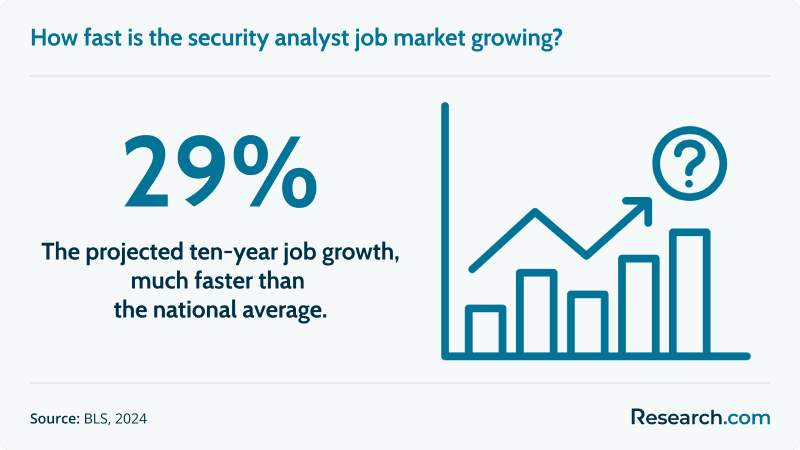
CyberSeek data indicates there are enough cybersecurity workers to fill only about 74% of available jobs. The U.S. Bureau of Labor Statistics projects that information security analyst employment will grow by 29% over the next decade. These figures support a favorable long-term outlook, but students should still build marketable experience through labs, internships, projects, certifications, and security competitions.
What Employers Look For Beyond the Degree
- Hands-on security experience: Labs, projects, internships, home labs, or competition experience can show practical ability.
- Tool familiarity: Exposure to SIEM tools, vulnerability scanners, firewalls, cloud platforms, and scripting can help candidates stand out.
- Communication skills: Security professionals must explain risks, write reports, and work with technical and nontechnical teams.
- Continuous learning: Threats change quickly, so employers value candidates who keep learning after graduation.
- Professional credentials: Certifications can strengthen a resume when paired with a degree and practical experience.
Students wondering whether this field is realistic for them can read Research.com’s guide on whether cybersecurity is hard to get into. The field is challenging, but students who build technical fundamentals and hands-on experience can create a credible path into entry-level security work.
Can Affordable Online Cybersecurity Programs Support Your HBCU Cybersecurity Goals?
Affordable online cybersecurity programs can be useful for students who need flexibility, want to reduce costs, or need prerequisite coursework before entering an HBCU degree program. They can also help current students add technical electives, prepare for certifications, or explore a specialization that may not be available every term on campus.
Online programs should be evaluated carefully. Students should verify accreditation, compare course content with employer needs, ask whether credits will transfer, and confirm the level of lab access and career support. For students prioritizing cost, Research.com’s guide to the cheapest cyber security degree online can help identify lower-cost options to compare with HBCU programs.
What Graduates Say About HBCU Cybersecurity Programs
- : "I wanted a cybersecurity education where I was not treated like just another student in a large lecture hall. My professors learned what I wanted to do, challenged me in technical courses, and connected me with people already working in the field. That support helped me lead my capstone team and walk into interviews with confidence. — Ava"
- : "Once I understood how underrepresented Black professionals are in senior cybersecurity roles, my goal became bigger than landing my first job. I wanted preparation for leadership. My program helped me build technical skill, but it also pushed me to understand policy, risk, and how decisions get made. — Laila"
- : "Before transferring, I felt disconnected from my classes and from the campus around me. At my HBCU, I found a community that understood my background and expected me to succeed. That sense of belonging made it easier to focus, ask questions, and grow. — Jaquola"
Key Insights
- The best HBCU cybersecurity program depends on your goal. Choose a computer science-based program for deeper technical preparation, an information systems or business-based program for organizational security work, and a graduate program for advanced specialization.
- Accreditation and CAE designation matter. Institutional accreditation is essential, while ABET accreditation and NSA Center of Academic Excellence designation can add value depending on the program and career target.
- Cost should be judged by net price, not sticker price. Compare tuition, fees, aid, transfer credits, and scholarship options before deciding which program is most affordable.
- Hands-on experience is critical. Labs, internships, capstones, security competitions, and certification preparation can help convert classroom learning into employable skill.
- Cybersecurity demand is strong but not automatic. The median annual pay for information security analysts is $124,910, CyberSeek shows enough workers to fill only about 74% of available jobs, and BLS projects 29% growth over the next decade, but outcomes still depend on skills, experience, location, and role.
- AI, cloud security, and governance are shaping the field. Students should look for programs that cover current employer needs, including cloud security and AI-related security risks.
- HBCUs offer more than technical coursework. Mentorship, alumni networks, cultural belonging, and leadership development can be major advantages for students preparing to enter and advance in cybersecurity.
References:
- Allen, B. (2024, June 2). Minorities and the cybersecurity skills gap: A 2024 update. SecureWorld. Retrieved September 25, 2025, from https://www.secureworld.io/industry-news/minorities-cybersecurity-skills-gap-2024
- Aspen Digital. (2021, September 9). Diversity, equity, and inclusion in cybersecurity. Aspen Institute. Retrieved September 25, 2025, from https://www.aspendigital.org/report/dei-in-cybersecurity/
- Bureau of Labor Statistics, U.S. Department of Labor. (n.d.). Occupational outlook handbook, information security analysts. Retrieved September 25, 2025, from https://www.bls.gov/ooh/computer-and-information-technology/information-security-analysts.htm
- CyberSeek. (n.d.). Cybersecurity supply/demand heat map. Retrieved September 25, 2025, from https://www.cyberseek.org/heatmap.html
- Hammer, A. (2024, January 29). GIAC® exam passing rates: What you need to know before taking the test. Readynez. Retrieved September 25, 2025, from https://www.readynez.com/en/blog/giac-exam-passing-rates-what-you-need-to-know-before-taking-the-test/
- IBM. (n.d.). Cost of a data breach 2025. Retrieved September 25, 2025, from https://www.ibm.com/reports/data-breach
- ISC2. (2024, October 31). 2024 ISC2 cybersecurity workforce study. Retrieved September 25, 2025, from https://www.isc2.org/Insights/2024/10/ISC2-2024-Cybersecurity-Workforce-Study
- R Street Institute. (2022, February 16). The state of cybersecurity careers for black professionals. Retrieved September 25, 2025, from https://www.rstreet.org/events/the-state-of-cybersecurity-careers-for-black-professionals/
- U.S. Government Accountability Office. (n.d.). Cybersecurity. Retrieved September 25, 2025, from https://www.gao.gov/cybersecurity
Other Things You Should Know About HBCUs with Cybersecurity Programs
In 2027, renowned HBCUs with outstanding cybersecurity programs include North Carolina A&T State University, Howard University, and Morgan State University. These institutions offer robust curricula, experienced faculty, and hands-on learning opportunities, preparing students for careers in cybersecurity with a strong emphasis on practical knowledge and skills.
Leading HBCUs in 2027 typically require courses in network security, cryptography, and cyber law as part of their core cybersecurity curriculum. Students will complete a minimum of 30 credit hours in major-specific courses, alongside general education classes, to earn their degrees.


