
2027 Best Certifications for Security Consultants

Co-Founder and Chief Data Scientist
A paradox defines many security careers today. The industry is projected to grow by an astounding 29%, yet countless technical experts feel stuck in reactive, hands-on roles, watching their career progression stall. Mastering the technical side of security is no longer enough to guarantee advancement into strategic, decision-making positions.
This guide is different. Prepared by career planning experts, it details the critical pivot from technical operator to strategic advisor. We focus on the specific certifications for security consultants that validate business acumen, creating a clear path to greater influence and earnings.
What are the benefits of getting a certification for security consultant?
- Obtaining certifications for security consultants opens doors to senior advisory and consulting roles where you can directly influence business strategy.
- You can command a significant salary premium, as the median pay for information security analysts was $124,910 in 2024, with top consultants earning far more.
- You gain globally recognized validation of your expertise, giving you immediate credibility with leadership and clients.
What can I expect from a certification for security consultant?
It’s important to understand that these advanced certifications are not like typical training courses. They are rigorous exams designed to validate years of your real-world professional experience across a broad body of knowledge.
Think of certification bodies like (ISC)² and ISACA as industry gatekeepers. Their job is to ensure that anyone holding their credential has proven, real-world competence. This is what gives the certification its value and credibility in the market.
So, you should expect to prove your mastery of concepts that go far beyond your day-to-day tasks. The exam will test your expertise in everything from risk management and policy development to security architecture and engineering.
Where can I work with a certification for security consultant?
Certified consultants have immense flexibility in where and how they work. The primary paths are working as an internal strategic advisor in a large enterprise, joining a technical or management consulting firm, serving in government or defense, or operating as a high-demand independent contractor.
Many people assume "consultant" means you have to work for a big firm, but that's just one of many options. The roles can be internal, where you act as a trusted advisor to your own company's leadership, or external and client-facing.
The gig economy has also opened up new possibilities. Top-tier certified talent can now work as fractional consultants or virtual CISOs (vCISOs), offering high-level strategy to multiple clients. This path provides significant pay and autonomy.
How much can I make with a certification for security consultant?
The median pay for information security analysts was $124,910 in 2024. Think of that as the baseline; advanced certifications are a key lever to unlock a significant salary premium above that figure.
Your earning potential is not fixed. The highest salaries go to professionals who can translate technical risk into business impact. When you can explain security in terms of financial loss and strategic advantage, you become an invaluable advisor. This is the skill that leadership pays a premium for, as you are directly protecting the business from multi-million dollar threats.
List of the Best Certifications for Security Consultants for 2027
How do we rank the programs?
Recognizing that paying for a degree is a significant investment, our ranking methodology ensures that students can make informed decisions based on comprehensive and transparent information. The ranking draws upon reliable sources such as the IPEDS database, Peterson's database, the College Scorecard database, and The National Center for Education Statistics.
These sources provide a robust foundation of data to evaluate and rank DEGREE programs. For more details on our methodology, please visit Research.com’s methodology page.
1. Global Information Assurance Certification (GIAC)
Global Information Assurance Certification (GIAC) is recognized as a gold standard for its deep technical focus and rigorous, hands-on validation of skills.
It offers specialized credentials for intermediate to advanced professionals, such as the GIAC Security Essentials (GSEC) for broad foundational knowledge and the GIAC Certified Intrusion Analyst (GCIA) for advanced network traffic analysis.
These certifications represent a significant investment, with a single exam attempt costing around $2,499, not including the associated SANS training courses which can add several thousand dollars more. Preparation is self-paced over several months, culminating in a proctored exam lasting two to five hours.
2. CompTIA (Computing Technology Industry Association)
CompTIA provides the globally recognized, vendor-neutral foundation for an IT security career, making it the ideal starting point for many professionals.
It offers a clear pathway, beginning with the highly recommended Network+, moving to the essential Security+ for core skills, and advancing to the Cybersecurity Analyst (CySA+) for practical, hands-on threat detection.
CompTIA certifications are financially accessible, with an exam voucher costing around $392. The credentials are valid for three years and require continuing education credits for renewal, ensuring skills remain current.
3. EC-Council (International Council of E-Commerce Consultants)
The EC-Council is known for its job-specific training programs that map directly to roles within the industry.
Its Certified SOC Analyst (CSA) program is designed for professionals aiming for a Tier I or II role in a Security Operations Center, focusing heavily on practical skills like log management and SIEM tool operation.
The exam voucher is about $550, though the official self-paced online training is a larger investment, starting closer to $2,199. The three-hour exam leads to a certification that is valid for three years and is maintained through continuing education credits.
4. (ISC)² (International Information System Security Certification Consortium)
(ISC)² functions as a professional association for cybersecurity leaders, offering globally recognized credentials that often lead to senior and management roles.
They provide a full career path, from the foundational Certified in Cybersecurity (CC) for beginners, to the Systems Security Certified Practitioner (SSCP) for hands-on administrators, up to the prestigious Certified Information Systems Security Professional (CISSP) for experienced leaders with at least five years of experience.
Exam costs vary widely from $199 for the CC to $749 for the CISSP, and all certifications require annual maintenance fees and continuing professional education credits to remain active.
5. IBM (International Business Machines)
IBM offers a university-style learning program called the IBM Cybersecurity Analyst Professional Certificate, designed to take a beginner from zero knowledge to job-ready through a structured online curriculum.
The program emphasizes hands-on experience with industry tools, including labs using IBM's own QRadar SIEM platform.
It is highly accessible, offered through a low-cost monthly subscription on platforms like Coursera, and most learners can complete the self-paced courses in four to six months of part-time study, earning a valuable professional certificate to add to their resume.
How long does it take to complete a certification for security consultant?
Focused exam preparation typically takes three to six months. However, that study period only begins after you meet the non-negotiable prerequisite of four to five years of documented professional experience.
This is the key difference from foundational certifications. While you might prepare for an entry-level exam through something like Comptia security+ bootcamps online, these advanced credentials are designed to validate a career's worth of accumulated knowledge.
Visualizing the Global Demand
This significant time investment is justified by the massive and sustained global demand for cybersecurity talent. The worldwide workforce gap is estimated to be nearly 4.7 million professionals, creating a clear and lasting need for proven experts. North America alone has a shortage of over 480,000 skilled individuals, ensuring that those who earn these credentials are in an exceptionally strong position in the job market.
What is the average cost of a certification for security consultant?
The total cost for top-tier certifications for security consultants, including training and exam fees, is typically between $2,000 and $5,000. It's best to view this not as an expense, but as a strategic investment in your career with an extremely high return.
The Business Case for Your Certification
The return on investment is often realized in months, not years. A $4,000 investment that helps unlock a $20,000 salary increase has a payback period of under three months.
For your employer, the calculation is even more compelling. The ultimate justification for them to sponsor your certification is the average $10.22 million cost of a data breach. Sponsoring your training is one of the most cost-effective ways for a company to protect itself from that level of financial damage. This is why salaries, and training budgets, are often highest in sectors like finance and healthcare where the risk is greatest.
As you compare programs, it can be helpful to look at the best security engineer certifications that are consistently recognized across industries for their rigorous standards and real-world relevance. These credentials not only validate your technical expertise, but also signal to employers that you can design secure systems, manage risk, and respond effectively to emerging threats—making them a powerful lever for career advancement.
What are the financial aid options for students enrolling in a certification for security consultant?
While traditional financial aid like student loans isn't available for these certifications, the most common and effective funding method is employer sponsorship. You should not assume you have to pay for this entirely yourself.
How to Get Your Company to Invest in You
The key is to build a strong business case for your manager. You need to connect the certification's knowledge domains directly to specific company goals or pain points. For example, show how the risk management training will help the company address recent audit findings or prepare for new compliance regulations.
Remember the context: high turnover and persistent skills gaps mean most companies have dedicated training budgets. They use these funds as a strategic tool to upskill and, most importantly, retain their top talent. Frame your request as a win-win scenario that solves a problem for them.
For those comparing certification options, it can be helpful to review lists of the best security analyst certifications, as some credentials are more aligned with entry-level analyst responsibilities while others emphasize advanced engineering or leadership roles. Choosing the right credential ensures that any financial support you secure directly contributes to your long-term earning potential and job mobility.
What are the prerequisites for enrolling in a certification for security consultant?
The primary prerequisite is not academic but professional. You must have four to five years of documented, full-time work experience in specific cybersecurity domains. While a degree is helpful, it cannot replace this hands-on experience, which is the non-negotiable gatekeeper for these credentials.
Building Your Foundational Experience
This experience requirement exists because companies need proven talent. With 90% of security teams reporting skills gaps, certification bodies act as a filter to ensure that their credential holders have verifiable competence that can be deployed on day one.
For those building their careers, the goal is to gain that experience in core analytical roles. Mastering the skills covered in top Comptia CySA plus training online is a direct path to building the professional resume that qualifies you for these advanced certifications later on.
What courses are typically in a certification for security consultant?
Advanced certifications for security consultants are not structured around a series of courses. Instead, they require you to demonstrate mastery across several broad knowledge domains. For a credential like the CISSP, these domains include Security and Risk Management, Security Architecture and Engineering, and Security Operations, among others.
The Importance of Networking Expertise
The industry needs "T-shaped" professionals. The broad domains of a cornerstone certification build the horizontal bar of the T—your wide-ranging strategic knowledge. The vertical bar is your deep, specialized expertise in a core area.
For many, that deep expertise must be in networking. A mastery of the concepts covered in top CCNA online courses provides the foundational knowledge required for almost any security specialization. This combination of broad and deep skills makes you highly resilient to market shifts, as these well-rounded experts are always in demand in stable sectors like government, healthcare, and finance.
What types of specializations are available in a certification for security consultant?
After you earn a cornerstone certification like CISSP or CISM, the next step is to specialize to maximize your value. The main paths are Governance, Risk, and Compliance (GRC); Technical Security, like penetration testing; and Cloud Security.
It's a mistake to think a cornerstone cert is the only one you'll ever need. That certification gets you the consultant title; the specialization defines your high-value niche and is what clients and employers will pay a premium for.
Aligning Your Specialization with Market Demand
You should align your choice with what the market is demanding. Right now, Cloud Security is the top in-demand skill, with 36% of hiring managers citing it as a priority. Pursuing credentials through programs like top Comptia cloud plus online training is a direct way to meet this need.
Governance, Risk, and Compliance (GRC) follows at 25%, and the emerging field of AI and Machine Learning security is at 24%. While demand is strong nationwide, it is particularly concentrated in states like California, Texas, Virginia, Florida, and Maryland.
How to Choose the Best IT certifications and training bootcamp
The "best" certification is the one that aligns with your specific career goal. The choice sends a clear signal to the market about the type of work you want to do. Here’s how to decide:
- For Management: If you want to manage security programs and align security with business goals, choose CISM.
- For Technical Leadership: If you want to serve as a senior technical authority and architect security solutions, choose CISSP.
- For Niche Expertise: If you want to be a deep, hands-on expert in a specific area like auditing or pentesting, pursue a specialist certification (like CISA or OSCP) after a cornerstone.
Matching the Credential to the Role
The idea that CISSP is always the best choice is a common oversimplification. Hiring managers have specific needs. A manager hiring for a GRC consultant role will actively look for a CISA or CRISC on a resume, while a manager building a penetration testing team will prioritize the OSCP. Your choice should reflect the job you want.
For students and early-career professionals, it may also help to explore HBCU cybersecurity programs, which often provide strong foundational coursework, mentorship, and industry partnerships that align well with these certification paths. These programs can serve as a valuable launch point into security roles and higher-level credentialing.
What career paths are available for graduates of a certification for security consultant?
The core career paths after earning certifications for security consultants are internal advisor, external consultant, and independent contractor. However, you should view these roles as gateways, not endpoints. They are the foundation for more senior positions like a practice lead, a virtual CISO (vCISO), or a security executive within a large corporation.
The Emerging AI Security Consultant & Mentoring the Next Generation
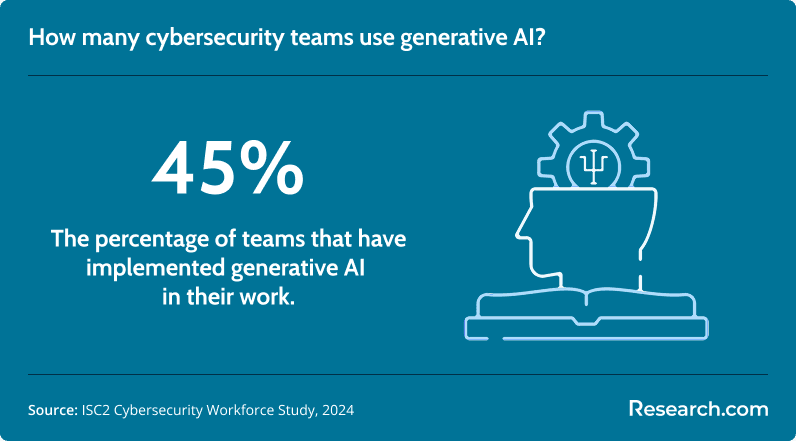
A new, high-demand career path is emerging for consultants who can advise companies on AI security. With 45% of security teams already using generative AI tools, the need for experts who can secure these systems is growing rapidly.
As you advance, your role also evolves into one of leadership and mentorship. A key responsibility of a senior consultant is to develop the next generation of talent—guiding the junior analysts who are just starting out with foundational training like the best online Comptia A+ training bootcamps.
What is the job market for graduates of a certification for security consultant?
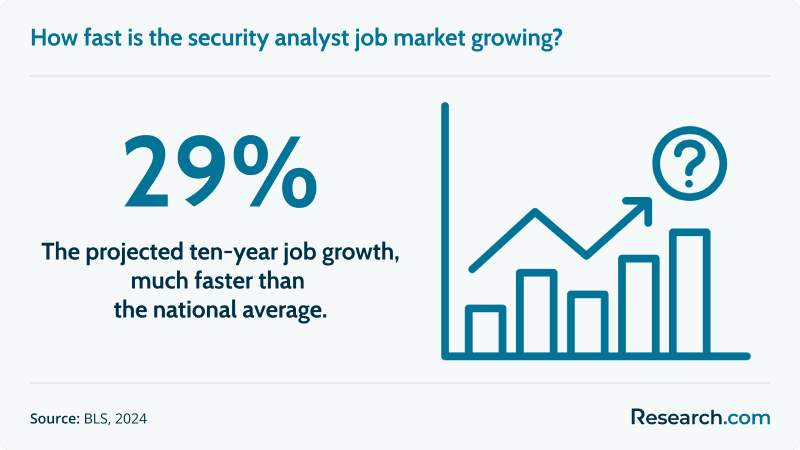
The job market is exceptionally strong. The U.S. Bureau of Labor Statistics projects that employment for information security analysts will grow by 29% over the next decade. This is much faster than the average for all occupations, and the demand for professionals holding advanced certifications is even higher.
A Career Built on Unprecedented Demand
This is not a temporary trend. The market's strength is driven by a fundamental and long-term factor: a massive, global talent shortage. The demand for skilled security professionals far outstrips the supply.
This creates a seller's market for talent. For certified professionals, this reality provides immense job security, significant negotiating leverage for salary and benefits, and long-term career resilience.
For those considering entering the field, it’s also worth understanding how much does a cyber security certification cost, as pricing varies widely depending on the credential level, training format, and exam provider. Knowing the investment upfront helps you compare programs and choose the path that delivers the highest return for your career goals.
How do certifications compare to cybersecurity degree programs?
When evaluating your educational path, it is important to understand that certifications and academic degree programs serve different purposes. Certifications for security consultants emphasize hands-on application, targeted skill validation, and rapid career advancement by aligning directly with current market demands. In contrast, cybersecurity degree programs provide a structured academic framework that covers theoretical foundations and a broader spectrum of computer science topics. Decision makers should assess factors such as duration, cost, and return on investment. For instance, if affordability and flexibility are top priorities, exploring the cheapest cyber security degree online may serve as a valuable complement to specialized certifications, ensuring both practical expertise and formal education are part of your career strategy.
Here’s What Graduates Have to Say about Their Certifications for Security Consultant
- Jason: "I was only a couple of years into my career and felt lost, unsure of what my next five years should look like. Preparing for the certification gave me a clear roadmap of the skills I needed to develop for senior roles. The online format was perfect because I could study at my own pace while still building the required hands-on experience at my job, which made me feel like I was actively working toward my future every single day."
- Tom: "I went into this with a clear financial goal, and the return was faster than I expected. My company agreed to sponsor the cost after I showed them how the skills would help us with upcoming compliance audits. The best part of studying online was that I didn't have to take any time away from work, so there was no loss of income. Six months after passing the exam, I leveraged it to secure a 25% salary increase."
- Jessica: "I knew the technical side of our systems inside and out, but I struggled to get management to listen to my recommendations. It's amazing how having those letters after my name changed the dynamic in meetings; suddenly, my input was actively sought out. Because I was learning online, I could immediately apply concepts from my studies to my work projects, building credibility even before I took the final exam."
Key Findings
- The job market for information security analysts is projected to grow by 29%, a rate much faster than the average for all occupations, signaling exceptional career security for certified professionals.
- The median pay for information security analysts reached $124,910 in 2024, establishing a strong financial baseline that certified consultants can significantly exceed.
- A massive global talent shortage of nearly 4.7 million professionals creates a seller's market, giving certified consultants significant leverage in salary negotiations and career choices.
- With 45% of security teams now using or experimenting with generative AI, a new, high-demand specialization in AI security is rapidly emerging for senior consultants.
- The average cost of a data breach has climbed to $10.22 million, providing a powerful business case for companies to invest in sponsoring their employees' advanced certifications.
- Cloud security remains the single most in-demand skill, with 36% of hiring managers citing it as a top priority when seeking new talent.
References:
- CyberSeek. (n.d.). Cybersecurity supply/demand heat map. Retrieved September 24, 2025, from https://www.cyberseek.org/heatmap.html
- IBISWorld. (n.d.). IT consulting in the US. Retrieved September 24, 2025, from https://www.ibisworld.com/united-states/industry/it-consulting/1415/
- IBM. (n.d.). Cost of a data breach report. Retrieved September 24, 2025, from https://www.ibm.com/reports/data-breach
- (ISC)². (2024, October). ISC2 2024 Cybersecurity Workforce Study. Retrieved September 24, 2025, from https://www.isc2.org/Insights/2024/10/ISC2-2024-Cybersecurity-Workforce-Study
- Readynez. (n.d.). GIAC exam passing rates: What you need to know before taking the test. Retrieved September 24, 2025, from https://www.readynez.com/en/blog/giac-exam-passing-rates-what-you-need-to-know-before-taking-the-test/
- U.S. Bureau of Labor Statistics. (n.d.). Occupational outlook handbook: Information security analysts. Retrieved September 24, 2025, from https://www.bls.gov/ooh/computer-and-information-technology/information-security-analysts.htm
- U.S. Government Accountability Office. (n.d.). Cybersecurity. Retrieved September 24, 2025, from https://www.gao.gov/cybersecurity
Other Things You Should Know About Certifications for Security Consultant
When selecting the best certifications for security consultants in 2027, consider factors such as industry recognition, relevance to your career path, hands-on training opportunities, and the certifying body's reputation. Certifications like CISSP, CISM, and CEH are valuable for their comprehensive curriculum and recognition in the cybersecurity sector.
In 2027, the best certifications for security consultants include Certified Information Systems Security Professional (CISSP), Offensive Security Certified Professional (OSCP), and Certified Ethical Hacker (CEH). These certifications are recognized for providing essential skills and knowledge that align with the latest industry standards and practices.
Yes, there are certifications specifically required for government and military work. The U.S. Department of Defense Directive 8570 (and its updated version, 8140) mandates specific certifications for personnel performing information assurance functions. Credentials like Security+, CISSP, and others are often required to qualify for these roles, making them essential for a career in public service or defense contracting.


