
2027 Best Certifications for Security Engineers

Co-Founder and Chief Data Scientist
The digital world faces constant threats, and the cost of failure is immense; a typical data breach in the United States now averages $10.22 million. This stark reality underscores the critical need for highly skilled cybersecurity professionals. Yet, many aspiring and current IT professionals feel lost in the complex landscape of security roles, struggling to differentiate between a "security analyst" and a "security engineer."
This comprehensive guide, crafted by career planning experts with over 10 years of experience, cuts through that confusion. We'll clarify the distinct path for security engineers—the architects who build and secure our digital infrastructure—and provide a clear roadmap for advancing your career.
What are the benefits of getting a certification for security engineers?
- Certifications get your resume past HR filters and validate your skills to hiring managers, directly addressing the 90% of cybersecurity professionals who reported having one or more skills gaps on their teams.
- These credentials provide leverage for negotiating a higher salary or promotion, with Information Security Analysts earning a median annual wage of $124,910 as of May 2024.
- Online training programs offer the flexibility and accessibility needed to prepare for these rigorous certifications, fitting into your existing schedule.
What can I expect from a certification for security engineers?
When you pursue a certification, you're really signing up for three things: a structured learning path, a tough exam to prove what you know, and a formal credential that you can put on your resume. The curriculum is designed to give you the specific, hands-on skills employers are looking for, moving beyond theory to cover the practical tools and techniques you'll use daily.
Many advanced certifications for security engineers are no longer just multiple-choice questions. The industry is shifting toward performance-based testing, meaning you'll likely be in a simulated environment, actively configuring firewalls or hardening systems. This is how employers verify that you can actually do the job.
After passing, you'll receive a verifiable credential. Most also require you to earn continuing education units, ensuring your skills remain current and relevant in this fast-changing field.
Where can I work with a certification for security engineers?
As a security engineer, your skills are needed in just about every industry you can think of. The old idea that all the top tech jobs are in a few specific cities is completely outdated. With the rise of remote work, you can land a high-impact, high-paying role from almost anywhere.
You’ll find critical engineering roles in:
- Finance and Banking: You'll be on the front lines, designing the systems that protect financial data from sophisticated threats.
- Healthcare: This sector needs engineers to secure sensitive patient records, connected medical devices, and critical hospital networks.
- Government and Defense: These roles involve defending national infrastructure and sensitive government data, offering stable and impactful careers.
- Technology: From cloud providers to software companies, you'll build the secure products and platforms that power our digital world.
- Retail and E-commerce: You'll be responsible for protecting customer data and securing the payment systems that millions of people rely on every day.
How much can I make with a certification for security engineers?
The median annual wage for an Information Security Analyst was $124,910 as of May 2024. That's a strong baseline and shows just how much the industry values these skills. It's a significant step up from many other IT and general occupations.
Of course, that number is influenced by a few key factors. Your years of hands-on experience, where you're located, and any specializations you have will all play a significant role in your specific offers.
Think of a certification as a powerful lever. It validates your skills to employers and gives you the credibility to negotiate for a salary at the higher end of that range. It's the proof that gets you access to the best opportunities.
List of the Best Certification for Security Engineersfor 2027
How do we rank schools?
Recognizing that paying for a degree is a significant investment, our ranking methodology ensures that students can make informed decisions based on comprehensive and transparent information. The ranking draws upon reliable sources such as the IPEDS database, Peterson's database, the College Scorecard database, and The National Center for Education Statistics.
These sources provide a robust foundation of data to evaluate and rank DEGREE programs. For more details on our methodology, please visit Research.com’s methodology page.
1. EC-Council - Certified Ethical Hacker (C|EH)
EC-Council's Certified Ethical Hacker credential validates your ability to think like an attacker and find vulnerabilities before they can be exploited. The program provides a deep understanding of hacking methodologies and tools, equipping you with the hands-on skills needed for penetration testing and defensive security engineering roles.
- Certifying Body: International Council of E-Commerce Consultants (EC-Council)
- Recommended Experience: At least two years of information security work experience is recommended for those without official training.
- Exam Details: 125 multiple-choice questions over 4 hours.
- Exam Cost: Varies by training package, typically starting around $1,199 for the exam voucher.
- Renewal: Required every three years with 120 ECE credits.
2. Cisco - Cisco Certified Network Professional (CCNP) Security
Cisco's CCNP Security certification demonstrates your expertise in designing, implementing, and managing security solutions on Cisco networks. This credential proves your advanced skills in areas like firewalls, VPNs, and intrusion prevention, making it ideal for engineers responsible for securing enterprise network infrastructure.
- Certifying Body: Cisco Systems, Inc.
- Recommended Experience: Three to five years of experience implementing security solutions is recommended.
- Exam Details: Requires passing one core exam and one security concentration exam.
- Exam Cost: Approximately $400 for the core exam and $300 for the concentration exam.
- Renewal: Required every three years with 80 continuing education credits.
3. CompTIA - Security+
CompTIA's Security+ is the globally recognized, vendor-neutral certification that establishes the foundational knowledge required for any cybersecurity role. It validates the core skills needed to perform security functions and is often the first certification security engineers earn to prove their readiness for hands-on responsibilities.
- Certifying Body: Computing Technology Industry Association (CompTIA)
- Recommended Experience: CompTIA Network+ and two years of IT administration experience with a security focus are recommended.
- Exam Details: Maximum of 90 multiple-choice and performance-based questions over 90 minutes.
- Exam Cost: Approximately $404.
- Renewal: Required every three years with 50 Continuing Education Units (CEUs).
4. (ISC)² - Certified Information Systems Security Professional (CISSP)
The (ISC)² CISSP is a globally respected, advanced certification for experienced security practitioners, architects, and managers. It proves your expertise across eight critical security domains, demonstrating the comprehensive knowledge required to design and manage an organization's overall security posture at a senior level.
- Certifying Body: International Information System Security Certification Consortium ((ISC)²)
- Recommended Experience: A minimum of five years of cumulative, paid, full-time work experience in two or more of the eight domains.
- Exam Details: 125-175 questions over 4 hours (CAT format).
- Exam Cost: Approximately $749.
- Renewal: Required every three years with 120 Continuing Professional Education (CPE) credits.
5. GIAC - Security Essentials (GSEC)
GIAC's Security Essentials certification is a highly respected credential that proves you have the hands-on technical skills needed for security roles. The program goes beyond theory to validate your practical knowledge in areas like network security, cryptography, and incident response, signaling to employers that you are ready for technical challenges.
- Certifying Body: Global Information Assurance Certification (GIAC)
- Recommended Experience: No specific experience is required, but a strong understanding of networking and IT systems is assumed.
- Exam Details: 106-180 questions over 4-5 hours.
- Exam Cost: Approximately $979.
- Renewal: Required every four years with 36 CPE credits.
6. (ISC)² - Systems Security Certified Practitioner (SSCP)
The (ISC)² SSCP is an ideal certification for hands-on security engineers and administrators who design, implement, and monitor IT infrastructure. It validates your technical skills in operational security across seven key domains, proving you have the practical expertise to handle the day-to-day security of an organization's systems.
- Certifying Body: International Information System Security Certification Consortium ((ISC)²)
- Recommended Experience: A minimum of one year of cumulative, paid, full-time work experience in one or more of the seven domains.
- Exam Details: 150 multiple-choice questions over 4 hours.
- Exam Cost: Approximately $249.
- Renewal: Required every three years with 60 Continuing Professional Education (CPE) credits.
7. ISACA - Certified Information Systems Auditor (CISA)
ISACA's CISA credential is the global standard for professionals in information systems auditing, control, and security. While focused on auditing, it provides security engineers with a crucial understanding of governance and compliance frameworks, enabling them to build systems that meet rigorous regulatory and policy requirements.
- Certifying Body: Information Systems Audit and Control Association (ISACA)
- Recommended Experience: A minimum of five years of professional information systems auditing, control, or security work experience.
- Exam Details: 150 multiple-choice questions over 4 hours.
- Exam Cost: $575 for members, $760 for non-members.
- Renewal: Required every three years with 120 CPE hours.
How long does it take to complete a certification for security engineers?
For a mid-level security certification, most people with an existing IT background should plan for three to six months of dedicated study. This timeline typically involves a few hours of focused work each week to master the curriculum and prepare thoroughly for the exam.
This estimate, however, assumes you already have a solid grasp of core IT and networking concepts. If you're new to the field, your starting point is a bit earlier.
Factoring in Foundational Knowledge
You can't effectively secure a network you don't fundamentally understand. For this reason, true beginners should factor in additional time to build that core knowledge before diving into security.
This often means starting with a foundational certification to learn the fundamentals of computer hardware, software, and networking. For those at the very beginning of their IT career, looking into the best online Comptia A+ online course can provide the structured knowledge needed to get started on the right foot.
What is the average cost of a certification for security engineers?
The exam voucher for a mid-level security certification typically costs between $350 and $600. This fee covers the cost of taking the exam itself at a registered testing center or through a proctored online session.
However, it's a common mistake to only budget for the exam fee. To get a full picture of the financial commitment, you need to consider the total investment required to succeed.
Understanding the Total Investment
Beyond the exam voucher, you should also account for high-quality training materials, which can range from affordable online courses to more expensive, instructor-led bootcamps. Many candidates also invest in practice exams to gauge their readiness.
Finally, remember to factor in renewal fees. Most certifications require you to pay a maintenance fee and submit continuing education credits every few years to keep your credential active. Planning for these costs from the start ensures there are no surprises down the road.
For those planning to move into consulting roles later in their career, exploring the best security consultant certifications can be especially worthwhile. These certifications often require a similar investment, but they can elevate your professional credibility and open the door to higher-paying advisory and leadership positions.
What are the financial aid options for students enrolling in a certification for security engineers?
You have several strong options to fund your certification, and it’s a mistake to think that financial aid is only available for traditional university degrees. The most common routes are:
- employer tuition reimbursement
- corporate training budgets
- the GI Bill for military veterans
- various industry-specific scholarships
Many companies are actively looking for ways to upskill their existing talent, so don't hesitate to ask your manager about professional development funds.
Leveraging Job Stability for Financial Support
The severe talent shortage in cybersecurity gives you leverage. Companies are competing for skilled professionals, and offering a robust training budget is a key benefit they use to attract and retain people like you. This is especially true in sectors known for their stability.
Industries like government, military, and critical infrastructure were significantly less affected by recent layoffs and promotion freezes. These employers often have dedicated, reliable funding for professional development and certifications as part of their strategy to maintain a skilled workforce.
For students who are also exploring degree pathways, many HBCUs with cybersecurity programs offer financial aid, scholarships, and mentorship opportunities that support both academic learning and industry certification. This can create a powerful combination of formal education and job-ready credentials, strengthening your career trajectory.
What are the prerequisites for enrolling in a certification for security engineers?
While most certifications don't have formal academic prerequisites for enrollment, there is a clear, unwritten rule in the industry: you need a strong foundation in IT and networking to succeed as a security engineer. Attempting to get advanced certifications for security engineers without this background is like trying to build a roof before the foundation is poured.
Employers expect you to have hands-on experience with the systems you'll be tasked to protect. This ensures you have the context to apply security principles effectively.
The Non-Negotiable Networking Foundation
A deep understanding of how networks function is arguably the most critical prerequisite. You cannot secure what you do not understand. As the data shows, employers place immense value on hands-on IT experience (99%) right alongside certifications (98%) as the most important factors for career growth.
This is why many successful security engineers start by mastering networking. For those looking to build or formalize this specific skill set, pursuing a credential like a CCNA online certification is a proven way to build the essential foundation needed for a successful career in security.
What courses are typically in a certification for security engineers?
A security engineering certification curriculum is built around the core technical domains you'll be responsible for in your day-to-day role. You can expect to dive deep into the following key areas:
- Network Security: Learn to design and implement secure network architectures, including firewalls, VPNs, and intrusion detection systems. This foundational skill set is also a core focus in many online masters in network security programs, where students expand these practical skills into higher-level architecture, risk evaluation, and enterprise defense strategy.
- Cloud Security: Gain hands-on experience with major platforms like AWS or Azure, focusing on securing cloud infrastructure and services.
- Identity and Access Management (IAM): Master the principles and tools for ensuring only authorized individuals can access sensitive data and systems.
- Systems Hardening: Cover the techniques for configuring operating systems, servers, and applications to minimize vulnerabilities and resist attacks.
Complementary Skills for Application Security Engineers
The most effective engineers have what's known as "T-shaped skills"—deep expertise in security, supported by a broad understanding of the systems they protect. For example, an engineer specializing in application security can become far more valuable by understanding the developer's perspective.
Learning about the principles of good design through something like an accelerated online user experience design course can provide unique insights. It helps you build security solutions that are not only effective but also practical for developers to implement, making you a more valuable team member.
What types of specializations are available in a certification for security engineers?
Once you have a solid foundation, you can choose a specialization to deepen your expertise and increase your market value. It's wise to align your choice with current and future market demand rather than just personal interest. The most common paths include Cloud Security Engineer, Network Security Engineer, and Defensive Security Engineer.
Each of these roles requires a specialized skill set. A cloud engineer lives in platforms like AWS and Azure, while a network engineer focuses on the architecture of routers, switches, and firewalls.
The AI Frontier: Securing and Leveraging a New Technology
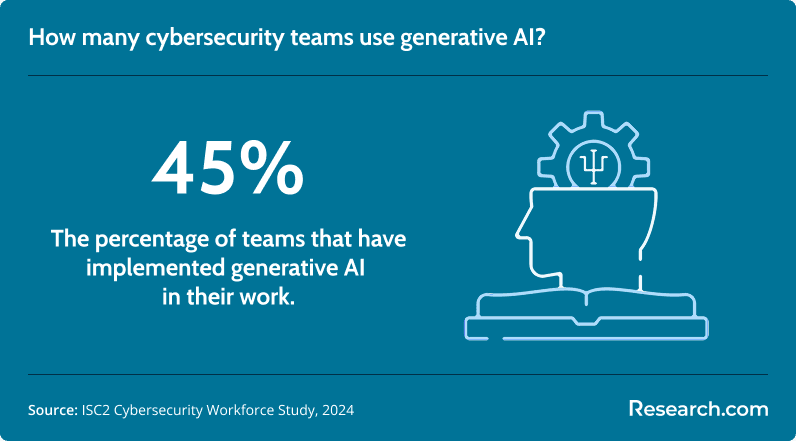
The next major specialization emerging right now is focused on Artificial Intelligence. As companies rapidly adopt these new tools, they create a massive need for engineers who can secure the AI models themselves and use AI for advanced threat detection. With 45% of cybersecurity teams already using generative AI, this is quickly becoming a core competency.
This is a critical area for future-proofing your career. For those looking to lead in this space, pairing AI knowledge with a vendor-neutral credential like the one found in the best CCSP certification training online is a powerful strategy.
How to Choose the Best Certification for Security Engineers
First, clearly define your target role. Second, research job postings for that role to see which certifications are most in-demand. Finally, consider the tech ecosystem of your target employers.
If a company you want to work for is an AWS shop, getting an AWS security certification makes more sense than an Azure one. This targeted approach ensures the certifications for security engineers you choose provide the best possible return on your investment.
Aligning Your Certification with Market Demand
The highest-paying jobs are always tied to the most in-demand skills. Looking at salary data gives you a clear picture of how the market values different roles. This context is crucial for making a smart investment in your career.
When you see that certain computer occupations command a significantly higher median pay, it’s a strong signal of where the demand is. Aligning your certification choice with these high-demand, high-value areas is the most direct path to maximizing your earning potential and securing your long-term career growth.
As you evaluate your options, it’s also helpful to compare cyber security certifications cost, since prices can vary widely depending on exam level, required training resources, and ongoing renewal fees. Taking the time to weigh both the career value and the financial investment ensures you choose a certification that delivers a strong return.
What career paths are available for graduates of a certification for security engineers?
A certification is your entry ticket to a well-defined and rewarding career ladder. The typical progression follows a clear path of increasing responsibility and strategic impact:
- Security Engineer: This is the foundational role where you'll focus on the hands-on implementation of security controls, hardening systems, and building secure infrastructure.
- Senior Security Engineer: After gaining experience, you'll advance to this role, tackling more complex projects, designing security solutions, and often mentoring junior team members.
- Security Architect / Engineering Manager: At the top of the technical track is the Architect, who designs the organization's overall security strategy. The management track leads to a role as an Engineering Manager, where you lead a team of engineers.
Adjacent Roles: Collaborating with Security Analysts
It's important to understand how an engineer's path differs from that of a security analyst. While engineers are the builders, analysts are the detectives. They work in the Security Operations Center (SOC), monitoring for threats and responding to incidents.
While some professionals pivot between these fields, their day-to-day functions and career tracks are distinct. If the investigative side sounds more appealing, you might explore the best cyberops training online programs to see that alternative path. Understanding both helps clarify the unique value of the engineering track.
What Additional Soft Skills and Continuing Education Are Essential for Security Engineers?
Security engineering extends beyond technical mastery. Professionals must also develop strong communication and team collaboration skills to effectively translate complex security challenges into strategic business terms. Proficiency in problem-solving and critical thinking enhances decision-making during high-pressure incidents, while leadership and project management capabilities prepare engineers for roles that require guiding teams and influencing organizational policy. Equally important is a commitment to lifelong learning—engaging with advanced courses, industry conferences, and professional communities can bridge the gap between evolving cyber threats and a security engineer’s expertise. For those seeking an affordable route to broaden their technical foundations alongside these soft skills, consider exploring the cheapest cyber security degree online.
What is the job market for graduates of a certification for security engineers?
The job market for security engineers is exceptionally strong, with a projected ten-year job growth of 29% for information security roles. This rapid expansion is driven by a simple, powerful reality: there is a massive, ongoing shortage of qualified professionals to fill critical roles.
This isn't a temporary trend; it's a long-term structural gap in the global economy. For those who have validated their skills with certifications for security engineers, this creates a seller's market, providing significant leverage in salary negotiations and excellent job security.
Quantifying the Global Opportunity
The demand for skilled security engineers extends far beyond local or national markets. On a global scale, the cybersecurity workforce gap is staggering, with a shortfall of nearly 4.8 million professionals. This persistent talent shortage ensures that your skills will remain in high demand for the foreseeable future.
In North America alone, there are over half a million unfilled cybersecurity positions. This data makes it clear that investing in a security engineering career path is a strategic decision that offers both immediate opportunity and long-term stability. The chart below breaks down the need by region.
Here’s What Graduates Have to Say about Their Certification for Security Engineers
- Kenny: "I looked at the cost of the certification as a direct investment in myself, and the payoff was faster than I ever expected. I was able to use the credential to negotiate a 20% salary increase at my current company. The training paid for itself in less than six months. It was the most practical and financially sound career decision I've ever made."
- Jean: "I was already working in a junior security role, but I wanted to specialize in application security. The certification curriculum was incredibly focused, giving me the deep knowledge to become the go-to person on my team for securing our software development lifecycle. It moved me from being a generalist to a specialist, which came with a lot more responsibility and a significant pay bump."
- Bryan: "After transitioning out of the military, I needed a way to translate my technical experience into a civilian career. The GI Bill covered my certification, and the program's structure was perfect for me. It was all practical, hands-on skills with no fluff. It gave me the specific language and credentials that corporate hiring managers were looking for."
Key Findings
- The job market for certified security professionals is exceptionally strong, with a projected ten-year growth rate of 29% and a staggering global workforce gap of nearly 4.8 million.
- Security engineering offers a significant financial reward, with the median annual pay for Information Security Analysts reaching $124,910 as of May 2024.
- Employers overwhelmingly value a combination of hands-on IT experience (99%) and professional certifications (98%) as the most critical factors for career growth.
- A staggering 90% of cybersecurity teams report having skills gaps, making certified professionals highly sought after to fill these critical needs.
- The field is rapidly evolving, with 45% of security teams already using generative AI, creating a pressing need for engineers with skills in this emerging specialization.
- Job stability is a key feature in certain sectors, with 78% of government and military cybersecurity teams reporting no impact from recent layoffs, making them reliable sources for training and development funding.
// PREVIEW //
References:
- CyberSeek. (n.d.). Cybersecurity supply/demand heat map. Retrieved September 30, 2025, from https://www.cyberseek.org/heatmap.html
- IBM. (n.d.). Cost of a data breach report. Retrieved September 30, 2025, from https://www.ibm.com/reports/data-breach
- (ISC)². (2024, October). ISC2 2024 Cybersecurity Workforce Study. Retrieved September 30, 2025, from https://www.isc2.org/Insights/2024/10/ISC2-2024-Cybersecurity-Workforce-Study
- Readynez. (n.d.). GIAC exam passing rates: What you need to know before taking the test. Retrieved September 30, 2025, from https://www.readynez.com/en/blog/giac-exam-passing-rates-what-you-need-to-know-before-taking-the-test/
- U.S. Bureau of Labor Statistics. (n.d.). Computer and information technology occupations. Retrieved September 30, 2025, from https://www.bls.gov/ooh/computer-and-information-technology/
- U.S. Bureau of Labor Statistics. (n.d.). Information security analysts. Retrieved September 30, 2025, from https://www.bls.gov/ooh/computer-and-information-technology/information-security-analysts.htm
- U.S. Government Accountability Office. (n.d.). Cybersecurity. Retrieved September 30, 2025, from https://www.gao.gov/cybersecurity
Other Things You Should Know About Certification for Security Engineers
The average salary for a security engineer in 2027 can vary significantly based on factors such as location, experience, and certification level. However, it's generally estimated around $120,000 to $150,000 annually in the United States. This range reflects the growing demand for skilled professionals in the field of cybersecurity.
The best choice depends on your career goals. Vendor-specific certifications, like those from AWS or Cisco, prove deep expertise in a particular technology ecosystem and are valuable if you plan to work in that environment. Vendor-neutral certifications, such as Security+ or CISSP, demonstrate broader foundational knowledge and are more portable across different jobs and industries.
In 2027, top certifications for security engineers include Certified Information Systems Security Professional (CISSP), Certified Ethical Hacker (CEH), CompTIA Security+, and Offensive Security Certified Professional (OSCP). These certifications cover various aspects of security, ensuring comprehensive expertise.


