
2027 How Much Do Cybersecurity Certifications Cost?

Co-Founder and Chief Data Scientist
The growing demand for professionals in the digital security field makes understanding cybersecurity certification cost a practical concern for many learners and job seekers. Certifications are not only a stepping stone into the profession but also a way to validate skills for more advanced career paths.
As the U.S. cybersecurity market revenue is projected to reach US$86.38 billion, the demand for certified professionals will continue to rise alongside industry investment. This article explores the costs, benefits, and career opportunities associated with cybersecurity certifications to help readers make informed decisions.
What are the benefits of getting a cybersecurity certification?
- Cybersecurity certifications can qualify individuals for roles such as security analyst, penetration tester, incident responder, or network security engineer.
- The median salary for cybersecurity professionals in the U.S. often exceeds $100,000 annually, making the investment in certification worthwhile.
- A recognized certification demonstrates verified expertise and helps candidates stand out in a competitive job market.
What can you do with a cybersecurity certification?
A cybersecurity certification opens the door to a wide range of roles in protecting data, systems, and networks across industries. It demonstrates mastery of essential concepts such as risk management, threat detection, and incident response while also showing commitment to professional growth.
With the rapid expansion of cloud services, digital transactions, and data-driven businesses, certified professionals are needed in both technical and strategic positions. Beyond traditional IT roles, industries such as healthcare, finance, government, and e-commerce rely heavily on skilled cybersecurity practitioners.
Where can you work with a cybersecurity certification?
Within the private sector, companies engaged in e-commerce, telecommunications, and cloud services often recruit certified professionals to safeguard sensitive customer and business data. These certifications also provide an entry point into consulting firms and managed service providers, where cybersecurity expertise is delivered to multiple clients at once.
Public-sector opportunities are equally significant. Government agencies, defense contractors, and law enforcement divisions depend on certified specialists to manage classified data, protect national infrastructure, and oversee compliance with security standards. Nonprofits and educational institutions are also expanding their digital defense teams as data privacy regulations increase worldwide.
How much can you earn with a cybersecurity certification?
According to the U.S. Bureau of Labor Statistics (BLS), information security analysts earned a median salary of $124,910 in 2024, and projections suggest continued growth as the field expands. Entry-level positions such as junior security analysts may start around $65,000 to $75,000 annually, but certifications like CompTIA Security+ or Certified Ethical Hacker (CEH) can accelerate salary progression.
At the mid-career and advanced levels, professionals holding certifications such as Certified Information Systems Security Professional (CISSP) or Certified Information Security Manager (CISM) often earn between $120,000 and $150,000 per year. Senior roles in governance, penetration testing, or cloud security may command salaries even higher, depending on experience and region.
- What is the average cost of cybersecurity certifications in 2027? Average Cost
- Cost Breakdown by Popular Certifications Cost per Certification
- How much does cybersecurity certification training cost online vs. in-person? How much does cybersecurity certification training cost online vs. in-person?
- What financing or installment plans exist for cybersecurity certification? What financing or installment plans exist for cybersecurity certification?
- What hidden fees should I expect beyond the exam registration cost? Hidden Fees
- Do free resources prepare you well enough for cybersecurity exams? Free Resources
- What is the salary increase after earning a cybersecurity certification? Salary Increase
- Do multiple cybersecurity certifications increase earning potential significantly? Do multiple cybersecurity certifications increase earning potential significantly?
- How much does it cost to renew a cybersecurity certification? Renewal Fee
- How can I save money on cybersecurity certification costs? How can I save money on cybersecurity certification costs?
- Is a cybersecurity certification a better investment than a traditional degree? Is a cybersecurity certification a better investment than a traditional degree?
What is the average cost of cybersecurity certifications in 2027?
The average cybersecurity certification cost in 2027 ranges widely depending on the credential and level of expertise. Entry-level certifications such as CompTIA Security+ generally cost between $370 and $450, while advanced certifications like CISSP may cost upwards of $749 or more. Specialized certifications, including penetration testing or cloud security, can exceed $1,000 when factoring in both exam fees and training materials.
Learners also have the option of enrolling in structured programs, such as the best online cyberops training bootcamps, which often package exam preparation, lab access, and practice tests together. While this may increase the upfront expense, it provides a comprehensive learning path and ensures candidates are fully prepared before scheduling an exam.
Cost Breakdown by Popular Certifications
The cost of individual certifications is one of the most frequently asked questions by students and professionals. Below is a breakdown of common certifications, along with their typical exam fees. Those seeking accelerated training can also explore fast-track online cyberops training programs to prepare more quickly for these exams.
CompTIA Security+
A widely recognized entry-level certification that covers foundational cybersecurity skills, including risk management, threat detection, and incident response. It is often the first certification pursued by those beginning a cybersecurity career.
- Exam Fee: $425
- Training (optional): $200–$1,200 depending on provider
CISSP
An advanced certification designed for experienced professionals in information security, focusing on security architecture, engineering, and management. It is highly regarded for leadership and governance roles.
- Exam Fee: $749
- Annual Maintenance Fee: $125
- Study Resources: $150–$500
CEH
A certification for professionals specializing in penetration testing and ethical hacking, teaching methods used by attackers to strengthen system defenses. It is ideal for those pursuing offensive security careers.
- Exam Fee: $1,199
- Official Training (optional but common): $850–$2,999
CISM
Targeted at IT professionals aiming for management-level roles, CISM emphasizes governance, risk management, and compliance. It validates expertise in aligning cybersecurity programs with organizational goals.
- Exam Fee: $575 (members), $760 (non-members)
- Annual Maintenance Fee: $45–$85
Offensive Security Certified Professional (OSCP)
A hands-on certification that tests advanced penetration testing and exploitation skills through practical lab challenges. It is highly respected for its rigorous exam and real-world application.
- Exam + 90-day lab access: $1,749
- Additional lab time: $359–$1,499
How much does cybersecurity certification training cost online vs. in-person?
Training costs vary significantly based on delivery format. Both online and in-person training prepare candidates for the same exams, but the cybersecurity certification cost of each mode differs in terms of accessibility, flexibility, and support. Those seeking accelerated options may consider the shortest cybersecurity training online, which condenses preparation into weeks rather than months.
Online Training
Online courses are typically more affordable, with self-paced modules starting at $200 to $500. Live online bootcamps with instructor guidance usually range between $1,000 and $3,000, depending on the length and resources provided. These programs often include practice exams, labs, and interactive learning sessions, which reduce the need for additional resources.
In-Person Training
In-person training is often more expensive due to venue, equipment, and instructor costs. Prices usually start around $2,000 for short workshops and can exceed $5,000 for week-long intensive courses. While these provide immersive learning experiences, candidates should weigh whether the additional expense is justified compared to online formats.
What financing or installment plans exist for cybersecurity certification?
Because cybersecurity certification cost can be substantial, many providers and organizations offer payment options to ease the burden. In addition to employer sponsorship, students can also explore the fastest online bachelor's programs in cybersecurity, which often provide structured financing or student aid packages.
Common financing and installment plans include:
- Monthly payment plans: Spread training and exam costs into smaller installments.
- Deferred payment options: Begin training now and pay later after employment or a set grace period.
- Employer reimbursement: Many companies cover certification costs as part of professional development.
- Scholarships and grants: Cybersecurity-focused scholarships are offered through nonprofits, government programs, and industry organizations.
- Third-party financing: Some bootcamps and academies partner with financing companies to provide loans tailored for training costs.
What hidden fees should I expect beyond the exam registration cost?
While the exam itself is the most visible expense, candidates should account for additional costs that can significantly increase the overall cybersecurity certification cost. Some of these fees are mandatory, while others are highly recommended for success. Advanced learners may also consider the shortest online cybersecurity master's degree programs, which incorporate these fees into comprehensive tuition.
Hidden or additional fees may include:
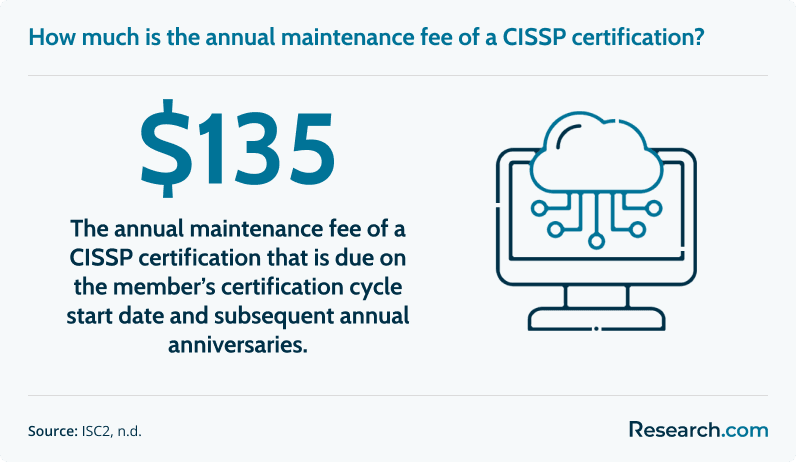
- Annual maintenance fees: $45–$135 per year, depending on the certification body
- Renewal and recertification exams: $150–$500 every 2–3 years
- Study materials and guides: $50–$300 each
- Practice exams and labs: $100–$500
- Travel and testing center costs: $50–$200 if local testing is not available
Do free resources prepare you well enough for cybersecurity exams?
Free study guides, tutorials, and open-source labs can help candidates build foundational knowledge, especially at the entry level. However, while these resources are valuable for practice, they may not always provide the depth required to pass advanced certification exams. For example, many students complement free study materials with structured courses such as the best online CompTIA Security+ training bootcamps, which combine official content with hands-on labs and exam simulations.
While free resources can reduce the overall cybersecurity certification cost, most learners benefit from at least some paid resources. Official training materials and accredited bootcamps ensure content is current and aligned with exam objectives. This is particularly important because the industries that employ the most information security analysts—computer systems design (22%), finance and insurance (16%), and management or consulting services—often expect candidates to hold recognized certifications.
What is the salary increase after earning a cybersecurity certification?
One of the strongest motivators for absorbing the cybersecurity certification cost is the potential for higher earnings. Certified professionals often earn more than their uncertified peers, with salaries reflecting both the specialized knowledge and commitment that certification represents.
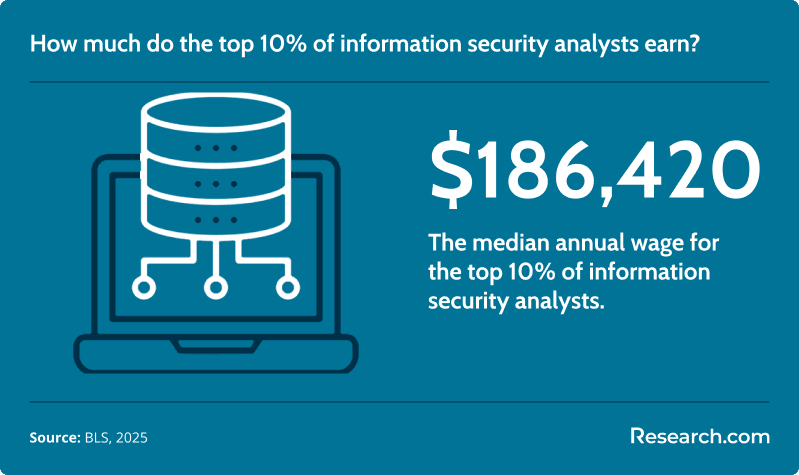
For example, the top 10% of information security analysts earned more than $186,420 annually, showing that advanced credentials and expertise can place professionals in some of the highest-paying roles in the industry.
The specific salary increase depends on factors such as the type of certification, years of experience, and the sector of employment. In most cases, employers recognize certifications as evidence of immediately applicable skills, which translates into competitive offers, promotions, or eligibility for senior positions.
For individuals looking to pivot into the field, programs like a masters in computer science without CS undergrad provide an alternative pathway to develop the advanced skills needed to compete for these high-paying cybersecurity roles.
Do multiple cybersecurity certifications increase earning potential significantly?
Holding multiple certifications can create additional opportunities for salary growth, especially when credentials cover complementary areas such as network security, penetration testing, and cloud security. Employers often view multiple certifications as a signal of versatility and depth of knowledge, which is highly valued in complex security environments.
While each additional exam increases overall cybersecurity certification cost, the combined effect on earning potential can be substantial. Professionals with advanced or stacked certifications may qualify for senior analyst or managerial positions earlier in their careers, often commanding six-figure salaries. However, the decision to pursue multiple certifications should balance financial investment with career goals to ensure the returns justify the expense.
For those exploring entry points into this field, understanding how to start a career in cloud computing can provide a complementary path, as cloud expertise increasingly intersects with cybersecurity and enhances overall marketability.
How much does it cost to renew a cybersecurity certification?
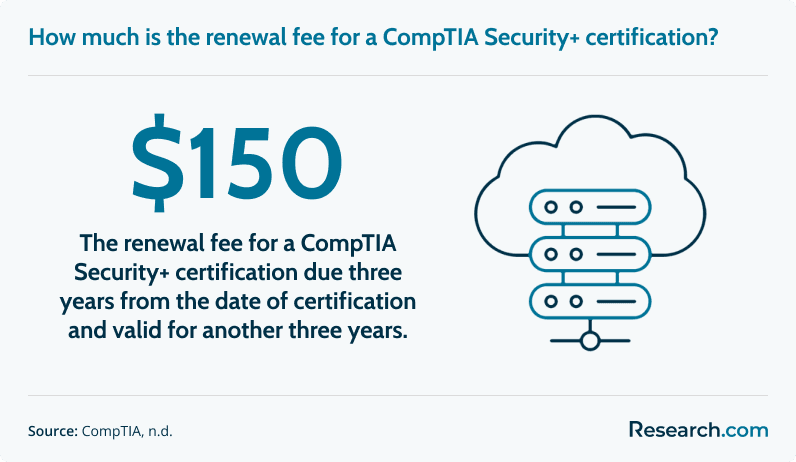
The cost of certification does not end with the initial exam fee. Many providers require ongoing maintenance or recertification to keep credentials active and relevant. For instance, renewing a CompTIA Security+ certification carries a $150 renewal fee, and similar costs apply to other entry-level credentials. Over time, these renewal fees add up, becoming a factor in the long-term cybersecurity certification cost.
Advanced certifications often involve higher maintenance costs, such as annual fees of $85 to $125 for ISC2 or ISACA credentials. In addition to fees, professionals are expected to complete continuing education activities to meet renewal requirements. These obligations ensure knowledge remains current but also require both financial and time commitments beyond the initial exam.
For those pursuing specialized roles, exploring additional certifications for security engineer can further enhance career prospects and provide a pathway to higher-paying positions in network security, cloud security, and enterprise protection.
How can I save money on cybersecurity certification costs?
Managing cybersecurity certification cost strategically can make the process more affordable without sacrificing preparation quality. Several options exist for reducing expenses while still accessing valuable resources:
- Employer sponsorships: Many companies cover the cost of training and exams as part of professional development.
- Discount vouchers: Certification bodies and training providers occasionally offer promotional codes or bundle deals.
- Scholarships and grants: Nonprofit organizations and workforce development programs provide financial assistance for students and career changers.
- Bundled training packages: Enrolling in a program that combines study materials, labs, and exam fees may be cheaper than paying separately.
- Early preparation and practice: Investing time in thorough preparation helps avoid retake fees, which can significantly raise overall costs.
By combining these approaches, candidates can lower out-of-pocket expenses and make certification more accessible while still benefiting from the career advantages that credentials provide.
For students looking to enter the field through higher education, exploring HBCU colleges with cybersecurity majors can also be a cost-effective way to gain foundational knowledge and position themselves for professional certification opportunities.
Is a cybersecurity certification a better investment than a traditional degree?
Comparing the direct pathway to skill validation provided by cybersecurity certifications against the broader academic scope of traditional degree programs can clarify long-term career investments. Certifications deliver targeted expertise with shorter preparation times and lower upfront costs, whereas academic degrees offer an expansive curriculum and potentially enhanced critical thinking abilities over extended periods. Evaluating factors such as training duration, cost, and immediate market recognition is crucial for professionals mapping their career trajectories. For further comparison on educational investments in the field, consider whether is an associate degree in cyber security worth it.
Here’s What Graduates Have to Say About Cybersecurity Certifications Cost
- Renzo: "Paying for my first certification felt overwhelming, especially since the exam alone was nearly $400. But once I passed Security+ and landed a job as a junior analyst, I saw my salary increase by almost 30 percent within a year. The initial cybersecurity certification cost was quickly offset by the career opportunities it unlocked. Looking back, the investment was the stepping stone that gave me credibility in interviews. I’m proud of the return it brought me."
- Maryl: "I chose to enroll in an online bootcamp to prepare for my CISSP, and while it cost me over $3,000, the structure and mentorship made a big difference. Before certification, I was stuck in a help desk role earning under $60,000. After passing, I transitioned into an information security analyst role earning more than $100,000. The cybersecurity certification cost was high, but it directly influenced my career growth and confidence. It was worth the sacrifice."
- Ian: "My employer covered part of the expense for my CEH certification, but I still had to pay for study materials and renewal fees. Altogether, the cybersecurity certification cost added up to more than I initially expected. Even so, the credential gave me a competitive edge, especially when applying to consulting firms. I felt more prepared to handle client challenges and prove my technical skills. It turned out to be both a financial and professional boost."
Key Findings
- The average cybersecurity certification cost ranges from $370 for entry-level exams like Security+ to over $1,000 for advanced credentials such as CEH or OSCP.
- Training programs can raise costs significantly, with online bootcamps priced between $1,000 and $3,000, and in-person courses often exceeding $5,000.
- Renewal fees also factor into long-term expenses, such as the $150 renewal cost for CompTIA Security+ and annual maintenance fees of $85–$125 for advanced certifications.
- Certified professionals earn higher wages, with the median salary for information security analysts at $124,910, and the top 10% earning more than $186,420.
- The largest employers of information security analysts are computer systems design, finance and insurance, and management or consulting services, showing diverse career options.
- Multiple certifications can further boost earning potential, but they increase overall costs, making strategic investment planning essential.
References:
- BLS. (2025, August 28). Information Security Analysts. bls.gov.
- CompTIA. (n.d.). CE Renewal Cycle. comptia.org.
- CompTIA. (n.d.). Security+ (Plus) Certification. comptia.org.
- EC-Council. (2025, August 1). CEH Certification | Certified Ethical Hacker Course | EC-Council. eccouncil.org.
- ISACA. (n.d.). CISM Certification | Certified Information Security Manager. isaca.org.
- ISC2. (n.d.). ISC2 Exam Pricing. isc2.org.
- ISC2. (n.d.). Member policies. www.isc2.org.
- OffSec. (2025, September 4). Individual pricing. offsec.com.
- Statista. (2025). Cybersecurity - United States | Statista market forecast. statista.com.
Other Things You Should Know About Cybersecurity Certifications Cost
In 2027, the time it takes to recover the cost of a cybersecurity certification varies. For many professionals, the investment can be recuperated within 6 months to a year, depending on the certification type and job market demand, as cybersecurity roles often command higher salaries.
In 2027, the most affordable cybersecurity certification varies by provider and level. Generally, entry-level certifications, such as CompTIA Security+, are more budget-friendly, typically costing between $349 to $400. Discounts, grants, or educational subsidies may further reduce costs, making them accessible for beginners pursuing cybersecurity careers.
In 2027, exam fees for top cybersecurity certifications like CISSP and CISM range from $699 to $760. Entry-level certifications such as CompTIA Security+ typically charge around $370. These fees reflect only the costs for taking the exams, not preparation or study materials.


