
2027 Is It Worth Earning an MBA as a Non-Business Student?

Co-Founder and Chief Data Scientist
An MBA can be a powerful career accelerator, but it is not automatically the right graduate degree for every non-business major. The decision depends on your target role, work experience, financial risk, preferred program format, and whether you need broad management training or a more specialized credential.
The question matters because MBA programs remain widely available and widely recognized, yet they also require a serious commitment. Validated Insights reports that over 233,000 graduate students were enrolled in MBA programs in 2024, making the MBA one of the leading graduate fields. At the same time, recent reports show some softness in MBA applications, which makes the value question more important for applicants comparing business school with other graduate options.
This guide explains when an MBA is worth it for non-business students, what outcomes the degree can realistically support, how costs affect return on investment, and how to compare MBA formats, specializations, and alternatives. It also helps answer related questions such as what you can do with a business administration degree, why professionals pursue MBAs, and how non-business graduates can make the degree work in their favor.
Quick Answer: Is an MBA Worth It for Non-Business Students?
An MBA can be worth it for a non-business student when the degree directly supports a move into management, consulting, entrepreneurship, finance, operations, product leadership, healthcare administration, technology management, or another business-facing role. It is usually less worthwhile if you are pursuing it mainly because you feel stuck, want a general career reset without a plan, or cannot justify the cost and time against your expected career outcomes.
The strongest MBA candidates from non-business backgrounds usually bring professional experience, a clear reason for needing business training, and a realistic understanding of program costs. The degree can help translate technical, creative, public-sector, healthcare, education, or humanities experience into leadership value, but it does not guarantee a promotion, salary increase, or career switch by itself.
Is an MBA Worth It? Table of Contents
- Why MBA Programs Still Attract Applicants
- MBA Job Outlook and Career Outcomes
- Why Non-Business Students Choose MBAs
- How to Decide Whether an MBA Is Worth It
- Choosing an MBA Specialization That Fits Your Background
- Affordable MBA Options for Non-Business Students
- How Employers View Non-Business MBA Graduates
- How Online MBA Costs Affect ROI
- Whether Accelerated Online MBAs Support Faster Advancement
- How MBA Format and Length Affect Career Progress
- Why Accreditation Matters for MBA Value
- MBA vs. Alternative Business Degrees
- Advantages of Online MBA Programs Without GMAT Requirements
- Potential Drawbacks for Non-Business Students
- How to Use Your Previous Experience in an MBA
- Whether a Dual Degree Can Improve Career Prospects
Why MBA Programs Still Attract Applicants
The MBA was created to prepare professionals who could understand organizations as integrated systems rather than as isolated functions. As companies became more complex, employers needed leaders who could connect finance, operations, marketing, strategy, people management, and decision-making. That broad business foundation remains the main reason the degree continues to appeal to students from many academic backgrounds.
Harvard Business School illustrates how diverse MBA cohorts can be. In 2024, HBS received 9,856 applications. Its Class 2026 Profile reports 930 enrolled students, including 43% with humanities or social science undergraduate backgrounds. Other represented academic backgrounds include engineering and computer science (29%), business/commerce (17%), math/physical sciences (8%), and arts and humanities (3%).
Research on non-business students pursuing MBAs points to career acceleration and self-investment as common motivations. GMAC reports similar findings from nearly 300 business schools across 40 countries: applicants most often cite more job opportunities (74%), higher salary potential (72%), and stronger general business knowledge and skills (71%) as reasons for applying.
MBA programs have also become more flexible. Online, hybrid, full-time, part-time, executive, and accelerated formats give applicants more ways to study without leaving the workforce entirely. Diversity in MBA classrooms has also expanded. Using Harvard Business School’s 2024 MBA Class Profile as one example, the class includes 46% women and 38% international students. Reported ethnic backgrounds include White (60%), Asian American (28%), Hispanic or Latino (13%), Black or African American (13%), and American Indian or Alaska Native (1%).
For non-business majors, these figures show that an undergraduate business degree is not the only path into an MBA classroom. Many programs actively consider applicants with engineering, healthcare, education, public policy, liberal arts, technology, military, nonprofit, and creative backgrounds, provided they can show readiness for graduate-level business study.
MBA Job Outlook and Career Outcomes
For most applicants, the MBA value question comes down to career outcomes. The degree is often used to move into leadership, change industries, qualify for management-track roles, or gain credibility in business functions that require cross-functional decision-making.
GMAC’s 2024 Corporate Recruiters Survey indicates continued employer interest in MBA talent. According to the report, 90% of corporate recruiters planned to hire MBA graduates that year. The same source shows that 88.9% of graduates from full-time MBA programs and 85% of graduates from professional MBA programs in 2024 were employed at graduation.
Compensation is another reason many candidates consider the degree. GMAC reported a 50% increase in total compensation among graduates of full-time MBA programs in North America. These graduates reported earning $85,000 before completing a full-time MBA and $125,000 in total compensation after earning the degree.
However, these outcomes should be interpreted carefully. MBA salaries vary by school reputation, industry, geography, prior experience, specialization, internship access, employer network, and economic conditions. A degree from a highly recruited program may produce very different outcomes from a lower-cost or less-recognized program. The right question is not only “Do MBA graduates earn more?” but “Do graduates from this specific program reach the roles I want at a cost I can justify?”
| Career goal | When an MBA may help | When another option may be better |
| Move into management | You need broader training in strategy, finance, operations, and leadership. | Your employer offers internal leadership training or promotion pathways without a graduate degree. |
| Change industries | You need recruiting access, internships, alumni networks, and structured career support. | You can switch through certifications, portfolio work, targeted networking, or direct experience. |
| Start a business | You want formal training in finance, marketing, operations, and venture strategy. | You need immediate market testing, mentorship, or industry-specific startup experience more than a degree. |
| Advance in a technical field | You want to move from individual contributor work into product, operations, or executive leadership. | A technical master’s, certificate, or management role within your current company offers a clearer path. |
| Enter consulting or finance | You are targeting employers that recruit heavily from MBA programs. | You lack the quantitative preparation, recruiting access, or program brand needed for your target firms. |
Why Non-Business Students Choose MBAs
Non-business students often use an MBA to convert specialized expertise into broader organizational influence. A nurse may want to manage hospital operations. An engineer may want to lead product strategy. A teacher may want to work in education entrepreneurship. A military veteran may want to transition into corporate leadership. In each case, the MBA can provide common business language, management frameworks, and access to professional networks.
Before applying, compare the degree with your career objective and learn how to choose a quality MBA program. The value of the MBA depends less on the title of the degree and more on whether the curriculum, employer network, schedule, cost, and specialization match your next move.
- It is recognized across many industries and regions. MBA credentials are understood by employers in corporate, nonprofit, government, healthcare, technology, consulting, finance, and entrepreneurial settings. GMAC’s Corporate Recruiters Survey reports that one-third of Middle Eastern employers or more planned to expand hiring of MBA graduates, with interest also noted in regions such as Latin America and the Middle East/Africa. If you hope to work internationally, research employer preferences carefully because some organizations may favor graduates from business schools in their own region.
- It can expand career options. MBA programs expose students to recruiters, alumni, faculty, classmates, case competitions, consulting projects, and industry events. These networks can be especially valuable for non-business students who need a bridge into new functions. If you are comparing possible paths, review business administration career options to see how roles differ by industry, function, and level.
- It develops transferable business skills. MBA coursework usually covers core areas such as accounting, finance, marketing, operations, strategy, analytics, organizational behavior, and leadership. Case-based assignments and team projects help students practice communication, negotiation, strategic thinking, data interpretation, and decision-making. GMAC reports employer confidence in business school graduates in areas such as problem-solving (54%), strategic thinking, communication (51%), and adaptability.
| Non-business background | How an MBA can add value | Potential specialization fit |
| Engineering or computer science | Builds skills for product leadership, operations, technology strategy, and cross-functional management. | Technology management, analytics, operations, entrepreneurship |
| Healthcare | Connects clinical or public health experience with finance, administration, policy, and organizational leadership. | Healthcare management, operations, leadership |
| Education or nonprofit work | Supports movement into administration, program leadership, social enterprise, or organizational strategy. | Social impact, entrepreneurship, organizational leadership |
| Humanities or social sciences | Pairs communication, research, and human behavior skills with business decision-making. | Marketing, strategy, human capital, consulting |
| Arts or design | Adds commercial, managerial, and entrepreneurial skills to creative problem-solving. | Brand management, innovation, entrepreneurship |
How to Decide Whether an MBA Is Worth It
An MBA is worth considering when it solves a specific career problem. It may help you qualify for leadership roles, change functions, build a professional network, gain business credibility, or prepare to manage a company or venture. It is less likely to be worth the investment if you do not know what role you want, have not researched hiring outcomes, or assume the degree alone will create opportunities.
The broader question of whether a business degree is worth it depends on context. For a non-business applicant, the MBA decision should be based on goals, cost, time, admissions requirements, program quality, opportunity cost, and realistic employment outcomes.
Your career goal
Start by identifying the job you want after graduation. Then work backward. Does that job commonly require or prefer an MBA? Do your target employers recruit from MBA programs? Would a specialization, certificate, technical master’s, or internal promotion path be faster or less expensive?
If you want to build a company or pursue entrepreneurship as a career, an MBA may help you learn finance, customer discovery, operations, pricing, leadership, and venture strategy. But if you mainly feel bored or dissatisfied in your current role, an MBA may not address the root problem. In that case, first explore stretch assignments, internal transfers, mentoring, employer-sponsored training, or skill-specific certificates.
An MBA is not a universal fix for career frustration. It is a demanding graduate program designed for people who need business training, leadership development, and access to networks that support defined professional goals.
Cost and time
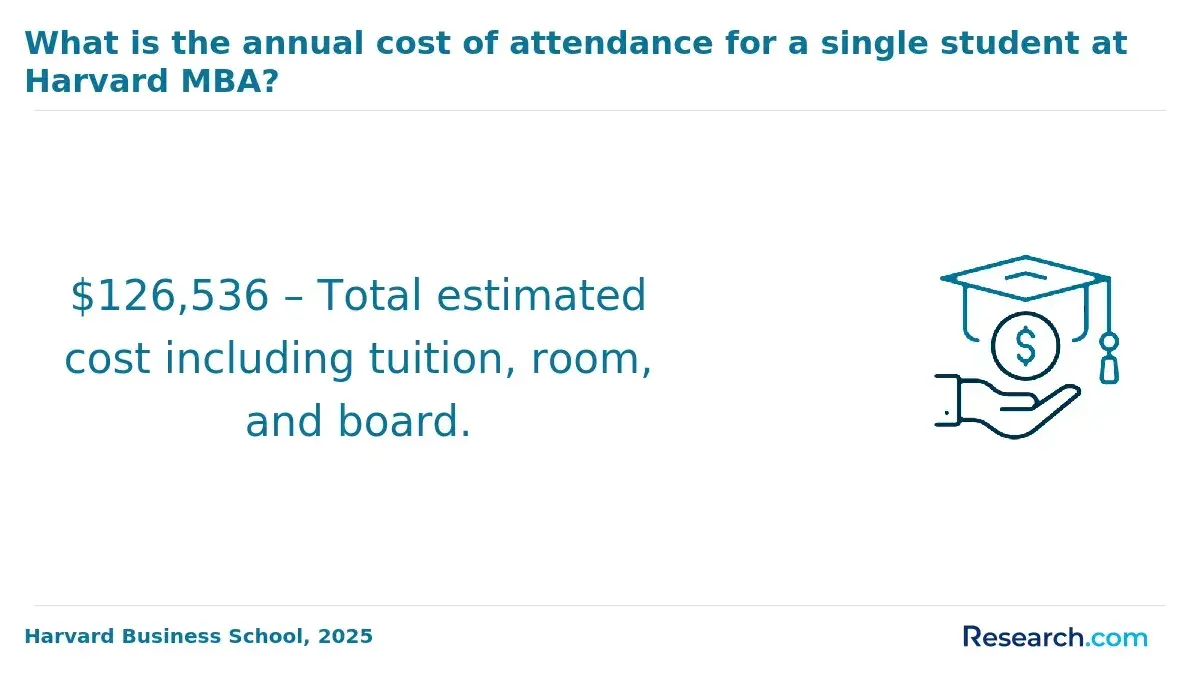
Cost is one of the biggest factors in MBA ROI. Some of the most affordable online MBA programs list tuition around $9,000 to $18,000, while top programs can require six-digit total investments. Harvard Business School lists $126,536 plus a $1,500 to $2,000 computer budget as the total annual cost of attendance for A.Y. 2025-2026. Because the HBS MBA is a two-year, full-time program, the estimated total is about $253,072 to $256,072.
For some students, a specialized master’s program can provide relevant leadership or management preparation at a lower cost. Harvard’s Master’s program in Education Leadership, Organizations, and Entrepreneurship (ELOE), for example, focuses on leading with impact, strategic vision, and management tools. The ELOE master’s degree at Harvard costs approximately $184,004 for two years of full-time study, which is almost $50,000 less than the Harvard Business School MBA figure above.
Financial aid can reduce the burden, but it does not erase the need for careful planning. Ask about scholarships, grants, loans, assistantships, employer tuition reimbursement, military benefits, and payment plans. Also calculate opportunity cost: income lost during full-time study, reduced work hours during part-time study, relocation costs, technology fees, travel for residencies, and interest on borrowed funds.
Time matters as much as tuition. Many U.S. full-time MBA programs take two years. Part-time formats usually take longer, while accelerated and online options may move faster. An online MBA in the USA can be practical for working professionals, but faster formats may be more intense and may offer fewer internship opportunities.
ROI should be estimated, not assumed. The return on investment for graduate school is not always positive, so compare the specific program cost with the roles, industries, salary ranges, and employment outcomes that match your plans.
Admissions requirements
Most MBA programs accept non-business majors, but applicants usually need to meet the same admissions standards as business majors. Common requirements include GMAT or GRE scores, undergraduate transcripts, a minimum GPA, recommendations, essays, interviews, work experience, and prerequisite coursework. If you have not taken accounting, economics, statistics, or finance, a school may require foundation courses before or during the program. Reviewing MBA acceptance rates can help you set a realistic application strategy.
Relevant work experience can strengthen an application, especially for non-business candidates. GMAC reports that most MBA applicants have at least three to 10 years or more of work experience. Across MBA program types, 25% of applicants had 10 years or more, 26% had six but less than 10 years, and 37% had three but less than six years of work experience.
| Question to ask before applying | Why it matters |
| What specific role do I want after the MBA? | A clear target helps you choose the right program, specialization, and recruiting strategy. |
| Do employers in my target field value MBAs? | Some industries strongly recruit MBAs, while others prioritize portfolios, licenses, or technical credentials. |
| Can I afford the full cost, not just tuition? | Fees, travel, books, residencies, lost income, and loan interest can change ROI. |
| Does the program publish employment outcomes? | Transparent placement data helps you judge whether graduates reach roles like the ones you want. |
| Will I need prerequisite courses? | Foundation courses can add cost and time for non-business majors. |
| Is the program properly accredited? | Accreditation affects credibility, transferability, employer perception, and long-term value. |
Choosing an MBA Specialization That Fits Your Background
The best MBA specialization for a non-business student should connect three things: your previous experience, your target role, and the business skill gap you need to close. Do not choose a concentration only because it sounds marketable. Choose it because it makes your story stronger to employers.
For example, an engineer targeting product management may benefit from technology management, analytics, or operations. A healthcare professional may need healthcare management or finance. A humanities graduate interested in customer behavior may find marketing analytics or strategy more useful. If you are still comparing business pathways, reviewing the easiest business major can help you understand how different business disciplines vary in focus and difficulty.
| If your background is... | Consider this MBA focus | Best fit when you want to... |
| STEM | Analytics, operations, technology management | Lead technical teams, manage products, or move into data-informed decision-making. |
| Healthcare | Healthcare management, finance, operations | Move into hospital administration, payer strategy, health operations, or healthcare consulting. |
| Education | Leadership, social impact, entrepreneurship | Manage schools, education organizations, training programs, or education ventures. |
| Creative fields | Marketing, innovation, entrepreneurship | Lead brand strategy, product development, creative operations, or your own business. |
| Public sector or nonprofit | Strategy, leadership, finance, social enterprise | Manage programs, budgets, partnerships, and mission-driven organizations. |
Affordable MBA Options for Non-Business Students
Affordability can determine whether an MBA creates value or financial strain. Non-business students should be especially careful because they may also need prerequisite coursework, career coaching, or extra quantitative preparation. A lower-cost program can be a strong choice when it is accredited, career-relevant, flexible, and connected to your target market.
Online programs may reduce relocation and commuting costs while allowing students to keep working. If your priority is lowering total cost, compare MBA programs with options such as the cheapest online business administration degree. While undergraduate and graduate programs serve different purposes, cost comparisons can help you think more critically about the price of business education.
Affordable does not mean automatically valuable. Check accreditation, faculty qualifications, curriculum depth, student support, alumni access, employer reputation, and graduation requirements. Also ask whether the program reports career outcomes for online students separately from campus students.
How Employers View Non-Business MBA Graduates
Employers can value MBA graduates from non-business backgrounds because they bring both domain expertise and management training. A candidate with experience in healthcare, engineering, education, public service, design, or technology may offer perspectives that a traditional business major does not. The MBA can make that experience easier to translate into strategy, operations, finance, leadership, and cross-functional collaboration.
Still, employers usually evaluate more than the credential. They look at prior achievements, communication ability, leadership potential, internships, projects, technical strengths, program reputation, and fit for the role. Experienced professionals may also compare traditional MBAs with an online executive MBA, especially if they already manage teams or hold senior responsibilities.
How Online MBA Costs Affect ROI
Online MBA ROI depends on total cost, current salary, expected salary growth, debt, employer sponsorship, program reputation, and whether the format gives you access to the career outcomes you need. A lower-priced online MBA may produce stronger ROI than a costly program if it helps you advance without leaving your job. A higher-priced program may be justified if it offers stronger recruiting access, alumni networks, or industry placement in your target field.
Before enrolling, compare tuition, fees, technology costs, residencies, travel, books, and financing terms. Use published information on online MBA program costs to benchmark your options, then weigh those costs against employment outcomes, accreditation, specialization fit, and flexibility.
Whether Accelerated Online MBAs Support Faster Advancement
Accelerated online MBA programs can work well for focused professionals who need business training quickly and can handle an intensive pace. These programs compress coursework into a shorter period, which may reduce time away from career progression and help students apply new skills sooner.
The trade-off is intensity. Accelerated formats may leave less time for internships, networking, reflection, career exploration, and foundational skill-building. They are usually best for students who already know their target role and have enough professional experience to connect coursework to real workplace problems. If speed is a priority, compare online accelerated MBA programs carefully before deciding.
How MBA Format and Length Affect Career Progress
Program format shapes the MBA experience. Full-time programs may provide stronger internship access and immersive recruiting. Part-time and online programs may be better for students who need to keep earning income. Executive MBA formats often fit experienced managers. Accelerated programs can reduce time to completion but may demand heavier weekly workloads.
Some students consider one year MBA programs online because they want faster advancement. These programs can be useful when your goal is clear, your schedule can handle the pace, and the program provides enough academic and career support. Longer formats may be better if you need more time for career switching, networking, internships, or quantitative preparation.
| MBA format | Best for | Main trade-off |
| Full-time MBA | Career switchers who want internships, recruiting access, and an immersive experience. | Higher opportunity cost because students may leave full-time work. |
| Part-time MBA | Working professionals who want to advance while remaining employed. | Longer completion time and heavier work-study balance. |
| Online MBA | Students who need geographic flexibility or cannot relocate. | Networking and recruiting support vary widely by program. |
| Executive MBA | Experienced managers and senior professionals. | Often less suitable for early-career career switchers. |
| Accelerated MBA | Focused students who want a shorter timeline. | Less time for internships, exploration, and pacing. |
Why Accreditation Matters for MBA Value
Accreditation is one of the most important checks when evaluating an MBA. It signals that a school or program has gone through an external quality review. For students, accreditation can affect employer trust, transfer credit, financial aid eligibility, academic standards, and long-term credential value.
Do not rely only on rankings or advertising language. Confirm the institution’s accreditation and, when relevant, programmatic business accreditation. If cost is a major concern, compare accredited MBA programs with other reputable options from an affordable business degree provider.
MBA vs. Alternative Business Degrees
An MBA is broad and management-focused. Other graduate business degrees may be narrower, deeper, and sometimes better aligned with specific roles. For example, a master’s in finance may serve finance-focused candidates better than a general MBA. A master’s in analytics may be stronger for data roles. A master’s in management may suit earlier-career students with limited experience.
Compensation comparisons depend on industry, role, employer, geography, and experience. MBA graduates may see strong compensation growth, but alternative degrees can also lead to strong outcomes when they match labor market demand. If you are weighing business credentials, compare program goals and salary pathways using resources such as business administration vs. business management salary.
| Credential | Best fit | Consider it if... |
| MBA | Broad leadership, management, career switching, entrepreneurship | You need cross-functional business training and access to MBA networks. |
| Master’s in management | Early-career business preparation | You have limited work experience and want foundational management training. |
| Master’s in finance | Finance, investment, corporate finance, quantitative roles | You want depth in financial analysis rather than broad management training. |
| Master’s in analytics | Data-informed business roles | You want stronger quantitative and technical preparation for analytics-driven work. |
| Specialized industry master’s | Healthcare, education, public administration, technology, or another focused field | Your career goal is tied to one sector and does not require a general MBA. |
Advantages of Online MBA Programs Without GMAT Requirements
An online MBA with no GMAT requirement can be helpful for non-business students, but applicants should still evaluate quality carefully. A test waiver removes one barrier; it does not automatically make a program easier, cheaper, or more valuable.
- Lower application barrier: Students who have not prepared for standardized testing can apply without spending additional time and money on GMAT preparation.
- More flexibility: Online delivery can help working adults balance coursework with employment, caregiving, military service, or other responsibilities.
- Broader classroom mix: Online MBA cohorts often include students from different locations, industries, and professional backgrounds.
- Practical course design: Many online programs emphasize applied projects, case analysis, and workplace-relevant assignments.
- Potential career mobility: The credential may support advancement when paired with experience, clear goals, and a reputable program.
Potential Drawbacks for Non-Business Students
Non-business students can succeed in MBA programs, but they should enter with a clear view of the challenges. The degree may require more preparation than expected, especially in quantitative subjects or business fundamentals.
- Steep learning curve: Accounting, finance, economics, statistics, and operations may be new for students without business coursework.
- Possible prerequisites: Foundation courses can add cost and time before or during the MBA.
- High total cost: Many MBA programs are expensive, and top-tier programs can exceed $100,000 in total costs.
- Heavy time commitment: Work, family, and study obligations can be difficult to manage, especially in accelerated or part-time formats.
- Risk of misalignment: Some roles value experience, licenses, portfolios, or technical credentials more than an MBA.
- Uncertain ROI: Career and salary outcomes are not guaranteed, particularly if the program has weak employer connections in your target field.
Common Mistakes to Avoid
| Mistake | Better approach |
| Choosing a program only because it is ranked highly. | Compare ranking, cost, accreditation, curriculum, employer network, and outcomes for your target role. |
| Looking only at tuition. | Calculate fees, travel, residencies, books, technology, loan interest, and lost income. |
| Assuming online programs offer the same recruiting access as campus programs. | Ask how online students access career services, alumni events, internships, and employer recruiting. |
| Ignoring accreditation. | Verify institutional and business accreditation before applying. |
| Applying without a post-MBA plan. | Define target roles, industries, employers, and required skills before investing. |
| Assuming salary increases are guaranteed. | Use program-specific employment reports and realistic salary expectations for your market. |
How to Use Your Previous Experience in an MBA
Your non-business background can be an advantage if you know how to position it. MBA classrooms benefit from students who understand real problems in healthcare, technology, education, public service, engineering, design, science, and other fields. The key is to translate your experience into business value.
- STEM experience: Use your analytical, technical, and problem-solving skills in finance, analytics, operations, product management, and strategy coursework.
- Humanities and social science training: Apply strengths in communication, research, ethics, human behavior, persuasion, and critical thinking to leadership and marketing problems.
- Healthcare or public-sector work: Connect your knowledge of patients, policy, compliance, budgets, and service delivery to management and operations courses.
- Creative or design background: Bring innovation, storytelling, customer empathy, branding, and product thinking into entrepreneurship and marketing projects.
- International experience: Use cross-cultural communication and global awareness in courses on international business, supply chains, markets, and strategy.
- Existing professional network: Combine your previous contacts with MBA classmates, faculty, alumni, and career services to expand opportunities.
If you already have a clear career target and want to move quickly, the best one-year online MBA programs may be worth comparing. Just make sure the faster timeline still gives you enough support to close any business knowledge gaps.
Whether a Dual Degree Can Improve Career Prospects
A dual degree can be useful when your career requires both specialized expertise and business leadership training. Common examples include combining business with law, public policy, healthcare, education, technology, or international affairs. For non-business students, this route can create a stronger interdisciplinary profile.
The trade-off is workload. Dual degrees usually require more planning, more credits, and careful coordination between departments. They may also increase total cost. Before committing, compare the added value with the extra time and expense, and review options such as dual master’s degrees.
Should You Get an MBA?
You should consider an MBA if you have a defined career goal that requires business leadership skills, a realistic financing plan, and a program that connects to your target employers. Non-business students can thrive in MBA programs, but the degree should be chosen for a specific purpose, not as a default answer to career uncertainty.
Also compare the MBA with alternatives. Depending on your goals, an executive master’s degree, specialized graduate program, certificate, employer-sponsored training, or one of several business management degree options may provide a better fit. The best choice is the credential that moves you toward your target role with acceptable cost, manageable risk, and credible outcomes.
Key Insights
- An MBA can be valuable for non-business students when it supports a specific career move. The degree is strongest for applicants targeting leadership, management, consulting, entrepreneurship, product, operations, finance, or industry transition roles.
- Non-business backgrounds are common in MBA classrooms. Harvard Business School’s Class 2026 includes 43% of enrolled students from humanities or social science backgrounds, along with students from engineering, computer science, business, math, physical sciences, and arts and humanities.
- Employer demand remains meaningful, but outcomes vary. GMAC reported that 90% of corporate recruiters planned to hire MBA graduates, while full-time MBA graduates in North America reported a 50% increase in total compensation.
- Cost can make or break ROI. Affordable online MBA programs may list tuition around $9,000 to $18,000, while top programs can require six-digit total investments. Always calculate total cost, not only tuition.
- Program fit matters more than the MBA label. Accreditation, employer network, specialization, format, career services, and alumni access all affect long-term value.
- Online, accelerated, no-GMAT, and part-time formats can be worthwhile for working professionals. They are not interchangeable, so compare pace, support, recruiting access, and workload before enrolling.
- The MBA is not the only business credential. Specialized master’s degrees, executive programs, certificates, and business management programs may offer a better return depending on your field and goals.
References:
- BestColleges article on employer confidence in graduate business education and GMAC recruiter findings. https://www.bestcolleges.com/news/2025-gmac-corporate-recuriters-survey-ai-human-skills/
- Coursera guide to MBA salary considerations. https://www.coursera.org/articles/mba-degree-salary
- Graduate Management Admission Council report on 2024 application trends. https://www.gmac.com/-/media/files/gmac/research/admissions-and-application-trends/2024_ats.pdf?rev=7fdd40dc7f914d97a29ed5c0f42834c2
- Graduate Management Admission Council 2024 Corporate Recruiters Survey report. https://www.gmac.com/-/media/files/gmac/research/employment-outlook/2024-corporate-recruiters-survey/2024_gmac_crs_report.pdf?rev=43588bfef9a549af9bb00a432a3d7b06
- Graduate Management Admission Council report on MBA program demand and career aspirations. https://www.gmac.com/-/media/files/gmac/research/prospective-student-data/2024_pss_programreport1_mba.pdf
- Harvard Business School MBA class profile. https://www.hbs.edu/mba/admissions/class-profile/Pages/default.aspx
- Harvard Business School annual cost of attendance. https://www.hbs.edu/mba/financial-aid/tuition-assistance/Pages/cost-of-attendance.aspx
- Leland breakdown of Harvard MBA tuition and fees. https://www.joinleland.com/library/a/harvard-business-school-tuition-and-fees-breakdown
- MIT Sloan 2024-2025 MBA Employment Report. https://mitsloan.mit.edu/sites/default/files/2024-12/MBA-Employment-Report-2024-2025.pdf
- Poets & Quants report on Harvard MBA Class of 2026 applications. https://poetsandquants.com/2024/09/23/mba-class-of-2026-at-harvard-a-massive-rebound-in-mba-applications/
- Validated Insights MBA enrollment report. https://validatedinsightsmbareport.carrd.co/
Other Things You Should Know About Earning an MBA as a Non-Business Student
For non-business students, an MBA provides critical business acumen, broadens career opportunities, and enhances leadership skills. It fosters a versatile skill set that applies to various industries, and networking opportunities can be invaluable for career advancement.
MBAs are popular among non-business students because they provide a broad understanding of business principles, which can complement their existing skills and knowledge. This can help them transition into business roles or advance in their current careers. Additionally, the skills learned in MBA programs, such as leadership and strategic thinking, are valuable in many fields.
In 2027, non-business students who earn an MBA can gain versatile skills such as leadership, strategic thinking, and financial acumen, enhancing their employability. It opens career opportunities across industries, fosters networking, and can lead to positions in management and higher earning potential.
Yes, non-business students can succeed in an MBA program even with non-traditional backgrounds. Many programs value diverse perspectives and offer foundational courses in accounting, finance, and marketing to bridge gaps, allowing students from all fields to thrive and contribute effectively.
Non-business students should evaluate their career goals, the financial investment required, and the time commitment of pursuing an MBA. They should also consider the reputation and curriculum of the MBA program, its network opportunities, and how well it aligns with their interests and desired career path.
In 2027, admission to an MBA program typically requires a bachelor's degree, a strong GPA, and satisfactory GMAT or GRE scores. Recommendations and relevant professional experience are often crucial, and non-business students should highlight unique skills or perspectives that contribute to their application.


