
2027 Best Texas Psychology Degrees Online

Co-Founder and Chief Data Scientist
Choosing an online psychology degree in Texas is not just a question of convenience. It is a decision about cost, accreditation, graduate school preparation, career flexibility, and whether the program can support your long-term goal—whether that is human services, research, human resources, counseling, school support, forensic psychology, or a future licensed clinical role. Texas has more than 1.5 million students enrolled across universities and colleges offering online degrees, which means students have many options but also more programs to compare carefully.
This guide is for Texas students, transfer students, working adults, military learners, and career changers who want a flexible psychology education without overlooking the details that matter most. You will learn what online psychology programs cover, how long they take, what they cost, what careers they can lead to, which schools are featured, and what questions to ask before enrolling.
Quick answer: Is an online psychology degree in Texas worth it?
An online psychology degree in Texas can be worth it if you want a flexible pathway into behavioral science, human services, education, business, research support, or graduate study. A bachelor’s degree alone usually does not qualify you to become a licensed therapist, counselor, or psychologist in Texas, but it can prepare you for entry-level roles or for a master’s or doctoral program. Students should prioritize accredited schools, clear transfer-credit policies, realistic tuition costs, and programs that match their intended career path.
What are the benefits of getting an online psychology degree in Texas?
- Career flexibility: Psychology graduates can pursue several directions, including clinical psychology preparation, school counseling pathways, human resources, market research, social services, and related behavioral science roles.
- Income range by education level: In Texas, psychology-related earnings commonly vary from $30,000 to $80,000 depending on degree level, specialization, experience, and role, with higher earnings generally tied to advanced education and licensure.
- Location flexibility: Online study allows students to access Texas-based programs without relocating, which can be especially useful for working adults, rural students, caregivers, and learners balancing school with employment.
What can I expect from an online psychology degree in Texas?
An online psychology degree in Texas typically introduces students to how people think, learn, develop, interact, and respond to stress, environments, relationships, and social systems. Programs usually combine theory, research methods, statistics, writing, ethics, and applied coursework so students can understand behavior from both scientific and practical perspectives.
At the undergraduate level, students often study cognition, abnormal psychology, social behavior, lifespan development, research design, and psychological measurement. Graduate programs may go deeper into assessment, counseling theory, behavioral intervention, program evaluation, educational psychology, or specialized research methods. Some programs also include internships, field experiences, virtual labs, case analyses, or supervised projects, although requirements vary widely by school and degree level.
The most important distinction is licensure. An online psychology degree may provide the academic foundation for future licensed practice, but licensure in counseling, school psychology, clinical psychology, or social work generally requires specific graduate education, supervised experience, exams, and state approval. Before enrolling, students should confirm whether the program is designed for general psychology education, graduate school preparation, professional licensure, or career advancement outside clinical practice.
Where can I work with an online psychology degree in Texas?
Graduates can work in many settings that value communication, research, data interpretation, behavior analysis, interviewing, case documentation, and an understanding of human motivation. However, students should be careful not to assume that an online bachelor’s degree by itself qualifies them to diagnose mental health disorders or provide independent therapy in Texas.
With the appropriate graduate degree, supervised training, and state licensure, psychology graduates may work in settings such as:
- Hospitals: Supporting patients and families as part of behavioral health or interdisciplinary care teams.
- Mental health clinics: Providing counseling, assessment support, case management, or therapy after meeting the required education and licensing standards.
- Private practices: Working as licensed clinicians, counselors, psychologists, or related professionals depending on credentials.
- Rehabilitation centers: Helping clients address addiction, injury recovery, behavioral change, or adjustment challenges.
How much can I make with an online psychology degree in Texas?
Psychology-related pay in Texas depends heavily on the role, degree level, specialization, employer, licensure status, and years of experience. A bachelor’s degree in psychology often leads to entry-level jobs with annual salaries ranging from $30,000 to $40,000.
A master’s degree can improve access to roles in counseling-adjacent work, human resources, research, education, program coordination, and related fields, with annual income commonly ranging from $50,000 to $80,000. Actual earnings depend on whether the program leads to licensure, the type of license, and the employer.
Doctoral-level psychologists, especially those in clinical or counseling psychology, may earn more than $80,000 per year, particularly in specialized practice areas or private practice. Salary outcomes are not guaranteed, so students should compare program costs with realistic job requirements and local labor market conditions.
- Best Online Psychology Degree Programs in Texas for 2027
- How long does an online psychology degree in Texas take?
- Online vs. campus psychology programs in Texas: which format fits you?
- How much does an online psychology degree in Texas cost?
- What financial aid can online psychology students in Texas use?
- What admission requirements should applicants expect?
- What classes are included in online psychology programs?
- Which psychology specializations are available online in Texas?
- How should you choose an online psychology program in Texas?
- What jobs can graduates pursue?
- What online tools and student services matter most?
- What myths about online psychology degrees should you avoid?
- How do programs address cultural diversity and inclusion?
- What trends are changing online psychology education?
- Can you become a therapist without a psychology degree?
- Which certifications can strengthen a psychology degree?
- Is forensic psychology a strong option in Texas?
- Can an online psychology degree lead to forensic psychology?
- What is the job market for psychology graduates in Texas?
- How does online psychology study help working professionals?
- What does health psychology involve in Texas?
- What ethical issues should online psychology students understand?
- Why consider an online master’s in psychology in Texas?
Best Online Psychology Degree Programs in Texas for 2027
How do we rank schools?
Research.com evaluates schools using a ranking method based on institutional data, program research, and comparative analysis. The process draws from established education data sources, including:
- Peterson’s data set;
- College Scorecard database;
- National Center for Education Statistics; and
- IPEDS database.
These sources help compare graduation rates, affordability, student-to-faculty ratios, faculty credentials, program availability, and other indicators that can affect student outcomes. Rankings should be used as a starting point, not as the only factor in your decision.
1. Sam Houston State University
Sam Houston State University offers online education through a long-established public institution that has served students since 1879. Its online psychology options emphasize core psychology study, liberal arts preparation, and opportunities to build research skills. The university also offers on-campus master’s programs and a Ph.D. in Clinical Psychology accredited by the American Psychological Association (APA), which may matter to students planning advanced study.
- Program Length: Four years
- Tracks/concentrations: General Psychology
- Cost per Credit: $636.60 – $741.85 (in-state), $1,044.60 – $1,149.85 (out-of-state)
- Required Credits to Graduate: 120
- Accreditation: APA
2. Southwestern Assemblies of God University
Southwestern Assemblies of God University is a Christian university accredited by the Southern Association of Colleges and Schools Commission on Colleges (SACSCOC). Its pre-professional psychology programs are designed for students who want either workforce preparation or a foundation for graduate study. The school also offers master’s degrees in Clinical Psychology, Clinical Mental Health Counseling, and Human Services Counseling (non-clinical).
- Program Length: Four years
- Tracks/concentrations: General Psychology
- Cost per Credit: $415
- Required Credits to Graduate: 120
- Accreditation: SACSCOC
3. Concordia University Texas
Concordia University Texas provides an online bachelor’s degree in psychology through a SACSCOC-accredited institution. The program reflects a Lutheran liberal arts model and is intended to develop broad professional skills along with psychology knowledge. Its 15:1 student-to-teacher ratio may appeal to students who want a smaller learning environment with applied coursework and research exposure.
- Program Length: Four years
- Tracks/concentrations: General Psychology
- Cost per Credit: $495
- Required Credits to Graduate: 120
- Accreditation: SACSCOC
4. The University of Texas Permian Basin
The University of Texas Permian Basin offers an online undergraduate psychology program built around foundational behavioral science knowledge and career-ready academic skills. The university emphasizes student-centered learning and digital instruction. Doctoral degrees at The University of Texas at Austin and Southwestern Medical Center campuses are accredited by the APA.
- Program Length: Four years
- Tracks/concentrations: General Psychology
- Cost per Credit: $362.34
- Required Credits to Graduate: 120
- Accreditation: APA
5. University of Houston
The University of Houston has offered programs since 1953 and delivers online options through a large public university system. Its online undergraduate psychology degree blends psychology coursework with broader preparation in areas such as technology and social services. In-person Ph.D. and Psy.D. programs at the main campus and Clear Lake locations are accredited by the APA.
- Program Length: Four years
- Tracks/concentrations: General Psychology
- Cost per Credit: $876.59 (in-state), $1,384.59 (out-of-state)
- Required Credits to Graduate: 120
- Accreditation: APA
6. University of Houston-Victoria
University of Houston-Victoria, founded in 1973 as part of the UH System, serves students seeking flexible access to higher education. Its psychology program focuses on communication, analysis, and applied learning. With an 18:1 student-to-faculty ratio, the university may be a practical option for students who want online study with faculty interaction.
- Program Length: Four years
- Tracks/concentrations: General Psychology
- Cost per Credit: $325.98 (in-state), $733.98 (out-of-state)
- Required Credits to Graduate: 120
- Accreditation: SACSCOC
7. Angelo State University
Angelo State University offers undergraduate psychology options and an online psychology master’s program in Texas. Its psychology training emphasizes student support, research experience, laboratory learning, and internship opportunities. Angelo State University also offers in-person MS and PsyD degrees in Counseling Psychology, both accredited by SACSCOC.
- Program Length: Four years
- Tracks/concentrations: General Psychology
- Cost per Credit: $614 – $637 (in-state), $1,022 – $1045 (out-of-state)
- Required Credits to Graduate: 120
- Accreditation: SACSCOC
8. Houston Christian University
Houston Christian University combines liberal arts education with a faith-based academic model. The university is accredited by SACSCOC and reports a 16:1 student-to-faculty ratio, which can support a more personal online learning experience.
Its Christ-centered online psychology-related options are designed to build communication, critical thinking, and behavioral science skills for students planning careers in human services, ministry-related support, counseling preparation, or related fields.
- Program Length: Four years
- Tracks/concentrations: Christian Counseling, Marriage and Family Studies
- Cost per Credit: $430 – $660
- Required Credits to Graduate: 120
- Accreditation: SACSCOC
9. Our Lady of Lake University
Our Lady of Lake University offers a Bachelor of Social Work program that is described as one of just three in the country specifically designed to serve the Hispanic population, which is projected to reach 111 million individuals by 2060. Although social work is distinct from psychology, this pathway may interest students who want direct human services preparation and eligibility to take the Licensed Social Work exam.
- Program Length: Four years
- Tracks/concentrations: Social Work
- Cost per Credit: $494 – $962
- Required Credits to Graduate: 120
- Accreditation: Council on Social Work Education (CSWE)
10. University of North Texas
The University of North Texas offers online educational psychology MS pathways for students interested in learning, development, assessment, research, and program administration. This graduate-level option may be best for students who want to apply psychology in educational, organizational, policy, or evaluation settings rather than pursue a general undergraduate psychology degree.
- Program Length: Two years
- Tracks/concentrations: Family Policy and Program Administration, Gifted and Talented, Learning and Development, Research and Evaluation
- Cost per Credit: $466.67 (in-state), $955.45 (out-of-state)
- Required Credits to Graduate: 33
- Accreditation: APA
How to use this list without relying only on rankings
A ranking can help you build a shortlist, but the best program is the one that fits your goal, budget, timeline, and credential requirements. Before applying, compare programs on accreditation, total cost, transfer-credit acceptance, online course format, faculty access, required fieldwork, and whether the degree supports your intended next step.
| Student goal | What to prioritize | What to verify before enrolling |
| Finish a bachelor’s degree online | Transfer credits, tuition, course availability, flexible scheduling | How many credits will transfer and whether upper-division psychology courses are fully online |
| Prepare for graduate school | Research methods, statistics, faculty mentorship, strong GPA support | Whether prerequisites match master’s or doctoral admissions requirements |
| Become licensed later | Graduate program alignment, practicum options, licensure disclosures | Whether the program meets Texas licensing expectations for your intended profession |
| Move into HR, research, or business roles | Data skills, organizational psychology, communication, applied projects | Whether the curriculum includes workplace, analytics, or research-focused coursework |
What graduates say about online psychology degrees in Texas
-
: "
Online psychology study gave me enough flexibility to keep working full time while still moving toward a degree. The discussion boards and virtual class meetings helped me interact with classmates, and the format pushed me to become more independent as a learner. – Jane
"
-
: "
I chose an online psychology program because I wanted to study human behavior without stepping away from work and family responsibilities. Having course materials available at different times helped me connect what I was learning to situations I was already seeing in my workplace. – Anna
"
-
: "
The online format was more engaging than I expected. Faculty interaction, structured assignments, and peer conversations made difficult theories easier to understand and helped me grow academically while managing life outside school. – Davidson
"
Key findings about online psychology degrees in Texas
- Online psychology programs in Texas can support career goals in clinical psychology preparation, school counseling pathways, human resources, market research, and related fields, with reported average annual salaries of up to $238,256.
- Most programs cover multiple branches of psychology, including cognitive, social, clinical, developmental, and research-focused study.
- Advanced education matters. Master’s and doctoral degrees can significantly affect career eligibility, licensure options, and earning potential.
- Texas universities offer general psychology pathways as well as specialized study in areas such as counseling, clinical preparation, educational psychology, and social work-related fields.
- The outlook is especially relevant for students considering clinical, counseling, and school psychology, with Texas employment projected to increase 15% until 2030.
How long does it take to complete an online psychology degree in Texas?
A full-time online bachelor’s degree in psychology in Texas generally takes around four years. Students who transfer credits, enroll in summer terms, or choose accelerated formats may finish sooner, while part-time students usually need more time.
A master’s degree in psychology often takes one and a half to two years of full-time study. Some accelerated programs compress the schedule, but working adults may prefer a slower pace to manage employment and field requirements.
Doctoral degrees such as a Ph.D. or Psy.D. often require five to seven years because they include advanced coursework, research, supervised internships, clinical or applied training, and dissertation work. The exact timeline depends on the specialization, dissertation progress, practicum structure, and full-time or part-time enrollment.
Because psychology can require several years of education for licensed clinical practice, it may not fit students looking only for quick but high-paying degrees. It can be a strong long-term path, but students should understand the timeline before committing.
| Degree level | Typical full-time timeline | Best for |
| Bachelor’s degree | Around four years | Entry-level roles, graduate school preparation, career changers |
| Master’s degree | One and a half to two years | Advanced applied roles, counseling-related preparation, research or organizational work |
| Doctoral degree | Five to seven years | Clinical psychology, counseling psychology, academic research, high-level specialization |
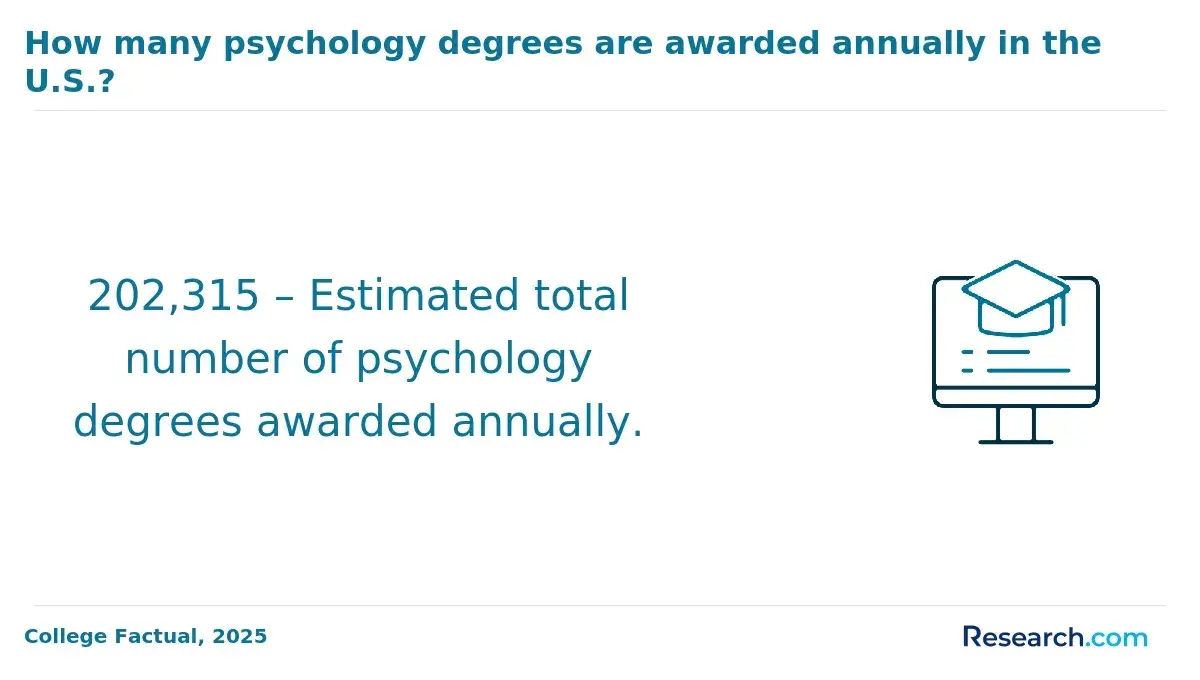
How does an online psychology degree in Texas compare to an on-campus program?
Online psychology programs are usually best for students who need schedule flexibility, live far from campus, work full time, or want to reduce commuting. Many online courses use recorded lectures, digital discussions, virtual simulations, online exams, and remote faculty meetings.
Campus programs may be better for students who want in-person interaction, laboratory access, immediate classroom discussion, local networking, or easier access to campus-based research and clinical experiences. Some psychology programs also use hybrid models, especially when internships, labs, or supervised practice are required.
| Format | Strengths | Possible limitations | Best fit |
| Online | Flexible schedule, no relocation, good for working adults | Requires self-discipline; fieldwork may still be in person | Students balancing school with work, family, or distance |
| On campus | Face-to-face advising, lab access, easier informal networking | Less flexible; commuting or relocation may raise costs | Students who want structure, campus life, or in-person research access |
| Hybrid | Combines online coursework with selected in-person experiences | May require scheduled campus visits | Students who want flexibility but still need supervised or hands-on components |
What is the average cost of an online psychology degree in Texas?
Online psychology tuition in Texas varies by institution type, residency status, degree level, fees, and transfer credits. Public undergraduate online psychology programs often cost between $10,000 and $30,000 annually for in-state students, while out-of-state students typically pay more. Private universities commonly cost between $30,000 and $50,000 per year.
At the master’s level, psychology programs may cost $10,000 to $30,000 annually at public institutions and $20,000 to $40,000 per year at private colleges. Specialized programs may cost more, especially if they require field placements, clinical supervision, technology fees, or additional assessment materials.
Psychology is often discussed among the top-paying college majors, but return on investment depends on the credential you earn and the career you enter. A student pursuing licensed doctoral practice will evaluate ROI differently from a student using psychology for human resources, marketing, social services, or education.
The table below shows the primary employment sectors represented in the psychology field:
| Sector | Percentage |
| Private | 62% |
| Education | 21% |
| Government | 12% |
| Public | 5% |
Cost questions to ask before enrolling
- Is tuition charged per credit, per semester, or by program?
- Are online students charged extra technology or distance-learning fees?
- How many transfer credits will be accepted toward the degree?
- Are books, software, testing platforms, or internship expenses included in the listed cost?
- Will out-of-state tuition apply if you live outside Texas?
- Does the program require campus visits, travel, background checks, or field placement fees?
What are the financial aid options for students enrolling in an online psychology degree program in Texas?
Online psychology students in Texas may be eligible for several types of aid, but eligibility depends on the school, enrollment status, degree level, financial need, and whether the institution participates in federal aid programs.
Scholarships and grants
Scholarships and grants do not need to be repaid when students meet the award requirements. Psychology students may find awards through universities, professional associations, nonprofit organizations, community foundations, and discipline-specific scholarship programs.
Federal aid
Students can complete the Free Application for Federal Student Aid to be considered for federal grants, work-study, and federal loans. Federal loans often offer borrower protections and repayment options that private loans may not provide.
Institutional aid
Many colleges award their own scholarships, tuition discounts, grants, or fee waivers. Online students should ask whether they are eligible for the same aid as campus students and whether aid changes for part-time enrollment.
Work-study programs
Work-study may allow eligible students to earn money through part-time employment while enrolled. Availability can vary for online learners, so students should ask the financial aid office about remote or campus-based options.
Private loans
Private loans may help cover remaining costs, but they should be considered carefully because interest rates, repayment terms, and borrower protections vary. Students should compare loan terms and borrow only what they need.
What are the prerequisites for enrolling in an online psychology degree program in Texas?
Admission requirements differ by school and degree level, but applicants commonly need the following:
- High school diploma or equivalent: Bachelor’s programs generally require proof of high school completion or an equivalent credential.
- Standardized tests: Some undergraduate programs may request SAT or ACT scores, while some graduate programs may require GRE scores.
- Prerequisite coursework: Certain programs may expect prior classes in math, biology, statistics, social science, or related subjects.
- Letters of recommendation: Graduate programs often ask for recommendations from faculty members, supervisors, or professional mentors.
- Statement of purpose or personal statement: Graduate applicants may need to explain their academic interests, career plans, and reasons for choosing psychology.
- Minimum GPA: Many undergraduate programs set minimum GPA expectations around 2.5 to 3.0, while competitive graduate programs may require higher academic performance.
What courses are typically in an online psychology degree program in Texas?
Coursework depends on the degree level and specialization, but most online psychology programs in Texas include a mix of theory, research, writing, statistics, and applied psychology topics.
- Introduction to Psychology: Covers the major concepts, historical foundations, theories, and research methods used in the field.
- Developmental Psychology: Examines physical, cognitive, social, and emotional development across the lifespan.
- Abnormal Psychology: Introduces psychological disorders, diagnostic concepts, possible causes, treatment approaches, and social implications.
- Social Psychology: Studies how individuals are influenced by groups, relationships, culture, norms, and social situations.
- Cognitive Psychology: Explores mental processes such as perception, memory, language, reasoning, attention, and problem-solving.
What types of specializations are available in online psychology degree programs in Texas?
Specializations help students align their psychology education with a specific work setting or graduate-school plan. Not every specialization is available fully online, and some require advanced degrees or supervised training.
- Clinical Psychology: Focuses on assessment, diagnosis, and treatment of mental health disorders and usually requires doctoral-level education for psychologist licensure.
- Counseling Psychology: Emphasizes counseling skills, emotional well-being, life transitions, and mental health support across varied populations.
- School Psychology: Prepares students to support children and adolescents through assessment, behavioral intervention, academic support, and collaboration with schools and families.
- Industrial-Organizational Psychology: Applies psychology to workplace behavior, employee motivation, leadership, organizational development, and human resources. Students can learn more about the scope of industrial and organizational psychology.
- Forensic Psychology: Connects psychology with courts, corrections, law enforcement, victim services, criminal behavior, and legal decision-making.
| Specialization | Common focus | Important note |
| Clinical psychology | Mental health assessment and treatment | Licensure typically requires advanced graduate education and supervised experience |
| Counseling psychology | Emotional wellness, coping, relationships, life challenges | Program must align with licensure requirements if your goal is counseling practice |
| School psychology | Student learning, behavior, assessment, school-based interventions | State credentialing rules matter; verify requirements before enrolling |
| Industrial-organizational psychology | Workplace behavior, leadership, employee performance | Often useful for HR, consulting, analytics, and organizational roles |
| Forensic psychology | Psychology and legal systems | May require graduate training for specialized assessment or expert roles |
How to choose the best online psychology degree program in Texas?
Start by defining your end goal. A student who wants a bachelor’s degree for career flexibility should evaluate programs differently from a student planning to become a licensed psychologist, counselor, social worker, or school psychologist. If you are comparing broader online options, Research.com’s guide to the best degrees to get online can help you think through format, value, and long-term fit.
Next, verify accreditation. Regional accreditation affects credit transfer, financial aid eligibility, graduate admissions, and employer confidence. Students pursuing clinical or counseling psychology should also understand how APA accreditation works by reviewing the APA or other regional accrediting agencies and confirming which level of program is accredited.
Then compare curriculum and specialization fit. If your goal is research, look for statistics, methods, labs, and faculty research alignment. If your goal is applied work, review practicum options, internship support, and licensure disclosures. If your goal is business or HR, prioritize organizational psychology, analytics, and communication-heavy coursework.
Checklist for comparing online psychology programs
- Confirm institutional accreditation and any program-specific accreditation.
- Ask whether the program is fully online, hybrid, synchronous, or asynchronous.
- Calculate total cost, not just tuition per credit.
- Review transfer-credit limits and residency requirements.
- Check whether fieldwork, internships, or campus visits are required.
- Ask about career services, graduate-school advising, and faculty access.
- Verify whether the curriculum supports your intended licensure or graduate pathway.
- Compare student support services before choosing the lowest-cost program.
What career paths are available for graduates of online psychology degree programs in Texas?
Psychology graduates build transferable skills in communication, research, critical thinking, data interpretation, ethics, and understanding behavior. Career options depend on the highest degree earned and whether the graduate completes licensure requirements.
Clinical psychology
Clinical psychology careers involve assessment, diagnosis, treatment planning, therapy, and mental health support. These roles generally require graduate study, supervised experience, and licensure.
Counseling psychology
Counseling-focused roles help people manage emotional stress, relationships, transitions, grief, school concerns, or workplace challenges. Opportunities may exist in schools, community agencies, rehabilitation programs, private practices, or nonprofit settings after the required credentials are completed.
School psychology
School psychologists work with students, families, educators, and administrators to support academic progress, behavioral needs, emotional development, and intervention planning.
Industrial-organizational psychology
Industrial-organizational psychology applies behavioral science to workplaces. Graduates may work in employee development, organizational consulting, leadership training, assessment, human resources, or research.
Forensic psychology
Forensic psychology connects psychological principles to legal and correctional contexts. Roles may involve evaluation, victim advocacy, behavioral analysis, legal consultation, or research, depending on education and credentials.
Texas graduates may also use psychology training in related roles such as elementary teacher, medical and health services manager, market research analyst, or marketing specialist. As students compare clinical and medical career routes, they may also want to understand the difference between psychologist and psychiatrist salary.
The chart below shows Texas cities with the highest salaries for psychologists.
What digital resources and student support services boost online psychology education in Texas?
Strong online psychology programs need more than recorded lectures. Students should look for reliable learning management systems, digital libraries, virtual office hours, writing support, tutoring, technical help, career advising, and access to faculty. Programs that include simulations, case-based assignments, virtual labs, or supervised field experiences can make online learning more applied and interactive.
Support services matter because online students often manage work, family, and school at the same time. If affordability is a major concern, compare tuition alongside support quality by reviewing options such as the cheapest psychology degree online.
What are the common misconceptions about online psychology degree programs in Texas?
One common myth is that online psychology degrees are automatically easier than campus programs. Accredited online programs can include the same reading load, exams, research assignments, statistics coursework, and writing expectations as in-person programs.
Another misconception is that every online psychology degree leads directly to counseling or therapy licensure. In reality, licensure depends on the specific degree level, curriculum, supervised experience, exams, and state rules. Students comparing options should review accredited program quality and formats through resources such as psychology degree online.
Common mistakes and better choices
| Mistake | Why it can hurt you | Better approach |
| Choosing a program only because it is cheap | Low tuition may come with limited support, fewer courses, or poor fit for graduate goals | Compare total value, accreditation, support, transfer credits, and outcomes |
| Assuming online means licensure-ready | Some programs are general academic degrees, not professional licensure programs | Ask for written licensure disclosures before enrolling |
| Ignoring transfer-credit policies | You may pay for courses you already completed elsewhere | Request an official transfer evaluation early |
| Relying only on rankings | A highly ranked school may not match your schedule, budget, or specialization | Use rankings as one tool among several decision factors |
| Overlooking fieldwork requirements | Internships or practicums may require local placement, travel, or background checks | Ask how the school helps online students secure approved sites |
How do online psychology programs in Texas address cultural diversity and inclusion?
Texas has a culturally diverse population, so psychology students need preparation for working with clients, students, employees, families, and communities from varied backgrounds. Online programs may address this through coursework in multicultural psychology, ethics, social justice, bias awareness, community mental health, and culturally responsive communication.
Discussion forums, case studies, group projects, and applied assignments can also help students analyze how culture, language, socioeconomic status, disability, immigration, race, religion, gender, and family systems affect mental health and service delivery. Students planning advanced study should also consider cost when evaluating graduate options, including resources such as How much to get a masters in psychology?.
What emerging trends are shaping online psychology education in Texas?
Online psychology education is being shaped by technology, telehealth expectations, data-focused research, simulation-based learning, and demand for flexible graduate pathways. Programs are increasingly expected to help students understand digital ethics, remote communication, psychological data, and evidence-based decision-making.
Students interested in advanced specialization may see more online or hybrid pathways connected to emerging credentials and fields, including options related to a PsyD in neuropsychology. However, students should verify whether any advanced program includes required in-person clinical training, residencies, internships, or state-specific licensure conditions.
What are the pathways to become a therapist without a psychology degree?
A psychology degree is not the only possible academic route into therapy-related professions. Some therapists begin with degrees in social work, counseling, marriage and family therapy, human services, education, or related fields. The key is not the undergraduate major alone but whether the graduate program, supervised hours, exams, and state licensing requirements match the profession you want.
Students considering a nontraditional path should research approved graduate programs, supervised clinical training rules, and professional licensing boards before investing in coursework. For a more detailed overview, review the qualifications to become a therapist.
What additional certifications can complement your online psychology degree in Texas?
Additional credentials can strengthen a psychology background, especially for students interested in applied behavior analysis, assessment support, education, autism services, organizational training, human resources, or research. The right certification depends on the student’s career target and whether the credential is recognized by employers or licensing bodies.
For example, students interested in behavior analysis may compare programs that lead toward BCBA-related preparation, including options discussed in the cheapest online BCBA degree guide. Before enrolling in any certificate, confirm eligibility requirements, supervised experience rules, exam requirements, and whether a graduate degree is required.
Is forensic psychology a promising specialization in Texas?
Forensic psychology may appeal to students interested in the intersection of behavior, law, public safety, corrections, victim services, and court systems. This specialization can involve risk assessment, competency-related questions, criminal behavior, trauma, legal decision-making, and consultation with justice-related agencies.
It is important to distinguish interest from eligibility. Some forensic roles require graduate education, licensure, or specialized supervised experience. Students who want advanced forensic training can compare options such as the most affordable forensic psychology masters online.
Can an online psychology degree in Texas pave the way to a career in forensic psychology?
Yes, an online psychology degree can be a useful starting point for forensic psychology, especially if the program includes courses in abnormal psychology, criminal behavior, research methods, statistics, assessment, ethics, and legal systems. A bachelor’s degree may support entry-level work in human services, corrections support, advocacy, or research assistance, while advanced forensic psychology roles often require graduate study.
Students should look for programs that offer forensic electives, internship options, faculty expertise, and research opportunities connected to law or public safety. To understand the field more fully, review the job outlook forensic psychologist.
What is the job market for graduates of online psychology degree programs in Texas?
The job market for psychology graduates depends on degree level and specialization. Students should compare the time to complete psychology degrees with realistic career requirements because clinical and counseling roles typically require more than a bachelor’s degree.
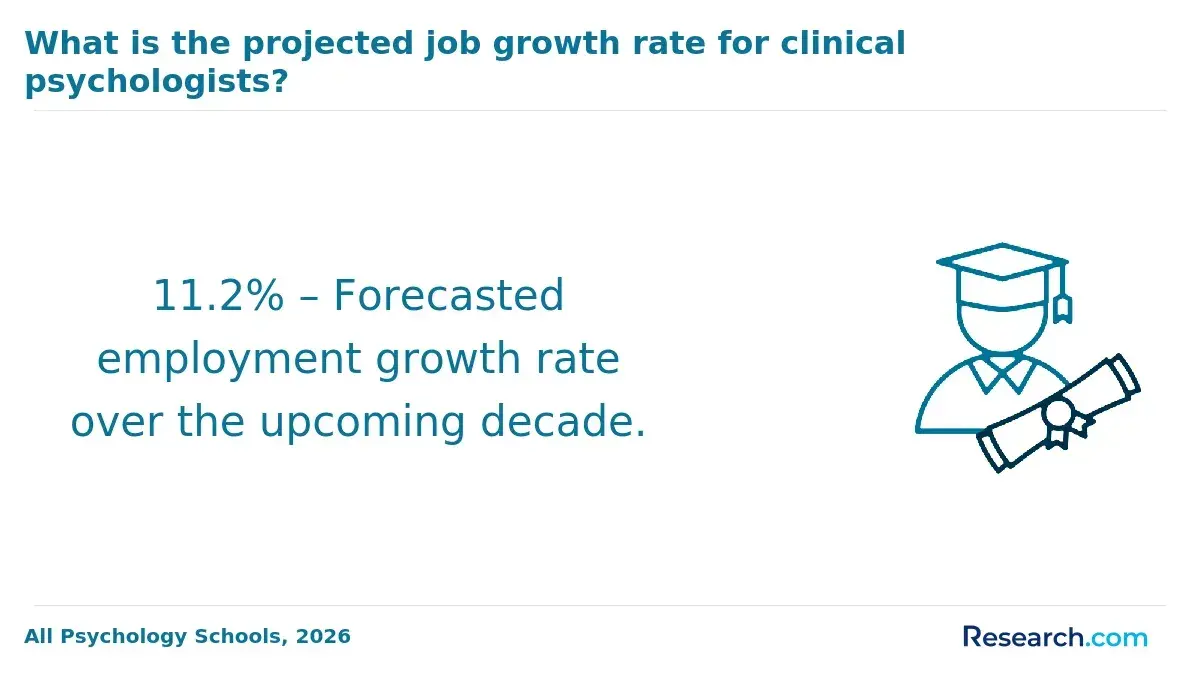
For clinical, counseling, and school psychologists in Texas, employment is projected to increase 15%, with approximately 790 job openings annually until 2030. Nationally, the projected employment change for clinical and counseling psychologists is 8.2%, with approximately 4,200 yearly openings from 2024 to 2034.
How can pursuing an online psychology degree in Texas benefit working professionals?
Working adults often choose online psychology programs because they need a degree path that fits around employment, caregiving, military responsibilities, or an unpredictable schedule. The flexibility can be valuable, but students should still plan weekly study time carefully because psychology programs require reading, writing, exams, research assignments, and group participation.
- Flexible scheduling: Online courses can make it easier to continue working while completing a degree.
- Career mobility: Psychology coursework can support advancement in fields such as human resources, healthcare, education, training, and social services.
- Immediate workplace use: Students can often apply concepts such as motivation, communication, conflict resolution, and behavior change to their current jobs.
- Professional networking: Online discussion boards, group projects, faculty connections, and virtual events can help students build relationships beyond their local area.
What does health psychology in Texas involve?
Health psychology examines how psychological, behavioral, and social factors affect physical health. In Texas, this field can be relevant to healthcare systems, public health organizations, chronic disease management, patient education, and community wellness initiatives.
Health psychologists and related professionals may work on issues such as:
- Helping patients manage chronic illnesses like diabetes, hypertension, and heart disease.
- Promoting behavior changes such as exercise, smoking cessation, medication adherence, and balanced nutrition.
- Collaborating with healthcare teams to identify psychological barriers that affect treatment follow-through and patient outcomes.
Why consider health psychology in Texas?
Texas has a large and diverse population, which creates a need for professionals who understand both health behavior and cultural context. A graduate degree is typically required for a career in health psychology. Online psychology programs in Texas, including pathways connected to the University of Houston or Sam Houston State University, may help students prepare for advanced coursework in behavioral medicine, health promotion, and psychophysiology.
Students who want a deeper overview of education requirements and roles can review Research.com’s guide to health psychology careers.
What are the ethical considerations in online psychology programs?
Psychology students study sensitive topics involving mental health, trauma, identity, assessment, research participation, confidentiality, and professional boundaries. Online programs, including forensic psychology master's programs online accredited, should teach ethical decision-making as a core part of professional preparation.
- Confidentiality in digital spaces: Online discussions, case studies, and recorded sessions must be handled through secure platforms and clear privacy rules.
- Academic integrity: Remote testing and asynchronous assignments require clear honesty policies, citation standards, and plagiarism controls.
- Cultural competence: Students should learn to work respectfully with diverse populations and recognize bias in research, assessment, and practice.
- Informed consent: Programs should teach students how consent applies to research, assessment, data collection, and service delivery.
- Clinical practicum standards: When fieldwork is required, programs must ensure that supervision, documentation, and client care follow ethical and professional expectations.
What are the advantages of pursuing a master's in psychology online in Texas?
An online master’s in psychology in Texas can help students build advanced expertise while keeping more control over their schedules. This can be especially useful for working professionals, parents, military students, and learners who cannot relocate for graduate school.
Master’s programs may offer study in areas such as clinical psychology, counseling, organizational psychology, educational psychology, or research. Some pathways are designed for doctoral preparation or applied professional roles, while others may connect to licensure only if they meet specific curriculum and supervision requirements.
Students should compare programs carefully because “master’s in psychology” is not a single credential with one outcome. Some programs are research-focused, some are applied, and some are designed as stepping stones to doctoral study. To explore options, review masters in psychology online programs and compare structure, admissions, specialization, and career alignment.
Key Insights
- An online psychology degree in Texas can be a flexible and credible option, but accreditation, career alignment, and licensure fit matter more than convenience alone.
- A bachelor’s degree in psychology can support entry-level behavioral science, human services, HR, research, and business-related roles, but licensed therapy or psychologist practice usually requires graduate education and supervised experience.
- Typical timelines range from around four years for a bachelor’s degree to one and a half to two years for a master’s degree and five to seven years for a doctoral degree.
- Costs vary widely by school type and residency status, so students should calculate total program cost, including fees, books, technology, fieldwork, and transfer-credit policies.
- Online and campus psychology programs can both be rigorous. The better choice depends on your schedule, learning style, need for in-person experiences, and access to local field placements.
- Students interested in licensure should get written confirmation that the program meets Texas requirements for their intended profession before enrolling.
- Forensic psychology, health psychology, industrial-organizational psychology, counseling, and school psychology can all be strong directions, but each has different education and credential requirements.
References:
- Indeed.com. (2024). Psychologist salary in Texas. Indeed
- College Factual. (2025). 2025 Psychology Degree Guide. https://www.collegefactual.com/majors/psychology/
- All Psychology Schools. (2026). Clinical Psychologist Salary by State. https://www.allpsychologyschools.com/clinical-psychology/salary/
- Teach.com. (2026). Clinical Psychologist Careers and Salary. https://teach.com/online-ed/psychology-degrees/online-masters-in-clinical-psychology/salary-and-career-outlook
- Psychologists. (2025, August 28). Bureau of Labor Statistics. https://www.bls.gov/ooh/
Other Things You Should Know About Online Psychology Degree Programs in Texas
In 2027, some of the most affordable accredited online psychology degree programs in Texas include the University of Texas of the Permian Basin, Sam Houston State University, and Texas A&M University-Commerce. Each of these institutions offers competitive tuition rates and flexible online learning options.
Accreditation for online psychology programs in Texas ensures educational quality and legitimacy. It guarantees that programs meet set standards, covering curriculum, faculty qualifications, and student support. Accreditation also ensures degree credibility and eligibility for certifications and licensure exams. Therefore, opting for accredited programs from reputable Texas institutions is crucial for a quality education and career advancement.
Admission requirements for online psychology degrees in Texas typically include a high school diploma or GED, a minimum GPA (often around 2.5 or higher), and standardized test scores like the SAT or ACT. Some programs may also request letters of recommendation or a personal statement.
In 2027, several Texas universities offer online psychology degree programs with flexible scheduling. Institutions like the University of Texas at Arlington and Texas Tech University provide options that include both full-time and part-time study formats, accommodating various student needs and commitments.


