2027 Online MSW Programs That Accept Transfer Credit

Co-Founder and Chief Data Scientist
If you already completed graduate coursework and want to enter social work, the right online MSW program can save you time, tuition, and repeated classes. The challenge is that transfer credit rules vary widely: one school may apply several courses toward the degree, while another may reject the same credits because of accreditation, age, grade, or curriculum fit.
This guide explains how online MSW programs evaluate transfer credits, what accreditation matters for licensure, how transfer credits can affect completion time, and what to compare before applying. It is designed for students changing fields, returning to graduate school, or moving from one MSW program to another who want a practical path into social work without sacrificing program quality or licensure eligibility.
Key Things You Should Know
- Many accredited online MSW programs in 2026 accept up to 30 transfer credits, accelerating degree completion and reducing tuition costs for students with prior graduate coursework.
- Programs emphasize flexibility, offering part-time and full-time options to accommodate working professionals aiming to balance careers and advanced social work studies.
- Accreditation by the Council on Social Work Education (CSWE) remains essential, ensuring transfer credits meet quality standards and graduates are eligible for licensure across U.S. states.
What are the best online MSW programs accepting transfer credits?
The best online MSW programs accepting transfer credits are accredited, transparent about what they will review, and clear about which requirements cannot be waived. A strong transfer-friendly MSW program should help students avoid repeating equivalent graduate coursework while still protecting the field education, ethics, and competency standards required for professional social work practice.
Columbia University is a prominent example because it recognizes up to 30 credit hours, which can meaningfully shorten the path to graduation for eligible students. According to the Columbia School of Social Work Annual Report 2025, its pathway reports a 95% employment rate in social work roles within six months of graduation, surpassing the national average by 12 percentage points.
Other well-known options include the University of Southern California and the University of Denver, which evaluate transfer credits on a case-by-case basis. These reviews usually look for close course alignment with the MSW curriculum, graduate-level rigor, strong grades, and prior coursework from accredited social work programs. Courses such as human behavior, social policy, and research methods are commonly reviewed because they are central to the MSW foundation.
What to compare before choosing a transfer-friendly MSW
| Factor | Why it matters |
| Maximum transferable credits | Programs commonly allow between 12 and 30 semester hours, but the actual number depends on course match and school policy. |
| Age of prior credits | Some schools limit how long previously earned credits remain eligible, especially for practice, policy, or research courses. |
| Accreditation of prior coursework | Credits from CSWE-accredited or otherwise properly accredited graduate social work programs are more likely to be considered. |
| Field education rules | Field internships and practicum requirements usually must be completed through the enrolling institution. |
| Specialization fit | A course may transfer as elective credit but not satisfy a clinical, policy, or macro-practice concentration requirement. |
Before applying, ask each admissions office for a preliminary transfer review, not just a general policy statement. Send official or unofficial transcripts, course descriptions, syllabi if available, and the catalog year from your prior program. Students planning long-term advancement can also compare MSW options with online DSW programs if doctoral study may be part of their future career path.
Which online MSW programs accept transfer credits?
Many online MSW programs accept transfer credits, but acceptance is never automatic. Schools typically review whether prior coursework was graduate level, completed at an accredited institution, earned with a minimum grade, recent enough to remain current, and equivalent to courses in the receiving MSW curriculum.
Texas State University is one example of an online MSW option with a transfer pathway. It allows transfer of up to 24 credits and often requires those credits to come from CSWE-accredited programs with a minimum grade of B or better. This type of policy can be especially useful for students who started an MSW elsewhere, paused their studies, relocated, or need a more flexible online format.
Common transfer credit rules in online MSW programs
- Transfer limits often range from 12 to 30 credits, depending on the institution and degree plan.
- Transferred credits must usually be earned within the past five years.
- Programs commonly require a grade of B or better for transfer consideration.
- Field practicum, capstone, and some advanced practice courses are generally excluded because they must meet program-specific supervision and competency standards.
- Credits may transfer as electives even when they do not replace required core or specialization courses.
Cost can also affect the value of transfer credits. Texas public universities offering online MSW programs report average in-state tuition around $412 per credit, which is approximately 35% lower than private institutions nationally. When lower tuition is combined with accepted transfer credits, students may reduce both direct costs and time away from full-time career progress.
The most important step is to confirm how credits will apply, not just whether they are accepted. A program may accept prior coursework but still require additional classes for a concentration, licensure track, or field education sequence. Students comparing cost-sensitive options can also review the least expensive online MSW programs to identify schools where transfer credit and tuition policy work together.
Do online MSW programs accept transfer credits from other schools?
Yes, many online MSW programs accept transfer credits from other schools, but each program sets its own limits. Most schools require credits to come from an accredited institution, and MSW-specific courses are usually strongest when they come from CSWE-accredited master's programs. A minimum grade of B or higher is common.
Transfer limits often range from 6 to 15 credits, which is roughly equivalent to one or two semesters of coursework. Some programs allow more, but the review depends on whether the prior courses match the receiving program's curriculum and professional competencies. Foundational courses such as human behavior, social policy, research methods, and social work practice are the most likely to be evaluated closely.
Field practicum credits are more difficult to transfer. Even if previous field hours were completed successfully, the new program may require its own supervised practicum sequence to satisfy accreditation expectations, local placement agreements, and licensure preparation standards.
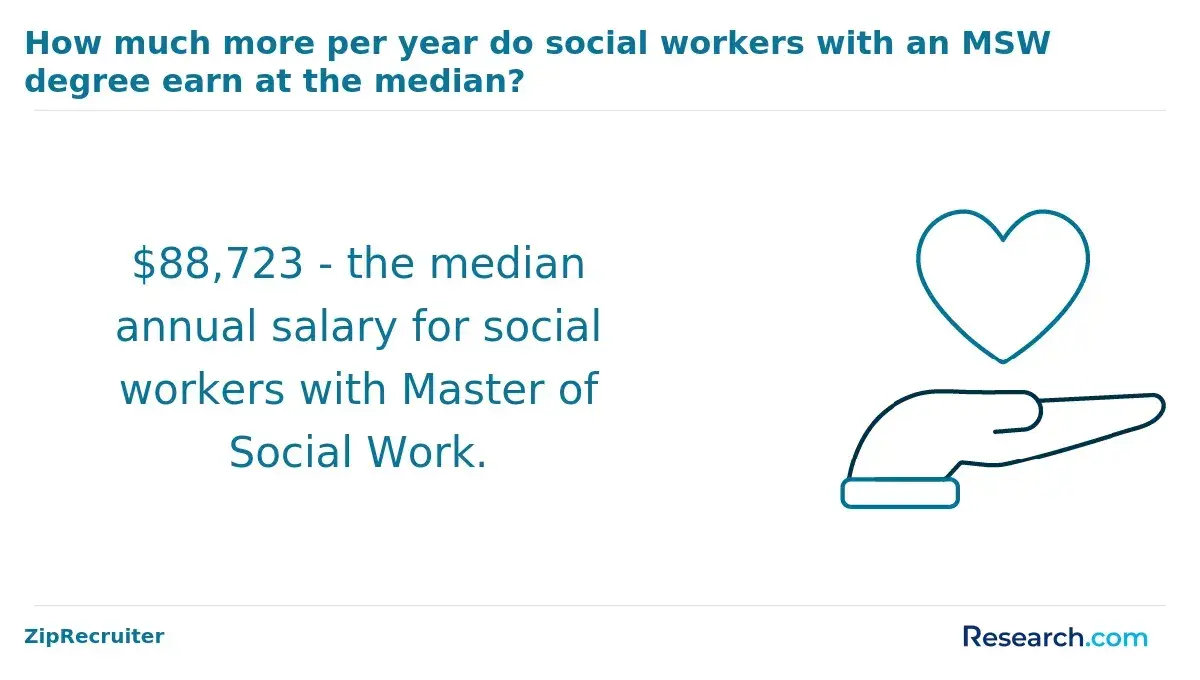
The University of Kentucky's online Advanced Standing MSW program, designed for students with qualifying bachelor's degrees in social work, allows significant credit transfers. It also offers a 25% tuition discount for out-of-state students in 2025. Based on median social worker salaries, the UK College of Social Work Program Evaluation 2025 reports an average return on investment of 250% within five years after graduation.
How to prepare for a transfer credit review
- Request official transcripts from every graduate institution attended.
- Collect syllabi, catalog descriptions, reading lists, and course objectives for each course you want reviewed.
- Ask whether the school provides a written transfer credit audit before enrollment.
- Confirm whether accepted credits reduce tuition, course load, or only elective requirements.
- Verify how transfer credits affect advanced standing, specialization options, and field placement timing.
Students who want to finish as quickly as possible should compare transfer policies with accelerated formats. The fastest MSW program online options may be useful, but speed should not come at the expense of CSWE accreditation, practicum quality, or licensure eligibility.
What accreditation do online MSW programs require?
The key accreditation for an online MSW program is accreditation from the Council on Social Work Education, commonly known as CSWE. CSWE accreditation signals that the program meets national standards for curriculum, faculty qualifications, field education, assessment, and professional competencies in social work.
For students who plan to become a Licensed Master Social Worker or Licensed Clinical Social Worker, CSWE accreditation is especially important. In most U.S. states, graduation from a CSWE-accredited MSW program is a prerequisite for licensure. Without it, graduates may face serious barriers to exams, supervised clinical hours, or license applications.
Accreditation also affects transfer credit. Accredited MSW programs typically prefer previous coursework from other CSWE-accredited programs because the competencies and curriculum are more likely to align. Institutional accreditation still matters, but in social work education, CSWE accreditation is the profession-specific standard students should verify first.
Accreditation checklist for transfer students
- Confirm that the online MSW program is CSWE-accredited.
- Check whether your previous program was CSWE-accredited when you completed the coursework.
- Ask whether institutional accreditation is also required for transfer review.
- Verify that the program's accreditation status supports licensure in the state where you plan to practice.
- Do not rely only on marketing language; use the official accreditor and state licensing board when confirming eligibility.
Program outcomes can also help students judge value, although they should not replace accreditation checks. For example, alumni of the University of Michigan-Ann Arbor Online MSW reported a median starting salary of $62,000, 18% above the national MSW average of $52,500, reflecting the career benefits associated with reputable accredited programs.
For students still weighing the professional return of the degree, the question of whether is social work a good career depends heavily on choosing an accredited program that supports licensure, accepts applicable transfer credit, and aligns with the student's intended practice area.
What are admission requirements for online MSW programs?
Admission requirements for online MSW programs usually start with a bachelor's degree from an accredited institution. Students do not always need an undergraduate social work degree for regular standing admission, but applicants with a qualifying bachelor's degree in social work may be eligible for advanced standing if the program offers it.
Most programs require official transcripts and often look for a minimum GPA around 3.0. Some schools consider applicants below that level when they have strong professional experience, compelling recommendations, or evidence of academic improvement. Transfer applicants should expect a closer transcript review because the school must evaluate both admission eligibility and course equivalency.
Typical application materials
- Official transcripts from all colleges and graduate schools attended.
- Two to three letters of recommendation from academic or professional references.
- A personal statement explaining career goals, preparation for social work, and fit with the program.
- A resume showing employment, volunteer work, internships, or social service experience.
- Transfer credit documentation, including syllabi and course descriptions when requested.
- English proficiency scores such as TOEFL or IELTS for international applicants when required.
Experience expectations vary by program. Some schools prefer or require 200-400 hours of volunteer or paid experience in social services, while others admit motivated students with limited direct experience if their academic record and statement show readiness for graduate-level social work education.
Standardized testing is less central than it once was. The GRE is increasingly optional, but applicants should verify each program's current requirements before assuming it is waived. Transfer credits from accredited MSW courses completed within the last five years are frequently considered, but acceptance depends on the program's curriculum and policies.
Program quality may also show up in licensure outcomes. Case Western Reserve University's online MSW program reports a 92% pass rate on the ASWB clinical exam, surpassing the national average of 77%, which reflects rigorous academic standards and strong student preparation.
How long do online MSW programs take with transfer credits?
Online MSW programs with transfer credits can reduce completion time, but the exact timeline depends on how many credits are accepted, whether the student qualifies for advanced standing, and how the program sequences field education. A traditional full-time online MSW often takes about two years. With approved transfer credits, some students may finish in 12 to 18 months.
Many schools allow up to 12 to 18 credit hours to transfer toward the 60-credit requirement. Students who receive advanced standing credit based on prior graduate work or qualifying preparation may be able to bypass foundational coursework and move more quickly into advanced practice classes. Part-time students may spread the degree over two to three years, which can be more manageable for working professionals or caregivers.
Why transfer credits may not shorten every timeline
- Courses may be accepted as electives but not replace required core classes.
- Field education may follow a fixed sequence that cannot be accelerated easily.
- Some specializations require courses offered only in certain terms.
- Licensure-focused tracks may require specific clinical content regardless of prior coursework.
- Part-time enrollment can extend the calendar even when total credits are reduced.
Ohio State University-Columbus Online MSW is an example of a program offering flexibility while maintaining accreditation and fieldwork requirements. Graduates from Ohio State report a 28% salary premium in clinical roles, with median earnings at $75,200 compared to $58,600 for social services jobs without an MSW, according to the National Association of Social Workers Compensation Report 2025.
Students should ask admissions advisors for a term-by-term degree plan after transfer review. A credit total alone is not enough; the key question is how those credits change the actual graduation date, practicum schedule, and tuition bill.
What is the curriculum in online MSW programs?
The curriculum in online MSW programs combines theory, policy, research, ethics, and supervised practice. The goal is to prepare students to work with individuals, families, groups, organizations, and communities while meeting professional social work standards.
Foundation coursework commonly covers human behavior, social welfare policy, research methods, ethics, social justice, and generalist practice. These courses help students understand client systems, community conditions, and the policy environments that shape access to care and services.
Advanced coursework varies by program and specialization. Clinical tracks may emphasize assessment, diagnosis, intervention, trauma-informed practice, and mental health treatment. Macro or leadership tracks may focus on administration, program evaluation, policy advocacy, nonprofit management, and community practice.
The University of Denver's MSW program highlights macro practice and prepares graduates for leadership in nonprofits and community agencies. According to the Urban Institute Social Sector Workforce Study, these graduates accounted for 15% of new nonprofit leadership roles amid a 22% demand increase in 2025.
Common curriculum components
| Curriculum area | What students learn |
| Human behavior and social environment | How individuals, families, groups, and communities develop and respond to social conditions. |
| Social welfare policy | How laws, programs, and institutions affect access to services and client outcomes. |
| Research methods | How to evaluate evidence, assess programs, and use data ethically in practice. |
| Practice courses | How to engage clients, assess needs, plan interventions, and evaluate progress. |
| Field education | How to apply classroom learning in supervised agency, clinical, school, healthcare, or community settings. |
| Electives or certificates | Focused study in areas such as mental health, child welfare, gerontology, and substance abuse. |
Transfer students should pay close attention to course sequencing. Even if a foundation course transfers, the program may require a bridge course, field seminar, or specific prerequisite before advanced clinical or administrative study. The best approach is to compare syllabi early and ask how transferred courses affect both curriculum requirements and practicum placement.
What careers follow an online MSW degree?
An online MSW can lead to careers in clinical practice, healthcare, schools, child welfare, community services, nonprofit leadership, government, policy, and advocacy. The degree is especially important for students who want to pursue licensed clinical social work, but it also supports nonclinical roles that require advanced assessment, program, and systems-level skills.
Many graduates work toward becoming licensed clinical social workers and provide therapy in healthcare organizations, schools, community mental health agencies, or private practice settings. Others work in program management, case management, policy analysis, grant writing, or agency administration.
Common MSW career paths
- Clinical social worker providing assessment, counseling, and treatment after meeting state licensure requirements.
- Healthcare social worker helping patients and families navigate illness, treatment plans, insurance issues, discharge planning, and mental health needs.
- Child welfare social worker or case manager supporting child safety, family stability, and service coordination.
- School social worker addressing student well-being, attendance, behavior, family engagement, and crisis support.
- Community program manager overseeing services for populations such as homeless individuals or veterans.
- Policy or advocacy specialist working on social welfare systems, public benefits, community needs, or organizational reform.
- Specialist in gerontology, substance abuse counseling, mental health case management, or related practice areas.
According to data from the Council on Social Work Education Diversity Statistics 2025, Howard University's online MSW program contributed to workforce diversification, with 68% of its graduates identifying as people of color, compared to about 41% minority representation nationally. A more diverse social work workforce can improve cultural responsiveness and community trust.
Students should connect career planning to licensure early. Many clinical roles require supervised post-graduate hours and state approval after the MSW. Transfer credits may help students complete the degree sooner, but they do not replace state licensure requirements or supervised clinical experience after graduation when those are required.
What is the salary outlook for MSW graduates?
The salary outlook for MSW graduates in 2026 depends on role, setting, location, licensure, and experience. Entry-level social workers typically earn between $50,000 and $60,000 annually. Higher starting salaries, sometimes up to $65,000, are more common in healthcare or government roles.
Clinical social workers with licensure or experience often surpass $75,000, especially in major metropolitan areas. Experienced social workers who manage teams or specialized programs may earn from $70,000 to $90,000. Private practice incomes can exceed $100,000, but that depends heavily on caseload, payer mix, business costs, referral networks, and client development.
| Career stage or setting | Salary outlook stated in the article |
| Entry-level social workers | Between $50,000 and $60,000 annually |
| Healthcare or government starting roles | Sometimes up to $65,000 |
| Licensed or experienced clinical social workers | Often surpass $75,000 |
| Experienced managers or specialized program leaders | From $70,000 to $90,000 |
| Private practice | Can exceed $100,000, depending largely on caseload and client development |
Location has a major effect on pay. States such as California, New York, and Massachusetts often offer above-average salaries because of higher living costs and demand. Rural areas may pay less, but some roles may come with benefits such as loan forgiveness, broader responsibility, or faster advancement into leadership.
Licensure is one of the most important salary factors. Becoming a Licensed Clinical Social Worker can improve access to clinical roles, independent practice opportunities, and higher-paying positions. Students should verify the licensing rules in the state where they plan to work before choosing a program or specialization.
Transfer credit can improve the financial case for an MSW by reducing tuition exposure and helping students return to higher-level employment sooner. According to the CSWE Annual Program Survey 2025, 62% of online MSW programs expanded these options in 2025.
How to choose a reputable online MSW program?
To choose a reputable online MSW program, start with CSWE accreditation, then compare transfer policy, licensure alignment, field placement support, faculty expertise, format, cost, and graduate outcomes. A program is not automatically the best choice because it is flexible or inexpensive; it must also prepare you for the kind of social work you want to practice.
Decision checklist for online MSW applicants
- Verify CSWE accreditation. This is essential for professional credibility and is commonly required for LMSW or LCSW licensure pathways.
- Request a transfer credit audit. Many top programs accept 12-15 credit hours from prior graduate social work coursework, but you need to know exactly how credits apply.
- Review field placement support. Online students should confirm whether the program helps arrange local practicum placements and whether supervision meets state licensure standards.
- Compare delivery format. Synchronous classes offer live interaction, asynchronous classes offer schedule flexibility, and hybrid formats may require some in-person participation.
- Evaluate faculty expertise. Prioritize programs with instructors who have active clinical, macro, policy, or administrative social work experience.
- Check outcomes. Licensure pass rates, employment data, and alumni roles can help show whether the program delivers practical value.
- Calculate total cost after transfer credit. Tuition per credit matters, but so do fees, field placement expenses, lost work time, and the number of credits remaining.
Transfer credit can affect return on investment. According to the Georgetown University Center on Education and the Workforce MSW ROI Analysis 2025, transfer students recover costs 22% faster on average due to reduced tuition exposure.
The best choice is the program that combines accreditation, a clear transfer pathway, realistic scheduling, strong field education, relevant specialization options, and credible outcomes. Before enrolling, get key promises in writing, including the number of credits accepted, remaining degree requirements, practicum expectations, and whether the program supports licensure in your intended state of practice.
Other Things You Should Know About Social Work
In 2027, online MSW programs typically require that transfer credits come from accredited institutions and match the program's curriculum. Most programs allow a limited number of transfer credits, often up to 12, though this varies by school. Transfer credits are usually subject to evaluation to ensure they meet academic standards.
Despite being online, MSW programs require students to complete in-person field placements or practicums. These placements provide hands-on experience under the supervision of licensed social workers, and are essential for skill development. The program usually assists students in finding appropriate agencies near their location.
Online MSW programs in 2027 often accept transfer credits for foundational courses like human behavior and social environment, provided they are from accredited institutions and meet minimum grade requirements, typically a B or higher. Check specific program guidelines for detailed policies.
References
- 5 High-Paying Jobs You Can Get with an MSW https://onlinedegrees.keuka.edu/blog/highest-paying-msw-jobs
- Online Master’s in Social Work Programs https://onlinecounselingprograms.com/online-counseling-degrees/cswe-accredited-online-msw-programs/
- What is the transfer policy for the Master of Social Work? https://help.paloaltou.edu/what-is-the-transfer-policy-for-the-master-in-social-work
- Social Work (MSW) https://www.wlu.ca/programs/social-work/graduate/social-work-msw/index.html
- MSW Transfer Credit Policy https://tssw.tulane.edu/msw-transfer-credit-policy
- Home https://www.onlinemswprograms.com/
- Online Master of Social Work https://socialwork.pacific.edu/programs/online-msw-programs
- Online MSW Programs No GRE Required - MasterofSocialWork.com https://www.masterofsocialwork.com/faqs/gre-requirements-online-msw-programs
- MSW Program Length: 1-4 Year Timeline Guide for 2025 https://www.socialworkdegrees.org/faq/how-long-does-it-take-to-complete-a-msw-program
- Online MSW Programs https://socialworklicensemap.com/social-work-degrees/online-msw-programs/