2027 Social Work Careers Working With Older Adults

Co-Founder and Chief Data Scientist
Choosing a social work career with older adults is a decision about more than job title. It means preparing to help people and families make difficult choices about health care, housing, independence, benefits, grief, safety, and end-of-life planning. As the U.S. population ages, demand is growing for social workers who understand both clinical care and the practical systems older adults must navigate.
This guide is for career changers, social work students, human services professionals, and anyone considering a role in geriatric or aging services. It explains what these careers involve, what education and licensure are typically required, which degree paths lead to elder care roles, what programs cost, and how to compare accredited options before enrolling.
Key Things You Should Know
- Employment for social work professionals specializing in older adults is projected to grow 19% from 2024 to 2034, driven by a 15% increase in the U.S. elderly population.
- Effective training in geriatric social work requires expertise in chronic illness management, mental health, and navigating Medicare and Medicaid systems.
- Social workers supporting older adults often address critical issues such as elder abuse prevention, end-of-life planning, and promoting social engagement for improved quality of life.
What Are Social Work Careers with Older Adults?
Social work careers with older adults focus on helping aging clients maintain safety, dignity, independence, and access to care. These professionals address practical needs such as housing, transportation, benefits, and long-term care, while also supporting clients through grief, depression, dementia, chronic illness, family conflict, and social isolation.
In practice, geriatric social workers often serve as the bridge between older adults, families, medical providers, care facilities, government agencies, and community organizations. Their work can include care planning, crisis intervention, discharge planning, caregiver support, elder abuse response, and advocacy for Medicare, Medicaid, housing, food assistance, or disability-related services.
Common settings for geriatric social workers
- Hospitals, rehabilitation centers, and outpatient clinics
- Nursing homes, assisted living communities, and continuing care facilities
- Hospice and palliative care organizations
- Area agencies on aging and community-based nonprofits
- Adult protective services and elder rights programs
- Mental health clinics serving older adults and caregivers
- Policy, advocacy, and program administration roles
The role varies by setting. In a hospital, a social worker may coordinate discharge plans and connect a patient to home health services. In hospice, the work may focus on counseling, family meetings, grief support, and end-of-life planning. In community agencies, social workers may help older adults avoid unnecessary institutional care by arranging transportation, meals, home modifications, or caregiver respite.
Employment for healthcare social workers is projected to grow 9.6% from 2022 to 2032, reaching 209,800 jobs. That growth is closely tied to the needs of an aging population and the rising complexity of health, behavioral health, and long-term care systems.
Career changers can improve their prospects by building experience in healthcare, mental health, case management, community services, or benefits navigation. Specialized knowledge of aging, Medicare, Medicaid, dementia care, and family caregiving can make candidates more competitive. Professionals who want advanced preparation for leadership, clinical specialization, teaching, or applied research may also consider online doctorate of social work programs.
What Education Is Needed for Geriatric Social Work?
The usual education path begins with a Bachelor of Social Work (BSW) or a related undergraduate degree and often continues to a Master of Social Work (MSW). A BSW can qualify graduates for entry-level human services and case management roles, but many clinical, supervisory, and specialized healthcare positions require an MSW.
For students who want to work directly with older adults, the most useful programs combine general social work training with focused coursework and field placements in aging services. Look for programs that include gerontology, health care social work, mental health, family systems, grief and loss, dementia care, elder abuse, policy, and benefits systems.
Typical degree pathway
| Degree level | Best fit | Common outcome |
| BSW | Students seeking entry-level social services roles | Case management, community support, benefits navigation, or preparation for graduate study |
| MSW | Students seeking clinical, healthcare, supervisory, or specialized aging roles | Preparation for licensure, advanced practice, and geriatric social work positions |
| Doctoral degree | Experienced professionals pursuing leadership, research, policy, or higher education roles | Advanced practice leadership, teaching, program development, or research |
Clinical licensure requirements vary by state, but they generally require an MSW, supervised postgraduate experience, and a licensing exam. Clinical social workers who serve older adults may provide therapy, behavioral health assessment, crisis support, and counseling related to depression, anxiety, grief, caregiver stress, cognitive decline, or major life transitions.
Specialized MSW courses may cover elder law, dementia care, healthcare collaboration, and social policy affecting older adults. Additional credentials in aging or gerontological social work can help demonstrate focused expertise, especially for roles in hospitals, long-term care, hospice, and community aging agencies.
Employment projections indicate a 6% growth in social worker jobs, which reinforces the value of combining a recognized degree with practical field experience. Students concerned about tuition should compare accredited, lower-cost options, including the cheapest online MSW programs, while confirming that the program supports their state licensure goals.
What Licensing and Certification Are Required?
Licensing determines what services a social worker may legally provide, especially in clinical practice. Certification is usually optional, but it can signal specialized expertise in aging and strengthen a resume for geriatric, healthcare, hospice, or long-term care roles.
A Bachelor of Social Work (BSW) may qualify graduates for some entry-level positions, but it usually does not meet the requirements for independent clinical practice. Most states and many employers require a Master of Social Work (MSW) from a CSWE-accredited program for licensure as a Licensed Clinical Social Worker (LCSW) or an equivalent credential.
Typical licensure steps
- Earn a qualifying social work degree, most often an MSW for clinical licensure.
- Complete supervised postgraduate clinical experience, commonly 2,000 to 4,000 supervised hours post-MSW.
- Pass the required ASWB clinical exam or the exam required by the state licensing board.
- Meet any state-specific requirements, which may include jurisprudence exams, background checks, ethics training, or continuing education.
- Maintain licensure through renewal and continuing education.
The LCSW credential is important for professionals who want to diagnose and treat mental health conditions, provide therapy independently, or qualify for many clinical roles serving older adults with depression, anxiety, dementia-related concerns, grief, trauma, or caregiver stress.
Certification in geriatric social work is not always required, but it can improve credibility. The Gerontological Social Work Certification (GCSW) from NASW requires at least two years or 3,000 hours working with seniors and passing a specialized exam, indicating advanced knowledge of aging-related practice.
Licensure rules are state-specific, so students should review the board requirements in the state where they plan to practice before choosing a program. This is especially important for online students, military families, and professionals who may move across state lines.
States with large elderly populations may offer stronger demand for licensed social workers. For example, California projects a 14% job growth through 2033. Comparing state-level compensation through resources that explain how much social workers make can help professionals plan where to study, seek licensure, and build their careers.
What Degree Programs Lead to These Careers?
Several degree paths can lead to social work careers with older adults, but the right choice depends on the role you want. Entry-level support positions may be available with an associate degree, BSW, or related human services background. Clinical, supervisory, and specialized geriatric roles usually require an MSW and, for therapy or independent practice, state licensure.
A Bachelor of Social Work (BSW) provides foundational training in human behavior, social welfare policy, ethics, assessment, case management, and practice with individuals, families, groups, and communities. Students interested in aging should seek electives, internships, or volunteer work involving older adults, caregivers, health systems, or long-term care.
An MSW is the key degree for many advanced geriatric social work positions. MSW programs often allow students to choose concentrations or electives in healthcare, mental health, aging, clinical practice, community practice, or policy. These options can prepare graduates for roles in nursing homes, hospice, hospitals, rehabilitation centers, mental health clinics, and aging services agencies.
Doctoral degrees, including PhD and DSW options, are most relevant for professionals who want to influence elder care through research, teaching, executive leadership, program evaluation, or policy development. They are not usually required for direct service roles, but they can support advancement into leadership and academic positions.
How to match a degree to a career goal
- Direct service or case management: Consider a BSW with field experience in aging, healthcare, or community services.
- Clinical counseling with older adults: Plan for an MSW and the state licensure process.
- Hospice, palliative care, or medical social work: Look for MSW field placements in healthcare and end-of-life care settings.
- Program leadership or policy: Choose programs with macro practice, aging policy, administration, or evaluation coursework.
- Research or teaching: Consider doctoral study after gaining strong practice or research experience.
Demographic data show that 85.2% of the 139,446 geriatric social workers in the U.S. are women, with 63% aged 40 or older. This suggests that many professionals enter or advance in the field after gaining life and work experience, which can be an advantage in roles requiring judgment, communication, and family support skills.
Students asking whether social work is a good major should evaluate the question by career goal. A social work degree is most valuable when it aligns with a clear path to licensure, field experience, and the specific older adult populations or settings the student wants to serve.
What Does the Curriculum Cover?
A geriatric social work curriculum teaches students to understand aging as a biological, psychological, social, cultural, and policy-related process. The goal is not only to help older adults cope with challenges, but also to protect autonomy, strengthen support systems, reduce isolation, and connect clients with appropriate care.
Core topics in aging-focused social work programs
- Aging theories and lifespan development
- Chronic illness, disability, and functional decline
- Dementia, depression, anxiety, grief, and other mental health concerns
- Caregiver stress, family dynamics, and respite resources
- End-of-life care, hospice, palliative care, and bereavement support
- Elder abuse, neglect, exploitation, guardianship, and patient rights
- Medicare, Medicaid, Social Security, and long-term care systems
- Cultural humility, ethics, client self-determination, and informed consent
- Interdisciplinary teamwork with physicians, nurses, therapists, attorneys, and care managers
Students also learn practical assessment skills. This can include evaluating a client’s physical safety, cognitive functioning, emotional well-being, housing situation, financial risk, family support, transportation access, and ability to complete daily activities. Strong programs train students to turn those assessments into realistic care plans.
Communication is a major part of the curriculum. Social workers must be able to speak clearly with clients who may have hearing loss, cognitive impairment, trauma histories, or fear of losing independence. They also need to facilitate difficult conversations with families about driving, home safety, assisted living, hospice, finances, and guardianship.
Field education is especially important. Practicum experiences in nursing homes, hospitals, hospice programs, community aging agencies, and senior centers help students apply classroom knowledge to real cases. These placements also expose students to documentation standards, ethical dilemmas, mandated reporting, and interdisciplinary care planning.
Salary data indicates an average annual income of $52,000 for geriatric social workers, with top metropolitan earners exceeding $70,000. While curriculum alone does not determine salary, specialized training in healthcare, behavioral health, crisis response, and aging services can improve readiness for higher-responsibility roles.
What Are Admission Requirements for Programs?
Admission requirements depend on the degree level, program format, and school. In general, programs look for academic readiness, communication skills, ethical maturity, and evidence that the applicant understands the demands of social work practice.
BSW admission requirements
Bachelor’s programs typically require a high school diploma or GED, transcripts, and completion of general education requirements. Some programs also expect prerequisite coursework in psychology, sociology, statistics, biology, human development, or introductory social work. Applicants may need a minimum GPA, a personal statement, or documentation of volunteer or service experience.
MSW admission requirements
MSW applicants usually need a bachelor’s degree from an accredited institution. Students with a BSW may qualify for advanced standing options if they meet the program’s academic and fieldwork requirements. Applicants without a BSW can still enter many traditional MSW programs, but they should expect foundational coursework before advanced practice classes.
Common MSW application materials include:
- Official transcripts
- Letters of recommendation
- A personal statement or statement of purpose
- Resume or CV
- Documentation of volunteer, human services, healthcare, or advocacy experience
- GRE scores, if the school still requires them
For aging-focused applicants, relevant experience can include work in senior centers, hospitals, hospice programs, nursing homes, disability services, crisis lines, caregiver support programs, food assistance programs, or community nonprofits.
Experience or coursework in trauma-informed care—an approach expected to be adopted by 70% of healthcare and community programs by 2026 according to the Pacific University Social Work Blog—is increasingly valued. Applicants can demonstrate this preparation through internships, continuing education, certificates, or professional experience.
Doctoral admission requirements
Doctoral candidates generally need an MSW, a minimum GPA around 3.5, research experience, and strong writing samples. Programs may also ask for a scholarly agenda, professional practice background, policy interests, or evidence of leadership in aging services.
International students may need English proficiency scores, transcript evaluations, visa documentation, and proof of financial support. Working professionals should ask about part-time pacing, online course requirements, field placement flexibility, and whether the program can accommodate employment schedules.
How Long Do Programs Take and What Do They Cost?
Program length and cost vary by degree level, enrollment status, residency, school type, and whether the student studies online, in person, or in a hybrid format. Students planning for geriatric social work should consider not only tuition, but also field placement time, books, technology fees, transportation, licensing fees, and the opportunity cost of reducing work hours.
Typical program timelines
- An associate degree generally takes two years.
- A bachelor’s degree usually requires about four years of full-time study.
- An MSW typically adds two years after the bachelor’s degree.
- Accelerated MSW programs can shorten this to one year for students with a bachelor’s in social work.
- Doctoral degrees may take an additional three to five years.
Part-time programs can make school more manageable for working adults and caregivers, but they may lengthen the path to graduation and licensure. Full-time programs can be faster, but field placements may require daytime availability, which can affect employment.
Typical cost ranges
| Program type | Cost information stated | Planning note |
| Public in-state undergraduate programs | $8,000 to $15,000 annually | Often the lower-cost route for students who qualify for in-state tuition |
| Private colleges | May exceed $30,000 per year | Compare institutional aid, scholarships, and total net cost |
| Master’s programs | Often range from $20,000 to $40,000 total | Some private or prestigious schools may charge more |
Online and part-time options may help students manage work and family responsibilities, but they are not automatically cheaper. Compare tuition per credit, fees, field placement support, residency requirements, and whether online students pay in-state or separate distance-learning rates.
Financial aid, scholarships, assistantships, public service loan forgiveness planning, and employer tuition reimbursement can reduce out-of-pocket costs. Students should also budget for state licensing applications, exam fees, supervision costs if not employer-covered, and continuing education after graduation.
Employment for social workers supporting aging workforces is expected to grow by 15% by 2026, driven by increased focus on senior mental health, according to the Pacific University Social Work Blog. That demand can make the degree worthwhile for well-prepared students, but the best financial choice is still the accredited program that leads to licensure and employment without unnecessary debt.
What Are Typical Job Roles and Responsibilities?
Social work roles with older adults range from entry-level support positions to licensed clinical practice and program leadership. The responsibilities depend on the setting, the client’s needs, and the worker’s education and licensure.
Common job roles
- Case manager: Coordinates housing, healthcare, transportation, benefits, home care, and community services.
- Clinical social worker: Provides assessment, counseling, crisis intervention, and mental health support for older adults and caregivers.
- Hospice or palliative care social worker: Supports patients and families with end-of-life planning, grief, family meetings, and care decisions.
- Hospital or rehabilitation social worker: Assists with discharge planning, insurance barriers, caregiver readiness, and safe transitions home or to care facilities.
- Long-term care social worker: Supports residents in nursing homes or assisted living settings with adjustment, care planning, rights advocacy, and family communication.
- Adult protective services worker: Investigates and responds to concerns involving elder abuse, neglect, or exploitation.
- Social and human service assistant: Helps clients access services, track progress, complete paperwork, and stay connected to support systems.
Across roles, social workers assess physical, emotional, cognitive, financial, social, and environmental needs. They develop care plans, document progress, advocate for benefits, coordinate with healthcare providers, educate families, and intervene when clients face safety risks.
The work often involves high-stakes decisions. A social worker may help determine whether an older adult can safely return home, whether a caregiver needs urgent support, whether a suspected abuse case must be reported, or whether a client understands the consequences of refusing services. Ethical practice requires balancing safety, autonomy, family concerns, legal requirements, and client preferences.
The aging U.S. population is increasing rapidly, with those aged 65 and older projected to rise from 21.5% to 25.2% by 2032. This growth drives an 8.6% increase in social and human service assistant roles, emphasizing rising demand for professionals skilled in elder care navigation and mental health support, as noted in the BLS Monthly Labor Review.
Professionals in this field should be prepared for caseloads involving chronic illness, cognitive decline, poverty, caregiver burnout, grief, housing instability, substance use, depression, and social isolation. Experience with interdisciplinary teams and knowledge of aging-related laws can improve both client outcomes and career mobility. For clinical roles, licensure such as the LCSW expands opportunities in healthcare, behavioral health, hospice, and private or independent practice settings.
What Is the Salary Range and Job Outlook?
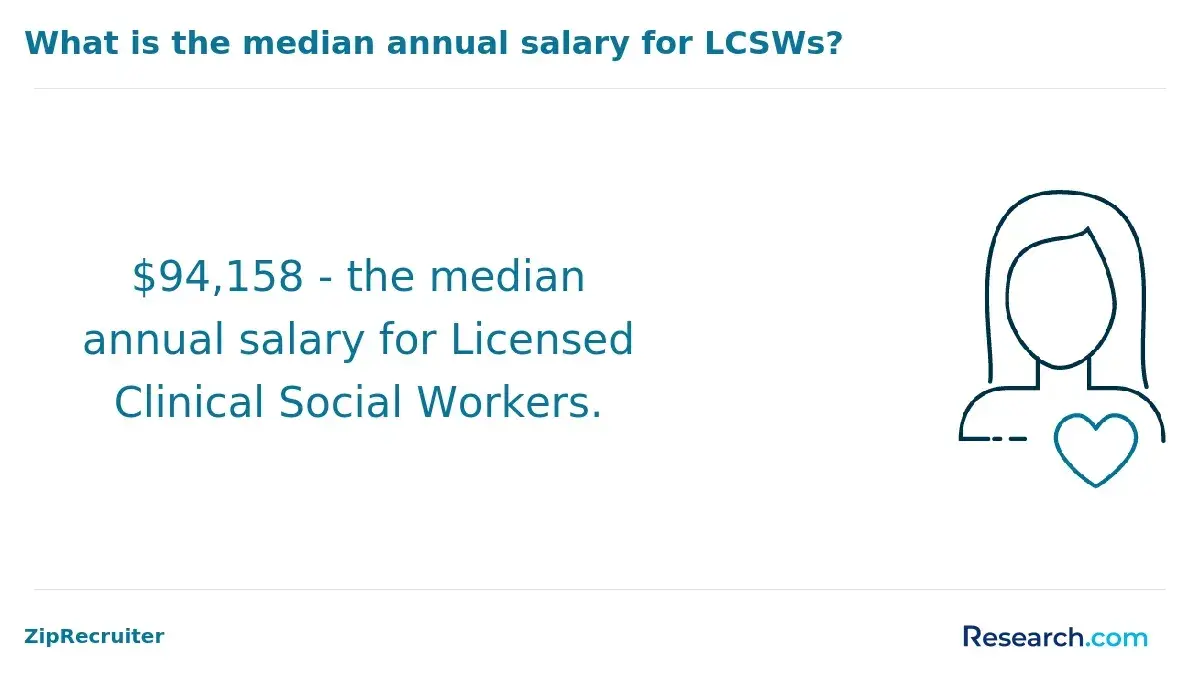
Salaries for social workers serving older adults vary by role, degree level, licensure, employer, location, and experience. Entry-level professionals typically earn between $50,000 and $60,000 annually. Social workers with a master’s degree and clinical licensure (LCSW) often see salaries rise to $65,000-$80,000. Advanced roles in healthcare systems or administration can exceed $90,000 per year.
Pay is often higher in urban areas, large healthcare systems, specialty facilities, and roles requiring clinical licensure or supervisory responsibility. However, higher pay may also come with heavier documentation, larger caseloads, crisis responsibilities, or higher cost of living.
Factors that can improve earning potential
- Completing an MSW with aging, healthcare, or clinical coursework
- Earning clinical licensure, such as the LCSW where applicable
- Building experience in hospitals, hospice, behavioral health, or long-term care
- Developing expertise in dementia care, Medicare and Medicaid, elder abuse, or end-of-life care
- Moving into supervision, program administration, policy, or healthcare leadership
The job outlook is strong because older adults and their families need more support navigating long-term care, healthcare access, mental health services, housing, benefits, and caregiver strain. The ASPE HHS Report anticipates the number of professional social workers in long-term care will double by 2050, based on 2012 data showing about 1.29 social workers per 1,000 elderly.
Demand is expected across nursing homes, hospice care, hospitals, government agencies, nonprofits, community aging programs, and behavioral health settings. Workers who combine gerontology knowledge with licensure, healthcare experience, and strong case management skills are likely to have the broadest options.
To maximize career and salary potential:
- Earn a Master of Social Work (MSW) with a gerontology focus.
- Obtain clinical licensure (LCSW) for higher-paying roles.
- Specialize in healthcare, behavioral health, or end-of-life care.
- Target opportunities in urban centers or specialty facilities.
How to Choose an Accredited Program?
The most important step is confirming that the social work program is accredited by the Council on Social Work Education (CSWE). CSWE accreditation is widely required for social work licensure and signals that the program meets national standards for curriculum, field education, ethics, and professional preparation.
Do not choose a program based only on convenience or price. For geriatric social work, the best program is one that is accredited, affordable enough to complete, aligned with your state’s licensure requirements, and able to place you in field settings that serve older adults.
What to compare before enrolling
- Accreditation: Confirm CSWE accreditation directly through official sources.
- Licensure alignment: Check whether the curriculum satisfies requirements in the state where you plan to practice.
- Aging-focused coursework: Look for gerontology, healthcare, dementia, hospice, long-term care, caregiver support, and aging policy options.
- Field placements: Ask whether students can complete practicums in hospitals, hospice, nursing homes, senior centers, adult protective services, or community aging agencies.
- Faculty expertise: Review whether faculty have research or practice backgrounds in aging, healthcare, clinical practice, policy, or long-term services.
- Student outcomes: Compare graduation rates, licensure exam pass rates, field placement support, and employment outcomes when available.
- Format: Decide whether online, in-person, or hybrid delivery fits your schedule, learning style, and field placement needs.
- Total cost: Compare tuition, fees, travel, technology requirements, scholarships, and employer tuition assistance.
Programs offering specialized coursework or certificates in gerontological social work may provide a stronger foundation for students who already know they want to serve older adults. Gero-specialist social workers are expected to see faster-than-average job growth through 2034 in areas like housing, transportation, and civic engagement, so training that includes community-based interventions and policy advocacy can be especially useful.
Before applying, contact admissions and field education offices with specific questions. Ask where aging-focused students have completed placements, how online students are supported, whether evening or part-time options are available, and how the program helps graduates prepare for licensure. A strong accredited program should be able to explain how its curriculum, fieldwork, and advising connect directly to your career goals in older adult services.
Other Things You Should Know About Social Work
Social workers in this field need strong communication and empathy skills to effectively support older adults and their families. Critical thinking and problem-solving abilities are essential for assessing needs and coordinating care. Additionally, cultural competence is important to address the diverse backgrounds and values of older clients.
In 2027, social workers support family members of older adults by providing resources and counseling to help them understand and manage caregiving challenges. They offer guidance in navigating healthcare systems and facilitate communication between family members and care providers, ensuring that the voices and needs of older adults are respected and prioritized.
Confidentiality and respect for autonomy are paramount, especially when older adults face cognitive decline or dependency. Social workers must balance advocating for client safety with honoring their independence and informed decision-making. They must also be vigilant about elder abuse and neglect, ensuring timely intervention.
References
- Geriatric Social Work: A Guide to Social Work with Older Adults https://www.onlinemswprograms.com/careers/geriatric-social-work-elderly/
- What is a Job Description & Why Is It Important? https://www.rolemapper.tech/what-is-a-job-description/
- How to Become a Geriatric Social Worker in 2022 https://mastersinsocialworkonline.org/careers/geriatric-social-worker/
- Job Role: Definition, Comparison, Components & Types https://x0pa.com/glossary/job-role/
- What is Program Accreditation? https://blog.spol.com/what-is-program-accreditation
- What Is Curriculum In Education & It's Types? | Extramarks https://www.extramarks.com/blogs/teachers/what-is-curriculum-in-education/
- What is a Salary Range? | AD Offshore https://www.alexanderdanielsoffshore.com/what-is-a-salary-range/
- Training For Geriatric Social Workers | American Geriatrics Society https://www.americangeriatrics.org/geriatrics-profession/training-requirements/training-geriatric-social-workers
- The national curriculum https://www.gov.uk/national-curriculum
- What does a Geriatric Social Worker do? Career Overview, Roles, Jobs | NASW https://joblink.socialworkers.org/career/geriatric-social-worker