
2027 Transfer-Friendly Online MSW Programs for Adult Learners

Co-Founder and Chief Data Scientist
Choosing an online Master of Social Work is more complicated when your earlier degree, credits, or career path do not fit a traditional admissions route. Adult learners often need a program that will evaluate prior coursework fairly, offer flexible pacing, support local field placements, and lead to the credentials required for licensure or advancement.
This guide explains how to compare transfer-friendly online MSW programs without losing sight of the details that matter most: CSWE accreditation, transfer-credit limits, advanced standing options, field education requirements, admissions expectations, tuition, and career outcomes. It is written for working adults, career changers, and students who have completed some graduate or social-work-related coursework and want the shortest responsible path to an accredited MSW.
Key Things You Should Know
- Most 2026 online MSW programs offer transfer credits to accommodate adult learners, often accepting up to 30 credits from previous graduate coursework.
- Flexible scheduling and asynchronous classes allow working professionals to pursue degrees without disrupting employment or personal commitments.
- According to 2024 data, programs with robust field placement support increase graduate employment rates by up to 15% within six months of completion.
What are the best transfer-friendly online MSW programs?
The best transfer-friendly online MSW programs are not simply the ones that advertise “flexibility.” They are programs that clearly explain how prior credits are reviewed, how many credits may apply, whether advanced standing is available, and how field placements are arranged for online students. For adult learners, those details can determine whether the MSW takes less time and costs less—or becomes a longer, more expensive restart.
Institutions such as the University of Southern California, Rutgers University, and the University of Denver are often discussed by transfer-minded students because of their accommodating pathways. Depending on the program structure and student background, some pathways may allow 30 to 45 credit hours to be transferred or waived through prior qualifying coursework, advanced standing, or equivalent preparation. Applicants should confirm the exact policy directly with each school because “transfer credit,” “course waiver,” and “advanced standing” do not always mean the same thing.
Strong online MSW options for adult learners usually share several features:
- CSWE accreditation, which is essential for most social work licensure pathways.
- Published transfer-credit rules, including maximum credits accepted, grade requirements, and time limits on prior coursework.
- Part-time, full-time, evening, block, synchronous, or asynchronous scheduling options.
- Specializations that align with career goals, such as clinical social work, child welfare, healthcare, mental health, policy, or advocacy.
- Reliable field placement support in or near the student’s community.
- Advising that helps adult learners avoid duplicating coursework they have already completed.
The University of North Carolina at Chapel Hill, for example, is known for a model that combines synchronous and asynchronous learning, which can help students who need structure but cannot relocate. Adult learners now make up over 40% of college students, so programs that offer clear advising and flexible formats are increasingly important for degree completion.
If you are comparing transfer-friendly online MSW programs, request a preliminary credit review before enrolling. A generous-sounding policy is only useful if the credits apply to required courses, not just electives. Students planning beyond the MSW may also want to explore an online DSW as a later option for advanced leadership, teaching, or practice-focused roles.
Which online MSW programs accept the most transfer credits?
Online MSW programs vary widely in how they treat previous coursework. Some accept only a small number of graduate credits, while others provide larger reductions through advanced standing or course equivalencies. Arizona State University and the University of Southern California are examples of institutions that may accept up to 12 to 15 transfer credits, which can reduce the program by a semester or more when those credits match required MSW content.
Other schools, including the University of Denver and Rutgers University, typically accept between 9 and 12 transfer credits, depending on the accreditation, relevance, grade, and age of the courses. Many programs require previously completed courses to have been taken within the last five to seven years so that students enter practice courses with current knowledge of social work ethics, policy, research, and intervention methods.
The most important point for transfer students is that maximum credit acceptance is not automatic. A school may advertise a cap, but your actual credit award depends on how closely your previous courses match the MSW curriculum.
| Transfer factor | Why it matters |
| Maximum credit hours accepted | Sets the upper limit on how much time and tuition you can potentially save. |
| Course equivalency and content alignment | Determines whether prior classes replace required MSW courses or count only as electives. |
| Originating institution's accreditation status | Programs are more likely to accept credits from appropriately accredited institutions. |
| Age of prior coursework | Courses older than five to seven years may be rejected or reviewed more closely. |
| Documentation requirements | Syllabi, transcripts, course descriptions, and faculty review may be required before credits are approved. |
Credit loss is common. Data from ReUp Education shows over a third of transfer students lose some credits during transfer, which is why adult learners should ask for a written credit evaluation early. Do not rely only on admissions emails or general website language.
When comparing online MSW options, ask these questions before committing: How many credits can be applied to the degree? Which courses will they replace? Will they reduce tuition? Will they shorten field placement requirements? Clear answers can prevent unnecessary coursework and unexpected costs.
What makes an online MSW program transfer-friendly for adults?
A transfer-friendly online MSW program makes it easy for adult learners to understand what counts, what does not count, and how quickly they can move from admission to graduation. The best programs do not leave credit decisions vague until after enrollment; they provide a transparent review process, realistic timelines, and advising that connects prior learning to a workable degree plan.
For adults balancing work, caregiving, military service, or career changes, transfer-friendly design usually includes:
- Transparent transfer policies that list maximum transferable credits, minimum grades, required documentation, and review deadlines.
- Dedicated academic advising for credit evaluation, course sequencing, and graduation planning.
- Recognition of relevant work experience through credit, advanced standing, competency review, or portfolio assessment where allowed by the program.
- Hybrid or fully online course options for working adults, reflecting flexible online MSW degree options for transfer students preferred by nearly 90% of adult learners surveyed by ReUp Education.
- Multiple start dates or flexible enrollment windows that reduce waiting time between admission and the first course.
- Local field placement support so students do not have to leave their jobs or communities to complete supervised practice.
Transfer-friendly does not mean academically easy. MSW programs must still cover required competencies in ethics, human behavior, social welfare policy, research, diversity, practice methods, and field education. A responsible program will not waive essential preparation needed for safe practice or future licensure.
Adults should also watch for policies that make transfer harder than expected. Common barriers include strict residency requirements, narrow course-equivalency rules, refusal to accept older but relevant graduate work, and limited field placement networks. Formal agreements between universities and partner institutions can reduce those barriers by clarifying how credits move into the MSW.
Because the MSW is often a career investment, students should compare program cost and time savings against likely outcomes. Reviewing resources such as this guide to social worker salary with a bachelor degree can help applicants understand how graduate education, licensure, role, and state affect earning potential.
How do you choose an accredited online MSW program?
Start with accreditation. For an MSW, the most important credential is accreditation by the Council on Social Work Education (CSWE). CSWE accreditation signals that the curriculum meets professional standards and is typically required for social work licensure eligibility. If a program is not CSWE-accredited, graduates may face serious limits when applying for licensing exams, clinical supervision, or social work jobs.
After confirming accreditation, compare programs by how well they fit your academic history, schedule, budget, and licensing goals. A transfer-friendly program may accept prior credits or professional experience, and some schools allow transferring up to 30 credit hours or more. However, students should verify whether those credits reduce required coursework, tuition, and time to completion.
Key checks before enrolling
- Accreditation: Confirm CSWE accreditation directly through official program materials or the accreditor’s listing.
- Licensure alignment: Check whether the curriculum and field hours meet requirements in the state where you plan to practice.
- Transfer policy: Ask for the maximum credits accepted, course age limits, grade requirements, and review process.
- Field practicum support: Confirm whether the school helps secure local placements, especially if you live outside a major metro area.
- Format: Compare full-time, part-time, accelerated, synchronous, and asynchronous options.
- Faculty and support: Look for qualified faculty, academic advising, technical support, writing help, and career services.
- Total cost: Include tuition, fees, travel to field sites, books, lost work hours, and licensing-related expenses after graduation.
Field education deserves special attention. Even fully online MSW programs require supervised practice experience. Students who work full time should ask whether placements can be scheduled during evenings or weekends, whether employment-based placements are allowed, and who is responsible for finding an approved site.
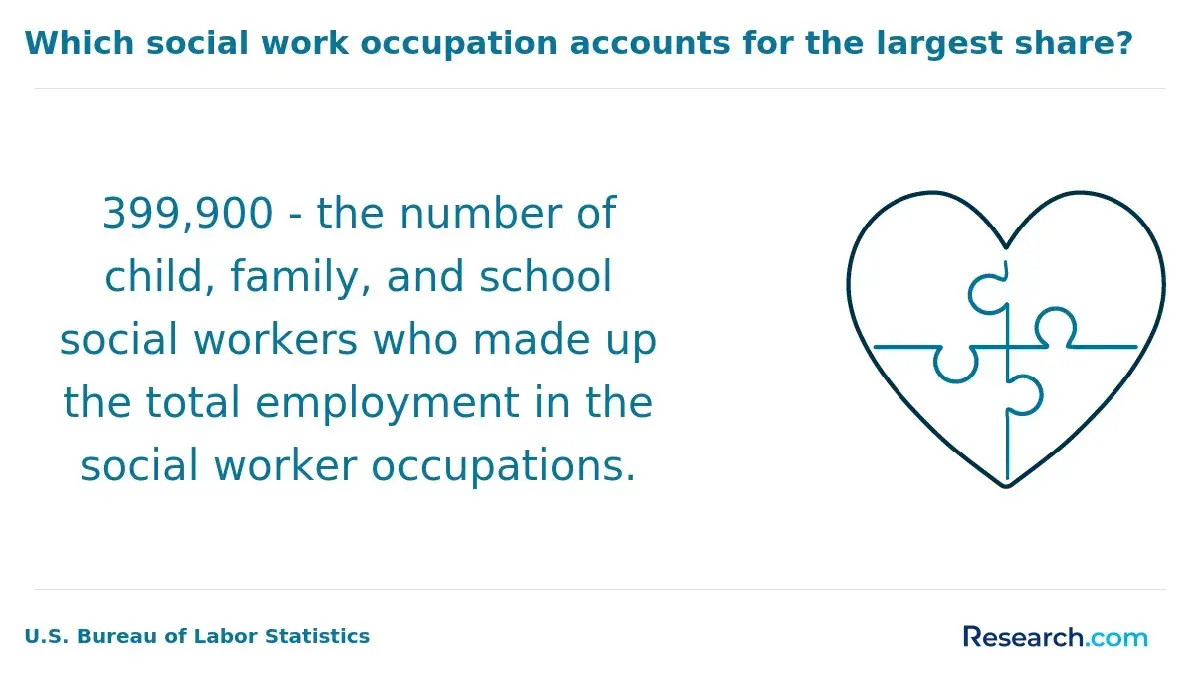
The U.S. Bureau of Labor Statistics projects 13% employment growth in social work from 2022-2032, which makes program quality and licensure preparation especially important. Applicants looking for accessible admissions pathways can also review MSW online programs that may better match their academic profile.
What are the admission requirements for online MSW programs?
Most online MSW programs require a bachelor's degree from an accredited institution. A Bachelor of Social Work may qualify students for advanced standing, while applicants from unrelated majors usually enter a traditional MSW track and may need prerequisite coursework or additional foundational classes.
Common admission requirements include:
- A completed bachelor's degree from an accredited college or university.
- Official transcripts from all previously attended institutions.
- A minimum GPA around 3.0 on a 4.0 scale, although some programs review applicants holistically.
- Two or three letters of recommendation from academic, professional, or supervisory references.
- A personal statement explaining career goals, readiness for graduate study, and commitment to social work values.
- A resume showing employment, volunteer work, human services experience, military service, or community involvement.
- Possible GRE scores, although more programs waive this requirement for qualified applicants.
- An interview, often by video, to assess communication skills, professional judgment, and fit for the program.
- Background checks and immunization documentation because field placements may involve healthcare, schools, or vulnerable populations.
Some programs require or strongly prefer undergraduate coursework in areas such as human behavior, social welfare policy, statistics, psychology, sociology, or research methods. Applicants without those courses may still be admitted but could need to complete prerequisites before or during the program.
Transfer-friendly online MSW programs usually ask for detailed transcripts and may request syllabi from prior graduate courses. If you are seeking transfer credit, submit documentation early. Waiting until after admission can delay your degree plan and may limit your ability to register for the right first-term courses.
Applicants should also distinguish between regular standing and advanced standing. Advanced standing is generally for students with a qualifying BSW, while transfer credit may apply to prior graduate-level coursework. Both can shorten the path, but they are reviewed differently.
The median annual wage for social workers holding an MSW is projected to reach $74,750, with clinical roles averaging $92,000, according to the U.S. Bureau of Labor Statistics. Because roles, states, and licensure levels affect pay, students should choose an admissions pathway that supports their intended career outcome rather than the fastest option alone.
What does an online MSW curriculum typically cover?
An online MSW curriculum prepares students for advanced social work practice through coursework in theory, ethics, policy, research, assessment, intervention, and supervised field experience. The online format changes how students attend class, but it does not remove the professional competencies required of accredited MSW programs.
Most curricula include foundation courses in human behavior and the social environment, social welfare policy, diversity and oppression, social work ethics, research methods, and generalist practice. These courses teach students to understand clients within families, communities, institutions, and broader systems rather than treating problems as isolated individual issues.
Advanced coursework usually moves into specialized practice. Depending on the program, students may focus on clinical practice, mental health, child welfare, healthcare, school social work, community practice, policy advocacy, substance abuse, trauma-informed care, geriatric social work, or nonprofit leadership. Clinical practice classes often cover assessment, diagnosis, treatment planning, documentation, and evidence-based interventions.
Field education is a required part of the curriculum. Online students complete supervised practicum hours in approved agencies, hospitals, schools, clinics, nonprofits, or community organizations. Before enrolling, ask how placements are selected, whether the program has partners in your area, and whether your current workplace can qualify as a placement.
| Curriculum area | What students learn |
| Human behavior and social environment | How individuals, families, groups, organizations, and communities interact across the lifespan. |
| Social welfare policy | How laws, benefits, institutions, and public systems affect client access and social justice. |
| Research and evidence-based practice | How to evaluate interventions, use data, and apply research to practice decisions. |
| Clinical or advanced practice | How to assess needs, plan interventions, support clients, and document services ethically. |
| Field placement | How to apply classroom learning in supervised professional settings. |
Affordability should be part of curriculum planning. For example, Western New Mexico University charges $286 per credit for residents, keeping total costs under $20,000, which aligns with practical financial planning for many students (SocialWorkDegree.net, 2026). Students should compare not only tuition but also how many credits remain after transfer or advanced standing review.
How long do online MSW programs take with transfer credits?
Online MSW programs that accept transfer credits generally take 1.5 to 3 years to complete. The exact timeline depends on the number of credits accepted, whether the student qualifies for advanced standing, the course schedule, and whether the student enrolls full time or part time.
Many MSW programs require around 60 graduate-level credit hours. Transfer-friendly programs may reduce that requirement by 12 to 24 credits for eligible undergraduate or graduate coursework, although schools differ in how credits are applied. A student transferring 18 credits might finish in 18 to 24 months full-time, while students with fewer accepted credits or a part-time schedule may take 2 to 3 years.
Some schools also use portfolio reviews, competency assessments, or equivalency exams to determine whether students can bypass certain content. These options can help experienced adult learners, but they usually require documentation and faculty approval.
Students should ask how transfer credits affect each part of the program:
- Do transferred credits replace foundation courses, electives, or both?
- Do they reduce tuition dollar for dollar?
- Do they shorten the calendar time to graduation?
- Do they affect field placement requirements?
- Are there course sequencing rules that limit how quickly students can finish?
CSWE-accredited programs typically evaluate credits against foundational social work competencies. Many institutions cap transferable credits at 50% of total degree requirements. Even when credits are approved, students may still need to complete required field education and advanced practice courses through the degree-granting institution.
Graduates who use transfer credits may benefit financially because they can reduce tuition, avoid repeated coursework, and enter higher-level roles sooner. According to the EAB adult learner survey (2025), adult MSW graduates with transfer credits earn a 25-30% higher salary within three years compared to peers with only bachelor's degrees. The main advantage is not only faster graduation but also a shorter period before the degree can support career advancement.
What are the costs of transfer-friendly online MSW programs?
The cost of a transfer-friendly online MSW depends on the school, tuition rate, residency status, credits required after transfer review, and field placement expenses. Public universities usually charge between $400 and $700 per credit for in-state students, while out-of-state and private institutions can range from $800 to $1,200 per credit. Transfer students with advanced standing often need 30 to 45 credits, making total tuition costs anywhere from $12,000 to $54,000.
Tuition is only part of the full cost. Students should also budget for technology fees, registration fees, books, background checks, liability insurance, transportation to field sites, and possible lost wages during practicum hours. Additional expenses such as technology fees, registration, and field placement supervision typically add $1,000 to $3,000.
Some programs offer flat-rate tuition per semester between $6,000 and $12,000. That structure may benefit students who can take heavier course loads, but it may be less useful for part-time learners who need a slower pace.
| Cost factor | How it affects transfer students |
| Credits accepted | More accepted credits can reduce tuition and shorten time in school. |
| Residency status | In-state students at public universities may pay much less than out-of-state students. |
| Program pace | Accelerated study can reduce calendar time but may be difficult for working adults. |
| Field placement requirements | Unpaid or travel-heavy placements can increase indirect costs. |
| Fee structure | Technology, registration, and supervision fees can add significantly to the advertised tuition. |
Field placement requirements can also affect affordability. Programs requiring fewer than 1,000 hours can increase retention by 20% among full-time working students compared to traditional 1,500+ hour mandates, according to ASWB Test Prep community data, 2026. Fewer hours may reduce travel, scheduling strain, and unpaid time, although students must still meet all accreditation and licensure requirements that apply to their program and state.
Financial aid may include federal student aid, employer tuition assistance, scholarships for adult learners, graduate assistantships, or payment plans. Before enrolling, ask the school to show your estimated total cost after transfer credits are applied. A program with higher tuition per credit may still be competitive if it accepts more credits and reduces the number of terms you must attend.
What careers and salaries follow an online MSW degree?
An online MSW can lead to roles in clinical practice, healthcare, schools, child welfare, behavioral health, nonprofit leadership, community programming, policy, and advocacy. The degree is especially valuable when it comes from a CSWE-accredited program and aligns with the licensure requirements in the state where the graduate plans to work.
Common roles for MSW graduates include clinical social worker, school social worker, healthcare social worker, case manager, behavioral health specialist, program director, policy analyst, and community program manager. Clinical roles often require supervised post-graduate experience and state licensure, so students should plan for those steps before graduation.
With a 95% licensure pass rate reported by CSWE-accredited online MSW programs, graduates of accredited online pathways can be well prepared for professional licensing routes when they meet state-specific requirements. Online study can also help working adults continue earning income while completing the credential needed for advancement.
Salary varies by role, setting, location, licensure, and experience. Clinical social workers typically start near $55,000 annually, with median wages around $75,000. Roles in administration or policy can yield salaries over $90,000, especially in metropolitan areas or specialized sectors such as healthcare and child welfare.
- School social workers earn $60,000 to $70,000 on average, providing mental health, behavioral, and family support services in educational settings.
- Healthcare social workers focus on patient advocacy, discharge planning, care coordination, and support during illness or crisis, with median salaries near $65,000.
- Community program managers and policy advocates may earn more than $80,000, depending on position, agency size, funding, and leadership responsibilities.
Students choosing an online MSW should connect coursework and field placements to their intended career path. For example, a student seeking clinical licensure should prioritize clinical practice courses and mental health placements, while a student interested in leadership may benefit from policy, administration, and program evaluation experience.
What is the job outlook for MSW graduates?
The job outlook for MSW graduates is strong because demand continues in healthcare, behavioral health, schools, social services, aging services, substance abuse treatment, and community-based organizations. The U.S. Bureau of Labor Statistics projects a 12% growth rate for social workers from 2024 to 2034, outpacing many other fields.
Growth is closely tied to public need. More communities need professionals trained to address mental health, substance use, family instability, homelessness, chronic illness, school-based behavioral needs, and services for aging populations. Employers often prefer MSW graduates for roles that require advanced assessment, case coordination, supervision, policy knowledge, or clinical preparation.
Online MSW programs can be especially useful for adult learners over 36 years old who need to reskill or advance without leaving the workforce. A recent survey by EAB found that graduate online enrollments matched face-to-face programs at 1.3 million students each, showing that online graduate study has become a mainstream route for professional fields such as medical and school social work.
MSW professionals commonly work in:
- Hospitals and clinics providing patient support, behavioral health services, and discharge planning.
- Schools supporting students, families, special education teams, and behavioral intervention plans.
- Government agencies administering benefits, child welfare services, public health programs, and community policy.
- Nonprofits addressing substance abuse, homelessness, domestic violence, food insecurity, reentry, and crisis response.
Licensure remains one of the most important career variables. Clinical roles usually require state-specific licensure, supervised experience, and exam completion after graduation. Students should research state requirements before choosing a program, especially if they live in one state but plan to practice in another. Specialization, field placement quality, and licensure planning can significantly strengthen long-term career stability for MSW graduates.
Other Things You Should Know About Social Work
Fieldwork is a critical component of 2027 transfer-friendly online MSW programs, blending virtual coursework with in-person practicums. Students must complete supervised field placements, often arranged locally, to gain hands-on experience and meet the competencies required for social work licensure. This ensures integration of academic knowledge with real-world practice.
To transfer into an online MSW program in 2027, students generally need to have completed foundational social work courses, earned a specified minimum GPA, and submit transcripts. Some programs might require letters of recommendation or a statement of purpose detailing career goals.
Yes, online MSW programs accredited by the Council on Social Work Education (CSWE) are widely recognized by employers. Graduates from accredited online programs have access to licensure and professional opportunities comparable to those from traditional in-person programs.
References
- Definition of WHAT https://www.merriam-webster.com/dictionary/what
- What Can I Do with an MSW Degree? MSW Career Paths https://socialworklicensemap.com/social-work-degrees/master-of-social-work-programs/what-can-you-with-a-msw-career/
- 5 High-Paying Jobs You Can Get with an MSW https://onlinedegrees.keuka.edu/blog/highest-paying-msw-jobs
- WHAT - Translation from English into Polish https://en.pons.com/translate/english-polish/what
- WHAT - Translation in Polish - bab.la https://en.bab.la/dictionary/english-polish/what
- Online MSW Programs Guide: Accredited & Affordable - AU https://online.aurora.edu/program-resources/choosing-best-msw-degree/
- MSW Career Outlook https://www.kysu.edu/academics/college-as/school-of-social-work/careers/msw-career-outlook.php
- Best Online MSW Programs - CSWE-Accredited https://www.onlinemastersdegrees.org/best-programs/social-work-msw/cswe-accredited/
- MSW Program Length: 1-4 Year Timeline Guide for 2025 https://www.socialworkdegrees.org/faq/how-long-does-it-take-to-complete-a-msw-program
- Most Affordable Online MSW Programs: Review Low-Cost Options https://www.degreesforgood.org/online-degrees/social-work-programs/masters-msw/most-affordable/


























![2027 Best Advanced Standing Online MSW Programs [CSWE Accredited] thumbnail](/uploads/Online_Advanced_Standing_MSW_301dbd5368.jpg)
