2027 Child and Family Social Work Online Master’s Programs

Co-Founder and Chief Data Scientist
Choosing an online master’s program in child and family social work is a licensure, career, and schedule decision—not just an academic one. The right program should prepare you to support children and families in high-stakes settings such as schools, child welfare agencies, hospitals, foster care systems, and community organizations while also meeting the education requirements for your state’s social work license.
In 2027, families are navigating complex challenges tied to mental health, housing stability, education access, healthcare, trauma, and economic pressure. Social workers trained in child and family practice help assess needs, coordinate services, advocate for resources, and deliver evidence-informed support. A master’s degree can also open the door to clinical practice, leadership roles, policy work, and advanced study.
This guide explains what an online child and family social work master’s program includes, how long it takes, what admissions committees look for, how fieldwork works online, and what to check before enrolling. It also highlights universities offering online MSW pathways with child, youth, family, trauma, or related practice options.
Key Benefits of an Online Master’s in Child and Family Social Work
- Online master's programs for Child and Family Social Work offer flexible study schedules that fit around work and family life.
- Online programs give students access to accredited, high-quality programs from anywhere in the U.S.
- Students of this program are exposed to specialized coursework in family systems, child development, and trauma-informed care
- Online programs provide students with opportunities for local field placements that meet licensure requirements.
What Is a Child and Family Social Work Master’s Program?
A child and family social work master’s program is typically a Master of Social Work (MSW) pathway that prepares students to serve children, adolescents, parents, caregivers, and family systems. The focus is practical: how to assess risk, respond to trauma, coordinate services, advocate for families, and work ethically across schools, courts, healthcare systems, and community agencies.
Most programs combine generalist social work training with advanced coursework in child welfare, family systems, clinical practice, school-based services, trauma-informed care, policy, and case management. Students learn how individual well-being is shaped by poverty, housing, discrimination, disability, education access, family violence, healthcare, and public policy.
In many schools, child and family social work is offered as a concentration, specialization, certificate, or set of electives within an MSW. The exact label matters less than whether the curriculum, field placements, faculty expertise, and licensure alignment match your goals.
What students usually learn
- Assessment and intervention: How to evaluate family needs, safety concerns, developmental issues, trauma exposure, and service gaps.
- Case management: How to connect children and families with housing, healthcare, education, legal, and behavioral health resources.
- Clinical and supportive counseling skills: How to work with children, caregivers, and families using ethical, evidence-informed methods.
- Advocacy and policy practice: How child welfare rules, school systems, healthcare policy, and public benefits affect family outcomes.
- Cultural humility and ethics: How to practice responsibly with families from different racial, cultural, linguistic, religious, and socioeconomic backgrounds.
Graduates often pursue licensure as Licensed Master Social Workers (LMSW) or Licensed Clinical Social Workers (LCSW), depending on state rules, supervised experience, and exam requirements. Students comparing timelines may also review one year MSW programs online, especially if they already hold a qualifying social work background and want a faster route.
Why Choose an Online Master’s Program in Child and Family Social Work?
An online master’s program can be a strong fit for students who need graduate training but cannot relocate, pause work, or commute to campus several days a week. For child and family social work, the most important question is not whether the classroom is online; it is whether the program is accredited, provides strong field placement support, and prepares you for licensure in the state where you plan to practice.
Online MSW programs commonly deliver lectures, discussions, advising, and some skills-based activities through digital platforms. Fieldwork, however, is still completed in approved practice settings. That means students usually apply classroom learning in local agencies, schools, hospitals, or family service organizations while completing academic work online.
Key advantages of the online format
- More scheduling flexibility: Online coursework can make graduate study more manageable for working adults, caregivers, and students who live far from campus.
- Local field experience: Students may be able to complete supervised placements near where they live, which can help them build regional professional contacts.
- Access to a wider range of schools: Students are not limited to programs within commuting distance, though they still need to verify state authorization and licensure fit.
- Diverse peer perspectives: Online cohorts often include students from different regions and practice settings, which can strengthen discussions about family systems, child welfare, and service delivery.
Trade-offs to consider
- Field placement logistics matter: A flexible online class schedule does not remove the need for in-person practicum hours.
- Self-management is essential: Online students need strong time management, consistent participation, and reliable technology.
- Licensure rules are state-specific: A program may be academically strong but still require careful review against the state where you want to become licensed.
- Not all online programs feel the same: Some programs use live classes, while others rely more on asynchronous work. Choose the format that fits how you learn best.
Which Universities Offer the Best Online Programs for Child and Family Social Work?
Several respected universities offer online MSW programs with coursework, concentrations, or practice pathways relevant to children, youth, families, trauma, clinical practice, and social justice. Each program should be reviewed for Council on Social Work Education (CSWE) accreditation, field placement support, state authorization, cost, schedule, and licensure alignment.
The universities below are commonly considered by students interested in online child and family social work pathways:
- University of Southern California (USC): Offers a nationally recognized online MSW with a concentration in children, youth, and families. The curriculum emphasizes trauma-informed care and public policy.
- Boston University (BU): Provides a flexible online MSW with options to specialize in clinical or macro social work. BU’s field education department helps students find placements in local agencies.
- University of Denver (DU): Features an online MSW@Denver that focuses on social justice and trauma-informed practice. It offers an accelerated track for full-time students.
- University at Buffalo (SUNY): Delivers a low-residency MSW with hybrid fieldwork and affordable tuition for out-of-state learners.
How to compare programs beyond the name
| Program factor | Why it matters for child and family social work |
| CSWE accreditation | Accreditation is central for licensure eligibility and signals that the program meets recognized social work education standards. |
| Child and family coursework | Look for classes in child welfare, family systems, school social work, trauma, adolescent development, and clinical practice with families. |
| Field placement support | Strong programs help students identify approved placements rather than leaving them to navigate practicum requirements alone. |
| Licensure alignment | The program should support the education requirements for the state where you plan to practice, especially if you want clinical licensure. |
| Format and pace | Live classes, asynchronous coursework, accelerated pacing, and part-time options can affect your ability to balance school, work, and field hours. |
| Career and doctoral pathways | Students interested in leadership, teaching, research, or advanced practice may prefer schools with clear connections to doctoral study. |
Some universities also maintain pathways into Doctor of Social Work online programs and other advanced degrees for continued professional growth. If doctoral study is part of your long-term plan, compare how each MSW program supports research preparation, advanced practice, policy leadership, and connections to Doctor of Social Work online programs.
How Long Does It Take to Complete the Online Master's Degree in Child and Family Social Work?
The completion time for an online master’s degree in child and family social work depends on your prior education, enrollment status, field placement schedule, and whether the program offers an accelerated or advanced standing pathway.
A full-time student can often finish in about 16 to 24 months. Part-time learners may take up to three years, depending on fieldwork availability and personal schedules. Accelerated programs, like those offered at the University of Denver and USC, allow motivated students to graduate faster.
Field education typically requires 900 to 1,200 hours of supervised practice, which can extend completion time slightly. For many students, practicum scheduling is the biggest factor affecting pace because field placements must meet program and accreditation expectations.
Timeline factors to review before applying
- Full-time versus part-time enrollment: Full-time study may shorten the degree timeline but can be difficult to combine with employment and practicum hours.
- Advanced standing eligibility: Some MSW programs offer shorter pathways for students with a qualifying bachelor’s degree in social work.
- Field placement availability: Students in rural areas or specialized practice areas may need more time to secure an approved placement.
- Course sequencing: Some required classes are offered only in specific terms, so missing a course can delay graduation.
- Work and family responsibilities: Online coursework is flexible, but fieldwork still requires scheduled hours in a professional setting.
These flexible timelines mirror those in online PhD social work programs, where students manage research and coursework at a self-directed pace. The online format lets students plan their progress while maintaining professional commitments.
Completion time can also affect when graduates begin earning at the master’s level. Students researching the financial side of graduate study often compare tuition, debt, location, licensure timeline, and long-term master in social work salary outcomes by state and role.
What Are the Admission Requirements for Child and Family Social Work Master's Program?
Admission requirements vary by school, but online child and family social work master’s programs generally look for evidence that applicants can handle graduate-level coursework, communicate clearly, understand the demands of the profession, and work ethically with vulnerable populations.
Applicants need a bachelor’s degree from an accredited college, usually with a GPA of 3.0 or higher. Some schools require a background in psychology, sociology, or human services, but many accept students from diverse academic fields.
Most universities request letters of recommendation, a personal statement, and a current résumé outlining work or volunteer experience. The GRE is rarely required in 2025.
Common application materials
- Official transcripts: Schools use these to confirm degree completion, GPA, prerequisite coursework, and academic readiness.
- Personal statement: This should explain why you want to enter social work, why child and family practice interests you, and how your experiences have prepared you.
- Résumé: Include paid work, internships, volunteer service, advocacy, caregiving, community involvement, or human services experience.
- Letters of recommendation: Strong letters usually come from supervisors, faculty members, or professionals who can speak to your judgment, empathy, reliability, and readiness for graduate study.
- Interview or supplemental questions: Some programs use these to assess professional fit, ethical awareness, and communication skills.
How to strengthen your application
- Show that you understand social work beyond a general desire to help people.
- Connect your goals to child welfare, school social work, family services, trauma-informed care, or community practice.
- Be honest about challenging experiences and what you learned from them.
- Demonstrate readiness for fieldwork, not just classroom study.
- Explain any academic weaknesses directly and professionally, especially if your GPA is below the preferred threshold.
Many prospective students wonder is social work school hard. The honest answer is that MSW programs can be demanding because they combine reading, writing, group work, ethics, self-reflection, and supervised practice. Students who plan their schedules carefully and understand the emotional demands of the field are usually better prepared.
What Courses Will You Take in a Child and Family Social Work Master’s Program?
Coursework in a child and family social work master’s program blends social work theory, ethics, policy, research, and applied practice. The goal is to help students understand both individual family needs and the larger systems that shape children’s well-being.
Core classes often include:
- Social Policy and Advocacy: Students examine the creation and implementation of social policies that affect children and families. The course emphasizes advocacy strategies, policy analysis, and methods for influencing change within public and nonprofit systems.
- Research Methods for Social Work: This course teaches students how to design, conduct, and evaluate research relevant to social work practice. It covers qualitative and quantitative methods, data interpretation, and evidence-based approaches to improve outcomes for children and families.
- Clinical Practice with Families and Children: Students gain practical skills for assessing, counseling, and supporting families and children in crisis. The course focuses on intervention techniques, case management, and the use of trauma-informed and culturally responsive practices.
- Ethics and Professional Conduct: This course reviews the ethical standards and professional responsibilities required in social work. Students analyze case studies and apply the National Association of Social Workers (NASW) Code of Ethics to real-world practice situations.
Electives may cover trauma-informed care, foster care systems, school social work, and child protection law. Students interested in clinical licensure should pay close attention to whether electives support assessment, diagnosis, treatment planning, and supervised clinical preparation in their state.
How classroom learning connects to practice
| Course area | Practice skill developed |
| Child welfare and family services | Understanding safety planning, permanency, mandated reporting, family preservation, and service coordination. |
| Trauma-informed practice | Recognizing trauma responses and using supportive, culturally responsive interventions. |
| School social work | Supporting students, families, educators, and multidisciplinary teams in educational settings. |
| Policy and advocacy | Analyzing how laws, funding, and institutional rules affect children and families. |
| Research and evaluation | Using data and evidence to improve services, assess outcomes, and support ethical decision-making. |
Students also complete a capstone project or research paper that integrates field experiences with classroom learning. These projects often require students to examine a practice problem, analyze research, and connect evidence to real-world service delivery.
These research components are useful for students comparing affordable MSW online programs, because lower cost should not come at the expense of strong field education, faculty support, or evidence-based practice preparation.
Is Fieldwork or Practicum Experience Required in Online Child and Family Social Work Programs?
Yes. Field education is required in accredited social work programs, including online MSW programs. Online students complete academic coursework remotely, but practicum experience usually takes place in approved local settings under qualified supervision.
Students complete supervised placements in community agencies, schools, hospitals, or family service organizations. Online learners typically work with a field coordinator who helps arrange local placements that meet CSWE standards.
Technology supports the process but does not replace practice experience. Students may log hours, submit reflections, participate in seminar discussions, and meet with supervisors through secure virtual platforms. The purpose is to connect classroom concepts with real client, agency, policy, and ethical situations.
What to ask about field placement support
- Does the school find placements, approve student-identified placements, or use a combination of both?
- Can placements be completed near your home or workplace?
- Are evening or weekend placements available, or are most hours during standard agency schedules?
- What types of child and family settings are commonly available?
- Who qualifies as a field instructor or supervisor?
- How does the program handle placement problems, schedule conflicts, or site closures?
This combination of local engagement and virtual oversight helps online students gain professional preparation comparable to campus-based students. Advanced social work doctorate programs may also require field-based, applied, or practice-focused research components that build on these practicum experiences.
What Career Paths Can Graduates of Master's Degree in Child and Social Work Pursue?
Graduates of a master’s degree in child and family social work can work in direct service, clinical practice, case management, advocacy, administration, policy, and program development. The best path depends on licensure status, supervised experience, state rules, and whether the graduate wants to work directly with clients or focus on systems-level change.
Common job titles include child welfare case manager, school social worker, family therapist, and foster care coordinator. Some graduates work in hospitals, community centers, or nonprofit organizations.
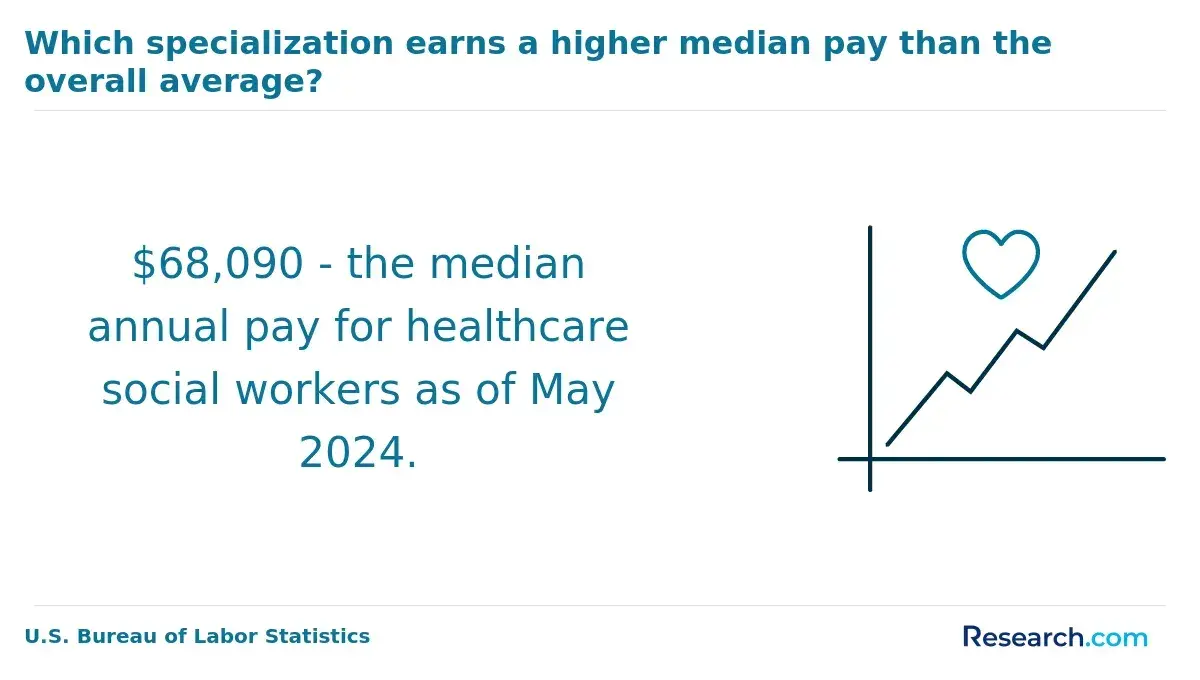
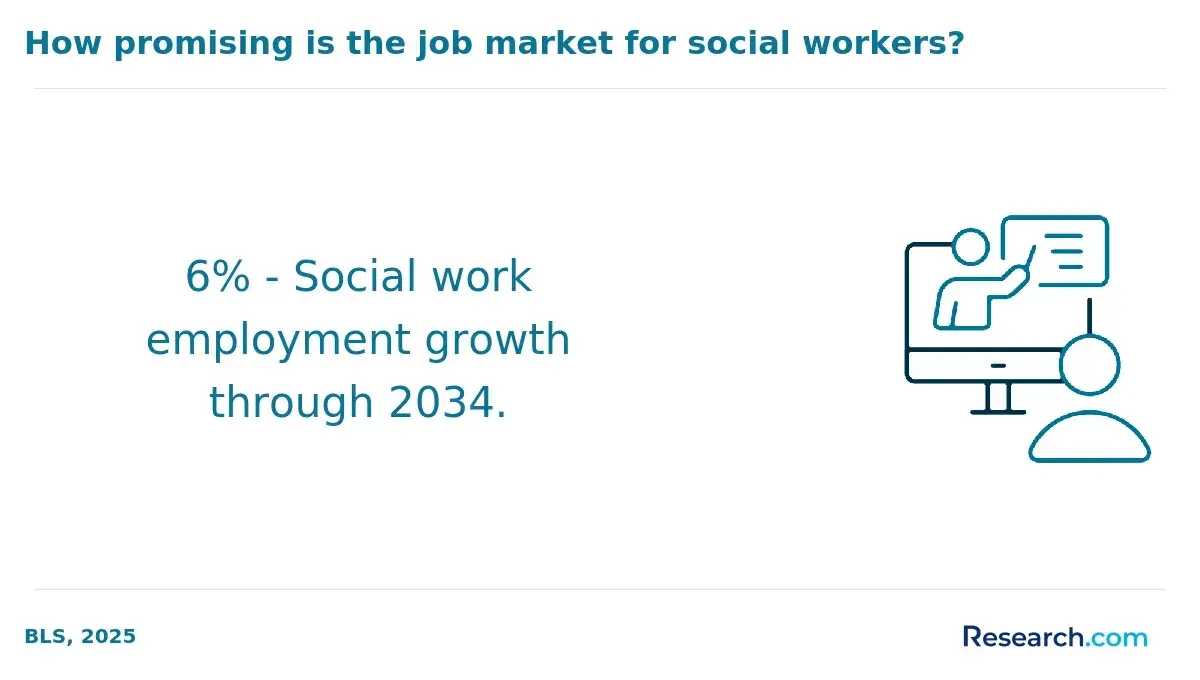
According to the U.S. Bureau of Labor Statistics (BLS), employment of social workers is projected to grow 6 percent from 2024 to 2034, faster than the average for all occupations. Median annual pay in 2024 was around $61,330, with higher salaries for clinical social workers.
Common career settings
- Child welfare agencies: Supporting children and families involved in protective services, foster care, permanency planning, or family reunification.
- Schools: Helping students and families address attendance, behavior, mental health, disability services, crisis response, and community resource needs.
- Healthcare and behavioral health organizations: Coordinating care, supporting families during illness or crisis, and connecting clients with needed services.
- Community nonprofits: Managing family support programs, parenting services, youth development initiatives, and prevention programs.
- Clinical practice settings: Providing therapy or counseling services when state licensure requirements are met.
- Government and policy organizations: Improving systems that affect children, families, housing, public benefits, education, and healthcare access.
Those interested in leadership, policy, or academia may continue their education through MSW online programs or later doctoral study, depending on their goals. For clinical roles, graduates should verify state licensing requirements before assuming that a job title or degree alone authorizes independent practice.
How Do Online Graduates Prepare for Licensure?
Online MSW graduates prepare for licensure the same way campus-based graduates do: by completing a qualifying accredited degree, documenting required coursework and field education, earning supervised post-graduate experience when required, and passing the appropriate licensing exam. The online format does not lower licensure standards.
After earning an online MSW, graduates must complete supervised post-graduate hours, which range from 2,000 to 3,000, depending on the state. Candidates then take a national exam administered by the Association of Social Work Boards (ASWB).
Online graduates meet the same requirements as campus-based students, provided their programs are CSWE-accredited. Field hours, coursework, and supervision are carefully documented to support state licensing applications.
Licensure checklist for online MSW students
- Confirm CSWE accreditation before enrolling. This is one of the most important safeguards for licensure eligibility.
- Check your state board’s requirements. Rules vary by state, including titles, exams, supervision, and clinical practice requirements.
- Ask whether the program meets education requirements in your state. Do this before applying, especially if the school is located outside your state.
- Keep records of coursework and field hours. Save syllabi, placement documentation, evaluations, and supervisor information.
- Plan for supervised experience after graduation. Clinical licensure typically requires approved supervision beyond the MSW.
- Prepare for the ASWB exam. Use the exam category required by your state and license level.
Students planning to move after graduation should be especially careful. Licensure portability is not automatic, and requirements can differ across state lines.
What Factors Should You Consider Before Enrolling in an Online Child and Family Social Work Program?
Selecting the right online master’s program in child and family social work requires more than comparing tuition or rankings. The best program for you is the one that fits your licensure goals, field placement needs, learning style, budget, and intended career path.
First, confirm that the program is accredited by the Council on Social Work Education (CSWE). Accreditation helps ensure that your degree qualifies for state licensure review and reflects national academic standards.
Next, review tuition costs, financial aid availability, and technology requirements. A reliable internet connection and access to virtual learning tools are essential.
Consider the quality of student support services, such as academic advising and career counseling. Faculty expertise and field placement options also play a major role in professional development.
Questions to answer before you enroll
- Will this program support licensure in my state? Contact the program and your state licensing board if the answer is not clear.
- Who arranges field placements? Strong field support can make a major difference, especially for online students.
- Does the curriculum match my career goal? A student interested in school social work may need different electives than one preparing for clinical family therapy or child welfare leadership.
- Can I realistically complete the field hours? Online coursework may be flexible, but practicum schedules can be fixed and time-intensive.
- What is the total cost? Look beyond tuition and include fees, books, travel to placements, technology, and possible reduced work hours.
- How are online students supported? Ask about advising, writing support, library access, licensure guidance, career services, and emergency field placement support.
- What outcomes do graduates pursue? Review whether alumni move into roles similar to the ones you want.
Finally, think long-term. If you plan to pursue advanced credentials, select a school that offers or connects to an online PhD social work or DSW program in social work. This can create a more seamless pathway from master’s study to doctoral-level practice, leadership, teaching, or research.
Frequently Asked Questions About Child and Family Social Work Online Master’s Programs
Tuition assistance options include federal financial aid, scholarships specific to social work, and employer tuition reimbursement programs. Some universities also offer grants for online learners. Deadlines for applications vary by institution, so it is important to check specifics with each program in 2027.
In 2027, admission requirements for online Child and Family Social Work Master’s programs typically include a bachelor's degree, a minimum GPA (often around 3.0), and letters of recommendation. Some programs may require relevant work experience or prerequisite coursework in social work or related fields.
References
- Council on Social Work Education. (n.d.-a). About CSWE accreditation. https://www.cswe.org/accreditation/about/
- Council on Social Work Education. (n.d.-b). Accreditation. https://www.cswe.org/accreditation/
- Council on Social Work Education. (n.d.-c). Directory of Accredited Programs. https://www.cswe.org/accreditation/about/directory/
- U.S. Bureau of Labor Statistics. (n.d.). Social workers: Occupational outlook handbook. https://www.bls.gov/ooh/community-and-social-service/social-workers.htm
- Walden University. (n.d.). Why choose a CSWE-accredited online MSW program? https://www.waldenu.edu/online-masters-programs/master-of-social-work/resource/why-choose-a-cswe-accredited-online-msw-program