Social Work Job Outlook and Employment Trends Through 2030

Co-Founder and Chief Data Scientist
Social work can be a meaningful career, but it is also a regulated profession that requires careful planning. Before committing to a degree, field placement, or licensure path, you need to know where jobs are growing, which specializations offer the strongest demand, and what credentials can improve your earning potential.
This guide explains the social work job outlook using the available employment, salary, and workforce data in the article. It is written for prospective students, career changers, BSW and MSW students, and early-career professionals who want a practical view of the field before making a long-term decision. You will learn where demand is strongest, how pay varies by role and credential, which skills are becoming more important, and how to position yourself for advancement.
Key Things You Should Know About Social Work Job Outlook and Employment Trends
- The social work profession is projected to grow by 6% through 2034, which is faster than the average for all occupations.
- In 2024, there were approximately 810,900 social work jobs, highlighting the significant scale of this vital profession.
- With the right credentials, your earning potential is strong, as licensed clinical social workers earn a median annual salary of $94,158.
- The greatest demand for social workers is in the mental health and healthcare sectors, offering clear paths for specialization.
- A Master of Social Work (MSW) and state licensure are the most important factors for advancing your career and increasing your salary.
What is the overall job outlook for social workers through 2030?
The overall social work job outlook is strong. The field is projected to grow by 6% through 2034, which is faster than the average for all occupations. That growth matters because social work is already a large profession: there were about 810,900 social workers employed in 2024.
For students and career changers, this points to a stable labor market rather than a narrow or shrinking career path. It does not guarantee that every job will be easy to get or that every specialty will pay the same, but it does show that social workers are expected to remain essential across healthcare, behavioral health, schools, government agencies, and community organizations.
What is driving demand?
Two long-term forces are behind much of the growth. The first is population aging. As more older adults need help navigating health systems, long-term care, benefits, family support, and end-of-life planning, demand rises for healthcare and geriatric social workers.
The second is the increased need for mental health and substance abuse services. More people are seeking support, employers and schools are paying closer attention to behavioral health, and healthcare systems are integrating social workers into care teams. This makes social work especially relevant in settings where emotional, medical, financial, and family stressors overlap.
What this means for career planning
A positive outlook is most useful when paired with the right preparation. Candidates who pursue accredited education, complete supervised experience, and earn appropriate licensure are generally better positioned for clinical, healthcare, supervisory, and specialized roles. Those who enter the field without a clear credential plan may find fewer options, especially in states or settings that restrict social work titles and clinical practice.
How much can you expect to earn as a social worker?
Social work earnings vary widely by role, education level, license, employer, and location. The strongest salaries are usually tied to advanced credentials and clinical authority. The median annual salary for licensed clinical social workers (LCSWs) is $94,158, while healthcare social workers earned a median pay of $68,090 as of May 2024.
Those figures should be interpreted carefully. Social work includes entry-level case management roles, public-sector positions, nonprofit jobs, hospital-based roles, therapy positions, supervisory jobs, and private practice. Pay can differ substantially across these settings.
Factors that affect social work salary
- Education: A Bachelor of Social Work (BSW) can qualify graduates for many generalist and case management roles, but a Master of Social Work (MSW) is the more common route to higher-level clinical, supervisory, and specialized positions.
- Licensure: Becoming an LCSW can significantly expand your options because it may allow independent clinical practice, supervision responsibilities, and eligibility for roles that require diagnostic and therapy-related training.
- Location: Pay often reflects state licensing rules, local demand, employer budgets, and cost of living. Reviewing state-level LCSW pay can help you compare realistic salary expectations before choosing where to work.
- Specialization: Healthcare, mental health, substance abuse, and other high-need areas often offer stronger compensation than some generalist roles, particularly when combined with licensure.
- Employer type: Hospitals, public agencies, nonprofit organizations, schools, outpatient clinics, and private practices may offer different mixes of salary, benefits, caseload expectations, flexibility, and advancement opportunities.
Why licensure can change your earning path
Licensure matters because it can change the type of work you are legally allowed to perform. An LCSW is not just a résumé credential; it signals that the professional has met education, supervised experience, examination, and practice requirements for clinical work. That can make a difference in hiring, promotion, reimbursement, and private practice opportunities.
For salary planning, the key question is not only “How much do social workers make?” but “Which credential leads to the role I want?” If your goal is therapy, clinical supervision, or independent practice, plan early for the MSW, supervised hours, exams, and state-specific licensure requirements.
What are the primary areas of practice for social workers?
Social work is not one job. It is a broad profession with roles that range from direct client support to clinical therapy, hospital discharge planning, school-based intervention, policy work, and community program leadership. The best area for you depends on the population you want to serve, the setting you prefer, and the level of education and licensure you are willing to pursue.
- Child, family, and school social work: These social workers support children, parents, caregivers, and students. They may help families access services, respond to safety concerns, address attendance or behavioral issues, and coordinate with teachers, courts, or child welfare systems.
- Healthcare social work: Professionals in this area help patients and families manage illness, treatment decisions, discharge planning, insurance or benefits issues, and emotional stress related to medical conditions.
- Mental health and substance abuse social work: This practice area often involves assessment, counseling, therapy, crisis intervention, treatment planning, and coordination with other behavioral health providers. Clinical roles usually require graduate education and licensure.
- Community and macro social work: Macro practitioners focus on systems rather than only individual cases. They may design programs, advocate for policy change, conduct research, organize communities, or manage nonprofit and public-sector initiatives.
How to choose a practice area
Start with the type of problem you want to work on every day. If you are drawn to one-on-one therapy, mental health and substance abuse work may be a strong fit. If you prefer medical settings and coordinated care, healthcare social work may be better. If you want to address poverty, housing, public policy, or service access at scale, macro practice may align more closely with your goals.
Also consider working conditions. A hospital role may involve fast decisions and interdisciplinary teamwork. School social work follows an academic calendar but can involve complex family and student needs. Community agency work may offer mission-driven impact but sometimes comes with resource constraints. Understanding these differences can prevent mismatches later.
Which social work specializations will be the most in-demand?
The strongest demand is expected in areas connected to mental health, substance abuse, healthcare, aging, and student support. While all social work roles serve important needs, these specializations are closely tied to demographic and social trends that are unlikely to disappear soon.
- Mental health and substance abuse social workers: Demand is supported by the growing need for counseling, therapy, crisis response, addiction treatment, and behavioral health coordination.
- Healthcare social workers: Hospitals, clinics, outpatient centers, and long-term care settings need social workers who can help patients and families manage medical, emotional, financial, and logistical challenges.
- School social workers: Schools increasingly rely on social workers to support student mental health, family engagement, attendance, crisis response, and connections to community resources.
Why mental health is central to the field
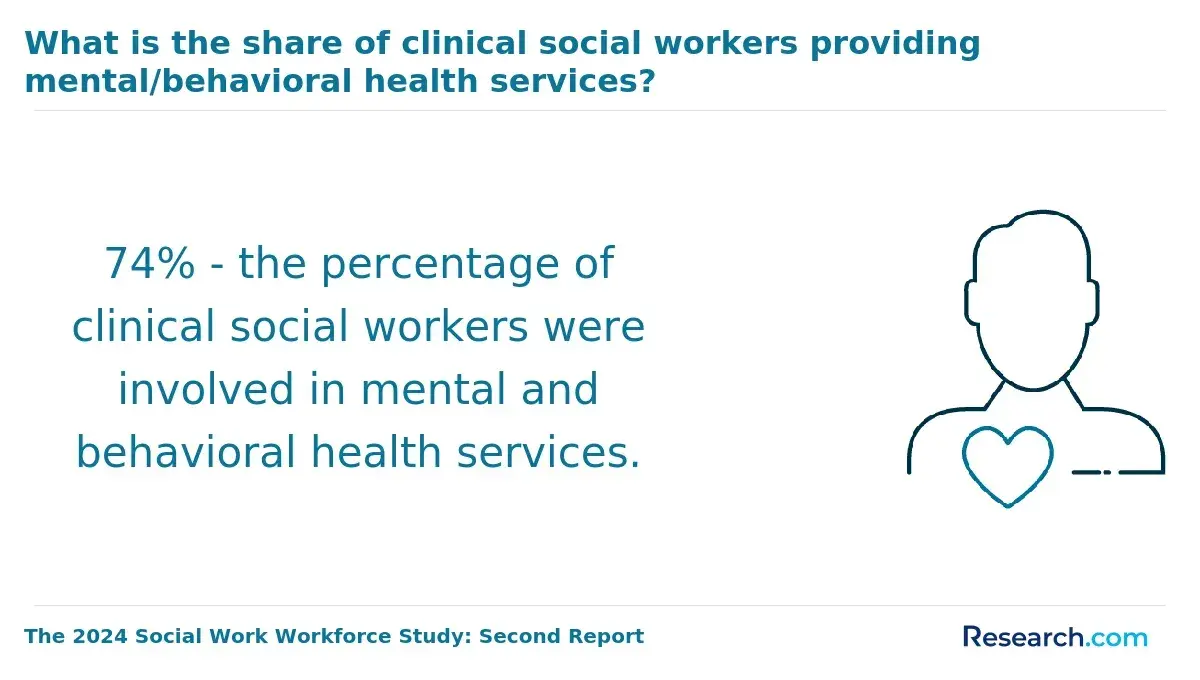
Mental and behavioral health is not a small niche within social work. An estimated 74% of all clinical social workers are involved in providing mental and behavioral health services. That makes clinical preparation, trauma-informed practice, ethical documentation, and cultural competency especially important for students who want the broadest range of opportunities.
How to position yourself for in-demand roles
Choose field placements, electives, certifications, and supervision experiences that match your intended specialization. For example, a student interested in healthcare social work should look for hospital, hospice, rehabilitation, or outpatient care experience. A future clinical social worker should prioritize placements where they can build assessment, treatment planning, and therapy-related skills under qualified supervision.
What key employment trends are shaping the future of social work?
Several employment trends are changing how social workers practice and where they are hired. The profession is moving toward more integrated, evidence-informed, and technology-supported models of care. Social workers who understand these shifts can make better decisions about education, specialization, and continuing professional development.
- Trauma-informed care is becoming a baseline expectation: Many employers now expect social workers to understand how trauma affects behavior, relationships, health, learning, and trust. This approach emphasizes safety, collaboration, empowerment, and avoiding practices that can retraumatize clients.
- Integrated care is expanding: Social workers are increasingly part of teams that include physicians, nurses, psychologists, teachers, case managers, and community health workers. This is especially important in healthcare, schools, and behavioral health settings.
- Non-traditional roles are growing: Social work skills are useful beyond conventional agencies. Employers may use social workers in employee wellness, human services administration, community outreach, crisis response, program evaluation, and advocacy roles.
- Accountability and documentation matter more: Employers need professionals who can document services clearly, track outcomes, coordinate with other providers, and comply with privacy and regulatory standards.
For BSW graduates who want to move more quickly into advanced practice, the best MSW advanced standing programs can shorten the path to graduate-level preparation when the applicant meets eligibility requirements. This can be especially useful for students targeting clinical, healthcare, school, or supervisory roles.
Practical takeaway for students
Do not choose a program based only on convenience. Look for curriculum and field placements that reflect where the profession is going: behavioral health, integrated care, trauma-informed practice, ethical technology use, and culturally responsive service delivery.
How is technology impacting the delivery of social work services?
Technology is changing how social workers reach clients, coordinate care, document services, and manage caseloads. It is not replacing the human relationship at the center of social work, but it is changing the skills required to deliver services effectively and ethically.
Telehealth has expanded access
Telehealth is one of the most visible changes. Secure video platforms can help social workers serve clients who live in rural areas, lack reliable transportation, have mobility limitations, or need more flexible access to counseling and support. For behavioral health roles in particular, comfort with virtual service delivery is becoming an important professional skill.
Telehealth also has limits. Not every client has privacy, broadband access, digital literacy, or a safe environment for remote sessions. Social workers must know when virtual care is appropriate and when in-person support, crisis intervention, or referral is necessary.
Digital tools are changing everyday practice
Modern social workers often use electronic records, case management platforms, secure messaging systems, assessment tools, and data dashboards. These tools can improve coordination and continuity of care, but they also increase the importance of careful documentation and privacy protection.
Ethics and confidentiality are central
Technology creates new responsibilities. Social workers must protect client information, understand consent for virtual services, use secure platforms, and follow employer policies and state rules. Technical skill alone is not enough; ethical judgment is what determines whether technology improves care or creates risk.
Where do most social workers find employment?
Social workers are employed across public, nonprofit, healthcare, education, and private-sector settings. Government agencies remain important employers, but they are only one part of the labor market. This variety gives social workers room to choose settings that match their preferred population, pace, mission, and career goals.
- Individual and family services: This is the largest single employment sector, accounting for 17% of all social work jobs. It includes community agencies, nonprofit organizations, family service providers, and programs that connect individuals with housing, food, counseling, benefits, and other supports.
- State and local government: These roles, excluding schools and hospitals, often involve child welfare, public assistance, adult protective services, justice-related programs, public health, and community services.
- Ambulatory healthcare services: Social workers in outpatient clinics, mental health centers, primary care offices, and private practices may provide counseling, care coordination, assessment, and referrals.
- Hospitals: Hospital social workers support patients and families during illness, crisis, discharge planning, rehabilitation, palliative care, and transitions to home or long-term care.
How work settings differ
| Setting | Common focus | Best fit for professionals who want |
| Community agencies | Resource connection, case management, family support | Direct service work with local populations and community needs |
| Government agencies | Public benefits, protection services, regulatory programs | Structured systems, public service, and policy-connected work |
| Healthcare settings | Care coordination, discharge planning, patient and family support | Fast-paced teamwork with medical professionals |
| Behavioral health settings | Counseling, therapy, substance abuse treatment, crisis support | Clinical practice and mental health specialization |
When comparing employers, consider more than the job title. Caseload size, supervision quality, safety protocols, documentation expectations, benefits, flexibility, and opportunities for licensure hours can have a major effect on long-term satisfaction.
What skills will be most critical for social workers by 2030?
Compassion matters, but it is not enough by itself. Social workers need practical, ethical, and evidence-informed skills that help them assess needs, build trust, coordinate services, and make sound decisions under pressure. By 2030, the most competitive professionals will combine strong interpersonal ability with clinical, technological, cultural, and systems-level competence.
- Active listening and interviewing: Social workers must gather accurate information while making clients feel respected, heard, and safe.
- Empathy with professional boundaries: The work requires care and emotional presence, but also clear boundaries, ethical judgment, and sustainable practice habits.
- Critical thinking: Practitioners often make decisions with incomplete information, competing needs, and limited resources. Strong judgment is essential.
- Cultural competency: Social workers must be able to serve clients across different racial, ethnic, socioeconomic, religious, gender, disability, and family backgrounds with respect and self-awareness.
- Technological literacy: Telehealth platforms, electronic records, secure communication tools, and case management systems are now part of routine practice in many settings.
- Policy and research skills: Professionals interested in leadership, academia, or macro practice may need advanced research and policy analysis training, including pathways such as social work PhD programs online.
- Interdisciplinary collaboration: Social workers increasingly coordinate with doctors, nurses, educators, psychologists, attorneys, housing specialists, and public agencies.
Skills that help prevent burnout
Burnout is a real concern in helping professions. Skills such as workload prioritization, documentation efficiency, supervision use, crisis debriefing, and boundary-setting can help social workers remain effective without sacrificing their own well-being. Students should look for programs and field placements that teach these habits early, not only after stress becomes unmanageable.
What education is required to enter the social work field?
Most professional social work roles require a social work degree from an appropriate program, and many roles require licensure. A general degree in psychology, sociology, human services, or a related field may be useful background, but it may not meet requirements for social work licensure or positions that specifically require a BSW or MSW.
The typical entry point is a Bachelor of Social Work (BSW), which prepares graduates for generalist, non-clinical roles. For clinical therapy, advanced practice, many supervisory roles, and broader career mobility, a Master of Social Work (MSW) is usually the required credential. Professional practice is also regulated, and in 32 states, you are required to have a license to work as a social worker.
Prospective clinical social workers should pay close attention to accreditation, field placement support, state licensure alignment, and supervised experience requirements. For students comparing flexible graduate options, accessible MSW online programs may be worth exploring, especially if they meet the educational standards needed in the student’s state.
Typical education pathway
- Earn a BSW or related undergraduate degree: A BSW can lead directly to entry-level social work roles and may qualify graduates for advanced standing MSW options.
- Complete an MSW if your goal requires it: Clinical practice, advanced specialization, and many leadership roles commonly require graduate education.
- Complete supervised experience: Clinical licensure generally requires supervised post-degree practice, with requirements set by the state.
- Pass required exams and apply for licensure: Licensure rules vary, so students should verify requirements with the board in the state where they plan to practice.
A common path for career changers
Social work is also a common second career. The average age of social workers with a master's degree is 34. That suggests many people enter the profession after gaining work, family, military, volunteer, or community experience that can strengthen their perspective.
Career changers should compare program formats carefully. Online and hybrid options can be helpful, but field placements, supervision, accreditation, and state eligibility are more important than convenience alone.
What opportunities exist for career advancement in social work?
Social work offers several advancement paths, but most require deliberate planning. Moving forward often means earning an MSW, becoming licensed, developing a specialization, taking on supervision or administration, or shifting from direct practice into policy, research, or program leadership.
- Become a Licensed Clinical Social Worker (LCSW): This is one of the most important advancement steps for professionals who want to provide clinical therapy, supervise others, qualify for higher-level roles, or pursue private practice where permitted.
- Move into management and administration: Experienced social workers can become program managers, clinical supervisors, directors, agency leaders, or administrators responsible for staffing, budgets, compliance, and service quality.
- Specialize in macro-level practice: Social workers interested in systemic change can focus on policy development, advocacy, community organizing, research, grant-funded programs, or nonprofit leadership.
- Develop a high-need specialty: Healthcare, mental health, substance abuse, school social work, aging, crisis response, and trauma-informed practice can all support career growth when paired with the right credentials.
How to plan an advancement strategy
Start with your target role and work backward. If you want to become a therapist, confirm the MSW, supervision, examination, and licensure requirements in your state. If you want to lead programs, look for experience in budgeting, staff supervision, evaluation, and compliance. If you want to teach or conduct research, doctoral study may eventually become relevant.
Cost also matters. Pursuing one of the best affordable online MSW programs can make graduate education more financially manageable, but affordability should be considered alongside accreditation, placement support, faculty expertise, and licensure alignment.
Is a career in social work a good choice for the next decade?
Yes, social work can be a strong career choice for the next decade, especially for people who want purpose-driven work and are willing to meet the profession’s education, fieldwork, and licensure requirements. The projected 6% growth in the field, the size of the workforce, and the demand for healthcare and behavioral health services all point to continued need.
That said, social work is not the right fit for everyone. The work can involve high caseloads, emotional stress, documentation demands, and complex systems. A realistic decision should weigh both the mission and the working conditions. The strongest long-term outcomes often come from choosing the right specialization, getting quality supervision, pursuing licensure strategically, and protecting your own sustainability.
When social work may be a good fit
- You want a career centered on helping individuals, families, groups, or communities solve serious problems.
- You are comfortable working with people experiencing stress, crisis, illness, trauma, poverty, discrimination, or major life transitions.
- You are willing to complete the education and licensure steps needed for your target role.
- You can balance empathy with boundaries, documentation, ethical decision-making, and professional self-care.
Final decision point
The social work job outlook is positive, but the best reason to enter the field is not growth alone. It is the combination of demand, career variety, advancement potential, and meaningful service. For readers weighing the broader return on investment, the question of whether is it worth being a social worker depends on your goals, financial situation, state requirements, and preferred practice area.
If you want a career that can combine purpose with long-term stability, social work deserves serious consideration. The field’s projected 6% growth reinforces that trained, ethical, and resilient social workers will continue to be needed in the years ahead.
Other Things You Should Know About Social Work Job Outlook and Employment Trends
The U.S. Bureau of Labor Statistics projects a 12 percent growth in social work jobs from 2021 to 2030, faster than the average for all occupations. This growth is largely driven by increased demand for healthcare and social services.
Demographic changes, such as an aging population and increasing diversity, are expected to boost the need for social workers through 2030. These changes require specialized support and services, thereby increasing demand in areas like geriatric social work and culturally competent services.
References
References:
- Association of Social Work Boards. (2025). Association of Social Work Boards. Retrieved October 27, 2025, from ASWB.
- Council on Social Work Education. (2025). Directory of accredited programs. Retrieved October 27, 2025, from CSWE.
- Data USA. (2025). Social work. Retrieved October 27, 2025, from Data USA.
- Substance Abuse and Mental Health Services Administration. (2024). National Survey on Drug Use and Health. Retrieved October 27, 2025, from SAMHSA.
- U.S. Bureau of Labor Statistics. (2025). Occupational Outlook Handbook: Social workers. Retrieved October 27, 2025, from BLS.