2027 Community and Policy-Focused Social Work Programs

Co-Founder and Chief Data Scientist
Choosing a community and policy-focused MSW is a different decision from choosing a clinically oriented social work degree. Instead of preparing primarily for therapy or case treatment, these programs train students to change conditions at the neighborhood, agency, legislative, and systems level. They are designed for people who want to organize communities, lead programs, evaluate services, influence policy, and address the structural causes of social problems.
This guide is for prospective MSW students comparing macro social work pathways, including community practice, policy analysis, advocacy, program leadership, and human services administration. It explains how these tracks differ from clinical social work, what admissions committees usually expect, what courses and field placements look like, how tuition and salaries compare, and which career paths may fit your goals.
The key decision is not simply whether to earn an MSW. It is whether your long-term impact will come from direct clinical practice, community-level leadership, policy reform, or a blend of these roles. The sections below highlight community and policy-focused social work programs and give you a practical framework for evaluating cost, accreditation, curriculum, field education, job outcomes, and professional fit.
Key Benefits of Getting Into Community and Policy-Focused Social Work Programs
- Students learn how to influence social systems and public institutions through evidence-based policy development and collaborative community initiatives.
- The programs foster a strong foundation in advocacy, ethics, and strategic communication, preparing graduates to navigate complex social and political environments.
- By combining theory with hands-on experience, these degrees open pathways to leadership positions focused on driving meaningful policy reform and sustainable community progress.
Community and Policy-Focused Social Work Programs in 2027
Community and policy-focused MSW programs prepare students for macro social work: practice that addresses social problems through organizations, communities, public systems, and policy change. These programs still build on core social work values, including ethics, human dignity, diversity, empowerment, and evidence-informed practice. The difference is the scale of intervention. Students learn to design programs, organize coalitions, evaluate services, manage agencies, advocate for legislation, and translate community needs into workable policy solutions.
Most programs include supervised field education, coursework in social welfare policy, leadership training, and applied projects tied to real organizations or public systems. When comparing options, students should look closely at accreditation, field placement structure, online or hybrid flexibility, credit requirements, and whether the curriculum leans more toward community practice, administration, or policy analysis.
- Sacred Heart University – Direct Community Practice: This 60-credit online MSW can be completed in approximately 2–3 years. It is CSWE-accredited and includes supervised community-based practicum placements in settings such as schools, adult mental-health clinics, and probation services.
- Winthrop University Online MSW: This program includes a generalist year followed by specialized practicum and outcome goals related to community organizing, social justice, and policy leadership. It is designed to prepare students for community-organizing roles, agency leadership, and policy practice.
- Howard University Online MSW – Community, Administration & Policy (CAP) Practice: This fully CSWE-accredited program offers a 60-credit traditional track and a 30-credit Advanced Standing track. The CAP focus emphasizes human service administration, advanced community organizing, and social policy analysis. Field placements range from 520 to 1,000 hours depending on track.
- Boston University Online MSW – Macro Practice Major: This part-time, 65-credit online program offers majors in Clinical or Macro Practice. The Macro track focuses on leadership, community practice, human services management, and policy development, and the program is CSWE-accredited.
These programs can lead to different forms of social impact. A student who wants to work closely with neighborhoods and local organizations may prefer a community practice concentration. A student who wants to shape legislation, evaluate public programs, or work in advocacy research may be better served by a policy or administration pathway. The strongest choice is the program whose practicum options, faculty expertise, and specialization match the work you want to do after graduation.
How do MSW programs in community vs. policy analysis differ?
Community practice and policy analysis are both part of macro social work, but they train students to create change in different ways. Community-focused programs emphasize organizing people, strengthening local institutions, and building programs with communities. Policy-analysis programs emphasize research, law, data, and decision-making processes that shape public systems.
The distinction matters because it affects your coursework, field placements, writing assignments, professional network, and likely first jobs after graduation.
| Comparison point | Community-focused MSW programs | Policy-analysis MSW programs |
| Primary goal | Build community capacity, improve local services, and support collective action. | Analyze, design, and influence policies that affect populations and systems. |
| Typical methods | Community organizing, coalition-building, program development, facilitation, and local advocacy. | Policy research, legislative analysis, data interpretation, policy briefs, and impact assessment. |
| Common field settings | Nonprofits, neighborhood organizations, housing authorities, schools, local government agencies, and community development programs. | Legislative offices, advocacy organizations, research centers, think tanks, and public agencies. |
| Skills emphasized | Resident engagement, group facilitation, needs assessment, program implementation, and partnership development. | Research design, policy writing, statistics, legal and regulatory analysis, and evaluation of policy outcomes. |
| Likely career outcomes | Community organizer, program manager, nonprofit administrator, or director of social initiatives. | Policy analyst, legislative aide, advocacy strategist, researcher, or advisor to public institutions. |
Some MSW programs blend both approaches. For example, a student might complete a field placement at a nonprofit that combines direct community organizing with policy advocacy on housing, healthcare, or education. This overlap can be useful for students who want to stay connected to community realities while also influencing institutional or legislative decisions.
Students comparing formats may also consider accelerated MSW online programs if they qualify and want a shorter path to completion. The trade-off is that accelerated study can leave less time for reflection, networking, and extended field experience, so applicants should make sure the pace fits their work schedule and learning style.
What prerequisites are required for admission to community and policy-focused social work programs?
Admission to a community and policy-focused MSW usually requires the same foundation expected of other graduate social work applicants: academic readiness, evidence of service or leadership potential, and a clear understanding of the profession’s ethical commitments. Programs want students who can handle graduate-level reading, writing, research, and field education while working with communities and institutions responsibly.
Requirements vary by university and by track. Traditional MSW applicants are generally expected to hold a bachelor’s degree, while Advanced Standing applicants usually need a qualifying undergraduate social work background. Applicants should always verify requirements directly with each school because GPA thresholds, prerequisite courses, field expectations, and application materials can differ.
- Educational background: A bachelor’s degree from an accredited institution is required. Common undergraduate majors include social work, sociology, psychology, political science, public health, criminal justice, and related social or behavioral science fields. Applicants without a social work major may still be eligible if they can show preparation for graduate study and an informed commitment to social work.
- Minimum GPA requirement: Most MSW programs require a minimum cumulative GPA of 3.0 on a 4.0 scale. Programs may also review the strength of upper-division coursework, writing ability, and academic improvement over time.
- Letters of recommendation: Programs typically request two to three letters from professors, supervisors, or professionals who can speak to the applicant’s judgment, reliability, communication skills, and readiness for graduate fieldwork.
- Personal statement or essay: The essay should explain why the applicant is pursuing social work, why community or policy practice fits their goals, and how their experiences have prepared them for ethical work with diverse populations.
- Relevant experience: Volunteer work, internships, employment, or leadership in community agencies, advocacy organizations, schools, public offices, or social service settings can strengthen an application. Experience does not need to be prestigious; it needs to show maturity, service orientation, and realistic understanding of social work.
Applicants may also encounter interviews, background checks, resume requirements, writing samples, or prerequisite coursework in research, statistics, or social sciences. A strong application connects past experience to future goals and shows that the applicant understands macro practice as more than “helping people” in general. It is a structured profession that requires ethical decision-making, cultural humility, policy awareness, and accountability to communities.
What core courses are included in community and policy-focused social work programs?
Community and policy-focused MSW programs combine the social work core with specialized macro practice training. Students usually study human behavior, social welfare history, ethics, diversity, research methods, and field education before moving into advanced courses in organizing, policy, leadership, and evaluation.
The best curricula do more than teach theory. They require students to apply research, assess community needs, evaluate programs, write policy arguments, and understand how institutions make decisions. These assignments are useful preparation for roles in nonprofits, government agencies, advocacy organizations, and public systems.
Community Practice Courses
- Community Organizing and Development: Students learn how to mobilize residents, build coalitions, identify community assets, and support collective action. Strong courses also address power, trust, conflict, and the ethical risks of entering communities as an outside professional.
- Program Planning and Evaluation: This coursework focuses on designing, implementing, and assessing social programs. Students learn how to define goals, choose measurable outcomes, collect data, and determine whether a program is reaching the people it intends to serve.
- Leadership in Nonprofit and Public Organizations: Students examine organizational behavior, supervision, budgeting, governance, and resource management. This preparation is important for graduates who want to direct programs, manage teams, or lead community-based institutions.
Policy Analysis Courses
- Social Welfare Policy and Advocacy: Students study how U.S. social policies are created, implemented, challenged, and changed. The course typically emphasizes advocacy strategies, administrative systems, and the historical roots of inequality in social welfare policy.
- Policy Research and Data Analysis: Students learn quantitative and qualitative methods for evaluating policy outcomes. This includes interpreting research, using evidence to support recommendations, and communicating findings to decision-makers.
- Economics and Social Policy: This course examines how economic conditions, public finance, and resource distribution affect poverty, inequality, and access to social services. It helps students understand the fiscal implications of proposed policy changes.
Students asking is an MSW worth it should pay close attention to these courses. For community and policy-focused students, the degree’s value often depends on whether the curriculum builds practical skills that employers can recognize: grant writing, program evaluation, policy writing, community engagement, data analysis, and organizational leadership.

What is the average tuition for community and policy-focused social work programs?
Tuition for community and policy-focused MSW programs is usually similar to tuition for other MSW tracks at the same institution. The major cost differences come from school type, residency status, enrollment format, program length, and whether the student qualifies for Advanced Standing. Students should also budget for fees, books, technology costs, transportation to field placements, background checks, and lost income if they reduce work hours during practicum semesters.
On average, tuition for a full-time, two-year MSW program ranges from $25,000 to $60,000. Public universities often cost less for in-state students, while private universities usually have higher published tuition. However, the posted price is not always the final price. Scholarships, grants, employer tuition support, assistantships, and institutional aid can change the total cost substantially.
| Cost factor | Why it matters |
| Public vs. private institution | Public programs may offer lower in-state tuition, while private programs may have different aid packages or specialized networks. |
| Online, hybrid, or campus format | Online study may reduce commuting or relocation costs, but students still need to complete approved field placements. |
| Traditional vs. Advanced Standing track | Advanced Standing can reduce credits and time in school for eligible students, which may lower total cost. |
| Field placement schedule | Practicum hours can limit paid work availability, so students should consider the indirect cost of time. |
| Financial aid availability | Scholarships, grants, tuition waivers, and federal aid can make a higher-priced program more affordable. |
Students seeking lower-cost options can compare affordable MSW programs, especially if they want to avoid relocation or commuting expenses. Online and hybrid programs may also waive some out-of-state cost barriers, but applicants should confirm field placement support, accreditation, and state authorization before enrolling.
A practical way to compare programs is to calculate total estimated cost, not just tuition per credit. Include fees, books, travel, technology, field-related expenses, and the cost of time away from work. Then compare that total with the program’s accreditation status, field placement quality, graduation requirements, and career relevance. A less expensive program is not automatically the best option if it lacks strong macro placements; a more expensive program is not automatically worth it unless it offers concrete advantages for your goals.
What kind of field placements are typical for community and policy-focused social work students?
Field education is where community and policy-focused MSW students learn how systems actually work. Instead of concentrating mainly on therapy sessions or individual case treatment, these placements often involve organizing residents, evaluating programs, supporting advocacy campaigns, writing grants, analyzing legislation, coordinating services, or helping agencies improve how they serve communities.
Common placement sites include local government offices, nonprofit organizations, advocacy groups, policy research institutes, community development agencies, public service institutions, and organizations focused on poverty reduction, health equity, housing reform, education access, or justice-related issues. Students may work on community needs assessments, coalition meetings, program design, grant proposals, public testimony preparation, policy briefs, legislative tracking, or outcome evaluation.
Typical placement activities may include:
- mapping community needs and assets;
- supporting neighborhood outreach or resident engagement;
- helping evaluate a social service program;
- drafting advocacy materials or policy summaries;
- assisting with grant writing and reporting;
- coordinating partnerships between agencies;
- analyzing how a proposed policy may affect a target population;
- participating in meetings with public officials, agency leaders, or community stakeholders.
Within community and policy-focused social work programs, field placements should be matched to the student’s goals as closely as possible. A future community organizer needs different supervision and tasks than a future policy analyst. Even MSW programs with high acceptance rate should maintain rigorous field education expectations because practicum quality strongly affects professional readiness.
Before enrolling, ask each program how placements are secured, whether online students receive placement support in their area, what macro placement sites are available, and who supervises students. A strong macro placement should offer meaningful responsibility, structured supervision, and projects that can become writing samples, portfolio materials, or interview examples after graduation.
How does a community and policy social work specialization differ from clinical social work?
Community and policy social work differs from clinical social work in its primary level of intervention. Clinical social work focuses on individuals, families, and groups, often through assessment, diagnosis, counseling, therapy, crisis intervention, and treatment planning. Community and policy social work focuses on organizations, neighborhoods, public systems, and laws that shape people’s access to resources and opportunities.
| Area | Community and policy social work | Clinical social work |
| Main focus | Systems, communities, organizations, programs, and policy change. | Individuals, families, and groups receiving therapeutic or behavioral health support. |
| Common work settings | Government offices, nonprofits, advocacy organizations, policy research centers, and community agencies. | Hospitals, schools, mental health clinics, substance use treatment programs, and private practices. |
| Core skills | Organizing, advocacy, leadership, policy analysis, program evaluation, and administration. | Assessment, diagnosis, treatment planning, counseling, crisis response, and therapeutic intervention. |
| Typical goal | Improve social conditions and institutional responses for groups or populations. | Support client well-being, functioning, coping, and recovery at the individual or family level. |
The two paths are connected. A clinical social worker may notice patterns among clients that point to larger policy failures, while a policy social worker may rely on clinical and community data to advocate for better systems. The difference is where the professional spends most of their time and how they are trained to intervene.
Students should also consider licensure goals. Clinical roles often have specific licensure requirements tied to supervised clinical practice, while macro roles may not follow the same licensure pathway. Requirements vary by state and role, so students should check the rules in the state where they plan to practice.
Some professionals later pursue online social work doctoral programs to deepen their research, leadership, teaching, or systems-change expertise. This can be useful for social workers who want to influence policy at a higher administrative, academic, or national level.
The right specialization depends on how you want to create impact. Choose clinical social work if you want direct therapeutic practice to be central to your career. Choose community and policy social work if you want to improve the systems that affect many people at once.
How to choose the best community and policy-focused social work program?
The best community and policy-focused MSW is not simply the highest-profile school or the cheapest option. It is the accredited program that gives you the right training, field experience, schedule, and professional network for the work you want to do. Because macro social work can lead to many roles, students should evaluate programs with a clear career direction in mind.
- Accreditation: Confirm that the program is accredited by the Council on Social Work Education (CSWE). CSWE accreditation is a key quality marker and is commonly important for licensure eligibility, though specific licensure rules vary by state.
- Curriculum focus: Review course descriptions, not just concentration titles. Look for substantive coursework in community organizing, policy analysis, advocacy, program evaluation, nonprofit leadership, human services administration, and research methods.
- Faculty expertise: Strong programs have faculty engaged in policy research, community partnerships, advocacy, public administration, or social justice work. Faculty interests can shape electives, research opportunities, and mentorship.
- Field placement opportunities: Ask whether the program has placements with government agencies, nonprofits, policy institutes, advocacy organizations, or community development groups. Macro field education should involve real projects, not only administrative observation.
- Program format and flexibility: Compare full-time, part-time, online, hybrid, and campus-based formats. Flexibility matters, but students should also check whether the format supports strong advising, peer connection, and field placement coordination.
- Financial aid and scholarships: Compare the net cost after grants, scholarships, assistantships, tuition waivers, employer support, and federal aid. Do not rely only on published tuition.
- Career support: Look for alumni outcomes, job placement support, practicum-to-employment pathways, policy networking events, and help developing professional writing samples or portfolios.
- Fit with long-term goals: Some students want agency leadership, some want legislative advocacy, and others want community organizing. Choose a program whose strengths match your intended role.
Use the same questions when comparing every school: Is it accredited? Does it teach the skills I need? Can it place me in relevant field settings? Can I afford it? Will the schedule work with my life? Does it have faculty and alumni connected to the type of work I want? If a program cannot answer those questions clearly, keep looking.
Students planning long-term specialization may later consider advanced study, including online social work doctoral programs, but the MSW decision should come first. A strong master’s program should prepare you for immediate professional practice while keeping future leadership, research, or policy options open.
How much do community social workers and policy social workers earn?
Social work earnings depend on role, employer, location, funding source, experience, education, and whether the position is in direct service, administration, research, or government. According to the U.S. Bureau of Labor Statistics (BLS, 2024), the median annual wage for social workers across all sectors was approximately $58,380. That figure is useful as a broad benchmark, but community and policy roles can vary widely.
Community social workers typically earn between $50,000 and $65,000 per year. Salaries in these roles are often shaped by the budget and mission of the employer. Nonprofit organizations, local agencies, community development programs, and grant-funded initiatives may have different compensation structures even when job duties are similar.
Policy social workers often earn higher salaries because their roles may require research, legislative analysis, writing, data interpretation, and experience navigating public systems. These positions usually range from $60,000 to $85,000, with senior policy analysts and administrators often exceeding that range.
| Role type | Typical salary information stated | Common salary influences |
| Social workers across all sectors | Approximately $58,380 median annual wage according to the U.S. Bureau of Labor Statistics (BLS, 2024). | Sector, state, employer type, licensure, experience, and specialization. |
| Community social workers | Typically between $50,000 and $65,000 per year. | Organization size, funding source, local government budgets, grant funding, and management responsibility. |
| Policy social workers | Usually from $60,000 to $85,000, with senior policy analysts and administrators often exceeding that range. | Research skills, policy expertise, government or think tank employment, leadership level, and advanced experience. |
Clinical social workers may have comparable median earnings, but their income path can differ because some clinical roles are tied to healthcare systems, licensure, insurance reimbursement, or private practice. Community and policy roles may offer less predictable salary growth in some nonprofit settings, but they can provide broader influence over programs, funding priorities, and public systems.
Graduates of community and policy-focused social work programs can improve earning potential by building measurable skills: program evaluation, grant management, budget oversight, data analysis, policy writing, supervision, and cross-agency collaboration. Salary should be part of the decision, but it should be weighed alongside mission fit, job stability, advancement opportunities, and the kind of impact you want your work to have.
What jobs can you get with a community and policy-focused MSW?
A community and policy-focused MSW can lead to roles in nonprofits, government agencies, advocacy organizations, research institutes, public service systems, foundations, and international NGOs. The common thread is systems-level problem-solving. Graduates often work less as one-on-one therapists and more as organizers, planners, analysts, managers, advocates, and administrators.
Community-Focused MSW Careers:
- Community Organizer: Mobilizes residents, coordinates campaigns, facilitates meetings, builds coalitions, and advocates for equitable access to housing, healthcare, education, or other services.
- Program Manager: Plans, implements, and monitors social programs. This role often involves staff coordination, reporting, budgeting, outcome tracking, and communication with funders or partner agencies.
- Nonprofit Administrator: Oversees operations, staffing, compliance, partnerships, fundraising, and strategic planning for organizations that deliver social, educational, health, or community services.
Policy-Focused MSW Careers:
- Policy Analyst: Evaluates social policies, reviews research, writes recommendations, and helps organizations understand how laws or regulations affect communities.
- Legislative Aide: Supports lawmakers or committees by researching social issues, preparing policy briefs, tracking legislation, and assessing how proposals may affect constituents.
- Advocacy Director: Leads campaigns for policy reform, coordinates coalitions, manages messaging, and works with stakeholders to advance social justice and systems change.
Other possible roles may involve grant writing, community engagement, program evaluation, public affairs, human services administration, coalition management, or social impact strategy. The best first job often depends on the student’s field placement. A strong practicum can provide references, portfolio samples, and evidence of applied skills that make the transition from graduate school to employment easier.
Professionals who build additional credentials, gain management experience, or relocate to areas listed among what states pay social workers the most may find expanded opportunities and more competitive compensation. However, job title alone does not determine career quality. Applicants should also evaluate supervision, workload, funding stability, advancement paths, and whether the role aligns with their values.
What is the job outlook for social workers specializing in community and policy change?
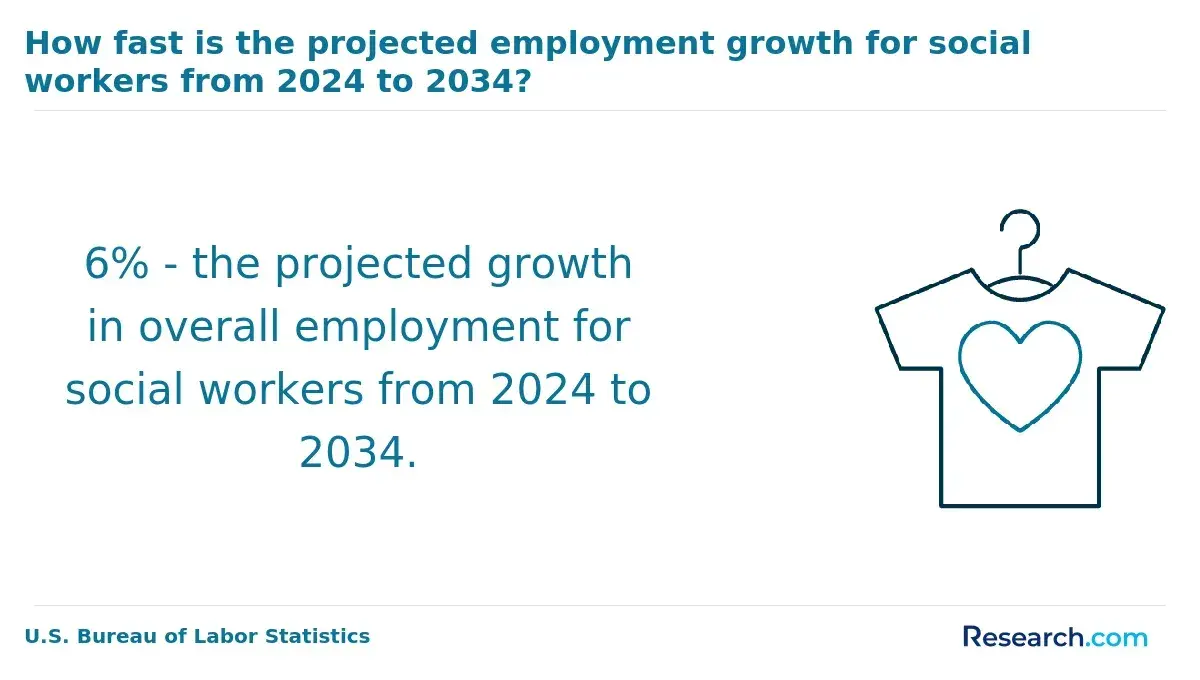
The long-term outlook for social workers remains positive. Employment for social workers is projected to grow 6 percent between 2024 and 2034, faster than the average for all occupations. According to the Bureau of Labor Statistics, this growth reflects about 74,000 job openings each year on average over that decade.
Demand for community and policy-focused social workers is tied to complex social needs that cannot be solved only through individual services. Aging populations increase pressure on healthcare coordination, housing, long-term services, and community supports. Rising rates of substance use, mental health challenges, and social inequities also create demand for professionals who can design programs, coordinate systems, and advocate for policy change.
At the same time, macro social work jobs can be competitive. Nonprofits and public agencies often depend on grants, government budgets, and shifting policy priorities. Hiring may slow when funding is uncertain. Policy roles may also require strong writing, research, data analysis, and relationship-building skills in addition to the MSW credential.
Graduates of community and policy-focused social work programs can improve their outlook by building a practical portfolio during school. Useful materials may include policy briefs, program evaluation reports, grant proposals, community needs assessments, advocacy campaign plans, or data dashboards. Networking through field placements, professional associations, public meetings, and alumni contacts can also be important because many macro roles are relationship-driven.
Overall, the outlook is favorable for social workers who can connect community realities with institutional action. The strongest candidates will be able to communicate clearly, use evidence responsibly, manage partnerships, understand policy processes, and show concrete results from field or professional experience.
Other Things You Should Know About Community and Policy-Focused Social Work Programs
In 2027, macro-social work graduates typically pursue certifications like the Certified Advanced Macro Social Work (CAMSW) credential. Depending on the state, licenses such as Licensed Master Social Worker (LMSW) may also be required, focusing on advanced community engagement and policy development.
Admission prerequisites typically include a bachelor’s degree in social work or a related field, a minimum GPA of 3.0, letters of recommendation, and a statement of purpose. Some programs might also require GRE scores, particularly for policy-focused tracks.
Field placements in settings such as government agencies, nonprofit organizations, or policy-making bodies provide critical macro-level exposure and networking opportunities. These placements complement classroom learning by giving students practical experience in program development, policy analysis, or community leadership.
References
- Bureau of Labor Statistics. (2024). Social workers: Occupational outlook handbook. U.S. Department of Labor. Retrieved from https://www.bls.gov/ooh/community-and-social-service/social-workers.htm
- Bureau of Labor Statistics. (2024). Projected employment growth for community and social service occupations. Beyond the Numbers, U.S. Department of Labor. Retrieved from https://www.bls.gov/opub/btn/volume-13/projected-employment-growth-for-community-and-social-service.htm
- Council on Social Work Education (CSWE). (2024). Directory of accredited programs. Retrieved from https://www.cswe.org/accreditation/directory/
- National Association of Social Workers (NASW). (2024). Credentials and certifications for social workers. Retrieved from https://www.socialworkers.org/Careers/Credentials-Certifications