2027 What Accreditation Matters for MSW Programs (CSWE, Regional, Institutional)

Co-Founder and Chief Data Scientist
An MSW can open the door to licensed clinical practice, school and healthcare roles, leadership positions, and more specialized social work careers. But before comparing tuition, format, admissions requirements, or field placement options, you need to answer one question first: is the program properly accredited?
That question matters whether you are entering graduate school right after a bachelor’s degree, changing careers, or returning to school later in life. With the average age for a master's-level social worker being 34, many MSW students are making this decision after years of work and life experience. A wrong choice can affect licensure, financial aid, transfer options, employer recognition, and the value of your degree.
This guide explains how MSW program accreditation works, why CSWE accreditation is the standard for social work education, how institutional accreditation fits in, and how to verify a program before you apply. Use it as a practical checklist before investing time, money, and energy in any MSW program.
Key Things You Should Know About What Accreditation Matters for MSW Programs
- The Council on Social Work Education (CSWE) accreditation is the non-negotiable standard for any MSW program if you plan to become a licensed social worker.
- Graduating from a CSWE-accredited program is a mandatory requirement for social work licensure in all states that have it.
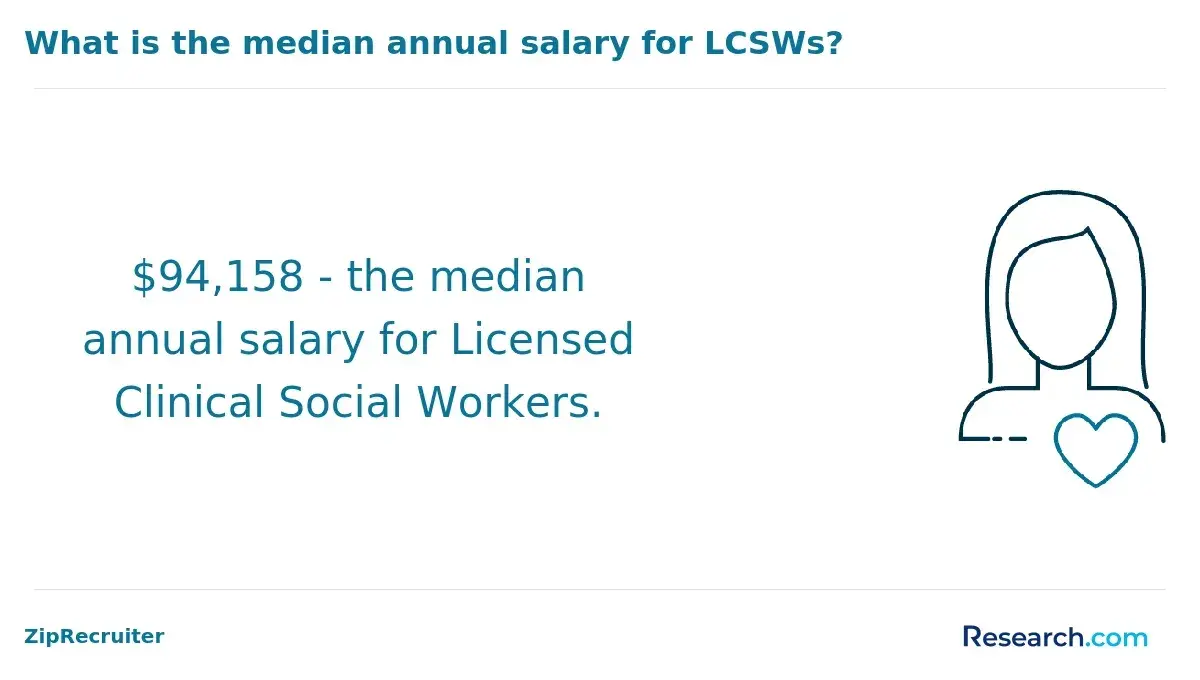
- The median annual salary for licensed clinical social workers is approximately $94,158.
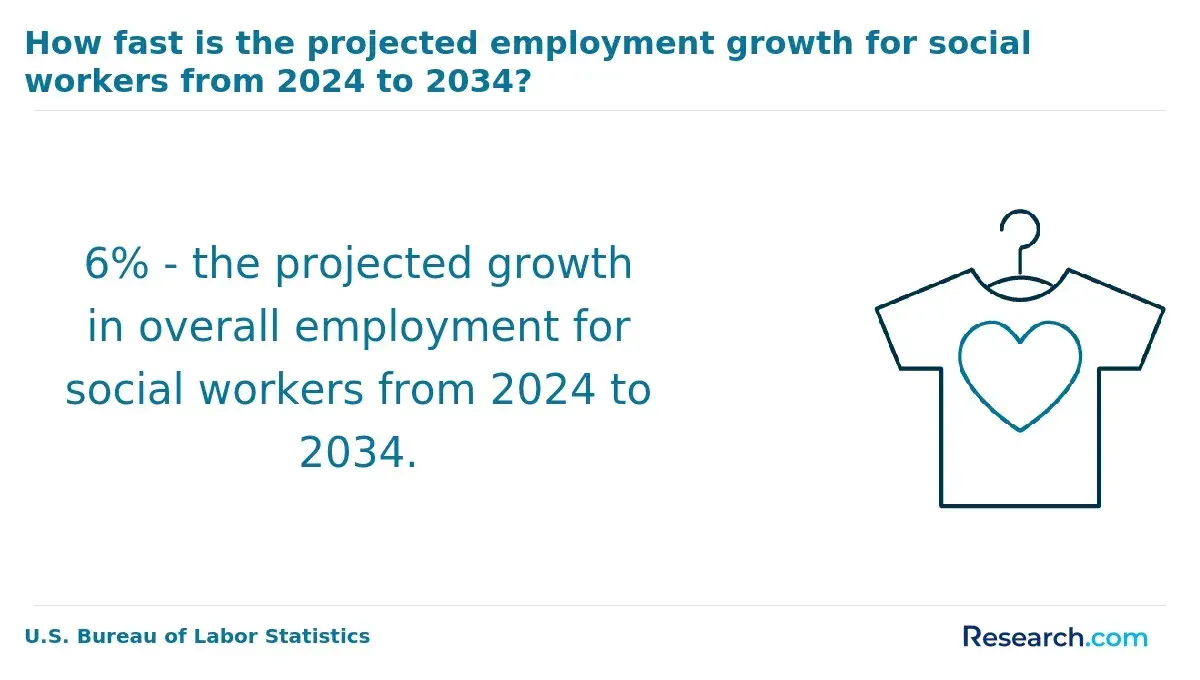
- The U.S. Bureau of Labor Statistics projects that employment for social workers will grow by 6% between 2024 and 2034.
- You should always verify a program’s accreditation status for yourself using the official CSWE and U.S. Department of Education online directories.
What is accreditation and why does it matter in higher education?
Accreditation is an external quality review process used to determine whether a college, university, or academic program meets accepted standards. It is not a popularity score, a ranking, or a marketing label. It is a formal evaluation conducted by an accrediting body recognized for reviewing educational quality.
For students, accreditation matters because it helps answer a basic but important question: can this institution or program deliver the education it promises? Accrediting agencies examine areas such as curriculum quality, faculty qualifications, student services, institutional stability, academic policies, assessment practices, and whether the school has the resources to support students through graduation.
Accreditation also affects practical outcomes. It can determine whether you qualify for federal student aid, whether credits may transfer, whether graduate schools will recognize your degree, and whether employers or licensing boards will accept your academic preparation. In professional fields such as social work, accreditation is especially important because the degree is tied directly to public trust, ethical standards, and state licensure.
It is also important to separate accreditation from rankings. Rankings often weigh factors such as reputation, selectivity, research activity, or survey results. Accreditation focuses on whether a school or program meets a defined quality threshold. A highly ranked school may not necessarily have the right programmatic accreditation for your career goal, and a less famous school may still offer a fully accredited, licensure-eligible MSW.
For MSW students, the most important accreditation question is not just whether the university is legitimate. It is whether the social work program itself meets the professional standard for the field.
What is CSWE accreditation and why is it the gold standard for MSW programs?
CSWE accreditation is the key accreditation standard for Master of Social Work programs in the United States. CSWE stands for the Council on Social Work Education, the only nationally recognized body that accredits social work programs in the country.
This is programmatic accreditation, meaning the review focuses on the MSW program rather than only the university as a whole. CSWE evaluates whether the program prepares students for competent, ethical social work practice. That includes curriculum design, field education, faculty qualifications, assessment of student learning, professional values, and preparation for work with individuals, families, groups, organizations, and communities.
The distinction is critical. A university can be well known, financially stable, and institutionally accredited, but that does not automatically mean its MSW program meets social work professional standards. If the MSW program is not CSWE-accredited or in an approved candidacy process, students may face serious barriers to licensure and employment.
CSWE accreditation applies across delivery formats. A campus-based program, hybrid program, and online program are evaluated against the same professional expectations. Students comparing flexible options such as online MSW programs should therefore verify CSWE status rather than assuming online delivery is either less rigorous or automatically acceptable.
In practical terms, CSWE accreditation tells you that the program has been reviewed against the professional education standards most directly connected to social work licensure and practice. It is the credential you should confirm before looking closely at cost, convenience, admissions flexibility, or specialization tracks.
What is the difference between regional and national institutional accreditation?
Institutional accreditation evaluates the college or university as a whole. For MSW students, the most useful distinction is between regional and national institutional accreditation. Although the word “national” may sound broader, regional accreditation has traditionally been the more widely accepted standard for academic colleges and universities.
- Regional Accreditation: This type of accreditation is most commonly associated with public and private nonprofit colleges and universities that offer associate, bachelor’s, master’s, and doctoral degrees. It is generally the preferred form of institutional accreditation for students who may want to transfer credits, pursue doctoral study, qualify for certain employer tuition benefits, or keep academic options open.
- National Accreditation: This type of accreditation is more often associated with career-focused, vocational, for-profit, or faith-based institutions. Some nationally accredited institutions may provide useful training, but credits and degrees from nationally accredited schools may not be accepted as readily by regionally accredited institutions.
For a prospective MSW student, regional accreditation usually offers the stronger long-term safeguard. It can matter if you later pursue another graduate degree, apply for a doctorate, move between institutions, or need your academic record reviewed by an employer or credentialing body.
The main takeaway is simple: look for a CSWE-accredited MSW program housed within a properly accredited institution. If the university also has regional institutional accreditation, you generally have the broadest academic mobility and recognition.
How do CSWE and regional accreditation work together for MSW programs?
CSWE accreditation and regional institutional accreditation serve different purposes, and a strong MSW choice should satisfy both. One confirms the quality and legitimacy of the institution. The other confirms that the social work program meets professional education standards.
Think of the two forms of accreditation as separate checks:
- Institutional accreditation reviews the university’s overall operations, academic policies, governance, finances, student support, and educational quality.
- CSWE accreditation reviews the MSW program’s social work curriculum, field education, professional competencies, faculty preparation, and alignment with social work practice standards.
One does not replace the other. A regionally accredited university without a CSWE-accredited MSW may still leave graduates unable to meet social work licensure requirements. A program claiming professional preparation at an institution with weak or unclear institutional accreditation may create problems with aid, transferability, and academic recognition.
Why this combination matters for your future
Dual confidence in both the institution and the program protects the major outcomes most MSW students care about: licensure eligibility, employer recognition, access to federal student aid, and future academic mobility.
This is especially important if your plans may change. You may enter an MSW program intending to work in case management, then later pursue clinical licensure. You may start in direct practice and later consider teaching, administration, research, or doctoral study. A degree from a properly accredited institution and a CSWE-accredited program keeps more of those doors open, including options such as an online DSW.
Before applying, confirm both layers. Do not rely only on a school’s reputation, a recruiter’s statement, or a program page that uses vague language such as “aligned with professional standards.” Accreditation should be specific, current, and verifiable.
What are the risks of choosing a non-accredited MSW program?
Choosing a non-accredited MSW program can be one of the most damaging mistakes a future social worker can make. The risk is not simply that the program may be lower quality. The larger problem is that the degree may not qualify you for the professional outcomes that make an MSW valuable.
- You may be ineligible for licensure. State licensing boards commonly require an MSW from a CSWE-accredited program for credentials such as Licensed Master Social Worker (LMSW) or Licensed Clinical Social Worker (LCSW). Without the right degree, you may not be allowed to begin the licensing process.
- Your job options may be sharply limited. Hospitals, behavioral health organizations, schools, government agencies, and many nonprofit employers often screen for CSWE-accredited education. A non-accredited degree may prevent you from qualifying for professional social work roles.
- Your investment may not produce the expected return. Graduate tuition, field education hours, books, fees, and lost work time are significant costs. If the degree does not support licensure or recognized employment, the financial and professional return can be poor.
- Your credits may not transfer. If you later try to move into an accredited MSW program, the new school may not accept credits from a non-accredited program. In many cases, students may have to repeat coursework or start over.
- You may face confusion with titles and scope of practice. Social work titles and clinical practice rules are regulated. A non-accredited educational path can create problems when you try to use protected titles, provide clinical services, or meet supervision requirements.
Non-accredited programs may sometimes advertise low tuition, quick completion, or easy admission. Those features do not compensate for a degree that may fail to meet licensing and employer requirements. Before considering any other factor, verify accreditation.
How can you verify the accreditation of an MSW program?
Do not rely only on a program brochure, search ad, social media post, or admissions representative. Accreditation is easy to verify through official sources, and you should check it yourself before submitting an application or paying a deposit.
Step 1: Check the CSWE directory
Start with the Council on Social Work Education’s official directory of accredited programs. Search for the institution and program name. Confirm whether the MSW is fully accredited or listed in the CSWE candidacy process. If the program does not appear, ask the school for clarification and verify the information directly through CSWE before moving forward.
Step 2: Verify institutional accreditation
Next, check the university’s institutional accreditation through the U.S. Department of Education’s Database of Accredited Postsecondary Institutions and Programs (DAPIP). This helps confirm whether the school itself is recognized by an approved accrediting agency.
Step 3: Match the accreditation to the exact program you plan to attend
Be careful when a university offers multiple campuses, formats, or related programs. Confirm that the specific MSW you are applying to is covered. Do not assume that a BSW, certificate, counseling program, or another graduate program has the same accreditation status as the MSW.
What to watch for during your search
- Vague wording: Phrases such as “designed to meet standards” or “seeking accreditation” are not the same as being accredited.
- Outdated claims: Accreditation status can change. Always check the current official listing.
- Program name confusion: Make sure you are reviewing the MSW, not a related human services, counseling, psychology, or public administration degree.
- Pressure to enroll quickly: A reputable program should be willing to explain its accreditation status clearly and point you to official verification sources.
Accreditation should come before convenience. It is reasonable to compare admission difficulty, cost, and scheduling after you confirm accreditation. For example, students may look for the easiest MSW program to access, but easier admission is not useful if the degree does not support licensure or recognized social work employment.
Does CSWE accreditation apply to online MSW programs?
Yes. CSWE accreditation applies to online, hybrid, and campus-based MSW programs. There is no separate lower standard for online MSW degrees.
For an online MSW to earn CSWE accreditation, it must show that students receive a professional social work education that meets the same expectations as an in-person program. That includes coursework, faculty oversight, assessment of competencies, ethical preparation, and field education. The format may differ, but the standards do not.
This is important for working adults, parents, rural students, military-connected students, and others who need flexibility. An accredited online MSW can be a legitimate path to licensure and professional employment, provided it meets the requirements of the state where you plan to practice.
However, online students should look closely at field placement support. Every MSW requires supervised field education, and online delivery does not remove that requirement. Ask whether the school helps secure placements near your location, whether you may need to find your own placement, and how the program handles supervision, scheduling, and state-specific requirements.
Cost also deserves careful comparison. Students can find accredited and cheap online MSW programs, but low tuition should be evaluated alongside CSWE status, institutional accreditation, field placement support, student services, and total fees. The best value is not simply the lowest advertised price; it is an accredited program that can realistically move you toward licensure and employment.
What role does accreditation play in getting your social work license?
Accreditation is central to social work licensure. If your goal is to become a licensed social worker, graduating from a CSWE-accredited MSW program is typically the required educational foundation.
State licensing boards decide who may practice social work and under what title. In the 32 states that require a license to practice social work, the board will not even consider your application if your degree is not from a CSWE-accredited institution. That makes accreditation more than an academic preference. It is often the gatekeeping requirement that determines whether you can enter the profession legally.
Licensure requirements can also include supervised experience, exams, background checks, jurisprudence or ethics requirements, and application fees. Accreditation does not replace those steps. Instead, it is the educational prerequisite that allows you to begin the process.
This distinction is especially important for career changers. A master’s degree in counseling, psychology, human services, public health, education, or a related helping field is not automatically equivalent to an MSW for social work licensure. Those degrees may lead to other professional paths, but they generally do not substitute for a CSWE-accredited MSW when the license sought is LMSW, LCSW, or another social work credential.
Before enrolling, review the licensing board requirements in the state where you intend to work. If you may move, compare requirements across states as well. Accreditation is the starting point, but state rules determine the full licensure pathway.
How does accreditation impact your future job prospects and salary?
Accreditation affects job prospects because many employers use it as a basic screening standard. A CSWE-accredited MSW signals that your education followed the professional preparation expected for social work practice. Without it, you may be excluded from roles that require licensure, clinical supervision eligibility, or recognized graduate social work training.
The impact is strongest in settings where regulation, reimbursement, and public accountability matter. Healthcare organizations, behavioral health providers, schools, government agencies, community mental health centers, and social service organizations often expect applicants to have a CSWE-accredited degree, especially for clinical or advanced practice roles.
Accreditation also affects earning potential indirectly because it supports access to licensed roles. The median annual salary for licensed clinical social workers is approximately $94,158. That figure should not be read as a guarantee for every graduate. Actual earnings vary by location, employer, specialization, license level, experience, and whether the role is clinical, administrative, policy-focused, or community-based.
What the labor market looks like
The social work field is broad, with approximately 810,900 jobs in 2024. The majority of clinical social workers, about 74%, are involved in mental and behavioral health services, while another 17% work in individual and family services.
Pay differs by specialization. For example, the median pay for healthcare social workers was about $68,090 as of May 2024. Because wages can vary substantially by state and metro area, students should compare local demand, licensing rules, and employer requirements before choosing a program. A state-by-state review of social work salaries by state can help you evaluate whether the investment fits your career and financial goals.
How to think about return on investment
When estimating the value of an MSW, look beyond tuition alone. Consider total program cost, field placement logistics, time away from work, expected licensure timeline, local salary ranges, and the types of roles available to new graduates. Accreditation does not guarantee a specific salary, but it is often what makes the recognized career pathway possible.
What does it mean if an MSW program's accreditation is "in candidacy"?
An MSW program that is “in candidacy” with CSWE is in a formal pre-accreditation stage. It is not the same as full accreditation, but it is also not the same as being unaccredited with no recognized pathway. Candidacy means the program is moving through CSWE’s structured review process and has met requirements to continue toward full accreditation.
Programs in candidacy are often newer MSW programs. CSWE reviews the program’s plans, curriculum, resources, faculty, assessment processes, and field education structure as it moves through the accreditation process. The program must continue meeting requirements before full accreditation can be granted.
What candidacy means for students
The key point is retroactive recognition. If a program achieves full accreditation, that status is applied retroactively to the date it was first granted candidacy. This means that if you enroll in and graduate from a program while it is in candidacy, your degree will be recognized as coming from a fully CSWE-accredited program.
That said, candidacy still involves some risk because full accreditation is not guaranteed until the process is complete. Students should ask direct questions before enrolling:
- When was candidacy granted?
- What stage of the CSWE review process is the program in?
- When does the program expect a final accreditation decision?
- What happens to students if accreditation is delayed or not granted?
- How is the program communicating updates to current and prospective students?
A program in candidacy may be a reasonable choice, especially if it offers the format, location, specialization, or field placement access you need. But it requires more due diligence than enrolling in a fully accredited program. Verify candidacy through CSWE, keep records of the program’s statements, and make sure you understand the timeline before committing.
Is a CSWE-accredited MSW program really worth the investment?
Yes—if your goal is professional social work practice, especially licensure, a CSWE-accredited MSW is the required investment rather than an optional upgrade. The value of the degree depends heavily on whether it qualifies you for the roles, licenses, and advancement opportunities you are pursuing.
A cheaper or faster non-accredited program may look attractive at first, but it can become costly if it blocks licensure, limits employment, or forces you to repeat graduate coursework elsewhere. The safer comparison is not “accredited versus less expensive.” It is “recognized pathway versus uncertain outcome.”
When evaluating whether the degree is worth it, consider these factors:
- Your licensure goal: If you want to become an LMSW, LCSW, or pursue clinical practice, CSWE accreditation is essential.
- Your target setting: Healthcare, schools, government, behavioral health, and clinical agencies often require accredited MSW preparation.
- Your total cost: Include tuition, fees, books, technology costs, transportation, field placement demands, and potential lost income.
- Your timeline: Factor in the time needed for coursework, field education, exams, supervision, and licensure after graduation.
- Your local labor market: Compare salaries, job openings, and license requirements in the state where you plan to work.
The question do social workers make good money cannot be answered by salary alone. It depends on credential level, specialization, location, employer type, and whether the degree leads to licensure. A CSWE-accredited MSW is the credential that makes many higher-responsibility social work roles possible.
A career with a future
By choosing an accredited path, you protect your ability to enter a regulated profession, pursue licensure, and compete for recognized social work positions. The U.S. Bureau of Labor Statistics projects that employment for social workers will continue to expand, providing long-term security for qualified professionals.
The data below shows the positive outlook for the social work field:
Other Things You Should Know About What Accreditation Matters for MSW Programs
In 2027, MSW programs are typically accredited by the Council on Social Work Education (CSWE). This accreditation ensures that the program meets the standards necessary for professional competence in social work. Regional and institutional accreditations may also apply but focus on broader educational standards rather than specifically on social work.
Regional accreditation ensures that MSW credits can be easily transferred between colleges within the region, helping students who move or change schools. It also assures employers and licensing bodies that the education meets broad quality standards in 2027.
CSWE accreditation is crucial for MSW programs in 2027 because it ensures the curriculum meets professional standards, facilitating graduates’ eligibility for licensure. It also assures employers of the program's educational quality and increases students' access to federal financial aid and more employment opportunities.
References
- Council on Social Work Education. (2025). Directory of accredited programs. Retrieved October 26, 2025, from CSWE.
- Data USA. (2025). Social work. Retrieved October 26, 2025, from Data USA.
- Higher Learning Commission. (2025). How accreditation works for you. Retrieved October 26, 2025, from HLC.
- MasterofSocialWork.com. (2025, January 2). CSWE accredited online Master of Social Work (MSW) programs. Retrieved October 26, 2025, from MasterofSocialWork.com.
- U.S. Bureau of Labor Statistics. (2025). Social workers. October 26, 2025, from BLS.