2027 Medical and Healthcare Social Work Online Programs

Co-Founder and Chief Data Scientist
If you already hold a Bachelor of Social Work (BSW), the main question is not whether healthcare needs social workers—it does. The decision is whether an online medical and healthcare social work program can help you move into hospital, clinic, behavioral health, hospice, long-term care, or care coordination roles without leaving your current job or relocating.
Healthcare systems increasingly serve patients with complex medical, financial, family, behavioral health, and discharge-planning needs. Yet only 20% of social workers specialize in medical and healthcare settings, creating a gap in care (Bureau of Labor Statistics, 2025). Online MSW pathways with healthcare-focused coursework and field education can help BSW graduates build the clinical, policy, case management, and interdisciplinary skills needed in these settings.
This guide, prepared by career planning experts with over 10 years of experience, explains how long these programs take, what they cost, how financial aid works, what admission requirements to expect, which courses you may take, and how to choose a program that supports licensure and healthcare social work career goals.
What are the benefits of getting a medical and healthcare social work online degree?
- Graduates can work in hospitals, outpatient clinics, and long-term care facilities, addressing patient needs and improving social outcomes.
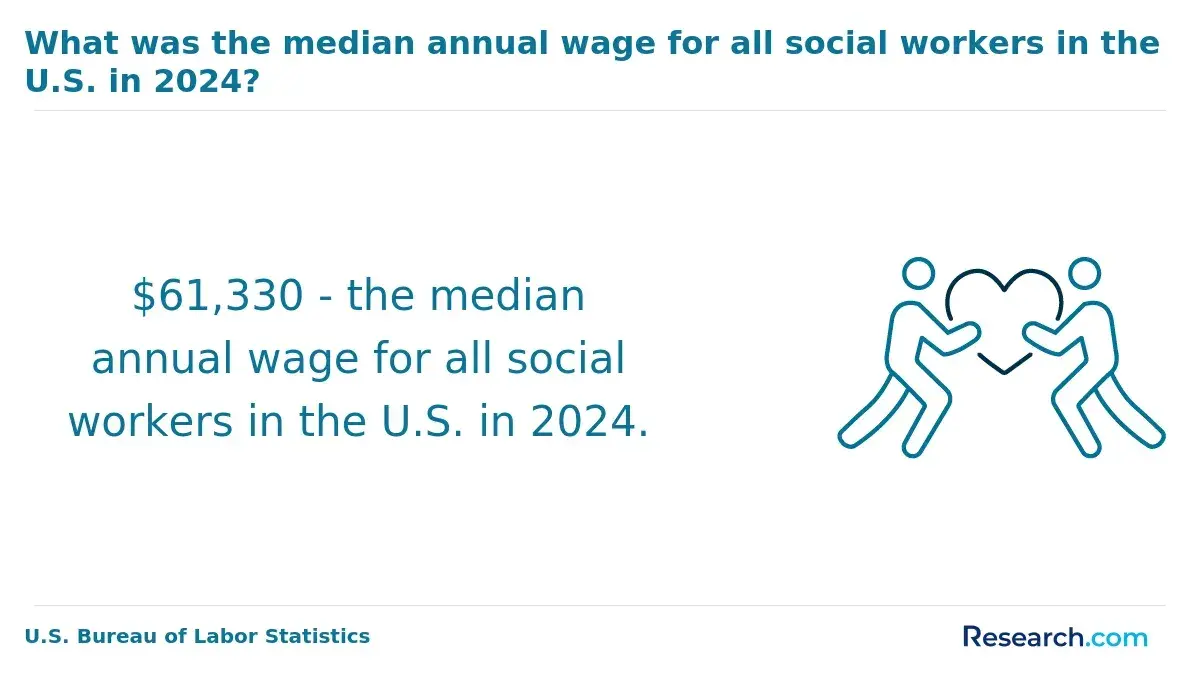
- The median annual wage for healthcare social workers is $77,000.
- Online programs allow students to earn their degree while maintaining current work and personal obligations.
How long does it take to complete a medical and healthcare social work online program?
Most online Master of Social Work (MSW) programs take two years for full-time students and three years for part-time students. BSW graduates may qualify for Advanced Standing, which can shorten the timeline to about 1.5 years because prior accredited social work coursework may reduce the number of credits and field hours required.
The exact completion time depends on the school’s curriculum, whether the program is full-time or part-time, how field placements are scheduled, and whether the student qualifies for Advanced Standing. On-time graduation rates for these programs are generally high, with many institutions reporting completion rates above 80%.
| Enrollment path | Typical completion time | Best fit |
| Full-time online MSW | Two years | Students who can handle a heavier course load and field education schedule |
| Part-time online MSW | Three years | Working professionals who need a slower pace |
| Advanced Standing online MSW | About 1.5 years | BSW graduates who meet GPA, accreditation, and prerequisite requirements |
Before enrolling, ask how the program handles field placement timing. A program may be online academically but still require in-person field education at an approved healthcare, behavioral health, community, or social service site. Students planning for doctoral-level study later may also compare options for a DSW degree online as part of a long-term social work education path.
What is the average cost of a medical and healthcare social work online program?
The average cost of an online MSW program depends heavily on whether the school is public or private, whether you qualify for in-state tuition, and whether you enter through an Advanced Standing pathway. Public universities cost approximately $12,596 per year, while private non-profit institutions cost around $28,017 annually.
| Program type | Typical annual cost | Cost consideration |
| Public universities | Approximately $12,596 per year | Often more affordable, especially when online students qualify for lower tuition rates |
| Private non-profit institutions | Around $28,017 annually | May offer strong field networks or scholarships, but total cost can be higher |
| Advanced Standing programs | Varies by institution | Can be more cost-effective for BSW graduates because fewer credits may be required |
Tuition is only part of the total cost. Students should also budget for books, technology requirements, field education fees, application costs, background checks, transportation to field sites, and any campus visit requirements. If you are comparing least expensive online MSW programs, review the full cost of attendance rather than tuition alone.
A lower tuition rate is valuable, but it should not be the only deciding factor. For healthcare social work, confirm that the program has appropriate accreditation, licensure preparation, healthcare-related electives, and reliable field placement support. A cheaper program that delays your field placement or does not support your state’s licensure requirements can become more expensive over time.
What are the financial aid options for students enrolling in a medical and healthcare social work online program?
Graduate students in online MSW programs may use a mix of institutional aid, scholarships, employer support, federal loans, and loan forgiveness programs. Approximately 74% of graduate students receive some form of financial aid, including federal grants, scholarships, and loans.
Federal aid
Start by completing the FAFSA and asking the school’s financial aid office which forms of aid apply to graduate social work students. Federal aid rules can differ by degree level and student status, so confirm eligibility before building your budget.
- Pell Grants: Federal grants awarded based on financial need. Graduate students should verify whether this type of aid applies to their situation and program.
- Federal Supplemental Educational Opportunity Grants (FSEOG): Additional federal grants for students with exceptional financial need. Availability and eligibility should be confirmed directly with the institution.
- Direct Unsubsidized Loans and PLUS loans: Common federal loan options for graduate students. Borrow only what you need and compare projected monthly payments before accepting the full amount offered.
Scholarships
- Social work-specific scholarships: Professional associations, foundations, and service organizations may offer funding for social work students. For instance, the Consuelo W. Gosnell Memorial Scholarship provides up to $4,000.
- University-specific scholarships: Some universities offer scholarships to MSW students. For example, the University of Maryland's School of Social Work awards scholarships averaging $4,000.
Loan forgiveness and employer support
Public Service Loan Forgiveness programs can benefit graduates who work in qualifying healthcare, government, nonprofit, or community service roles. Some hospitals, behavioral health providers, and public agencies may also offer tuition assistance or reimbursement for employees pursuing an MSW.
When evaluating a social work degree online, compare net cost after scholarships, field placement expenses, loan amounts, and whether the program supports career paths that may qualify for public service loan forgiveness.
What are the prerequisites for enrolling in a medical and healthcare social work online program?
Admission requirements vary, but online MSW programs generally look for evidence that applicants can succeed in graduate-level social work courses and field education. BSW graduates often apply through Advanced Standing tracks, which usually have more specific academic requirements than traditional MSW pathways.
- Educational background: A Bachelor of Social Work (BSW) is typically required for Advanced Standing admission. Traditional MSW programs may have different requirements, but this guide focuses on BSW graduates pursuing healthcare specialization.
- Advanced Standing requirements: Programs offering Advanced Standing may require a higher GPA, often a minimum of 3.0, and fewer credits due to prior coursework.
- Relevant work experience: Some programs prefer applicants with experience in social services, healthcare, behavioral health, case management, community outreach, or client advocacy.
- Letters of recommendation: Typically 2–3 letters from academic or professional references are required. Strong letters should speak to your ethics, communication skills, readiness for graduate study, and ability to work with vulnerable populations.
- Statement of purpose: Applicants usually submit a personal statement explaining career goals, interest in healthcare social work, commitment to service, and preparation for field education.
Other common requirements may include a resume, official transcripts, prerequisite coursework, an interview, background checks, or documentation of prior field experience. If your GPA or experience is not competitive, you may want to compare programs described as the easiest online MSW program, while still verifying accreditation, field placement quality, and licensure alignment.
What types of courses will I take in a medical and healthcare social work online program?
Online medical and healthcare social work programs usually combine advanced social work theory, clinical practice, policy, research, ethics, and supervised field education. The goal is to prepare students to support patients and families while working effectively with physicians, nurses, behavioral health providers, discharge planners, insurers, and community organizations.
Core MSW courses
- Social Welfare Policy: Examines laws, regulations, benefits systems, and policy decisions that affect clients, families, healthcare access, and social work practice.
- Human Behavior and the Social Environment: Focuses on how biological, psychological, social, cultural, economic, and environmental factors shape individuals, families, groups, and communities.
- Research Methods: Teaches students how to read, evaluate, and apply social work research in practice settings, including healthcare and community-based services.
Healthcare specialization courses
- Medical Ethics: Explores ethical decision-making in healthcare settings, including confidentiality, informed consent, end-of-life care, patient autonomy, and interdisciplinary practice.
- Healthcare Systems: Builds knowledge of hospitals, outpatient clinics, long-term care, hospice, behavioral health, public health, and community healthcare organizations.
- Clinical Practice: Focuses on assessment, intervention, treatment planning, crisis response, care coordination, and documentation in medical and behavioral health contexts.
Field Education
Field Education is the practical training component of an MSW program. Students apply classroom knowledge in approved settings such as hospitals, clinics, hospice programs, rehabilitation centers, behavioral health agencies, or community health organizations. Because field education can affect your schedule, commute, supervision quality, and licensure preparation, ask each program how placements are arranged before enrolling.
Well-designed healthcare coursework and field training can help make an MSW degree worth it for students who want roles in patient advocacy, care transitions, behavioral health integration, palliative care, case management, or healthcare administration.
How does an online medical and healthcare social work online program differ from on-campus programs?
Online and on-campus MSW programs can cover the same core competencies, but the learning experience is different. The best choice depends on your schedule, learning style, access to nearby programs, technology comfort, and need for in-person networking.
| Factor | Online programs | On-campus programs |
| Flexibility | Students can complete coursework from anywhere, which can help those balancing employment, caregiving, or location constraints. | Students attend classes at set times and locations, which provides structure but less scheduling flexibility. |
| Interaction | Communication with instructors and peers typically occurs through discussion boards, video meetings, group projects, and online forums. | Students have more routine face-to-face contact with faculty, classmates, advisors, and campus organizations. |
| Self-management | Students need strong time management, reliable technology, and the discipline to keep up without daily in-person supervision. | The campus schedule can create built-in accountability through regular class meetings and in-person expectations. |
| Resources | Online students may access virtual advising, digital libraries, telehealth training tools, and remote student services. | Students may have easier access to campus libraries, events, faculty offices, and local networking opportunities. |
| Field education | Field placements are usually completed in person at approved sites near the student when possible. | Field placements are often connected to the school’s local agency and healthcare networks. |
Online programs are often best for students who need geographic flexibility or must keep working while enrolled. On-campus programs may be better for students who prefer live classroom discussion, regular in-person support, and direct access to local campus networks. In either format, confirm that the program provides meaningful field placement support in healthcare-related settings.
What are the career outcomes for graduates of a medical and healthcare social work online program?
Graduates of online MSW programs in medical and healthcare social work can pursue roles that combine clinical skill, systems knowledge, advocacy, and care coordination. Outcomes depend on licensure, field experience, state regulations, employer requirements, and the type of healthcare setting.
Medical Social Workers
Medical social workers often work in hospitals, outpatient clinics, rehabilitation centers, hospice programs, long-term care facilities, and community health organizations. They help patients and families understand treatment plans, access benefits and services, prepare for discharge, cope with illness, and address barriers such as housing, transportation, insurance, caregiving, or mental health needs.
Clinical Social Workers
Some graduates pursue licensure as clinical social workers, providing therapy, counseling, assessment, crisis intervention, and treatment planning in healthcare or community settings. Clinical roles usually require supervised post-graduate experience and state licensure before independent practice.
Healthcare Administrators
Graduates may also move into administrative or program leadership roles. These positions can involve managing social work departments, coordinating care programs, overseeing compliance with healthcare policies, improving patient support workflows, or supervising case management teams.
Employment in healthcare social work is projected to grow by 12% from 2021 to 2031. Because opportunities and compensation differ by location, students should research regional demand, licensure rules, cost of living, and employer concentration. Reviewing the worst states for social workers can help you compare regional conditions before choosing where to study, complete fieldwork, or seek employment.
What is the job market for graduates of a medical and healthcare social work online program?
The job market for healthcare social workers is supported by several long-term needs: an aging population, more patients living with chronic illnesses, growing attention to mental health, and the increasing importance of coordinated care. Healthcare organizations need professionals who can connect clinical care with social supports, reduce discharge barriers, advocate for patients, and help families navigate complex systems.
Graduates may find opportunities in hospitals, outpatient clinics, long-term care facilities, rehabilitation centers, behavioral health programs, hospice organizations, public health agencies, and community health organizations. Roles may focus on discharge planning, care coordination, patient advocacy, crisis intervention, resource referral, family support, or integrated behavioral health.
Urban areas often have more openings because they have larger hospital systems and higher patient volumes. Rural and underserved communities may also have strong need, especially where access to behavioral health, specialty care, transportation, housing, and social services is limited. Telehealth and mobile services can expand access, but many healthcare social work responsibilities still require local knowledge and coordination with community resources.
For students, the practical takeaway is clear: choose field placements and electives that match the settings where you want to work. Healthcare employers often value candidates who already understand documentation, interdisciplinary teamwork, discharge planning, ethical practice, and the realities of patient care environments.
What certifications or licenses are needed after completing a medical and healthcare social work online program?
Licensure requirements depend on the state and the type of work you plan to do. An MSW may qualify you for certain social work roles, but clinical practice, independent counseling, diagnosis, or psychotherapy typically requires additional supervised experience and a state license.
Licensed Clinical Social Worker (LCSW)
Many graduates pursue the LCSW credential because it can allow them to provide therapy, counseling, clinical assessment, and clinical interventions. To qualify, candidates must complete supervised clinical experience, typically ranging from 2,000 to 3,000 hours depending on the state.
Licensing Exam
Applicants must pass a national clinical social work exam that tests knowledge of ethical practice, clinical skills, assessment, intervention, professional standards, and social work principles. Exam requirements and accepted exam levels vary by state, so students should check their licensing board before graduation.
Continuing Education and State Requirements
Licensure requirements differ by state. Some states require continuing education credits, periodic renewal, additional documentation, jurisprudence exams, or specific training topics to maintain active status. If you plan to move after graduation, compare licensing rules in both your current state and the state where you intend to practice.
Before choosing an online program, confirm that it is designed to support your intended licensure path. Ask the admissions or program office whether graduates meet education requirements for your state, whether field placements can be completed where you live, and whether the curriculum includes clinical content needed for healthcare and behavioral health practice.
How can I choose the right medical and healthcare social work online program for my career goals?
The right online medical and healthcare social work program should match your career target, licensure plan, budget, schedule, and preferred learning format. Do not choose based only on convenience or tuition. For healthcare social work, field placement quality and licensure alignment are just as important.
- Accreditation: Ensure the program is accredited by the Council on Social Work Education (CSWE) to support academic quality and eligibility for licensure. (cswe.org)
- Specialization Options: Look for programs that offer medical and healthcare social work tracks, clinical electives, integrated behavioral health content, aging courses, palliative care topics, or healthcare policy coursework that matches your interests.
- Field Education Opportunities: Prioritize programs with strong field placement support and partnerships with hospitals, clinics, hospice agencies, behavioral health providers, or community health organizations.
- Faculty Expertise: Review faculty qualifications and professional backgrounds. Faculty with healthcare social work, clinical practice, policy, public health, or behavioral health experience can provide more relevant mentoring.
- Program Flexibility: Compare full-time, part-time, Advanced Standing, synchronous, and asynchronous options. Make sure the course schedule and field education expectations fit your work and family responsibilities.
- Career Alignment: Verify that the program prepares you for your intended career path, including licensure, clinical practice, healthcare case management, patient advocacy, administration, or advanced practice opportunities.
Ask direct questions before applying: Who finds my field placement? Can I complete fieldwork near where I live? Does the program meet education requirements in my state? What healthcare settings have hosted students recently? What support is available for online students? The answers will tell you more about fit than a brochure or program slogan.
Other Things You Should Know About Medical and Healthcare Social Work Online Programs
Yes, online MSW programs in 2027 typically require clinical hours, often ranging from 900 to 1,200 hours, depending on state licensure requirements and specific program guidelines. These hours are essential for gaining practical experience and are usually completed under supervision at approved sites.
To enroll in a 2027 online MSW program focusing on healthcare, candidates typically need a bachelor's degree from an accredited institution and foundational coursework in social work or related fields. Some programs may also require professional experience or letters of recommendation.
In 2027, graduates with an online MSW in healthcare can pursue careers as medical social workers, healthcare policy advisors, patient advocates, or hospice social workers. These roles are crucial in bridging the gap between patients, medical professionals, and community resources.
References
- American Library of Social Work Education. (n.d.). Field learning in online social work programs. Simmons University. Retrieved October 27, 2025, from https://alswe.simmons.edu/article/field-learning-in-online-social-work-programs
- American Library of Social Work Education. (n.d.). Triumphs and travails of building a fully online social work field evaluation system. Simmons University. Retrieved October 27, 2025, from https://alswe.simmons.edu/article/triumphs-and-travails-of-building-a-fully-online-social-work-field-evaluation-system
- Boise State University. (2025, August 9). How long does a master's degree in social work take. Retrieved October 27, 2025, from https://www.boisestate.edu/online/2025/08/09/how-long-does-a-masters-degree-in-social-work-take
- Columbia University. (n.d.). Recent MSW graduate outcomes report. Retrieved October 27, 2025, from https://www1.columbia.edu/sec/cu/ssw/ire/Columbia-University-Recent-MSW-Graduate-Outcomes-Report.pdf
- Council on Social Work Education. (n.d.). Accreditation. Retrieved October 27, 2025, from https://www.cswe.org/accreditation
- Council on Social Work Education. (n.d.). Online vs. in-person workforce data brief 2018. Retrieved October 27, 2025, from https://www.cswe.org/getattachment/b0294d5e-eee3-4f2f-b03b-db8656eebc63/Online-vs-Inperson-Workforce-Data-Brief-2018-%281%29.pdf
- Council on Social Work Education. (n.d.). Annual survey of social work programs. Retrieved October 27, 2025, from https://www.cswe.org/research-statistics-0a2756984f2446870db6e935f0e44221/annual-survey-of-social-work-programs
- Kurzman, R., & Littlefield, S. (2023). Online and distance social work education: Current practice and future trends. Routledge. Retrieved October 27, 2025, from https://www.routledge.com/Online-and-Distance-Social-Work-Education-Current-Practice-and-Future-Trends/Kurzman-Littlefield/p/book/9781032839110
- National Center for Education Statistics. (2023, July 26). Press release: Trends in higher education enrollment. Retrieved October 27, 2025, from https://nces.ed.gov/whatsnew/press_releases/7_26_2023.asp
- Social Work Degree Center. (n.d.). Explore social work careers. National Association of Social Workers. Retrieved October 27, 2025, from https://www.socialworkers.org/Careers/NASW-Career-Center/Explore-Social-Work
- U.S. Department of Education, Federal Student Aid. (n.d.). Public service loan forgiveness. Retrieved October 27, 2025, from https://studentaid.gov/manage-loans/forgiveness-cancellation/public-service
- U.S. Bureau of Labor Statistics. (2023, May). Occupational employment and wage statistics: Social workers. Retrieved October 27, 2025, from https://www.bls.gov/oes/2023/may/oes211029.htm
- U.S. Bureau of Labor Statistics. (n.d.). Community and social service occupations: Social workers. Retrieved October 27, 2025, from https://www.bls.gov/ooh/community-and-social-service/social-workers.htm
- U.S. Bureau of Labor Statistics. (n.d.). Projected employment growth for community and social service occupations. Retrieved October 27, 2025, from https://www.bls.gov/opub/btn/volume-13/projected-employment-growth-for-community-and-social-service.htm
- University of Maryland, School of Social Work. (n.d.). Tuition & fees, scholarships & fellowships. Retrieved October 27, 2025, from https://www.ssw.umaryland.edu/tuition--fees/scholarships--fellowships
- Portland State University. (n.d.). Open access electronic theses and dissertations. Retrieved October 27, 2025, from https://pdxscholar.library.pdx.edu/open_access_etds/5707/