2027 Is an Online MSW Worth It for Career Advancement?

Co-Founder and Chief Data Scientist
Choosing an online Master of Social Work is usually a practical career decision, not just an academic one. Many prospective students already have a bachelor’s degree in another field, a full-time job, family responsibilities, or limited access to a campus-based MSW program. The central question is whether an online MSW can provide the same professional value, licensure preparation, field experience, and employer recognition as a traditional program.
This guide explains when an online MSW is worth the investment, what to check before enrolling, and how the degree can affect career options, salary potential, licensure eligibility, and advancement. It is designed for career changers, current human services workers, and professionals comparing flexible graduate programs in social work.
Key Things You Should Know
- Online MSW programs in 2026 offer flexible schedules, making them accessible to professionals seeking career advancement without pausing employment.
- Graduates from accredited online MSW programs report a 15-20% average salary increase within two years, reflecting strong ROI in the social work field.
- Licensure eligibility and field practicum requirements remain consistent between online and traditional MSW degrees, ensuring comparable professional credentials.
Is an online MSW worth it for career advancement?
An online MSW can be worth it for career advancement when the program is properly accredited, includes supervised field education, and aligns with the type of social work license or role you want. The degree can help professionals move from entry-level human services work into clinical, supervisory, policy, healthcare, school, or administrative roles.
The value is strongest for students who need flexibility but do not want to delay graduate study. Many online MSW programs for career advancement allow students to keep working while completing coursework, which can reduce the opportunity cost of returning to school. However, online does not mean less demanding. Field placements, licensure preparation, writing-intensive courses, and client-centered practice training still require significant time.
Career demand is one reason many students consider the degree. Healthcare social workers earn a median salary of $62,940, with a projected job growth rate of 11% from 2022 to 2032, indicating strong demand in the field. An MSW can also support eligibility for clinical licensure, which is often required for therapy, counseling, diagnosis, private practice, and some higher-paying clinical roles.
When an online MSW is likely to be worth it
- You want to qualify for clinical social worker positions requiring licensure.
- You need a graduate credential for advancement into administrative, supervisory, or leadership roles.
- You plan to specialize in areas such as healthcare, school, or substance abuse social work.
- You cannot relocate or attend daytime campus classes because of work, family, or location constraints.
- You choose a reputable, accredited program that supports field placement in your state.
When to be cautious
- The program is not accredited by the Council on Social Work Education.
- The school does not clearly explain how field placements are arranged.
- The curriculum does not match your state’s licensure requirements.
- The total cost would create debt that is hard to manage on expected social work salaries.
- You need extensive in-person networking and would struggle in a mostly virtual learning environment.
Prospective students should verify accreditation, licensure alignment, field placement support, and employer reputation before applying. For professionals who later want to move into advanced practice, teaching, executive leadership, or applied research, exploring a DSW program may be a future next step.
What are the benefits of an online MSW degree?
The main benefits of an online MSW degree are flexibility, access, licensure preparation, and the ability to continue working while earning a graduate credential. For many students, the online format makes an MSW possible when relocation, commuting, or fixed campus schedules would not work.
Strong online MSW programs typically use the same academic standards as campus programs and prepare students for advanced generalist, clinical, community, policy, or leadership roles. The best programs combine online coursework with supervised field education in approved agencies, clinics, schools, hospitals, or community organizations.
Practical advantages for working adults
- Schedule flexibility: Asynchronous courses can allow students to complete lectures and assignments around work and family obligations.
- Geographic access: Students in rural areas or regions without nearby MSW programs can pursue graduate study without relocating.
- Career continuity: Many students can remain employed while completing the degree, which may help maintain income and professional experience.
- Licensure pathway: Accredited programs can help prepare students for credentials such as the Licensed Clinical Social Worker (LCSW), depending on state requirements.
- Specialization options: Programs may offer tracks in healthcare, schools, criminal justice, child and family services, substance use, or community practice.
Financially, the investment can be meaningful but should be evaluated carefully. Graduates commonly experience salary increases ranging from $15,000 to $25,000 annually, recovering tuition costs typically within three to five years. That outcome depends on tuition, financial aid, location, license level, employer type, and the student’s prior work experience.
Students comparing costs should look beyond advertised tuition. Fees, books, travel to field sites, residency requirements, lost work hours, and licensing costs can affect the real price of attendance. Those seeking lower-cost options can begin by reviewing the cheapest online social work degree options, while still confirming accreditation and field placement quality.
Online MSW degree career benefits may also include broader professional networks. Digital discussion boards, virtual group projects, remote advising, and practicum coordination can connect students with peers and agencies across multiple communities. Still, students should be proactive about networking because online programs may not provide the same informal relationship-building that happens naturally on campus.
Online MSW vs traditional MSW: key differences?
The main differences between an online MSW and a traditional MSW are delivery format, flexibility, cost structure, networking style, and field placement logistics. The degree name may be the same, but the student experience can feel very different.
Tuition for online MSW programs typically ranges from $25,000 to $45,000, while traditional on-campus programs cost between $30,000 and $70,000. Cost should not be judged by tuition alone. Students should also compare fees, travel, relocation, technology requirements, lost work time, and field placement expenses.
How the formats compare
- Learning format: Online programs often use asynchronous classes, live virtual meetings, or a mix of both. Traditional programs rely more heavily on in-person classroom discussion.
- Flexibility: Online programs usually fit better for students who need to keep working or cannot relocate. Campus programs may provide more predictable structure.
- Networking: Campus students often build relationships through in-person classes, events, and local agency partnerships. Online students may need to be more intentional about connecting with faculty, peers, alumni, and field supervisors.
- Field education: Both formats require fieldwork and practicum to meet accreditation standards. Online students should confirm how placements are approved, whether the school has partners in their area, and whether their state has specific licensure requirements.
- Student support: Traditional students may have easier access to campus offices. Online students should check the availability of remote advising, writing support, career services, library access, and technical help.
Online MSW programs can be a strong fit for professionals who are disciplined, comfortable with digital learning, and able to manage a practicum schedule alongside other responsibilities. Traditional MSW programs may be better for students who prefer face-to-face interaction, campus-based support, and immersive cohort experiences.
The most important distinction is not online versus on campus; it is whether the program is accredited, respected, affordable, and aligned with your career goal. Both program types may hold accreditation from the Council on Social Work Education, which is important for academic credibility and licensure eligibility. Students comparing career outcomes should also review the average LCSW salary by state to understand how location can affect earnings.
What accreditation should an online MSW program have?
An online MSW program should be accredited by the Council on Social Work Education (CSWE). CSWE accreditation is the key program-level accreditation for social work education in the United States and is commonly required for social work licensure pathways.
Without CSWE accreditation, graduates may face serious barriers. A non-accredited MSW may not satisfy state licensing board requirements, may not be accepted by employers that require accredited social work training, and may limit eligibility for supervised clinical hours or advanced practice roles.
CSWE accreditation vs regional accreditation
Students should understand the difference between institutional accreditation and social work program accreditation. Regional accreditation from organizations such as the Higher Learning Commission or Middle States Commission on Higher Education helps indicate institutional quality and can affect federal financial aid eligibility. However, regional accreditation does not replace CSWE accreditation for an MSW program.
- CSWE accreditation: Confirms that the MSW program meets social work education standards.
- Regional accreditation: Confirms that the institution meets broader higher education quality standards.
- State licensure approval: Depends on state rules and should be checked with the licensing board where you plan to practice.
Before enrolling, verify accreditation directly through official sources rather than relying only on marketing language. Some programs emphasize convenience, affordability, or speed but may not provide the licensure pathway students expect.
Research from the CSWE Workforce Data Brief (2018) reveals that online MSW students often start their programs with more work experience. Graduates are 54% more likely than in-person students to have six or more years of prior work experience, indicating these programs attract seasoned professionals aiming to formalize and advance their expertise.
For students asking is a social work degree worth it, accreditation is one of the first factors that determines whether the degree can actually support the intended career outcome.
What are online MSW admission requirements?
Online MSW admission requirements usually include a bachelor’s degree from an accredited school, official transcripts, a resume, a statement of purpose, and letters of recommendation. Many programs look for a minimum GPA of around 3.0, though exact thresholds differ by school.
Applicants should expect admissions committees to evaluate both academic readiness and fit for the profession. Social work programs often look for evidence of ethical judgment, communication skills, service orientation, cultural awareness, and the ability to handle emotionally demanding work.
Common application materials
- Bachelor’s degree: Usually required from an accredited institution.
- Official transcripts: Used to review GPA, prerequisite coursework, and academic preparation.
- Resume: Should highlight employment, volunteer work, internships, advocacy, case management, healthcare, education, nonprofit, or human services experience.
- Statement of purpose: Should explain why you want an MSW, which populations or settings interest you, and how the program supports your goals.
- Letters of recommendation: Typically two or three letters from academic, professional, or supervisory references.
- Interview or writing sample: Some programs use these to assess communication skills and readiness for graduate study.
Many programs welcome applicants from outside social work. Students with unrelated bachelor’s degrees may need to demonstrate relevant work, volunteer experience, or readiness for foundational coursework. Some schools offer bridge courses for applicants who lack a direct background in social sciences or human services.
International candidates usually provide TOEFL or IELTS scores to confirm English proficiency. Some programs may ask for GRE scores or existing professional licenses, though requirements vary.
Applicants interested in clinical practice should pay close attention to prerequisites and field education expectations. Programs focused on Licensed Clinical Social Worker (LCSW) certification often require supervised fieldwork hours and foundational courses in human behavior and policy. Holding an LCSW opens doors to private practice and offers a median salary of $59,980 per year according to Bureau of Labor Statistics data.
The strongest applicants connect their experience to a clear professional goal. Before applying, contact admissions advisors, ask about field placement in your state, and confirm whether the program supports your intended licensure pathway.
How long does an online MSW program take?
An online MSW program generally takes two to three years for full-time students, often around 24 months. Part-time students who are balancing work, caregiving, or other commitments often take three or more years to finish. Accelerated programs may allow completion in 12 to 18 months for students with related undergraduate preparation or significant field experience.
Program length depends on enrollment status, course load, field placement scheduling, transfer credits, curriculum model, and whether the student qualifies for an advanced standing or accelerated pathway. Field education is often the scheduling factor students underestimate most.
Factors that affect completion time
- Full-time vs part-time enrollment: Full-time study can shorten the timeline but may be difficult for students working full time.
- Field placement availability: Practicum hours must fit agency schedules, supervisor availability, and program approval rules.
- Course sequencing: Some required courses must be completed in order, which can delay graduation if a course is missed.
- Prior credits or licensure: Existing licensure or eligible prior academic credits may shorten the path in some programs.
- Accelerated format: Faster programs can reduce time to graduation but may require a heavier weekly workload.
Students should choose a timeline that is realistic, not just fast. A compressed schedule can be useful for career changers who want to enter the field quickly, but it may be difficult if field hours conflict with employment. A part-time schedule may cost more over time but can make the degree more manageable.
Government roles may be one reason some students value faster completion. Online MSW graduates are more likely to secure government employment (23%) compared to campus-based graduates (17%) according to CSWE data from 2019. The online format’s wider access to diverse or remote practicum sites may influence these outcomes and scheduling flexibility.
Before enrolling, ask each program for a sample course plan, weekly workload expectations, practicum hour requirements, and field placement timelines. These details will give you a more accurate sense of how long the degree will take in your situation.
What does an online MSW curriculum cover?
An online MSW curriculum covers the theory, policy knowledge, research skills, ethics, and supervised practice training needed for professional social work. The curriculum should prepare students to work with individuals, families, groups, organizations, and communities, depending on the program’s concentration.
Core subjects commonly include human behavior and social environment, social welfare policy, ethics, research methods, and advanced clinical techniques. Students learn to assess needs, plan interventions, document services, evaluate outcomes, and understand how social systems affect client well-being.
Common curriculum areas
- Human behavior and the social environment: How development, family systems, culture, trauma, poverty, and institutions shape client experiences.
- Social welfare policy: How laws, programs, and public systems affect access to services and client outcomes.
- Ethics and professional practice: Confidentiality, boundaries, mandated reporting, informed consent, and professional decision-making.
- Research methods: How to evaluate evidence, measure program effectiveness, and use data in practice.
- Clinical practice: Assessment, diagnosis, treatment planning, counseling approaches, crisis response, and work with mental illness, trauma, and substance abuse.
- Macro practice: Community organizing, advocacy, program administration, grant-related work, and policy change.
- Field education: Supervised practice in approved settings, usually arranged locally for online students.
Programs typically offer specializations such as child and family welfare, healthcare social work, school social work, and community development. A strong curriculum should make clear whether it emphasizes micro-level direct practice, macro-level leadership and policy work, or a balanced advanced generalist model.
Cultural competence, diversity, and social justice should be integrated across the program rather than treated as a single course. Social workers must understand how systemic inequities, discrimination, community resources, and institutional barriers affect client needs and service access.
According to the CSWE Workforce Data Brief (2018), 61% of online MSW graduates earn $40,000 or more annually, compared to 74% of in-person graduates, reflecting differences in practical exposure and networking. Prospective students should look for programs that combine rigorous coursework with strong field placement support and specialization options aligned with their career goals.
The best online MSW curriculum is not simply convenient. It should build measurable practice skills, support licensure eligibility, and prepare graduates for clinical, administrative, policy, or community-based roles.
What careers can you pursue with an online MSW?
An online MSW can prepare graduates for clinical, healthcare, school, nonprofit, government, advocacy, policy, and leadership roles in social work. Career options depend on the program’s accreditation, field placements, state licensure rules, specialization, and the graduate’s prior experience.
Many graduates pursue clinical social work roles, including licensed clinical social workers (LCSWs), where they provide therapy, counseling, assessment, and treatment planning in hospitals, mental health clinics, community agencies, or private practices. Others move into program management, child welfare, substance abuse treatment, school-based services, or public health work.
Common career paths
- Clinical practice: Providing therapy, assessment, crisis intervention, and treatment services after meeting licensure requirements.
- Healthcare support: Helping patients and families navigate illness, discharge planning, chronic conditions, insurance issues, and community resources.
- School social work: Supporting students’ mental health, family engagement, attendance, behavior, and access to services.
- Administration and leadership: Managing programs, supervising staff, overseeing compliance, and improving service delivery.
- Policy and advocacy: Working on legislation, community organizing, public benefits, social justice initiatives, and systems change.
Graduates may also work in child welfare, aging services, criminal justice, crisis response, housing, veteran services, employee assistance programs, and nonprofit leadership. Some roles require state licensure, while others may prioritize experience, specialization, and administrative skills.
The job outlook is strong. According to the Bureau of Labor Statistics cited by Eastern Oregon University, social work is expected to add approximately 67,300 jobs annually from 2023 to 2033, growing faster than the average occupation. This demand highlights the variety of paths open to MSW graduates.
Students should choose field placements strategically. Practicum experience in a hospital, school, behavioral health agency, child welfare organization, or government office can influence the first job after graduation. For career changers, field education is often the bridge between graduate coursework and a new professional identity.
What is the average MSW salary and job outlook?
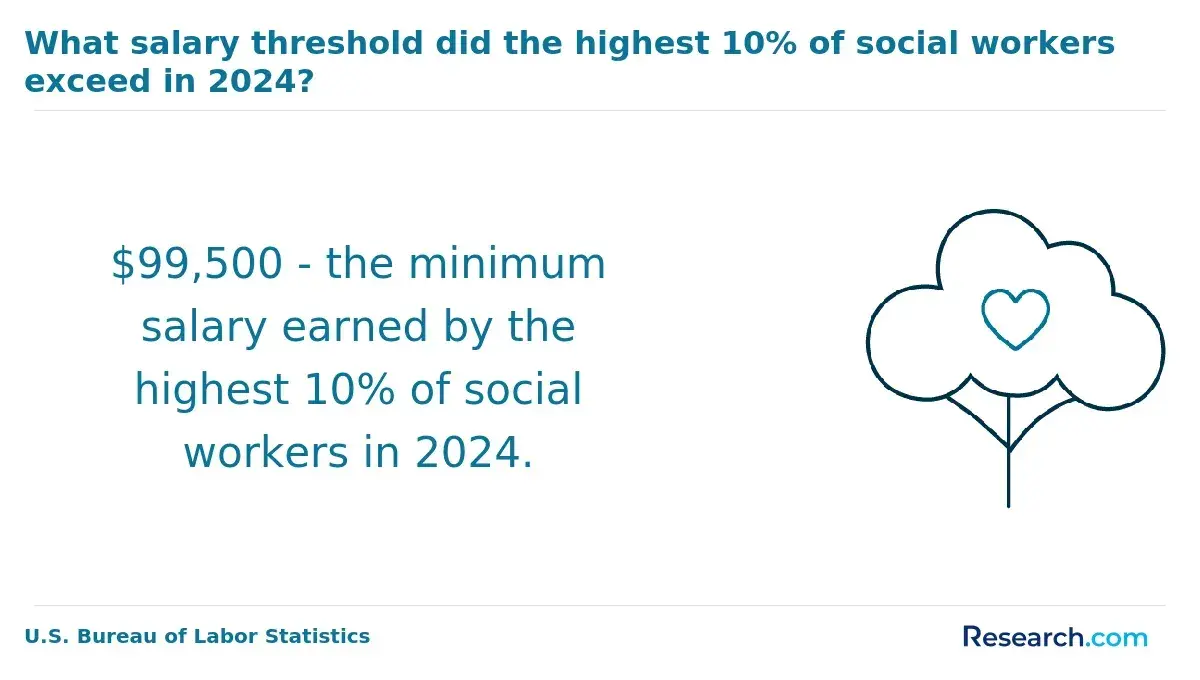
The average salary for individuals holding a master's in social work (MSW) typically ranges from $60,000 to $75,000 annually, influenced by factors such as location, employer type, specialization, license level, and experience. Healthcare and government roles generally pay toward the higher end, while schools and nonprofit organizations may offer lower salaries.
Advancement into management or clinical supervisor roles can increase earnings beyond $85,000. Clinical licensure, specialized experience, and supervisory responsibility often have a major effect on salary growth.
The job outlook remains strong with a projected 12% growth rate from 2024 to 2034, according to the U.S. Bureau of Labor Statistics. This growth is faster than average, driven by growing demand in behavioral health, healthcare, and child welfare sectors. Increasing mental health awareness and an aging population contribute significantly to this trend.
What affects MSW earning potential?
- Licensure: Clinical credentials can expand access to therapy, diagnosis, private practice, and supervisory roles.
- Setting: Hospitals, government agencies, and specialized behavioral health settings may pay differently than community nonprofits or schools.
- Location: Salaries vary widely by state, metropolitan area, and local demand.
- Specialization: Mental health, healthcare, substance use, and leadership tracks may offer different advancement paths.
- Experience: Prior human services work, field placement quality, and post-graduate supervised practice can influence hiring and promotion.
Online MSW graduates often serve rural or smaller communities at almost double the rate (57%) compared to in-person graduates (30%), per CSWE (2019). This highlights the vital role of online programs in addressing workforce shortages in underserved areas, impacting job availability and salary scales.
Students should avoid assuming that an MSW automatically leads to a specific salary. The degree can improve access to higher-level roles, but earnings depend on the labor market, license requirements, agency funding, and the graduate’s willingness to pursue clinical, supervisory, or specialized positions.
How to choose a reputable online MSW program?
To choose a reputable online MSW program, start with accreditation, licensure alignment, field placement support, affordability, and student outcomes. The right program should match your career goal and your state’s requirements, not simply offer the fastest or cheapest route to a degree.
First, confirm that the program is accredited by the Council on Social Work Education (CSWE). This is essential for students who plan to pursue licensure or want the broadest employer recognition. Then check whether the institution is properly accredited and whether online students qualify for the same academic and career services as campus students.
Key questions to ask before applying
- Is the MSW program CSWE-accredited? Do not rely only on general university accreditation.
- Does the curriculum match your goal? Compare clinical practice, administration, policy, school social work, healthcare, and advanced generalist options.
- How are field placements handled? Ask whether the school finds placements, approves student-found sites, and supports placements in your state.
- Does the program support licensure where you plan to practice? State licensing boards set requirements, so verify them directly.
- What is the real cost? Compare tuition, fees, travel, books, technology, residency requirements, and potential lost income.
- What support services are available online? Look for advising, writing help, library access, career counseling, tutoring, and technical support.
- How accessible are faculty? Instructors with professional experience and regular availability can improve the online learning experience.
- What is the course format? Determine whether classes are asynchronous, synchronous, hybrid, or require campus visits.
Be cautious with programs that advertise very low cost, unusually fast completion, or guaranteed outcomes without clearly explaining accreditation, field education, and licensure preparation. A reputable program should be transparent about requirements, placement expectations, graduation timelines, and student responsibilities.
Flexibility is important, but it should not come at the expense of professional preparation. Some programs offer asynchronous courses for students who need control over their schedules, while others require live class meetings that may provide more structure and interaction. Choose the format you can sustain through coursework and practicum.
The social work field is projected to grow by 9% over the decade, with more than 62,888 MSW students enrolled (Bureau of Labor Statistics and CSWE data). Opting for a program with strong career placement can help navigate this competitive market and support long-term advancement.
Other Things You Should Know About Social Work
Yes, graduates of accredited online MSW programs are eligible to pursue licensure as clinical social workers or other social work credentials, depending on their state requirements. It is important to verify that the program meets your state's educational standards and includes the necessary supervised fieldwork hours necessary for licensure.
MSW programs develop a range of skills including client assessment, ethical decision-making, counseling techniques, case management, and advocacy. Students also learn research methods and gain knowledge of social policies that affect diverse populations.
Yes, internships or field practicum placements are a mandatory component of all accredited MSW programs, including online options. These supervised experiences provide practical training and are essential for building hands-on skills and meeting licensure requirements.
References
- Social Worker Salary and Jobs in Social Work https://teach.com/online-ed/social-work-degrees/online-masters-social-work/salary-and-career-outlook/
- Social Worker (LCSW, MSW) Salary Guide By State https://socialworklicensemap.com/social-work-careers/social-work-salary/
- Is an Online MSW Worth It? 2025 Cost-Benefit Analysis & Career Guide - Social Work Degrees https://www.socialworkdegrees.org/is-it-worth-it-to-get-an-online-msw
- Social Work Professional Development: What’s the Value of an MSW for my Career? https://onlinedegrees.keuka.edu/blog/social-work-professional-development-whats-value-msw-my-career
- Online MSW Admissions Requirements | Tulane School of Social Work https://socialwork.tulane.edu/msw-programs/admissions/
- Online MSW Programs No GRE Required - MasterofSocialWork.com https://www.masterofsocialwork.com/faqs/gre-requirements-online-msw-programs
- 8 Career Paths You Can Pursue with a Social Work Degree https://www.sacredheart.edu/news-room/news-listing/8-career-paths-you-can-pursue-with-a-social-work-degree/
- Social Work Salaries https://www.socialworkers.org/careers/career-center/kickstart-your-job-hunt/social-work-salaries
- Is a Master of Social Work (MSW) worth it? https://www.onlinemswprograms.com/careers/is-an-msw-worth-it/
- Best Online MSW Programs - CSWE-Accredited https://www.onlinemastersdegrees.org/best-programs/social-work-msw/cswe-accredited/