2027 Best Online MSW Programs With Advanced Standing Tracks

Co-Founder and Chief Data Scientist
If you already earned a Bachelor of Social Work and want to move into licensed, advanced, or specialized practice faster, an online MSW with advanced standing can shorten the path without removing the graduate-level training required for professional social work roles. The key is choosing a program that is properly accredited, realistic about field placement expectations, and aligned with the licensing rules in the state where you plan to practice.
Advanced standing is not simply a “shorter MSW.” It is an accelerated option for qualified BSW graduates whose prior coursework and field education meet graduate program standards. That can reduce time in school, lower total tuition, and help students move sooner toward clinical practice, policy work, healthcare social work, school-based roles, community leadership, or doctoral study.
This guide explains how online advanced standing MSW programs work, what CSWE accreditation means, what admissions committees look for, how long these programs take, what they cost, and how to evaluate career, salary, and licensure outcomes before enrolling.
Key Things You Should Know
- Advanced standing tracks in MSW programs allow qualified students with BSW degrees to complete the degree faster, typically in 12 to 18 months, enhancing time and cost efficiency.
- Top online MSW programs with advanced standing maintain accreditation by the CSWE, ensuring high educational standards and eligibility for clinical licensure across all states.
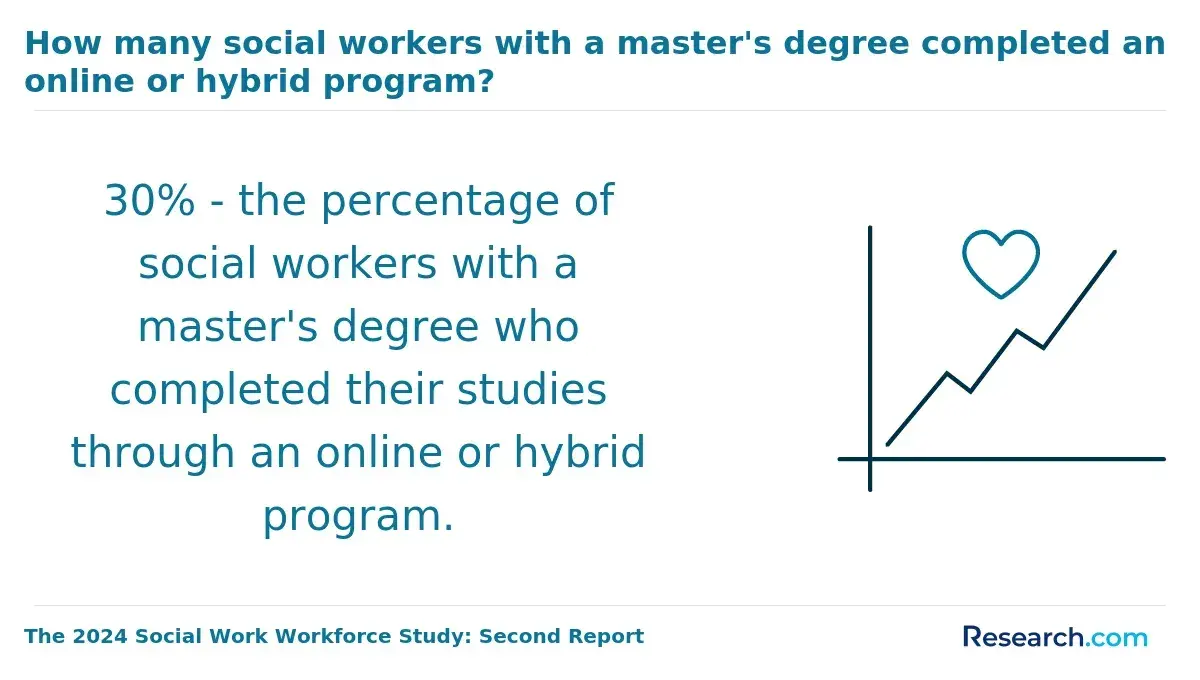
- Data from 2024-2025 shows increasing enrollment in online MSW programs, driven by flexible scheduling and growing demand for licensed social workers amid a national workforce shortage.
What is an online MSW program with advanced standing?
An online MSW program with advanced standing is a graduate social work degree pathway for students who already hold a Bachelor of Social Work from a CSWE-accredited institution. Because these students have completed accredited foundational social work coursework and undergraduate field education, they may enter the MSW at an advanced point rather than repeating the full first-year generalist curriculum.
In practical terms, advanced standing often reduces a standard two-year MSW timeline to about one year for full-time students. The online format allows students to complete coursework remotely, while field education is usually completed in an approved agency or organization near the student’s location.
Advanced standing does not mean the program is easier or less rigorous. Students still complete graduate-level coursework, supervised field education, and the competencies required for professional practice. The difference is that the program builds on the BSW instead of starting from the beginning.
Who advanced standing is designed for
- BSW graduates from a CSWE-accredited program
- Applicants with strong undergraduate social work preparation and field evaluations
- Students who want to move more quickly into advanced practice, clinical preparation, policy advocacy, or community leadership
- Working professionals who need online coursework and local field placement options
Key admissions and program factors to check
- Whether the program requires a BSW from a CSWE-accredited school
- The minimum GPA, often 3.0 or higher
- How the program evaluates prior field education
- Whether advanced standing students complete the same practicum expectations as other MSW students at the advanced level
- Whether the curriculum supports the license or role you plan to pursue
Financially, advanced standing can be a strategic option because students typically complete fewer credits than in a traditional MSW. Data from the U.S. Bureau of Labor Statistics reveals social workers with an MSW earn a median annual salary of $61,330—about 25% more than BSW-only holders. Salary outcomes still depend on location, licensure, specialization, employer type, and experience.
Students planning for long-term leadership, academic, or high-level practice roles may later compare doctoral options, including online DSW programs in social work.
Which online MSW programs hold CSWE accreditation and advanced standing approval?
Online MSW programs with advanced standing should hold CSWE accreditation and clearly state that they admit eligible BSW graduates into an advanced standing pathway. CSWE accreditation matters because it signals that the program meets recognized social work education standards, including curriculum quality, faculty qualifications, field education, and professional competencies.
Several online MSW programs in 2026 hold CSWE accreditation and advanced standing approval. Notable institutions offering accredited advanced standing MSW programs for social work include the University of Southern California (USC), University of Denver, and University of North Carolina at Chapel Hill. Other universities with CSWE-accredited online MSW advanced standing tracks include Smith College and Boston University.
These programs may differ significantly in specialization, field placement support, class format, tuition, and state authorization. A program can be strong overall but still be a poor fit if it does not support the license, practicum location, or career track you need.
How to verify accreditation and advanced standing status
- Confirm the MSW program appears as CSWE-accredited, not merely the university as a whole.
- Look for a dedicated advanced standing track, not just transfer credit policies.
- Check whether online students receive the same degree designation as campus students.
- Ask whether the program meets educational requirements for social work licensure in your state.
- Review field placement policies before applying, especially if you live outside the university’s home state.
Advanced standing students typically start in the second year, which can reduce the overall time and cost to earn an MSW. This pathway can also accelerate progress toward clinical or macro practice for qualified BSW graduates.
USC's online MSW program is a strong example; its 2025 graduates reported a 95% employment rate within six months, exceeding the national average of 88%, according to the USC Suzanne Dworak-Peck School of Social Work 2025 Program Outcomes Report.
Prospective students comparing MSW online options should evaluate accreditation, advanced standing eligibility, field placement support, licensure alignment, and whether full-time or part-time formats fit their work and family responsibilities.
What are the admission requirements for online MSW advanced standing tracks?
Admission to an online MSW advanced standing track is usually more selective than admission to a traditional MSW pathway because the program is granting credit for prior social work education. The central requirement is typically a Bachelor of Social Work from a program accredited by the Council on Social Work Education.
Applicants generally must submit official transcripts showing a competitive cumulative GPA, commonly a minimum of 3.0 on a 4.0 scale. Schools may also review grades in core social work courses, field seminar performance, and evidence that the applicant is prepared for advanced graduate work.
Completion of relevant fieldwork during the BSW program is essential, with some schools requiring around 400 supervised practicum hours to recognize prior social work education and practice.
Common application materials
- Official transcripts from all colleges attended
- Proof of a CSWE-accredited BSW
- Letters of recommendation from academic, field, or professional references
- A personal statement explaining career goals, social work values, and readiness for advanced study
- A current resume or curriculum vitae
- Field evaluation forms or documentation of undergraduate practicum experience
- An interview, if required by the program
Additional requirements to prepare for
- International applicants may need TOEFL or IELTS scores to demonstrate English language proficiency.
- Programs may require background checks before field placement begins.
- Some field sites require immunization records, drug screening, or agency-specific onboarding.
- Applicants with lower GPAs may need to show strong field evaluations, work experience, or an academic explanation.
Because advanced standing can reduce both time and tuition compared with a traditional MSW, applicants should treat the admissions process as evidence-based: show readiness, professional maturity, ethical judgment, and a clear reason for pursuing graduate social work training.
Graduates benefit from accelerated career advancement; for example, Simmons University MSW alumni reported an average salary increase of 42% within one year after graduation in 2025.
Location can also affect pay and job options, so applicants planning where to practice may want to compare the highest paying states for social workers.
How long does an online MSW with advanced standing take to complete?
An online MSW with advanced standing often takes 12 to 18 months to complete. The shorter timeline is possible because the program recognizes a qualifying bachelor's degree in social work and allows students to move directly into advanced graduate coursework.
Program length depends on credit requirements, course load, academic calendar, practicum hours, and whether the student enrolls full time or part time. Advanced standing candidates generally need about 30 to 40 credits, compared to 60 or more for traditional MSW students.
What can shorten or extend your timeline
- Full-time enrollment: Usually the fastest route, but it may be difficult to combine with full-time work and field placement.
- Part-time enrollment: More manageable for working students, but it extends completion time.
- Field placement availability: Delays in securing an approved practicum site can affect graduation timing.
- Course sequencing: Some courses must be taken in order, so missing one term can delay progress.
- State or licensure preparation needs: Students pursuing clinical licensure should choose courses and field settings carefully.
Practicum placements and field education are central to MSW preparation. Even in online programs, students must complete required supervised practice experiences. Many online MSW programs with advanced standing duration options offer flexible practicum scheduling to help students balance work, study, and personal obligations, but flexibility does not eliminate the time commitment.
For example, Florida State University's advanced standing MSW program reports a strong 15:1 return on investment, with lifetime earnings gains exceeding costs by 1,500%, per the Council on Social Work Education's 2025 data. This highlights how accelerated completion can bring career benefits, especially for students comparing program cost with how much do social workers make after graduation.
Before enrolling, ask each program for a term-by-term plan, expected weekly workload, field placement start date, and policies for students who need to slow down. The best timeline is not always the fastest one; it is the one you can complete without compromising field performance, employment, or licensing goals.
What is the typical cost and financial aid availability for online MSW programs?
Online MSW programs with advanced standing tracks typically cost between $15,000 and $40,000 for the entire degree. The final price depends on the institution, residency status, credit requirements, fees, field placement expenses, and whether the school is public or private.
Public universities often offer reduced tuition rates for in-state students, sometimes lowering costs by 30% or more. Some state schools charge about $500 to $700 per credit hour, and advanced standing tracks require fewer credits—usually 30 to 40 instead of the full 60—which can substantially reduce total tuition.
Costs to compare beyond tuition
- Per-credit tuition and required university fees
- Technology, online learning, or distance education fees
- Books, course materials, and assessment tools
- Travel costs for field placement or any required campus visits
- Background checks, immunizations, and agency onboarding costs
- Lost work hours if practicum scheduling conflicts with employment
Financial aid is widely available for eligible students. Federal aid options, such as Pell Grants and student loans, may support candidates regardless of program format, as long as the program and student meet eligibility rules. Many institutions also provide scholarships for social work students, including merit-based and need-based awards.
Students should also ask about employer tuition assistance, graduate assistantships, state workforce grants, and loan repayment programs tied to public service, behavioral health, or clinical social work roles. Public mental health agencies and nonprofit organizations often participate in loan repayment initiatives for graduates who enter qualifying clinical roles.
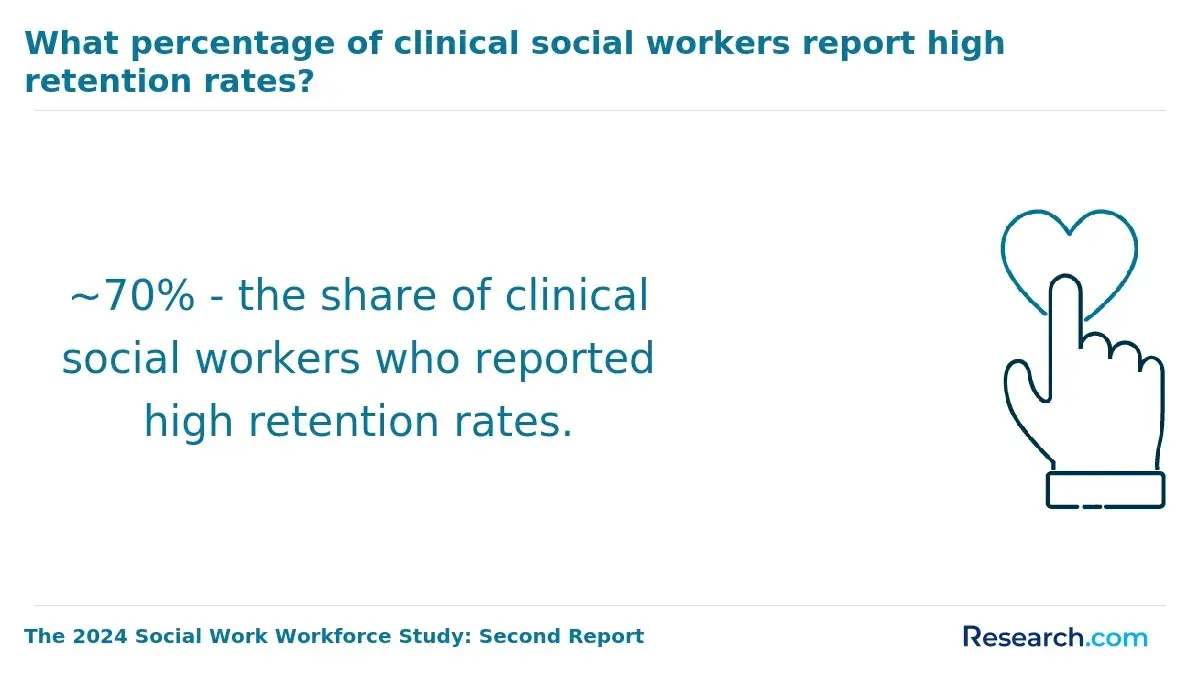
The demand for clinical social workers is growing steadily, with a 12% increase from 2024 to 2025. According to the U.S. Bureau of Labor Statistics, Kentucky MSW graduates filled 78% of new mental health positions, highlighting strong employment opportunities.
To judge affordability, compare total program cost against completion time, licensing alignment, field placement quality, and likely employment settings. The cheapest program is not always the best value if it lacks strong practicum support or does not meet your state’s professional requirements.
What coursework and specializations are included in online MSW curricula?
Online MSW programs with advanced standing tracks focus on advanced practice because students have already completed foundational BSW coursework. The curriculum typically includes policy analysis, clinical practice methods, ethics, research methods, assessment, intervention planning, and advanced practice with individuals, families, groups, organizations, or communities.
Students learn to assess client systems, apply evidence-based interventions, document services appropriately, evaluate outcomes, and work within complex social service, healthcare, school, and community settings.
Common specialization areas
- Clinical social work: Focuses on assessment, diagnosis, psychotherapy, trauma-informed care, and preparation for clinical licensure pathways.
- Mental health: Emphasizes behavioral health services, crisis intervention, treatment planning, and interdisciplinary care.
- Healthcare social work: Prepares students for hospitals, clinics, hospice, discharge planning, and patient advocacy.
- Child welfare: Centers on child protection, foster care, family systems, permanency planning, and safety assessment.
- Substance abuse: Addresses addiction, recovery models, co-occurring disorders, and treatment systems.
- Community practice: Builds skills in organizing, program development, advocacy, and systems-level change.
- Policy and administration: Focuses on leadership, program evaluation, budgeting, supervision, and social policy analysis.
Practicum placements are usually matched to the student’s specialization when possible. A student pursuing clinical licensure, for example, should prioritize field settings that provide appropriate supervision and exposure to assessment, treatment planning, and direct client services. A student aiming for policy or administration should look for placements involving program evaluation, advocacy, grant work, or organizational leadership.
For example, Fordham University's online advanced standing MSW completers achieved a 92% first-attempt LCSW pass rate in 2025, exceeding the national average by 14 percentage points. This reflects the benefit of rigorous clinical training combined with flexible online delivery.
Although advanced standing moves quickly, strong programs still cover essential professional frameworks, including human behavior in the social environment, social justice, ethics, cultural responsiveness, and work with diverse populations. Students should choose a curriculum that matches both their immediate job goals and their long-term licensing or leadership plans.
How does online learning format differ from campus-based MSW program delivery?
Online MSW programs differ from campus-based programs mainly in how coursework, interaction, advising, and field placement coordination are delivered. The academic expectations can be comparable, but the student experience is different.
Online programs often combine asynchronous coursework with synchronous class meetings. Asynchronous work may include recorded lectures, readings, discussion boards, quizzes, and written assignments that students complete within weekly deadlines. Synchronous sessions require students to log in at scheduled times for live discussion, skills practice, or group work.
Campus-based programs require physical attendance and fixed class times, which can make them less accessible for students who work full time, provide caregiving, or live far from a university. However, campus programs may offer more spontaneous interaction, informal networking, and direct access to faculty and student services.
Online MSW format: main advantages
- Greater scheduling flexibility for working adults
- Ability to study without relocating
- Potential to complete field education in a local community
- Access to classmates and faculty from different regions and practice settings
Online MSW format: common challenges
- Requires strong time management and self-direction
- May involve fewer informal networking moments than campus study
- Field placement coordination can take more planning, especially outside the school’s region
- Live sessions may still conflict with work schedules depending on the program
Field placements through online programs often allow students to complete internships locally, which can make the degree more practical for students who cannot move. This flexibility also requires clear communication among the student, program, field agency, and supervisor.
Data from the University of South Florida highlights a 28% reduction in student loan default rates for graduates of online advanced standing tracks, with just a 2.1% default rate according to U.S. Department of Education 2025 Federal Student Aid Cohort Default Rates. This indicates that focused online MSW options can positively impact student success and financial outcomes.
When comparing formats, focus less on whether a program is online or on campus and more on whether it offers strong faculty access, reliable field placement support, licensure preparation, student services, and a schedule you can realistically sustain.
What are the career outcomes and job titles for MSW graduates?
MSW graduates from advanced standing tracks can pursue a wide range of roles in clinical practice, healthcare, schools, child welfare, community programs, nonprofit leadership, government agencies, and policy organizations. The right job path depends on specialization, field experience, state licensure, and whether the graduate wants direct practice, systems-level work, or leadership.
Common job titles include clinical social worker, licensed clinical social worker (LCSW), school social worker, healthcare social worker, child welfare specialist, case manager, behavioral health clinician, community organizer, program coordinator, policy advocate, and program director.
Typical career paths
- Clinical social worker providing psychotherapy, counseling, assessment, and mental health services
- School social worker supporting student welfare, family engagement, crisis response, and access to services
- Healthcare social worker coordinating patient support, discharge planning, care transitions, and resource navigation
- Child welfare social worker working with foster care, protective services, permanency planning, and family safety
- Community organizer or policy advocate promoting systemic change and improving access to services
- Program director or administrator overseeing staff, budgets, outcomes, and service delivery
Employment settings for MSW graduates include hospitals, community mental health centers, schools, nonprofit organizations, government agencies, substance use treatment programs, aging services, correctional settings, and private practice. Clinical roles usually require additional supervised experience and state licensure after graduation.
Salary outcomes vary by location and employer. For example, data from the California Employment Development Department shows that San Jose State University MSW graduates earned a median starting salary of $78,500, 18% above the state average, demonstrating competitive compensation for graduates with advanced standing.
Licensure as an LCSW can improve job prospects and earning potential because it may allow independent clinical practice, insurance billing, and access to higher-level clinical roles. Graduates should plan for supervised clinical hours, exam preparation, and state board requirements early instead of waiting until after graduation.
What is the salary outlook and earning potential for licensed social workers?
The salary outlook for licensed social workers depends on specialization, location, employer, licensure level, and years of experience. The U.S. Bureau of Labor Statistics reports the median annual wage around $60,000, with clinical and healthcare social workers often earning over $70,000.
Advanced standing MSW graduates may enter the workforce sooner than traditional MSW students because they complete the degree faster. That can help them begin accumulating post-graduate supervised hours earlier, but salary growth still depends on licensure progress, local demand, job setting, and clinical or leadership responsibilities.
Where licensed social workers may earn more
- Healthcare facilities and hospitals: These settings usually offer higher wages and benefits, especially for roles involving discharge planning, behavioral health, care coordination, and interdisciplinary teams.
- Government agencies: These roles may provide stable employment, structured raises, pensions, or strong benefits.
- Clinical practice settings: Licensed Clinical Social Workers can often access more advanced clinical roles and may be able to bill independently where permitted.
- Nonprofits: Starting salaries may be lower, but these roles can build specialized experience and leadership opportunities.
Job growth remains robust, especially in community practice roles due to urban development and demographic changes. For instance, University of Houston Houston-area MSW graduates experienced a 19% job growth rate in community practice from 2024 to 2025, according to the Texas Workforce Commission. This trend highlights increasing opportunities in metropolitan and suburban areas for licensed social workers.
Licensure can have a major effect on income. Licensed Clinical Social Workers can often perform a broader range of clinical functions than non-licensed peers and may qualify for roles involving independent practice, supervision, or advanced behavioral health services. Rural social workers may earn less in some markets but could access loan repayment and incentive programs.
Before choosing a program, students should review regional salary trends, state licensure rules, and the types of employers hiring in their intended practice area. The strongest earning path usually combines an accredited MSW, relevant field placement, timely licensure, and a specialization tied to local workforce demand.
What licensing and certification requirements follow MSW program completion?
After completing an MSW, graduates who want to practice professionally usually need state licensure. Requirements vary by state, so students should verify rules with the licensing board in the state where they plan to work before enrolling and again before graduation.
Most social work licensing pathways involve passing an Association of Social Work Boards (ASWB) exam. The ASWB offers various exam levels, such as Bachelor, Master, Advanced Generalist, and Clinical. The appropriate exam depends on the license type and state requirements.
Graduates pursuing clinical roles commonly aim for the Licensed Clinical Social Worker credential. This typically requires a master's degree, supervised post-degree experience of about 2-3 years or 3,000 hours, and passing the clinical ASWB exam. Some states offer provisional, associate, or temporary licenses that allow graduates to practice under supervision while completing full licensure requirements.
Common post-MSW licensing steps
- Confirm the correct license level for your intended role and state.
- Submit transcripts and required application materials to the state board.
- Pass the required ASWB exam.
- Complete supervised post-degree hours if pursuing clinical licensure.
- Document supervision, practice hours, and continuing education as required.
- Apply for independent or advanced licensure once all requirements are met.
For nonclinical roles, the Licensed Master Social Worker credential may be sufficient in some states, but it may provide limited clinical privileges. Students who want to diagnose, treat, provide psychotherapy, or practice independently should pay close attention to LCSW requirements.
Certification options beyond licensure, such as Certified Social Work Case Manager (C-SWCM), can strengthen professional credibility and support specialization. These certifications generally require continuing education, relevant experience, and adherence to ethical standards.
Advanced standing MSW graduates, like those from the University of Texas at Arlington, benefit from strong job placement in high-demand areas such as aging and mental health. UTA's 2025 data reports 85% placement and a 22% rise in national openings in these fields.
The most important licensing advice is to plan early. Choose field placements intentionally, keep accurate supervision records, understand your state’s exam and hour requirements, and begin preparing for licensure as soon as your program allows.
Other Things You Should Know About Social Work
To evaluate the best online MSW programs with advanced standing tracks in 2027, consider accreditation, faculty expertise, program flexibility, field education opportunities, and cost. Accreditation ensures a recognized degree, while experienced faculty and flexible formats accommodate diverse schedules. Robust field placements and transparent tuition fees are also crucial for a quality educational experience.
Field education is a crucial component of social work programs where students gain supervised, hands-on experience in real-world settings. Advanced standing students usually complete fewer field hours due to prior coursework but must still fulfill designated practicum requirements to apply theoretical knowledge. This experience helps build practical skills essential for professional social work practice.
Yes, social work licensure requirements vary significantly from state to state, including differences in required exams, supervised practice hours, and continuing education. Graduates should verify specific state board regulations where they intend to practice to ensure compliance. Advanced standing graduates typically need to meet the same licensing standards as those from traditional MSW tracks.
Social workers can pursue roles beyond clinical practice such as policy analysis, social justice advocacy, program administration, research, and nonprofit leadership. Many MSW graduates engage in community organizing or public health initiatives. Online MSW advanced standing programs often prepare students for diverse careers within and outside direct client services.
References
- Advanced Standing Online MSW Programs https://socialworklicensemap.com/social-work-degrees/online-msw-programs/advanced-standing/
- Best Advanced-Standing Online MSW Programs https://www.onlinemastersdegrees.org/best-programs/social-work-msw/advanced-standing/
- All MSW Programs in School Social Work [Online & Campus] https://www.masterofsocialwork.com/faqs/msw-programs-school-social-work
- Social Work Salaries https://www.socialworkers.org/careers/career-center/kickstart-your-job-hunt/social-work-salaries
- Social Worker Salary and Job Outlook - TrueCare24 https://www.truecare24.com/behavioral-health/social-worker-salary-and-job-outlook/
- Social Worker Salary and Jobs in Social Work https://teach.com/online-ed/social-work-degrees/online-masters-social-work/salary-and-career-outlook/
- Maximizing Your Earnings: A Comprehensive Guide to LCSW Salary in Private Practice https://www.blueprint.ai/blog/maximizing-your-earnings-a-comprehensive-guide-to-lcsw-salaries-in-private-practice
- Best Affordable Master's Degree In Social Work https://www.psychology.org/social-work/best-affordable-masters-programs/
- How to Become a Licensed Social Worker https://onlinecounselingprograms.com/mental-health-careers/how-to-become-licensed-social-worker/
- Social Work Salaries - How Much Do Social Workers Make? https://www.onlinemswprograms.com/careers/social-worker-salaries/