2027 Advanced Standing vs Traditional Online MSW: Which Path Fits You Best?

Co-Founder and Chief Data Scientist
The first question in choosing an online MSW is whether your prior education qualifies you to skip the foundation year. If you already hold a Bachelor of Social Work (BSW) from a CSWE-accredited program, an advanced standing MSW may shorten your path to graduate-level practice. If your bachelor’s degree is in another field, a traditional online MSW is usually the required route because it provides the core social work theory, ethics, policy, research, and field education you have not yet completed.
This choice affects more than graduation speed. It influences tuition, field placement hours, weekly workload, licensure preparation, specialization options, and how quickly you can move into clinical, school, healthcare, policy, or community practice roles. The faster option is not automatically the better one; the right path depends on your academic background, state licensure goals, finances, and readiness for intensive graduate study.
This guide compares advanced standing and traditional online MSW programs in practical terms: who qualifies, how long each path takes, what each typically costs, which accreditation matters, what careers an MSW can support, and how to evaluate programs before applying.
Key Things You Should Know
- Advanced standing programs reduce completion time by up to 50% for students with accredited bachelor's degrees in social work, enabling faster entry into the workforce.
- Traditional online MSW programs offer more flexibility and broader specialization options, catering to those without prior social work education.
- Graduates from both paths report similar licensure eligibility rates; however, advanced standing often leads to higher early career salary averages, around 7% above traditional graduates.
What is advanced standing in online MSW programs?
Advanced standing in an online MSW program is an accelerated graduate pathway for students who already earned a Bachelor of Social Work (BSW) from a CSWE-accredited school. Because these students have completed undergraduate social work foundation courses and field education, the MSW program may allow them to enter at an advanced level rather than repeat the first-year foundation curriculum.
In practice, an advanced standing online MSW often moves students directly into specialized coursework, advanced practice classes, and graduate field education. Program length is commonly reduced to 12-18 months, compared with the standard two to three years for traditional MSW students.
The pathway is designed for students who can demonstrate that their BSW training is recent, rigorous, and aligned with graduate expectations. Applicants are usually asked to document their CSWE-accredited BSW degree, undergraduate GPA, field placement history, and readiness for advanced coursework. Some programs also review social work experience, references, and the quality of the applicant’s personal statement.
According to the Council on Social Work Education 2025 Workforce Report, graduates from these programs enter the workforce up to 12 months earlier and often earn approximately $20,000 more annually in early career wages. Those outcomes are one reason advanced standing is attractive to BSW graduates who want to move more quickly toward licensure, clinical practice, or leadership responsibilities.
Advanced standing is not the right fit for everyone. It assumes you already understand social welfare policy, human behavior, ethics, research basics, and generalist practice. Students who want broader foundational training, who earned a non-social-work bachelor’s degree, or whose BSW preparation does not meet program standards are usually better served by a traditional online MSW. Students planning long-term academic, research, or executive careers may also later compare doctoral options, including an online doctorate social work.
How does advanced standing MSW differ from traditional MSW?
The main difference is where you start. Advanced standing MSW students begin after the foundation level because they have already completed a CSWE-accredited BSW. Traditional MSW students start with the foundation curriculum because they may come from psychology, sociology, education, criminal justice, public health, business, or another undergraduate field.
| Factor | Advanced standing online MSW | Traditional online MSW |
| Typical applicant | BSW graduate from a CSWE-accredited program | Student with any eligible bachelor’s degree, including non-social-work majors |
| Program structure | Skips or reduces foundation coursework and moves into advanced practice | Includes foundation coursework before advanced specialization |
| Typical pace | Accelerated and academically intensive | More gradual, with more time to build core social work knowledge |
| Best fit | Students confident in their BSW preparation and ready for advanced fieldwork | Career changers or students who need full social work preparation |
| Main trade-off | Faster completion but less time to revisit foundational concepts | Longer completion time but broader preparation |
Advanced standing MSW program differences are most visible in credit load, field placement expectations, and workload intensity. Students may complete the MSW in about one year instead of two because the program grants credit for foundational coursework. That speed can be valuable, but it also means less time to adjust to graduate expectations, field supervision, and specialization decisions.
Admissions can also be more selective. Only about 32% of BSW graduates from CSWE-accredited programs meet the minimum 3.5+ GPA threshold for advanced standing admission. According to the CSWE Annual Program Survey, these programs typically produce cohorts with 15% higher employment rates post-graduation. Those figures highlight both the potential benefit and the selectivity of the route.
The traditional MSW program curriculum comparison favors students who need a complete entry point into the profession. Traditional programs usually take longer because they include social work ethics, human behavior, policy, research methods, generalist practice, and field education before advanced concentration courses. This route is often the only appropriate option for students without a BSW or with GPAs below an advanced standing cutoff.
A simple rule can help: choose advanced standing if you have the required BSW and feel ready to move quickly into advanced practice; choose the traditional track if you need the foundation year to become competent and licensure-ready. Students comparing budget-conscious options can also review MSW online affordable programs.
What are the main advantages of advanced standing MSW?
The biggest advantage of an advanced standing MSW is efficiency. Students who qualify can complete fewer credits, pay for fewer courses, and reach the job market sooner than they would in a traditional MSW program. For BSW graduates who are certain they want graduate-level social work practice, that shorter timeline can be a major financial and professional benefit.
Advanced standing MSW programs are intended for students who already completed a bachelor’s degree in social work (BSW) from a Council on Social Work Education (CSWE) accredited institution. Because foundation requirements are reduced or waived, students can spend more of the program on advanced practice methods, field specialization, clinical skills, policy analysis, leadership, or research.
This accelerated online MSW degree format can also deepen specialization. Students in advanced standing tracks report 40% higher satisfaction with clinical coursework, with intensive focus on evidence-based trauma interventions and advanced skills in areas such as mental health, substance abuse, and child welfare.
Other practical benefits include:
- Lower total tuition exposure: Fewer required credits can reduce overall program cost, even when per-credit tuition is similar.
- Faster career progression: Students may qualify sooner for post-MSW supervised practice toward clinical licensure, depending on state rules.
- More advanced electives: Reduced foundation coursework can create room for courses in policy advocacy, program evaluation, trauma practice, healthcare, or leadership.
- Stronger fit for working BSW professionals: Many online programs offer evening, asynchronous, or hybrid coursework that helps students continue employment while studying.
The main caution is intensity. Advanced standing compresses the graduate experience, so students must be organized, comfortable with independent learning, and prepared for demanding fieldwork. It is a strong option for qualified BSW graduates, but it is not a shortcut for students who still need foundational training.
Career planning should also include local labor market research. Social work pay varies widely by state, employer, specialization, and licensure level, so prospective students should compare expected costs with regional earning potential using resources such as this social worker salary by state guide.
What admission requirements apply to advanced standing MSW?
Advanced standing MSW admissions focus on one core question: has the applicant already completed enough accredited social work preparation to begin graduate study beyond the foundation level? For most programs, the non-negotiable requirement is a Bachelor of Social Work (BSW) from a CSWE-accredited program.
Common admission requirements include:
- A BSW degree from a CSWE-accredited program.
- A minimum undergraduate GPA, often around 3.0 or higher depending on the school’s selectivity.
- Official transcripts showing social work coursework and field education.
- A resume that documents practicum, employment, volunteer work, or human services experience.
- Letters of recommendation from faculty members, field instructors, or supervisors.
- A personal statement explaining career goals, readiness for advanced study, and interest in the program’s concentration or practice area.
Some programs still require GRE scores, but many waive this due to evolving admissions policies. International students may need to provide proof of English proficiency and evidence that their prior degree is comparable to a CSWE-recognized BSW. If a student’s undergraduate preparation is dated or missing required content, the program may require prerequisites or deny advanced standing placement.
Field education matters in admissions because advanced standing students are expected to enter graduate fieldwork with professional maturity. Applicants should describe not only where they completed field hours, but what populations they served, which practice skills they used, and how supervision shaped their development.
The requirements for accelerated MSW programs reflect the compressed nature of the route. Graduates of one-year advanced standing online programs reached LCSW licensure eligibility 18 months faster than traditional peers, with 25% assuming supervisory roles within two years compared to 12% among others. Those outcomes are appealing, but they depend on entering the program with the right preparation.
Applicants who do not meet competitive advanced standing criteria should not assume they are out of options. Traditional online MSW programs, bridge supports, and schools with broader admissions policies may still fit their goals. For flexible admissions research, students can compare MSW programs with high acceptance rate.
How long do advanced standing vs traditional online MSW take?
Advanced standing online MSW programs are shorter because they are built for students who already completed accredited undergraduate social work preparation. Students with a bachelor’s degree in social work can often complete the MSW in 12 to 18 months by skipping foundational courses. Traditional online MSW programs typically take two to three years because they include the full sequence of foundation courses, advanced courses, and practicum requirements.
| Path | Typical completion time | Who it fits | Timing consideration |
| Advanced standing online MSW | 12 to 18 months, or about 1 to 1.5 years | Qualified CSWE-accredited BSW graduates | Fastest route, but often requires a concentrated workload |
| Traditional online MSW | Two to three years, or 24 to 36 months | Students without a BSW or those needing full foundation training | More time for academic adjustment, field learning, and specialization exploration |
| Part-time traditional online MSW | May extend beyond three years | Working professionals, caregivers, and students needing a reduced course load | More flexible, but delays graduation and may increase indirect costs |
The shorter timeline can reduce both direct and indirect costs. According to the U.S. Department of Education Higher Education Cost Report 2025, average total tuition for advanced standing fell to around $22,500 for in-state students at public universities. The shorter duration contributes to a strong return on investment of 180% over three years by cutting tuition and opportunity costs.
However, speed should be weighed against capacity. Advanced standing students may take fewer total credits, but the remaining credits can be demanding because they focus on advanced practice and field education. Traditional students spend more time in school, but that extra time can be valuable for students who are new to social work or who need a slower pace because of work and family responsibilities.
Before choosing based on time alone, compare weekly course expectations, field placement schedules, state licensure requirements, and whether the program allows part-time advanced standing enrollment. A program that is shorter on paper may still be difficult if field hours conflict with employment.
What costs should you expect for each MSW path?
The cost difference between advanced standing and traditional online MSW programs usually comes down to required credits, program length, field placement demands, and residency-based tuition. Advanced standing is often less expensive overall because students take fewer courses. Traditional programs usually cost more because they include the full foundation and advanced curriculum.
| Cost category | Advanced standing MSW | Traditional online MSW |
| Typical tuition range | $20,000 to $45,000 | $30,000 to $70,000 |
| Field placement hours | Roughly 550 field placement hours | About 1,000 or more field placement hours |
| Program length impact | Shorter timeline can reduce tuition exposure and living costs | Longer timeline spreads payments out but can increase total cost |
| Work schedule impact | Short and intensive; may require temporary work-hour reductions | Longer but may be easier to manage part time |
Traditional online MSW programs usually range from $30,000 to $70,000, depending on the school’s tuition model, reputation, residency rules, and credit requirements. The field education component can also create indirect costs, including transportation, background checks, liability insurance, immunizations, required trainings, and possible lost wages if placement hours occur during normal work time.
Advanced standing MSW programs, designed for students with a bachelor’s in social work, typically cost between $20,000 and $45,000. Because foundational courses are waived or reduced, students pay for fewer credits. These accelerated paths require roughly 550 field placement hours, often in mental health settings, which may reduce some indirect costs but could limit breadth of practice exposure compared with traditional routes.
Both pathways can include expenses beyond tuition, such as textbooks, technology fees, graduation fees, professional association dues, licensing exam costs after graduation, and state licensure application fees. Students should also ask whether online tuition differs for in-state and out-of-state students and whether the school charges separate field placement or distance learning fees.
A realistic budget should include time as well as money. Traditional students need to plan for a longer period of enrollment and living expenses. Advanced standing students need to plan for a shorter but more compressed schedule that may leave less room for full-time work, overtime, or caregiving flexibility.
Which accreditation matters most for online MSW programs?
The most important accreditation for an online MSW program is accreditation by the Council on Social Work Education (CSWE). For students who plan to become licensed social workers, especially clinical social workers, CSWE accreditation is the standard most closely tied to licensure eligibility, employer recognition, and professional mobility.
CSWE accreditation means the program has been reviewed against national social work education standards, including curriculum, field education, ethics, assessment, and faculty qualifications. Graduating from a non-CSWE-accredited MSW program can create serious barriers when applying for state licensure, clinical supervision, government positions, healthcare roles, school social work credentials, or jobs that require an accredited social work degree.
Accreditation is important for both advanced standing and traditional online MSW students. Advanced standing programs typically hold CSWE accreditation because they must verify that students’ BSW preparation and graduate coursework meet professional standards. Traditional students also need CSWE-accredited training to ensure their foundation and advanced practice education will be recognized by licensing boards.
The Bureau of Labor Statistics Occupational Outlook 2025 reports that advanced standing MSW graduates had a median starting salary of $68,000, 14% higher than the $59,500 median of traditional track graduates. This difference largely reflects quicker access to clinical licensure tracks, not simply the credential itself. Licensure rules, supervised hours, exam requirements, and employer demand still vary by state and practice area.
When evaluating an online MSW, verify more than the school’s general accreditation. Confirm that the specific MSW program is CSWE-accredited, that the program accepts students from your state, and that it can support field placements where you live. State authorization matters because some online programs cannot enroll students in every state or may not be able to arrange approved practicum sites in certain locations.
If your goal is licensed practice, do not treat accreditation as optional. A lower-cost or faster program that lacks CSWE accreditation can cost more in the long run if it blocks licensure or limits employment.
What career paths open with an MSW degree?
An MSW can prepare graduates for careers in clinical practice, case management, healthcare, schools, child welfare, community organizations, policy, program administration, and nonprofit leadership. The degree is especially important for students who want to pursue licensed clinical social work, although licensure requirements vary by state and usually require supervised post-graduate experience and an exam.
Common MSW career paths include:
- Clinical social work: Providing therapy, assessment, crisis intervention, and treatment planning in mental health or substance abuse settings.
- School social work: Supporting students, families, and school teams with behavioral, social, attendance, and family-system challenges.
- Healthcare social work: Helping patients and families navigate hospitals, rehabilitation, discharge planning, chronic illness, and end-of-life care.
- Child welfare and family services: Working with children, parents, courts, foster care systems, and protective service agencies.
- Community organization: Building programs, partnerships, and advocacy initiatives for underserved groups.
- Policy advocacy and administration: Designing, evaluating, or improving social welfare systems through research, management, and legislative work.
The right MSW format can influence how quickly you enter these roles. Advanced standing may be attractive for BSW graduates who already know their intended specialization and want a faster move into advanced fieldwork. Traditional MSW programs may be better for career changers who need exposure to several practice areas before choosing a concentration.
Online formats can also support students who cannot pause work or family responsibilities. In 2025, 75% of advanced standing online MSW students were full-time employed parents. Their ability to complete degrees with a 92% retention rate versus 78% in traditional programs demonstrates how online and advanced standing options can support career growth without requiring students to leave the workforce entirely.
According to the Online Learning Consortium MSW Flexibility Study 2025, these pathways support success for diverse learners balancing education, employment, and family. Even so, students should confirm that online coursework, field placements, and required live sessions fit their schedule before enrolling.
What salaries and job outlooks exist for MSW graduates?
MSW salaries depend on specialization, licensure level, employer type, geography, and experience. In 2026, the U.S. Bureau of Labor Statistics reports a median annual wage of about $60,000 for social workers, with clinical social workers earning up to $77,000. Specialized areas, such as healthcare or school social workers, may earn between $55,000 and over $80,000 annually.
Advanced standing does not automatically guarantee a higher salary, but it can accelerate income because qualified students finish sooner and may begin post-graduate supervised practice earlier. The financial advantage is strongest when the student completes the program on time, secures appropriate supervision, and works in a state or employer setting where clinical licensure is rewarded.
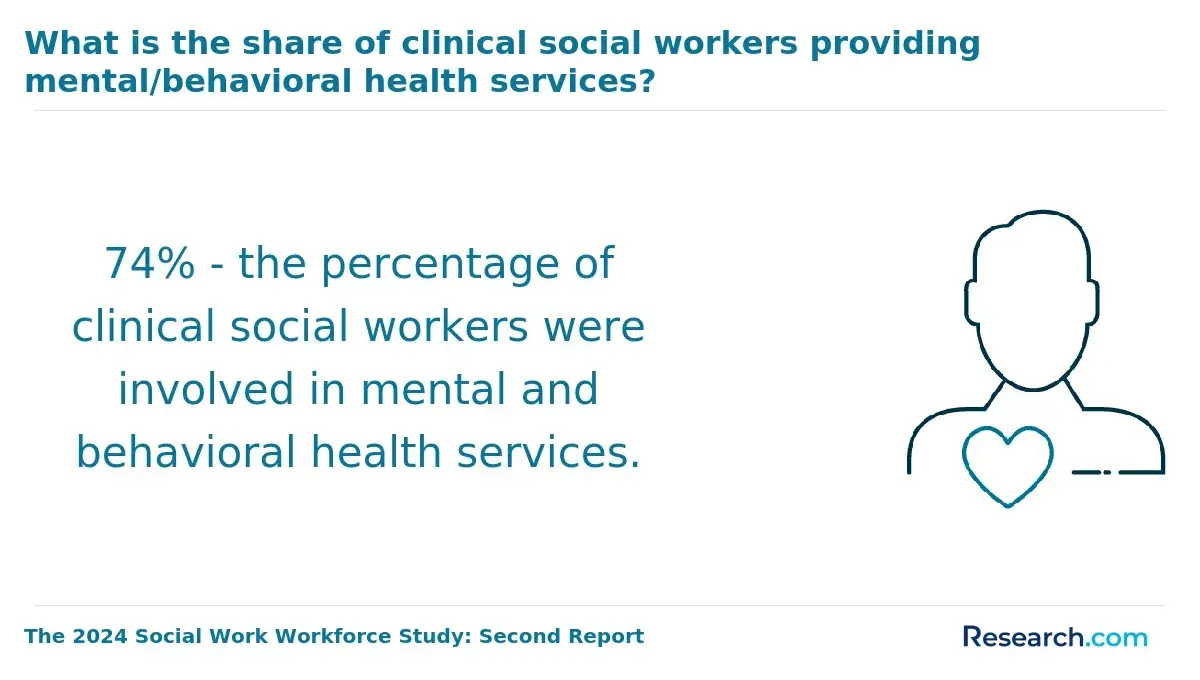
Employment growth for social workers is projected at 12% through 2034, outpacing many other occupations. Demand is connected to expanding healthcare services, increased mental health awareness, substance use treatment needs, aging populations, and ongoing child welfare and school-based service needs.
Graduates from CSWE-accredited advanced standing programs show strong readiness, with a 98% average licensure exam pass rate and 22% less pass rate variance compared to traditional programs, based on Association of Social Work Boards 2025 Exam Data. Students should interpret exam data carefully, however, because pass rates can reflect admissions selectivity, academic support, prior BSW preparation, and student demographics as well as program quality.
- Research salary ranges in your target state, city, and practice setting before estimating return on investment.
- Confirm the state licensure pathway for your intended role, especially if you plan to provide clinical services.
- Compare time-to-degree, total cost, field placement quality, and licensure exam support.
- Consider whether the program’s specialization matches higher-demand areas such as healthcare, mental health, school social work, or rural services.
For many students, the best financial outcome comes from choosing the program that they can complete successfully, that meets licensure rules, and that connects them with strong field placements in their intended practice area.
How to choose the best online MSW program for you?
The best online MSW program is the one that fits your eligibility, licensure goal, schedule, budget, and preferred area of practice. Start with the most important dividing line: if you have a qualifying BSW from an accredited institution, advanced standing may be available; if you do not, a traditional online MSW is usually necessary.
If you qualify for advanced standing, the main benefit is speed. These programs often finish within 12 to 18 months and may reduce tuition by lowering the number of credits required. This can matter in areas with workforce shortages. Demand for LCSW-certified social workers in rural areas increased by 28% by 2025, and according to the Health Resources and Services Administration Social Work Shortage Report 2025, 65% of new openings were filled by advanced standing graduates.
If you do not have a social work background, choose a traditional online MSW that provides a strong foundation year, supportive advising, and well-organized field education. These programs usually take two to three years and are designed to prepare students for advanced practice even if they entered from another discipline.
Use this checklist when comparing programs:
- CSWE accreditation: Verify that the MSW program itself, not just the university, is CSWE-accredited.
- State licensure alignment: Confirm that the curriculum and field education meet requirements in the state where you plan to practice.
- Field placement support: Ask whether the school finds placements, assists with placement searches, or expects students to secure their own sites.
- Specialization options: Compare concentrations such as clinical practice, healthcare, school social work, child welfare, community practice, or policy.
- Schedule design: Review whether classes are asynchronous, live online, evening-based, weekend-based, full time, or part time.
- Student support: Look for advising, career counseling, writing support, licensure exam preparation, and faculty accessibility.
- Total cost: Compare tuition, fees, field-related expenses, books, technology costs, and potential lost income during placement.
- Technology quality: Make sure the learning platform, remote supervision tools, and online library access are reliable and easy to use.
Before applying, answer these five questions:
- Do I have a BSW qualifying me for advanced standing?
- What timeline fits my workforce goals?
- Which licensure requirements apply to my state?
- How does the program support practicum placements?
- Is the remote learning technology reliable and engaging?
Choose advanced standing if you are academically eligible, confident in your BSW foundation, and prepared for an intensive pace. Choose a traditional online MSW if you need comprehensive preparation, are changing fields, or want more time to explore social work specializations before committing to a practice path.
Other Things You Should Know About Social Work
Advanced Standing MSW programs are designed for students with a BSW and typically take about one year to complete. Traditional Online MSW programs, which are for those without a BSW, usually require two to three years of study. This difference is primarily due to the prerequisite coursework required in Traditional programs.
Field placements, also known as practicums or internships, are a mandatory component of all accredited MSW programs, including online formats. These placements provide supervised, hands-on experience in social work settings and are essential for meeting licensing requirements in most states.
Completing an advanced standing MSW program does enable graduates to pursue social work licensure. Graduates must still meet state-specific requirements, including supervised post-master's hours and passing the licensing exam, which are consistent regardless of whether the MSW was earned traditionally or via advanced standing.
While traditional MSW programs may provide more in-person networking, many online programs have adapted by offering virtual networking events, discussion forums, and mentorship connections. These online opportunities can still foster professional relationships but may require more self-motivation to engage effectively.
References
- How Much Does an MSW Cost? | SocialWorkDegrees.org https://www.socialworkdegrees.org/lp/msw-tuition-2
- Admission Requirements and Available Intakes https://www.uwindsor.ca/msw/401/admission-requirements
- Online MSW Programs Guide: Accredited & Affordable - AU https://online.aurora.edu/program-resources/choosing-best-msw-degree/
- Accredited Master of Social Work (MSW) Programs (2026 Update) - MasterofSocialWork.com https://www.masterofsocialwork.com/
- Advanced Standing Online MSW Programs https://socialworklicensemap.com/social-work-degrees/online-msw-programs/advanced-standing/
- Master’s in Social Work: An informative guide https://www.avanse.com/blog/master-s-in-social-work-an-informative-guide
- Where a Social Work Degree Can Take You | ACAP https://www.acap.edu.au/news-and-opinion/where-a-social-work-degree-can-take-you/
- Online Master of Social Work https://socialwork.pacific.edu/programs/online-msw-programs
- Best Online MSW Programs - CSWE-Accredited https://www.onlinemastersdegrees.org/best-programs/social-work-msw/cswe-accredited/
- Advanced Standing Master's in Social Work Programs | MSW Guide https://www.mswguide.org/schools/advanced-standing/