
2027 Best States to Work as a Nurse

Co-Founder and Chief Data Scientist
Best States to Work as a Nurse in 2026: Salary, Demand, Licensing, and Career Fit
Choosing where to work as a nurse is not only a salary decision. A state with high pay may also have high housing costs, strict licensing steps, heavy workloads, or limited flexibility. Another state may pay less on paper but offer stronger job availability, better scheduling options, loan repayment opportunities, or a lower cost of living.
This guide is for registered nurses, nursing students, career changers, and licensed practical nurses planning their next move. It explains which states stand out for nursing demand, pay, work-life balance, education support, licensing flexibility, and advancement opportunities. You will also learn how to compare states realistically instead of relying only on salary rankings.
Quick Answer: What Are the Best States for Nurses?
Based on the salary, demand, employment, career-growth, and work-environment factors cited in this guide, strong states for nurses include California, Washington, New York, Massachusetts, Texas, Arizona, Delaware, Colorado, Maryland, and Nevada. California offers the highest registered nurse salary listed here at $124,000, while Texas and California have some of the largest registered nurse workforces. Nurses who want mobility should also consider whether their target state participates in the Nurse Licensure Compact.
The best state for you depends on your goal. If income is your priority, compare high-paying states against cost of living. If stability matters most, look at employment levels and healthcare infrastructure. If you want to advance into roles such as nurse practitioner, clinical nurse specialist, nurse educator, or nurse leader, prioritize states and employers that support graduate education, certifications, and clinical specialization.
Key things you should know about working as a nurse
- Before practicing as a registered nurse, candidates must pass the NCLEX-RN exam and satisfy the licensing rules of their state board of nursing.
- California is the highest-paying state for registered nurses among the states discussed in this guide.
- The average salary for registered nurses across the country is around $82,750.
- Nurses who want to work across state lines may qualify for a multistate license if their home state and work state participate in the compact.
- The demand for registered nurses is expected to grow by 6.2 percent from 2024 to 2034, while another projection cited below describes nationwide RN growth of approximately 7% during the same period.
- Which states have the highest demand for nurses?
- What are the highest-paying states for nurses?
- How do nursing job opportunities vary across different states?
- How does nursing salary vary from state to state?
- How do benefits for nurses differ based on state of employment?
- How does work-life balance vary for nurses across different states?
- How can nurses transition into advanced roles with ease?
- What are the most in-demand nursing specialties in different states?
- What are the best online ADN programs for non-nurses?
- How can nurses bridge from ADN to advanced practice roles?
- Are there states that support emerging nursing specialties and innovative healthcare roles?
- Are there states offering unique financial incentives for nurses?
- What affordable pathways exist for advanced nursing education?
- What affordable pathways can help launch a nursing career?
- What is the most accessible pathway to become a nurse practitioner?
- What are the nursing licensing requirements in different states?
- Can I practice as a nurse in any state with a compact nursing license?
- What is the projected job growth and demand for nurses in various states over the next decade?
- What opportunities are available for nurses to pursue advanced education and certifications?
- Are there states with more educational support for nurses?
How to Compare the Best States for Nursing Jobs
A useful state comparison should look beyond headline pay. Nurses should evaluate total compensation, patient volume, staffing policies, housing costs, commute times, state licensing rules, specialty demand, union presence, employer benefits, and access to advanced education. A higher wage may not produce a better lifestyle if rent, taxes, childcare, transportation, and overtime expectations are also high.
| Factor | Why it matters for nurses | What to check before relocating |
| Salary | Base pay affects short-term income, loan repayment, and long-term savings. | Compare the RN average salary with local housing, taxes, commute costs, and shift differentials. |
| Demand | High demand can mean more openings, better bargaining power, and more specialty options. | Look at hospitals, clinics, long-term care facilities, rural needs, and population growth. |
| Licensure | State rules determine how quickly you can begin practicing after a move. | Confirm board of nursing requirements, compact status, background checks, fees, and continuing education rules. |
| Work environment | Staffing ratios, scheduling, and workplace culture affect burnout risk. | Ask about patient loads, mandatory overtime, weekend expectations, safety policies, and float requirements. |
| Career advancement | Some states offer stronger pathways into advanced practice, education, leadership, or specialty care. | Review employer tuition benefits, nearby graduate programs, certification support, and clinical placement access. |
Which states have the highest demand for nurses?
The states below stand out because they combine sizable healthcare systems, ongoing RN employment, competitive pay, or strong career-development conditions. They are not identical opportunities. California and New York may appeal to nurses who want large hospital networks and urban specialty care. Texas and Arizona may appeal to nurses seeking population growth and a wider mix of urban, suburban, and rural roles. Delaware and Nevada may be attractive for nurses who want smaller markets with clear demand signals.
| State | RN salary cited in this guide | RN employment cited in this guide | Best fit for nurses who want... |
| California | $124,000 | 325,620 nurses employed | High pay, major health systems, academic medicine, and specialty practice options |
| Washington | $95,350 | Over 139,000 licensed and active practical and registered nurses | Professional development, staffing-focused policy attention, and research-oriented healthcare settings |
| New York | $93,320 | 190,470 nurses employed | Large urban healthcare systems, continuing education, and diverse specialty settings |
| Massachusetts | $96,630 | Not specified in the provided data | Healthcare innovation, advanced education, research, and specialty growth |
| Texas | $79,120 | 231,060 nurses employed | Large job markets, geographic flexibility, and roles across urban and rural settings |
| Arizona | $81,600 | Over 56,000 registered nurses | Flexible scheduling, warm climate, and expanding healthcare needs |
| Delaware | $77,760 | Over 12,500 registered nurses | Smaller-state healthcare access and proximity to larger regional job markets |
| Colorado | $80,670 | 52,390 registered nurses | Outdoor quality of life, professional networking, and continuing education |
| Maryland | $82,660 | Almost 50,000 registered nurses | Specialty facilities, professional organizations, and access to regional healthcare hubs |
| Nevada | $82,750 | 23,970 registered nurses | Growing healthcare demand, tourism-driven care needs, and potential career stability |
1. California
California remains one of the most visible nursing markets because of its large population, broad healthcare needs, major medical centers, and extensive specialty-care network. The trade-off is cost. Nurses considering Los Angeles, San Francisco, or other high-cost metro areas should compare salary offers against housing, commuting, parking, childcare, and taxes before assuming the higher wage will automatically improve take-home value.
Salary: Registered nurses in California earn an average salary of $124,000 per year, making it the top-paying state discussed in this guide. That pay can support strong financial goals, but only when evaluated alongside regional living costs.
Work-life balance: California offers many shift structures, specialty settings, and employer types. Nurses may find day, evening, night, per-diem, travel, and specialty roles, but the experience will vary widely by facility and unit.
Career outlook: California is a strong match for nurses interested in academic hospitals, research institutions, advanced technology, specialty care, and progressive clinical practice environments.
2. Washington
Washington offers a strong healthcare infrastructure with access to research, academic, and professional-development opportunities. It may be a good fit for nurses who want to keep learning while practicing in a state that pays attention to staffing and workplace conditions.
Salary: Registered nurses in Washington earn an average annual wage of $95,350. That level reflects the value of experienced nursing labor in a competitive healthcare market.
Work-life balance: Washington has policies related to hospital nurse staffing, which can be an important factor for nurses comparing workload, patient safety, and burnout risk.
Career outlook: Washington has over 139,000 licensed and active practical and registered nurses, representing 2.13% of the nation’s nursing population. Nurses who want advancement should compare employer tuition assistance, clinical ladders, and specialty certification support.
3. New York
New York offers one of the country’s most complex and varied healthcare environments, with large hospital systems, specialty centers, community clinics, long-term care organizations, and academic institutions. The state can be especially attractive for nurses who want exposure to diverse patient populations and advanced specialty care.
Salary: According to the U.S. Bureau of Labor Statistics data cited in the original article, registered nurses in New York earn an average annual salary of $93,320.
Work-life balance: New York can be demanding, especially in high-volume metro facilities. However, nurses may also value the state’s cultural, social, and educational options outside of work.
Career outlook: New York supports continuing education and professional development, which can help nurses move into specialty, leadership, education, or advanced practice roles.
4. Massachusetts
Massachusetts is a strong choice for nurses who want access to healthcare innovation, advanced clinical practice, research, and academic medical environments. The state’s healthcare ecosystem may be especially useful for nurses planning graduate education or specialty certification.
Salary: Registered nurses in Massachusetts earn an average salary of $96,630, one of the highest figures cited in this guide.
Work-life balance: Massachusetts has nurse staffing regulations and offers benefits that may include paid time off, flexible scheduling options, and professional development programs, depending on the employer.
Career outlook: Nurses can pursue advanced degrees, certifications, educator roles, and leadership pathways. The state is a practical option for nurses who want a long-term career ladder rather than only an entry-level RN job.
5. Texas
Texas has one of the largest nursing labor markets in the country, supported by population growth, major metropolitan health systems, rural healthcare needs, and a wide range of practice settings. It can be a strong choice for nurses who want geographic flexibility and many employer types.
Salary: Registered nurses in Texas earn an average annual salary of $79,120. While this is lower than salaries in states such as California and Massachusetts, the cost-of-living equation may be different depending on the city or region.
Work-life balance: Texas offers urban, suburban, and rural lifestyles, as well as a range of hospital, clinic, long-term care, and community health roles. Nurses should compare scheduling expectations by employer, not just by state.
Career outlook: Texas has over 231,000 registered nurses and continued healthcare demand. Nurses seeking autonomy, specialty roles, or graduate education should confirm scope-of-practice rules and employer advancement pathways.
6. Arizona
Arizona offers nursing opportunities across hospitals, clinics, long-term care facilities, community health settings, and growing population centers. The state may appeal to nurses who want warm weather, flexible employment options, and a developing healthcare market.
Salary: Registered nurses in Arizona earn an average annual salary of $81,600.
Work-life balance: Arizona may offer part-time, per-diem, and flexible scheduling options depending on the employer. Its climate and outdoor recreation can also be attractive for nurses who place a high value on lifestyle outside of work.
Career outlook: The state has over 56,000 registered nurses and supports opportunities for advancement and specialization. Nurses should review state practice rules if they plan to move into advanced practice.
7. Delaware
Delaware is smaller than many states on this list, but it still offers a developed healthcare system with hospitals, outpatient facilities, clinics, and regional access to nearby job markets. Its location near Philadelphia and Baltimore can expand options for nurses who are willing to commute or compare licenses across state lines.
Salary: The average annual salary for registered nurses in Delaware is around $77,760.
Work-life balance: Delaware’s smaller size and lower population density may appeal to nurses seeking less congestion and a more manageable daily routine.
Career outlook: According to the U.S. BLS data cited in the source article, Delaware has over 12,500 registered nurses. Nurses should compare local openings by specialty because smaller markets can have fewer positions in highly specialized units.
8. Colorado
Colorado combines a growing healthcare sector with strong lifestyle appeal. It can be a good fit for nurses who want access to professional organizations, continuing education, and outdoor recreation while working in hospitals, clinics, or specialty settings.
Salary: Registered nurses in Colorado earn an annual average salary of $80,670.
Work-life balance: Colorado’s recreation options, flexible work opportunities, and focus on employee well-being can be attractive, but nurses should still ask employers about staffing, weekend rotations, and overtime expectations.
Career outlook: Colorado has 52,390 registered nurses, according to the U.S. BLS data cited in this guide. Nurses can pursue professional development through workshops, certifications, networking events, and advanced education.
9. Maryland
Maryland offers access to hospitals, clinics, specialty facilities, research organizations, and healthcare employers near major regional hubs. It may be a practical state for nurses who want both local opportunities and access to broader Mid-Atlantic healthcare markets.
Salary: Registered nurses in Maryland earn an average salary of $82,660.
Work-life balance: Maryland employers may offer flexible scheduling, family-friendly policies, and advancement opportunities, though benefits and staffing conditions vary by facility.
Career outlook: Maryland has almost 50,000 registered nurses, according to the U.S. BLS data cited in the original article. Nurses comparing healthcare careers may also want to look at adjacent clinical fields, including the best occupational therapy colleges, if they are deciding between nursing and other patient-care professions.
10. Nevada
Nevada’s healthcare demand is shaped by population growth, an aging population, and a tourism-driven economy. With 23,970 registered nurses in the state, nurses may find opportunities in hospitals, urgent care, specialty clinics, long-term care, and high-volume service environments.
Salary: Registered nurses in Nevada earn an average salary of $82,750.
Work-life balance: Nevada’s climate, outdoor access, and entertainment options may support a satisfying lifestyle outside of work. Nurses should still review unit-level workload, shift expectations, and commute patterns before accepting a role.
Career outlook: Nevada offers ongoing education and training opportunities. Nurses who add advanced degrees, specialty credentials, and clinical expertise may improve their competitiveness for higher-responsibility roles.
Real-World Perspectives from Nurses
"Becoming a nurse has been the most rewarding decision of my life. Every day, I have the opportunity to make a real difference in people's lives, whether it's comforting a patient in need or saving someone's life in the emergency room. The sense of fulfillment and purpose I get from my career in nursing is unparalleled." - Alex
"As a nurse, I've had the privilege of working in various healthcare settings across the United States. From bustling city hospitals to rural clinics, each experience has taught me something new and expanded my skill set. Nursing isn't just a job; it's a calling that allows me to touch the lives of others and be a beacon of hope during their darkest moments." - Lily
"Being a nurse means being a part of a community dedicated to caring for others. Whether it's administering medication, providing emotional support, or advocating for patients' rights, I'm constantly reminded of the impact nurses have on the world. Through the ups and downs of this profession, I've found strength, resilience, and a deep sense of purpose." - Ollie
What are the highest-paying states for nurses?
The highest-paying states for registered nurses cited in this guide are California ($124,000), Hawaii ($106,530), Oregon ($98,630), Alaska ($97,230), and Massachusetts ($96,630). These states can be attractive for nurses seeking higher income, but salary should be reviewed together with housing prices, taxes, relocation costs, commute time, and available benefits.
| State | Average registered nurse salary cited | Decision note |
| California | $124,000 | Highest listed pay, but some metro areas have very high living costs. |
| Hawaii | $106,530 | High pay should be compared with island living costs and relocation logistics. |
| Oregon | $98,630 | Competitive pay with regional variation by city and employer. |
| Alaska | $97,230 | Strong salary, but nurses should consider location, travel, weather, and access to services. |
| Massachusetts | $96,630 | High pay and strong healthcare infrastructure, with a higher cost of living in many areas. |
How do nursing job opportunities vary across different states?
Nursing opportunities vary because each state has a different population profile, healthcare system, regulatory environment, and employer mix. A state with many hospitals may offer more acute-care openings, while a state with a large older population may need more long-term care, home health, and geriatric nursing professionals.
- Population demographics: States with aging populations or fast population growth often need more nurses because demand for healthcare services rises.
- Healthcare infrastructure: Areas with more hospitals, clinics, nursing homes, outpatient centers, and specialty facilities usually offer a wider range of nursing roles.
- Nursing shortages: States with fewer qualified nurses may have more openings and stronger recruitment efforts. Some clinicians comparing advanced patient-care careers may also evaluate the difference between a nurse practitioner and physician assistant pathway.
- State regulations: Scope-of-practice laws, nurse staffing policies, licensing rules, and continuing education requirements can affect where nurses choose to work.
- Economic conditions: Healthcare spending, local unemployment levels, and employer expansion can influence salary offers and hiring volume.
How does nursing salary vary from state to state?
Nursing salaries differ by state because employers compete in different labor markets. Cost of living, local demand, union contracts, healthcare funding, experience requirements, specialty mix, and state labor laws can all affect pay. A nurse in a high-cost state may earn more than a nurse in a lower-cost state, but the higher salary does not always mean greater disposable income.
Nurses who want to increase their earning potential can compare specialty certifications, leadership roles, travel nursing, shift differentials, and graduate education. For example, nurses preparing for advanced clinical or leadership positions may consider whether it is the right time to earn an MSN degree.
How do benefits for nurses differ based on state of employment?
Benefits can change the real value of a nursing job. Two offers with similar salaries may be very different once you compare insurance premiums, retirement contributions, paid leave, tuition reimbursement, shift bonuses, relocation support, and loan repayment options.
- Health insurance: Coverage, premiums, deductibles, family-plan costs, and employer contributions can vary by state and employer.
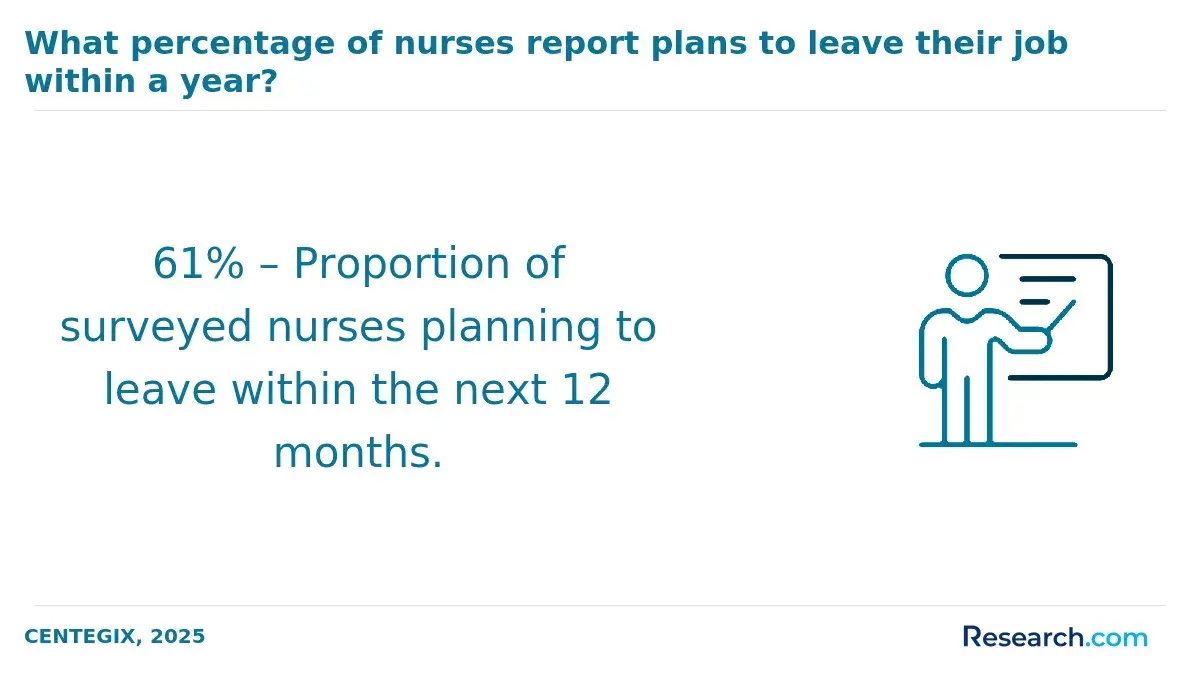
- Retirement plans: Some employers offer 401(k) plans, pension options, or matching contributions. The source article notes that about one million nurses will retire or consider retiring within the next five to ten years, making retirement planning especially relevant for the workforce.
- Paid time off: Vacation, sick leave, holidays, parental leave, and scheduling flexibility depend on employer policy and state labor rules.
- State-specific incentives: Some states or employers may offer loan repayment, tuition reimbursement, housing assistance, sign-on bonuses, or tax-related incentives for nurses in underserved areas.
- Career-development benefits: Nurses interested in research, quality improvement, or non-bedside healthcare roles can also compare options such as the most affordable online master’s in clinical research programs.
How does work-life balance vary for nurses across different states?
Work-life balance depends heavily on the unit, employer, specialty, and local staffing market. State laws and regulations can also matter. Some states address nurse-to-patient ratios, staffing plans, rest periods, consecutive workdays, or scheduling practices. In general, nurses should look for manageable patient loads, transparent scheduling, adequate break coverage, realistic overtime policies, and a culture that supports safe care.
| Work-life balance question | Why nurses should ask it |
| What is the typical patient load on this unit? | Patient assignment size is one of the clearest indicators of workload and burnout risk. |
| How often is overtime mandatory? | Mandatory overtime can quickly change the lifestyle value of a higher-paying job. |
| How are weekends, holidays, and call shifts assigned? | Scheduling rules affect family time, recovery, and second-job or school commitments. |
| Does the employer offer self-scheduling or part-time options? | Flexible scheduling can be especially valuable for working parents, graduate students, and nurses nearing retirement. |
| What is the turnover rate on the unit? | High turnover may signal poor staffing, weak management, or unsustainable workload expectations. |
How can nurses transition into advanced roles with ease?
Moving into advanced nursing roles usually requires a deliberate education plan. Registered nurses who want to become nurse practitioners, clinical nurse specialists, nurse educators, administrators, or advanced clinical leaders often need graduate study, supervised clinical preparation, and specialty credentials.
An MSN can be a practical next step for many working nurses. If admissions flexibility matters, nurses can compare the easiest MSN programs to get into while still checking accreditation, clinical placement expectations, state authorization, and graduate outcomes. Ease of admission should never be the only selection factor.
Online and part-time formats may help working nurses continue earning income while studying. However, nurses should confirm how clinical rotations are arranged, whether the program is authorized in their state, and whether the degree supports their intended license or certification.
What are the most in-demand nursing specialties in different states?
Demand by specialty changes by state, region, employer, and patient population. Large trauma centers may need emergency and critical care nurses. States with older populations may need geriatric, home health, and long-term care nurses. Areas with expanding behavioral health services may need psychiatric-mental health nurses.
- Emergency Room (ER) Nursing
- Critical Care Nursing, including ICU, PICU, and NICU
- Operating Room (OR) Nursing
- Labor and Delivery (L&D) Nursing
- Pediatric Nursing
- Oncology Nursing
- Psychiatric-Mental Health Nursing
- Geriatric Nursing
- Home Health Nursing
- Nurse Practitioner specializations, including Family Nurse Practitioner, Acute Care Nurse Practitioner, and Psychiatric-Mental Health Nurse Practitioner
The states with the highest employment levels of registered nurses cited here include California, with 325,620 nurses employed; Texas, with 231,060 nurses employed; Florida, with 197,630 nurses employed; New York, with 190,470 nurses employed; and Pennsylvania, with 137,970 nurses employed. These large markets may offer broader specialty options, but competition and working conditions still vary by employer.
What are the best online ADN programs for non-nurses?
For career changers, an Associate Degree in Nursing can be an entry point into registered nursing when the program is properly accredited and aligned with state licensure requirements. Non-nurses should look for programs that provide strong science preparation, supervised clinical experiences, NCLEX-RN preparation, and clear state authorization information.
Online coursework can add flexibility, but nursing is not fully online because clinical training must be completed in approved healthcare settings. Before enrolling, confirm whether the program can place students in clinical sites near your location and whether graduates are eligible for licensure in your state. A helpful starting point is this guide to online ADN programs for non-nurses.
How can nurses bridge from ADN to advanced practice roles?
Nurses who begin with an ADN can still move into advanced roles, but they need a pathway that builds the academic foundation required for graduate-level nursing. Bridge programs can reduce duplication by connecting prior RN education with bachelor’s- and master’s-level coursework.
When comparing ADN to APRN programs, review accreditation, prerequisites, clinical hour requirements, specialty tracks, state authorization, and graduate certification eligibility. The best program is not necessarily the shortest one; it is the one that matches your license status, career goal, schedule, and state practice requirements.
Are there states that support emerging nursing specialties and innovative healthcare roles?
Some states and employers are more supportive of emerging nursing roles because they have academic medical centers, integrative care programs, telehealth expansion, specialty clinics, and advanced practice opportunities. Nurses interested in newer or more specialized areas should look for mentorship, certification support, interdisciplinary practice models, and clear scope-of-practice rules.
One example of an evolving pathway is functional and integrative care. Nurses exploring holistic and advanced practice models can review what it takes to become an NP in functional medicine and then compare whether their target state supports the practice model they want.
Are there states offering unique financial incentives for nurses?
Yes. Some states, regions, and employers use financial incentives to recruit and retain nurses, especially in shortage areas. These may include loan repayment, tuition reimbursement, sign-on bonuses, relocation allowances, tax incentives, housing support, or paid certification programs.
Financial incentives should be read carefully. A bonus may require a multi-year service commitment. Loan repayment may be limited to specific employers, rural locations, public service roles, or shortage areas. Nurses planning advanced practice should also compare affordable graduate options, such as the most affordable online nurse practitioner programs, before taking on new debt.
What affordable pathways exist for advanced nursing education?
Advanced education can increase professional options, but cost matters. Nurses should compare tuition, fees, clinical placement support, travel requirements, technology costs, time away from work, and whether employer tuition benefits apply. A lower tuition rate may not be the best value if the program lacks strong student support or does not meet state requirements.
Nurses aiming for leadership, systems improvement, or advanced clinical practice may compare options such as a low-cost online DNP program. Before enrolling, verify accreditation, program outcomes, state authorization, and whether the curriculum supports your intended role.
What affordable pathways can help launch a nursing career?
Entry-level nursing students can reduce costs by comparing community colleges, public institutions, employer-sponsored training, scholarships, transfer pathways, and online-supported coursework. Licensed practical nursing can be a shorter route into patient care for some students, though requirements vary by state and program.
Students comparing affordable starting points can review affordable online LPN programs, but they should remember that clinical training must meet state approval standards. Always confirm licensure eligibility with the state board of nursing before enrolling.
What is the most accessible pathway to become a nurse practitioner?
The most accessible nurse practitioner pathway depends on your current credential. An RN with a BSN may move into an MSN or DNP nurse practitioner program. An RN with an ADN may need a bridge program. A nurse who already has a graduate degree may consider a post-master’s certificate if it matches their intended specialty.
Accessibility should include more than admission requirements. Compare accreditation, clinical placement support, specialty certification eligibility, online format, faculty access, and whether the program meets licensure rules in your state. Nurses who need flexible options can begin by reviewing the easiest nurse practitioner programs online, then narrow choices using quality and licensure criteria.
What are the nursing licensing requirements in different states?
To become a registered nurse in the United States, students generally complete an approved nursing education program, pass the NCLEX-RN, and meet state board of nursing requirements. Education options may include diploma programs, associate degrees in nursing, and bachelor’s degrees in nursing. Nurses who want to advance beyond RN preparation may later consider an RN-to-MSN program.
Licensing rules vary by state, so nurses should check the board of nursing in the state where they plan to practice. Some candidates also use free online nursing courses to strengthen prerequisite knowledge or complete continuing education, but free courses do not replace an approved nursing degree or state licensing process.
- Complete an approved nursing education program.
- Pass the NCLEX-RN exam.
- Submit an application to the state board of nursing.
- Complete a criminal background check if required.
- Pay state licensing fees.
- Meet any additional state requirements, such as continuing education or specific training courses.
Can I practice as a nurse in any state with a compact nursing license?
Yes, a compact nursing license, also called a multistate license, allows eligible nurses to practice in states that participate in the Nurse Licensure Compact (NLC). The compact lets a nurse hold one multistate license through a primary state of residence and practice in other compact states, subject to NLC rules.
However, not every state participates in the compact. Nurses should verify compact status, primary state of residence rules, and any state-specific practice requirements before accepting a job or travel assignment.
What is the projected job growth and demand for nurses in various states over the next decade?
Demand for registered nurses is expected to remain strong across the United States, although state-level openings will vary. The source article cites nationwide RN demand growth of approximately 7% from 2024 to 2034, according to the U.S. Bureau of Labor Statistics, with about 203,700 job openings for newly registered nurses each year, on average, over the next decade.
States with fast population growth, aging communities, rural access challenges, and large healthcare systems may experience especially strong demand. Healthcare delivery changes, workforce retirements, and evolving patient needs can also shape hiring. Nurses should review state and local job postings, not just national projections, because demand can differ sharply by specialty and region.
Advancing Your Nursing Career: Steps to Becoming a Nurse Practitioner
Registered nurses who want more autonomy and responsibility may consider becoming nurse practitioners. NPs may diagnose conditions, prescribe medications where permitted, manage patient care, and work in primary care, acute care, psychiatric-mental health, family practice, or specialty settings.
The common pathway includes completing a graduate nursing degree, meeting clinical hour requirements, and passing a national certification exam. State scope-of-practice rules differ, so nurses should review nurse practitioner requirements before choosing a program or relocating for practice.
Some states grant broader practice authority, while others require physician oversight or collaborative agreements. This difference can affect job options, autonomy, and the type of practice setting available to NPs.
What opportunities are available for nurses to pursue advanced education and certifications?
Nurses can advance through graduate degrees, post-master’s certificates, specialty certifications, leadership training, clinical ladders, and continuing education. Common pathways include MSN programs, DNP programs, nurse practitioner tracks, clinical nurse leader preparation, clinical nurse specialist training, nurse educator programs, and specialty certifications in areas such as critical care, oncology, pediatrics, psychiatric-mental health, and family practice.
Nurses who already hold a graduate degree and want to specialize in family practice may compare options such as a post-master’s FNP online certificate. Before enrolling, confirm clinical requirements, certification eligibility, accreditation, and whether the program is authorized for students in your state.
Are there states with more educational support for nurses?
Yes. Some states and employers make it easier for nurses to continue their education through tuition reimbursement, university partnerships, scholarships, online program availability, clinical ladder systems, and state-supported workforce initiatives. Educational support is especially valuable for RNs moving from ADN to BSN, MSN, DNP, or specialty certification pathways.
- Healthcare and education partnerships: States such as California and Texas have many hospital-university partnerships that may support tuition reimbursement, on-the-job training, and degree completion.
- Financial incentives for advanced education: New York and Michigan are cited as states known for scholarships and grants that can help nurses pursue higher credentials.
- Flexible online options: Florida and Pennsylvania are noted for online programs that can serve working nurses. Nurses seeking degree completion may compare options such as the cheapest RN to BSN online programs.
- Advanced nursing education infrastructure: North Carolina and Georgia are described as states with investments in nursing schools and online platforms for working professionals.
Current Trends Affecting Nursing Careers
Several trends are shaping where nurses work and how they plan their careers. Staffing remains a central issue, especially as experienced nurses retire or consider retirement. Technology is also changing practice through electronic health records, remote patient monitoring, telehealth, clinical decision-support tools, and automated administrative workflows. These tools can improve efficiency, but they do not remove the need for clinical judgment, patient advocacy, and hands-on care.
Employer expectations are also shifting. Many healthcare organizations prefer nurses who can adapt to team-based care, quality improvement, patient safety initiatives, and digital documentation systems. For nurses, this means that clinical skill is essential, but communication, technology fluency, cultural competence, and resilience are increasingly important.
Common Mistakes Nurses Should Avoid When Choosing a State
| Mistake | Why it can hurt your career or finances | Better approach |
| Choosing only by salary | High pay may be offset by housing, taxes, commuting, and childcare costs. | Compare total compensation and cost of living before relocating. |
| Ignoring licensure rules | You may not be able to start work as quickly as expected. | Check state board requirements and compact status early. |
| Assuming every online program qualifies for licensure | Some programs may not meet your state’s approval or clinical requirements. | Verify accreditation, state authorization, and clinical placement policies. |
| Not asking about staffing and overtime | A strong offer can become unsustainable if workload expectations are excessive. | Ask direct questions about patient ratios, float policies, overtime, and turnover. |
| Overlooking education benefits | You may miss employer-funded pathways to BSN, MSN, DNP, or certification advancement. | Compare tuition reimbursement, clinical ladders, certification pay, and loan repayment. |
Questions to Ask Before Accepting a Nursing Job in Another State
- Is the state part of the Nurse Licensure Compact, and do I qualify for a multistate license?
- What are the exact licensing steps, fees, background checks, and timelines?
- How does the salary compare with rent, taxes, transportation, insurance, and everyday expenses?
- What is the typical nurse-to-patient assignment on the unit?
- How often are nurses required to work overtime, weekends, holidays, or on-call shifts?
- Does the employer offer tuition reimbursement, loan repayment, certification pay, or a clinical ladder?
- Are there opportunities in my specialty, or would I need to change units or settings?
- What is the unit turnover rate, and why do nurses leave?
- Does the employer support advancement into BSN, MSN, DNP, NP, educator, or leadership roles?
- If I enroll in an online program, will it meet the licensing and clinical requirements in this state?
Resources
- CENTEGIX. (2025). Healthcare Trends Report: 2026. https://www.centegix.com
- Coherent Market Insights. (2025). Healthcare Staffing Market Size & YoY Growth Rate. https://www.coherentmarketinsights.com
- U.S. Bureau of Labor Statistics. (2025). Occupational Outlook Handbook: Registered Nurses. https://www.bls.gov/ooh/healthcare/registered-nurses.htm
Key Insights
- California offers the highest registered nurse salary cited in this guide at $124,000, but nurses should weigh that against high living costs in major metro areas.
- The best nursing state depends on your priority: salary, work-life balance, specialty access, compact licensure, graduate education, or long-term advancement.
- Large nursing markets such as California, Texas, Florida, New York, and Pennsylvania may offer broader job options, but employer-level conditions still matter more than state averages.
- A compact nursing license can improve mobility, but only in Nurse Licensure Compact states and only when the nurse meets eligibility rules.
- Advanced roles usually require additional education. Nurses planning to become NPs, educators, leaders, or specialists should compare accreditation, clinical placement support, state authorization, and certification eligibility before enrolling.
- Do not choose a state or program based only on salary, tuition, or convenience. The strongest decision considers licensing, workload, benefits, cost of living, career growth, and quality of life together.
Other Things You Should Know About the Best States to Work as a Nurse
In 2027, Massachusetts, Oregon, and Washington are considered the best states for registered nurses. These states are recognized for their high salaries, favorable nurse-to-patient ratios, and strong job growth. Additionally, they offer robust healthcare infrastructures, providing a supportive environment for professional nursing development and opportunities.
California offers the highest average salary for nurses in 2027, with figures exceeding $120,000 annually according to current reports. This makes it an attractive state for nursing professionals seeking competitive compensation packages.


