
2027 Best Nursing Schools in Texas – Accredited ADN, BSN, MSN Programs

Co-Founder and Chief Data Scientist
Choosing a nursing school in Texas is not just a question of which campus is closest or which program appears first in a ranking. The right choice affects your eligibility for licensure, clinical training quality, tuition costs, NCLEX-RN preparation, schedule flexibility, and long-term career options. Texas has a large and complex healthcare market, with opportunities in major hospital systems, rural care settings, public health, advanced practice, education, administration, and non-clinical healthcare roles.
This guide is designed for future nurses, working LVNs or RNs, paramedics considering a bridge program, career changers, and nurses planning to move into advanced practice. You will learn how Texas nursing programs compare, what degree level may fit your goals, how long programs usually take, what they cost, what admissions requirements to expect, and how to evaluate whether a school is a strong investment.
Quick answer: What are the main benefits of earning a nursing degree in Texas?
- Texas nursing graduates can prepare for work in hospitals, outpatient clinics, long-term care, public health agencies, community health programs, and specialized care settings.
- Registered nurses in Texas can earn a median annual salary of $72,890, although pay varies by degree level, employer, location, experience, shift, and specialty.
- Online and hybrid nursing programs can help working adults balance school with employment or family responsibilities, but students should confirm clinical placement rules, accreditation, and licensure eligibility before enrolling.
What should you expect from the best nursing schools in Texas?
The strongest nursing schools in Texas combine classroom instruction, laboratory practice, simulation, supervised clinical rotations, and preparation for the NCLEX-RN exam. Students may enter through several routes, including an Associate Degree in Nursing (ADN), a Bachelor of Science in Nursing (BSN), an RN-to-BSN bridge program, a Master of Science in Nursing (MSN), or a doctoral pathway.
A quality program should do more than meet minimum graduation requirements. It should help students build clinical judgment, patient-safety habits, communication skills, ethical decision-making, technology readiness, and confidence in high-pressure healthcare environments. Accreditation is especially important because it can affect licensure eligibility, transfer options, graduate school admission, and employer recognition.
| Program type | Best fit | Typical outcome | Key decision point |
| ADN | Students seeking a shorter and often lower-cost route to RN licensure | Eligibility to pursue RN licensure after meeting Texas requirements and passing the NCLEX-RN | Check whether local employers prefer or require a BSN for new RN roles |
| Traditional BSN | First-time college students who want broader preparation in leadership, research, and public health | Eligibility to pursue RN licensure and stronger preparation for advancement or graduate study | Compare total program cost, clinical placements, and NCLEX outcomes |
| Accelerated second-degree BSN | Career changers who already hold a bachelor’s degree in another field | Faster entry into professional nursing than completing another four-year degree | Confirm intensity, schedule demands, and prerequisite requirements |
| RN-to-BSN | Licensed RNs who want a bachelor’s degree while continuing to work | Expanded career mobility and preparation for leadership or graduate education | Review transfer credit policies and online course flexibility |
| MSN | RNs preparing for advanced practice, leadership, education, informatics, or administration | Preparation for specialized nursing roles and, when applicable, certification exams | Verify the track aligns with Texas licensure and certification goals |
Where can Texas nursing graduates work?
Graduates from Texas nursing programs can find opportunities across the state’s large healthcare system. The Texas Center for Nursing Workforce Studies projected a 15.2% increase in registered nurse employment from 2018 to 2028, signaling continued demand for qualified nurses. Major employment markets include Houston, Dallas-Fort Worth, San Antonio, and Austin, where large hospital systems, specialty clinics, children’s hospitals, academic medical centers, and outpatient networks employ nurses in many practice areas.
Texas also has significant demand outside the largest metro areas. Rural communities, long-term care facilities, public health agencies, school health programs, rehabilitation centers, and home health organizations need nurses who can manage complex patient needs with limited resources. The state’s aging population and expanding healthcare needs reinforce the importance of nursing education capacity and clinical workforce planning.
The Texas Board of Nursing has reported sustained growth in nursing program enrollments as the state works to address a forecasted shortfall of 57,700 nurses by 2032. For students, this does not mean every job or salary is guaranteed. It does mean program quality, licensure readiness, clinical experience, and geographic flexibility can strongly influence employment outcomes.
How much can graduates of Texas nursing schools earn?
Registered nurses in Texas earn a median annual salary of $72,890, according to cited labor market data. Earnings can be higher or lower depending on employer type, metro area, shift differentials, years of experience, union or non-union environment, specialty, certifications, and degree level.
Advanced practice roles often pay more. Nurse practitioners have median annual earnings exceeding $115,800 nationally, reflecting the higher level of clinical responsibility and education required for advanced practice. In Texas, top-paying nursing settings can include outpatient care centers, general medical and surgical hospitals, and specialty hospitals, excluding psychiatric and substance abuse hospitals. Large healthcare markets such as Dallas-Fort Worth and Houston may offer higher compensation in some roles because of employer concentration and specialized services.
| Role | Texas employment or salary detail stated | What affects earnings most |
| Registered nurse | Median annual salary of $72,890; another cited figure lists 231,060 RNs, a median hourly wage of $38.33, and an annual mean wage of $84,320 | Employer, specialty, schedule, location, experience, and degree level |
| Nurse practitioner | 18,820 employed in Texas, with a median hourly wage of $58.31 and an annual mean wage of $124,660 | Population focus, certification, practice setting, and experience |
| Nurse anesthetist | 2,880 in Texas, with a mean hourly wage of $100.45 and an annual mean wage of $208,940 | Advanced training, setting, call requirements, and specialty demand |
| LPN/LVN | 62,240 in Texas, with a median hourly wage of $24.48 and an annual mean wage of $52,850 | Facility type, experience, location, and whether the nurse advances to RN |
- 2026 Best Nursing Schools in Texas
- How long does it take to complete nursing programs in Texas?
- How do online and on-campus nursing programs in Texas compare?
- What is the average cost of nursing schools in Texas?
- What financial aid options are available for Texas nursing students?
- What prerequisites do Texas nursing schools require?
- What courses are common in Texas nursing programs?
- What nursing specializations are available in Texas?
- How to choose the best nursing school in Texas
- What career paths are available after nursing school in Texas?
- How are nurses leading healthcare initiatives in Texas?
- What networking opportunities are available for nursing students in Texas?
- What is the job market for graduates with nursing certificates in Texas?
- How do I obtain a nursing license in Texas?
- What are the easiest nursing programs to get into in Texas?
- What online nursing programs are available in Texas?
- How do Texas nursing programs lead to advanced practice roles?
- Can non-nurses transition into nursing in Texas?
- Can paramedics become nurses through bridge programs in Texas?
- Can nurses move into non-clinical healthcare roles in Texas?
- How can nurses pursue midwifery careers in Texas?
- How can LPNs transition into RN roles in Texas?
- Can CNAs move into higher nursing roles in Texas?
- Can nursing graduates pursue interdisciplinary healthcare careers in Texas?
- How can RNs transition to advanced practice roles in Texas?
- What are the differences between ADN and BSN programs in Texas?
2026 Best Nursing Schools in Texas
Texas has a broad nursing education landscape. The state includes 110 CCNE-accredited programs and 122 ACEN-accredited programs. Students should understand that accreditation counts can vary by whether a source counts schools, campuses, degree levels, or individual program tracks. Some summaries also refer to 142 recognized nursing programs by the Commission on Collegiate Nursing Education (CCNE) and the Accreditation Commission for Education in Nursing (ACEN).
The best school for one student may not be the best for another. A working LVN may prioritize a bridge pathway, while a first-time college student may need a traditional BSN with strong campus support. An RN pursuing graduate study may care most about specialty fit, clinical placement support, board certification preparation, and cost per credit.
How do we rank schools?
Research.com rankings are developed through expert review and data analysis. To understand the process in more detail, review our ranking methodology. Sources used in the ranking process include:
- IPEDS database
- Peterson’s database
- Distance Learning Licensed Data Set, College Scorecard database
- National Center for Education Statistics
1. Texas Tech University Health Sciences Center
The Texas Tech University Health Sciences Center School of Nursing has offered nursing education since 1981 and provides bachelor’s, master’s, and doctoral pathways through traditional and online formats. Its graduate options can suit nurses preparing for leadership, informatics, advanced clinical practice, or specialty certification. Texas Tech is also noted among institutions offering one of the most affordable online nursing master’s programs.
- Program length: Approximately two to three years
- Tracks/concentrations:
- MSN Nursing Administration
- MSN Informatics
- MSN Acute Care Pediatric Nurse Practitioner
- MSN Psychiatric Mental Health Nurse Practitioner
- Cost per credit: $265 per credit hour for residents, $673 per credit hour for non-residents
- Required credits to complete: From 36 up to 51 credits, depending on the MSN specialization
- Accreditation: Commission on Collegiate Nursing Education (CCNE), Accreditation Commission for Midwifery Education (ACME)
2. Texas A&M University School of Nursing
The Texas A&M University School of Nursing focuses on improving access to quality healthcare, including care for underserved and rural Texas communities. Founded in 2008, the school offers undergraduate, graduate, and certificate pathways. Its BSN graduates recorded a 98.15% first-time NCLEX pass rate in the 2024–2025 academic year. Students can choose a traditional BSN, an accelerated second-degree BSN, or an online RN-to-BSN route for licensed registered nurses.
- Program length: Two years (five semesters) for the traditional BSN, 15 months (four semesters) for the accelerated second-degree BSN
- Tracks/concentrations:
- Traditional BSN
- Accelerated Second-Degree BSN
- Cost per credit: The tuition and fees are $687.64 per semester credit hour for residents and $1,629.15 per semester credit hour for non-residents
- Required credits to complete: 61 semester credit hours at Texas A&M; enrollees are required to complete approximately 59 credit hours of prerequisite courses at any regionally accredited post-secondary institution
- Accreditation: Commission on Collegiate Nursing Education (CCNE)
3. University of Houston Andy & Barbara Gessner College of Nursing
The Andy & Barbara Gessner College of Nursing at the University of Houston offers multiple routes for aspiring and current nurses. Its BSN program reported a 96.88% NCLEX pass rate for first-time test-takers in the latter part of 2024–2025. Program choices include a Traditional BSN at the Katy campus, a Second Degree BSN delivered in person at the Sugar Land campus, and an RN to BSN option available through web-enhanced, online, or hybrid formats.
- Program length: 12 months for Second Degree BSN, approximately four years for the traditional BSN
- Tracks/concentrations:
- Traditional BSN
- Second Degree BSN
- RN to BSN
- Cost per credit: Tuition and consolidated fees for one credit hour are $484.82 for residents and $1,004.82 for non-residents
- Required credits to complete: 120 credits; the minimum credit hours of nursing coursework requirements that must be taken at UH is 30 for RN to BSN students and 60 for students in the Traditional and Second Degree BSN tracks
- Accreditation: Commission on Collegiate Nursing Education (CCNE)
4. The University of Texas at Austin
The University of Texas at Austin School of Nursing has offered nursing education since 1960 and is known for its work in education, research, and service. Its programs prepare nurses to serve diverse communities, including underserved populations. In the 2024-2025 academic year, MSN graduates taking the NCLEX for the first time achieved a 94.44% pass rate. UT Austin offers traditional and alternative MSN routes with several specialty areas.
- Program length: 1.5 to 2 years for full-time MSN students and 2.5 to 3 years for full-time Alternate Entry MSN learners
- Tracks/concentrations:
- Adult-Gerontology Clinical Nurse Specialist
- Leadership in Diverse Settings
- Psych/Mental Health Nurse Practitioner Program
- Primary Care Pediatric Nurse Practitioner
- Family Nurse Practitioner (not available for Alternate Entry MSN)
- Cost per credit: $1,418 per credit hour for residents, $2,035 per credit hour for non-residents
- Required credits to complete: 77 to 87, depending on the MSN concentration
- Accreditation: Commission on Collegiate Nursing Education (CCNE)
5. Tyler Junior College
Tyler Junior College has contributed to the nursing workforce since 1951 and serves students through campuses in Jacksonville, Lindale, Rusk, and Tyler. TJC may appeal to students seeking a two-year pathway with comparatively accessible tuition. In 2025, ADN graduates from TJC achieved a 94.12% first-attempt NCLEX pass rate. The ADN program includes Traditional, LVN to RN, and Paramedic to RN tracks.
- Program length: 24 to 32 months
- Tracks/concentrations:
- Traditional ADN track
- LVN to RN track
- Paramedic to RN track
- Cost per credit: $216 per credit hour for in-district, $279 per credit hour for out-of-district, and $304 for out-of-state
- Required credits to complete: 60 credits
- Accreditation: National League for Nursing Commission for Nursing Education Accreditation (NLN CNEA)
What nursing graduates in Texas say about their programs
- My Texas nursing program helped me grow from a nervous student into a confident caregiver. Clinical practice, faculty support, and peer collaboration made the biggest difference in preparing me for patient care. - Sarah
- Training in Texas exposed me to different communities and patient needs. The clinical rotations helped me understand how nursing care changes across hospitals, clinics, and underserved settings. - Carlos
- The online format gave me the flexibility to keep working while finishing my nursing degree. Instructor access and structured coursework helped me stay on track without pausing my responsibilities. - Jenna
Key findings for Texas nursing students
- Texas offers a large number of accredited nursing options, including ADN, BSN, RN-to-BSN, MSN, and advanced pathways.
- Texas nursing schools often report strong NCLEX outcomes, and some cited programs show first-time pass rates around 95% or higher.
- The Texas Workforce Commission projects a 16.7% job growth for RNs from 2020 to 2030, indicating continued demand for registered nurses.
- RNs in Texas earn $72,890 per year, while nurse practitioners earn above $115,000 per year in cited national salary data.
- Program choice should depend on more than ranking. Accreditation, NCLEX pass rates, clinical placement quality, total cost, licensure alignment, and schedule fit matter.
- Texas nursing schools are expanding capacity and using flexible education models as part of efforts to address workforce shortages.
How long does it take to complete nursing programs in Texas?
Program length depends on the credential, transfer credits, prerequisites, attendance status, and whether the program is traditional, accelerated, or bridge-based. ADN programs commonly take about two years. Traditional BSN programs generally require four years. MSN programs may take one and a half to three years, depending on full-time or part-time enrollment and specialty choice. Students comparing graduate options can review different types of MSN specialties and tracks before committing.
| Nursing pathway | Typical time frame stated or implied | Who it usually serves |
| ADN | About two years; Tyler Junior College lists 24 to 32 months | Students seeking a direct route to RN eligibility |
| Traditional BSN | Generally four years; Texas A&M lists two years after prerequisites for its traditional BSN | First-time nursing students seeking broader bachelor’s-level preparation |
| Accelerated second-degree BSN | Texas A&M lists 15 months; University of Houston lists 12 months for Second Degree BSN | Students who already hold a non-nursing bachelor’s degree |
| RN-to-BSN | Varies by transfer credits and enrollment pace | Licensed RNs who want to complete a bachelor’s degree |
| MSN | Texas Tech lists approximately two to three years; UT Austin lists 1.5 to 2 years for full-time MSN students | RNs moving into specialty, leadership, education, or advanced practice roles |
Texas Tech University Health Sciences Center offers MSN options such as nursing administration and psychiatric mental health nurse practitioner, with completion time varying by specialization. The University of Texas at Austin offers MSN tracks such as Leadership in Diverse Settings and Family Nurse Practitioner, with full-time students completing the program in approximately 1.5 to 2 years. Working nurses should confirm whether part-time sequencing, clinical hour requirements, and specialty practicums fit their schedule before applying.
How do online and on-campus nursing programs in Texas compare?
Online nursing education in Texas can be a strong option for licensed nurses, working adults, and students who need schedule flexibility. However, nursing is not fully virtual. Even programs with online coursework usually require in-person labs, simulations, proctored assessments, or supervised clinical placements. Students should confirm where clinicals happen, who arranges them, and whether the program meets Texas licensure expectations.
On-campus programs may offer easier access to simulation labs, faculty, peer study groups, and local clinical partners. Online and hybrid programs may reduce commuting and make education more manageable for employed students. Both formats can be high quality when they are properly accredited and designed around licensure and clinical competency. Students comparing formats should also understand the highest degree of nursing pathways if they plan to move beyond RN practice.
| Factor | Online or hybrid nursing program | On-campus nursing program |
| Flexibility | Often better for working adults and students with caregiving responsibilities | More structured weekly schedule |
| Clinical training | Usually still requires approved in-person clinical placements | Often integrated with local healthcare partners |
| Student support | Depends heavily on advising, technology, faculty responsiveness, and placement assistance | May offer easier face-to-face access to labs, tutoring, and faculty |
| Best for | RNs completing BSN/MSN coursework, career changers with discipline, and students needing flexibility | Students who want hands-on campus access, close supervision, and a cohort experience |
| Main caution | Do not assume online means fully remote or automatically licensure-approved | Commuting, fixed schedules, and campus fees can increase total cost |
What is the average cost of nursing schools in Texas?
Texas nursing school costs vary widely by degree level, public or private status, residency, campus fees, clinical fees, books, uniforms, exams, travel, and whether students transfer prior credits. For example, Texas Tech University Health Sciences Center charges $265 per credit hour for residents and $673 per credit hour for non-residents for cited MSN options. Texas A&M University School of Nursing lists tuition and fees of $687.64 per semester credit hour for residents and $1,629.15 per semester credit hour for non-residents.
The University of Houston lists tuition and consolidated fees of $484.82 for residents per credit hour, while the University of Texas at Austin lists $1,418 per credit hour for resident MSN students. Tyler Junior College lists $216 per credit hour for in-district students, $279 per credit hour for out-of-district students, and $304 for out-of-state students. Students considering entry-level healthcare first may also compare nursing with state-approved nurse aide training.
| School | Program example | Cost detail provided |
| Texas Tech University Health Sciences Center | MSN | $265 per credit hour for residents; $673 per credit hour for non-residents |
| Texas A&M University School of Nursing | BSN | $687.64 per semester credit hour for residents; $1,629.15 per semester credit hour for non-residents |
| University of Houston | BSN/RN to BSN options | $484.82 per credit hour for residents; $1,004.82 per credit hour for non-residents |
| University of Texas at Austin | MSN | $1,418 per credit hour for residents; $2,035 per credit hour for non-residents |
| Tyler Junior College | ADN | $216 per credit hour for in-district; $279 per credit hour for out-of-district; $304 for out-of-state |
What financial aid options are available for Texas nursing students?
Financial aid can significantly change the real cost of nursing school. Texas ranks second nationally with average spending of $1,235 per undergraduate for financial assistance, based on the cited data. Students should start by confirming that their program appears among approved nursing schools and programs in Texas, then compare aid packages rather than tuition alone.
- Federal and state grants: Need-based grants generally do not need to be repaid and may be available to eligible students in approved programs.
- Scholarships: Nursing students may qualify for awards based on academic performance, financial need, location, service commitment, employer partnership, or specialty interest.
- Work-study: Federal work-study can provide part-time employment for eligible undergraduate and graduate students with financial need.
- Federal student loans: The cited data states that 28.3% of Texas undergraduates receive federal student loans, with students at 2-year institutions receiving an average of $5,462 each and 38.8% at 4-year institutions receiving an average of $6,843.
- Loan forgiveness or repayment programs: Some programs may reduce debt for nurses who work in high-need communities or qualifying healthcare settings after graduation.
| Cost mistake | Why it can hurt | Better approach |
| Comparing tuition only | Fees, exams, supplies, uniforms, travel, and clinical costs can change affordability | Ask for a full estimated cost of attendance |
| Ignoring transfer credits | Lost credits can add semesters and increase debt | Request a written transfer evaluation before enrolling |
| Assuming online is cheaper | Online programs may still charge technology, clinical, or distance fees | Compare total program cost, not just per-credit tuition |
| Borrowing the maximum available | High debt can reduce the return on investment of a nursing degree | Use grants, scholarships, employer assistance, and part-time plans first when possible |
What prerequisites do Texas nursing schools require?
Admissions requirements vary by school and degree level, but most nursing programs expect applicants to show academic readiness in science, math, writing, and patient-care fundamentals. Students comparing nursing degree programs should check prerequisites early because missing one course can delay admission by a semester or more.
Associate Degree in Nursing (ADN)
- High school diploma or GED: Required for entry into most ADN programs.
- Prerequisite science courses: Common examples include anatomy, physiology, and microbiology.
- TEAS exam scores: Many programs require the Test of Essential Academic Skills.
- CPR certification: Often required before clinical participation.
Bachelor of Science in Nursing (BSN)
- High school diploma or GED: Applicants should be prepared for science-heavy coursework.
- College-level prerequisites: Requirements may extend beyond ADN prerequisites and include chemistry, statistics, and additional biology coursework.
- SAT or ACT scores: Often required for recent high school graduates.
- Minimum GPA: Many programs expect around 3.0 on a 4.0 scale.
Master of Science in Nursing (MSN)
- BSN from an accredited program: Most MSN tracks require a bachelor’s degree in nursing.
- Current, unrestricted RN license: Required for most MSN applicants.
- Minimum GPA: Often 3.0 or higher.
- Recommendations and personal statement: Programs may use these to assess readiness and professional goals.
- Clinical experience: Some specialty tracks require prior professional nursing experience.
DNP or PhD in Nursing
- Master’s degree in nursing or related health field: Some schools also offer BSN-to-DNP or BSN-to-PhD routes.
- Active RN license: Clinical doctoral programs may also require APRN licensure.
- Research proposal or statement: Especially important for PhD applicants.
- Advanced clinical experience: Common for DNP applicants.
- Minimum GPA and GRE scores: Required only when specified by the program.
What courses are common in Texas nursing programs?
Texas nursing curricula move from foundational patient-care knowledge to more complex clinical reasoning, leadership, population health, and specialty practice. Course sequencing depends on the degree level, but students should expect a blend of classroom learning, skills labs, simulation, and clinical practice.
ADN courses
- Nursing fundamentals: Introduces basic care skills, safety, documentation, and professional responsibilities.
- Anatomy, physiology, and microbiology: Builds the science foundation needed for clinical judgment.
- Medical-surgical nursing: Covers care for adults with common acute and chronic conditions.
- Pediatric and mental health nursing: Introduces care for children, adolescents, and patients with behavioral health needs.
- Clinical practicums: Provides supervised experience in approved healthcare settings.
BSN courses
- Advanced nursing theory: Expands the conceptual foundation for professional nursing practice.
- Leadership and management: Prepares students to coordinate care and work within healthcare teams.
- Community and public health: Emphasizes prevention, population health, and care outside hospital settings.
- Research and evidence-based practice: Teaches students how to use evidence to improve patient outcomes.
MSN courses
- Advanced practice or specialty coursework: Aligns with roles such as nurse practitioner, educator, administrator, or informatics specialist.
- Advanced pharmacology and assessment: Builds deeper diagnostic and medication-management knowledge.
- Health policy and ethics: Examines systems-level decision-making and professional accountability.
DNP or PhD courses
- Leadership and policy: Focuses on system improvement, administration, and healthcare policy influence.
- Advanced research methods: Central to PhD preparation and scholarly inquiry.
- Clinical practice excellence: Emphasized in DNP programs for nurses leading evidence-based practice change.
BSN completion pathways can be especially useful for licensed RNs. Students comparing value-focused options may review affordable RN to BSN programs that support continued work while advancing education.
What nursing specializations are available in Texas?
Specializations allow nurses to focus their education on a patient population, care setting, leadership function, or advanced practice role. The best choice depends on your clinical interests, tolerance for responsibility, preferred work environment, and long-term earning goals.
- Family Nurse Practitioner (FNP): Prepares nurses to deliver primary care across the lifespan, including health promotion, prevention, and chronic disease management.
- Pediatric Nurse Practitioner (PNP): Focuses on care for infants, children, and adolescents, including wellness care and acute or chronic illness management.
- Adult-Gerontology Nurse Practitioner: Centers on adult and older adult care, including prevention, chronic disease, and complex health needs.
- Psychiatric Mental Health Nurse Practitioner: Prepares nurses to assess, diagnose, and treat psychiatric conditions and substance use disorders.
- Nurse Educator: Trains nurses to teach in academic programs, healthcare systems, or clinical education departments.
- Nurse Leadership and Administration: Develops management, policy, staffing, budgeting, and organizational change skills.
How to choose the best nursing school in Texas
Texas includes 49 schools with CCNE-accredited programs and 55 with ACEN-accredited programs, so students have many options. The challenge is narrowing those options to programs that match your background, budget, schedule, academic readiness, and career goals. Some students need the fastest nursing degrees to become an RN, while others should choose a longer pathway because it improves advancement options.
| Question to ask | Why it matters |
| Is the program accredited by CCNE, ACEN, or another recognized nursing accreditor? | Accreditation can affect licensure, transfer, graduate school eligibility, and employer confidence. |
| Is the program approved for Texas nursing licensure? | Approval is essential if your goal is to become licensed in Texas. |
| What is the most recent NCLEX-RN pass rate? | Consistently strong pass rates can indicate effective preparation, though they should not be the only factor. |
| Who arranges clinical placements? | Clinical access can determine whether students progress on time. |
| What is the full cost of attendance? | Tuition alone does not show the real cost of nursing school. |
| How many credits will transfer? | Transfer policies can shorten or lengthen your path and affect total cost. |
| What support is available for struggling students? | Tutoring, simulation labs, advising, and mental health support can improve persistence. |
| Does the program align with your intended specialty? | Graduate and advanced practice students should verify track availability and certification preparation. |
- Verify accreditation: Look for recognized accreditation such as CCNE or ACEN before applying.
- Review program offerings: Confirm the school offers the specific ADN, BSN, MSN, bridge, or doctoral pathway you need.
- Compare NCLEX outcomes: Strong pass rates can help identify programs with effective licensure preparation.
- Evaluate clinical experience: Ask where clinicals occur and whether placements are guaranteed or student-arranged.
- Check faculty credentials: Experienced faculty can improve instruction, mentorship, and professional networking.
- Study total cost and aid: Compare scholarships, grants, employer reimbursement, and repayment options.
- Match format to your life: On-campus, hybrid, and online programs each require different time management and travel commitments.
- Look for student services: Career services, tutoring, exam preparation, and wellness support can affect graduation success.
What career paths are available after nursing school in Texas?
Nursing education can lead to bedside care, advanced practice, leadership, education, research, public health, and healthcare operations. The right path depends on your degree, license, certifications, clinical experience, and willingness to pursue additional education.
- Registered nurses: Texas has 231,060 professionals in this role, with a median hourly wage of $38.33 and an annual mean wage of $84,320.
- Nurse anesthetists: Texas has 2,880 nurse anesthetists, with a mean hourly wage of $100.45 and an annual mean wage of $208,940.
- Nurse practitioners: Texas has 18,820 employed NPs, with a median hourly wage of $58.31 and an annual mean wage of $124,660.
- LPNs/LVNs: Texas has 62,240 licensed practical and licensed vocational nurses, with a median hourly wage of $24.48 and an annual mean wage of $52,850.
- APRNs: Advanced practice registered nurses, including NPs, CNMs, CNSs, and CRNAs, generally earn salaries exceeding $100,000 annually depending on role and experience.
- Nurse educators: These professionals train future nurses, with salaries typically ranging from $75,000 to $114,000.
- Nurse administrators: These leaders manage nursing departments and operations, with salaries usually falling between $80,000 and $120,000 annually. Nurses targeting executive or operations roles may also compare healthcare leadership preparation with the best business schools in Texas.
- Public health nurses: These nurses work on community health, prevention, outreach, and education, with expected salaries ranging from $56,000 to $86,000.
- Nurse researchers: These professionals contribute to healthcare evidence and practice improvement, with salaries usually between $75,000 and $95,000 based on role scope and research impact.
How are nurses leading healthcare initiatives in Texas?
Nurses in Texas play major roles in community health, chronic disease management, rural care access, patient education, telehealth support, quality improvement, and health equity projects. In underserved areas, nurses often help connect patients with preventive care, screenings, medication education, and follow-up services that reduce avoidable complications.
Technology is also changing how nurses work. Telehealth, remote monitoring, electronic health records, clinical decision-support tools, and simulation-based education are now part of modern nursing practice. Nurses who understand both patient care and healthcare technology may be better positioned for leadership, informatics, and care coordination roles.
Education pathways are adapting as well. Working nurses who want to expand their scope may consider flexible bridge options such as online LPN to BSN bridge programs, especially when they need to continue earning income while completing additional education.
What networking opportunities are available for nursing students in Texas?
Networking can help nursing students find mentors, learn about specialties, understand employer expectations, and secure job leads. In nursing, many professional relationships begin during clinical rotations, simulation labs, student organizations, and faculty-led events.
- Conferences and seminars: Schools may connect students with events hosted by groups such as the Texas Nurses Association (TNA) and Texas Organization of Nurse Executives (TONE).
- Clinical rotations: Students interact with staff nurses, charge nurses, preceptors, managers, and interdisciplinary teams in real healthcare settings.
- Student nursing associations: Groups such as the National Student Nurses' Association (NSNA) and Texas Nursing Students' Association (TNSA) can offer leadership and career development opportunities.
- Alumni networks: Graduates can help current students understand hiring timelines, interview expectations, specialty transitions, and employer culture.
- Career fairs and online job portals: Many schools provide recruitment events, employer partnerships, and job boards that connect students with Texas healthcare organizations.
What is the job market for graduates with nursing certificates in Texas?
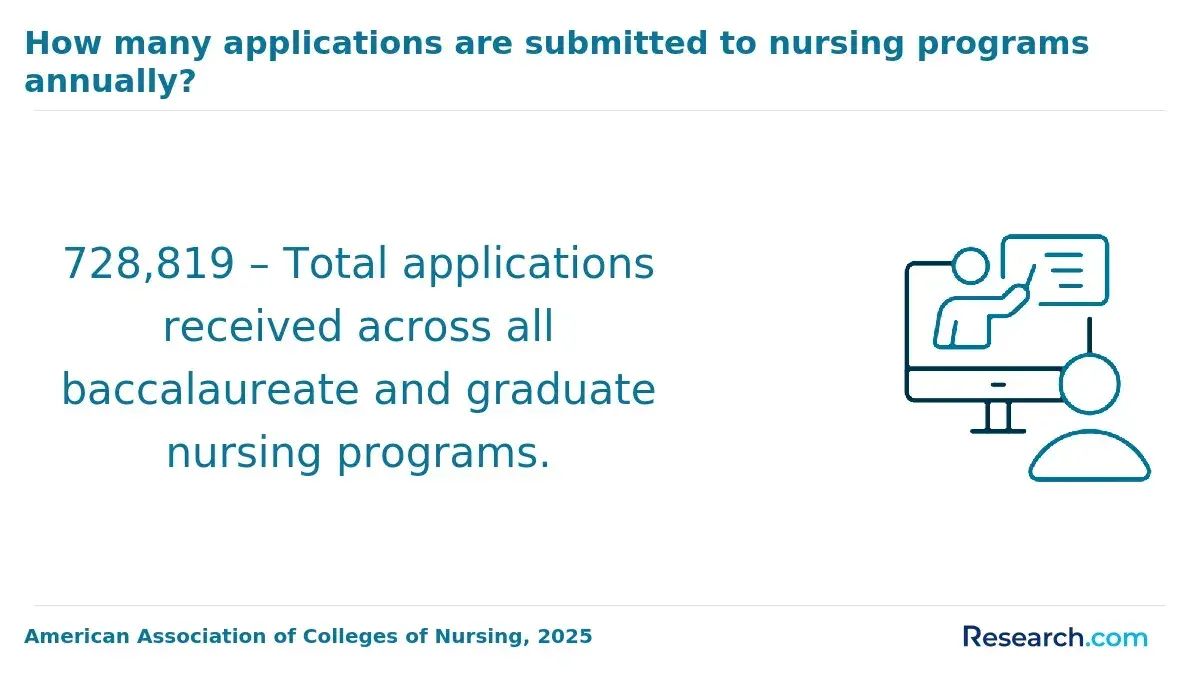
Graduates with nursing certificates or entry-level nursing credentials in Texas enter a healthcare market with substantial demand, but they should be cautious about claims that any job outcome is automatic. The cited information states that Texas is facing a shortage of approximately 60,000 nurses, with the shortage projected to increase significantly by 2035. It also notes that many qualified nursing school applicants are turned away because programs do not have enough seats, faculty, or clinical capacity.
The projected growth of 5% in the nursing field from 2024 to 2034 supports a positive outlook, but students should still evaluate local employer needs, licensure requirements, certification value, and whether a certificate is enough for their intended role. Program-level outcomes can vary. For example, the University of Houston’s Andy and Barbara Gessner College of Nursing has cited a 100% employment rate for graduates, but students should ask each school for current placement data, job titles, employer types, and how outcomes are measured. Those still comparing return on investment can review whether nursing school is worth it for their goals.
How do I obtain a nursing license in Texas?
To become licensed as a nurse in Texas, applicants generally need to complete an approved nursing program, pass the NCLEX-RN or appropriate licensing exam, complete required background checks, and submit documentation through the state process. Requirements can differ by credential and applicant history, so students should confirm eligibility before enrolling, especially if they have prior disciplinary, criminal, or out-of-state licensure issues. For a detailed walkthrough, review the guide to earning a nursing license in Texas.
What are the easiest nursing programs to get into in Texas?
The easiest nursing program to enter is not always the best program to choose. More accessible programs may have lower GPA thresholds, broader prerequisite options, or larger applicant pools, but students still need strong preparation for clinical coursework and the NCLEX. Community colleges and some public institutions may offer ADN pathways with admissions criteria that are more flexible than highly selective BSN programs.
Students wondering what the easiest nursing program is to get into should look beyond acceptance rates. Ask whether the program is accredited, approved for Texas licensure, transparent about NCLEX pass rates, able to place students in clinical sites, and supportive of students who plan to bridge from ADN to BSN later.
What online nursing programs are available in Texas?
Texas offers online and hybrid nursing options for different student profiles, including RN-to-BSN students, graduate nursing students, and some bridge-program learners. Initial RN licensure programs may include online coursework, but they still require in-person clinical learning. Students comparing online nursing programs in Texas should verify accreditation, clinical placement expectations, state authorization, tuition, technology requirements, and whether the program fits their licensure goal.
How do Texas nursing programs lead to advanced practice roles?
Texas nursing programs can prepare RNs for advanced practice through graduate coursework, supervised clinical experiences, simulation, specialty tracks, and certification preparation. Advanced practice roles may include nurse practitioner, clinical nurse specialist, nurse midwife, or nurse anesthetist pathways, each with distinct requirements. Students considering this route should compare specialty alignment, clinical site support, certification pass preparation, and faculty expertise. Those focused on NP careers can review nurse practitioner programs in Texas.
Can non-nurses transition into nursing in Texas?
Yes. Texas schools may offer accelerated second-degree BSN programs, direct-entry options, or structured pathways for students who hold a degree in another field. These programs are usually intensive because they compress nursing prerequisites, clinical training, and licensure preparation into a shorter format. Career changers should be realistic about time demands, prerequisite science courses, clinical schedules, and exam preparation. Flexible options such as online ADN programs for non nurses may help some students begin the transition while managing existing responsibilities.
Can paramedics become nurses through bridge programs in Texas?
Paramedics may be able to use bridge programs to transition into registered nursing by building on emergency care experience and adding nursing theory, broader patient-care planning, pharmacology, documentation, and supervised clinical practice. These pathways can shorten the transition for qualified paramedics, but they still require meeting admissions, clinical, and licensure standards. Students can explore options through a paramedic to RN bridge program online guide.
Can nurses move into non-clinical healthcare roles in Texas?
Nurses with clinical experience can move into non-clinical roles such as case management, quality improvement, healthcare administration, utilization review, informatics, compliance, medical billing, coding, education, and consulting. These roles may require additional training in regulations, documentation, data accuracy, payer systems, or management. Nurses interested in revenue cycle or coding careers can review how to become a medical biller and coder in Texas.
How can nurses pursue midwifery careers in Texas?
Nurses interested in maternal and newborn care may pursue midwifery through specialized graduate education, supervised clinical rotations, certification preparation, and state licensure steps. Midwifery training focuses on antenatal, intrapartum, postpartum, newborn, and reproductive health care. Because requirements are specific, nurses should review nurse midwife education requirements in Texas before selecting a program.
How can LPNs transition into RN roles in Texas?
LPNs and LVNs can advance through bridge programs that build on existing clinical skills while adding RN-level coursework, clinical judgment, leadership, and broader patient-care responsibilities. These programs may be offered in hybrid, campus-based, or accelerated formats. Before enrolling, students should confirm admissions requirements, clinical hour expectations, NCLEX preparation, and state eligibility. Reviewing LPN requirements in Texas can help clarify the starting credential and next steps.
Can CNAs move into higher nursing roles in Texas?
Certified Nursing Assistants can move toward LVN, ADN, or BSN pathways by completing prerequisite education and meeting admissions standards. CNA experience can help students understand patient care, communication, mobility support, and healthcare workflow, but it does not replace licensed nursing education. Some students use LVN training as an intermediate step before RN preparation. Comparing the best online LPN programs in Texas can help CNAs plan a staged career pathway.
Can nursing graduates pursue interdisciplinary healthcare careers in Texas?
Nursing education can also support careers that intersect with pharmacy, public health, technology, administration, research, health policy, and allied health. Nurses who want to move outside direct patient care may need additional credentials, graduate education, or licensure depending on the field. For example, those interested in pharmacy should understand the separate education and licensing route described in this guide on how to be a pharmacist in Texas.
How can RNs transition to advanced practice roles in Texas?
Registered nurses who want advanced practice roles usually need an accredited graduate program, a current RN license, specialty coursework, supervised advanced clinical hours, and certification preparation. Popular routes include family practice, pediatrics, adult-gerontology, psychiatric-mental health, and other specialty areas. Before applying, RNs should compare admission requirements, clinical placement support, certification outcomes, and whether the program aligns with Texas practice rules. A step-by-step overview is available in this guide on how to become a nurse practitioner in Texas.
What are the differences between ADN and BSN programs in Texas?
ADN and BSN programs can both lead to RN licensure eligibility, but they differ in length, depth, cost, and long-term career positioning. An ADN is typically shorter and often offered through community colleges. A BSN is broader and usually includes more coursework in leadership, public health, research, evidence-based practice, and systems-level care.
| Factor | ADN | BSN |
| Typical length | Usually two years | Generally four years, though accelerated and bridge options exist |
| Common setting | Community colleges and two-year institutions | Universities and four-year institutions |
| Primary advantage | Faster, often lower-cost route to RN eligibility | Broader preparation for leadership, specialty practice, and graduate study |
| Career implications | Can support entry-level RN roles | May be preferred by some employers and useful for advancement |
| Best fit | Students who want to enter the workforce quickly and may bridge later | Students who want stronger long-term mobility or plan to pursue MSN education |
ADN graduates often begin in hospitals, clinics, long-term care, and other direct-care environments. BSN graduates may have broader preparation for critical care, pediatrics, public health, leadership, and graduate study. Neither path should be chosen in isolation. Students should compare local employer expectations, transfer options, RN-to-BSN pathways, debt, and career goals. For a full licensure-focused pathway, review how to become an RN in Texas.
Common mistakes to avoid when choosing a Texas nursing school
- Choosing a program without verifying accreditation: Accreditation affects licensure readiness, transferability, and employer trust.
- Focusing only on rankings: A highly ranked program is not useful if it does not fit your schedule, budget, location, or specialty goals.
- Ignoring clinical placement policies: If students must find their own placements, delays can happen.
- Assuming online means fully remote: Nursing programs usually require in-person clinical work, labs, or simulations.
- Underestimating program intensity: Accelerated nursing programs can be demanding and may limit work hours.
- Not checking NCLEX pass rates: Licensure exam preparation is one of the most important outcomes of an entry-level nursing program.
- Borrowing without calculating ROI: Compare likely salary, debt, repayment options, and whether a lower-cost ADN-to-BSN route may be more practical.
- Assuming salary outcomes are guaranteed: Pay depends on many factors, including experience, employer, specialty, location, and schedule.
Related Articles for Nearby States
- 2027 Best Nursing Schools in Louisiana – Accredited ADN, BSN, MSN Programs
- 2027 Best Nursing Schools in Oklahoma – Accredited ADN, BSN, MSN Programs
- 2027 Best Nursing Schools in Arkansas – Accredited ADN, BSN, MSN Programs
- 2027 Best Nursing Schools in New Mexico – Accredited ADN, BSN, MSN Programs
- 2027 Best Nursing Schools in Kansas – Accredited ADN, BSN, MSN Programs
- 2027 Best Nursing Schools in Missouri – Accredited ADN, BSN, MSN Programs
- 2027 Best Nursing Schools in Colorado – Accredited ADN, BSN, MSN Programs
- 2027 Best Nursing Schools in Mississippi – Accredited ADN, BSN, MSN Programs
- 2027 Best Nursing Schools in Tennessee – Accredited ADN, BSN, MSN Programs
- 2027 Best Nursing Schools in Arizona – Accredited ADN, BSN, MSN Programs
References:
- AACN. (2025). 2024-2025 Enrollment and Graduations in Baccalaureate and Graduate Programs. https://www.aacnnursing.org
- American Nurses Association. (2024). 2024 Nursing Workforce Census. https://www.nursingworld.org/news/news/2024/american-nurses-association-releases-2024-nursing-workforce-censusAACN nursing education resources
- NurseJournal. (2025). The Top 20 Highest-Paying Nursing Specialties. https://nursejournal.org/articles/best-nursing-specialities-for-the-future/
- Texas Health and Human Services. (2024, February). Texas Workforce Commission Healthcare Workforce Report. Texas Health and Human Services.
- Texas Workforce Commission. (2025). Occupational employment projections (2020-2030). Retrieved from https://www.twc.texas.gov/businesses/occupational-employment-projections-2020-2030Nursing specialty salary overview
- U.S. Bureau of Labor Statistics. (2024). Nursing employment projections. https://www.bls.gov/ooh/healthcare/registered-nurses.htm
- Registered Nurses Occupational Outlook Handbook U.S. Bureau of Labor Statistics. (2025). Occupational Employment and Wages: Nurse Practitioners. https://www.bls.gov/oes/current/oes291071.htm
- Nurse Practitioners Occupational Employment and Wages U.S. Bureau of Labor Statistics. (2025). Occupational Outlook Handbook: Registered Nurses. https://www.bls.gov/ooh/healthcare/registered-nurses.htmHighest-paying nursing specialtiesAACN
Key Insights
- Texas is a strong state for nursing education because it offers many accredited ADN, BSN, RN-to-BSN, MSN, bridge, and advanced practice pathways.
- The best nursing school is the one that matches your licensure goal, budget, schedule, academic background, and intended specialty—not simply the one with the highest name recognition.
- Accreditation, Texas approval, NCLEX pass rates, clinical placement support, and total cost should be checked before applying.
- An ADN can be a faster route to RN eligibility, while a BSN may offer stronger preparation for leadership, specialty roles, and graduate study.
- Online nursing programs can be flexible, but students should expect in-person clinical requirements and should verify state licensure alignment.
- Texas nursing salaries and job demand are encouraging, but outcomes depend on experience, location, employer, specialty, degree level, and licensure status.
- Students who want advanced practice roles should plan early for BSN completion, graduate admission requirements, certification, supervised clinical hours, and Texas practice rules.
Other Things You Should Know About Best Nursing Schools In Texas
In 2027, top Texas nursing schools like The University of Texas at Austin and Texas Woman's University provide exceptional clinical opportunities. These programs offer a range of hands-on experiences in diverse healthcare settings, allowing students to work with cutting-edge medical technology and gain practical skills essential for successful careers in healthcare.
In 2027, Texas A&M University and the University of Texas Health Science Center at Houston are leading in job placement rates for nursing graduates. Their strong affiliations with healthcare institutions facilitate smooth transitions from classrooms to careers, ensuring high employment rates for graduates. Both schools have robust career support systems in place.
In 2027, some Texas nursing programs may require students to complete prerequisite courses in anatomy and physiology, while others might need a TEAS (Test of Essential Academic Skills) score. Always check specific school requirements as they can vary significantly between programs.


