
2027 Most Affordable Online FNP Programs

Co-Founder and Chief Data Scientist
Registered nurses (RNs) with a non-nursing bachelor's degree or a bachelor's degree in nursing (BSN) often aspire to advance into master of science in nursing (MSN) programs specializing in family nurse practitioner (FNP) roles.
Transitioning to an FNP role expands their nursing practice opportunities and potential earnings compared to non-nurse practitioners. However, many prospective FNPs face financial limitations while pursuing higher education.
This article seeks to aid such individuals by spotlighting affordable online MSN FNP programs. By presenting cost-effective options, the article empowers aspiring students to make informed educational choices aligned with their career aspirations, minimizing financial strain.
What are the benefits of getting an online FNP degree?
- Online FNP degrees enable FNPs to work in various healthcare settings such as hospitals, telehealth companies, retail health clinics, and urgent care centers.
- Obtaining an online FNP degree typically results in an average yearly income ranging from approximately $121,610 to $158,101.
- Earning an FNP degree online offers RNs flexibility, comprehensive coursework, hands-on clinical experience, and a mix of self-paced and interactive learning formats.
What can I expect from an online FNP degree?
Earning an FNP degree online can be a path for RNs to advance their careers. Here is a list of what you can expect:
- Flexibility and Accessibility: Online programs offer a chance to study on your own schedule, making it easier to balance work, family, and studies.
- Coursework: The curriculum will prepare you for the national FNP certification exam and equip you with the knowledge and skills to diagnose, treat, and manage patients across different age groups. Expect coursework in areas like advanced assessment, pharmacology, and primary care management.
- Clinical Requirements: While most of the program is online, there will likely be a clinical practicum component where you gain hands-on experience under the supervision of a licensed FNP.
- Learning Format: The online format may involve a mix of asynchronous materials like lectures and readings you access on your own time, and synchronous sessions such as live online meetings or webinars.
Where can I work with an online FNP degree?
An online FNP degree opens doors to various healthcare settings. Here are some of the common places you might find FNPs working:
- Traditional Healthcare Settings: This includes hospitals, outpatient clinics, and private practices run by physicians. FNPs can provide primary care services, manage chronic conditions, and perform procedures.
- Telehealth Companies: The rise of telemedicine creates opportunities for FNPs to work remotely, offering consultations and managing patient care virtually.
- Retail Health Clinics: These clinics, often located in pharmacies or grocery stores, are staffed by NPs who can treat minor illnesses and injuries.
- Urgent Care Centers: FNPs can play a key role in urgent care centers by evaluating patients with non-life-threatening conditions.
- Home Health Agencies: FNPs can provide in-home care for patients with difficulty traveling to a doctor's office.
- Schools and Colleges: Student health centers often employ FNPs to address the healthcare needs of the student population.
- Public Health Departments: FNPs can work in public health departments, focusing on preventive care and community health initiatives.
How much can I make with an online FNP degree?
An online FNP degree can lead to a rewarding career with strong earning potential. According to resources like the US Bureau of Labor Statistics (BLS) and Indeed, the average annual salary for FNPs in the US is around $121,610 to $158,101.
However, several factors can influence your actual salary, including:
- Years of Experience: As with many professions, FNPs with more experience typically command higher salaries.
- Location: Geographic location plays a role. FNPs in areas with a higher cost of living may earn more than those in lower-cost areas.
- Practice Setting: The type of healthcare facility you work in can affect your salary. For instance, according to BLS, state, local, and private hospitals often pay higher than some office settings.
- Additional Certifications: Additional certifications in specialty areas can enhance your skills and potentially increase your earning potential.
- 2027 List of the Best Online FNP Programs Best Programs
- How long does it take to complete an online FNP degree? Completion Time
- How does an online FNP degree compare to an on-campus program? How does an online FNP degree compare to an on-campus program?
- What is the average cost of an online FNP program? Average Cost
- What are the financial aid options for students enrolling in an online FNP program? Financial Aid
- What are the prerequisites for enrolling in an online FNP program? Requirements
- What courses are typically in an online FNP program? What courses are typically in an online FNP program?
- How does technology in clinical practice prepare FNPs for the digital future? How does technology in clinical practice prepare FNPs for the digital future?
- How to Minimize Cost and Time in FNP Programs How to Minimize Cost and Time in FNP Programs
- What common challenges do online FNP students encounter? What common challenges do online FNP students encounter?
- Can fast track RN to BSN online programs accelerate my path to becoming an FNP? Can fast track RN to BSN online programs accelerate my path to becoming an FNP?
- How can RN to NP bridge programs accelerate my transition to an FNP role? How can RN to NP bridge programs accelerate my transition to an FNP role?
- What types of specializations are available in online FNP programs? What types of specializations are available in online FNP programs?
- How to choose the best online FNP programs? How to choose the best online FNP programs?
- What career paths are available for graduates of online FNP programs? Career Paths
- Is an Online FNP Degree a Better Financial Investment Compared to LPN Roles? Is an Online FNP Degree a Better Financial Investment Compared to LPN Roles?
- What is the job market for graduates of online FNP programs? Job Market
- Accelerated Online FNP Programs: Fast-Tracking Your Nursing Career Accelerated Online FNP Programs: Fast-Tracking Your Nursing Career
- How Do Online FNP Programs Offer Mentorship and Career Support? How Do Online FNP Programs Offer Mentorship and Career Support?
- How Does Accreditation Influence the Quality and Outcomes of Online FNP Programs? How Does Accreditation Influence the Quality and Outcomes of Online FNP Programs?
2026 Guide to the Best Online FNP Programs
Choosing an online family nurse practitioner program is a high-stakes decision: the program must fit your schedule, prepare you for certification, support your clinical placement needs, and meet the accreditation expectations tied to advanced nursing practice. This guide is designed for registered nurses comparing online FNP programs, RN-to-BSN students planning a graduate pathway, and working nurses trying to balance cost, time, and career mobility.
You will find a ranked list of online FNP programs, key program details, cost comparisons, admission requirements, clinical expectations, online-versus-campus trade-offs, financial aid options, and practical questions to ask before enrolling. The goal is not just to identify “good” programs, but to help you choose the program that best matches your timeline, budget, licensure goals, and preferred practice setting.
Quick answer: What should you look for in an online FNP program?
The best online FNP program for you is accredited, prepares graduates for national FNP certification, offers transparent clinical placement support, fits your work schedule, and has a total cost you can realistically manage. Before applying, confirm the program’s accreditation status, required credits, clinical hours, campus visit requirements, state authorization, certification exam preparation, and whether you must find your own preceptors.
| Decision factor | Why it matters | What to verify before applying |
| Accreditation | Accreditation affects program quality, certification eligibility, employer confidence, and financial aid access. | Confirm CCNE, ACEN, or the listed institutional/programmatic accreditor directly with the school. |
| Clinical placement support | Online students often complete practicums near home, but placement responsibility varies by school. | Ask whether the program secures placements, helps identify preceptors, or requires you to arrange sites independently. |
| Program length | Accelerated formats save time but can be difficult for full-time working nurses. | Compare full-time, part-time, and leave-of-absence policies. |
| Total cost | Per-credit tuition is only one part of the price. | Include fees, books, travel for immersions, background checks, clinical compliance costs, and lost work hours. |
| State requirements | Online programs may not meet every state’s authorization, clinical, or licensure expectations. | Ask the program and your state board of nursing whether the degree supports your intended practice location. |
How do we rank schools?
Research.com uses a defined ranking methodology to evaluate schools and programs. For this online FNP list, we reviewed publicly available information from established education data sources and program pages, including:
Programs were compared using factors such as academic profile, enrollment information, affordability, accreditation, credit requirements, clinical expectations, and program features relevant to working nurses. Rankings should be used as a starting point, not as a substitute for checking whether a program meets your state licensure and certification needs.
1. Texas A&M International University
The online FNP program at Texas A&M International University requires 48 credits and is built for nurses preparing to contribute to family-focused primary care while also understanding research, health policy, and healthcare evaluation. The curriculum includes research methodology, healthcare policy and equity, pathophysiology, and healthcare evaluation. Students complete supervised clinical experiences in pediatric care, family primary care, and integrated family practice. The university also lists fellowships, assistantships, and scholarships among its graduate funding options.
- Program Length: 36 months
- Tracks/concentrations: Research Methodology, Healthcare Policy and Equity, Pathophysiology, Healthcare Evaluation
- Cost per Credit: $460.75 (in-state), $1,196.50 (out-of-state)
- Required Credits to Graduate: 48
- Accreditation: Accreditation Commission for Education in Nursing (ACEN)
2. University of Southern California
The University of Southern California offers an online FNP pathway focused on comprehensive care from infancy through adulthood. Students may enroll full time or part time, attend live online classes, and access course materials at any time. Clinical practicums are completed in students’ local communities. Coursework includes community-based research, pathophysiology, pharmacology, and quantitative and qualitative research methods. Some applicants may need to complete a bridge course before beginning pathophysiology and pharmacology.
- Program Length: 21 months (full-time), 33 months (part-time)
- Tracks/concentrations: Community-based Research, Pathophysiology, Pharmacology, Quantitative and Qualitative Research Methodologies
- Cost per Credit: $2,244
- Required Credits to Graduate: 50
- Accreditation: Commission on Collegiate Nursing Education (CCNE)
3. The University of West Florida
The full-time online FNP program at The University of West Florida emphasizes advanced assessment, care of acute and chronic conditions, and leadership theory in healthcare organizations. Students complete four practicums with attention to adult, pediatric, family, and women’s health care. The program reports a three-year average pass rate of 93% on the American Academy of Nurse Practitioners FNP certification exam. Students may transfer up to nine credits, and military benefits may make tuition-free education possible for eligible candidates.
- Program Length: 27 to 30 months
- Tracks/concentrations: Adult, Pediatric, Family, and Women's Healthcare
- Cost per Credit: $500
- Required Credits to Graduate: 45
- Accreditation: CCNE
4. Cedarville University
Cedarville University offers an online FNP program that combines advanced nursing preparation with Christian values and biblical integration. Students complete 56 to 59 credits and 800 clinical practice hours. Full-time and part-time plans are available, and students must attend four campus visits for clinical orientation and selected specialized coursework. A dedicated MSN clinical placement coordinator helps distance learners identify local clinical preceptors. Cedarville also offers a limited number of $5,000 scholarships for eligible new graduate nursing students.
- Program Length: Three and a half years
- Tracks/concentrations: Biblical Basis for Advanced Nursing Practice, Applied Scholarship in Advanced Nursing Practice, Advanced Concepts and Practice in the Care of Adults
- Cost per Credit: $680
- Required Credits to Graduate: 56 to 59
- Accreditation: Higher Learning Commission (HLC)
5. University of the Cumberlands
The University of the Cumberlands online FNP program prepares nurses to use data, informatics, healthcare technology, and leadership skills in advanced practice. The 48-credit curriculum includes 720 clinical hours and courses in advanced pharmacology, epidemiology, advanced practice issues, and the theoretical foundations of advanced nursing practice. The university notes affordable tuition and complimentary textbooks. Online learners also have access to career services, IT help, library resources, tutoring, and learning commons support.
- Program Length: Four years
- Tracks/concentrations: Advanced Pharmacology, Epidemiology, Advanced Practice Issues, Theoretical Foundation of Advanced Nursing Practice
- Cost per Credit: $539
- Required Credits to Graduate: 48
- Accreditation: CCNE
6. Rockhurst University
Rockhurst University delivers an online FNP program shaped by Jesuit values and designed for working nurses. Coursework is online, with one required on-campus immersion. The program includes clinical placement services and support matching students with appropriate preceptors. Students complete 750 clinical hours while studying advanced practice nursing foundations, evidence-based quality improvement, leadership, systems, and policy. Courses include advanced health assessment, informatics for advanced nursing practice, and mental health for family nurse practitioners.
- Program Length: Three to four years
- Tracks/concentrations: Advanced Practice Nursing Fundamentals, Evidence-based Quality Enhancement, Leadership, Systems, Policy Issues
- Cost per Credit: $735
- Required Credits to Graduate: 49
- Accreditation: HLC
7. George Washington University
George Washington University offers an online FNP program with full-time and part-time options and spring or fall entry points. The program requires 48 credits, 600 to 700 clinical hours, and two on-campus components. Students must receive departmental approval for clinical preceptors and sites. Core coursework includes biostatistics for healthcare research, population health concepts, and nursing leadership. FNP concentration work covers primary care across the lifespan, diagnosis, management, professional ethics, genetics for healthcare providers, and advanced pharmacology.
- Program Length: Four years
- Tracks/concentrations: Primary Care, Diagnosis, Management, Professional Ethics, Genetics for Healthcare Providers, Advanced Pharmacology
- Cost per Credit: $1,450
- Required Credits to Graduate: 48
- Accreditation: CCNE
8. Northern Arizona University
Northern Arizona University offers an FNP program requiring 48 to 51 credits, field practicums, and either a thesis or individual research project. The blended program emphasizes rural primary care and is designed to prepare graduates for Arizona state endorsement and national certification. Core courses include advanced principles of evidence-based practice, transition to advanced roles, applied pathophysiology, and rural theory and health policy. The FNP specialization addresses family care management, healthcare delivery systems, and professional relationships.
- Program Length: Four years
- Tracks/concentrations: Family Care Management, Healthcare Delivery Systems, Professional Relationships
- Cost per Credit: $610
- Required Credits to Graduate: 48 to 51
- Accreditation: CCNE
9. Saint John Fisher College
Saint John Fisher College offers an online FNP program centered on family primary care. Students can choose a 24-month accelerated track or a 28-month part-time option. The 46-credit curriculum includes one pre-clinical immersion on the Rochester campus and 600 local clinical placement hours. MSN core courses build advanced nursing competencies, while the FNP specialization emphasizes diagnostic reasoning, evidence-based practice, patient advocacy and education, and care for diverse populations.
- Program Length: 24 to 28 months
- Tracks/concentrations: Diagnostic Reasoning, Evidence-based Practice, Patient Advocacy and Education
- Cost per Credit: $1,094
- Required Credits to Graduate: 46
- Accreditation: CCNE
10. Maryville University of Saint Louis
Maryville University offers an online FNP program with 24/7 course access and a focus on compassionate, holistic care. The MSN core includes advanced health assessment, healthcare policy, and nursing theory. FNP concentration courses and practicums cover adult-gerontology, pediatric, and family practice. Students may enroll full time or part time and complete supervised FNP practicums in their local areas. Applicants are not required to submit GRE or GMAT scores, and statistics is not listed as a required prerequisite.
- Program Length: 20 to 32 months
- Tracks/concentrations: Adult-Gerontology, Pediatric and Family Practice
- Cost per Credit: $838
- Required Credits to Graduate: 47
- Accreditation: CCNE
How long does it take to complete an online FNP degree?
Most online MSN-FNP programs take about 15 to 24 months for full-time students, while part-time formats often take 24 to 48 months. Some options may be faster or slower depending on credit requirements, clinical hour scheduling, transfer credit rules, and whether the program uses traditional semesters, accelerated terms, or year-round enrollment. If cost is also a major factor, compare timing alongside tuition on lists of the cheapest online MSN programs.
| Enrollment option | Typical fit | Main advantage | Main trade-off |
| Full-time | Students who can reduce work hours or commit heavily to school | Faster completion and earlier entry into advanced practice | Heavy workload, less scheduling flexibility, and intense clinical planning |
| Part-time | Working nurses, parents, and students with limited weekly study time | More manageable pace while maintaining employment | Longer timeline and potentially more semesters of fees |
| Accelerated | Highly prepared students with strong time management and stable clinical access | Shortest route for qualified applicants seeking an accelerated nurse practitioner degree | Compressed courses can be difficult during busy work or family periods |
Two factors can change your timeline significantly:
- Transfer credits: Some schools allow prior graduate-level nursing coursework to count toward the FNP curriculum. For example, students moving from other specializations within affordable MSN programs online may be able to reduce duplicate coursework if the receiving program approves those credits.
- Program breaks: Leave policies, course sequencing, and clinical availability can extend the degree. Before enrolling, ask whether key FNP courses are offered every term or only once per year.
How does an online FNP program compare to an on-campus program?
Online and campus-based FNP programs can both prepare students for advanced family primary care, but the experience differs in schedule control, clinical placement process, peer interaction, and campus requirements. The right format depends on how you learn, where you live, and how much support you need in arranging clinical practice.
| Category | Online FNP program | On-campus FNP program |
| Flexibility | Often easier to fit around work and family, especially when courses are asynchronous. | Usually follows fixed class, lab, and campus schedules. |
| Location | Allows students to study without relocating, assuming the program is authorized in their state. | Requires regular campus access and may require moving closer to the school. |
| Learning style | Best for disciplined learners who can manage deadlines independently. | Better for students who prefer in-person structure and direct classroom interaction. |
| Cost considerations | May reduce commuting, relocation, and housing costs, although tuition varies widely. | May include higher living, travel, parking, or relocation expenses. |
| Clinical experience | Clinical hours are still required, but students may need to secure local placements or preceptors. | Schools may have stronger nearby clinical partnerships, though placements are not always guaranteed. |
| Networking | Requires more effort to build relationships through virtual discussions, immersions, and clinical sites. | Offers more regular face-to-face contact with faculty and classmates. |
Both online nursing degree programs online and campus FNP programs include clinical practicums. The key difference is not whether you get hands-on experience; it is how clinical placements are arranged and how much responsibility you carry for finding qualified preceptors.
What is the average cost of an online FNP program?
The average cost of an online FNP program varies widely, but it commonly falls between $400 and $800 per credit and averages about $22,500 for an FNP degree. Your actual cost may be higher or lower depending on tuition rate, number of credits, fees, residency status, clinical travel, books, and whether you reduce work hours during the program.
Cost factors to compare before enrolling
- Public vs. private institution: Public universities are often less expensive, while private institutions may charge higher per-credit tuition.
- In-state vs. out-of-state tuition: Some public programs charge different rates based on residency.
- Program length: A program lasting 15 months may cost less in fees than one lasting 48 months, but accelerated formats may affect your ability to work.
- Credit requirements: A lower per-credit rate can still lead to a higher total price if the program requires more credits.
- Campus visits: Immersions can add travel, lodging, and time-off-work costs.
| University | Cost per Credit |
| Texas A&M International University | $460.75 (in-state), $1,196.50 (out-of-state) |
| University of Southern California | $2,244 |
| The University of West Florida | $500 |
| Cedarville University | $680 |
| University of the Cumberlands | $539 |
| Rockhurst University | $735 |
| George Washington University | $1,450 |
| Northern Arizona University | $610 |
| Saint John Fisher College | $1,094 |
| Maryville University of Saint Louis | $838 |
What are the financial aid options for students enrolling in an online FNP program?
Online FNP students may be able to use federal aid, state programs, scholarships, employer tuition benefits, military benefits, and loan repayment programs. Availability depends on enrollment status, school eligibility, state rules, and the student’s financial profile, so always confirm details with the school’s financial aid office.
Federal financial aid
Federal aid is a major funding source for eligible graduate students. Completing the FAFSA is typically the first step.
- Federal grants: Some grants are need-based and do not usually require repayment. Eligibility depends on the student and the program.
- Federal loans: Graduate students may qualify for federal Direct Stafford Loans, which must be repaid with interest.
State grants
Some states fund nursing education grants or workforce programs for students pursuing advanced practice roles. Check your state education agency, nursing board, and local healthcare workforce initiatives.
Scholarships
Nursing associations, hospitals, universities, foundations, and community organizations may offer scholarships for graduate nursing students. Scholarships can make even affordable nurse practitioner programs online more manageable, especially when combined with employer assistance or part-time enrollment.
Employer assistance
Hospitals, clinics, and health systems may offer tuition reimbursement, education stipends, or loan repayment benefits for nurses who commit to continued employment. Ask whether benefits require minimum grades, a service commitment, or enrollment in specific accredited programs.
Military programs
Veterans, active-duty service members, and eligible family members may qualify for education benefits such as the GI Bill. Some nursing professionals may also explore Nurse Corps Loan Repayment Program options when eligible.
What are the prerequisites for enrolling in an online FNP program?
Admission requirements for nurse practitioner programs online differ by school, but most online FNP programs expect applicants to have a nursing foundation, an active RN license, and evidence that they can succeed in graduate-level clinical coursework.
Common baseline requirements
- BSN: Most online FNP programs require a Bachelor of Science in Nursing from an accredited institution.
- Current RN license: Applicants typically need an active, unencumbered registered nurse license in the state where they plan to complete clinical hours or practice.
- Minimum GPA: Many programs set a minimum GPA between 3.0 and 3.5 on a 4.0 scale.
Possible additional requirements
- Standardized tests: Some schools may request GRE or MAT scores, though many nursing programs have moved away from this requirement.
- Prerequisite courses: Programs may require previous coursework in statistics, health assessment, or related areas.
- RN experience: Some programs prefer or require professional nursing experience before admission.
Typical application materials
- Official transcripts: Schools usually require transcripts from every college or university attended.
- Resume or CV: Use this to document clinical experience, certifications, leadership, and specialty exposure.
- Letters of recommendation: Strong letters often come from supervisors, faculty, or advanced practice clinicians familiar with your work.
- Personal statement: This essay should explain why you want to become an FNP, what patient populations you hope to serve, and why the program fits your goals.
What courses are typically in an online FNP program?
Online FNP programs usually combine graduate nursing degree program courses with specialized family practice content and supervised clinical practicums. Course names vary, but most programs are built around advanced assessment, pharmacology, pathophysiology, evidence-based practice, and primary care management across the lifespan.
Common MSN core courses
- Advanced Pathophysiology: Examines disease processes across body systems and connects underlying mechanisms to clinical presentation.
- Advanced Pharmacology: Covers medication selection, therapeutic effects, adverse effects, contraindications, and drug interactions in primary care.
- Advanced Health Assessment and Diagnostic Reasoning: Develops physical exam, history-taking, clinical reasoning, and differential diagnosis skills.
- Health Promotion and Disease Prevention: Focuses on preventive care, screening, patient education, and lifestyle-related health risks.
- Healthcare Policy, Quality, and Finance: Introduces healthcare systems, policy issues, quality improvement, and financial pressures affecting practice.
- Advanced Nursing Research and Theory: Builds the ability to interpret research and apply evidence-based care in clinical decisions.
- Leadership and Professional Issues: Addresses ethics, interprofessional collaboration, care coordination, and the responsibilities of advanced practice nurses.
Common FNP specialty courses
- Primary Care Management: Prepares students to diagnose, treat, and manage common acute and chronic conditions across age groups.
- Advanced Physical Assessment for FNPs: Expands assessment skills for family primary care encounters.
- Pharmacotherapeutics for Primary Care: Applies medication management to patient populations commonly seen by FNPs.
- Women’s Health: Covers gynecologic care, contraception, pregnancy-related care, menopause, and lifespan health concerns.
- Pediatric Care: Focuses on wellness visits, immunizations, childhood illness, development, and adolescent health.
- Adult Gerontology: Addresses chronic disease management, preventive care, functional status, and age-related health issues in adults and older adults.
Clinical practicum
Clinical practice is a required part of FNP preparation. Unlike a leadership-focused program such as an affordable online master's in healthcare administration, an FNP program requires direct patient care experiences under qualified supervision. Clinical sites may include primary care offices, community clinics, pediatric practices, women’s health settings, urgent care clinics, or other approved settings.
How does technology in clinical practice prepare FNPs for the digital future?
Digital healthcare is now part of everyday primary care. Online FNP programs increasingly expose students to telehealth, electronic health records, digital documentation, patient portals, clinical decision-support tools, and remote communication practices. These tools matter because FNPs may manage follow-up visits, chronic care check-ins, preventive counseling, and triage support through virtual or hybrid care models.
Technology preparation should go beyond learning software clicks. Strong programs teach students to protect patient privacy, document clearly, recognize the limits of virtual assessment, use EHR data responsibly, and communicate effectively with patients who may have limited digital access. Simulation and virtual case exercises can help students practice these skills before applying them in supervised clinical settings.
For students comparing practice areas, technology can also shape daily workload and workflow. Even nurses exploring the least stressful nurse practitioner specialty should ask how each program prepares them for telehealth, EHR documentation, and digital patient management.
How to Minimize Cost and Time in FNP Programs
The fastest or cheapest FNP program is not always the best choice. The smarter goal is to minimize wasted credits, unnecessary fees, delayed clinical placements, and schedule conflicts while still choosing a program that supports certification and practice readiness.
- Request a full tuition and fee estimate. Ask for total program cost, not just cost per credit.
- Confirm transfer credit policies early. Prior graduate nursing coursework may reduce the curriculum if approved.
- Ask about clinical placement timelines. Delayed clinical approvals can extend graduation.
- Compare accelerated and part-time options realistically. Short programs can save time but may require reduced work hours.
- Look for included resources. Textbooks, tutoring, placement support, and exam preparation can affect the true cost.
- Check scholarship and employer deadlines. Missing aid deadlines can make an otherwise affordable program expensive.
Students seeking the most compressed post-master’s route can compare the shortest nurse practitioner programs, but should still verify accreditation, clinical requirements, and certification eligibility before enrolling.
What common challenges do online FNP students encounter?
Online FNP students often manage graduate coursework, clinical hours, employment, family responsibilities, and state compliance requirements at the same time. The most common difficulty is not the online format itself; it is the coordination required to complete clinical experiences while keeping up with advanced science, diagnostics, pharmacology, and primary care management content.
| Challenge | Why it happens | How to reduce the risk |
| Finding clinical preceptors | Some online programs expect students to identify local sites. | Ask for placement policies in writing before enrolling. |
| Time management | Courses, exams, discussion boards, and clinical hours overlap with work schedules. | Create a weekly study and clinical plan before each term starts. |
| Limited face-to-face contact | Online learning can feel isolating if students do not engage intentionally. | Use faculty office hours, peer groups, immersions, and professional associations. |
| Technology issues | Virtual platforms, proctored exams, and EHR simulations require stable access. | Test systems early and maintain backup internet options when possible. |
| State authorization confusion | Online programs may not be approved for every state. | Confirm eligibility with both the school and your state board of nursing. |
Nurses who are still working toward RN eligibility may need a different starting point before FNP study. For example, online LPN to RN programs may help some practical nurses move toward the registered nursing credential required for later advanced practice education.
Can fast track RN to BSN online programs accelerate my path to becoming an FNP?
Yes, for registered nurses who do not yet hold a BSN, a fast-track RN-to-BSN route can shorten the path to graduate FNP admission. Many online FNP programs require a BSN, so completing one efficiently may allow an RN to move into graduate study sooner. A fast track RN to BSN online programs pathway can be especially useful when it accepts prior nursing credits, offers flexible terms, and aligns with graduate nursing prerequisites.
Before choosing an accelerated RN-to-BSN program, confirm that it is properly accredited, that credits will be recognized by MSN-FNP programs, and that the course schedule leaves room for work, family, and clinical obligations. Speed only helps if the degree is accepted by the graduate programs you plan to apply to.
How can RN to NP bridge programs accelerate my transition to an FNP role?
RN-to-NP bridge programs are designed for experienced nurses who want a more direct route into advanced practice preparation. These pathways may combine baccalaureate-level bridge coursework with graduate nursing classes and FNP clinical preparation, helping students avoid unnecessary repetition while still meeting academic and clinical standards.
Bridge pathways are not identical across schools. Some are intended for ADN-prepared RNs, while others are structured for nurses with non-nursing bachelor’s degrees or prior graduate credits. Review RN to NP bridge programs carefully to understand admission rules, awarded credentials, clinical hour expectations, and whether the program meets state licensure and certification requirements for family nurse practitioners.
What types of specializations are available in online FNP programs?
The FNP role is already broad because it focuses on family primary care across the lifespan. Many programs therefore offer a general FNP track rather than narrow sub-specializations. However, some curricula include focus areas, electives, or clinical experiences that allow students to build experience with particular patient populations.
- Adult-Gerontology Primary Care: Emphasizes preventive care, chronic disease management, and primary care for adults and older adults.
- Pediatric Primary Care: Builds skills for caring for infants, children, and adolescents in outpatient settings.
- Women’s Health: Focuses on gynecologic care, contraception, pregnancy-related care, menopause, and preventive services for women across the lifespan.
- Neonatal Nurse Practitioner: Prepares clinicians to care for critically ill newborns in intensive care environments. This is less commonly available online than broader FNP-focused options.
When comparing specializations, ask whether the program title, curriculum, and clinical placements support your desired certification and practice population. A focus area is not the same as a separate certification track.
Can I pursue a dual degree alongside an online FNP program?
Some schools offer dual-degree options that combine advanced nursing practice preparation with leadership, management, or business training. These programs may appeal to nurses who want both clinical FNP preparation and administrative skills for future roles in healthcare operations, practice management, population health leadership, or executive decision-making.
A dual degree can expand career flexibility, but it also increases workload, tuition, and time commitment. Students considering an MSN and MBA dual degree online should compare total credits, clinical requirements, business coursework, sequencing, and whether the added degree supports a clear career goal.
How to choose the best online FNP program?
The best online FNP program is the one that meets professional standards and fits your life, budget, and practice goals. A general school-selection checklist can be useful across fields, even when comparing something unrelated such as the cheapest online degree in human services, but FNP students must add nursing-specific checks around clinical placement, certification, and state authorization.
1. Start with your career goal
- Patient population: Decide whether you want broad family primary care or deeper exposure to pediatrics, women’s health, adult-gerontology, or rural care.
- Practice setting: Consider whether you want to work in primary care, urgent care, community health, telehealth, school health, or a specialty clinic.
- State of practice: Confirm that the program can support your intended state for clinical placement and post-graduation practice.
2. Verify accreditation and academic quality
- Accreditation: Confirm that the program is accredited by a recognized nursing accreditor such as CCNE or ACEN, or that the school’s listed accreditation supports your academic and professional goals. Accreditation is important for quality assurance, and this overview of the importance of choosing an accredited MSN-FNP program explains why applicants should not skip this step.
- Certification preparation: Ask how the curriculum prepares students for FNP certification exams and whether the school reports pass-rate information.
- Faculty experience: Review whether faculty have advanced practice, primary care, rural health, pediatrics, women’s health, or other experience relevant to your goals.
3. Examine the online format
- Course delivery: Determine whether classes are synchronous, asynchronous, or blended.
- Campus visits: Ask how many immersions are required and calculate travel costs.
- Clinical placement process: Get a clear answer on whether the school places students, assists with placement, or expects students to find preceptors independently.
4. Compare full cost and aid
- Total price: Look beyond tuition and include program fees, books, clinical compliance, exam preparation, travel, and lost wages.
- Aid options: Compare scholarships, employer reimbursement, state programs, and federal aid. If price is a top concern, also review affordable nursing programs online to understand how online nursing costs vary by degree level.
5. Avoid common mistakes
- Choosing only by ranking: A highly ranked program may not be authorized in your state or may not fit your clinical needs.
- Ignoring accreditation: This can affect certification eligibility, transfer options, employer acceptance, and financial aid.
- Focusing only on tuition: Fees, travel, books, and clinical delays can change the real cost.
- Assuming online means no campus travel: Many online FNP programs require immersions or on-campus assessments.
- Waiting too long to plan clinicals: Preceptor shortages can delay graduation if you start searching late.
Questions to ask every FNP program
- Is the program authorized for students in my state?
- Which accreditation applies to the nursing program?
- How many clinical hours are required?
- Who is responsible for finding preceptors?
- Are campus visits required, and what do they cost?
- What is the total estimated program cost?
- Can I attend part time while working?
- What certification exam preparation is included?
- What happens if I cannot secure a clinical site on schedule?
What career paths are available for graduates of online FNP programs?
Graduates of online FNP programs may pursue advanced practice roles in primary care, urgent care, community health, telehealth, school-based care, and specialty-adjacent settings. Specific duties depend on state scope-of-practice laws, employer policies, certification, and clinical experience.
Primary care settings
- Primary care provider: FNPs may deliver preventive services, health screenings, chronic disease management, treatment for common illnesses, and patient education for individuals and families.
- Urgent care provider: FNPs can evaluate and manage non-life-threatening conditions such as minor injuries, infections, allergies, and sprains.
- Community health clinician: FNPs often serve patients in community clinics, where care may focus on prevention, health education, chronic conditions, and access for underserved populations.
Population-focused and specialty-adjacent roles
- Women’s health provider: FNPs with relevant training may provide gynecologic care, contraception counseling, prenatal support, and menopause-related care within their scope.
- Pediatric-focused provider: FNPs may work with infants, children, and adolescents, providing wellness visits, immunizations, developmental screening, and care for common childhood conditions.
- Adult-gerontology-focused provider: FNPs may care for adults and older adults with chronic disease, preventive needs, medication management concerns, and age-related health issues.
Additional career options
- Telehealth provider: FNPs may conduct virtual visits, follow-ups, chronic care check-ins, and patient education using secure digital platforms.
- School nurse practitioner: Some FNPs work in schools, supporting student health, preventive services, care coordination, and communication with families.
- Nurse educator: Experienced FNPs may teach nursing students, mentor new clinicians, or contribute to clinical education programs.
Is an Online FNP Degree a Better Financial Investment Compared to LPN Roles?
An online FNP degree can lead to broader clinical responsibilities and potentially stronger long-term earning opportunities than roles that begin with an LPN credential, but it also requires more education, more tuition, clinical hours, certification preparation, and time. The financial return depends on your current income, program cost, work schedule during school, state scope of practice, employer demand, and how quickly you move into an advanced practice role after graduation.
Before choosing the FNP path for financial reasons alone, compare the full cost of graduate school against your expected career direction. Students evaluating earlier nursing steps can use How much do LPNs make? as context when comparing practical nursing, registered nursing, and nurse practitioner pathways.
What is the job market for graduates of online FNP programs?
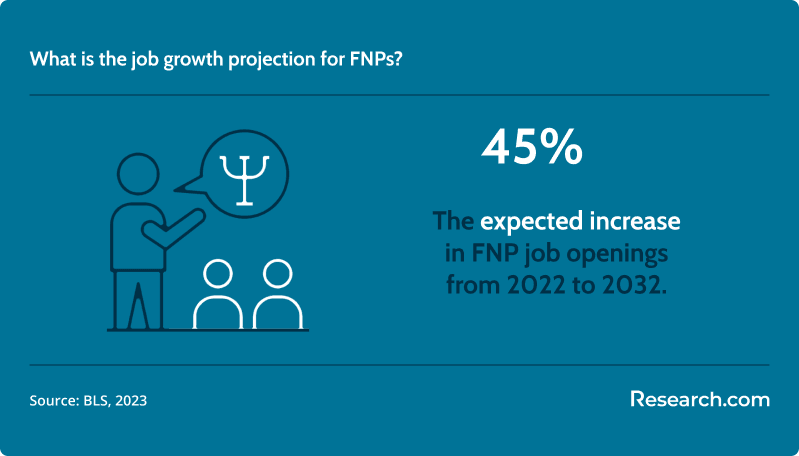
According to BLS, the total employment of nurse practitioners, including FNPs, is expected to increase by 45% between 2022 and 2032, faster than the average across all professions.
By 2032, it is estimated that approximately 384,900 positions for nurse practitioners will become available. A considerable portion of these openings is anticipated to arise from the necessity to replace individuals transitioning to other careers or leaving the workforce, often due to retirement.
Job prospects can vary by region, state scope-of-practice rules, employer type, and clinical experience. Students who want the strongest employment position should seek broad primary care clinical exposure, build relationships during practicums, prepare thoroughly for certification, and understand local demand before graduation.
Accelerated Online FNP Programs: Fast-Tracking Your Nursing Career
Accelerated online FNP programs are designed for registered nurses who want to move into advanced practice as quickly as possible. Options such as a 12-month FNP program online may appeal to students who can handle compressed coursework, intensive clinical planning, and a demanding weekly schedule.
The main benefit is speed. The main risk is overload. Before choosing an accelerated track, ask whether you can realistically manage work, family obligations, exams, clinical hours, and preceptor coordination at the same time. Fast programs are best suited for students with strong academic preparation, stable support systems, and early access to clinical placement options.
How Do Online FNP Programs Offer Mentorship and Career Support?
Strong online FNP programs do more than post lectures and assignments. They provide advising, faculty access, clinical placement guidance, certification preparation, and career services that help students move from RN practice into advanced practice with less confusion. Mentorship may come from faculty, clinical preceptors, alumni, or practicing nurse practitioners connected to the program.
Useful career support can include resume review, interview preparation, networking events, job search tools, alumni groups, and guidance on certification and state practice requirements. Applicants comparing program accessibility may also find value in Research.com’s guide, What's the easiest nursing program to get into?, when thinking about admissions competitiveness and program fit.
How Does Accreditation Influence the Quality and Outcomes of Online FNP Programs?
Accreditation is one of the most important checks in online FNP program selection. It signals that a program has been reviewed against educational and clinical standards, and it can affect eligibility for federal financial aid, certification exams, employer recognition, and transfer opportunities. Accreditation does not guarantee a job or exam success, but lack of appropriate accreditation can create serious barriers.
Students should verify accreditation directly with the school and accrediting body, then review graduation outcomes, certification pass rates when available, clinical support, and job placement information. Nurses still completing earlier steps in their education can also compare easy online RN-to-BSN programs as part of a longer pathway toward graduate FNP study.
Here’s What Graduates Have to Say About Their Online FNP Degree
- : "“Earning my FNP while working and caring for my family felt overwhelming at first, but the online format made it possible. I could study during the hours that worked for me, and the virtual discussions helped me connect with nurses from different regions. Faculty support mattered, especially during clinical planning. Now that I practice as an FNP, I appreciate how the flexibility of my education helped me reach this role.” — Mia"
- : "“As a single parent, relocating for a campus program was not realistic. The online FNP path gave me a way to keep working, stay at home, and move forward professionally. The asynchronous courses helped me set a steady rhythm, and faculty were available when I needed help. I now work in a community clinic, where the training feels directly connected to the patients I serve.” — Lisa"
- : "“I was unsure whether an online program would feel as rigorous as a classroom-based one. The experience proved more interactive than I expected, and my local clinical placement gave me the hands-on preparation I needed. After completing the program and becoming certified, I felt ready for the pace and responsibility of primary care.” — David"
Key Insights About Online FNP Programs
- Accreditation should be your first filter. Do not compare price, speed, or rankings until you confirm that the program’s accreditation supports certification, financial aid, and employer expectations.
- Clinical placement support can make or break the experience. Ask whether the school finds placements, assists with preceptor matching, or leaves the process mostly to you.
- Program length is a trade-off. Accelerated programs can shorten the path to practice, but they require more weekly availability and stronger clinical planning.
- Total cost is more than tuition. Include fees, books, travel for immersions, clinical compliance expenses, certification preparation, and reduced work hours.
- Online does not mean easier. FNP programs require advanced science, diagnostic reasoning, pharmacology, and supervised patient care regardless of delivery format.
- State authorization matters. Confirm that the program can enroll you, place you clinically, and support your intended state of practice.
- The FNP job outlook is strong, but outcomes are not automatic. Your region, certification, clinical experience, networking, and state scope-of-practice laws all affect career opportunities.
References:
- American Association of Nurse Practitioners. (2024). NP Fact sheet. AANP
- BLS. (2023). Nurse Anesthetists, nurse midwives, and nurse Practitioners: Occupational Outlook Handbook. BLS
- Indeed. (2024). Family nurse practitioner salary in the United States. Indeed
Other Things You Should Know About Online FNP Programs
In 2027, online FNP programs employ strategies such as utilizing open educational resources, offering financial aid options, and leveraging technology for cost-effective learning platforms. Many programs also streamline curricula to minimize unnecessary expenses while maintaining a strong focus on high-quality clinical training.
Yes, many institutions offer scholarships specifically for their online FNP programs in 2027. These scholarships may reduce tuition costs significantly and are often based on merit or financial need. Eligibility varies, so check each program's website for detailed scholarship information.
In 2027, many affordable online FNP programs are found in states like Texas and Florida, where institutions leverage state funding and low in-state tuition rates to offer competitive pricing for family nurse practitioner degrees. It’s important to compare these programs based on tuition costs, accreditation, and student support.


